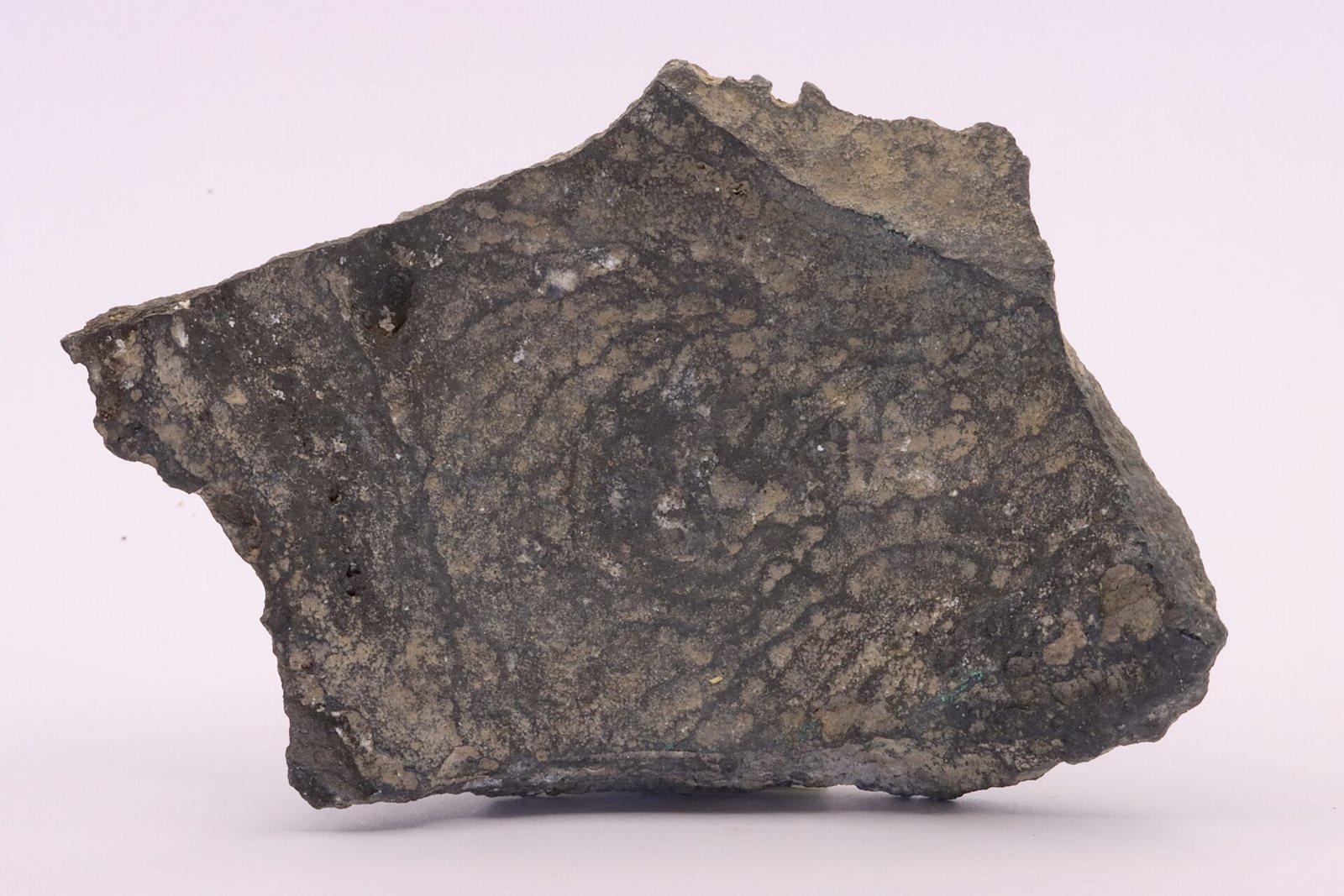
이것은 무엇인가?
Famous as a poison, but in ultra-pure form it is half of gallium arsenide, the compound behind high-frequency radio chips.
왜 중요한가?
It is also an unavoidable contaminant in many copper and gold ores, which makes arsenic management a real cost of mining.
Where it is in the Earth
Arsenic is not mined from deposits formed primarily around arsenic itself. It is instead concentrated as a secondary mineral within ore systems whose principal metals are copper, gold, lead, or cobalt. The geological process that brings arsenic to workable concentrations is hydrothermal mineralisation: hot, metal-bearing fluids moving through fractures in the crust cool and react with surrounding rock, precipitating sulfide minerals as they go. Arsenic is chemically comfortable in that environment. It substitutes readily into iron sulfide structures, most commonly as arsenopyrite (iron arsenic sulfide) and as enargite and tennantite in copper systems, and it travels with those fluids over long distances before being deposited.
Because arsenic behaves this way, it appears across a wide range of deposit types. Epithermal gold deposits — formed at relatively shallow depths from cooling volcanic fluids — are often strongly arsenical. So are porphyry copper systems, which form when large volumes of magmatic fluid intrude into crustal rock. The great copper and gold belts of the Andes account for much of the arsenic that reaches the market, which is why Peru sits so prominently in the production table. The arsenic is not the target of those mining operations; it is simply there, locked in the same rock as the copper or gold, and must be dealt with regardless.
Where arsenic is notably absent, it usually reflects a different geological history — different fluid chemistry, different host rocks, different temperatures of formation. This geological unevenness means that some ore bodies are almost arsenic-free while adjacent deposits may carry concentrations that substantially complicate processing. Grade, in this context, means not just how much of the target metal is present, but how much arsenic accompanies it.
Getting it out
Because arsenic is a by-product rather than a primary target, the mining method at any given operation is determined entirely by the geometry and depth of the host ore body, not by the arsenic itself. Porphyry copper deposits, which account for a large share of the arsenic that reaches the market, are typically mined by open-pit methods. The ore body is broad and disseminated — meaning the metal is spread thinly through a large volume of rock rather than concentrated in narrow veins — so open-pit mining, which removes material in successive horizontal benches, is the most practical approach. Underground methods are used where the ore is deeper or structurally constrained in a way that makes a surface excavation uneconomical.
Grade, in an open-pit copper or gold mine, describes how many grams or parts per million of the target metal are present in each tonne of rock. The arsenic content is rarely reported as a headline grade figure; it appears instead in metallurgical characterisation studies as a penalty element. The practical meaning is that for every tonne of copper or gold concentrate produced, the miner is also producing a quantity of arsenic that must either be sold, treated, or stored. The ratio of waste rock moved to ore processed — the strip ratio — can be very large in open-pit mining, meaning that the volume of material disturbed greatly exceeds the volume that eventually becomes product.
There is no in-situ recovery of arsenic, no brine operation, and no dedicated arsenic mine operating at commercial scale anywhere in the world. The arsenic supply is entirely downstream of decisions made about copper and gold.
What pulls on it
The two principal end uses for arsenic sit at opposite ends of the material's purity range. Arsenic trioxide, the lower-purity form, goes primarily into chromated copper arsenate (CCA), a wood preservative used to protect timber in outdoor structures from rot and insect damage. This application dominated global arsenic consumption for decades. Regulatory restrictions in many countries on CCA-treated wood in residential settings have reduced that demand meaningfully from its historical peak, though industrial and agricultural timber applications continue. Glass manufacture is a secondary use of the trioxide, where small additions act as a fining agent — a substance that helps remove bubbles from molten glass.
Semiconductor-grade arsenic metal, purified to extremely high levels, is the other principal use. It is one of the two elements in gallium arsenide (GaAs), a compound semiconductor with electronic properties that silicon cannot match at high frequencies. GaAs chips appear in mobile handsets, satellite communications, and radar systems. The quantity of arsenic consumed in this application is small relative to the trioxide market, but the price commanded is much higher. Demand in this segment moves with the production volumes of wireless devices and defence electronics.
For demand to shift sharply upward in aggregate, either the wood preservative market would need to recover substantially in a regulatory environment that has been moving in the other direction, or GaAs semiconductor volumes would need to grow considerably faster than they have. For demand to fall sharply, the compound semiconductor industry would need to find an alternative substrate, or the remaining CCA markets would need to face tighter restrictions.
생산 주체
지도에서 보기 →Production (arsenic trioxide, gross weight)
Production (arsenic trioxide, gross weight)metric tons 2025 (추정치) 세계 합계 61,000 metric tons
USGS Mineral Commodity Summaries 2026 · Reported as arsenic trioxide equivalent. · 출처 ↗
나머지 열을 보려면 표를 옆으로 스크롤하십시오.
| 국가 | 생산 | 세계 비중 |
|---|---|---|
| Peru | 30,000 | 49.2% |
| China | 24,000 | 39.3% |
| Morocco | 5,000 | 8.2% |
| Belgium | 1,000 | 1.6% |
| Russia | 500.0 | 0.8% |
| Japan | Zero | — |
| United States | Zero | — |
| 세계 합계 | 61,000 | 100% |
'비공개'는 USGS가 개별 기업의 데이터 노출을 막기 위해 수치를 억제한 것으로, 0을 의미하지 않습니다. 출처가 각 수치를 독립적으로 반올림하고 '기타 국가' 항목을 항상 별도로 구분하지는 않기 때문에, 국가별 합계가 세계 합계와 일치하지 않을 수 있습니다.
가격
metal, annual average, U.S. warehouse, dollars per pound
연간 평균dollars per pound
기준: metal, annual average, U.S. warehouse, dollars per pound. 다음 자료에 게재된 연간 평균 USGS Mineral Commodity Summaries 2026 · 출처 ↗. 이 수치는 기준 연간 평균값이며, 실시간 시장 가격이 아니다.
용도
전체 최종 시장 →| 최종 시장 | 거기에서의 기능 | 중요도 |
|---|---|---|
| Semiconductors | Dopant and GaAs | 중요 |