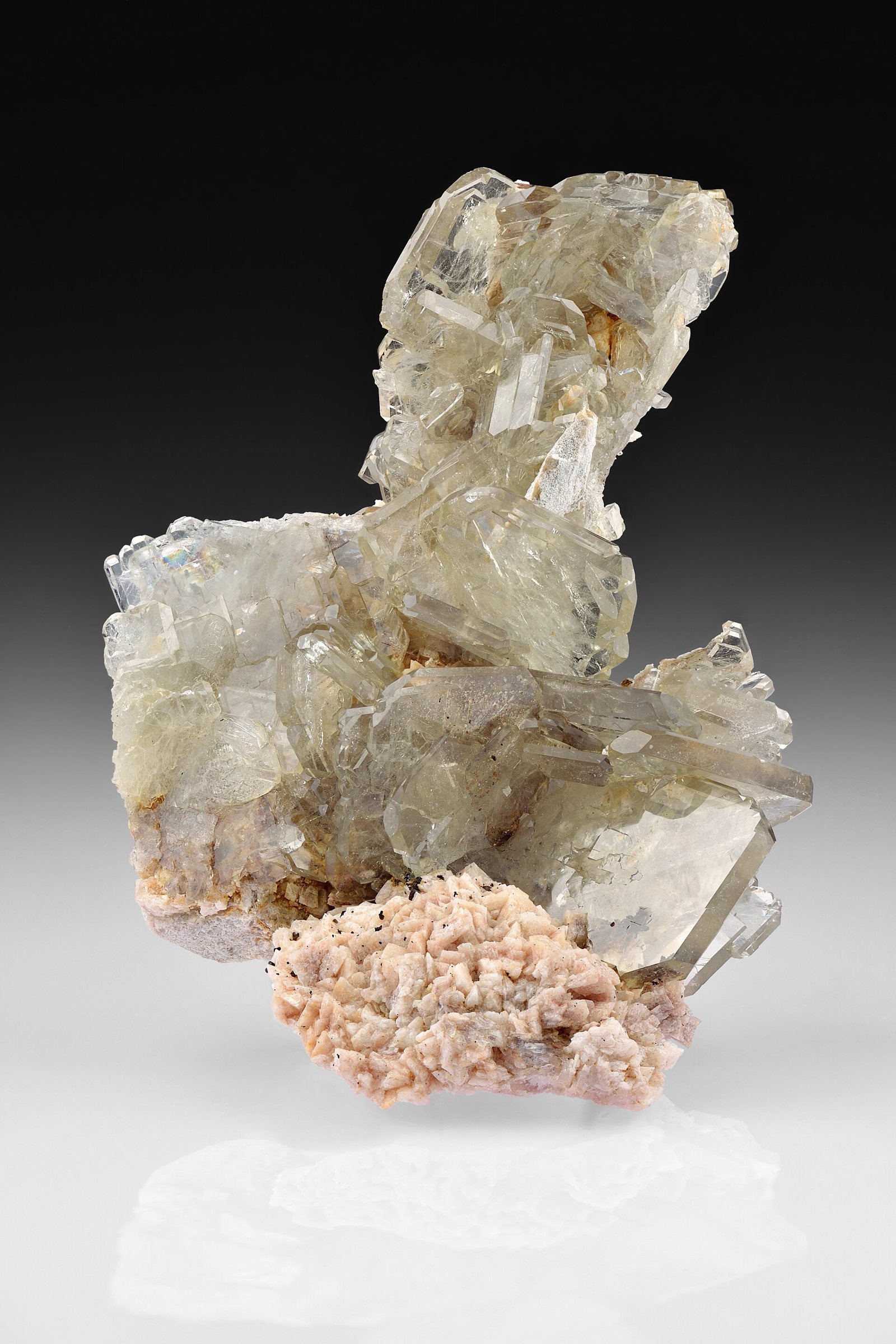
Wat is het?
A very heavy, soft mineral used mostly to weigh down drilling mud so an oil well does not blow out.
Waarom is het van belang?
Barite demand tracks drilling activity almost exactly, which makes it one of the purest oilfield-services indicators in the mineral world.
Where it is in the Earth
Barite is the mineral form of barium sulfate (BaSO₄). It forms in a narrow range of geological settings, all of which share a common requirement: barium-rich fluids must encounter a source of sulfate at a temperature and pressure where the two combine and precipitate out of solution. Because barium sulfate is almost insoluble in water under most surface conditions, it drops out readily, and over geological time this produces concentrations thick enough to mine.
The most common setting is a hydrothermal vein deposit, where hot mineral-bearing water circulates through fractures in older rock, cools, and deposits barite alongside other minerals. These veins cut through a wide range of host rocks — limestone, shale, sandstone — and can be found on most continents wherever ancient fluid pathways existed. A second important setting is the sediment-hosted stratiform deposit, where barite accumulated on ancient seafloors, sometimes in association with submarine volcanic activity. These bedded deposits tend to be laterally extensive and geologically predictable, which makes them attractive targets for large-scale mining. Residual deposits also exist, where weathering has dissolved the surrounding rock away and left behind a near-surface concentration of the resistant barite mineral, sometimes in a soft, earthy form that requires little crushing before processing.
The reason barite deposits cluster where they do — in the Rajasthan region of India, in central and southern China, along the Atlas ranges of Morocco, across Kazakhstan and Iran — reflects the intersection of ancient hydrothermal systems with the right host-rock chemistry. These are not random occurrences; they follow the same structural and stratigraphic controls that geologists use to target exploration in those regions today.
Getting it out
Most barite is recovered by open-pit mining, which suits the near-surface, bedded, or residual deposits that make up the majority of the world's output. In open-pit work, overburden — the rock and soil sitting above the ore — is stripped away and the ore is extracted in benches. The thickness of overburden relative to the ore below it, a ratio called the stripping ratio, determines a great deal of the cost. Where deposits are close to surface and the stripping ratio is low, barite can be one of the simpler bulk industrial minerals to extract. Where the deposit dips steeply or is buried under considerable waste, underground methods are used instead, with miners following the vein or bed from shafts or adits (horizontal access tunnels).
Barite ore is measured against a density standard rather than a chemical purity figure alone. The commercially important property is specific gravity — how much heavier a unit volume of barite is compared with water. Higher specific gravity ore commands better prices because the drilling industry needs the weight, and a tonne of denser barite does more work per tonne than a diluted or lower-grade material. Ore that falls below the minimum specific gravity threshold accepted by the API (the American Petroleum Institute, which sets the standards the oilfield uses) must either be upgraded through processing or sold into lower-value markets. In practice, run-of-mine ore from many deposits contains gangue minerals — quartz, calcite, iron oxides — mixed in with the barite, and the ore needs beneficiation before it meets the required specification.
What pulls on it
The dominant use of barite is as a weighting agent in drilling mud, also called drilling fluid. When an oil or gas well is drilled, the fluid circulating through the borehole must be dense enough to exert sufficient pressure on the surrounding rock to prevent the well from flowing uncontrollably. Barite, ground to a fine powder and suspended in the drilling fluid, provides that density without reacting chemically with the well components. Because this application is so large relative to all others, the overall level of demand for barite rises and falls almost in step with the number of wells being drilled globally. When oil and gas companies increase drilling activity — typically when energy prices support it — barite consumption follows quickly. When drilling slows, barite demand contracts with it, often sharply.
Outside the oilfield, barite has a range of secondary uses that are individually modest. Ground barite is used as a filler in paints and coatings, in rubber and plastics, and as an additive to concrete and mortars where density or radiation shielding is required. Barium chemicals derived from barite — including barium carbonate and barium chloride — serve as intermediates in the manufacture of glass, ceramics, and various industrial processes. Medical-grade barium sulfate is used as an X-ray contrast agent, allowing soft tissue of the gastrointestinal tract to be imaged; this application is small by volume but commands a substantially higher price. None of these secondary uses is large enough to compensate meaningfully for a contraction in oilfield demand, so the material's overall market profile remains tightly coupled to the drilling cycle.
A shift away from fossil fuel extraction over a long timeframe would reduce the oilfield pull on barite. Whether that reduction would be offset by growth in construction applications — where dense aggregate finds use in radiation shielding for medical and nuclear facilities — or in other industrial uses is genuinely uncertain and would depend on the pace and character of the energy transition, as well as on whether alternatives to barite in drilling fluids become cost-competitive.
Turning ore into product Niveau 3
The goal of barite processing is to raise the specific gravity of the product and reduce contamination by gangue minerals. The sequence typically begins with comminution — crushing and grinding the run-of-mine ore to liberate barite grains from the surrounding rock. Liberation is the point at which individual mineral particles are physically separated from one another, and it governs how efficiently subsequent steps can work. Grind too coarse and barite and gangue stay locked together; grind too fine and recovery falls because fine particles behave poorly in separation equipment.
The principal separation methods are gravity-based, which is appropriate given that barite's high density is exactly the property being sold. Jigs, shaking tables, and dense-medium circuits all exploit the density contrast between barite and lighter gangue minerals. Froth flotation — a process that uses air bubbles and chemical reagents to selectively attach to and float certain mineral surfaces — is applied where gravity separation alone cannot achieve the required grade, or where barite is associated with sulfide minerals. Iron staining, which is common in residual deposits, is addressed by acid leaching or magnetic separation to remove iron oxide coatings that would otherwise lower the apparent specific gravity of the product and introduce unacceptable colour. The final step is drying and milling to the particle size distribution specified by the customer: oilfield drilling mud uses coarser grades, while medical-grade barium sulfate for use as an X-ray contrast agent requires extremely fine, high-purity material produced under tightly controlled conditions. The losses in a barite circuit sit mainly in the fine fraction — slimes generated during grinding that are too small for efficient gravity recovery — and in the gangue rejection step, where some barite inevitably reports to the waste stream alongside the minerals being discarded.
Substitution and recycling Niveau 3
In drilling mud, the primary alternative weighting agents are ilmenite (an iron-titanium oxide mineral) and hematite, both of which are denser than barite and can therefore achieve the same mud weight with less material by volume. However, both carry drawbacks in practice: they are harder and more abrasive than barite, which increases wear on drilling equipment, and their supply chains are oriented toward other primary markets. Calcium carbonate is used in certain specialised drilling applications, particularly where acid-soluble materials are preferred to avoid formation damage, but its lower density limits its utility as a barite substitute in high-pressure wells. In paint and rubber applications, synthetic blanc fixe — precipitated barium sulfate produced chemically rather than from mined ore — can substitute for ground natural barite, and calcium carbonate or talc can replace barite as a filler where the density advantage is not required. These substitutions are routine in the paints and coatings sector and represent a real constraint on barite's pricing power in that market.
Recycling of barite from drilling mud is practised to a limited degree. Solids-control equipment on a drilling rig separates the used mud and recovers some barite for re-use within the same operation, which reduces the quantity of fresh material needed per well. However, the recovered material is often contaminated with formation solids, its specific gravity may have declined below specification, and on many operations — particularly in offshore environments — logistics make full recovery impractical. The result is that the recycling contribution to supply is real but not dominant, and fresh mined barite remains the primary input for most drilling operations. In the medical-grade segment, recycling is essentially absent; the material is consumed in a single use and cannot be recovered from the patient.
Waar het in het gesteente vandaan komt
Alle ertsmineralen →Dit zijn de mineralen die daadwerkelijk barite. Een afzetting is alleen een ertslichaam als een van beide voldoende geconcentreerd is om de winning ervan te bekostigen.
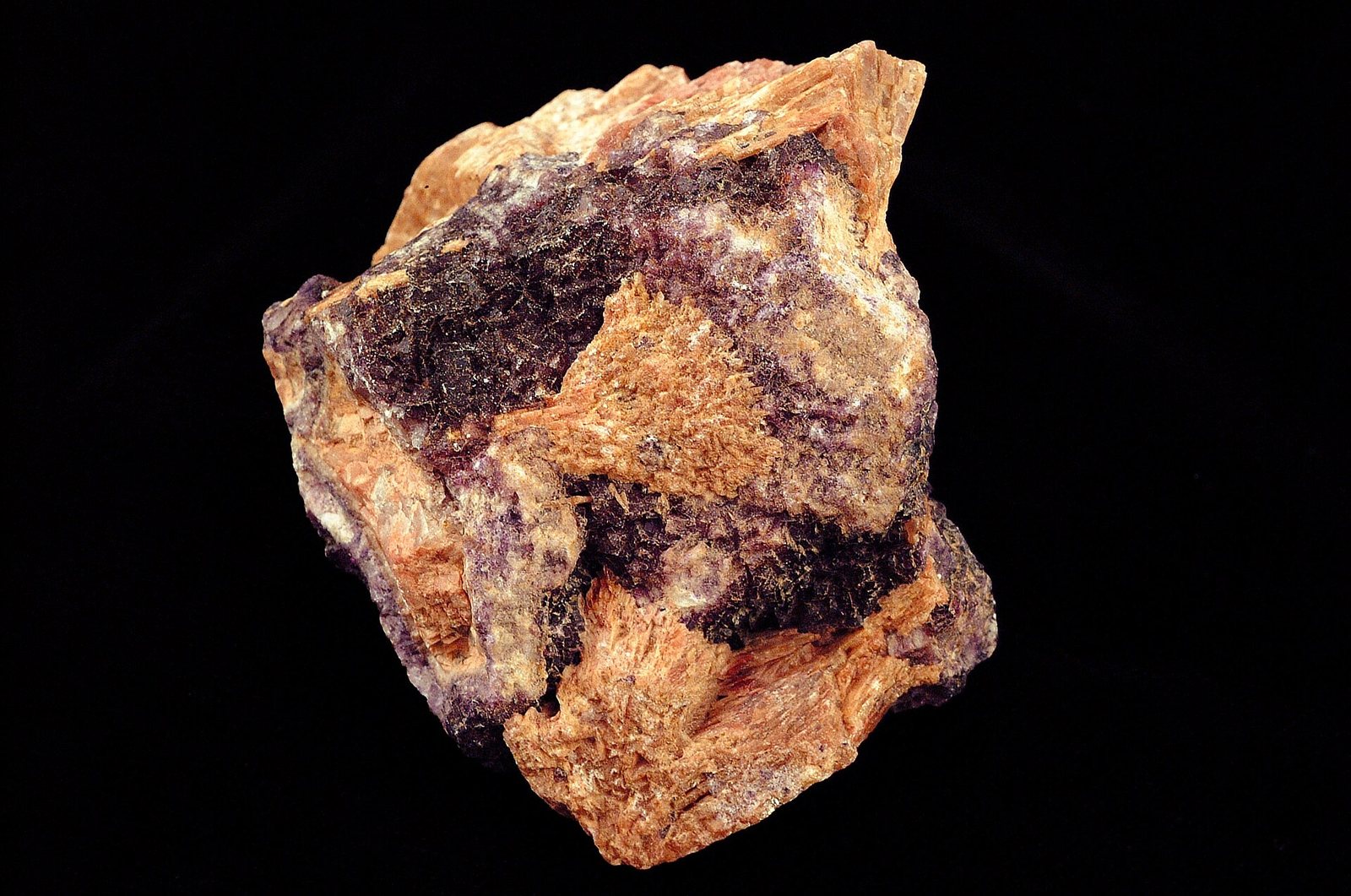
Wie het produceert
Bekijk het op een kaart →Mine production
Mine productionthousand metric tons 2025 (geschat) Wereldtotaal 8,700 thousand metric tons
USGS Mineral Commodity Summaries 2026 · Gross weight of barite ore. · bron ↗
Schuif de tabel zijwaarts voor de overige kolommen.
| Land | Productie | Aandeel van de wereld |
|---|---|---|
| India | 3,000 | 34.5% |
| China | 2,200 | 25.3% |
| Morocco | 1,000 | 11.5% |
| Kazakhstan | 700.0 | 8.0% |
| Other countries | 350.0 | 4.0% |
| Iran | 300.0 | 3.4% |
| Mexico | 300.0 | 3.4% |
| Laos | 260.0 | 3.0% |
| Turkey | 260.0 | 3.0% |
| Russia | 230.0 | 2.6% |
| Pakistan | 100.0 | 1.1% |
| United States | Withheld | — |
| Wereldtotaal | 8,700 | 100% |
"Ingehouden" betekent dat de USGS het cijfer heeft onderdrukt om gegevens van een individueel bedrijf niet prijs te geven — het betekent niet nul. Landrijen tellen niet altijd op tot het wereldtotaal, omdat de bron elk cijfer afzonderlijk afrondt en niet altijd een regel "overige landen" uitsplitst.
Wie de reserves bezit
Reserves
Reservesthousand metric tons 2025
USGS Mineral Commodity Summaries 2026 · bron ↗
| Land | Reserves | Aandeel van de wereld |
|---|---|---|
| China | 120,000 | — |
| Iran | 100,000 | — |
| Kazakhstan | 85,000 | — |
| India | 51,000 | — |
| Turkey | 34,000 | — |
| Russia | 12,000 | — |
| Mexico | Not applicable | — |
| United States | Not applicable | — |
| Laos | Not applicable | — |
| Morocco | Not applicable | — |
| Pakistan | Not applicable | — |
| Other countries | Not applicable | — |
| Wereldtotaal | Not applicable | 100% |
Prijs
average unit value, ground, ex-works, dollars per metric ton
Jaargemiddeldedollars per metric ton
Grondslag: average unit value, ground, ex-works, dollars per metric ton. Jaargemiddelden zoals gepubliceerd in USGS Mineral Commodity Summaries 2026 · bron ↗. Dit zijn referentiejaargemiddelden, geen live marktkoers.
Waarvoor het wordt gebruikt
Alle eindmarkten →| Eindmarkt | Wat het daar doet | Belang |
|---|---|---|
| Medicine & Health | X-ray contrast | Belangrijk |