De la roca al producto, trazado
The Materials Atlas
Materiales Minas y yacimientos Procesamiento y refinación Recorridos de custodia Cadenas de suministro Empresas Países Noticias
Materiales por categoría Materiales para baterías Elementos de tierras raras Cobre y electricidad Materiales para semiconductores Materiales nucleares Aeroespacial y Defensa Metales preciosos Acero y metales de aleación Minerales industriales Minerales Agrícolas Materias primas energéticas Minerales mena Tabla periódica
Demanda Mercados finales Tecnologías Calculadora de materiales Mapas Clasificador
Aprender y herramientas AprenderGlosario Consultar los datosAgentes de IA Investigación y datosAPI ★ Guardado
Acerca de Quiénes somosMetodología Fuentes de datosContacto Aviso legal
Opciones de lectura
🧭 Vista guiada ¿Es nuevo en esto: leyes de mena, concentrado, refinación, subproductos? Explicamos cada término mientras navega, en lenguaje claro. Los mismos datos, con la ayuda integrada.
⚡ Vista de experto Usted ya conoce el sector. Solo los datos: limpios, rápidos y compactos, sin explicaciones adicionales. Esta es la vista predeterminada.
Tema
Idioma de la interfaz
Profundidad Las páginas de materiales están redactadas en cuatro niveles. Seleccione uno en cualquier página de material y se recordará.
★ Guardado Investigación y datos
Barite

Minerales industriales

Barite

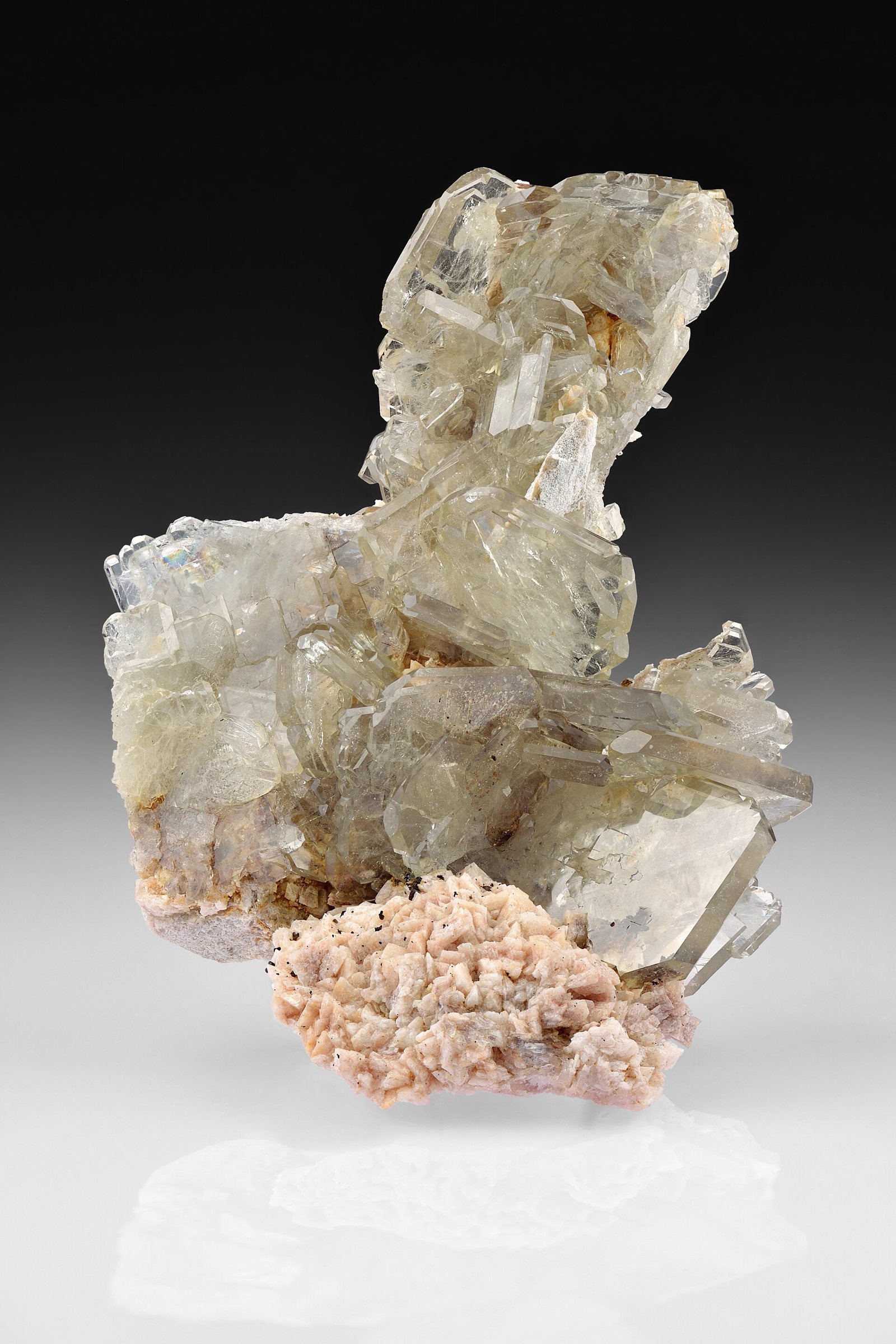
A very heavy, soft mineral used mostly to weigh down drilling mud so an oil well does not blow out.

Barite - Cerro Warihuyn, Miraflores, Huamalies, Huanuco, Peru · Ivar Leidus · CC BY-SA 4.0 · Wikimedia Commons

¿Qué es?

A very heavy, soft mineral used mostly to weigh down drilling mud so an oil well does not blow out.

¿Por qué importa?

Barite demand tracks drilling activity almost exactly, which makes it one of the purest oilfield-services indicators in the mineral world.

Where it is in the Earth

Barite is the mineral form of barium sulfate (BaSO₄). It forms in a narrow range of geological settings, all of which share a common requirement: barium-rich fluids must encounter a source of sulfate at a temperature and pressure where the two combine and precipitate out of solution. Because barium sulfate is almost insoluble in water under most surface conditions, it drops out readily, and over geological time this produces concentrations thick enough to mine.

The most common setting is a hydrothermal vein deposit, where hot mineral-bearing water circulates through fractures in older rock, cools, and deposits barite alongside other minerals. These veins cut through a wide range of host rocks — limestone, shale, sandstone — and can be found on most continents wherever ancient fluid pathways existed. A second important setting is the sediment-hosted stratiform deposit, where barite accumulated on ancient seafloors, sometimes in association with submarine volcanic activity. These bedded deposits tend to be laterally extensive and geologically predictable, which makes them attractive targets for large-scale mining. Residual deposits also exist, where weathering has dissolved the surrounding rock away and left behind a near-surface concentration of the resistant barite mineral, sometimes in a soft, earthy form that requires little crushing before processing.

The reason barite deposits cluster where they do — in the Rajasthan region of India, in central and southern China, along the Atlas ranges of Morocco, across Kazakhstan and Iran — reflects the intersection of ancient hydrothermal systems with the right host-rock chemistry. These are not random occurrences; they follow the same structural and stratigraphic controls that geologists use to target exploration in those regions today.

Getting it out

Most barite is recovered by open-pit mining, which suits the near-surface, bedded, or residual deposits that make up the majority of the world's output. In open-pit work, overburden — the rock and soil sitting above the ore — is stripped away and the ore is extracted in benches. The thickness of overburden relative to the ore below it, a ratio called the stripping ratio, determines a great deal of the cost. Where deposits are close to surface and the stripping ratio is low, barite can be one of the simpler bulk industrial minerals to extract. Where the deposit dips steeply or is buried under considerable waste, underground methods are used instead, with miners following the vein or bed from shafts or adits (horizontal access tunnels).

Barite ore is measured against a density standard rather than a chemical purity figure alone. The commercially important property is specific gravity — how much heavier a unit volume of barite is compared with water. Higher specific gravity ore commands better prices because the drilling industry needs the weight, and a tonne of denser barite does more work per tonne than a diluted or lower-grade material. Ore that falls below the minimum specific gravity threshold accepted by the API (the American Petroleum Institute, which sets the standards the oilfield uses) must either be upgraded through processing or sold into lower-value markets. In practice, run-of-mine ore from many deposits contains gangue minerals — quartz, calcite, iron oxides — mixed in with the barite, and the ore needs beneficiation before it meets the required specification.

What pulls on it

The dominant use of barite is as a weighting agent in drilling mud, also called drilling fluid. When an oil or gas well is drilled, the fluid circulating through the borehole must be dense enough to exert sufficient pressure on the surrounding rock to prevent the well from flowing uncontrollably. Barite, ground to a fine powder and suspended in the drilling fluid, provides that density without reacting chemically with the well components. Because this application is so large relative to all others, the overall level of demand for barite rises and falls almost in step with the number of wells being drilled globally. When oil and gas companies increase drilling activity — typically when energy prices support it — barite consumption follows quickly. When drilling slows, barite demand contracts with it, often sharply.

Outside the oilfield, barite has a range of secondary uses that are individually modest. Ground barite is used as a filler in paints and coatings, in rubber and plastics, and as an additive to concrete and mortars where density or radiation shielding is required. Barium chemicals derived from barite — including barium carbonate and barium chloride — serve as intermediates in the manufacture of glass, ceramics, and various industrial processes. Medical-grade barium sulfate is used as an X-ray contrast agent, allowing soft tissue of the gastrointestinal tract to be imaged; this application is small by volume but commands a substantially higher price. None of these secondary uses is large enough to compensate meaningfully for a contraction in oilfield demand, so the material's overall market profile remains tightly coupled to the drilling cycle.

A shift away from fossil fuel extraction over a long timeframe would reduce the oilfield pull on barite. Whether that reduction would be offset by growth in construction applications — where dense aggregate finds use in radiation shielding for medical and nuclear facilities — or in other industrial uses is genuinely uncertain and would depend on the pace and character of the energy transition, as well as on whether alternatives to barite in drilling fluids become cost-competitive.

Turning ore into product Nivel 3

The goal of barite processing is to raise the specific gravity of the product and reduce contamination by gangue minerals. The sequence typically begins with comminution — crushing and grinding the run-of-mine ore to liberate barite grains from the surrounding rock. Liberation is the point at which individual mineral particles are physically separated from one another, and it governs how efficiently subsequent steps can work. Grind too coarse and barite and gangue stay locked together; grind too fine and recovery falls because fine particles behave poorly in separation equipment.

The principal separation methods are gravity-based, which is appropriate given that barite's high density is exactly the property being sold. Jigs, shaking tables, and dense-medium circuits all exploit the density contrast between barite and lighter gangue minerals. Froth flotation — a process that uses air bubbles and chemical reagents to selectively attach to and float certain mineral surfaces — is applied where gravity separation alone cannot achieve the required grade, or where barite is associated with sulfide minerals. Iron staining, which is common in residual deposits, is addressed by acid leaching or magnetic separation to remove iron oxide coatings that would otherwise lower the apparent specific gravity of the product and introduce unacceptable colour. The final step is drying and milling to the particle size distribution specified by the customer: oilfield drilling mud uses coarser grades, while medical-grade barium sulfate for use as an X-ray contrast agent requires extremely fine, high-purity material produced under tightly controlled conditions. The losses in a barite circuit sit mainly in the fine fraction — slimes generated during grinding that are too small for efficient gravity recovery — and in the gangue rejection step, where some barite inevitably reports to the waste stream alongside the minerals being discarded.

Substitution and recycling Nivel 3

In drilling mud, the primary alternative weighting agents are ilmenite (an iron-titanium oxide mineral) and hematite, both of which are denser than barite and can therefore achieve the same mud weight with less material by volume. However, both carry drawbacks in practice: they are harder and more abrasive than barite, which increases wear on drilling equipment, and their supply chains are oriented toward other primary markets. Calcium carbonate is used in certain specialised drilling applications, particularly where acid-soluble materials are preferred to avoid formation damage, but its lower density limits its utility as a barite substitute in high-pressure wells. In paint and rubber applications, synthetic blanc fixe — precipitated barium sulfate produced chemically rather than from mined ore — can substitute for ground natural barite, and calcium carbonate or talc can replace barite as a filler where the density advantage is not required. These substitutions are routine in the paints and coatings sector and represent a real constraint on barite's pricing power in that market.

Recycling of barite from drilling mud is practised to a limited degree. Solids-control equipment on a drilling rig separates the used mud and recovers some barite for re-use within the same operation, which reduces the quantity of fresh material needed per well. However, the recovered material is often contaminated with formation solids, its specific gravity may have declined below specification, and on many operations — particularly in offshore environments — logistics make full recovery impractical. The result is that the recycling contribution to supply is real but not dominant, and fresh mined barite remains the primary input for most drilling operations. In the medical-grade segment, recycling is essentially absent; the material is consumed in a single use and cannot be recovered from the patient.

Where the chain is fragile Nivel 4

The most visible concentration risk in barite is on the production side. India alone accounts for approximately 3,000 thousand metric tons of a world total of 8,700 thousand metric tons — a share that makes it the overwhelmingly dominant supplier. China follows, and together with Morocco, Kazakhstan, and a handful of others, a small number of countries supply virtually all global output. The United States, which consumes substantial quantities given its large oil and gas sector, withholds its production figure (reported as W by the USGS), and its reserves are listed as not available, which itself signals something about the opacity of domestic supply accounting. U.S. net import reliance exceeds 75 percent, with India, China, Morocco, and Mexico as the principal sources. Any disruption — logistical, political, or climatic — affecting the Indian producing regions would propagate quickly into global drilling-mud supply chains, because lead times for new mine development are measured in years, not months.

The reserve picture adds a layer of complexity. Iran and Kazakhstan hold very large stated reserves, but neither country's current production matches what those figures might imply about near-term supply potential. Iran's reserves are given as 100,000 thousand metric tons, and Kazakhstan's as 85,000 thousand metric tons, yet both produce substantially less than India despite the reserve disparity. This divergence between reserve size and production capacity reflects the difference between a geological resource and an operating supply chain — infrastructure, investment environment, export logistics, and processing capacity all intervene between ore in the ground and product delivered to an oilfield. Reserves for Morocco, Mexico, Pakistan, Laos, and the world total are listed as not available in the source data, which means the global reserve base cannot be stated with precision from this source alone.

Barite's pricing behaviour introduces a further structural fragility. Because demand tracks drilling cycles so closely, prices can move substantially over short periods — the data show a range from $145 to $218 per metric ton across the years covered. Producers in low-cost geologies may be profitable across the full cycle, but marginal producers who entered the market during a high-price period face real risk of idling during downturns. When they idle, the institutional knowledge and operational readiness to restart is often degraded, meaning the supply response to the next upturn is slower than a simple reading of installed capacity would suggest. This asymmetry — demand can rise quickly, but supply ramp-up is slow — is characteristic of industrial minerals with fragmented, geographically concentrated production bases.

Interprete correctamente las cifras. Gross weight of barite ore. Ground barite by specific gravity grade; also medical contrast media.

De dónde proviene en la roca

Todos los minerales de mena →

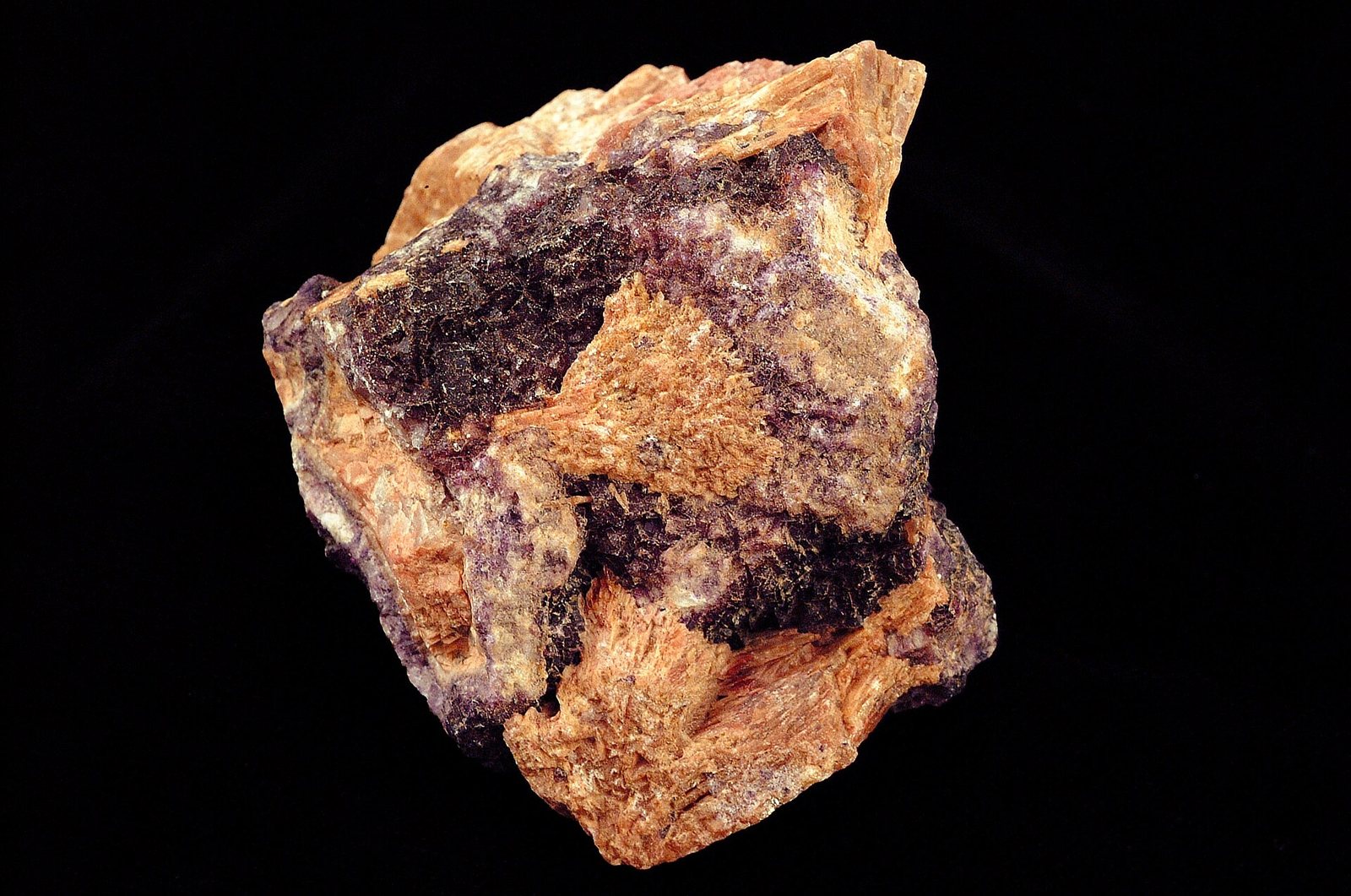
Estos son los minerales que realmente contienen barite. Un yacimiento solo es un cuerpo mineral si uno de ellos está suficientemente concentrado para costear su extracción.
Quién lo produce

Verlo en un mapa →

Mine production

Mine productionthousand metric tons 2025 (estimado) Total mundial 8,700 thousand metric tons

USGS Mineral Commodity Summaries 2026 · Gross weight of barite ore. · fuente ↗

Desplace la tabla lateralmente para ver las columnas restantes.

PaísProducción Cuota mundial
India 3,000 34.5%
China 2,200 25.3%
Morocco 1,000 11.5%
Kazakhstan 700.0 8.0%
Other countries 350.0 4.0%
Iran 300.0 3.4%
Mexico 300.0 3.4%
Laos 260.0 3.0%
Turkey 260.0 3.0%
Russia 230.0 2.6%
Pakistan 100.0 1.1%
United States Withheld
Total mundial 8,700100%

«Withheld» significa que el USGS suprimió el dato para evitar revelar información de una empresa concreta — no equivale a cero. Las filas por país no siempre suman el total mundial porque la fuente redondea cada cifra de forma independiente y no siempre desglosa una línea de «otros países».

Quién posee las reservas

«Reservas» es un término preciso. Designa la parte de un yacimiento conocido que podría extraerse económicamente en este momento, con los precios y la tecnología actuales — no todo lo que existe en el subsuelo. Las reservas aumentan cuando suben los precios o se inventa un nuevo proceso, y disminuyen cuando bajan.

Reserves

Reservesthousand metric tons 2025

USGS Mineral Commodity Summaries 2026 · fuente ↗

PaísReservasCuota mundial
China 120,000
Iran 100,000
Kazakhstan 85,000
India 51,000
Turkey 34,000
Russia 12,000
United States Not applicable
Laos Not applicable
Mexico Not applicable
Morocco Not applicable
Pakistan Not applicable
Other countries Not applicable
Total mundial Not applicable100%

Precio

average unit value, ground, ex-works, dollars per metric ton

Promedio anualdollars per metric ton

2021 · 167.0 alto 218.0 dollars per metric ton 2025 · 210.0

Base: average unit value, ground, ex-works, dollars per metric ton. Promedios anuales publicados en USGS Mineral Commodity Summaries 2026 · fuente ↗. Estos son promedios anuales de referencia, no una cotización de mercado en tiempo real.

Mercado finalLo que hace allíImportancia
Medicine & Health X-ray contrast Importante

Materiales

Todos los materiales Minerales críticos Tierras raras Materiales para baterías Minerales mena Tabla periódica Clasificador

El subsuelo

Minas y yacimientos Procesamiento y refinación Países Mapas

La economía

Recorridos de custodia Cadenas de suministro Mercados finales Tecnologías Empresas Calculadora de materiales

Aprender

AprenderGlosario Consultar los datosAgentes de IA Investigación y datosAPI abierta Noticias★ Guardado

Quiénes somos

Quiénes somosContacto MetodologíaFuentes de datos Política editorial Política de privacidadCondiciones de uso Aviso legal