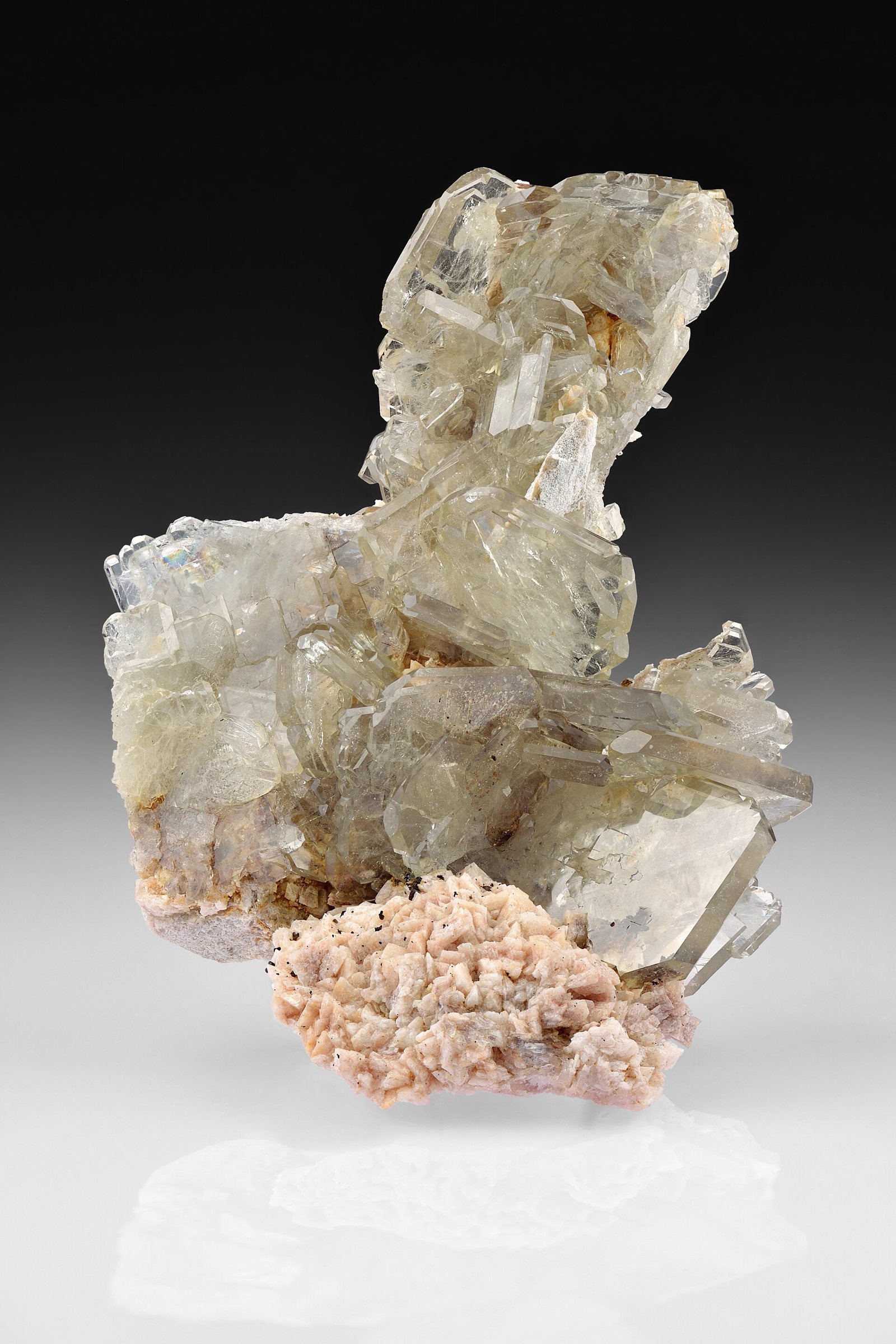
这是什么?
A very heavy, soft mineral used mostly to weigh down drilling mud so an oil well does not blow out.
为何重要?
Barite demand tracks drilling activity almost exactly, which makes it one of the purest oilfield-services indicators in the mineral world.
Where it is in the Earth
Barite is the mineral form of barium sulfate (BaSO₄). It forms in a narrow range of geological settings, all of which share a common requirement: barium-rich fluids must encounter a source of sulfate at a temperature and pressure where the two combine and precipitate out of solution. Because barium sulfate is almost insoluble in water under most surface conditions, it drops out readily, and over geological time this produces concentrations thick enough to mine.
The most common setting is a hydrothermal vein deposit, where hot mineral-bearing water circulates through fractures in older rock, cools, and deposits barite alongside other minerals. These veins cut through a wide range of host rocks — limestone, shale, sandstone — and can be found on most continents wherever ancient fluid pathways existed. A second important setting is the sediment-hosted stratiform deposit, where barite accumulated on ancient seafloors, sometimes in association with submarine volcanic activity. These bedded deposits tend to be laterally extensive and geologically predictable, which makes them attractive targets for large-scale mining. Residual deposits also exist, where weathering has dissolved the surrounding rock away and left behind a near-surface concentration of the resistant barite mineral, sometimes in a soft, earthy form that requires little crushing before processing.
The reason barite deposits cluster where they do — in the Rajasthan region of India, in central and southern China, along the Atlas ranges of Morocco, across Kazakhstan and Iran — reflects the intersection of ancient hydrothermal systems with the right host-rock chemistry. These are not random occurrences; they follow the same structural and stratigraphic controls that geologists use to target exploration in those regions today.
Getting it out
Most barite is recovered by open-pit mining, which suits the near-surface, bedded, or residual deposits that make up the majority of the world's output. In open-pit work, overburden — the rock and soil sitting above the ore — is stripped away and the ore is extracted in benches. The thickness of overburden relative to the ore below it, a ratio called the stripping ratio, determines a great deal of the cost. Where deposits are close to surface and the stripping ratio is low, barite can be one of the simpler bulk industrial minerals to extract. Where the deposit dips steeply or is buried under considerable waste, underground methods are used instead, with miners following the vein or bed from shafts or adits (horizontal access tunnels).
Barite ore is measured against a density standard rather than a chemical purity figure alone. The commercially important property is specific gravity — how much heavier a unit volume of barite is compared with water. Higher specific gravity ore commands better prices because the drilling industry needs the weight, and a tonne of denser barite does more work per tonne than a diluted or lower-grade material. Ore that falls below the minimum specific gravity threshold accepted by the API (the American Petroleum Institute, which sets the standards the oilfield uses) must either be upgraded through processing or sold into lower-value markets. In practice, run-of-mine ore from many deposits contains gangue minerals — quartz, calcite, iron oxides — mixed in with the barite, and the ore needs beneficiation before it meets the required specification.
What pulls on it
The dominant use of barite is as a weighting agent in drilling mud, also called drilling fluid. When an oil or gas well is drilled, the fluid circulating through the borehole must be dense enough to exert sufficient pressure on the surrounding rock to prevent the well from flowing uncontrollably. Barite, ground to a fine powder and suspended in the drilling fluid, provides that density without reacting chemically with the well components. Because this application is so large relative to all others, the overall level of demand for barite rises and falls almost in step with the number of wells being drilled globally. When oil and gas companies increase drilling activity — typically when energy prices support it — barite consumption follows quickly. When drilling slows, barite demand contracts with it, often sharply.
Outside the oilfield, barite has a range of secondary uses that are individually modest. Ground barite is used as a filler in paints and coatings, in rubber and plastics, and as an additive to concrete and mortars where density or radiation shielding is required. Barium chemicals derived from barite — including barium carbonate and barium chloride — serve as intermediates in the manufacture of glass, ceramics, and various industrial processes. Medical-grade barium sulfate is used as an X-ray contrast agent, allowing soft tissue of the gastrointestinal tract to be imaged; this application is small by volume but commands a substantially higher price. None of these secondary uses is large enough to compensate meaningfully for a contraction in oilfield demand, so the material's overall market profile remains tightly coupled to the drilling cycle.
A shift away from fossil fuel extraction over a long timeframe would reduce the oilfield pull on barite. Whether that reduction would be offset by growth in construction applications — where dense aggregate finds use in radiation shielding for medical and nuclear facilities — or in other industrial uses is genuinely uncertain and would depend on the pace and character of the energy transition, as well as on whether alternatives to barite in drilling fluids become cost-competitive.
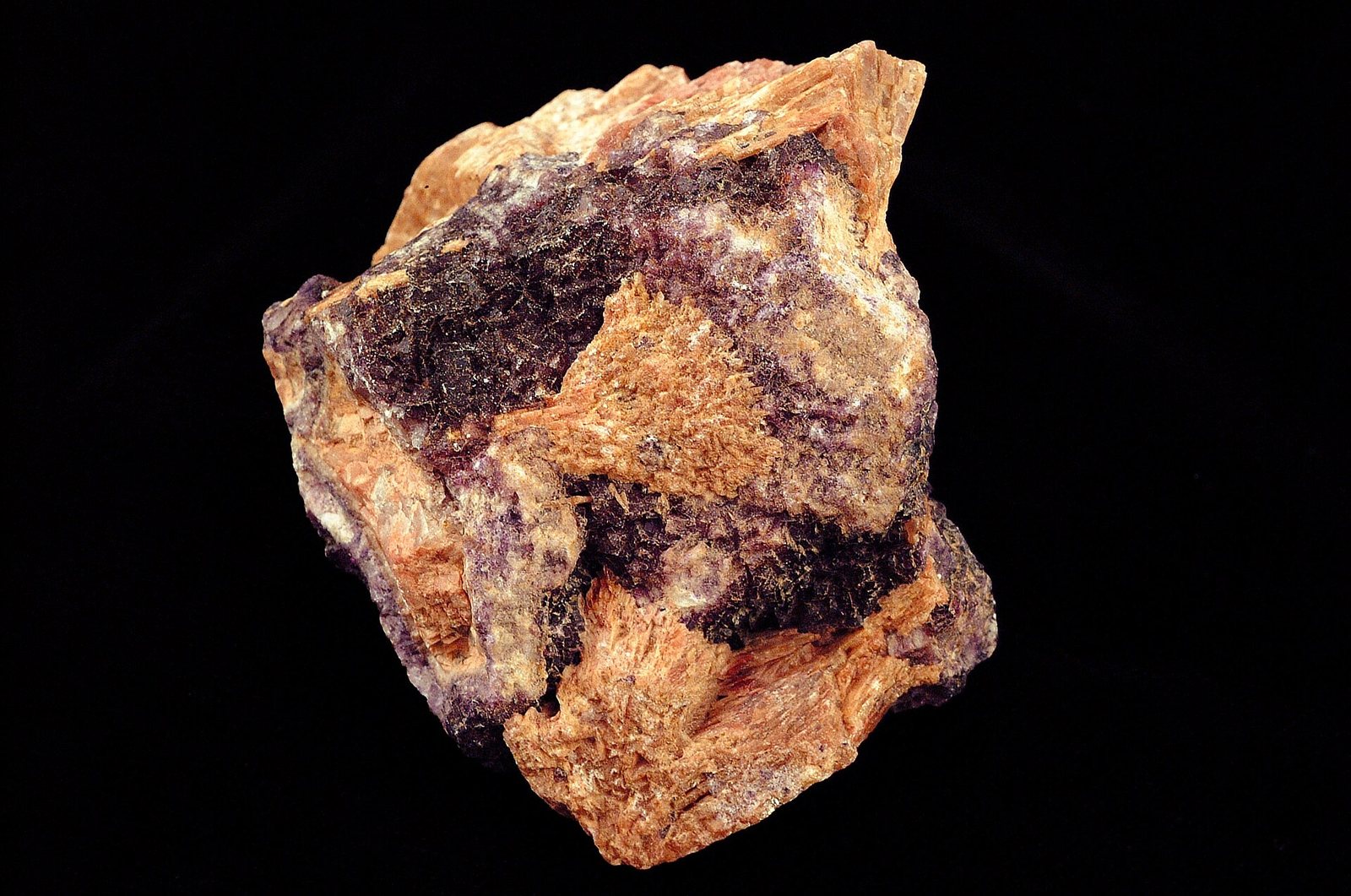
其在岩石中的来源
所有含矿矿物 →实际承载以下内容的矿物: barite. 只有其中某种物质的富集程度足以覆盖开采成本,矿床才能成为矿体。
生产主体
在地图上查看 →Mine production
Mine productionthousand metric tons 2025 (估计值) 全球合计 8,700 thousand metric tons
USGS Mineral Commodity Summaries 2026 · Gross weight of barite ore. · 来源 ↗
横向滚动表格以查看其余列。
| 国家/地区 | 产量 | 占全球份额 |
|---|---|---|
| India | 3,000 | 34.5% |
| China | 2,200 | 25.3% |
| Morocco | 1,000 | 11.5% |
| Kazakhstan | 700.0 | 8.0% |
| Other countries | 350.0 | 4.0% |
| Iran | 300.0 | 3.4% |
| Mexico | 300.0 | 3.4% |
| Laos | 260.0 | 3.0% |
| Turkey | 260.0 | 3.0% |
| Russia | 230.0 | 2.6% |
| Pakistan | 100.0 | 1.1% |
| United States | Withheld | — |
| 全球合计 | 8,700 | 100% |
"未披露"表示美国地质调查局(USGS)为避免泄露单个企业数据而对该数字进行了保密处理——并不意味着数值为零。各国行数之和不一定等于世界合计,原因在于来源对每个数字单独进行四舍五入处理,且并不总是单独列出"其他国家/地区"一行。
储量持有方
Reserves
Reservesthousand metric tons 2025
USGS Mineral Commodity Summaries 2026 · 来源 ↗
| 国家/地区 | 储量 | 占全球份额 |
|---|---|---|
| China | 120,000 | — |
| Iran | 100,000 | — |
| Kazakhstan | 85,000 | — |
| India | 51,000 | — |
| Turkey | 34,000 | — |
| Russia | 12,000 | — |
| Mexico | Not applicable | — |
| United States | Not applicable | — |
| Laos | Not applicable | — |
| Morocco | Not applicable | — |
| Pakistan | Not applicable | — |
| Other countries | Not applicable | — |
| 全球合计 | Not applicable | 100% |
价格
average unit value, ground, ex-works, dollars per metric ton
年度平均值dollars per metric ton
基准: average unit value, ground, ex-works, dollars per metric ton. 年度平均值,来源: USGS Mineral Commodity Summaries 2026 · 来源 ↗. 以下为参考年度均价,非实时市场报价。
其用途
所有终端市场 →| 终端市场 | 其在彼处的用途 | 重要性 |
|---|---|---|
| Medicine & Health | X-ray contrast | 重要 |