Từ quặng đến sản phẩm, có truy xuất nguồn gốc
The Materials Atlas
Vật liệu Mỏ & mỏ quặng Chế biến & tinh luyện Các hành trình quyền sở hữu Các chuỗi cung ứng Công ty Quốc gia Tin tức
Vật liệu theo kệ Vật liệu pin Nguyên tố đất hiếm Đồng & Điện Vật liệu bán dẫn Vật liệu hạt nhân Hàng không vũ trụ & Quốc phòng Kim loại quý Thép & Kim loại hợp kim Khoáng vật công nghiệp Khoáng sản nông nghiệp Nguyên liệu thô năng lượng Các khoáng vật quặng Bảng tuần hoàn
Nhu cầu Các thị trường đầu ra Công nghệ Máy tính vật liệu Bản đồ Bộ lọc
Tìm hiểu & công cụ Tìm hiểuBảng thuật ngữ Hỏi dữ liệuTác nhân AI Nghiên cứu & dữ liệuAPI ★ Đã lưu
Giới thiệu Về chúng tôiPhương pháp luận Nguồn dữ liệuLiên hệ Tuyên bố miễn trách nhiệm
Tùy chọn đọc
🧭 Chế độ xem có hướng dẫn Mới với lĩnh vực này — hàm lượng quặng, quặng tinh, tinh luyện, sản phẩm phụ? Chúng tôi giải thích mọi thuật ngữ khi bạn duyệt, bằng ngôn ngữ dễ hiểu. Cùng dữ liệu đó, với phần hỗ trợ được tích hợp sẵn.
⚡ Chế độ xem chuyên gia Bạn đã hiểu ngành. Chỉ cần dữ liệu — rõ ràng, nhanh và gọn, không có giải thích thêm. Đây là chế độ xem mặc định.
Chủ đề
Ngôn ngữ giao diện
Độ sâu Các trang vật liệu được biên soạn ở bốn cấp độ. Chọn một cấp độ trên bất kỳ trang vật liệu nào và lựa chọn đó sẽ được ghi nhớ.
★ Đã lưu Nghiên cứu & dữ liệu
Bismuth

Vật liệu hàng không vũ trụ & quốc phòng

Bismuth Bi · 83

A heavy metal that is, unusually, not very toxic — which is why it replaces lead in solders, plumbing brass and stomach medicine.

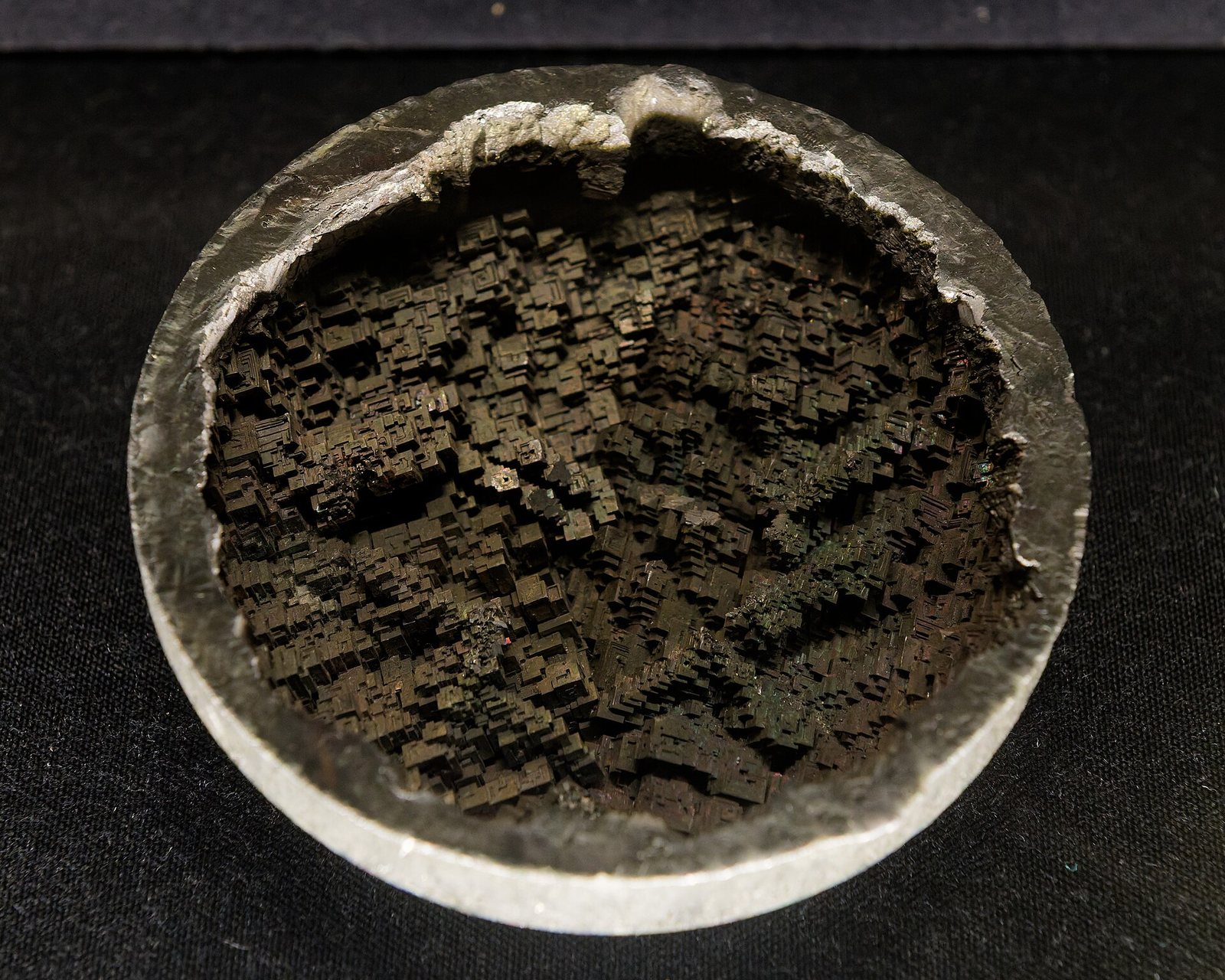
Bismuth crystal Créer le cristal n01 · Marie-Lan Taÿ Pamart · CC BY 4.0 · Wikimedia Commons

Đây là gì?

A heavy metal that is, unusually, not very toxic — which is why it replaces lead in solders, plumbing brass and stomach medicine.

Tại sao điều này quan trọng?

Bismuth demand grows every time a regulator restricts lead somewhere new.

Where it is in the Earth

Bismuth is a heavy metal — meaning it has a high atomic mass and correspondingly high density — that does not form large ore deposits of its own. Instead, it occurs as a minor constituent scattered through deposits that formed primarily around lead, copper, tin, tungsten and silver. The geological environments that concentrate it are hydrothermal veins: fractures in the crust through which hot, mineral-laden water once moved, depositing metals as it cooled. Bismuth sulfide minerals, most commonly bismuthinite, crystallise in these veins alongside galena (the main lead mineral) and various sulfosalts. At the temperatures and pressures where these veins form, bismuth behaves chemically like lead and arsenic, which is why the three tend to travel together.

Skarn deposits — zones where hot igneous fluids have reacted with carbonate rocks such as limestone — are another setting where bismuth concentrates. China's dominant position in world supply reflects the abundance of skarn and hydrothermal tin-tungsten systems in Hunan, Jiangxi and neighbouring provinces, where bismuth arrives as an incidental but recoverable companion to the target metals. Bolivia's Cerro Tasna and similar Andean deposits show a comparable association with silver-lead-tin mineralisation. The key point is that bismuth rarely justifies a mine on its own merits; a high local concentration of bismuth means very little unless the surrounding rock is already worth mining for something else.

Because bismuth does not form its own substantial ore bodies, the global reserve picture is correspondingly thin and imprecisely known. Most figures represent estimates of the bismuth content likely to be recovered as a by-product from known lead and copper reserves, not from dedicated bismuth ore. This matters when interpreting any reserve table: the numbers describe a dependent quantity, not a primary resource.

Getting it out

Bismuth is not mined in the way that iron or copper are mined — that is, by digging up ground specifically because it contains bismuth. With very few exceptions, the metal reaches refineries only because it was present in ore extracted for lead, copper, tin or tungsten. The mining method is therefore determined entirely by the host deposit. Polymetallic vein deposits are typically worked underground, using drilling and blasting to follow narrow, steeply dipping ore bodies. Skarn deposits at surface or shallow depth may be worked as open pits. In either case, the miners are making decisions based on the grade and geometry of the primary metal; bismuth content is noted and recovered if economics permit, but it does not drive the mine plan.

Grade, in this context, means the concentration of metal in the rock, usually expressed in grams per tonne. Because bismuth is a trace constituent of lead or copper ores, its grade is low and the ratio of waste rock moved to bismuth eventually recovered is very high. A tonne of refined bismuth metal may represent the processing of a very large quantity of ore, most of which was handled for the sake of another metal. This structure of production — where the economics are set by something else — defines essentially everything about bismuth supply, including why it is listed by several governments as a critical mineral despite the absence of any major dedicated bismuth mining operation.

What pulls on it

Bismuth is used in three broad areas: medicine, metallurgy and a collection of specialised industrial applications. The medical use is the oldest and most familiar — bismuth subsalicylate is the active ingredient in widely sold remedies for digestive complaints, and bismuth compounds appear in some treatments for gastric ulcers caused by the bacterium Helicobacter pylori. This demand is stable and relatively price-insensitive, since the quantity of bismuth per dose is small and the product sells on its therapeutic function rather than on material cost.

Metallurgical uses account for the largest and fastest-changing share of demand. Bismuth is added in small quantities to free-machining steels and brasses — alloys designed to be cut and shaped on automatic lathes — where it performs the same function as lead, improving the way the metal breaks into chips rather than tearing. This is one of the applications that has grown as regulations in the European Union, the United States and elsewhere have restricted or discouraged lead in plumbing fittings, electronics and other products. Bismuth-tin and bismuth-silver solders replace lead-tin solders in electronics assembly where lead is prohibited under directives such as the EU's RoHS legislation. The growth in these applications is directly tied to the pace of lead substitution, which is in turn driven by regulatory pressure rather than by any inherent cost or performance advantage of bismuth.

For demand to change sharply in either direction, a relatively small number of conditions would have to shift. A broad international tightening of lead restrictions would draw more bismuth into metallurgical uses. Conversely, if a substitute material became available at acceptable cost in any of the major applications — particularly free-machining alloys — that stream of demand could contract. The medical segment is unlikely to change quickly in either direction. The specialised uses, including certain catalysts, pigments and atomic research applications, are individually small enough that they do not drive the overall balance.

Đọc các con số cho đúng. Refinery production; a by-product of lead and copper smelting. Metal ingot and bismuth compounds.

Ai sản xuất nó

Xem trên bản đồ →

Refinery production

Refinery productionmetric tons 2025 (ước tính) Tổng toàn cầu 16,000 metric tons

USGS Mineral Commodity Summaries 2026 · Refinery production; a by-product of lead and copper smelting. · nguồn ↗

Cuộn bảng sang ngang để xem các cột còn lại.

Quốc giaSản lượng Tỷ phần thế giới
China 14,000 87.5%
Korea, Republic of 1,000 6.2%
Laos 500.0 3.1%
Japan 500.0 3.1%
Kazakhstan 180.0 1.1%
Bolivia 50.00 0.3%
Bulgaria 50.00 0.3%
United States Zero
Tổng toàn cầu 16,000100%

"Withheld" có nghĩa là USGS đã ẩn số liệu để tránh tiết lộ dữ liệu của một công ty riêng lẻ — không có nghĩa là bằng không. Tổng các hàng theo quốc gia không phải lúc nào cũng bằng tổng toàn cầu vì nguồn làm tròn từng số liệu một cách độc lập và không phải lúc nào cũng tách riêng dòng "các quốc gia khác".

Giá

average, dollars per pound

Trung bình nămdollars per pound

2021 · 3.74 cao 20.00 dollars per pound 2025 · 20.00

Cơ sở: average, dollars per pound. Trung bình năm theo công bố trong USGS Mineral Commodity Summaries 2026 · nguồn ↗. Đây là mức trung bình hàng năm tham khảo, không phải báo giá thị trường trực tiếp.

Kiểm soát xuất khẩu

Quốc giaKiểm soátÁp dụng cho
ChinaExport licensing requirement for materials and technologies Antimony (2024), bismuth (2025), synthesized diamond (2025), gallium (2023), germanium (2023), graphite (2023), indium (2025), magnesium materials (2024), molybdenum (2025), rare earths (2025), silver (2026), tellurium (2025), tungsten (2025), and items related to lithium batteries and artificial graphite anode materials (2025).

USGS Mineral Commodity Summaries 2026, table 4 — controls in effect as of January 2026, excluding controls since lifted.

Vật liệu

Tất cả vật liệu Khoáng sản thiết yếu Đất hiếm Vật liệu pin Các khoáng vật quặng Bảng tuần hoàn Bộ lọc

Lòng đất

Mỏ & mỏ quặng Chế biến & tinh luyện Quốc gia Bản đồ

Nền kinh tế

Các hành trình quyền sở hữu Các chuỗi cung ứng Các thị trường đầu ra Công nghệ Công ty Máy tính vật liệu

Tìm hiểu

Tìm hiểuBảng thuật ngữ Hỏi dữ liệuTác nhân AI Nghiên cứu & dữ liệuAPI mở Tin tức★ Đã lưu

Về chúng tôi

Về chúng tôiLiên hệ Phương pháp luậnNguồn dữ liệu Chính sách biên tập Chính sách bảo mậtĐiều khoản sử dụng Tuyên bố miễn trách nhiệm