ما هو؟
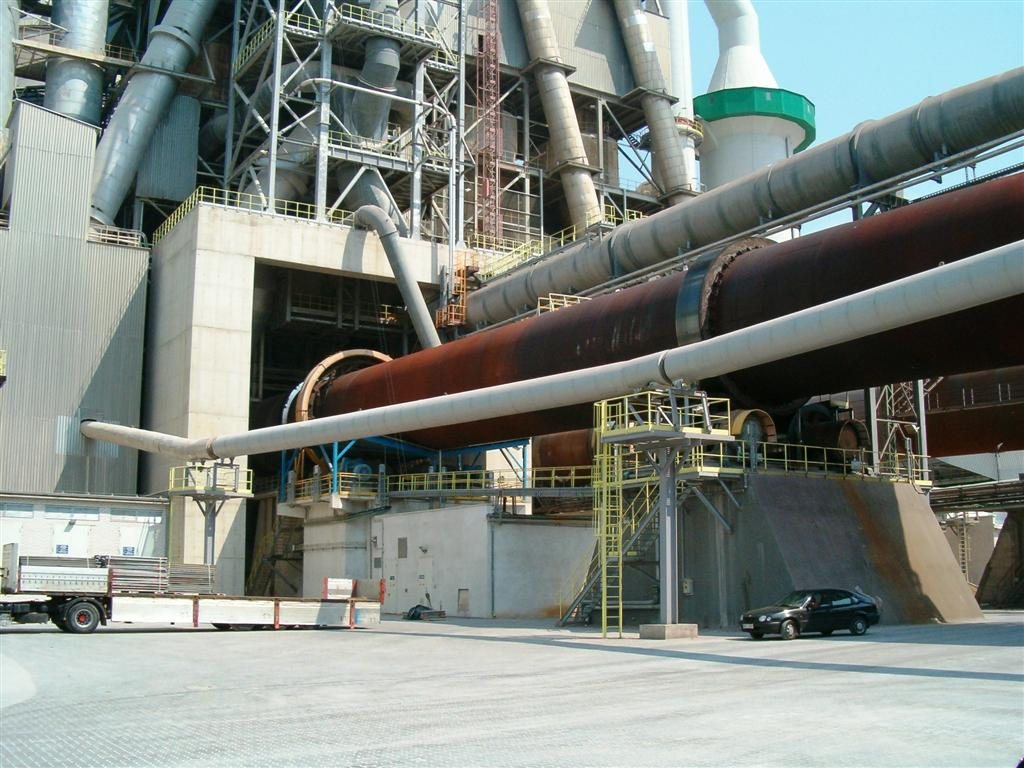
Powdered limestone and clay cooked at 1,450 C, which sets hard when mixed with water — the glue that holds concrete together.
لماذا يهم هذا؟
Concrete is the most-used material on Earth after water, and cement making is roughly seven to eight percent of global CO2 emissions.
Where it is in the Earth
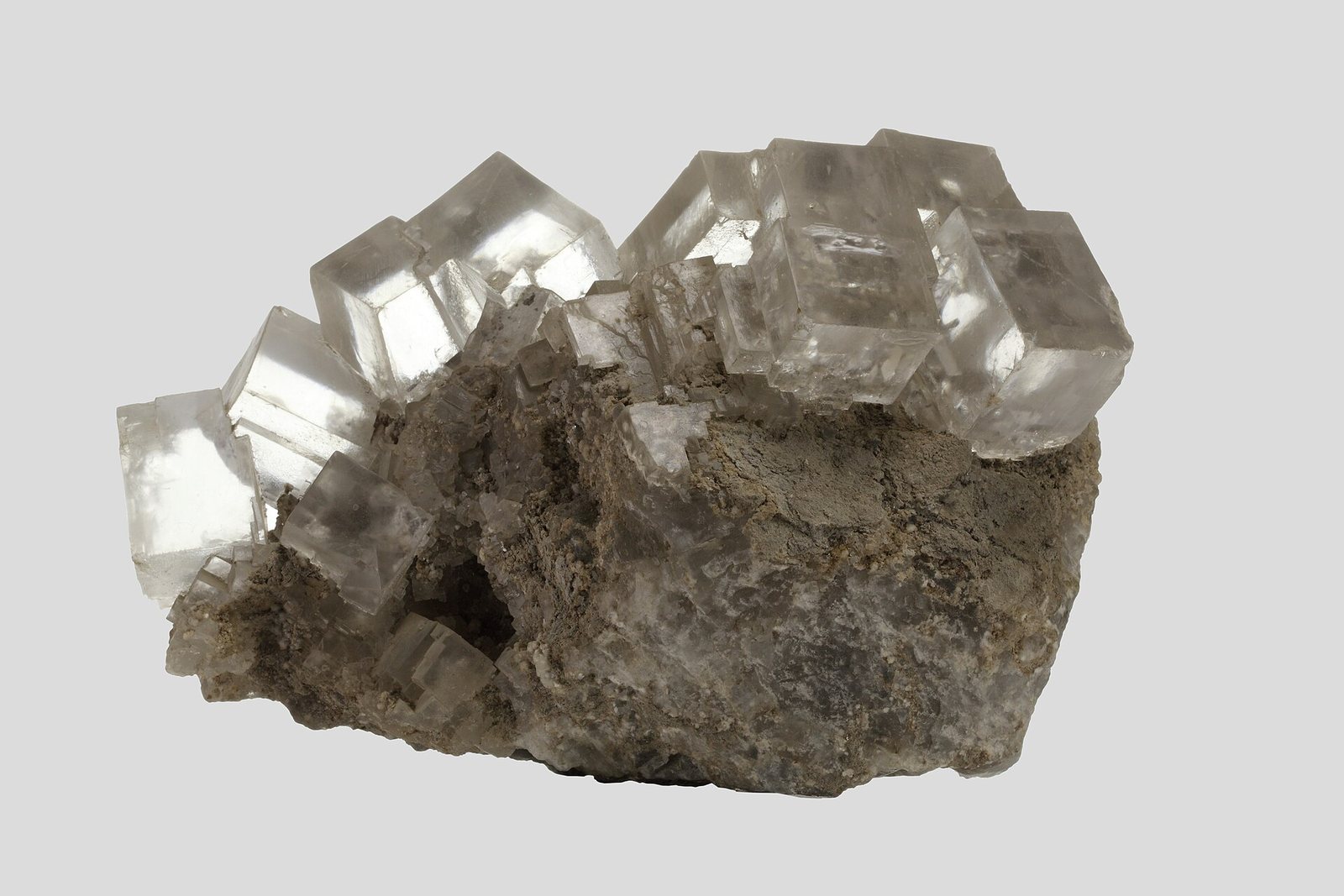
Cement is not made from a rare or exotic mineral. Its principal raw material is limestone, a sedimentary rock composed mainly of calcium carbonate (CaCO₃), which forms when calcium-rich shells and skeletal fragments accumulate on shallow sea floors and gradually compact and recrystallise over millions of years. Limestone is one of the most abundant rock types on the continental surface, and that abundance is precisely why cement can be manufactured in almost every country on Earth. The secondary raw material is a source of silica, alumina, and iron — typically clay, shale, or marl — which provides the compounds that give the final cement its hydraulic properties, meaning its ability to harden in the presence of water.
The deposits that matter are not rare occurrences but simply thick, pure, accessible limestone formations close to fuel and population. Purity matters: a limestone with a high calcium carbonate content and low amounts of magnesium, alkalis, or organic matter requires less blending and produces a more consistent clinker (the intermediate nodular product made inside the kiln before final grinding). Marl — a naturally occurring mixture of calcium carbonate and clay — is particularly convenient because it contains both the calcareous and aluminosilicate components in a single rock, reducing the need for a separate clay quarry. The map of cement production therefore tracks, broadly, the map of sedimentary basins, which is nearly everywhere people have built cities.
There is no meaningful concept of a mineral grade for limestone in the way that gold or copper ore is graded. What matters is the chemical composition — chiefly the calcium-to-silica ratio — and the proximity of adequate reserves to a kiln. Because limestone is heavy and cheap relative to its weight, transport costs dominate the economics of raw material supply, and virtually every large cement plant sits adjacent to or within a few kilometres of its own quarry.
Getting it out
Limestone for cement is quarried in open pits, almost without exception. The rock lies at or close to the surface over wide areas, which makes underground mining unnecessary and uneconomical. A typical quarry operates by drilling rows of holes into the rock face, loading them with explosives, and blasting to break the limestone into fragments small enough for primary crushing. Wheel loaders and large dump trucks then carry the broken rock to a primary crusher, where it is reduced to pieces roughly the size of a human fist before conveyor belts carry it to the cement plant.
Because limestone is abundant and the rock itself is the product — not a trace constituent within a host rock — there is very little waste in the conventional sense. The overburden, meaning the soil and non-limestone material above the deposit, must be stripped away before quarrying can begin, but once the limestone bench is exposed, nearly all of it can be used. Blending is the main operational challenge: the quarry manager must mix rock from different faces of the pit to keep the feed to the kiln within a narrow chemical specification. Where the natural rock is too high in silica or too low in calcium, a corrective material such as iron ore, bauxite, or pure calcium carbonate is added in small quantities. The scale of these quarries is large — a single plant typically consumes millions of tonnes of limestone per year — but because the resource is widespread and not geologically restricted, permitting and land access are the more common constraints on expansion, not geological scarcity.
What pulls on it
Almost all cement goes into concrete, which in turn goes into construction — buildings, roads, bridges, dams, ports, and the other fixed structures that underpin urbanisation. Demand therefore tracks population growth, economic development, and the rate at which societies build permanent infrastructure. Countries in early or middle stages of urbanisation consume cement at a far higher rate per person than mature economies, where most of the building stock already exists and activity is dominated by renovation rather than new construction. China's share of global production — roughly 1,700,000 thousand metric tonnes out of a world total of 3,800,000 thousand metric tonnes in 2025 — reflects the extraordinary pace of Chinese infrastructure and housing construction over recent decades, though that rate of growth has slowed as the country's urbanisation matures. India's figure of 470,000 thousand metric tonnes reflects a younger urbanisation curve still ascending.
Cement demand is almost entirely domestic. Because it is heavy, low in value per tonne, and produced from limestone that is available nearly everywhere, the economics of long-distance ocean freight are marginal. International trade flows mainly arise from regional imbalances — countries with insufficient production capacity importing from neighbours with surplus capacity — rather than from geological scarcity. The U.S. net import reliance figure of 21 percent for 2025 is notable precisely because it reflects a gap between domestic demand and domestic production capacity, filled largely by imports from Turkey, Canada, Vietnam, and Greece. For a material this bulky and this widely produced, that level of import dependence signals that domestic plant construction has not kept pace with demand rather than that the United States lacks the limestone to make cement.
Demand could change sharply in two directions. On the upside, large infrastructure programmes — roads, housing, water systems — in South and Southeast Asia and Sub-Saharan Africa represent the continuation of a long-running trend. On the downside, a sustained shift toward lower-clinker blended cements, or the adoption of alternative binders, would reduce the volume of traditional Portland cement required per unit of construction output. Neither trend is fast-moving; the construction industry adopts new materials slowly because structural failure carries severe consequences and building codes change over years, not months.
من أين يأتي في الصخر
جميع المعادن الخامة →هذه هي المعادن التي تحمل فعلياً cement. لا يُعدّ الرسوب خاماً إلا إذا كان تركيز أحد معادنه كافياً لتغطية تكاليف استخراجه.
من ينتجه
اعرضه على خريطة →Cement production
Cement productionthousand metric tons 2025 (مُقدَّر) المجموع العالمي 3,800,000 thousand metric tons
USGS Mineral Commodity Summaries 2026 · Hydraulic cement production, gross weight. · المصدر ↗
مرِّر الجدول أفقياً لعرض الأعمدة المتبقية.
| الدولة | الإنتاج | حصة من العالم |
|---|---|---|
| China | 1,700,000 | 44.7% |
| India | 470,000 | 12.4% |
| Vietnam | 100,000 | 2.6% |
| Turkey | 89,000 | 2.3% |
| United States | 84,000 | 2.2% |
| Iran | 68,000 | 1.8% |
| Brazil | 67,000 | 1.8% |
| Egypt | 64,000 | 1.7% |
| Indonesia | 64,000 | 1.7% |
| Russia | 59,000 | 1.6% |
| Saudi Arabia | 54,000 | 1.4% |
| Japan | 44,000 | 1.2% |
| Mexico | 42,000 | 1.1% |
| Korea, Republic of | 37,000 | 1.0% |
| المجموع العالمي | 3,800,000 | 100% |
«محجوب» يعني أن USGS أخفى الرقم تفاديًا للإفصاح عن بيانات شركة بعينها — وهو لا يعني صفرًا. لا يُساوي مجموع صفوف الدول دائمًا المجموع العالمي لأن المصدر يُقرِّب كل رقم باستقلالية ولا يُفصِّل دائمًا خانة «دول أخرى».
السعر
average mill unit value, dollars per metric ton
المتوسط السنويdollars per metric ton
الأساس: average mill unit value, dollars per metric ton. متوسطات سنوية كما نُشرت في USGS Mineral Commodity Summaries 2026 · المصدر ↗. هذه متوسطات سنوية مرجعية، وليست أسعار سوق آنية.
ما الذي يُستخدم فيه
جميع الأسواق النهائية →| السوق النهائية | ما الذي يؤديه هناك | الأهمية |
|---|---|---|
| Construction & Steel | Concrete | تعريف |