从矿石到产品,全程溯源
The Materials Atlas
材料 矿山与矿床 加工与精炼 溯源记录 供应链 企业 国家/地区 资讯
按货架浏览材料 电池材料 稀土元素 铜与电气 半导体材料 核材料 航空航天与国防 贵金属 钢铁与合金金属 工业矿物 农业矿物 能源原材料 矿石矿物 元素周期表
需求 终端市场 技术 材料计算器 地图 筛选器
学习与工具 了解术语表 数据问答AI智能体 研究与数据API ★ 已保存
关于 关于我们方法论 数据来源联系我们 免责声明
阅读选项
🧭 引导视图 初次接触矿石品位、精矿、精炼、副产品等概念?我们在您浏览时对每个术语进行解释,语言浅显易懂,数据相同,帮助内置其中。
⚡ 专家视角 您已熟悉这一行业,直接看数据即可——简洁、快速、紧凑,无附加说明。此为默认视图。
主题
界面语言
深度 材料页面分四个级别撰写。在任意材料页面选择后,系统将记住您的选择。
★ 已保存 研究与数据
Caesium

航空航天与国防材料

Caesium Cs · 55

The softest metal, liquid on a warm day, and the element that defines the second.

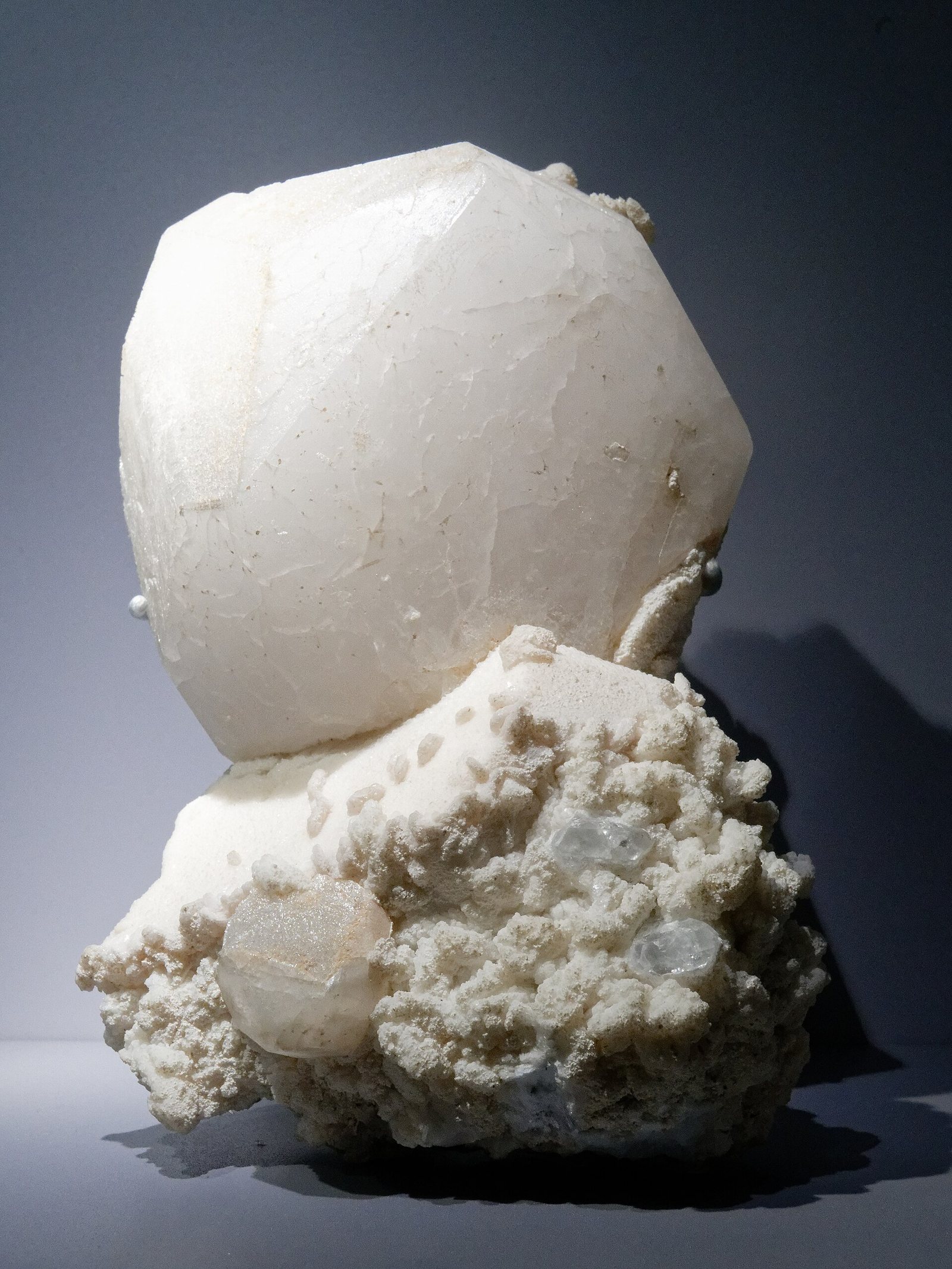
Pollucite Paprok MNHN Minéralogie · Marie-Lan Taÿ Pamart · CC BY 4.0 · Wikimedia Commons

这是什么?

The softest metal, liquid on a warm day, and the element that defines the second.

为何重要?

The international definition of a second is a count of caesium-133 transitions, so GPS, financial timestamps and the internet's clocks all trace back to this element.

Where it is in the Earth

Caesium is one of the alkali metals, a family of elements that share a strong tendency to bond with other substances rather than sit alone in the ground. Because it is so reactive, caesium is never found as a free metal in nature; instead it is locked inside silicate minerals, most importantly one called pollucite. Pollucite belongs to a mineral group known as zeolites, which have an open, cage-like crystal structure capable of accommodating large atoms. Caesium, being an unusually large atom for a metal, fits neatly into those cages in a way that smaller elements cannot, and so it becomes trapped there as the mineral crystallises.

The rock bodies that contain economically meaningful concentrations of pollucite are called granitic pegmatites. A pegmatite is an igneous rock — one that solidified from molten material — but it cooled extraordinarily slowly and in the presence of water and other volatile compounds. This slow, wet crystallisation allows ions to migrate over long distances and accumulate, which is why pegmatites tend to concentrate elements that are otherwise dispersed too thinly to recover. Caesium, lithium, rubidium, tantalum and beryllium are all characteristic pegmatite passengers. The geological term for elements that tend to concentrate in the last, most evolved fraction of a cooling magma is incompatible, meaning that they do not fit easily into the common rock-forming minerals that crystallise first, and so they are progressively enriched in the remaining melt.

Only a very small number of pegmatite bodies worldwide have ever produced pollucite in quantities worth mining. The deposit type is rare not because caesium is vanishingly scarce in the Earth's crust — it is actually more abundant than several metals in everyday use — but because the particular combination of geological conditions needed to concentrate it into mineable pollucite seldom occurs. Known world reserves, as reported by the USGS, are estimated at less than 200,000 tons in total across all countries, a figure that underscores how tightly the supply base is geographically confined.

Getting it out

Because caesium occurs in hard-rock pegmatite bodies rather than in sedimentary layers or brines, the mining methods used are those suited to solid crystalline rock. Where a pollucite-bearing pegmatite is close to the surface and the overlying material is not too thick, open-pit mining — removing rock in a series of stepped benches cut downward from the surface — is practical. Where the orebody is deeper or the geometry favours it, underground methods are used instead, with tunnels driven to follow the pegmatite. In either case the objective is the same: selectively extract the pollucite-rich zones without diluting them excessively with barren host rock.

The concept of grade matters here. Grade refers to the concentration of the element of interest in the ore — the raw rock that is actually mined. In caesium's case the relevant figure is the proportion of pollucite in the pegmatite, and the caesium content of that pollucite. Higher-grade zones require less rock to be processed for the same output, which directly affects operating costs. Pollucite is visually distinctive enough — it tends to be pale, almost glassy — that experienced miners and geologists can identify it in the pit or tunnel face, allowing some degree of hand-sorting or selective blasting to separate richer material from waste.

One important practical feature of caesium mining is that it often occurs alongside, or as a consequence of, mining for lithium or tantalum from the same pegmatite. In those cases caesium is a by-product, meaning that the economics of extracting it depend partly on what the primary operation is doing. If the mine is running primarily for lithium, the decision to also process pollucite depends on whether the additional revenue justifies the additional handling. This by-product relationship means that caesium supply is not entirely independent: it is linked to decisions made in adjacent commodity markets.

What pulls on it

The two largest uses of caesium sit in quite different parts of the economy and pull on the material in different ways. Caesium formate is used as a drilling fluid in the oil and gas industry. A drilling fluid circulates down the borehole during drilling, carrying rock cuttings back to the surface and maintaining pressure in the well to prevent blowouts. The usefulness of caesium formate in this role comes from its exceptionally high density when dissolved in water: a very dense fluid can balance the pressures found in deep, high-temperature, high-pressure reservoirs without requiring the addition of solid particles that could damage the formation. Demand from this sector tracks activity in deep and ultra-deep oil and gas drilling, and caesium formate has the additional commercial advantage of being recoverable and recyclable at the wellsite, so the same fluid can be reused across multiple jobs.

Caesium metal and its compounds serve a much smaller but technically exacting market in atomic timekeeping. An atomic clock works by counting the frequency of a specific quantum transition — a jump between two energy states — in caesium-133 atoms. That transition has a defined frequency, and it is this definition that makes caesium the basis for the international standard of time, the second. The clocks themselves are used in GPS satellites and ground receivers, in telecommunications infrastructure where timing accuracy prevents data collisions, and in scientific metrology. The quantities of caesium involved per clock are small, but the applications are ones where no acceptable substitute currently exists at the required performance level.

A change in demand would require either a significant shift in drilling activity, particularly for the deep wells where caesium formate is most cost-effective, or a technological transition in atomic timekeeping. Research into optical atomic clocks based on other elements — strontium, ytterbium and others — is active, and these newer designs can outperform caesium clocks in precision. Whether and when they displace caesium in operational infrastructure depends on cost, regulatory redefinition of the second, and the pace at which network operators replace existing equipment, none of which is imminent at the time of writing.

正确读取数据。 Production is not published; supply comes from very few pollucite deposits. Caesium formate drilling fluid, and metal for atomic clocks.

储量持有方

"储量"是一个严格的术语。它是指已知矿床中,按当前价格和当前技术,在经济上可行的可采部分——而非地下所有存量。当价格上涨或新工艺出现时,储量增加;当价格下跌时,储量减少。

Australia, Canada, China, and Namibia were estimated to have reserves totaling less than 200,000 tons

Australia, Canada, China, and Namibia were estimated to have reserves totaling less than 200,000 tonstons 2025

USGS Mineral Commodity Summaries 2026 · 来源 ↗

国家/地区储量占全球份额
Other countries <200,000

材料

所有材料 关键矿产 稀土 电池材料 矿石矿物 元素周期表 筛选器

地层

矿山与矿床 加工与精炼 国家/地区 地图

经济体

溯源记录 供应链 终端市场 技术 企业 材料计算器

了解

了解术语表 数据问答AI智能体 研究与数据开放 API 资讯★ 已保存

关于我们

关于我们联系我们 方法论数据来源 编辑方针 隐私政策使用条款 免责声明