암석에서 제품까지, 추적
The Materials Atlas
소재 광산 및 광상 가공 및 정제 인수인계 여정들 공급망 기업 국가 뉴스
분류별 소재 배터리 소재 희토류 원소 구리 및 전기 반도체 소재 핵 물질 항공우주 및 방위 귀금속 철강 및 합금 금속 산업용 광물 농업용 광물 에너지 원자재 광석 광물 주기율표
수요 최종 시장 기술 소재 계산기 지도 스크리너
학습 및 도구 학습용어집 데이터에 묻기AI 에이전트 조사 및 데이터API ★ 저장됨
소개 소개방법론 데이터 출처문의 면책 조항
읽기 옵션
🧭 안내 보기 광석 품위, 정광, 정제, 부산물 등의 용어가 생소하신가요? 탐색하는 동안 모든 용어를 쉬운 말로 설명해드립니다. 동일한 데이터에 도움말이 내장되어 있습니다.
⚡ 전문가 보기 업계 사정에 익숙한 이용자를 위한 뷰. 데이터만, 군더더기 없이, 빠르고 간결하게, 추가 설명 없이 제공된다. 기본 보기로 설정되어 있다.
테마
인터페이스 언어
심도 소재 페이지는 네 가지 수준으로 작성되어 있습니다. 소재 페이지에서 수준을 선택하면 해당 설정이 기억됩니다.
★ 저장됨 조사 및 데이터
Feldspar & Nepheline Syenite

산업용 광물

Feldspar & Nepheline Syenite

The most abundant mineral group in the crust, used as the flux that lets glass and ceramic melt at a workable temperature.

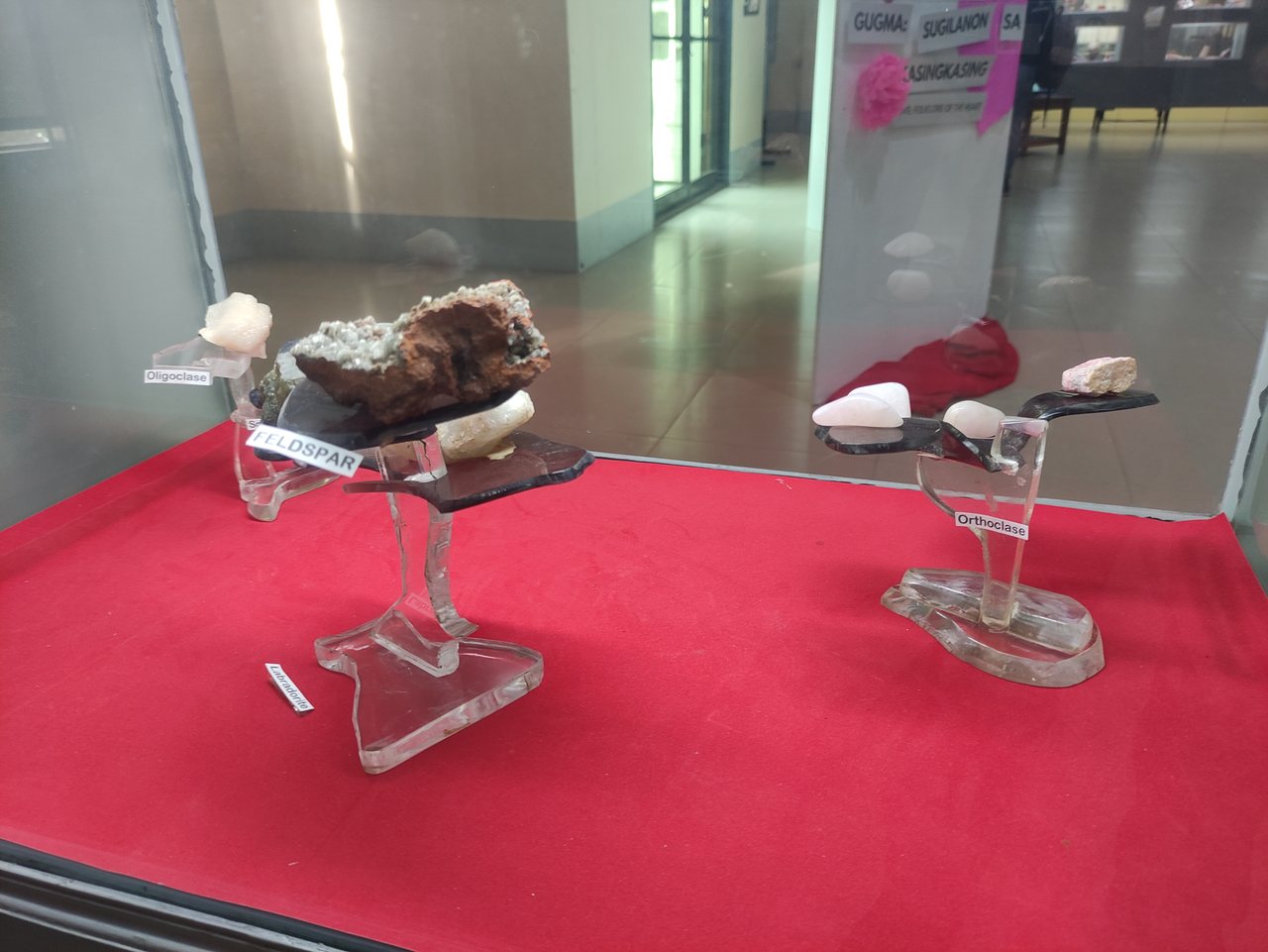
Feldspar Mineral Museum Display Exhibit · QueenCityCebu · CC BY-SA 4.0 · Wikimedia Commons

이것은 무엇인가?

The most abundant mineral group in the crust, used as the flux that lets glass and ceramic melt at a workable temperature.

왜 중요한가?

Without a flux, glass would have to be melted hundreds of degrees hotter. Feldspar is a quiet energy saving on an enormous scale.

Where it is in the Earth

Feldspar is not a single mineral but a family of closely related silicate minerals built from silicon, oxygen, aluminium, and varying proportions of potassium, sodium, and calcium. Because these elements are among the most common in the Earth's crust, feldspar ends up in nearly every type of igneous rock — granite, syenite, rhyolite, and their volcanic equivalents — as well as in many metamorphic rocks that have been recrystallised under heat and pressure. The sheer abundance of feldspar in the crust is what makes it commercially interesting: the challenge is not finding it but finding it in a form that can be separated cleanly from quartz, mica, and other minerals that arrive alongside it.

Nepheline syenite is a different but related material. It forms when silica-poor magma solidifies and produces a rock rich in nepheline (a sodium-potassium aluminium silicate) rather than quartz. Because quartz is absent, nepheline syenite carries a higher aluminium oxide and alkali content than most feldspathic granites, which matters to the glass and ceramics industries for reasons explained under demand. The largest nepheline syenite deposits are associated with ancient, deeply eroded alkaline igneous complexes — the kind that form when unusual, silica-depleted melts intrude continental crust over millions of years.

Commercially worked feldspar deposits tend to cluster in pegmatites and in weathered or hydrothermally altered granite masses. Pegmatites are very coarse-grained igneous bodies that crystallise slowly from residual, water-rich magma, and the slow cooling allows individual feldspar crystals to grow large enough to separate mechanically. Countries such as Turkey and India sit on extensive belts of granitic and pegmatitic terrain, which explains why they appear so prominently in the production figures. China and Iran have broadly comparable geology. European producers, particularly Italy and Spain, have historically served the ceramic tile industry with feldspar from pegmatite districts close to their main consuming regions.

Getting it out

Almost all feldspar and nepheline syenite is won by open-pit mining, a method well suited to deposits that are broad, relatively shallow, and hosted in rock that does not require deep underground access. In an open pit, overburden — the soil and waste rock covering the ore — is stripped away by excavators and trucks, and the exposed feldspar-bearing rock is drilled, blasted, and loaded for transport to a processing plant nearby. Because feldspar deposits are typically massive and relatively uniform rather than narrow veins, open-pit operations can be designed to move material efficiently and at low cost per tonne.

The concept of grade matters differently here than in metal mining. There is no single percentage of feldspar in the rock that defines whether something is ore or waste; instead, the relevant qualities are the alkali content (how much potassium and sodium the feldspar carries), the iron content (which must be low to avoid discolouring glass or ceramics), and the particle size that can be achieved after grinding. A deposit that is mineralogically abundant but contains enough iron-bearing minerals to stain the product may be unworkable for premium end uses, even if it is physically straightforward to extract. The ratio of waste rock moved to marketable product shipped depends on deposit geometry and how much of the mined rock falls below specification, but for well-situated pegmatite quarries the ratio is generally modest compared with hard-rock metal mines.

Nepheline syenite operations follow the same broad approach, though the rock tends to be harder and more uniform, which influences blasting patterns and crusher settings. Because the deposits are often free of quartz — quartz is an impurity that must be removed in processing — the selectivity required at the mining stage can be less demanding than for feldspar from granitic sources, where quartz and feldspar are intimately intergrown and must be separated later by flotation.

What pulls on it

The single largest use of feldspar and nepheline syenite is as a flux in glass and ceramics manufacturing. A flux, in this context, is a material that lowers the temperature at which a mixture melts. Pure silica — the main ingredient in glass — has a melting point far beyond what most industrial furnaces can sustain economically. Adding feldspar introduces alkali oxides (principally potassium oxide and sodium oxide) that disrupt the silica network and bring the melting temperature down to a range that is commercially practical. The same logic applies in ceramic bodies and glazes: feldspar acts as a bonding phase that develops during firing and binds the other ingredients together. This is not a marginal contribution. As the plain definition on this page notes, feldspar represents a quiet energy saving repeated across an enormous industrial base.

The ceramic tile industry has historically been the dominant consumer, and its geography closely tracks where global feldspar production is concentrated. Countries producing large quantities of ceramic tiles — and the construction activity that absorbs them — drive a substantial share of demand. Sanitary ware, tableware, and technical ceramics also consume feldspar, though in smaller volumes. Flat glass (used in buildings and vehicles) and container glass are significant glass-sector consumers. Paints, rubber, and plastic fillers absorb a smaller share of output, typically the finer grades or material that does not meet the chemical specification for glass or ceramics.

Demand would shift materially if construction activity in major consuming economies fell sharply, since ceramic tiles and flat glass are strongly tied to the construction cycle. Conversely, growth in construction in South and South-east Asia has underpinned rising output from India, Iran, and Thailand over recent years. There is no obvious large new application on the horizon that would dramatically change the overall scale of consumption, and no technology trend that is rapidly eliminating feldspar from its existing uses. The material is not associated with any high-growth technology sector in the way that lithium or cobalt are, which means its demand profile is relatively steady and tied closely to broader economic and construction conditions.

Turning ore into product 수준 3

Run-of-mine feldspar rock arrives at the plant as irregular fragments that must first be reduced in size through a series of crushing and grinding steps — a process collectively called comminution. Jaw crushers and cone crushers handle the coarser stages; rod mills or ball mills grind the material down to the fine particle sizes that glassmakers and ceramicists require. The particle size distribution of the final product is itself a specification: too coarse and the flux does not dissolve uniformly in a melt; too fine and handling and dust suppression become expensive.

Separation of feldspar from quartz and mica is achieved primarily by froth flotation, a technique in which surface-active reagents called collectors are added to a slurry of ground mineral particles. The collectors adsorb selectively onto the surfaces of target minerals, making them hydrophobic (water-repelling), so that air bubbles introduced into the slurry attach to those particles and carry them to the surface as a froth, while the unwanted gangue minerals sink. In feldspar processing, flotation circuits are typically run under acidic conditions to float feldspar away from quartz, or alternatively to float mica away first. Iron-bearing minerals — principally biotite mica, hornblende, and iron oxides — are the most commercially damaging impurities because even small quantities produce colour in fired ceramics or glass, so their removal is a primary objective. High-intensity magnetic separation is used after flotation to strip out any residual iron minerals whose magnetic susceptibility distinguishes them from the feldspar product.

Nepheline syenite processing is somewhat simpler where the host rock is already low in quartz and coarse iron minerals. The main steps are comminution and classification by particle size, with magnetic separation to remove iron minerals. Because nepheline syenite commands a modest price premium over standard feldspar — visible in the price data on this page — the economics of processing must be managed carefully: the value uplift from additional purification stages must be weighed against the cost of reagents, water, and energy. Losses occur at every stage of comminution and separation; material finer than the commercial specification either goes to lower-value filler markets or is discarded. Water management and tailings disposal are the main environmental engineering considerations at most operations, since the volumes of process water and fine waste generated per tonne of marketable product are substantial.

Substitution and recycling 수준 3

Within glassmaking, the alkali oxides that feldspar and nepheline syenite supply can also come from other raw materials: soda ash (sodium carbonate) for sodium oxide, potassium carbonate for potassium oxide, and various other mineral sands. The practical advantage of feldspar over these alternatives is that it delivers aluminium oxide alongside the alkalis, and that combined contribution improves the durability and chemical resistance of the finished glass or ceramic body. A pure soda ash addition would meet the fluxing requirement but would not replicate the aluminium oxide contribution without an additional ingredient, adding cost and complexity. Nepheline syenite is preferred over standard feldspar in certain applications precisely because its higher aluminium oxide and alkali content allows glassmakers to achieve the same effect with a smaller addition, and because its absence of free quartz reduces the risk of silica-related defects in the melt.

Wollastonite, talc, and calcium carbonate serve as partial substitutes in some ceramic body formulations, particularly where a white, low-iron body is required and local feldspar supplies are costly. However, these substitutes do not replicate the full fluxing behaviour of feldspar at typical ceramic firing temperatures, and their use often requires reformulation of the body recipe rather than simple substitution. For fillers and extenders in paints and plastics, ground calcium carbonate and kaolin are the main alternatives and are generally cheaper; feldspar's role in those applications is already residual.

Recycling plays essentially no role in the supply of feldspar or nepheline syenite. Once fired into glass or ceramic, the material is chemically transformed and physically bound into the product; it cannot be recovered as feldspar. Cullet — broken or waste glass — is recycled into new glass production, and this does reduce the total raw material input required per tonne of glass, but the recovered material functions as a glass rather than as feldspar. There is therefore no secondary supply stream to consider, and the market is entirely dependent on freshly mined and processed primary material.

수치를 올바르게 읽으십시오. Gross weight of marketable product. Ground feldspar and nepheline syenite by particle size and alkali content.
이 소재에 대해 둘 이상의 시리즈가 발행되어 있습니다. USGS는 이들을 별도로 보고하는데, 측정 대상이 다르기 때문입니다 — 광산 생산량과 정제 생산량, 또는 서로 다른 화학적 기준. 별도의 표로 표시되며, 절대 합산해서는 안 됩니다.

Mine production

Mine productionthousand metric tons 2025 (추정치) 세계 합계 31,000 thousand metric tons

USGS Mineral Commodity Summaries 2026 · Gross weight of marketable product. · 출처 ↗

나머지 열을 보려면 표를 옆으로 스크롤하십시오.

국가생산 세계 비중
India 6,000 19.4%
Turkey 5,300 17.1%
Iran 3,900 12.6%
China 3,700 11.9%
Other countries 3,400 11.0%
Italy 2,200 7.1%
Thailand 1,900 6.1%
Korea, Republic of 1,000 3.2%
Morocco 720.0 2.3%
Russia 650.0 2.1%
Saudi Arabia 650.0 2.1%
United States 440.0 1.4%
세계 합계 31,000100%

Mine production: beneficiated, marketable

Mine production: beneficiated, marketablethousand metric tons 2025 (추정치)

USGS Mineral Commodity Summaries 2026 · Gross weight of marketable product. · 출처 ↗

나머지 열을 보려면 표를 옆으로 스크롤하십시오.

국가생산 세계 비중
Brazil 620.0

Mine production: includes pegmatites

Mine production: includes pegmatitesthousand metric tons 2025 (추정치)

USGS Mineral Commodity Summaries 2026 · Gross weight of marketable product. · 출처 ↗

나머지 열을 보려면 표를 옆으로 스크롤하십시오.

국가생산 세계 비중
Spain 620.0

'비공개'는 USGS가 개별 기업의 데이터 노출을 막기 위해 수치를 억제한 것으로, 0을 의미하지 않습니다. 출처가 각 수치를 독립적으로 반올림하고 '기타 국가' 항목을 항상 별도로 구분하지는 않기 때문에, 국가별 합계가 세계 합계와 일치하지 않을 수 있습니다.

매장량 보유 주체

'매장량'은 엄밀한 용어입니다. 현재의 가격과 현재의 기술로 경제적으로 채굴 가능한 것으로 확인된 광상의 일부를 의미하며, 지하에 존재하는 모든 양을 가리키는 것이 아닙니다. 매장량은 가격이 오르거나 새로운 공정이 개발되면 증가하고, 반대의 경우에는 감소합니다.

Reserves

Reservesthousand metric tons 2025

USGS Mineral Commodity Summaries 2026 · 출처 ↗

국가매장량세계 비중
China 730,000
Turkey 720,000
India 320,000
Korea, Republic of 200,000
Iran 130,000
Thailand 45,000
United States Not applicable
Italy Not applicable
Morocco Not applicable
Russia Not applicable
Saudi Arabia Not applicable
Other countries Not applicable
세계 합계 Large100%

Reserves: beneficiated, marketable

Reserves: beneficiated, marketablethousand metric tons 2025

USGS Mineral Commodity Summaries 2026 · 출처 ↗

국가매장량세계 비중
Brazil 150,000

Reserves: includes pegmatites

Reserves: includes pegmatitesthousand metric tons 2025

USGS Mineral Commodity Summaries 2026 · 출처 ↗

국가매장량세계 비중
Spain Not applicable

가격

average unit value, dollars per metric ton: Nepheline syenite, imports

연간 평균dollars per metric ton

2021 · 164.0 높음 220.0 dollars per metric ton 2025 · 220.0

기준: average unit value, dollars per metric ton: Nepheline syenite, imports. 다음 자료에 게재된 연간 평균 USGS Mineral Commodity Summaries 2026 · 출처 ↗. 이 수치는 기준 연간 평균값이며, 실시간 시장 가격이 아니다.

average unit value, dollars per metric ton: Feldspar only, marketable production

연간 평균dollars per metric ton

2021 · 107.0 높음 110.0 dollars per metric ton 2025 · 110.0

기준: average unit value, dollars per metric ton: Feldspar only, marketable production. 다음 자료에 게재된 연간 평균 USGS Mineral Commodity Summaries 2026 · 출처 ↗. 이 수치는 기준 연간 평균값이며, 실시간 시장 가격이 아니다.

소재

전체 소재 핵심 광물 희토류 배터리 소재 광석 광물 주기율표 스크리너

지하

광산 및 광상 가공 및 정제 국가 지도

경제

인수인계 여정들 공급망 최종 시장 기술 기업 소재 계산기

학습

학습용어집 데이터에 묻기AI 에이전트 조사 및 데이터공개 API 뉴스★ 저장됨

소개

소개문의 방법론데이터 출처 편집 방침 개인정보 처리방침이용 약관 면책 조항