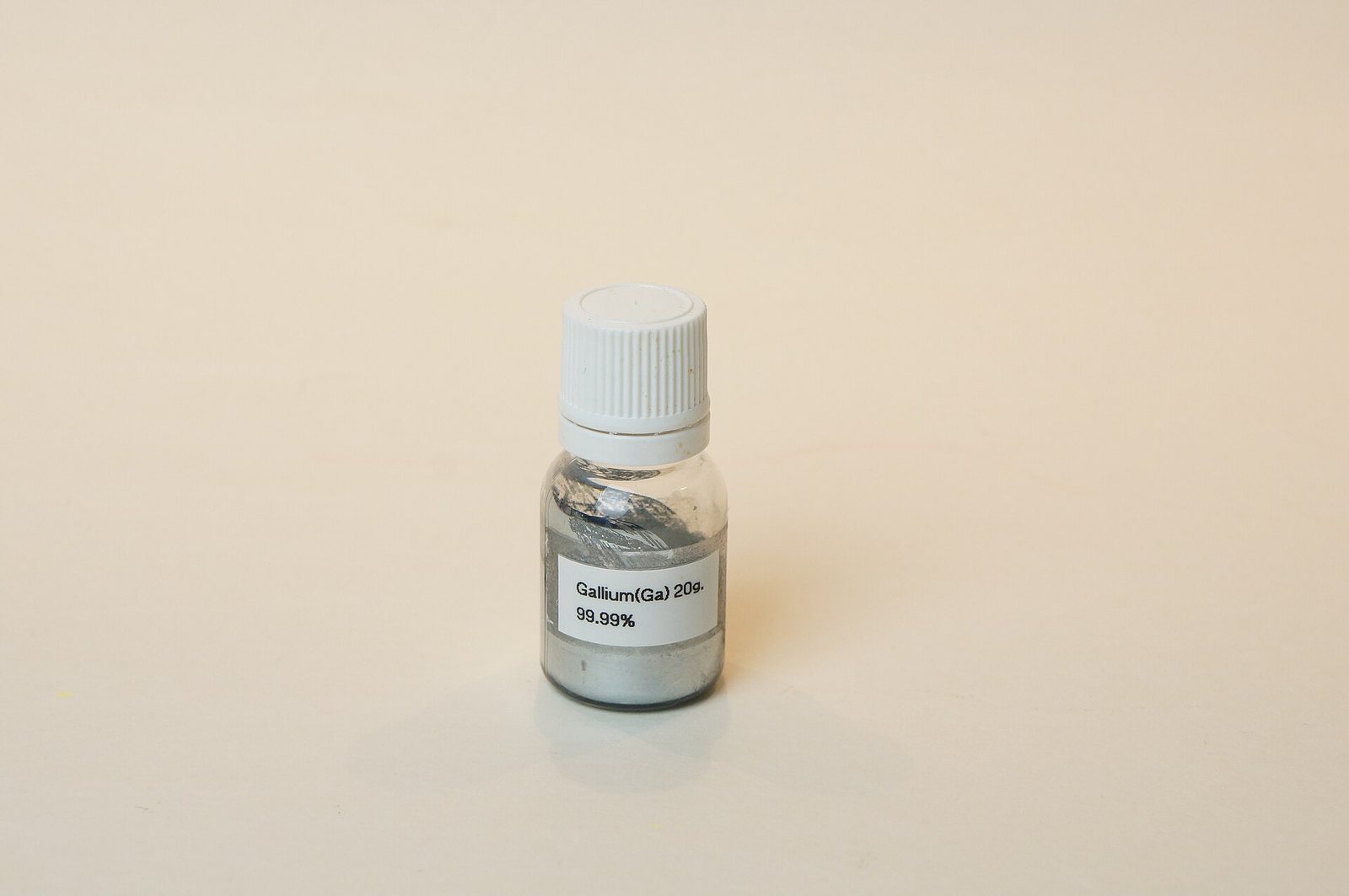
What is it?
A silvery metal that melts in your hand, and the basis of the compound semiconductors in fast chargers, radar and LEDs.
Why does it matter?
Gallium nitride switches far faster than silicon, which is why it appears in phone chargers, 5G base stations, radar and satellite power systems.
Deeper written sections for this material have not been published yet. Everything below is drawn straight from the source datasets and is complete.
Where it comes from in the rock
All ore minerals →These are the minerals that actually carry gallium. A deposit is only an orebody if one of them is concentrated enough to pay for digging it up.
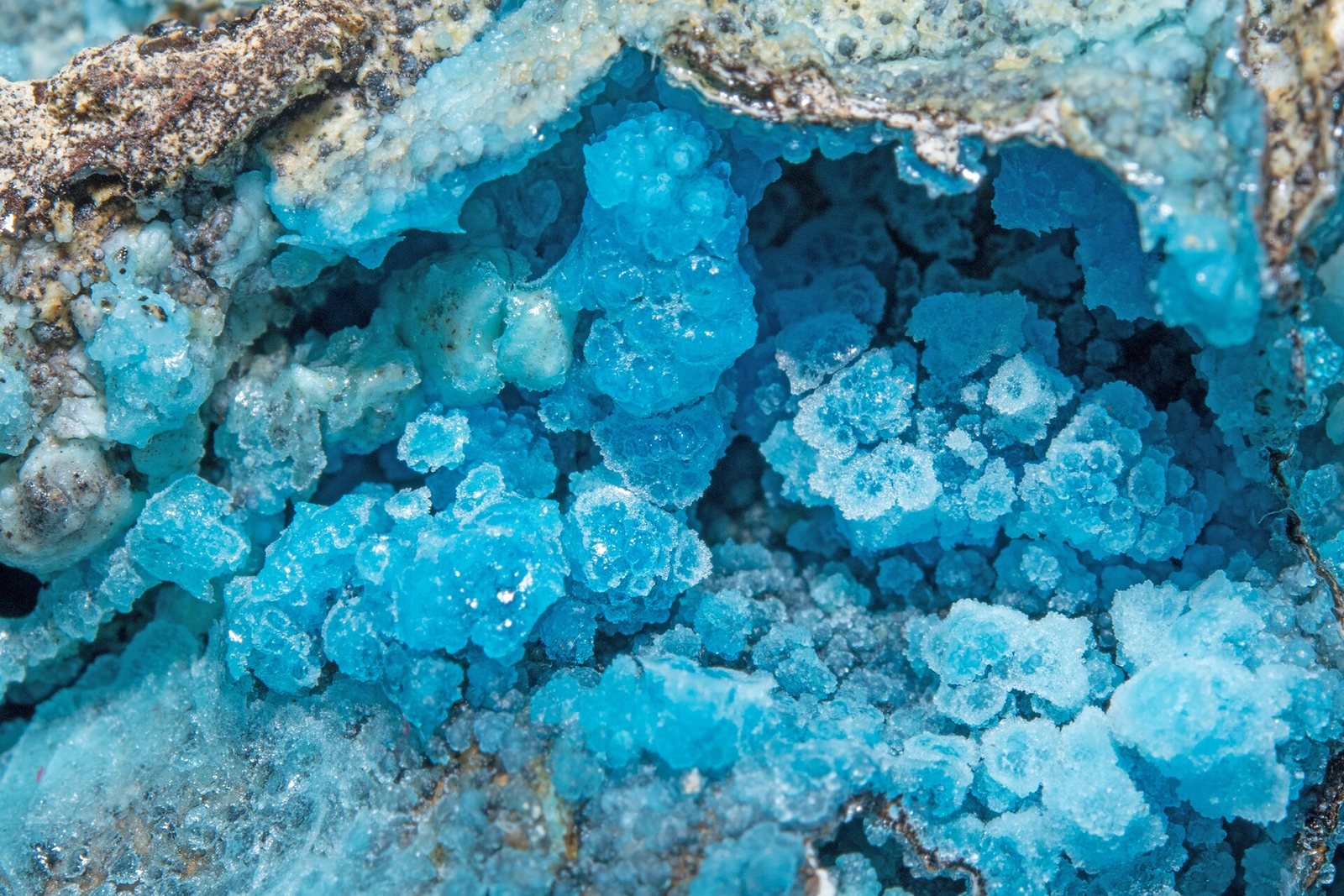
Bauxite (gibbsite/boehmite)
Not one mineral but a rock of aluminium hydroxides left after millions of years of tropical weathering.
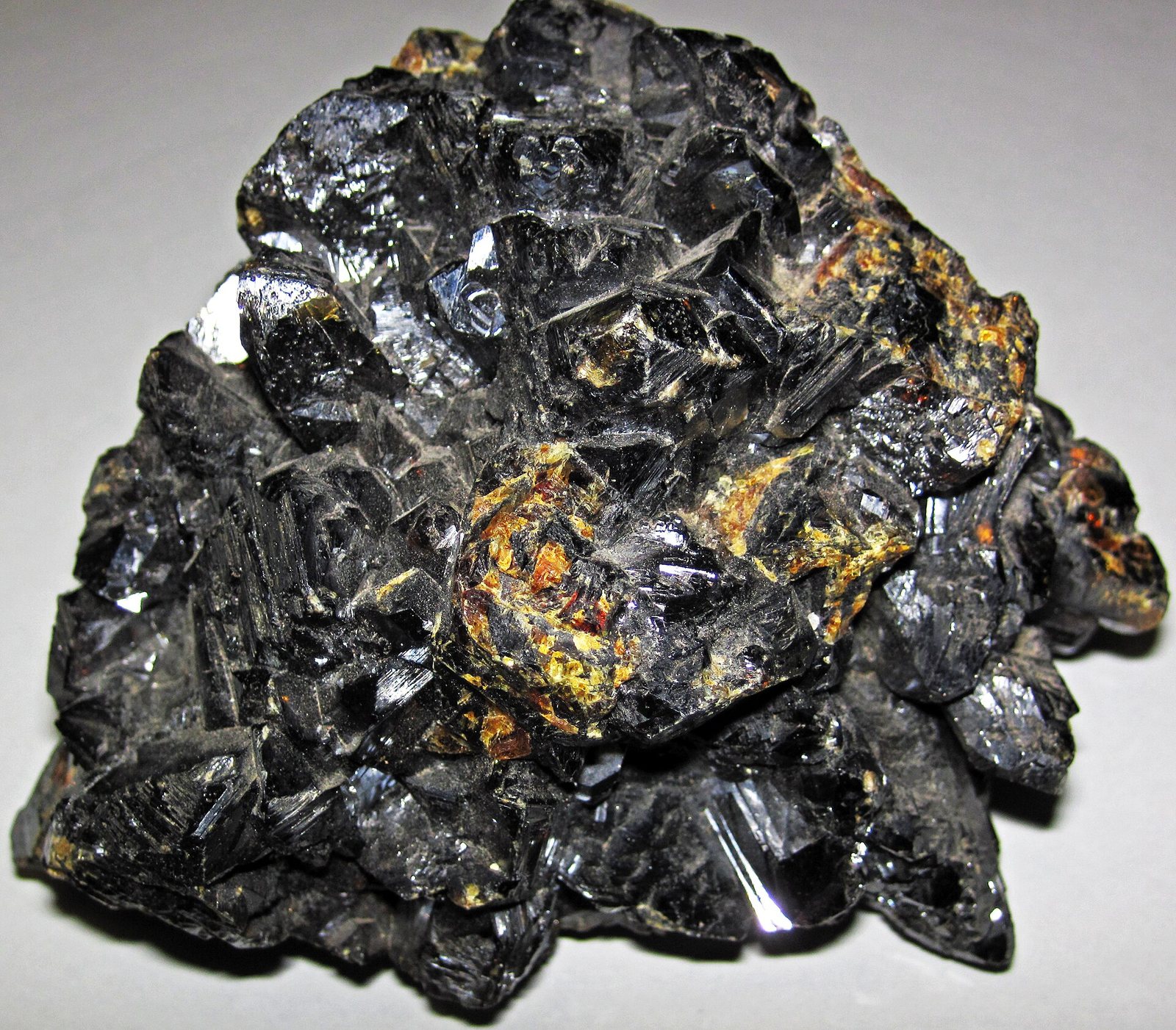
Sphalerite
The main zinc ore, and the world's main source of indium, germanium and gallium as trace substitutions in its lattice.
Who produces it
See it on a map →Primary production
Primary productionkilograms 2025 (estimated) World total 900,000 kilograms
USGS Mineral Commodity Summaries 2026 · Primary low-grade gallium production; recovered as a by-product of alumina refining and zinc processing. · source ↗
Scroll the table sideways for the remaining columns.
| Country | Production | Share of world |
|---|---|---|
| China | 900,000 | 100.0% |
| Russia | 6,000 | 0.7% |
| Japan | 3,000 | 0.3% |
| Other countries | Zero | — |
| United States | Zero | — |
| World total | 900,000 | 100% |
“Withheld” means the USGS suppressed the figure to avoid disclosing an individual company's data — it does not mean zero. Country rows do not always sum to the world total because the source rounds each figure independently and does not always break out an “other countries” line.
Price
average unit value of imports, dollars per kilogram
Annual averagedollars per kilogram
Basis: average unit value of imports, dollars per kilogram. Annual averages as published in USGS Mineral Commodity Summaries 2026 · source ↗. These are reference annual averages, not a live market quote.
Where it is processed and refined
| Plant | Kind | Stage | Country | Role |
|---|---|---|---|---|
| Bayer-Process Alumina Refineries, Western Australia | Refinery | Processing | Australia | Output |
What it is used for
All end markets →| End market | What it does there | Importance |
|---|---|---|
| Aerospace & Defence | Radar transmit-receive modules | Defining |
| Semiconductors | Compound semiconductors for RF and power | Defining |
| Data Centres & AI | High-efficiency power conversion | Important |
| Consumer Electronics | LED backlighting and RF front end | Important |
| Robotics & Automation | Efficient motor drive electronics | Important |
| Solar Power | CIGS thin film and cell doping | Present |
How much of it a technology needs
| Technology | Quantity | Quoted | Basis |
|---|---|---|---|
| Gallium Nitride Power Device Grams; the constraint is refining capacity, not tonnage. | trace | per device | Substrate and epitaxial layer |
Indicative range compiled from published technology studies and chemistry; verify against a manufacturer specification before use. Run these numbers at any scale in the material calculator →
Export controls
| Country | Control | Applies to |
|---|---|---|
| China | Export licensing requirement for materials and technologies | Antimony (2024), bismuth (2025), synthesized diamond (2025), gallium (2023), germanium (2023), graphite (2023), indium (2025), magnesium materials (2024), molybdenum (2025), rare earths (2025), silver (2026), tellurium (2025), tungsten (2025), and items related to lithium batteries and artificial graphite anode materials (2025). ↗ |
USGS Mineral Commodity Summaries 2026, table 4 — controls in effect as of January 2026, excluding controls since lifted.