Từ quặng đến sản phẩm, có truy xuất nguồn gốc
The Materials Atlas
Vật liệu Mỏ & mỏ quặng Chế biến & tinh luyện Các hành trình quyền sở hữu Các chuỗi cung ứng Công ty Quốc gia Tin tức
Vật liệu theo kệ Vật liệu pin Nguyên tố đất hiếm Đồng & Điện Vật liệu bán dẫn Vật liệu hạt nhân Hàng không vũ trụ & Quốc phòng Kim loại quý Thép & Kim loại hợp kim Khoáng vật công nghiệp Khoáng sản nông nghiệp Nguyên liệu thô năng lượng Các khoáng vật quặng Bảng tuần hoàn
Nhu cầu Các thị trường đầu ra Công nghệ Máy tính vật liệu Bản đồ Bộ lọc
Tìm hiểu & công cụ Tìm hiểuBảng thuật ngữ Hỏi dữ liệuTác nhân AI Nghiên cứu & dữ liệuAPI ★ Đã lưu
Giới thiệu Về chúng tôiPhương pháp luận Nguồn dữ liệuLiên hệ Tuyên bố miễn trách nhiệm
Tùy chọn đọc
🧭 Chế độ xem có hướng dẫn Mới với lĩnh vực này — hàm lượng quặng, quặng tinh, tinh luyện, sản phẩm phụ? Chúng tôi giải thích mọi thuật ngữ khi bạn duyệt, bằng ngôn ngữ dễ hiểu. Cùng dữ liệu đó, với phần hỗ trợ được tích hợp sẵn.
⚡ Chế độ xem chuyên gia Bạn đã hiểu ngành. Chỉ cần dữ liệu — rõ ràng, nhanh và gọn, không có giải thích thêm. Đây là chế độ xem mặc định.
Chủ đề
Ngôn ngữ giao diện
Độ sâu Các trang vật liệu được biên soạn ở bốn cấp độ. Chọn một cấp độ trên bất kỳ trang vật liệu nào và lựa chọn đó sẽ được ghi nhớ.
★ Đã lưu Nghiên cứu & dữ liệu
Gallium

Vật liệu bán dẫn

Gallium Ga · 31

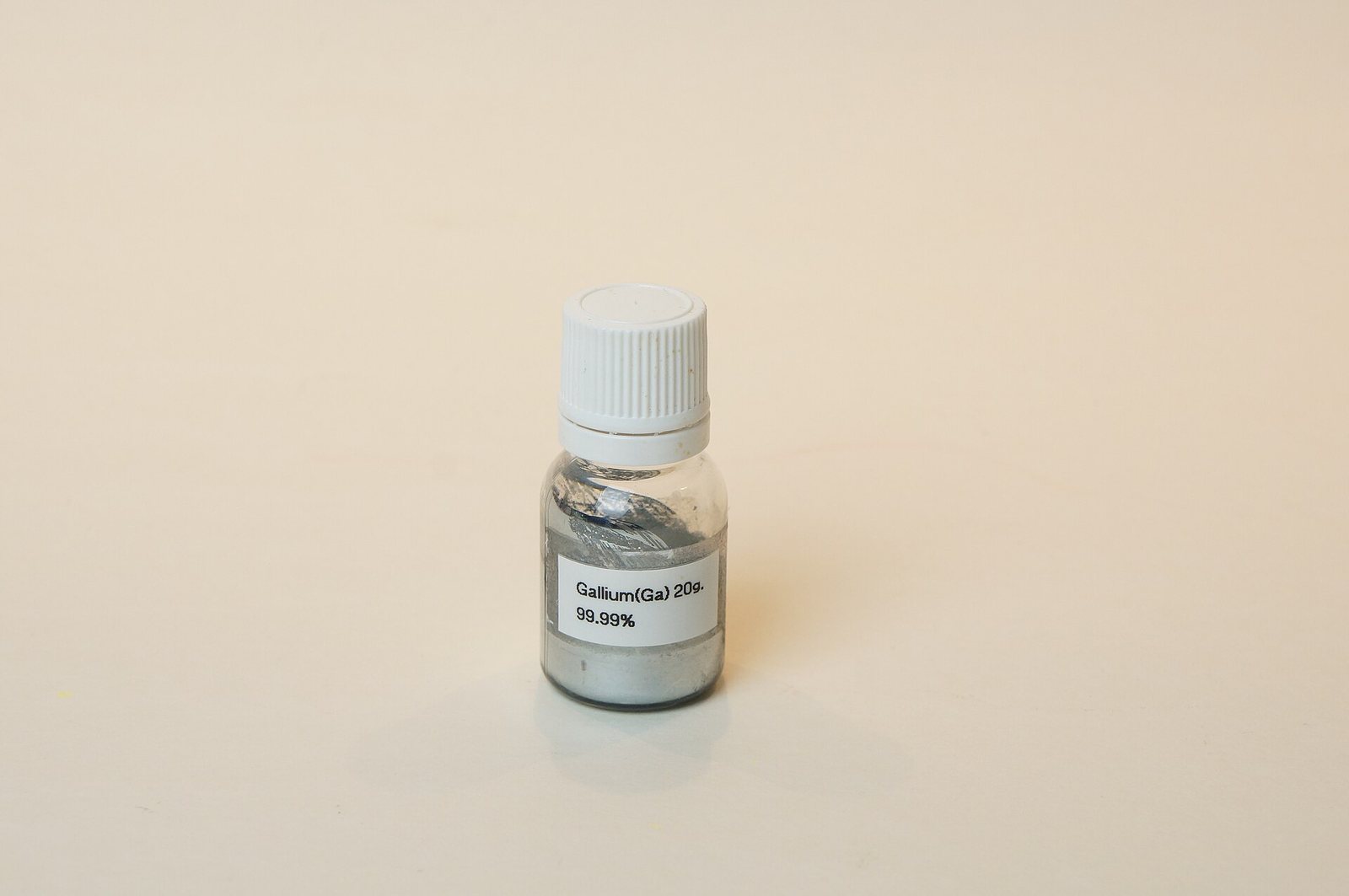
A silvery metal that melts in your hand, and the basis of the compound semiconductors in fast chargers, radar and LEDs.

Plastic bottle containing gallium metal · Pixelmaniac pictures ( Leave a reply ) · CC0 · Wikimedia Commons

Đây là gì?

A silvery metal that melts in your hand, and the basis of the compound semiconductors in fast chargers, radar and LEDs.

Tại sao điều này quan trọng?

Gallium nitride switches far faster than silicon, which is why it appears in phone chargers, 5G base stations, radar and satellite power systems.

Where it is in the Earth

Gallium is not a mineral in its own right. Unlike copper or gold, which form discrete ore minerals that can be selectively concentrated, gallium exists only as a trace impurity lodged inside the crystal structures of other minerals. The two host minerals that matter commercially are gibbsite and boehmite — the aluminium hydroxide and oxyhydroxide minerals that make up bauxite — and sphalerite, the zinc sulfide mineral that is the world's principal source of zinc. In both cases, gallium atoms substitute for aluminium or zinc atoms in the crystal lattice because their ionic radii are similar enough to allow the substitution. The concentrations involved are minute: gallium in bauxite is typically measured in parts per million relative to the aluminium present.

Bauxite forms in tropical and subtropical climates through a process called laterisation. When aluminium-bearing rocks are subjected to intense weathering over long periods, silica and most other elements are progressively leached away, leaving a residue enriched in aluminium hydroxide minerals. Because gallium behaves geochemically similarly to aluminium, it concentrates alongside aluminium during this weathering. The result is that wherever thick, high-aluminium bauxite deposits formed — across West Africa, Australia, the Caribbean and parts of South-East Asia — gallium is also present, albeit at trace levels. The same laterisation process that creates commercial bauxite is therefore the same process that creates any future gallium resource, even though gallium was never the target.

Sphalerite deposits, by contrast, form in entirely different geological settings: hydrothermal veins and sediment-hosted massive sulfide bodies, where metal-bearing fluids circulated through the crust and deposited zinc, lead and iron sulfides. Gallium follows zinc into sphalerite for the same substitution reasons, and some zinc districts carry appreciably higher gallium concentrations than others, though the variation is poorly characterised in public literature. The global distribution of gallium therefore mirrors the combined geography of bauxite and zinc deposits, but the amount recoverable depends on what happens in the processing plant, not in the mine.

Getting it out

Because gallium has no mine of its own, the question of how it is mined has no direct answer. The bauxite that carries most of the world's gallium is extracted by open-pit mining: the thin topsoil and clay overburden above the bauxite horizon is stripped away, the ore is dug out with excavators and shovels, and it is trucked or conveyor-belted to a crushing facility. The operations are large and relatively shallow. The gallium content of the bauxite is not a factor in the mining decision at all — the mine exists for aluminium, and gallium comes along for the ride.

What this means in practice is that the quantity of gallium potentially available to the world is enormous, dwarfing what is actually recovered. Every tonne of bauxite processed through an alumina refinery contains some gallium, but that gallium is only captured if the refinery is equipped to extract it and the economics make doing so worthwhile. Most refineries, historically, have not bothered. The same logic applies to zinc smelters processing sphalerite concentrates: gallium is present in the feed material, but recovering it requires additional processing steps that most smelters do not operate. The effective grade of gallium as a recoverable product is therefore determined more by refinery configuration and operating decisions than by the geological grade of the host ore.

There is no waste-rock calculation for gallium in the way there would be for a primary metal mine. The host ore — bauxite or zinc sulfide — is moved and processed regardless. Gallium recovery is an incremental activity layered on top of an existing industrial process, which is both its economic advantage and the source of its structural vulnerability.

What pulls on it

The applications that consume gallium all depend on the same underlying property: gallium forms compound semiconductors — most importantly gallium arsenide (GaAs) and gallium nitride (GaN) — with electronic and optical characteristics that silicon cannot replicate. Silicon remains the dominant material for general-purpose computing, but it struggles at high frequencies, high temperatures and at the wavelengths used in light emission. Gallium-based compounds handle all three better. GaN transistors switch far faster and at higher voltages than silicon equivalents, which is why GaN has become the material of choice for power conversion in compact chargers, for the amplifiers inside 5G base stations and for the transmit-receive modules in radar systems. GaAs remains important for radio-frequency front-end components in mobile handsets and for solar cells used in space, where its high efficiency per unit area justifies the cost premium over silicon.

The end markets listed for gallium span a wide range, but they share a common thread: they are all situations where the performance gap between gallium compounds and silicon justifies the higher material cost. LEDs and laser diodes rely on gallium compounds for light emission — silicon does not emit light efficiently because of the way its electronic band structure is arranged. CIGS thin-film solar cells use gallium as a dopant to tune the semiconductor's light-absorption characteristics. As power electronics migrate toward higher frequencies and higher power densities — driven by electrification, data centre efficiency requirements and defence electronics — the applications pulling on gallium tend to grow rather than shrink.

A sharp change in demand would most plausibly come from one of two directions. The first is a faster-than-expected adoption of GaN in power electronics and 5G infrastructure, pulling demand up. The second is a technological shift that reduces the gallium content per device — as has happened historically when manufacturers found ways to thin wafers or recover and reuse kerf losses from wafer slicing. The defence and radar segment is relatively insensitive to material cost and would be among the last to substitute away. Consumer electronics are more price-sensitive but have few practical alternatives at the frequencies involved.

Đọc các con số cho đúng. Primary low-grade gallium production; recovered as a by-product of alumina refining and zinc processing. Low-grade metal, refined 6N/7N metal, then GaAs and GaN wafers.

Nguồn gốc của nó trong đá

Tất cả khoáng vật quặng →

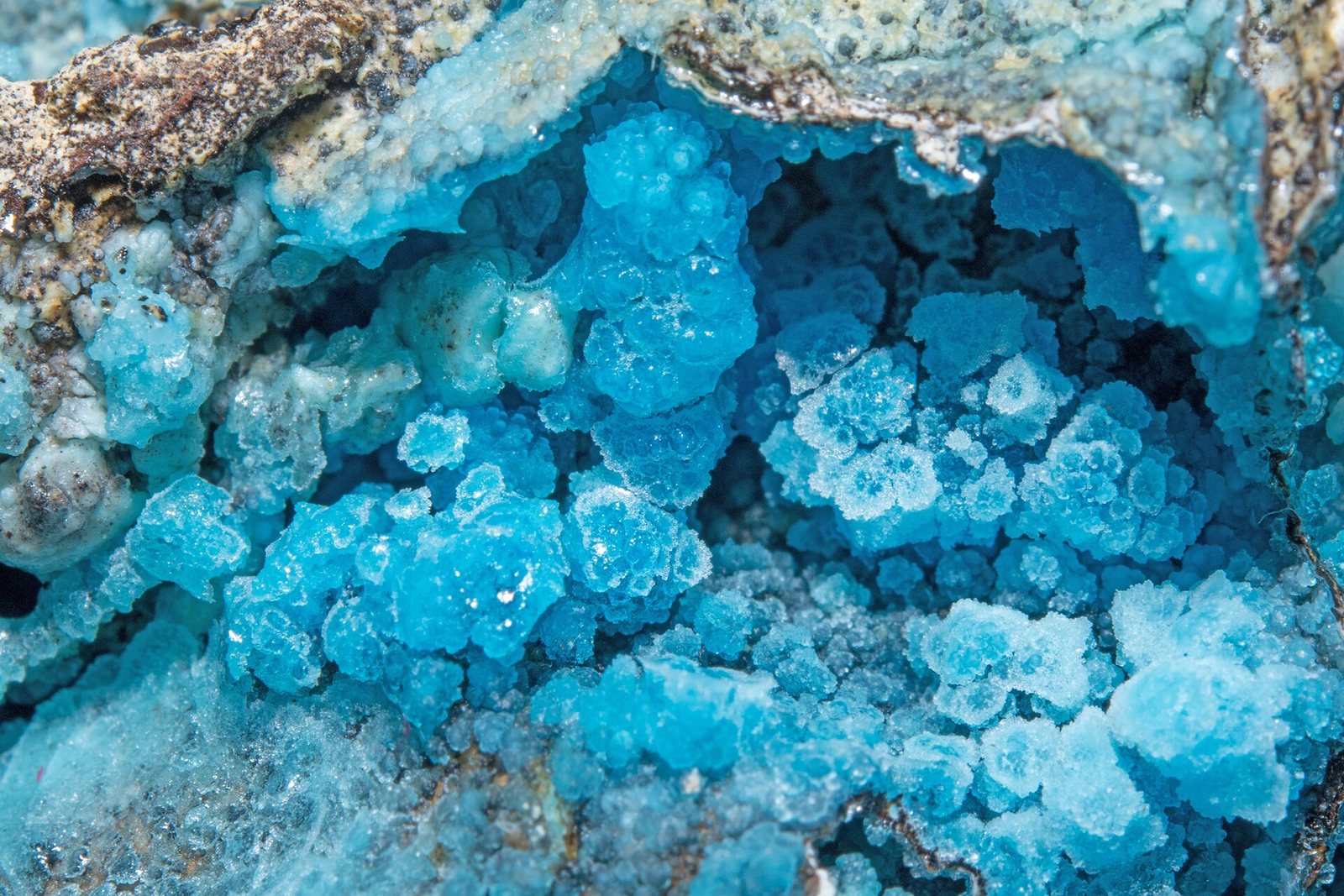
Đây là các khoáng sản thực sự mang lại gallium. Một mỏ khoáng chỉ là thân quặng khi một trong số chúng có hàm lượng đủ cao để bù đắp chi phí khai thác.
Ai sản xuất nó

Xem trên bản đồ →

Primary production

Primary productionkilograms 2025 (ước tính) Tổng toàn cầu 900,000 kilograms

USGS Mineral Commodity Summaries 2026 · Primary low-grade gallium production; recovered as a by-product of alumina refining and zinc processing. · nguồn ↗

Cuộn bảng sang ngang để xem các cột còn lại.

Quốc giaSản lượng Tỷ phần thế giới
China 900,000 100.0%
Russia 6,000 0.7%
Japan 3,000 0.3%
Other countries Zero
United States Zero
Tổng toàn cầu 900,000100%

"Withheld" có nghĩa là USGS đã ẩn số liệu để tránh tiết lộ dữ liệu của một công ty riêng lẻ — không có nghĩa là bằng không. Tổng các hàng theo quốc gia không phải lúc nào cũng bằng tổng toàn cầu vì nguồn làm tròn từng số liệu một cách độc lập và không phải lúc nào cũng tách riêng dòng "các quốc gia khác".

Giá

average unit value of imports, dollars per kilogram

Trung bình nămdollars per kilogram

2021 · 277.0 cao 580.0 dollars per kilogram 2025 · 580.0

Cơ sở: average unit value of imports, dollars per kilogram. Trung bình năm theo công bố trong USGS Mineral Commodity Summaries 2026 · nguồn ↗. Đây là mức trung bình hàng năm tham khảo, không phải báo giá thị trường trực tiếp.

Nơi nó được chế biến và tinh luyện

Nhà máyLoại Giai đoạnQuốc giaVai trò
Bayer-Process Alumina Refineries, Western Australia Nhà máy tinh luyệnChế biến AustraliaSản lượng đầu ra
Thị trường đầu raChức năng của nó ở đóTầm quan trọng
Aerospace & Defence Radar transmit-receive modules Định nghĩa
Semiconductors Compound semiconductors for RF and power Định nghĩa
Data Centres & AI High-efficiency power conversion Quan trọng
Consumer Electronics LED backlighting and RF front end Quan trọng
Robotics & Automation Efficient motor drive electronics Quan trọng
Solar Power CIGS thin film and cell doping Hiện tại

Một công nghệ cần bao nhiêu

"Cường độ" đơn giản là lượng vật liệu chứa trong một đơn vị sản phẩm. Đây là các khoảng chỉ thị — thiết kế thực tế thay đổi theo nhà sản xuất và năm mẫu, và tất cả đều đang giảm khi các kỹ sư học cách sử dụng ít hơn.
Công nghệĐại lượng Báo giáCơ sở
Gallium Nitride Power Device Grams; the constraint is refining capacity, not tonnage. vết per deviceSubstrate and epitaxial layer

Indicative range compiled from published technology studies and chemistry; verify against a manufacturer specification before use. Chạy các con số này ở bất kỳ quy mô nào trong máy tính vật liệu →

Kiểm soát xuất khẩu

Quốc giaKiểm soátÁp dụng cho
ChinaExport licensing requirement for materials and technologies Antimony (2024), bismuth (2025), synthesized diamond (2025), gallium (2023), germanium (2023), graphite (2023), indium (2025), magnesium materials (2024), molybdenum (2025), rare earths (2025), silver (2026), tellurium (2025), tungsten (2025), and items related to lithium batteries and artificial graphite anode materials (2025).

USGS Mineral Commodity Summaries 2026, table 4 — controls in effect as of January 2026, excluding controls since lifted.

Vật liệu

Tất cả vật liệu Khoáng sản thiết yếu Đất hiếm Vật liệu pin Các khoáng vật quặng Bảng tuần hoàn Bộ lọc

Lòng đất

Mỏ & mỏ quặng Chế biến & tinh luyện Quốc gia Bản đồ

Nền kinh tế

Các hành trình quyền sở hữu Các chuỗi cung ứng Các thị trường đầu ra Công nghệ Công ty Máy tính vật liệu

Tìm hiểu

Tìm hiểuBảng thuật ngữ Hỏi dữ liệuTác nhân AI Nghiên cứu & dữ liệuAPI mở Tin tức★ Đã lưu

Về chúng tôi

Về chúng tôiLiên hệ Phương pháp luậnNguồn dữ liệu Chính sách biên tập Chính sách bảo mậtĐiều khoản sử dụng Tuyên bố miễn trách nhiệm