从矿石到产品,全程溯源
The Materials Atlas
材料 矿山与矿床 加工与精炼 溯源记录 供应链 企业 国家/地区 资讯
按货架浏览材料 电池材料 稀土元素 铜与电气 半导体材料 核材料 航空航天与国防 贵金属 钢铁与合金金属 工业矿物 农业矿物 能源原材料 矿石矿物 元素周期表
需求 终端市场 技术 材料计算器 地图 筛选器
学习与工具 了解术语表 数据问答AI智能体 研究与数据API ★ 已保存
关于 关于我们方法论 数据来源联系我们 免责声明
阅读选项
🧭 引导视图 初次接触矿石品位、精矿、精炼、副产品等概念?我们在您浏览时对每个术语进行解释,语言浅显易懂,数据相同,帮助内置其中。
⚡ 专家视角 您已熟悉这一行业,直接看数据即可——简洁、快速、紧凑,无附加说明。此为默认视图。
主题
界面语言
深度 材料页面分四个级别撰写。在任意材料页面选择后,系统将记住您的选择。
★ 已保存 研究与数据
Gallium

半导体材料

Gallium Ga · 31

A silvery metal that melts in your hand, and the basis of the compound semiconductors in fast chargers, radar and LEDs.

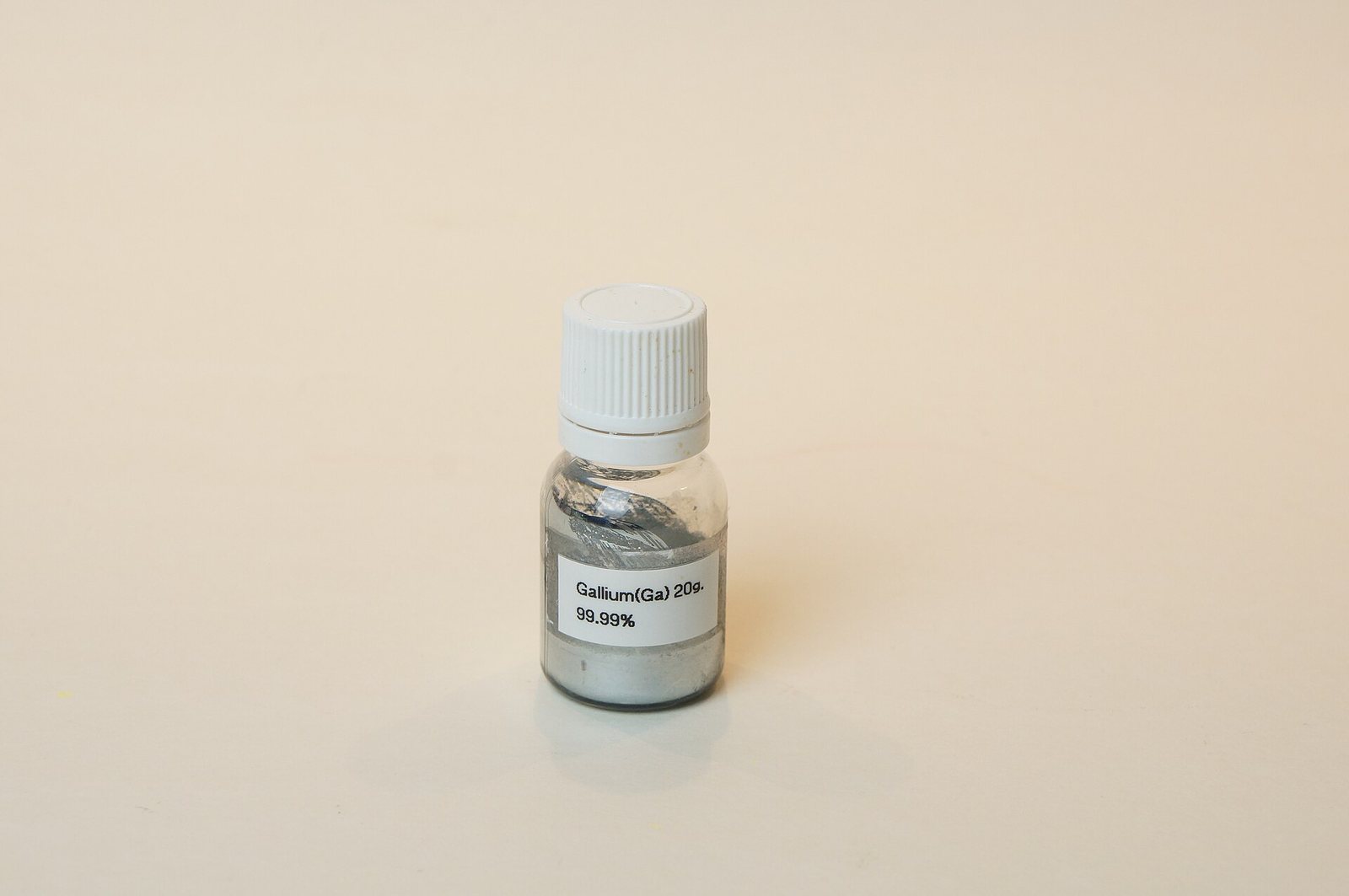
Plastic bottle containing gallium metal · Pixelmaniac pictures ( Leave a reply ) · CC0 · Wikimedia Commons

这是什么?

A silvery metal that melts in your hand, and the basis of the compound semiconductors in fast chargers, radar and LEDs.

为何重要?

Gallium nitride switches far faster than silicon, which is why it appears in phone chargers, 5G base stations, radar and satellite power systems.

Where it is in the Earth

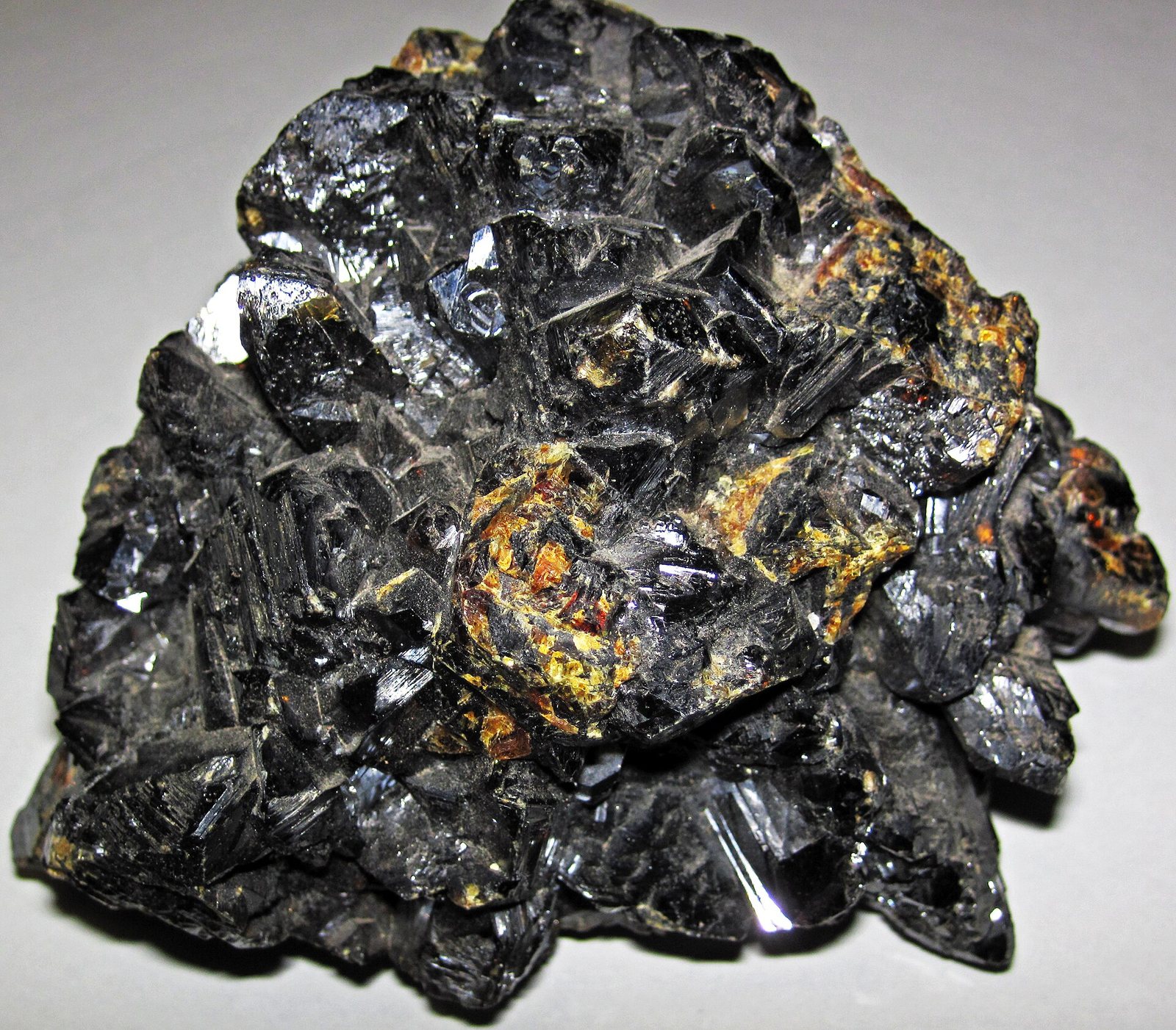
Gallium is not a mineral in its own right. Unlike copper or gold, which form discrete ore minerals that can be selectively concentrated, gallium exists only as a trace impurity lodged inside the crystal structures of other minerals. The two host minerals that matter commercially are gibbsite and boehmite — the aluminium hydroxide and oxyhydroxide minerals that make up bauxite — and sphalerite, the zinc sulfide mineral that is the world's principal source of zinc. In both cases, gallium atoms substitute for aluminium or zinc atoms in the crystal lattice because their ionic radii are similar enough to allow the substitution. The concentrations involved are minute: gallium in bauxite is typically measured in parts per million relative to the aluminium present.

Bauxite forms in tropical and subtropical climates through a process called laterisation. When aluminium-bearing rocks are subjected to intense weathering over long periods, silica and most other elements are progressively leached away, leaving a residue enriched in aluminium hydroxide minerals. Because gallium behaves geochemically similarly to aluminium, it concentrates alongside aluminium during this weathering. The result is that wherever thick, high-aluminium bauxite deposits formed — across West Africa, Australia, the Caribbean and parts of South-East Asia — gallium is also present, albeit at trace levels. The same laterisation process that creates commercial bauxite is therefore the same process that creates any future gallium resource, even though gallium was never the target.

Sphalerite deposits, by contrast, form in entirely different geological settings: hydrothermal veins and sediment-hosted massive sulfide bodies, where metal-bearing fluids circulated through the crust and deposited zinc, lead and iron sulfides. Gallium follows zinc into sphalerite for the same substitution reasons, and some zinc districts carry appreciably higher gallium concentrations than others, though the variation is poorly characterised in public literature. The global distribution of gallium therefore mirrors the combined geography of bauxite and zinc deposits, but the amount recoverable depends on what happens in the processing plant, not in the mine.

Getting it out

Because gallium has no mine of its own, the question of how it is mined has no direct answer. The bauxite that carries most of the world's gallium is extracted by open-pit mining: the thin topsoil and clay overburden above the bauxite horizon is stripped away, the ore is dug out with excavators and shovels, and it is trucked or conveyor-belted to a crushing facility. The operations are large and relatively shallow. The gallium content of the bauxite is not a factor in the mining decision at all — the mine exists for aluminium, and gallium comes along for the ride.

What this means in practice is that the quantity of gallium potentially available to the world is enormous, dwarfing what is actually recovered. Every tonne of bauxite processed through an alumina refinery contains some gallium, but that gallium is only captured if the refinery is equipped to extract it and the economics make doing so worthwhile. Most refineries, historically, have not bothered. The same logic applies to zinc smelters processing sphalerite concentrates: gallium is present in the feed material, but recovering it requires additional processing steps that most smelters do not operate. The effective grade of gallium as a recoverable product is therefore determined more by refinery configuration and operating decisions than by the geological grade of the host ore.

There is no waste-rock calculation for gallium in the way there would be for a primary metal mine. The host ore — bauxite or zinc sulfide — is moved and processed regardless. Gallium recovery is an incremental activity layered on top of an existing industrial process, which is both its economic advantage and the source of its structural vulnerability.

What pulls on it

The applications that consume gallium all depend on the same underlying property: gallium forms compound semiconductors — most importantly gallium arsenide (GaAs) and gallium nitride (GaN) — with electronic and optical characteristics that silicon cannot replicate. Silicon remains the dominant material for general-purpose computing, but it struggles at high frequencies, high temperatures and at the wavelengths used in light emission. Gallium-based compounds handle all three better. GaN transistors switch far faster and at higher voltages than silicon equivalents, which is why GaN has become the material of choice for power conversion in compact chargers, for the amplifiers inside 5G base stations and for the transmit-receive modules in radar systems. GaAs remains important for radio-frequency front-end components in mobile handsets and for solar cells used in space, where its high efficiency per unit area justifies the cost premium over silicon.

The end markets listed for gallium span a wide range, but they share a common thread: they are all situations where the performance gap between gallium compounds and silicon justifies the higher material cost. LEDs and laser diodes rely on gallium compounds for light emission — silicon does not emit light efficiently because of the way its electronic band structure is arranged. CIGS thin-film solar cells use gallium as a dopant to tune the semiconductor's light-absorption characteristics. As power electronics migrate toward higher frequencies and higher power densities — driven by electrification, data centre efficiency requirements and defence electronics — the applications pulling on gallium tend to grow rather than shrink.

A sharp change in demand would most plausibly come from one of two directions. The first is a faster-than-expected adoption of GaN in power electronics and 5G infrastructure, pulling demand up. The second is a technological shift that reduces the gallium content per device — as has happened historically when manufacturers found ways to thin wafers or recover and reuse kerf losses from wafer slicing. The defence and radar segment is relatively insensitive to material cost and would be among the last to substitute away. Consumer electronics are more price-sensitive but have few practical alternatives at the frequencies involved.

正确读取数据。 Primary low-grade gallium production; recovered as a by-product of alumina refining and zinc processing. Low-grade metal, refined 6N/7N metal, then GaAs and GaN wafers.

其在岩石中的来源

所有含矿矿物 →

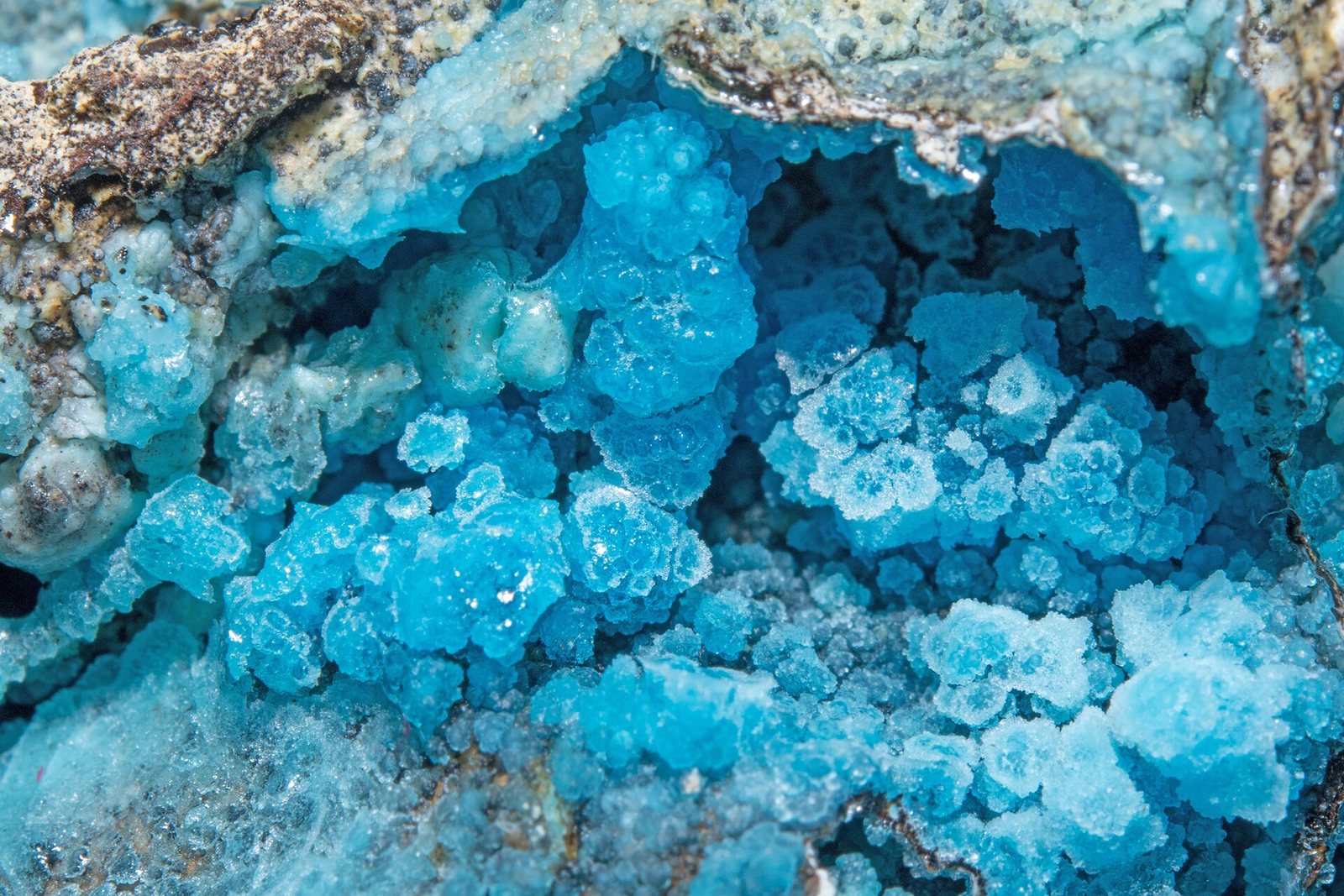
实际承载以下内容的矿物: gallium. 只有其中某种物质的富集程度足以覆盖开采成本,矿床才能成为矿体。
Primary production

Primary productionkilograms 2025 (估计值) 全球合计 900,000 kilograms

USGS Mineral Commodity Summaries 2026 · Primary low-grade gallium production; recovered as a by-product of alumina refining and zinc processing. · 来源 ↗

横向滚动表格以查看其余列。

国家/地区产量 占全球份额
China 900,000 100.0%
Russia 6,000 0.7%
Japan 3,000 0.3%
Other countries Zero
United States Zero
全球合计 900,000100%

"未披露"表示美国地质调查局(USGS)为避免泄露单个企业数据而对该数字进行了保密处理——并不意味着数值为零。各国行数之和不一定等于世界合计,原因在于来源对每个数字单独进行四舍五入处理,且并不总是单独列出"其他国家/地区"一行。

价格

average unit value of imports, dollars per kilogram

年度平均值dollars per kilogram

2021 · 277.0 高 580.0 dollars per kilogram 2025 · 580.0

基准: average unit value of imports, dollars per kilogram. 年度平均值,来源: USGS Mineral Commodity Summaries 2026 · 来源 ↗. 以下为参考年度均价,非实时市场报价。

其加工与精炼地点

工厂类型 阶段国家/地区角色
Bayer-Process Alumina Refineries, Western Australia 精炼厂加工 Australia产出
终端市场其在彼处的用途重要性
Aerospace & Defence Radar transmit-receive modules 定义
Semiconductors Compound semiconductors for RF and power 定义
Data Centres & AI High-efficiency power conversion 重要
Consumer Electronics LED backlighting and RF front end 重要
Robotics & Automation Efficient motor drive electronics 重要
Solar Power CIGS thin film and cell doping 至今

某项技术的需求用量

"强度"是指单位产品所含某种材料的用量。此处为参考区间——实际用量因制造商和年型而异,且随着工程师不断探索减量化设计,所有数值均呈下降趋势。
技术数量 报价基准
Gallium Nitride Power Device Grams; the constraint is refining capacity, not tonnage. 痕量 per deviceSubstrate and epitaxial layer

Indicative range compiled from published technology studies and chemistry; verify against a manufacturer specification before use. 在物料计算器中按任意规模运行这些数据 →

出口管制

国家/地区管控适用于
ChinaExport licensing requirement for materials and technologies Antimony (2024), bismuth (2025), synthesized diamond (2025), gallium (2023), germanium (2023), graphite (2023), indium (2025), magnesium materials (2024), molybdenum (2025), rare earths (2025), silver (2026), tellurium (2025), tungsten (2025), and items related to lithium batteries and artificial graphite anode materials (2025).

USGS Mineral Commodity Summaries 2026, table 4 — controls in effect as of January 2026, excluding controls since lifted.

材料

所有材料 关键矿产 稀土 电池材料 矿石矿物 元素周期表 筛选器

地层

矿山与矿床 加工与精炼 国家/地区 地图

经济体

溯源记录 供应链 终端市场 技术 企业 材料计算器

了解

了解术语表 数据问答AI智能体 研究与数据开放 API 资讯★ 已保存

关于我们

关于我们联系我们 方法论数据来源 编辑方针 隐私政策使用条款 免责声明