Madenden ürüne, izlenerek
The Materials Atlas
Materyaller Madenler ve yataklar İşleme ve rafinasyon Velayet güzergâhları Tedarik zincirleri Şirketler Ülkeler Haberler
Rafa göre materyaller Pil Malzemeleri Nadir Toprak Elementleri Bakır ve Elektrik Yarıiletken Malzemeler Nükleer Malzemeler Havacılık ve Savunma Kıymetli Metaller Çelik ve Alaşım Metalleri Endüstriyel Mineraller Tarım Mineralleri Enerji Ham Maddeleri Cevher mineralleri Periyodik tablo
Talep Son pazarlar Teknolojiler Materyal hesaplayıcı Haritalar Tarayıcı
Öğren ve araçlar ÖğrenSözlük Veriye SorYapay zeka ajanları Araştırma ve veriAPI ★ Kaydedildi
Hakkında HakkımızdaMetodoloji Veri kaynaklarıİletişim Sorumluluk reddi
Okuma seçenekleri
🧭 Rehberli Görünüm Cevher tenörü, konsantre, rafinasyon, yan ürün gibi kavramlar size yeni mi? Gezinirken her terimi sade bir dille açıklıyoruz. Aynı veriler, yerleşik yardımla birlikte.
⚡ Uzman Görünümü Sektörü zaten biliyorsunuz. Sadece veri — temiz, hızlı ve özlü, fazladan açıklama yok. Bu varsayılan görünümdür.
Tema
Arayüz dili
Derinlik Materyal sayfaları dört düzeyde hazırlanmıştır. Herhangi bir materyal sayfasında bir düzey seçin; bu tercih kaydedilir.
★ Kaydedildi Araştırma ve veri
Germanium

Yarıiletken Malzemeler

Germanium Ge · 32

The element the very first transistors were made from, now used mainly for infrared lenses and fibre-optic glass.

Miniman M 703 germanium crystal radio made in Japan late 1950s · R. Henrik Nilsson · CC BY 4.0 · Wikimedia Commons

Bu nedir?

The element the very first transistors were made from, now used mainly for infrared lenses and fibre-optic glass.

Neden önemli?

Night-vision and thermal-imaging optics are made of germanium because it is transparent to the infrared light warm objects emit.

Where it is in the Earth

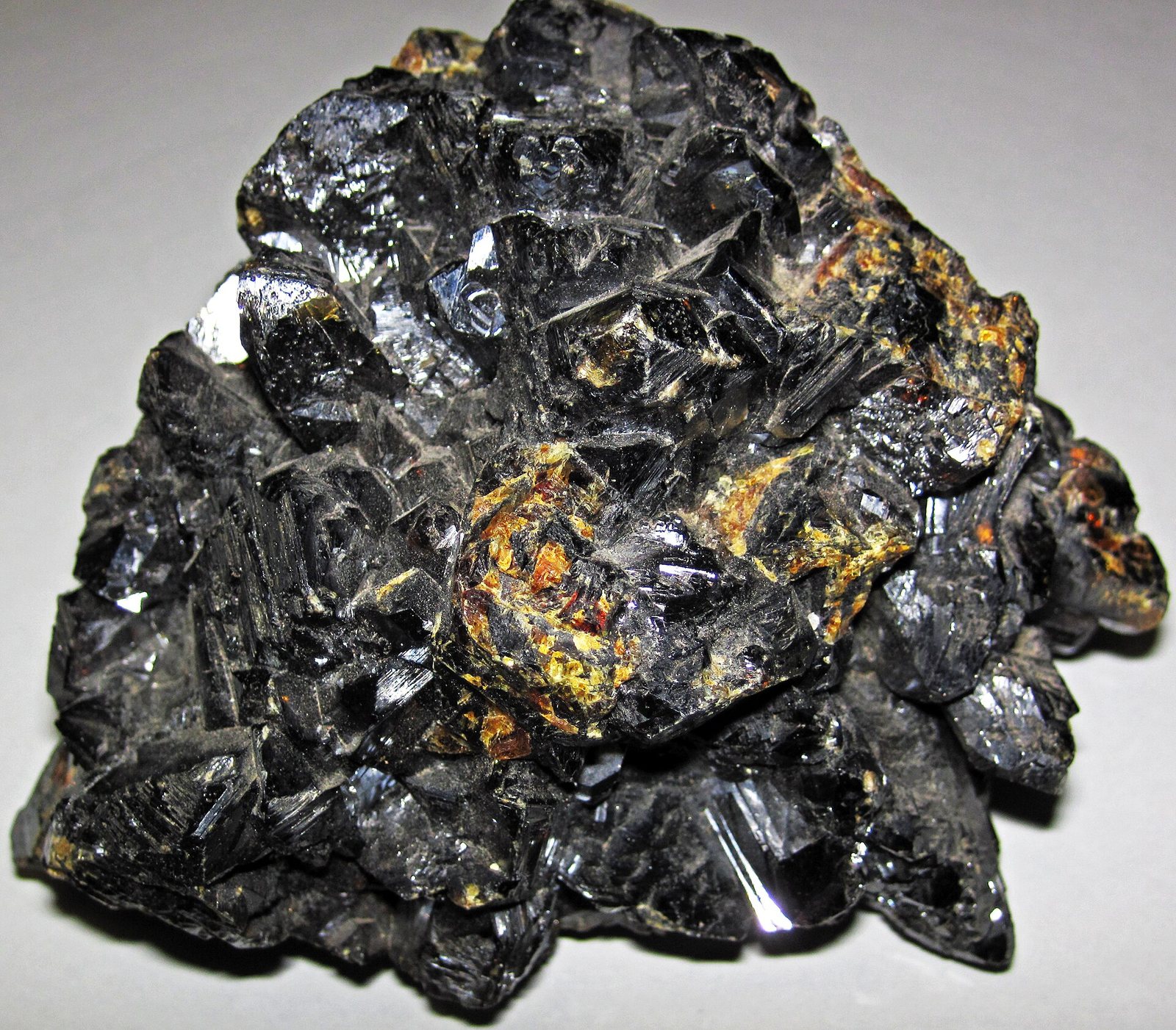
Germanium is not found in nature as a concentrated ore in its own right. Instead it appears as a trace impurity scattered through other minerals, most commonly sphalerite, the zinc sulfide mineral that forms the ore in most of the world's zinc mines. The concentrations involved are very low — a matter of parts per million rather than the percentages that define a conventional ore — so germanium only becomes recoverable because zinc is being processed in large volumes for its own sake. The geological settings that favour germanium enrichment are those that also produce zinc and lead: sediment-hosted (SEDEX) deposits, where metals were carried in hot brines through ancient seafloor sediments, and Mississippi Valley-type (MVT) deposits, a related style found in carbonate rocks. In both cases, organic matter in the host rock appears to have helped concentrate germanium alongside zinc during mineralisation.

A second and less obvious source is coal. Certain coal seams, particularly those where the original peat accumulated in contact with hydrothermal fluids or weathering zinc-bearing rocks, contain germanium at levels high enough to recover from the fly ash left after combustion. This means that coal-fired power stations and coking plants have occasionally served as germanium sources, quite apart from any mining operation. The distribution of these enriched coals is patchy and not always correlated with the most productive zinc belts, so the two source types — zinc refining and coal ash — tend to sit in different parts of the supply chain and different countries.

What unites both sources geologically is that germanium is a chalcophile element, meaning it has a chemical affinity for sulfur-bearing environments, and it is also relatively small and flexible in its bonding, which allows it to substitute quietly into the crystal structures of other minerals without forming a phase of its own. That is precisely why it never forms economically meaningful primary deposits: it is always a guest in someone else's mineral.

Getting it out

Because germanium has no ore deposit of its own, it is never the target of a mining operation. The mine extracts zinc, lead, or coal, and germanium comes along as an unintended passenger. At a zinc operation such as Red Dog in Alaska — a large open-pit sediment-hosted deposit — the rock is drilled and blasted, the broken material loaded and hauled, and the zinc and lead minerals are separated from the waste rock through a series of physical and chemical steps. None of that process is designed around germanium. The germanium simply reports, in trace quantities, to whichever intermediate product or waste stream the processing circuit directs it to.

This by-product status has a practical consequence for understanding what a grade means. At a zinc mine, the headline figure is the percentage of zinc in the ore, and that determines whether the mine is economic. Germanium's concentration in the same ore is orders of magnitude lower, and whether it is recovered at all depends on decisions made further down the chain — at the zinc smelter, not at the mine itself. A mine that sits on zinc ore with above-average germanium content generates no germanium unless a downstream refinery is equipped and willing to extract it. The ore in the ground does not become a germanium resource until that processing infrastructure exists.

The same logic applies to coal ash recovery. A power station or coking plant produces fly ash as a combustion residue, and in some cases that ash is rich enough in germanium to justify treating it as a secondary feed. Again, no mining is directed at germanium; the recovery is parasitic on an industrial process running for entirely different reasons. This means the supply of germanium is paced by, and capped by, the throughput of zinc smelters and coal combustion facilities worldwide, regardless of how large the germanium-bearing resource in the ground might be.

What pulls on it

The largest single use of germanium today is as the optical material in infrared lenses and windows. Germanium is transparent to the wavelengths of infrared radiation that objects at or near room temperature naturally emit, a property that very few materials share. This makes it essentially without equal for the front optics in thermal-imaging cameras used in military sighting systems, border surveillance, firefighting, and automotive driver-assistance. The defence and aerospace sector accounts for a large share of consumption on this basis, and demand from that sector tends to be steady and long-cycle rather than volatile, because the procurement of military optical systems follows government budget processes measured in years.

The second significant use is in fibre-optic telecommunications. Germanium dioxide is added to silica glass during the manufacture of optical fibre to raise the refractive index of the fibre core relative to its cladding — the difference in refractive index is what causes light to travel along the fibre rather than escape through the sides. As global fibre deployment has expanded, this use has grown alongside it, though the amount of germanium per kilometre of fibre is very small, and efficiency improvements in fibre manufacture have tended to reduce the germanium intensity of each kilometre produced over time. A third application, silicon-germanium (SiGe) alloy transistors, is used in high-frequency chips for mobile communications; this segment has grown as 4G and 5G infrastructure expanded, though it remains smaller than the optics and fibre segments.

Demand would change sharply if infrared detector technology moved to materials that do not require a germanium lens — amorphous silicon or vanadium oxide microbolometer arrays, for instance, can operate without a germanium window in some configurations. Wider adoption of uncooled detectors at lower price points could erode demand from the commercial end of the thermal-imaging market, though the optical performance requirements for high-end military systems have so far favoured germanium. On the growth side, any sustained expansion of fibre-optic infrastructure — whether driven by broadband programmes, data-centre construction, or long-haul telecommunications — adds demand, as does the continued rollout of 5G radio equipment containing SiGe chips.

Sayıları doğru okuyun. Recovered as a by-product of zinc refining and from coal fly ash; refinery output is not separately published by many producers. Germanium dioxide, zone-refined metal, IR-grade optics blanks.

Kayada nereden gelir

Tüm cevher mineralleri →

Bunlar gerçekten taşıyan mineraller germanium. Bir yatak, ancak içindeki minerallerden biri çıkarma maliyetini karşılayacak kadar yüksek tenörde olduğunda cevher kütlesi sayılır.

Fiyat

annual average, dollars per kilogram: Germanium dioxide

Yıllık ortalamadollars per kilogram

2021 · 770.0 yüksek 2,500 dollars per kilogram 2025 · 2,500

Dayanak: annual average, dollars per kilogram: Germanium dioxide. Şurada yayımlanan yıllık ortalamalar: USGS Mineral Commodity Summaries 2026 · kaynak ↗. Bunlar referans yıllık ortalamalar olup canlı piyasa fiyatı değildir.

annual average, dollars per kilogram: Germanium metal

Yıllık ortalamadollars per kilogram

2021 · 1,187 yüksek 4,100 dollars per kilogram 2025 · 4,100

Dayanak: annual average, dollars per kilogram: Germanium metal. Şurada yayımlanan yıllık ortalamalar: USGS Mineral Commodity Summaries 2026 · kaynak ↗. Bunlar referans yıllık ortalamalar olup canlı piyasa fiyatı değildir.

Bu materyali üreten madenler

Tüm madenler →
Red Dog
Red Dog, United States — One of the largest zinc mines in the world. Tek Alaska - Red Dog Mine Port Site Crew (344…, Public domain via Wikimedia Commons

Red Dog →

Son pazarOrada ne işe yararÖnem
Aerospace & Defence Infrared optics Önemli
Semiconductors SiGe transistors and optics Önemli

İhracat kontrolleri

ÜlkeKontrolUygulandığı kapsam
ChinaExport licensing requirement for materials and technologies Antimony (2024), bismuth (2025), synthesized diamond (2025), gallium (2023), germanium (2023), graphite (2023), indium (2025), magnesium materials (2024), molybdenum (2025), rare earths (2025), silver (2026), tellurium (2025), tungsten (2025), and items related to lithium batteries and artificial graphite anode materials (2025).

USGS Mineral Commodity Summaries 2026, table 4 — controls in effect as of January 2026, excluding controls since lifted.

Haberlerde

Daha fazla →

Drone wars deepen West’s critical minerals squeeze

The Northern Miner01 Sep 2026

Materyaller

Tüm malzemeler Kritik mineraller Nadir toprak elementleri Pil malzemeleri Cevher mineralleri Periyodik tablo Tarayıcı

Zemin

Madenler ve yataklar İşleme ve rafinasyon Ülkeler Haritalar

Ekonomi

Velayet güzergâhları Tedarik zincirleri Son pazarlar Teknolojiler Şirketler Materyal hesaplayıcı

Öğren

ÖğrenSözlük Veriye SorYapay zeka ajanları Araştırma ve veriAçık API Haberler★ Kaydedildi

Hakkımızda

Hakkımızdaİletişim MetodolojiVeri kaynakları Editoryal politika Gizlilik politikasıKullanım koşulları Sorumluluk reddi