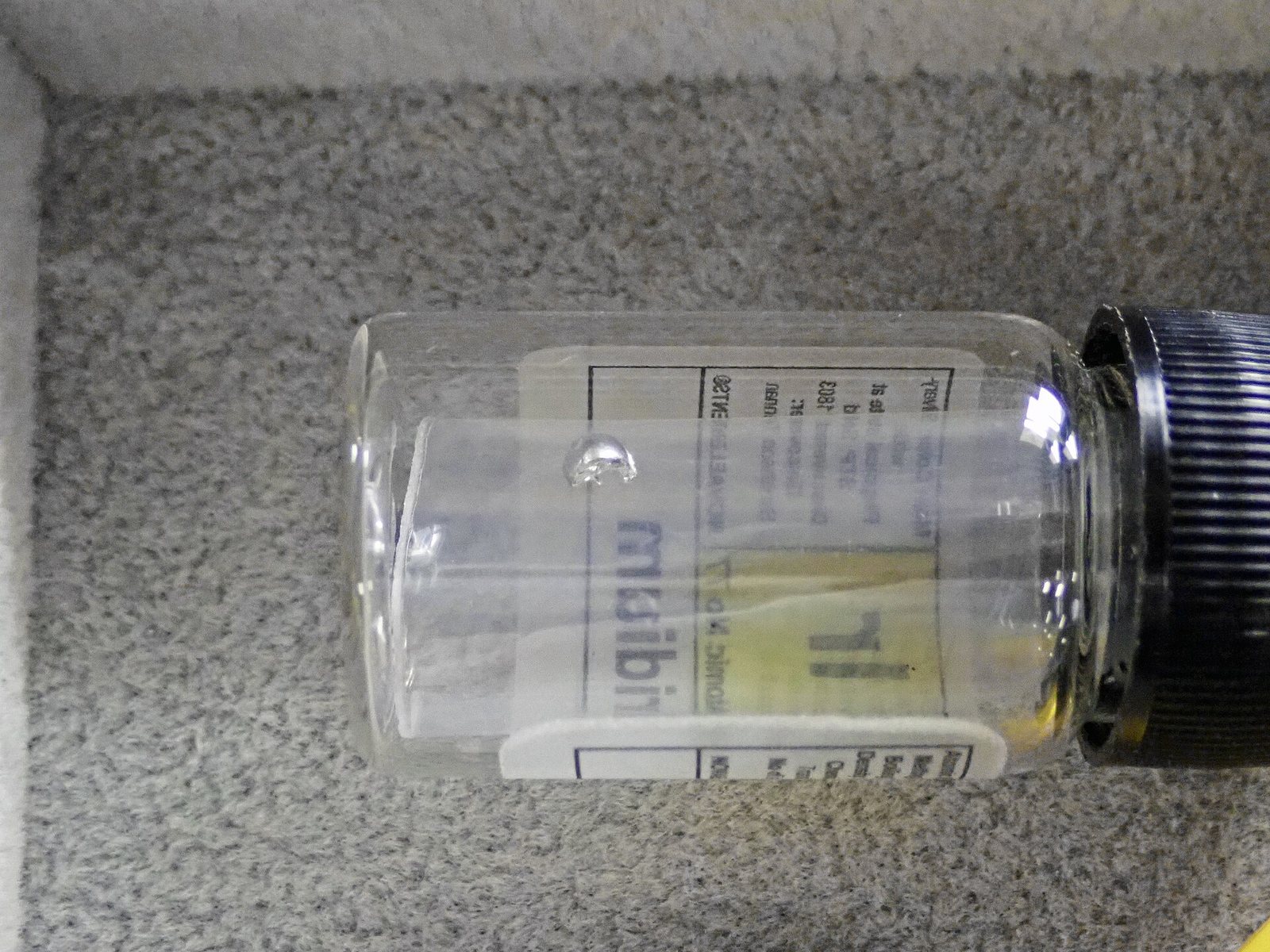
Che cos'è?
The most corrosion-resistant metal known, and the second densest — a litre of it weighs about 22.5 kilograms.
Perché è importante?
PEM electrolysers, the technology most often proposed for green hydrogen, need iridium on the oxygen side, and world output is only a few tonnes a year.
Where it is in the Earth
Iridium belongs to the platinum-group elements (PGEs), a set of six metals that share similar atomic radii and tend to occur together in nature. They are among the rarest elements in the Earth's crust, and the reason for that scarcity lies deep in planetary history. When the Earth was still molten, iron sank to form the core and carried most of the PGEs with it, because these metals have a strong chemical affinity for iron. What remains in the accessible crust is a residual trace, concentrated only where particular geological events brought PGE-bearing material close to the surface.
The most important such event is the intrusion of large bodies of magma — molten rock — into the crust. As a magma body cools slowly over millions of years, different minerals crystallise out at different temperatures, and some of them scavenge PGEs from the melt and carry them downward. The result is layered igneous complexes: thick sequences of rock with distinct chemical bands, some of which are enriched in platinum, palladium, rhodium, ruthenium, osmium, and iridium. The Bushveld Igneous Complex in South Africa is by far the largest and most important of these structures on Earth. A second significant occurrence is the Great Dyke of Zimbabwe. Outside Africa, the Stillwater Complex in Montana and the Fedorova-Pana intrusion in Russia host comparable geology at smaller scale.
Within these complexes, iridium concentrates in specific reef horizons — thin, laterally continuous layers within the larger igneous body. It also occurs in sulfide minerals alongside nickel and copper, which is why nickel smelters, particularly in Russia, produce PGEs as a secondary stream. There is one other geologically notable context: the iridium-rich layer found at the Cretaceous-Palaeogene boundary in sedimentary rocks worldwide is widely attributed to a large meteorite impact, which speaks to how elevated iridium concentrations are in extraterrestrial material relative to ordinary crustal rock.
Getting it out
Because iridium occurs only within the platinum-group reef horizons of large layered igneous complexes, it is never the primary target of a mining operation. It comes out of the ground as a by-product of platinum and palladium mining, and the method used reflects that host geology rather than anything specific to iridium. In South Africa's Bushveld Complex, the principal reef — called the Merensky Reef — and a secondary horizon called the UG2 Reef lie at varying depths below the surface. Where they are shallow enough, open-pit methods are used, but a large share of production comes from underground operations, where miners follow the reef using a combination of drill-and-blast and mechanised cutting.
The grade of PGE ore is measured in grams per tonne, meaning the mass of recoverable metal present in each tonne of rock mined. These grades are low enough that moving and processing large volumes of rock is necessary to obtain even modest quantities of refined metal. For every tonne of ore extracted, a much larger mass of waste rock is disturbed. Iridium's share of the PGE content of any given reef is itself small relative to platinum and palladium, so the effective concentration of iridium in the original ore is extremely low — well below what would justify mining for iridium alone. This dependency on the platinum mining cycle is the defining constraint on how much iridium the world can produce.
At Norilsk in Russia, nickel and copper are the primary targets, and PGEs including iridium emerge from the sulfide ores processed there. The physical method is underground mining into sulfide deposits, followed by smelting of the mixed metal output. The by-product logic is the same: iridium production rises and falls with the decisions made about nickel and copper output, not with iridium demand or price.
What pulls on it
For most of the metal's commercial history, iridium found use in applications that depended on its extreme resistance to heat and chemical attack. Spark-plug tips use small iridium inserts because the metal erodes very slowly under repeated electrical discharge. Crucibles for growing single crystals of refractory oxides rely on iridium's stability at temperatures that would destroy almost any other containment material. Electrode coatings for electrochemical processes — including the production of chlorine — exploit its corrosion resistance in strongly acidic or oxidising conditions. These applications consumed modest quantities and demand was fairly stable.
The situation has changed because of proton exchange membrane (PEM) electrolysis, a technology for splitting water into hydrogen and oxygen using an electric current. On the oxygen-producing side of a PEM electrolyser, the catalyst must survive an extremely corrosive, highly oxidising environment at elevated voltage. Iridium oxide is presently the only material that performs adequately under these conditions at industrial scale. The intensity figure in the table — 0.3 to 0.7 kilograms of iridium per megawatt of electrolyser capacity — gives a sense of the relationship between electrolyser deployment and metal demand. If PEM electrolysis is deployed at the scale that some energy transition scenarios project, the implied demand for iridium would be large relative to a supply measured in a few tonnes annually. Whether and how quickly that deployment occurs depends on policy, the cost of electricity, competition from alkaline electrolysis (which does not use iridium), and the pace of catalyst-loading reduction through ongoing research.
Demand could change sharply in either direction. A breakthrough that allowed PEM electrolysers to operate with substantially less iridium per megawatt, or that made a non-iridium catalyst viable at comparable performance, would reduce the metal's strategic importance significantly. Conversely, a rapid scale-up of PEM capacity without such a breakthrough would place pressure on a supply base that cannot respond quickly, because production is tied to platinum mining decisions made years in advance.
Prezzo
dollars per troy ounce: Iridium
Media annualedollars per troy ounce
Base: dollars per troy ounce: Iridium. Medie annuali pubblicate in USGS Mineral Commodity Summaries 2026 · fonte ↗. Queste sono medie annuali di riferimento, non quotazioni di mercato in tempo reale.
Dove viene lavorato e raffinato
| Impianto | Tipo | Fase | Paese | Ruolo |
|---|---|---|---|---|
| Rustenburg Base & Precious Metals Refineries | Raffineria | Raffinazione | South Africa | Output |
A cosa serve
Tutti i mercati finali →| Mercato finale | Cosa fa lì | Importanza |
|---|---|---|
| Hydrogen & Electrolysis | PEM anode catalyst | Definizione di |
Quanto ne richiede una tecnologia
| Tecnologia | Quantità | Quotato | Base |
|---|---|---|---|
| PEM Electrolyser Loadings are falling but remain the binding constraint. | 0.3–0.7 kg | per MW of capacity | Anode catalyst loading |
Indicative range compiled from published technology studies and chemistry; verify against a manufacturer specification before use. Eseguire questi calcoli a qualsiasi scala nel calcolatore dei materiali →