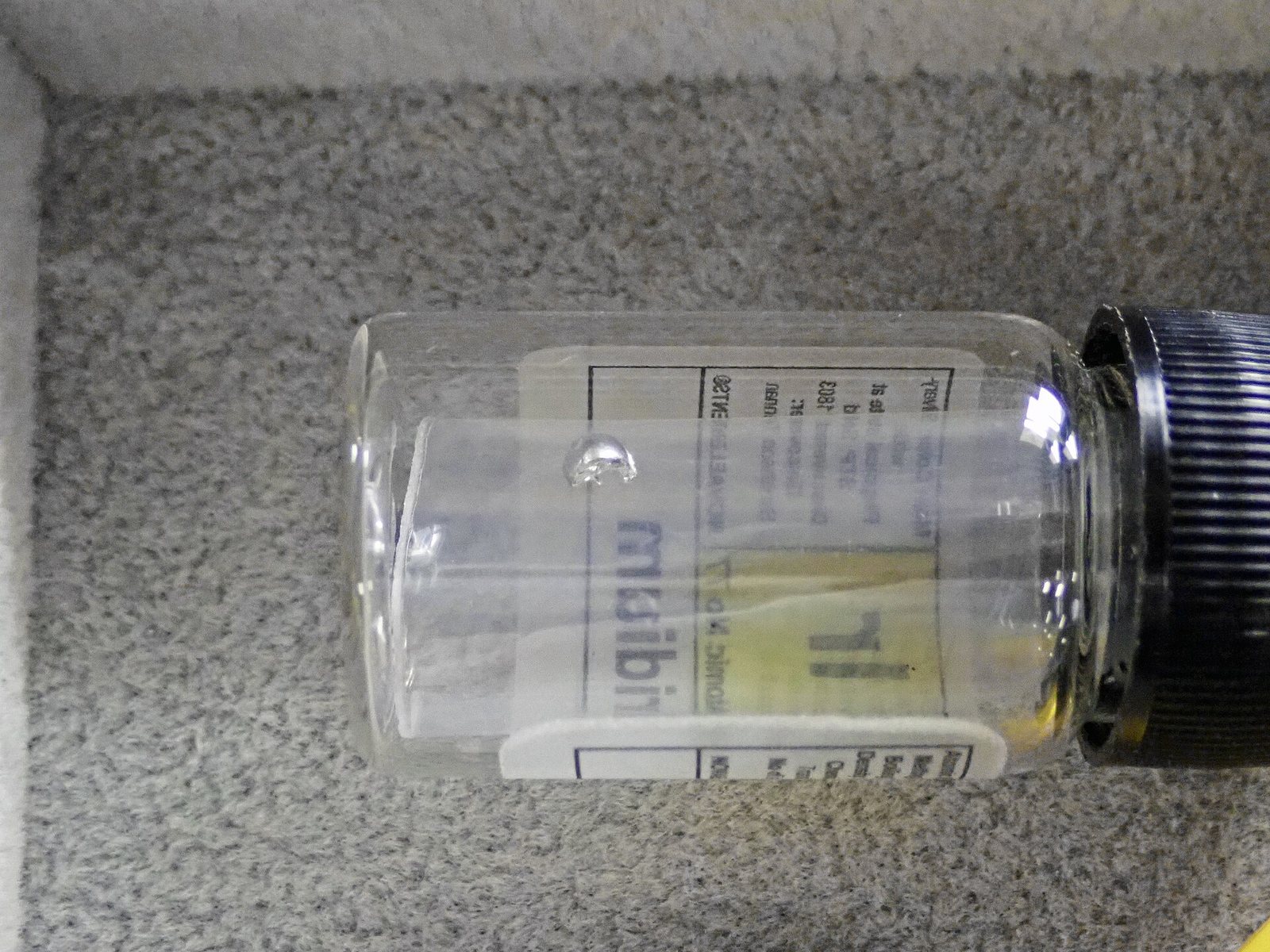
Qu'est-ce que c'est ?
The most corrosion-resistant metal known, and the second densest — a litre of it weighs about 22.5 kilograms.
Pourquoi est-ce important ?
PEM electrolysers, the technology most often proposed for green hydrogen, need iridium on the oxygen side, and world output is only a few tonnes a year.
Where it is in the Earth
Iridium belongs to the platinum-group elements (PGEs), a set of six metals that share similar atomic radii and tend to occur together in nature. They are among the rarest elements in the Earth's crust, and the reason for that scarcity lies deep in planetary history. When the Earth was still molten, iron sank to form the core and carried most of the PGEs with it, because these metals have a strong chemical affinity for iron. What remains in the accessible crust is a residual trace, concentrated only where particular geological events brought PGE-bearing material close to the surface.
The most important such event is the intrusion of large bodies of magma — molten rock — into the crust. As a magma body cools slowly over millions of years, different minerals crystallise out at different temperatures, and some of them scavenge PGEs from the melt and carry them downward. The result is layered igneous complexes: thick sequences of rock with distinct chemical bands, some of which are enriched in platinum, palladium, rhodium, ruthenium, osmium, and iridium. The Bushveld Igneous Complex in South Africa is by far the largest and most important of these structures on Earth. A second significant occurrence is the Great Dyke of Zimbabwe. Outside Africa, the Stillwater Complex in Montana and the Fedorova-Pana intrusion in Russia host comparable geology at smaller scale.
Within these complexes, iridium concentrates in specific reef horizons — thin, laterally continuous layers within the larger igneous body. It also occurs in sulfide minerals alongside nickel and copper, which is why nickel smelters, particularly in Russia, produce PGEs as a secondary stream. There is one other geologically notable context: the iridium-rich layer found at the Cretaceous-Palaeogene boundary in sedimentary rocks worldwide is widely attributed to a large meteorite impact, which speaks to how elevated iridium concentrations are in extraterrestrial material relative to ordinary crustal rock.
Getting it out
Because iridium occurs only within the platinum-group reef horizons of large layered igneous complexes, it is never the primary target of a mining operation. It comes out of the ground as a by-product of platinum and palladium mining, and the method used reflects that host geology rather than anything specific to iridium. In South Africa's Bushveld Complex, the principal reef — called the Merensky Reef — and a secondary horizon called the UG2 Reef lie at varying depths below the surface. Where they are shallow enough, open-pit methods are used, but a large share of production comes from underground operations, where miners follow the reef using a combination of drill-and-blast and mechanised cutting.
The grade of PGE ore is measured in grams per tonne, meaning the mass of recoverable metal present in each tonne of rock mined. These grades are low enough that moving and processing large volumes of rock is necessary to obtain even modest quantities of refined metal. For every tonne of ore extracted, a much larger mass of waste rock is disturbed. Iridium's share of the PGE content of any given reef is itself small relative to platinum and palladium, so the effective concentration of iridium in the original ore is extremely low — well below what would justify mining for iridium alone. This dependency on the platinum mining cycle is the defining constraint on how much iridium the world can produce.
At Norilsk in Russia, nickel and copper are the primary targets, and PGEs including iridium emerge from the sulfide ores processed there. The physical method is underground mining into sulfide deposits, followed by smelting of the mixed metal output. The by-product logic is the same: iridium production rises and falls with the decisions made about nickel and copper output, not with iridium demand or price.
What pulls on it
For most of the metal's commercial history, iridium found use in applications that depended on its extreme resistance to heat and chemical attack. Spark-plug tips use small iridium inserts because the metal erodes very slowly under repeated electrical discharge. Crucibles for growing single crystals of refractory oxides rely on iridium's stability at temperatures that would destroy almost any other containment material. Electrode coatings for electrochemical processes — including the production of chlorine — exploit its corrosion resistance in strongly acidic or oxidising conditions. These applications consumed modest quantities and demand was fairly stable.
The situation has changed because of proton exchange membrane (PEM) electrolysis, a technology for splitting water into hydrogen and oxygen using an electric current. On the oxygen-producing side of a PEM electrolyser, the catalyst must survive an extremely corrosive, highly oxidising environment at elevated voltage. Iridium oxide is presently the only material that performs adequately under these conditions at industrial scale. The intensity figure in the table — 0.3 to 0.7 kilograms of iridium per megawatt of electrolyser capacity — gives a sense of the relationship between electrolyser deployment and metal demand. If PEM electrolysis is deployed at the scale that some energy transition scenarios project, the implied demand for iridium would be large relative to a supply measured in a few tonnes annually. Whether and how quickly that deployment occurs depends on policy, the cost of electricity, competition from alkaline electrolysis (which does not use iridium), and the pace of catalyst-loading reduction through ongoing research.
Demand could change sharply in either direction. A breakthrough that allowed PEM electrolysers to operate with substantially less iridium per megawatt, or that made a non-iridium catalyst viable at comparable performance, would reduce the metal's strategic importance significantly. Conversely, a rapid scale-up of PEM capacity without such a breakthrough would place pressure on a supply base that cannot respond quickly, because production is tied to platinum mining decisions made years in advance.
Turning ore into product Niveau 3
Once platinum-group ore is mined, it goes through comminution — crushing and grinding — to liberate the PGE-bearing minerals from the surrounding rock. The ground material is then concentrated using froth flotation, a process in which air bubbles are passed through a slurry and preferentially carry sulfide minerals containing PGEs to the surface as a froth, while the waste gangue sinks. The resulting flotation concentrate contains a much higher proportion of PGEs and sulfides than the original ore, but it is still a mixed product. It is then smelted at high temperature to produce a PGE-rich matte — a partially refined mixture of sulfides and metals.
Separating individual PGEs from the matte is the most technically demanding and time-consuming part of the chain. The matte is treated by a sequence of hydrometallurgical steps — leaching with acids and oxidising agents, precipitation of individual metals, and solvent extraction — that exploit the different solubilities and chemical behaviours of each PGE. Iridium is among the more chemically inert of the group, which in practice means it can be difficult to dissolve and difficult to separate cleanly from osmium and ruthenium, which behave similarly. The refining process for PGEs from concentrate to final metal can take many months, which introduces a significant lag between ore being mined and refined iridium becoming available for sale. The Rustenburg refinery complex in South Africa is the principal facility for this work; its capacity and throughput determine a large part of global refined iridium supply independently of what happens at the mines.
Recovery losses occur at each stage — flotation, smelting, and refining — and the cumulative effect means that only a fraction of the iridium present in the original ore reaches the market as refined metal. Because iridium is a minor constituent of the PGE stream, optimising its recovery is secondary to managing the more commercially significant platinum and palladium fractions; where these objectives conflict, iridium recovery is typically the one that yields.
Substitution and recycling Niveau 3
Within the applications where iridium currently dominates, substitution is possible in some cases but costly in others. In spark plugs, platinum tips are an established alternative and are widely used; the trade-off is a shorter service interval, because platinum erodes more quickly than iridium under comparable conditions. In high-temperature crucibles and precision instrumentation, rhodium or certain refractory ceramics can sometimes be used, but each substitution involves some compromise in operating temperature limit, chemical inertness, or manufacturing difficulty. For anode coatings in industrial electrochemistry, ruthenium-based coatings are used in chlor-alkali production and serve as a partial reference point, but the operating conditions in PEM electrolysis are more aggressive than those in chlor-alkali cells.
For PEM electrolyser anodes, no substitute has yet demonstrated equivalent performance at commercial scale under the full range of operating conditions. Research into manganese-based, iron-based, and mixed-oxide catalysts is active, and some laboratory results are promising, but translating laboratory activity into a stable, durable industrial coating is a different problem. The relevant metric is not just initial catalytic activity but the rate at which activity degrades over thousands of hours of operation. Until a non-iridium catalyst demonstrates acceptable durability at scale, the electrolyser industry is effectively dependent on the metal.
Recycling does return some iridium to the market, primarily from spent electrodes and crucibles. The recovery economics are favourable where iridium is the predominant valuable metal in a scrap stream, because its price — which has averaged several thousand dollars per troy ounce in recent years, as the price table shows — makes collection worthwhile. However, the total volume of recyclable material is limited by the size of historical installed stocks, which were small precisely because the metal was used sparingly. Spent spark plugs represent a large potential secondary source in terms of unit count, but the iridium content per plug is tiny, and efficient collection from dispersed automotive scrap streams is difficult in practice. The recycling rate for iridium from electrolyser catalysts, which represent the growth use case, will depend on how well end-of-life collection infrastructure is established as the electrolyser fleet matures — a question that remains open.
Where the chain is fragile Niveau 4
The fragility of the iridium supply chain rests on several compounding structural features, each of which is well understood individually but which interact in ways that published production statistics do not always make legible. The most fundamental is by-product dependence. Because iridium is not mined for its own sake, its supply cannot be increased in response to iridium-specific demand signals. The decision to expand a platinum mine is driven by the platinum price, the palladium price, capital availability, labour relations in South Africa, and the regulatory environment — none of which are connected to iridium demand. This means the supply response function for iridium is effectively broken: high iridium prices do not, by themselves, bring more iridium to market within any practically relevant timeframe.
Geographic concentration compounds this. The Bushveld Complex hosts a dominant share of world PGE production, and the refining capacity associated with it — centred on the Rustenburg complex — handles a comparably dominant share of global PGE refining. Any disruption to South African mining or refining, whether from labour stoppages, power supply failures (a persistent issue given the stress on South Africa's national grid), flooding, or regulatory changes, propagates directly into refined iridium availability globally. Russian production from Norilsk provides a partial counterweight, but it is itself geographically concentrated and subject to its own political and logistical constraints.
A further source of uncertainty in published figures is the reporting convention for PGE production. Iridium output is rarely reported separately by producers; it is typically aggregated into broader PGE or minor PGE categories. The USGS and comparable national surveys acknowledge that primary production figures represent estimates derived from partial disclosure, and the allocation between osmium, iridium, and ruthenium — which are often produced and sold together — is not always transparent. Analysts working from trade data and customs records arrive at figures that sometimes diverge from survey-based estimates, and neither source can be taken as exact. The world production and reserves tables on this page reflect that underlying uncertainty; where values are withheld or not separately reported, the absence of a figure should be read as a data gap rather than as evidence of zero output.
Prix
dollars per troy ounce: Iridium
Moyenne annuelledollars per troy ounce
Base: dollars per troy ounce: Iridium. Moyennes annuelles telles que publiées dans USGS Mineral Commodity Summaries 2026 · source ↗. Il s'agit de moyennes annuelles de référence, et non de cotations de marché en temps réel.
Où c'est traité et raffiné
| Usine | Type | Étape | Pays | Rôle |
|---|---|---|---|---|
| Rustenburg Base & Precious Metals Refineries | Affinerie | Affinage | South Africa | Production |
À quoi cela sert
Tous les marchés finaux →| Marché final | Ce qu'il fait là-bas | Importance |
|---|---|---|
| Hydrogen & Electrolysis | PEM anode catalyst | Définition de |
Quelle quantité en nécessite une technologie
| Technologie | Quantité | Coté | Base |
|---|---|---|---|
| PEM Electrolyser Loadings are falling but remain the binding constraint. | 0.3–0.7 kg | per MW of capacity | Anode catalyst loading |
Indicative range compiled from published technology studies and chemistry; verify against a manufacturer specification before use. Appliquer ces chiffres à n'importe quelle échelle dans le calculateur de matériaux →