Đây là gì?
Six metals — platinum, palladium, rhodium, iridium, ruthenium and osmium — that occur together and are separated from each other only with difficulty.
Tại sao điều này quan trọng?
They are separated as a family, so the price of any one of them is partly set by demand for the other five.
Where it is in the Earth
The platinum-group metals — platinum, palladium, rhodium, iridium, ruthenium and osmium — are among the rarest elements in the Earth's crust, yet they occur in mineable concentrations in a small number of places because of a specific geological accident. When very large volumes of magma (molten rock) rise from the mantle and begin to cool slowly inside the crust, the heavier metals settle out in sequence, a process called magmatic segregation. Sulfur dissolved in the melt plays a key role: it combines with iron and nickel to form sulfide minerals, and the platinum-group metals partition strongly into those sulfide droplets, concentrating there as the magma crystallises. The result is a layered igneous rock body — called a layered intrusion — in which thin, remarkably consistent sheets of sulfide-rich rock carry almost the entire metal endowment.
The Bushveld Igneous Complex in South Africa is by far the most significant example. It formed roughly two billion years ago and has been exposed by long erosion to depths that are economically accessible. The reserve figures in the table make this clear: South Africa holds 63,000,000 kilograms of platinum-group metals in reserve, against Russia's 11,000,000 kilograms, Zimbabwe's 1,300,000 kilograms, the United States' 590,000 kilograms and Canada's 310,000 kilograms. The world total exceeds 76,000,000 kilograms; the South African share alone accounts for the great majority of that figure. A second geological setting also matters: in Russia, the platinum-group metals occur in the Norilsk–Talnakh sulfide deposits in Siberia, where they are recovered as by-products of nickel and copper mining rather than as the primary target. Canada's Sudbury Basin, formed by a meteorite impact that remobilised the country's ancient shield rocks, follows a similar pattern. These two geological routes — primary layered intrusions and nickel–copper sulfide deposits — together account for almost all the world's supply.
Zimbabwe's Great Dyke is geologically related to the Bushveld, being another ancient layered intrusion, though narrower and less studied. The United States has small layered-intrusion resources in Montana. What these deposits share is age and scale: the geological events that created them were enormous, slow and unrepeatable on a human timescale, which is why the metals are described as finite strategic resources rather than commodities that new discoveries can readily replace.
Getting it out
The method of extraction depends almost entirely on the geometry of the ore body. In the Bushveld Complex, the platinum-bearing layers — known as reefs — are thin, sometimes only a metre or two thick, but they extend laterally for enormous distances and dip at a moderate angle into the ground. Because the valuable rock is sandwiched between large volumes of barren rock above and below, open-pit mining (removing ore from a large surface excavation) works only near the surface, where the reef has not yet descended too deep. As the reef dips away, underground mining takes over. Miners follow the reef down and along its strike, cutting tunnels called stopes that track the thin ore horizon. This means the surrounding rock — called country rock or waste — must be blasted and moved, but only the reef itself is sent to the processing plant.
The grade of the ore — the concentration of metal in the rock — is extremely low by the standards of most metals. The platinum-group metals are measured in grams per tonne of ore, meaning that many tonnes of rock must be mined and processed to recover a single kilogram of metal. This is what makes mining economics so sensitive to the cost of labour, electricity and consumables: the ratio of waste handled to product recovered is very high. In the Norilsk model, where platinum-group metals are a by-product of nickel and copper, the economics are different — the capital and operating cost of mining is spread across several metals, which changes the threshold at which the operation is viable.
In South Africa, underground mining at depth is the norm, and the shafts can reach several kilometres below surface. Heat, ventilation and logistics at that depth make it among the more demanding mining environments anywhere in the world. Zimbabwe's Great Dyke operations are shallower in places, but the same thin-reef underground method applies. In Montana, a small amount of platinum-group metals is recovered from a palladium-rich reef by open-pit methods, reflecting the particular geometry of that deposit.
What pulls on it
The platinum-group metals are bought for two broad reasons: their chemical activity and their resistance to heat and corrosion. In practice, the dominant use for platinum and palladium is in catalytic converters fitted to petrol and diesel vehicles. A catalytic converter contains a ceramic or metallic substrate coated with a thin wash of platinum-group metals; as exhaust gases pass over this surface, the metals catalyse reactions that convert harmful pollutants into less harmful ones. Because the metals are not consumed in this reaction — they are catalysts, meaning they facilitate chemical change without being used up themselves — they remain in the converter for the life of the vehicle. Platinum has historically dominated in diesel converters; palladium in petrol ones. Rhodium is used in both because it is particularly effective at converting nitrogen oxides.
Beyond vehicles, platinum-group metals appear in industrial catalysts for producing chemicals including nitric acid and certain plastics, in fuel cells (where platinum catalyses the electrochemical reaction between hydrogen and oxygen), in glass-making equipment that must withstand very high temperatures, in hard-disk drive coatings, in medical devices, and in jewellery — particularly platinum jewellery, which has a long tradition in East Asian markets. Each of these uses draws on a different combination of the six metals, which is part of why the family is traded and analysed as a group even though the individual metals can have quite different price trajectories.
The direction of demand is genuinely uncertain in the medium term. Stricter vehicle-emission standards in most large economies have historically increased the loading of platinum-group metals per vehicle even as engineers work to reduce it. Battery-electric vehicles, which have no exhaust and therefore no catalytic converter, displace demand if they replace internal-combustion vehicles at scale. Hydrogen fuel cells, on the other hand, require platinum, and if hydrogen vehicles grow as a transport mode the demand picture shifts in a different direction. These two trends pull against each other, and their relative magnitude will depend on policy choices, infrastructure investment and technology cost reductions that are not yet determined.
Turning ore into product Cấp độ 3
The ore leaving a platinum-group-metal mine is crushed and ground in a comminution circuit — a sequence of mills that reduce the rock progressively to a fine powder. The purpose is to liberate the sulfide minerals, particularly pentlandite ((Fe,Ni)9S8) and sperrylite (PtAs2), from the surrounding silicate rock. Once the particles are fine enough, froth flotation separates them: air bubbles are introduced into a slurry, reagents make the target sulfide minerals hydrophobic, and they attach to the bubbles and are skimmed off as a concentrate. The tailings — the material that does not float — still contain some metal, and the fraction lost here is one of the principal sources of overall recovery loss. Flotation concentrate typically carries a much higher metal content than the run-of-mine ore, but it is still far from a finished product.
The concentrate is smelted in a furnace to produce a sulfide matte — a molten mixture of iron, nickel, copper and platinum-group metals from which most of the waste silicate has been removed. The matte is then converted, removing sulfur and iron to yield a higher-grade alloy. This alloy goes through a hydrometallurgical refinery (a wet-chemistry circuit using acids and selective precipitation or solvent extraction) to separate nickel, copper and cobalt from the platinum-group-metal fraction. The platinum-group metals themselves are then separated from one another in the base-metals-removal and precious-metals-refinery stages. This final separation is chemically complex because the six metals behave similarly and must be teased apart using selective dissolution, precipitation and reduction steps. The entire sequence from mine to separated refined metal takes months, which creates a significant time lag — called the in-process inventory — between mining and sale.
Losses accumulate at each stage: some metal stays in flotation tailings, some in furnace slags, some in refinery effluents. Each step is optimised to reduce these losses, but no circuit achieves perfect recovery. The cost structure is dominated by smelting and refining energy, reagents and the sheer volume of material handled. Because all six platinum-group metals travel through the same shared circuit before being separated at the end, the economics of producing any single metal depend partly on the revenue received for all the others — a point with direct implications for by-product pricing and project viability.
Substitution and recycling Cấp độ 3
Substitution in catalytic converters is constrained by chemistry. Palladium and platinum can partially substitute for each other in autocatalysts, and industry has shifted the balance between them in response to relative prices — using more palladium when platinum is expensive and vice versa, within limits set by the chemistry of each engine type. Rhodium has no practical substitute in three-way catalysts at current loadings; its function in reducing nitrogen oxides cannot be replicated by other metals without significant performance loss. For industrial catalysts, some reactions can in principle be redesigned around non-platinum-group-metal chemistry, but this requires changing the process entirely rather than simply swapping one metal for another, which is slow and costly.
Recycling is the other side of the substitution picture. Because the metals remain in catalytic converters throughout a vehicle's life, they are recoverable when the vehicle is scrapped. The autocatalyst recycling industry collects spent converters, shreds or chemically treats them, and reintroduces the recovered metals into the refining circuit. Recovery rates from collected converters are high; the main losses occur when vehicles are not formally scrapped — when they leave the recorded economy into regions where end-of-life processing is informal or non-existent. Jewellery recycling also returns meaningful quantities of platinum. Industrial process catalysts are typically recovered under commercial agreements between the catalyst user and the refiner. Despite these recovery streams, recycled supply does not come close to displacing primary mine production, in part because the stock of metal in use is finite and takes years to cycle back, and in part because growing vehicle fleets in some markets continue to add to the in-use stock faster than old vehicles retire.
The economics of recycling are sensitive to price: higher metal prices make it worthwhile to collect and process lower-grade or more dispersed material. There is no technical barrier to increasing recovery rates from formal recycling channels, but the informal loss of catalytic converters to theft or uncontrolled disposal represents a structural leak in the circuit that is not straightforwardly addressed by refinery investment alone.
Where the chain is fragile Cấp độ 4
The reserve data make the geographic concentration of platinum-group metals explicit and extreme. South Africa holds a share of known reserves that dominates all other countries combined. Russia is the only other country with reserves of comparable industrial relevance. This means that labour disputes, electricity shortages, regulatory shifts, infrastructure failures or political instability in either country can affect global supply in ways that no amount of inventory management fully buffers. The South African mining industry has historically been exposed to all of these stresses; the Russian supply, concentrated in a single remote Siberian complex, has a different risk profile but is no less concentrated.
A second structural feature is by-product dependence. Russian supply is driven primarily by the economics of nickel and copper; platinum-group metals are recovered because they are present, not because they are the target. This means that Russian platinum-group-metal output is not independently responsive to platinum-group-metal demand — it rises and falls with nickel and copper cycles and with the corporate strategy of a single producer. Canadian production follows a similar logic. The implication is that a significant portion of world supply is inelastic to platinum-group-metal prices in the short to medium term.
Reporting conventions add another layer of complexity to the supply picture. World production figures are compiled from national reporting, trade data and producer disclosures, but these sources do not always use the same unit basis, the same definition of what counts as produced (mined, smelted or refined), or the same attribution of individual metals versus the group as a whole. The months-long processing pipeline between mining and refined output means that annual production statistics can reflect ore mined in a prior period rather than current extraction rates. Differences in how individual countries define and report reserves — some use a resource classification system aligned with international standards, others do not — mean that the reserve figures shown in the table are not all directly comparable. The world total figure of more than 76,000,000 kilograms should therefore be read as an order-of-magnitude indicator rather than a precisely audited sum. Lead times for new primary mine development in layered intrusions are measured in decades rather than years, from discovery through permitting, shaft sinking and construction to first production, which means that the supply response to any sustained demand shift is structurally slow.
Nguồn gốc của nó trong đá
Tất cả khoáng vật quặng →Đây là các khoáng sản thực sự mang lại platinum-group metals. Một mỏ khoáng chỉ là thân quặng khi một trong số chúng có hàm lượng đủ cao để bù đắp chi phí khai thác.
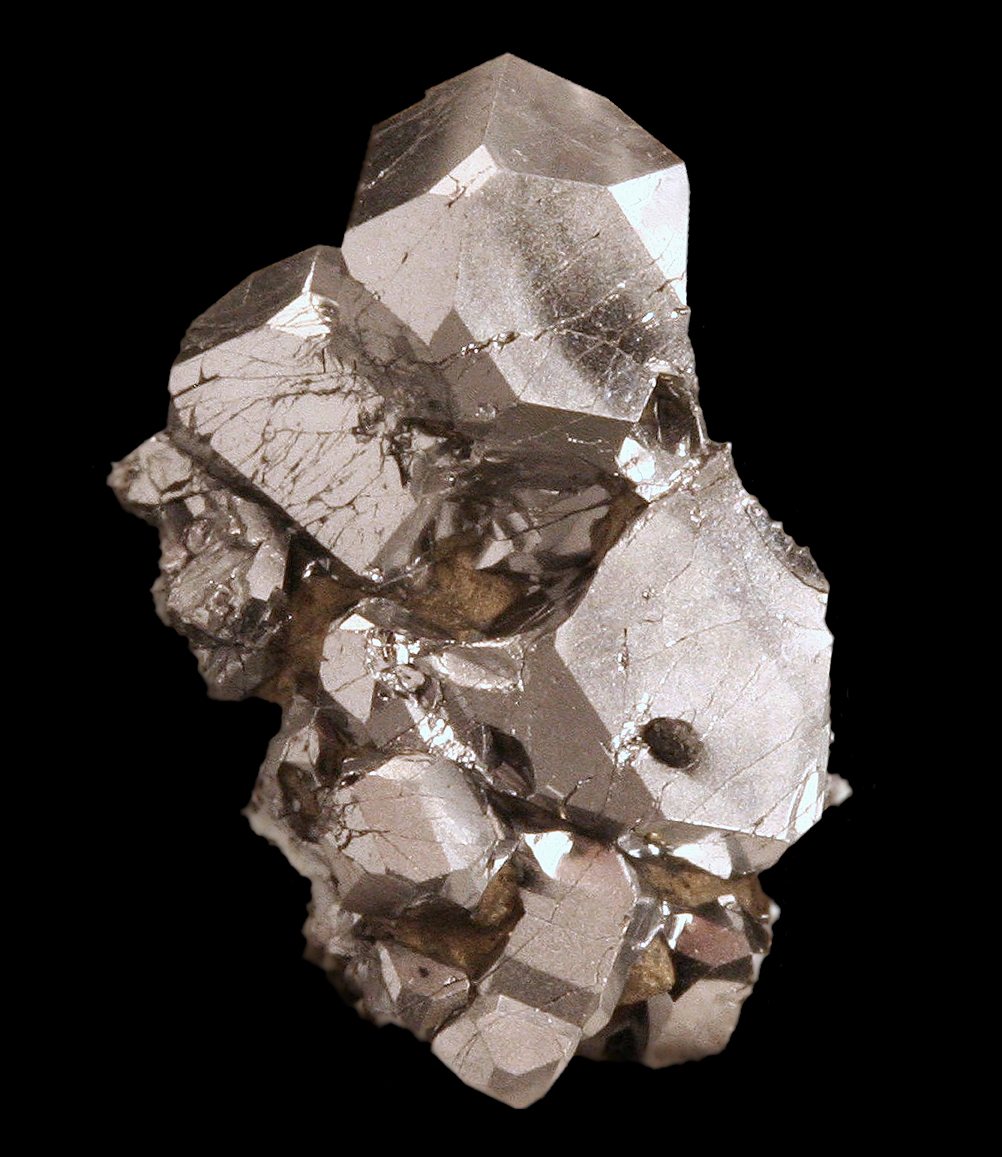
Sperrylite
The most common platinum mineral, a hard arsenide found in nickel-copper sulfide ores.
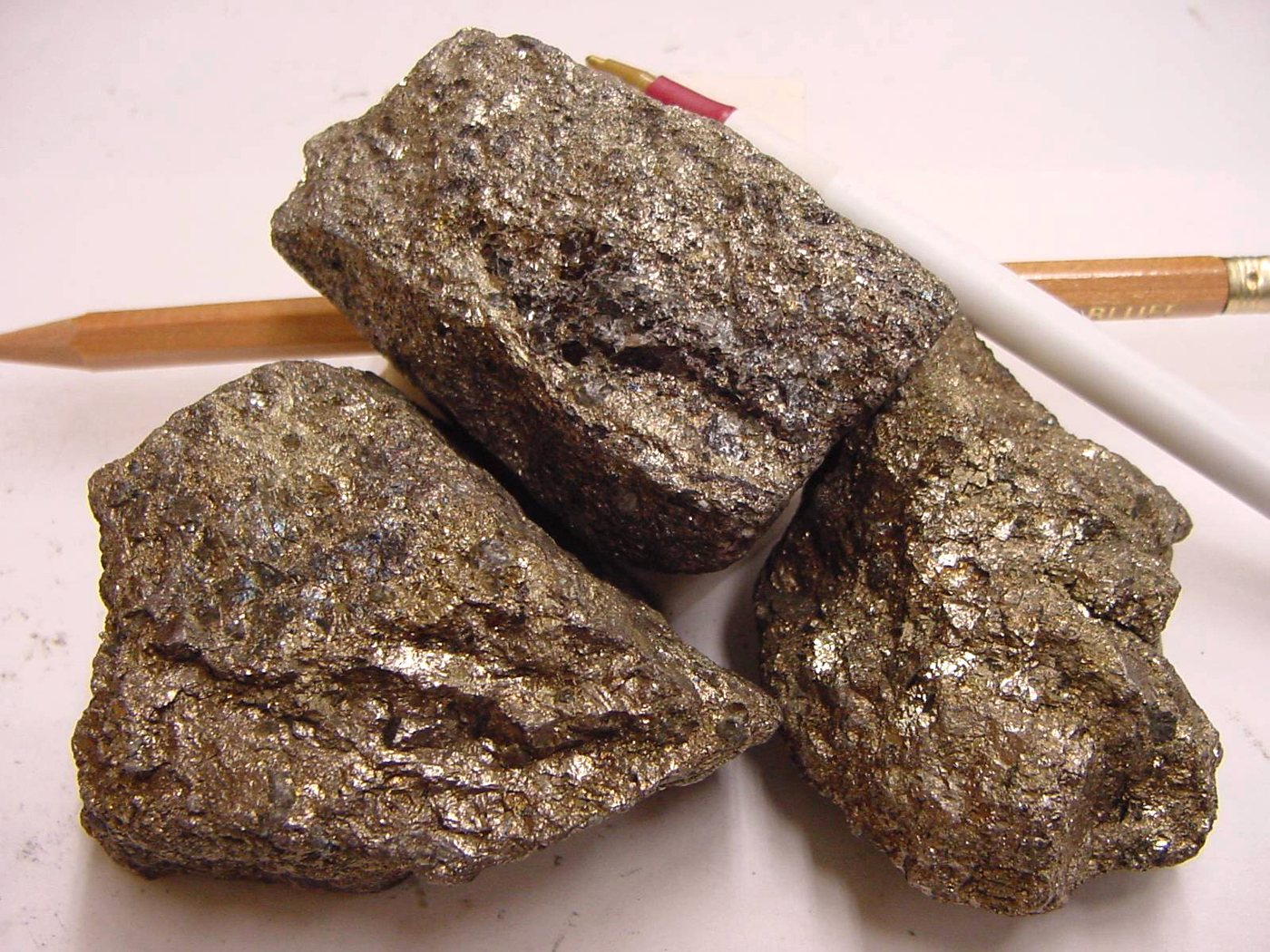
Pentlandite
The main nickel sulfide ore mineral, and the host that also carries most by-product platinum-group metals.
Ai nắm giữ trữ lượng
PGM reserves
PGM reserveskilograms 2025
USGS Mineral Commodity Summaries 2026 · nguồn ↗
| Quốc gia | Trữ lượng | Tỷ phần thế giới |
|---|---|---|
| South Africa | 63,000,000 | 82.9% |
| Russia | 11,000,000 | 14.5% |
| Zimbabwe | 1,300,000 | 1.7% |
| United States | 590,000 | 0.8% |
| Canada | 310,000 | 0.4% |
| Other countries | Not applicable | — |
| Tổng toàn cầu | >76,000,000 | 100% |
Nguồn công bố tổng sản lượng thế giới này dưới dạng khoảng giới hạn chứ không phải một con số điểm, do đó các tỷ phần ở cột cuối cùng cũng là các giới hạn.