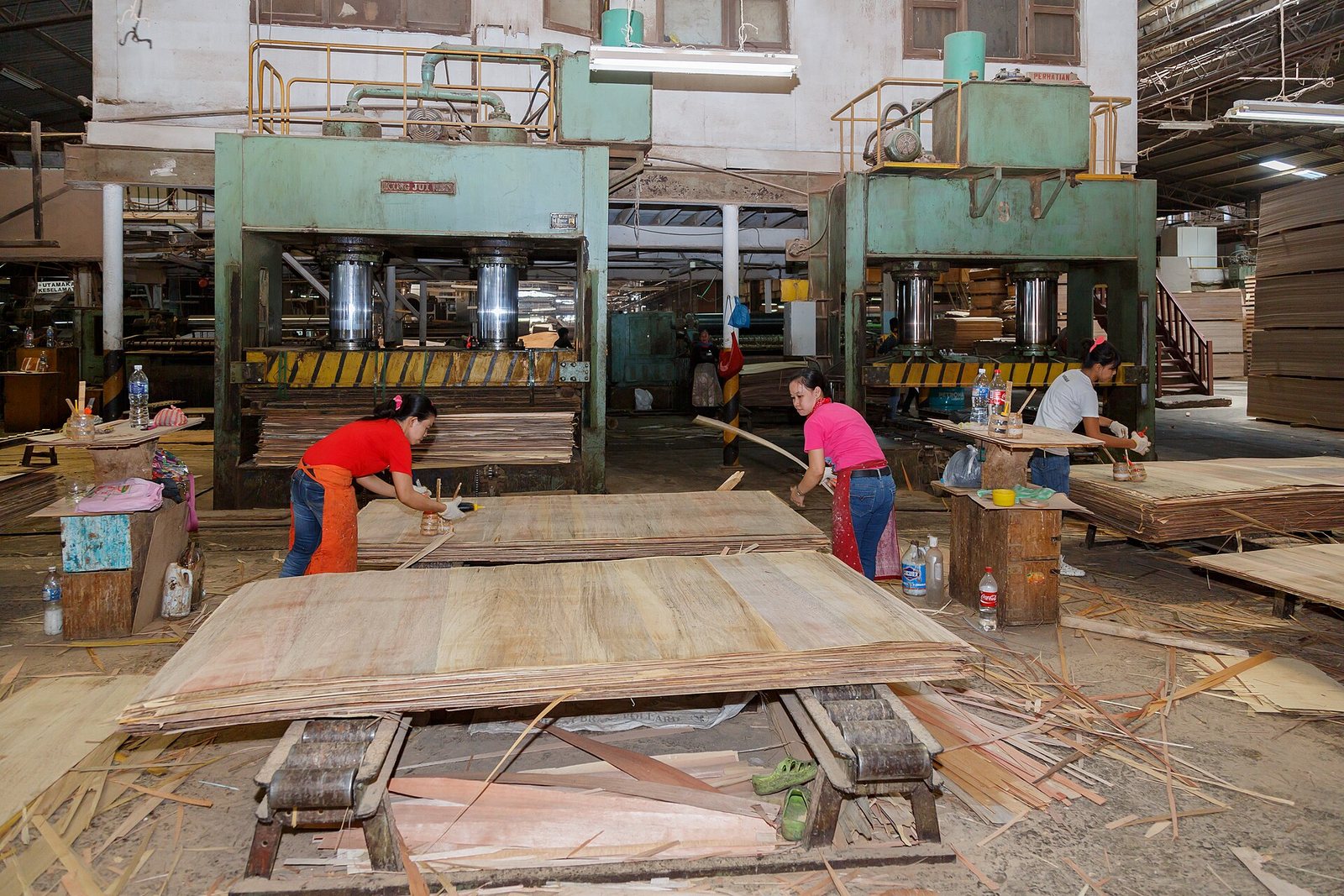
What is it?
Thin layers of wood peeled from a log and glued in a stack with the grain crossed at right angles.
Why does it matter?
Crossing the grain is what makes plywood behave: it is strong in both directions, barely moves with moisture and holds a fastener near an edge, none of which solid wood does. That is why it survives in structural and marine uses where cheaper panels cannot follow.
Deeper written sections for this material have not been published yet. Everything below is drawn straight from the source datasets and is complete.
Price
Plywood, US producer price index
Annual averageIndex 1982=100
Basis: US producer price index for plywood. An index, not a price.. Annual averages as published in FRED (US Bureau of Labor Statistics producer price indexes) · source ↗. These are reference annual averages, not a live market quote.
Softwood veneer and plywood, US producer price index
Annual averageIndex 1982=100
Basis: US producer price index for softwood veneer and plywood - the structural sheathing grades rather than decorative hardwood panels.. Annual averages as published in FRED (US Bureau of Labor Statistics producer price indexes) · source ↗. These are reference annual averages, not a live market quote.
What it is used for
All end markets →| End market | What it does there | Importance |
|---|---|---|
| Housebuilding | Structural sheathing, subfloor and formwork | Defining |
| Furniture & Joinery | Curved and structural furniture parts | Important |