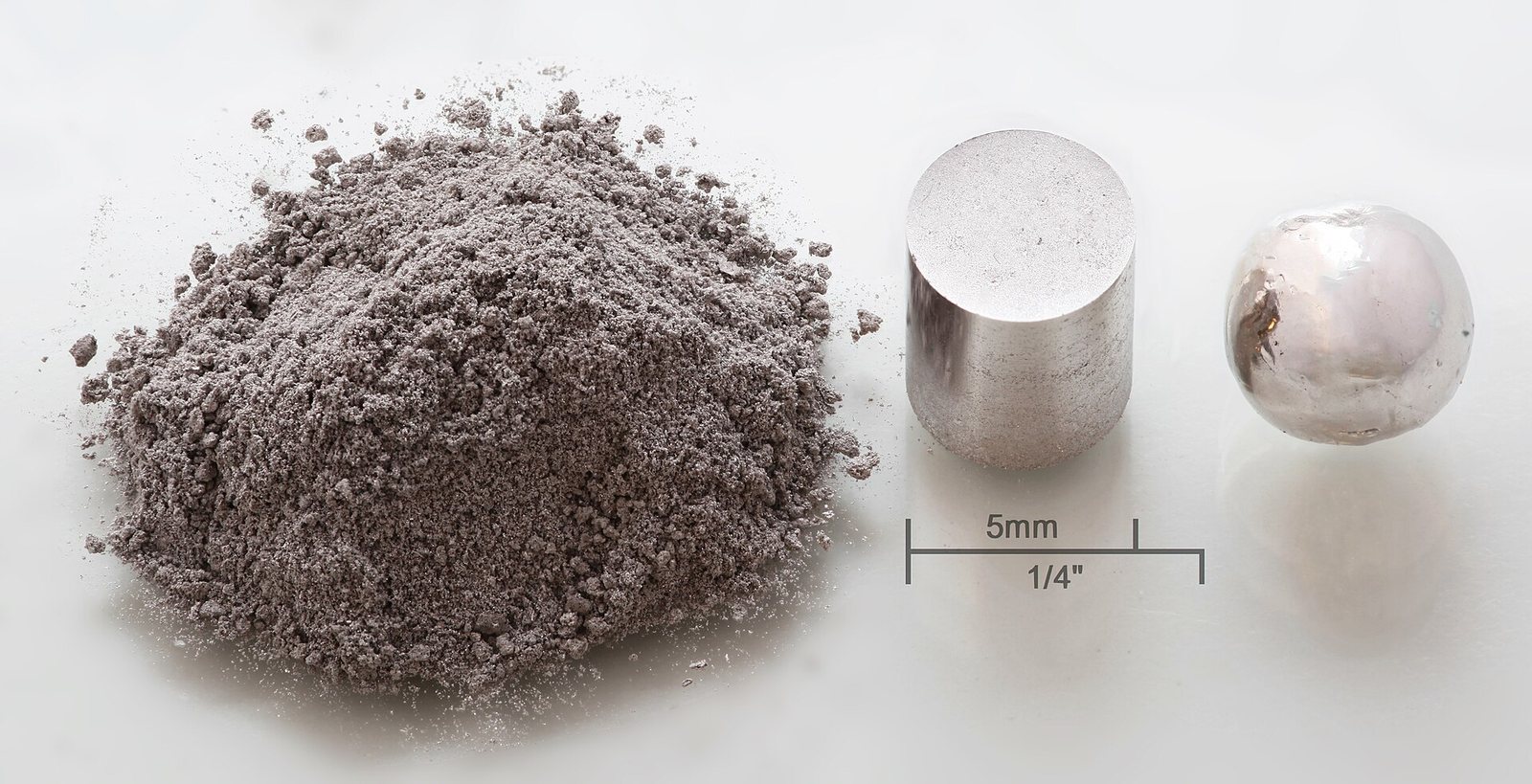
Was ist das?
The rarest of the metals traded in any volume, produced in tens of tonnes a year, and the only practical way to strip nitrogen oxides from petrol exhaust.
Warum ist das wichtig?
Rhodium's price history is the clearest illustration in any commodity of what happens when demand is inelastic and supply is a by-product.
Where it is in the Earth
Rhodium belongs to the platinum-group metals (PGMs), a family of six elements — platinum, palladium, rhodium, ruthenium, iridium and osmium — that share similar atomic radii and tend to travel together through geological processes. They are siderophile elements, meaning they have a chemical affinity for iron and sulfur and prefer to bond with those rather than oxygen. When the Earth was young and largely molten, most of the planet's PGM budget sank with iron toward the core. What remains in the crust arrived later, carried by deep-sourced magmas — molten rock — that intruded into overlying rock and slowly cooled.
The concentrations that matter for mining occur in two main settings. The first is layered mafic intrusions: enormous bodies of dark, iron- and magnesium-rich rock that solidified slowly enough for minerals to settle out in layers, like sediment in a quiet lake. As the magma cooled, sulfide minerals — compounds of sulfur and metals — formed droplets that sank and collected in specific horizons, dragging PGMs with them. The Bushveld Complex in South Africa is the largest such structure known, and it hosts the great majority of the world's identified PGM resources. The second setting is magmatic nickel-copper-sulfide deposits, where a similar process of sulfide separation occurred in a different geological context. The Norilsk-Talnakh system in Siberia is the principal example of this type. In both cases rhodium is not a mineral in its own right in any commercially meaningful sense — it occurs in solid solution within sulfide and alloy phases alongside platinum and palladium, and is extracted only because those host metals are worth mining.
The consequence of this geology is geographical concentration that has no parallel among commonly traded metals. The Bushveld Complex alone accounts for the dominant share of world PGM production, and there is no geologically equivalent structure elsewhere that has been brought into production. Rhodium's scarcity is therefore not simply a matter of low crustal abundance; it is the product of a very specific set of conditions — the right intrusion, the right sulfide event, the right preservation over billions of years — that happened to occur in a small number of places.
Getting it out
Because rhodium occurs only within PGM-bearing ore, the mining method used is determined entirely by the host deposit rather than by rhodium itself. In the Bushveld Complex, the ore horizons — called reefs — are thin, near-horizontal layers that dip gently underground. At shallower depths, open-pit mining removes overlying rock in benches to expose the reef, as at Mogalakwena. At greater depths, where open-pit working is no longer economical because of the volume of waste rock that would have to be moved, underground methods are used instead. At Norilsk-Talnakh, the ore body is accessed entirely underground, with miners working in deep stopes — excavated chambers — carved into the sulfide ore.
Grade in PGM mining is expressed in grams per tonne of ore, and for rhodium specifically the grade within a typical reef is very low indeed — a small fraction of the already-modest platinum grade. This means that for every tonne of metal produced, a very large mass of rock must be mined, crushed and processed. The ratio of waste rock to ore — the strip ratio in open-pit terms — varies by deposit, but even in relatively favourable open-pit operations the volumes of material handled are substantial. Underground mining avoids moving barren waste on the same scale, but it is slower, more labour-intensive and more expensive per tonne of rock broken. The economics of the whole operation rest on the combined value of all the PGMs and base metals recovered together; no individual element, least of all rhodium, could justify the mine on its own.
What pulls on it
Almost all rhodium that reaches the market goes into three-way catalytic converters, the devices fitted to petrol-engine vehicles that clean exhaust gases. A catalytic converter uses a ceramic or metallic substrate coated with a thin wash of precious metals; when hot exhaust gases pass over this coating, chemical reactions convert harmful compounds into less harmful ones. Rhodium's specific role is the reduction of nitrogen oxides — NOx — back to nitrogen and oxygen. No other material performs this reaction as efficiently under the temperature and chemical conditions found in a car exhaust, which is why rhodium demand is so tightly coupled to petrol vehicle production and to the strictness of emissions regulations.
The intensity figures in the table show that each vehicle requires a small but non-trivial mass of rhodium. Multiplied across tens of millions of vehicles produced each year globally, this produces a sustained and relatively predictable base of demand. That demand has grown over time as emissions standards have tightened in major markets — tighter standards require more complete NOx conversion, which generally means higher loadings of rhodium per vehicle. The trajectory of this demand depends entirely on regulatory choices: if standards tighten further, loadings tend to rise; if they are relaxed, the reverse is possible.
The significant long-term uncertainty is the electrification of personal transport. Battery electric vehicles have no exhaust pipe and therefore no need for a catalytic converter of any kind. A sustained shift toward electric vehicles in major markets — China, Europe, North America — would reduce the number of new petrol vehicles requiring autocatalysts. How quickly that shift occurs, and whether it is offset by growth in vehicle production in markets where electrification is slower, determines whether total rhodium demand in autocatalysts grows, holds steady or contracts. Beyond autocatalysts, rhodium is used in specialist chemical processes and in certain electrical components, but these applications represent a much smaller share of total consumption.
Preis
dollars per troy ounce: Rhodium
Jahresdurchschnittdollars per troy ounce
Grundlage: dollars per troy ounce: Rhodium. Jahresdurchschnitte gemäß Veröffentlichung in USGS Mineral Commodity Summaries 2026 · Quelle ↗. Dies sind jährliche Referenzdurchschnittswerte, kein Live-Marktpreis.
Bergwerke, die es fördern
Alle Minen →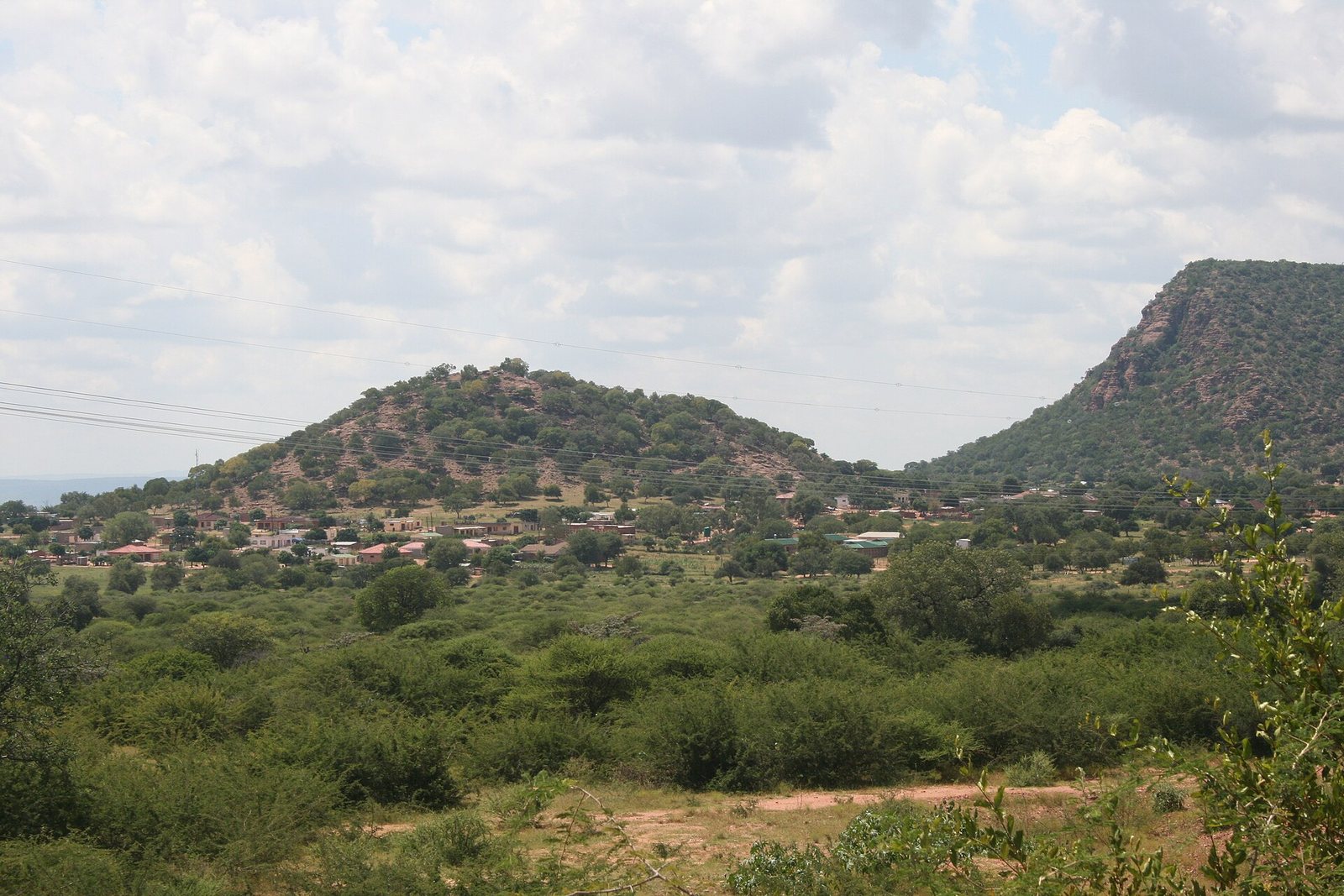
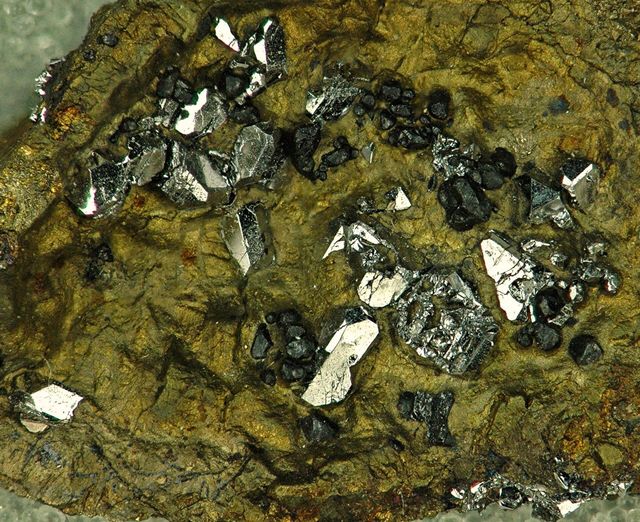
Wo es aufbereitet und raffiniert wird
| Anlage | Art | Stufe | Land | Rolle |
|---|---|---|---|---|
| Rustenburg Base & Precious Metals Refineries | Raffinerie | Raffination | South Africa | Ausgabe |
Wie viel eine Technologie davon benötigt
| Technologie | Menge | Angegeben | Grundlage |
|---|---|---|---|
| Three-Way Catalytic Converter No practical substitute. | 0.0002–0.001 kg | per vehicle | Nitrogen-oxide reduction |
Indicative range compiled from published technology studies and chemistry; verify against a manufacturer specification before use. Diese Zahlen mit beliebiger Skalierung im Materialrechner ausführen →
Exportkontrollen
| Land | Kontrolle | Gilt für |
|---|---|---|
| Venezuela | Export ban | Bauxite, cassiterite, columbite-tantalite, copper, gold, rhodium, silver, and thorium (2024). ↗ |
USGS Mineral Commodity Summaries 2026, table 4 — controls in effect as of January 2026, excluding controls since lifted.