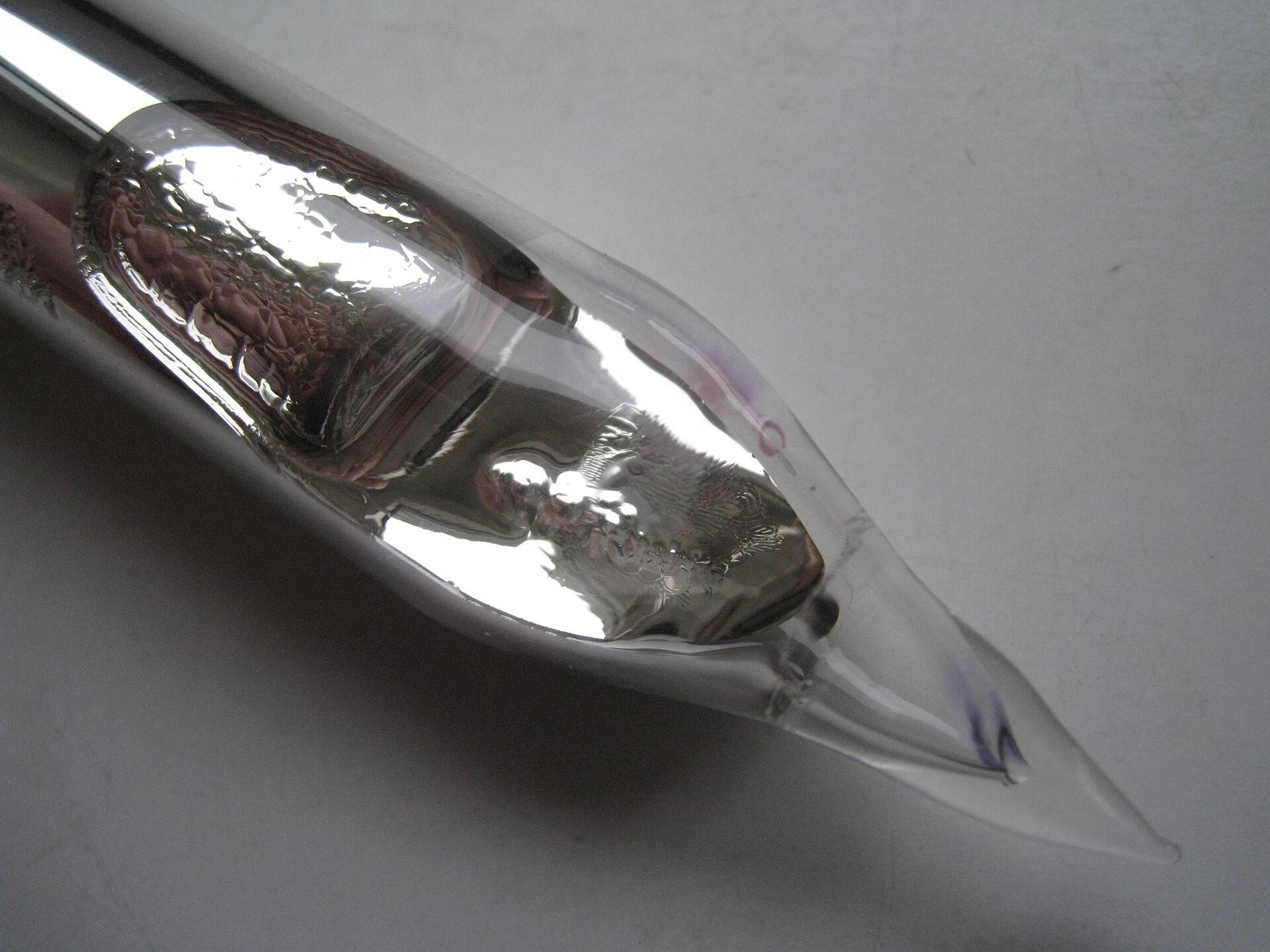
Wat is het?
Caesium's cheaper neighbour, recovered from the same rare deposits, and the basis of the atomic clocks small enough to fit in a rack.
Waarom is het van belang?
Rubidium clocks keep telecom networks and power grids synchronised where a caesium standard would be too expensive.
Where it is in the Earth
Rubidium is not concentrated by any geological process that produces a dedicated rubidium ore body. Instead, it accumulates as a trace constituent in minerals that formed late in the crystallisation of granitic magmas. As a body of granite-type melt cools, the common elements — silicon, aluminium, potassium, sodium — crystallise out first, leaving behind a residual fluid progressively enriched in elements that do not fit neatly into the common mineral structures. Rubidium is one of these. Its atom is large, similar in size to potassium, and it substitutes for potassium wherever potassium minerals form, but it is never abundant enough to crystallise in its own right under natural conditions.
The rock types that hold the highest rubidium concentrations are pegmatites — exceptionally coarse-grained granitic rocks that represent the very last, most chemically evolved fraction of a cooling magma. Within pegmatites, two minerals account for nearly all economically relevant rubidium: lepidolite, a lithium-bearing mica, and pollucite, a caesium-aluminium silicate. Pollucite in particular can carry substantial rubidium because caesium and rubidium are geochemically similar and substitute for one another in the same crystal sites. The world's significant pegmatite occurrences — in Canada, Zimbabwe, Namibia, and parts of central Africa — are therefore the same localities that matter for lithium and caesium supply, and rubidium arrives as an inseparable companion of those elements.
Because rubidium's presence depends entirely on geochemical enrichment during late-stage magmatic processes, economically useful concentrations are rare and geographically scattered. No deposit is mined for rubidium alone. The element is wherever caesium and lithium pegmatites happen to be, and if those deposits are not being worked for those primary commodities, rubidium is not recovered either.
Getting it out
Rubidium is not mined as a target mineral. Every tonne of rubidium that enters commerce arrives because something else — predominantly caesium from pollucite, or lithium from lepidolite and related mica minerals — was worth extracting on its own terms. The mining method is therefore determined entirely by the host deposit: hard-rock underground or open-pit mining for pegmatites, or brine extraction for lithium-bearing brines, none of which are chosen with rubidium in mind.
At pegmatite operations, selective mining separates pollucite or lepidolite from the surrounding waste rock. The grades of rubidium in these minerals are a secondary consideration, and because production figures are not published, it is not possible to state what quantity of rubidium passes through any given operation. What can be said is that the ratio of waste rock moved to useful mineral won is governed by the geometry and grade of the pegmatite itself — which varies considerably between deposits — rather than by any rubidium-specific economics.
This by-product status has a practical consequence for supply: the amount of rubidium available to the market is a function of how much lepidolite or pollucite is being processed for lithium or caesium, not of any independent rubidium demand signal. If the primary mineral is not worth mining, rubidium simply does not appear, regardless of what buyers might be willing to pay for it.
What pulls on it
The dominant application pulling on rubidium is the atomic clock used in telecommunications networks, positioning systems, and power-grid synchronisation. A rubidium frequency standard works by locking an oscillator to the natural resonance frequency of rubidium-87 atoms. These clocks are not as accurate as caesium-beam primary standards over long periods, but they are considerably smaller, cheaper to produce, and adequate for most network timing purposes where a signal from a primary standard can periodically correct any accumulated drift. This combination of acceptable performance and manageable cost is what gives rubidium its niche: it sits between the precision of a caesium standard and the simplicity of a quartz oscillator.
Beyond atomic clocks, rubidium finds use in research applications — as a working medium in certain laser systems that exploit its well-characterised atomic transitions, and in atomic physics experiments. Rubidium-82, a radioactive isotope, is used in medical imaging as a myocardial perfusion agent, though this is a small and specialised slice of demand. The compound rubidium formate has been used as a dense brine in oil-field drilling operations, though whether that use is currently active at any scale is not reflected in publicly available data.
Growth in demand would most plausibly follow from expansion of telecommunications infrastructure that requires distributed timing, including mobile networks and datacentres. A sharp shift in either direction would depend on whether competing clock technologies — chip-scale atomic clocks based on other vapours, or improved GPS disciplining — erode the rubidium clock's position, or whether network densification increases the number of nodes that need independent timing capability. Neither the direction nor the pace of that substitution is settled.
Wie de reserves bezit
Australia, Canada, China, and Namibia were estimated to have reserves totaling less than 200,000 tons of recoverable rubidium materials
Australia, Canada, China, and Namibia were estimated to have reserves totaling less than 200,000 tons of recoverable rubidium materialsmetric tons 2025
USGS Mineral Commodity Summaries 2026 · bron ↗
| Land | Reserves | Aandeel van de wereld |
|---|---|---|
| Other countries | <200,000 | — |
Prijs
1?gram ampoules of 99.75% (metal basis) rubidium
Jaargemiddeldedollars per gram
Grondslag: 1?gram ampoules of 99.75% (metal basis) rubidium. Jaargemiddelden zoals gepubliceerd in USGS Mineral Commodity Summaries 2026 · bron ↗. Dit zijn referentiejaargemiddelden, geen live marktkoers.
10-gram ampoules of 99.8% (metal basis) rubidium formate hydrate
Jaargemiddeldedollars per 10-grams
Grondslag: 10-gram ampoules of 99.8% (metal basis) rubidium formate hydrate. Jaargemiddelden zoals gepubliceerd in USGS Mineral Commodity Summaries 2026 · bron ↗. Dit zijn referentiejaargemiddelden, geen live marktkoers.