Was ist das?
The rarest stable gas in the atmosphere — under one part in ten million — and the heaviest thing you can breathe.
Warum ist das wichtig?
Xenon is an anaesthetic, a satellite ion-thruster propellant and a chip-etching gas, and every gram of it was pulled out of air.
Where it is in the Earth
Xenon is not a mineral and it does not form deposits in any geological sense. It is a noble gas — one of the six elements in the far-right column of the periodic table that, under ordinary conditions, forms no chemical compounds and therefore cannot be locked into a rock or a crystal lattice. Instead, xenon exists as free atoms dispersed through the atmosphere, mixed in with nitrogen, oxygen, argon and the other gases we breathe. It arrived in Earth's atmosphere partly through outgassing from the interior of the planet over geological time, and partly as a constituent of the primordial solar nebula from which the Earth formed. Because it is chemically inert, none of it has been captured in sediment or ore.
What makes xenon geologically interesting is precisely how thinly spread it is. Of all the stable gases in the atmosphere, xenon is the rarest. The data give its atmospheric concentration as under one part in ten million, which means the entire global supply of the gas is contained in the ordinary air around us — it is simply present at such a low concentration that recovering it requires processing enormous volumes of air to accumulate a meaningful quantity. There is no ore body to find, no deposit to delineate, no reserve figure in the conventional sense. The resource is the atmosphere itself, and it is the same everywhere on Earth.
There is a separate line of geochemical enquiry into why Earth's atmosphere contains less xenon than the solar system's primordial composition would predict — a puzzle known as the missing xenon problem — but that has no bearing on supply. For practical purposes, the question of where xenon is concentrated enough to recover is answered entirely by the engineering of air-separation plants rather than by geology.
Getting it out
Xenon is not mined. Because it has no ore mineral and no deposit, the vocabulary of mining — open pit, underground workings, drill holes, ore grades, stripping ratios — simply does not apply. Instead, every gram of xenon in commerce is recovered as a by-product of the industrial process used to manufacture oxygen and nitrogen from air. That process is called cryogenic air separation, meaning it works by cooling air until its components liquefy at different temperatures and can therefore be separated. Xenon, being heavier than oxygen or nitrogen and present in far smaller quantities, accumulates in certain fractions of this process and is drawn off for further purification.
The practical consequence is that xenon production is entirely dependent on how much oxygen and nitrogen the world's industrial-gas plants choose to produce, and on whether those plants are equipped with the additional processing stages needed to capture the rare gases rather than vent them. Most air-separation units are not instrumented to recover xenon at all; only a subset of the world's capacity does so, and those tend to be large, modern plants where the economics of rare-gas recovery justify the additional capital. The concentration of xenon in even the richest feedstream — liquid oxygen, where it naturally concentrates — is low enough that the volumes of liquid oxygen processed to yield a meaningful amount of xenon are very large.
Because the feedstock is air and the production method is continuous industrial processing rather than extraction from a finite deposit, there is no waste rock, no tailings pond and no land disturbance in the sense that mining produces. The environmental footprint is instead that of the air-separation plant itself, primarily its energy consumption, which is substantial given the refrigeration duty required to liquefy and fractionate air.
What pulls on it
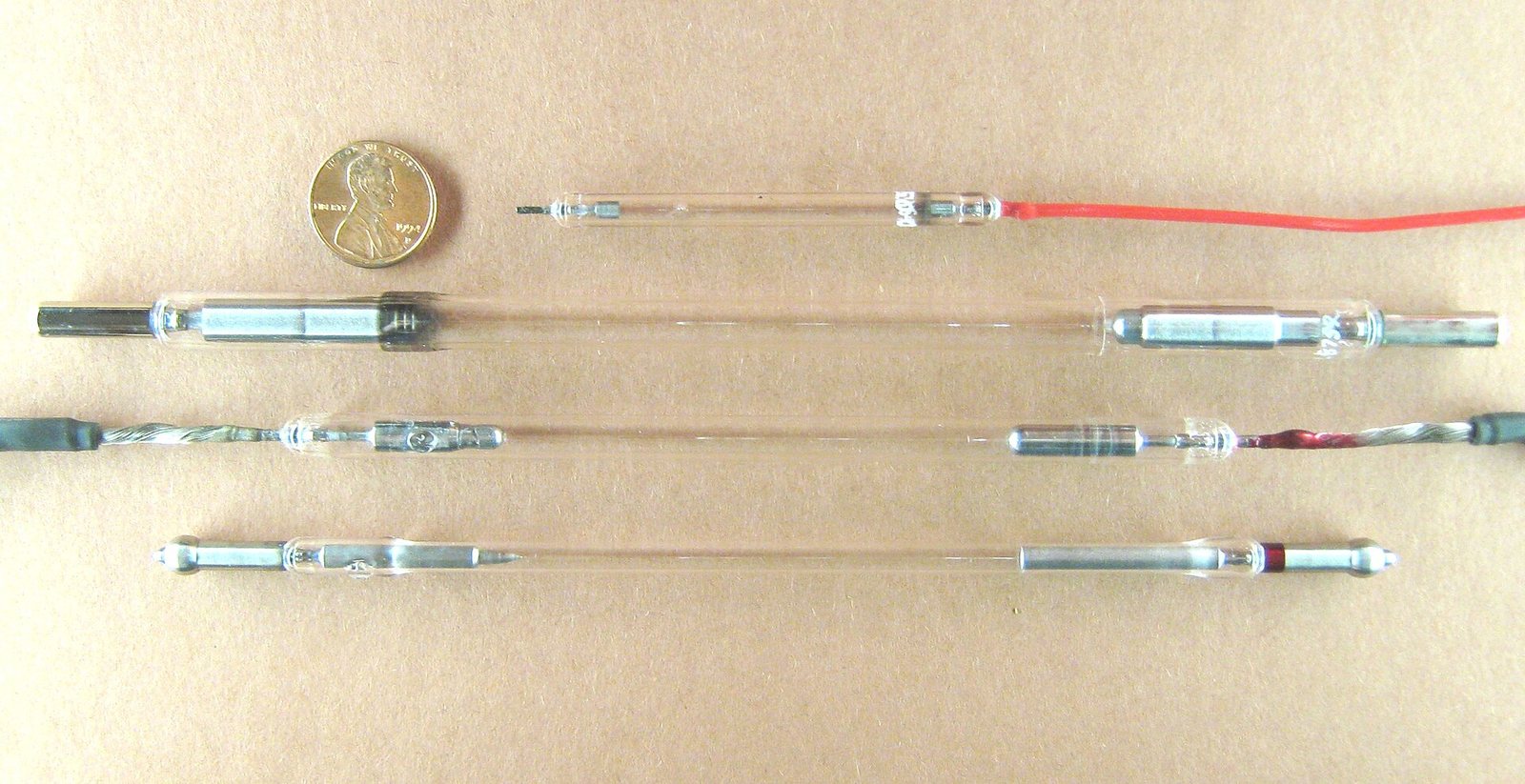
Xenon is bought by a small number of distinct industries that have little in common with one another except that they each need a property no cheaper material offers. In lighting, xenon's ability to produce a very bright, white-spectrum flash when an electrical discharge passes through it made it the standard fill gas for high-intensity discharge lamps — cinema projectors and vehicle headlights in particular. In medicine, xenon functions as a general anaesthetic when inhaled at appropriate concentrations; unlike most anaesthetic agents it is not metabolised by the body and leaves no residue, which gives it a clean safety profile, though its cost has kept it confined to specialist applications rather than routine use. In semiconductor manufacturing, xenon is used in certain ion-implantation and plasma-etching steps where its mass and chemical inertness are both relevant. And in space, xenon has become the standard propellant for ion thrusters — a form of electric propulsion — used on commercial and government satellites, where its high atomic mass and ease of ionisation allow thrusters to operate efficiently over long mission lifetimes.
The satellite propulsion market has grown as the number of spacecraft using ion propulsion has increased, including large constellations of commercial communications satellites in low Earth orbit. Semiconductor demand reflects the general trajectory of chip manufacturing, with process nodes requiring ever more precise gas-phase chemistry. Lighting demand has been declining as high-intensity xenon lamps in vehicles are displaced by light-emitting diode technology, which needs no fill gas. Medical demand remains small and relatively stable, constrained by price rather than by any scientific limitation. The net effect is that growth in aerospace and semiconductor end-uses has partially offset the contraction in lighting.
A sharp change in demand would most plausibly come from a rapid expansion of satellite constellations beyond current plans, or from the adoption of xenon anaesthesia into mainstream clinical practice — the latter requiring a large reduction in price that would itself require a substantial expansion of production capacity. A contraction would follow any shift in satellite propulsion technology away from xenon ion engines, though no such shift appears to be underway based on current engineering practice in the industry.
Turning ore into product Ebene 3
The path from air to usable xenon passes through several concentration stages, each of which removes a different impurity or unwanted gas fraction. In a cryogenic air-separation unit, air is first compressed, cleaned of water vapour and carbon dioxide, then cooled progressively until it liquefies. Distillation columns — tall vessels that exploit small differences in boiling point — separate the liquid into its main fractions: nitrogen overhead, oxygen as the primary product, and a heavier fraction in which argon, krypton and xenon accumulate. This heavy fraction is sometimes called the krypton-xenon concentrate, and it represents the starting material for all downstream xenon refining.
The concentrate is processed through a series of further distillation and adsorption steps to remove hydrocarbons, nitrous oxide, krypton and other trace components. Adsorption uses solid materials — typically activated charcoal or zeolite — whose surfaces selectively hold certain molecules, allowing others to pass. The xenon fraction that emerges from these stages is then subjected to final purification, often including catalytic oxidation to remove residual hydrocarbons and additional distillation to separate xenon from krypton, whose boiling points are close enough to make separation technically demanding. The finished product is typically supplied as a compressed high-purity gas, with different purity specifications for lighting, anaesthetic, semiconductor and space-propulsion applications, the semiconductor and space grades being the most demanding.
Losses occur at each stage of concentration and purification, and the overall yield from air-separation feedstock to finished xenon is modest given the starting concentration. The cost structure of xenon production is therefore dominated not by raw material cost — air is free — but by the capital cost of specialised equipment, the energy cost of refrigeration and recompression, and the operating cost of plants that must run continuously and carefully to maintain purity specifications. These economics mean that xenon production is largely indifferent to small changes in the xenon price in isolation; what matters is whether the host air-separation plant is running profitably on its main products.
Substitution and recycling Ebene 3
In ion propulsion, krypton is the most technically developed alternative to xenon. It is lighter, which means a thruster running on krypton operates at lower specific impulse — a measure of how efficiently a propellant is used — than the same thruster running on xenon, requiring a larger propellant load for an equivalent mission. Krypton is, however, substantially more abundant in the atmosphere than xenon and therefore cheaper per unit volume. Some satellite programmes have adopted krypton specifically to reduce propellant cost and improve supply security, accepting the performance trade-off. Argon has also been investigated as an ion propellant but requires even greater compromises in thruster design.
In anaesthesia, nitrous oxide and conventional volatile agents such as sevoflurane or isoflurane perform a broadly similar clinical function at far lower cost, and they dominate the market for that reason. Xenon anaesthesia offers certain physiological advantages — neuroprotective properties have been observed in research settings, and the absence of metabolic breakdown products is clinically attractive — but these advantages have not been sufficient, at xenon's current price, to drive widespread clinical adoption. The substitution question here runs in reverse: xenon could substitute for conventional agents in more settings if its price fell, rather than being displaced by something cheaper.
Recycling of xenon is practised in some high-value applications, particularly in medical and research contexts, where the gas can be collected after use, purified and returned to service. In most industrial and satellite applications, recovery is technically impractical: propellant is expelled into space, and process gases in semiconductor tools are consumed or exhausted. The fraction of xenon that is recycled in practice is therefore small relative to total consumption. The barrier to higher recycling rates is mostly economic and logistical rather than chemical — xenon can be recovered and repurified without difficulty — but the infrastructure to do so at scale outside specialist medical circuits has not been built.
Wer es produziert
Auf einer Karte anzeigen →Rare gases production, (million liters)
Rare gases production, (million liters)million liters 2025 (geschätzt) Weltgesamt 12.00 million liters
USGS Mineral Commodity Summaries 2026 · Reported in millions of litres of gas. · Quelle ↗
Tabelle seitwärts scrollen, um die restlichen Spalten zu sehen.
| Land | Produktion | Anteil an der Weltproduktion |
|---|---|---|
| Other countries | 12.00 | 100.0% |
| United States | 0.1 | 0.8% |
| Weltgesamt | 12.00 | 100% |
„Withheld" bedeutet, dass der USGS den Wert zurückgehalten hat, um keine Rückschlüsse auf Daten einzelner Unternehmen zuzulassen – er bedeutet nicht null. Die Länderwerte addieren sich nicht immer zum Weltgesamt, weil die Quelle jeden Einzelwert unabhängig rundet und eine Zeile „sonstige Länder" nicht immer ausweist.