Qu'est-ce que c'est ?
The rarest stable gas in the atmosphere — under one part in ten million — and the heaviest thing you can breathe.
Pourquoi est-ce important ?
Xenon is an anaesthetic, a satellite ion-thruster propellant and a chip-etching gas, and every gram of it was pulled out of air.
Where it is in the Earth
Xenon is not a mineral and it does not form deposits in any geological sense. It is a noble gas — one of the six elements in the far-right column of the periodic table that, under ordinary conditions, forms no chemical compounds and therefore cannot be locked into a rock or a crystal lattice. Instead, xenon exists as free atoms dispersed through the atmosphere, mixed in with nitrogen, oxygen, argon and the other gases we breathe. It arrived in Earth's atmosphere partly through outgassing from the interior of the planet over geological time, and partly as a constituent of the primordial solar nebula from which the Earth formed. Because it is chemically inert, none of it has been captured in sediment or ore.
What makes xenon geologically interesting is precisely how thinly spread it is. Of all the stable gases in the atmosphere, xenon is the rarest. The data give its atmospheric concentration as under one part in ten million, which means the entire global supply of the gas is contained in the ordinary air around us — it is simply present at such a low concentration that recovering it requires processing enormous volumes of air to accumulate a meaningful quantity. There is no ore body to find, no deposit to delineate, no reserve figure in the conventional sense. The resource is the atmosphere itself, and it is the same everywhere on Earth.
There is a separate line of geochemical enquiry into why Earth's atmosphere contains less xenon than the solar system's primordial composition would predict — a puzzle known as the missing xenon problem — but that has no bearing on supply. For practical purposes, the question of where xenon is concentrated enough to recover is answered entirely by the engineering of air-separation plants rather than by geology.
Getting it out
Xenon is not mined. Because it has no ore mineral and no deposit, the vocabulary of mining — open pit, underground workings, drill holes, ore grades, stripping ratios — simply does not apply. Instead, every gram of xenon in commerce is recovered as a by-product of the industrial process used to manufacture oxygen and nitrogen from air. That process is called cryogenic air separation, meaning it works by cooling air until its components liquefy at different temperatures and can therefore be separated. Xenon, being heavier than oxygen or nitrogen and present in far smaller quantities, accumulates in certain fractions of this process and is drawn off for further purification.
The practical consequence is that xenon production is entirely dependent on how much oxygen and nitrogen the world's industrial-gas plants choose to produce, and on whether those plants are equipped with the additional processing stages needed to capture the rare gases rather than vent them. Most air-separation units are not instrumented to recover xenon at all; only a subset of the world's capacity does so, and those tend to be large, modern plants where the economics of rare-gas recovery justify the additional capital. The concentration of xenon in even the richest feedstream — liquid oxygen, where it naturally concentrates — is low enough that the volumes of liquid oxygen processed to yield a meaningful amount of xenon are very large.
Because the feedstock is air and the production method is continuous industrial processing rather than extraction from a finite deposit, there is no waste rock, no tailings pond and no land disturbance in the sense that mining produces. The environmental footprint is instead that of the air-separation plant itself, primarily its energy consumption, which is substantial given the refrigeration duty required to liquefy and fractionate air.
What pulls on it
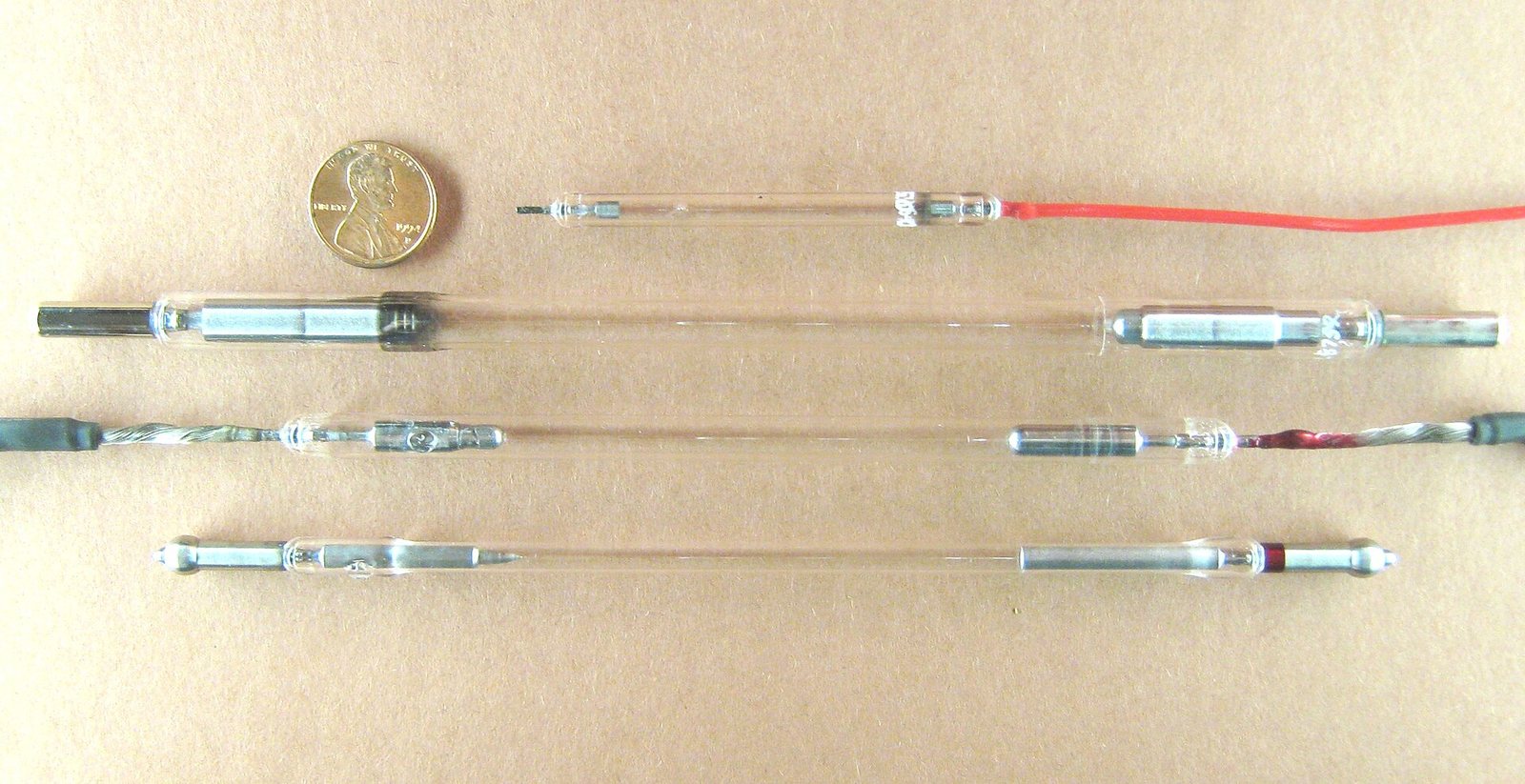
Xenon is bought by a small number of distinct industries that have little in common with one another except that they each need a property no cheaper material offers. In lighting, xenon's ability to produce a very bright, white-spectrum flash when an electrical discharge passes through it made it the standard fill gas for high-intensity discharge lamps — cinema projectors and vehicle headlights in particular. In medicine, xenon functions as a general anaesthetic when inhaled at appropriate concentrations; unlike most anaesthetic agents it is not metabolised by the body and leaves no residue, which gives it a clean safety profile, though its cost has kept it confined to specialist applications rather than routine use. In semiconductor manufacturing, xenon is used in certain ion-implantation and plasma-etching steps where its mass and chemical inertness are both relevant. And in space, xenon has become the standard propellant for ion thrusters — a form of electric propulsion — used on commercial and government satellites, where its high atomic mass and ease of ionisation allow thrusters to operate efficiently over long mission lifetimes.
The satellite propulsion market has grown as the number of spacecraft using ion propulsion has increased, including large constellations of commercial communications satellites in low Earth orbit. Semiconductor demand reflects the general trajectory of chip manufacturing, with process nodes requiring ever more precise gas-phase chemistry. Lighting demand has been declining as high-intensity xenon lamps in vehicles are displaced by light-emitting diode technology, which needs no fill gas. Medical demand remains small and relatively stable, constrained by price rather than by any scientific limitation. The net effect is that growth in aerospace and semiconductor end-uses has partially offset the contraction in lighting.
A sharp change in demand would most plausibly come from a rapid expansion of satellite constellations beyond current plans, or from the adoption of xenon anaesthesia into mainstream clinical practice — the latter requiring a large reduction in price that would itself require a substantial expansion of production capacity. A contraction would follow any shift in satellite propulsion technology away from xenon ion engines, though no such shift appears to be underway based on current engineering practice in the industry.
Qui le produit
Voir sur une carte →Rare gases production, (million liters)
Rare gases production, (million liters)million liters 2025 (estimé) Total mondial 12.00 million liters
USGS Mineral Commodity Summaries 2026 · Reported in millions of litres of gas. · source ↗
Faire défiler le tableau latéralement pour afficher les colonnes restantes.
| Pays | Production | Part mondiale |
|---|---|---|
| Other countries | 12.00 | 100.0% |
| United States | 0.1 | 0.8% |
| Total mondial | 12.00 | 100% |
« Withheld » signifie que l'USGS a supprimé le chiffre afin de ne pas divulguer les données d'une entreprise individuelle — cela ne signifie pas zéro. La somme des lignes par pays ne correspond pas toujours au total mondial, car la source arrondit chaque chiffre de manière indépendante et ne détaille pas toujours une ligne « autres pays ».