¿Qué es?
The metal that steel is dipped in so it does not rust — a sacrificial coating that corrodes instead of the iron underneath.
¿Por qué importa?
Galvanising is the quiet reason bridges, guardrails and roofing last decades instead of years. Zinc also carries indium, germanium and gallium as by-products.
Where it is in the Earth
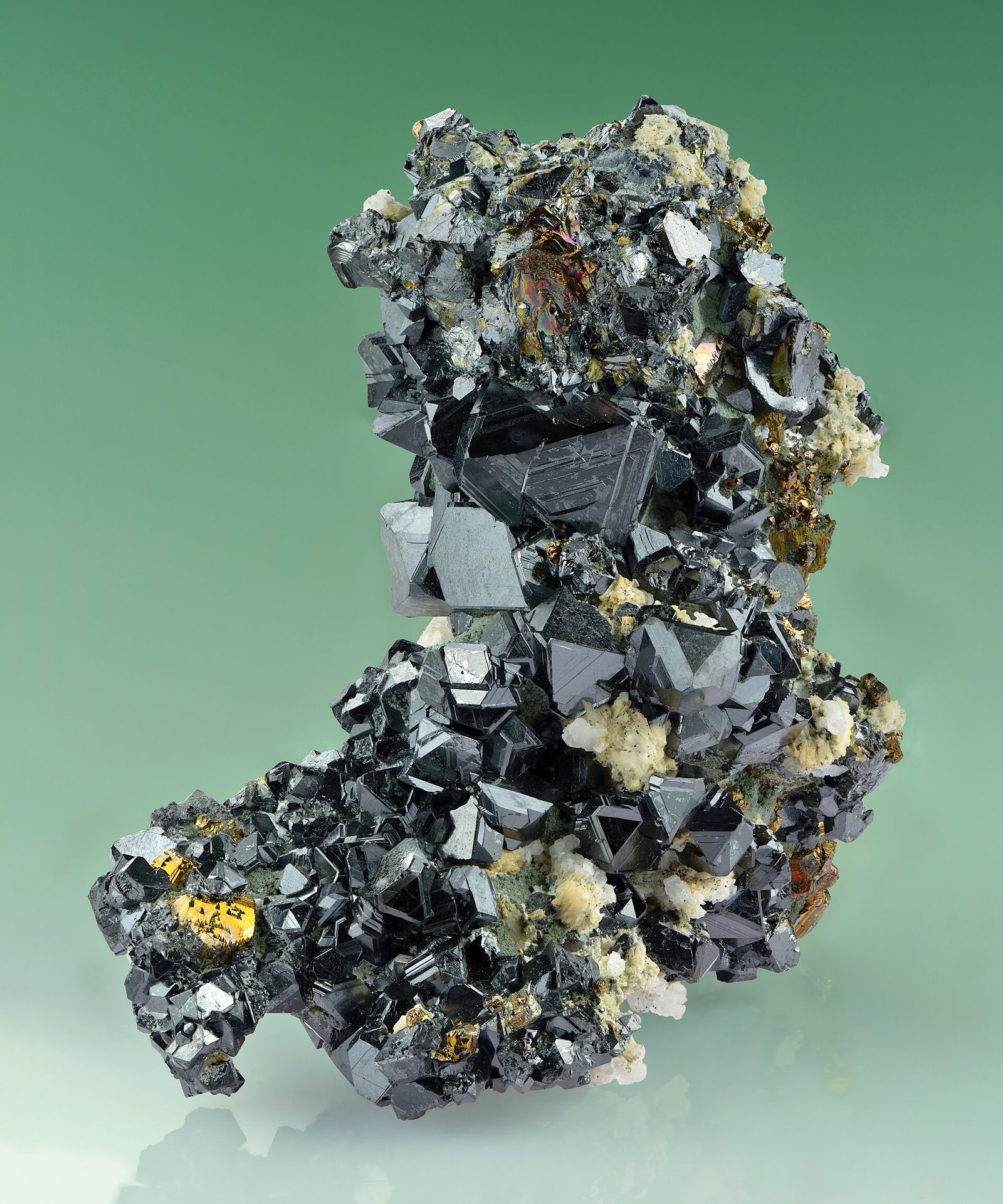
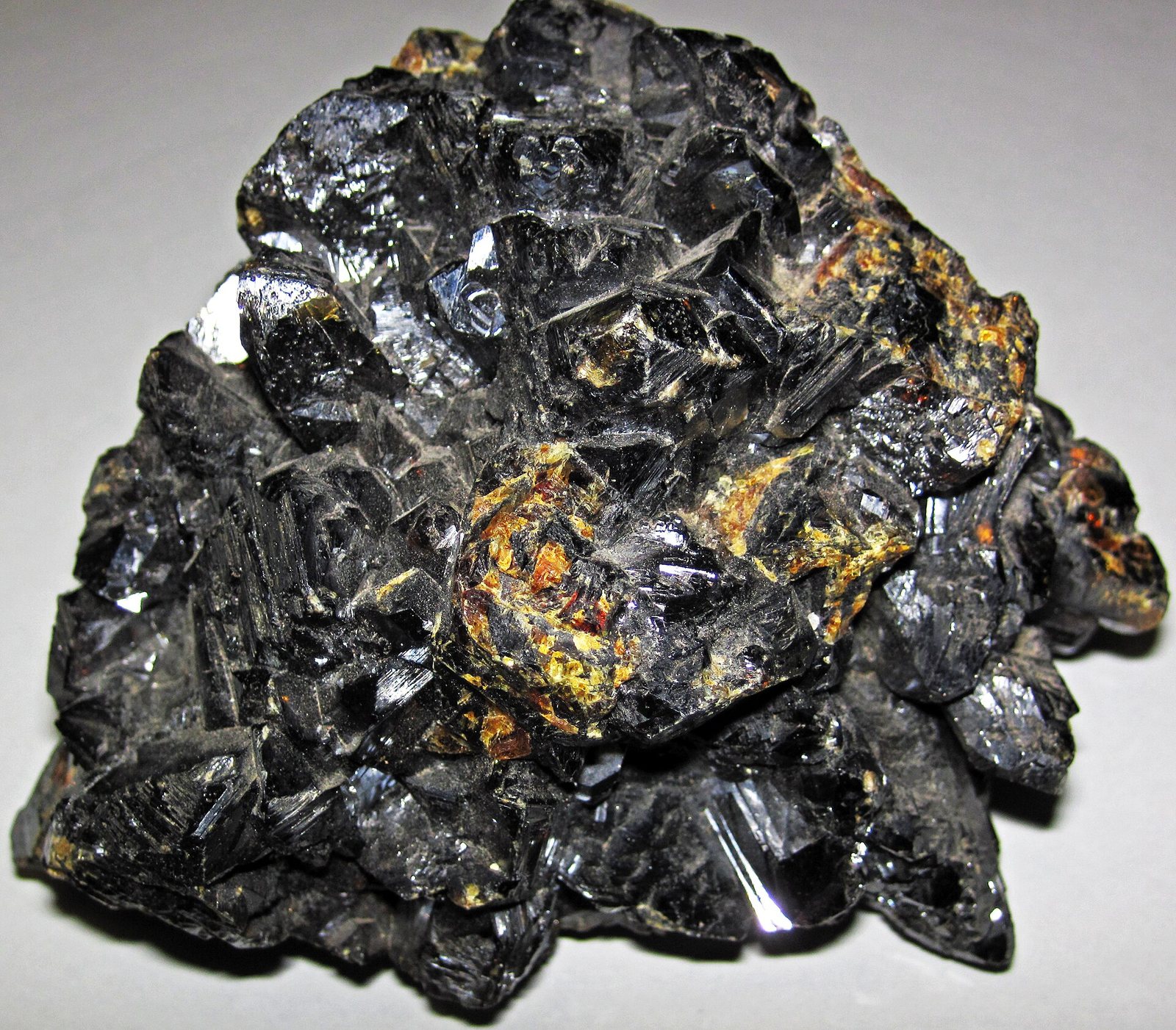
Zinc does not distribute itself evenly through the Earth's crust. It concentrates into minable deposits through a handful of well-understood geological processes, all of which share a common requirement: hot, mineral-laden fluids must move through rock and then precipitate their cargo where conditions change. The principal ore mineral is sphalerite, a zinc-iron sulfide written chemically as (Zn,Fe)S. Sphalerite is the starting point for almost all primary zinc production, and understanding where it forms explains why the world's zinc mines cluster where they do.
The most important deposit type is the sediment-hosted exhalative deposit, known in the industry as a SEDEX deposit. These form on ancient seafloors when hot, metal-rich brines exhale through vents and precipitate sulfide minerals into the surrounding sediment. The result is a flat, layered orebody that can be enormous and consistent in grade — the Red Dog mine in Alaska is a textbook example. A second major family is the Broken Hill-type deposit, named after the famous Australian district, where metamorphic processes have reworked and concentrated original seafloor sulfides into very high-grade lenses, as seen at the Cannington mine. A third, shallower family is the Mississippi Valley-type, or MVT, deposit, where zinc and lead sulfides precipitate in carbonate rocks such as limestone as warm basinal brines migrate through them. These tend to be lower grade but can be geologically straightforward to mine.
Because these deposit types are tied to specific chapters of geological history — ancient rift basins, passive continental margins, carbonate platforms — the world's zinc endowment is not random. Australia holds the largest reported reserves, followed closely by China, with Russia, Peru and Mexico also holding substantial resources. The geography of reserves does not mirror the geography of annual production exactly, partly because ore grade, infrastructure and economics determine which deposits are worked at any given time, and partly because exploration continuously revises the reserve picture.
Getting it out
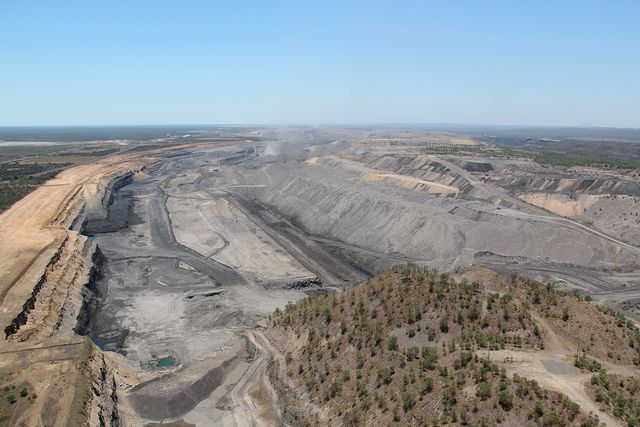
How a zinc deposit is mined depends almost entirely on the geometry and depth of the orebody. Shallow, flat-lying orebodies can sometimes be worked from the surface as open pits, which means stripping away overlying rock — called overburden — to expose the ore beneath. Red Dog in Alaska operates this way. Open-pit mining is generally lower cost per tonne of rock moved, but it produces very large volumes of waste material that must be managed on the surface. The ratio of waste rock to ore, called the strip ratio, matters enormously to the economics: a high strip ratio means a lot of diesel and blasting to reach each tonne of metal.
Deeper or narrower orebodies, including most Broken Hill-type deposits, are worked underground. Miners drive tunnels and shafts into the rock, then extract ore using methods such as cut-and-fill or open stoping, where large cavities are blasted out and the broken rock is hauled to the surface. Underground mining is more selective — it can follow the orebody without removing surrounding rock — but it is generally more expensive and slower to develop than an open pit. Cannington in Queensland is an underground operation of this kind.
The grade of a zinc deposit — the concentration of zinc in the ore, usually expressed as a percentage — determines how much rock must be processed to yield a given amount of metal. A higher grade means less material to mine, crush and treat per tonne of zinc produced, which directly reduces operating cost. Typical mineable grades vary considerably across deposit types, and what is economic at one point in time may not be at another as prices and costs shift. Grade also governs how much tailings — the finely ground rock left after the valuable minerals are extracted — must be stored or disposed of, which is one of the larger environmental management challenges at any zinc mine.
What pulls on it
The single largest use of zinc is galvanising steel — coating it with a thin layer of zinc to protect it from corrosion. Zinc works not merely as a physical barrier but as a sacrificial anode: because zinc is electrochemically more reactive than iron, it corrodes preferentially, protecting the steel underneath even if the coating is scratched. This property makes galvanised steel the material of choice wherever structural steel is exposed to weather: construction framing, roofing, guardrails, bridges, transmission towers and the like. Construction is therefore the dominant end market, and its health tracks closely with the rate at which new infrastructure is built and old infrastructure is replaced or maintained.
A second substantial use is die-casting, where zinc's low melting point of 419.5 °C and good fluidity make it suitable for producing detailed, dimensionally accurate components — door hardware, automotive parts, electrical fittings — by injecting molten zinc into moulds. Brass, an alloy of copper and zinc, accounts for a further share of demand, principally in plumbing fittings, musical instruments and decorative hardware. Zinc also serves as a micronutrient fertiliser in agriculture, correcting zinc-deficient soils in parts of South Asia and elsewhere, though this remains a smaller fraction of total use than galvanising.
Demand could shift in either direction depending on decisions made outside the zinc industry. Growth in renewable energy infrastructure — wind turbines, solar mounting systems, electricity transmission — requires galvanised steel throughout, so an accelerating energy transition would increase zinc consumption. Conversely, any structural change in how steel-framed buildings or vehicles are protected — for example a wide shift toward alternative coatings, polymer wrapping or fundamentally different materials — could erode galvanising demand over time. Neither shift is happening quickly at present, but the construction cycle in large economies, particularly China, has a strong short-term influence on how much zinc is consumed in any given year.
De dónde proviene en la roca
Todos los minerales de mena →Estos son los minerales que realmente contienen zinc. Un yacimiento solo es un cuerpo mineral si uno de ellos está suficientemente concentrado para costear su extracción.
Quién lo produce
Verlo en un mapa →Mine production
Mine productionthousand metric tons 2025 (estimado) Total mundial 13,000 thousand metric tons
USGS Mineral Commodity Summaries 2026 · Mine production of contained zinc; smelter production is a separate figure. · fuente ↗
Desplace la tabla lateralmente para ver las columnas restantes.
| País | Producción | Cuota mundial |
|---|---|---|
| China | 4,100 | 31.5% |
| Other countries | 2,000 | 15.4% |
| Peru | 1,500 | 11.5% |
| Australia | 1,100 | 8.5% |
| India | 870.0 | 6.7% |
| Mexico | 780.0 | 6.0% |
| United States | 670.0 | 5.2% |
| Bolivia | 500.0 | 3.8% |
| Russia | 430.0 | 3.3% |
| Kazakhstan | 360.0 | 2.8% |
| Sweden | 230.0 | 1.8% |
| Total mundial | 13,000 | 100% |
«Withheld» significa que el USGS suprimió el dato para evitar revelar información de una empresa concreta — no equivale a cero. Las filas por país no siempre suman el total mundial porque la fuente redondea cada cifra de forma independiente y no siempre desglosa una línea de «otros países».
Quién posee las reservas
Reserves
Reservesthousand metric tons 2025
USGS Mineral Commodity Summaries 2026 · fuente ↗
| País | Reservas | Cuota mundial |
|---|---|---|
| Australia | 64,000 | 26.7% |
| China | 60,000 | 25.0% |
| Russia | 29,000 | 12.1% |
| Other countries | 25,000 | 10.4% |
| Peru | 18,000 | 7.5% |
| Mexico | 14,000 | 5.8% |
| India | 10,000 | 4.2% |
| United States | 9,300 | 3.9% |
| Kazakhstan | 7,400 | 3.1% |
| Sweden | 4,100 | 1.7% |
| Bolivia | Not applicable | — |
| Total mundial | 240,000 | 100% |
Precio
Zinc, global price
Promedio anualUS$ per tonne
Base: IMF global price of zinc — high grade 98% pure, LME. Promedios anuales publicados en FRED (IMF primary commodity prices) · fuente ↗. Estos son promedios anuales de referencia, no una cotización de mercado en tiempo real.
average, cents per pound: North American
Promedio anualcents per pound
Base: average, cents per pound: North American. Promedios anuales publicados en USGS Mineral Commodity Summaries 2026 · fuente ↗. Estos son promedios anuales de referencia, no una cotización de mercado en tiempo real.
average, cents per pound: London Metal Exchange (LME), cash
Promedio anualcents per pound
Base: average, cents per pound: London Metal Exchange (LME), cash. Promedios anuales publicados en USGS Mineral Commodity Summaries 2026 · fuente ↗. Estos son promedios anuales de referencia, no una cotización de mercado en tiempo real.
Minas que lo producen
Todas las minas →
Para qué se usa
Todos los mercados finales →| Mercado final | Lo que hace allí | Importancia |
|---|---|---|
| Construction & Steel | Galvanising | Definición de |
| Power Grids | Galvanising every steel structure outdoors | Importante |
| Wind Power | Galvanised protection in a marine environment | Importante |
| Solar Power | Galvanised mounting structures | Importante |
| Agriculture & Food | Crop micronutrient | Importante |
Controles de exportación
| País | Control | Se aplica a |
|---|---|---|
| Laos | Export ban | Raw minerals, including copper, gold, iron, nickel, potassium, silver, and zinc (2024). ↗ |
| Vietnam | Export ban | Raw materials of iron, lead-zinc, chromite, manganese, apatite, and rare earths and deeply processed titanium (2012). ↗ |
USGS Mineral Commodity Summaries 2026, table 4 — controls in effect as of January 2026, excluding controls since lifted.