Dalla roccia al prodotto, tracciato
The Materials Atlas
Materiali Miniere e giacimenti Lavorazione e raffinazione Percorsi di custodia Filiere produttive Aziende Paesi Notizie
Materiali per scaffale Materiali per batterie Elementi delle terre rare Rame ed elettrico Materiali per semiconduttori Materiali nucleari Aerospazio e difesa Metalli preziosi Acciaio e metalli da lega Minerali industriali Minerali per l'agricoltura Materie prime energetiche Minerali mena Tavola periodica
Domanda Mercati finali Tecnologie Calcolatore di materiali Mappe Screener
Approfondisci e strumenti ApprofondisciGlossario Interroga i datiAgenti AI Ricerca e datiAPI ★ Salvato
Informazioni Chi siamoMetodologia Fonti dei datiContatti Avvertenza
Opzioni di lettura
🧭 Vista guidata Nuovo a tutto questo — tenori di minerale, concentrato, raffinazione, sottoprodotti? Spieghiamo ogni termine mentre navighi, in linguaggio chiaro. Stessi dati, con il supporto integrato.
⚡ Vista esperto Conosci già il settore. Solo i dati — puliti, rapidi e compatti, senza spiegazioni aggiuntive. Questa è la visualizzazione predefinita.
Tema
Lingua dell'interfaccia
Profondità Le pagine dei materiali sono scritte a quattro livelli. Selezionane uno in qualsiasi pagina di materiale: la scelta viene memorizzata.
★ Salvato Ricerca e dati
Chromium

Acciaio e metalli da lega

Chromium Cr · 24

The element that makes stainless steel stainless — at about eleven percent chromium, steel grows an invisible film that stops rust.

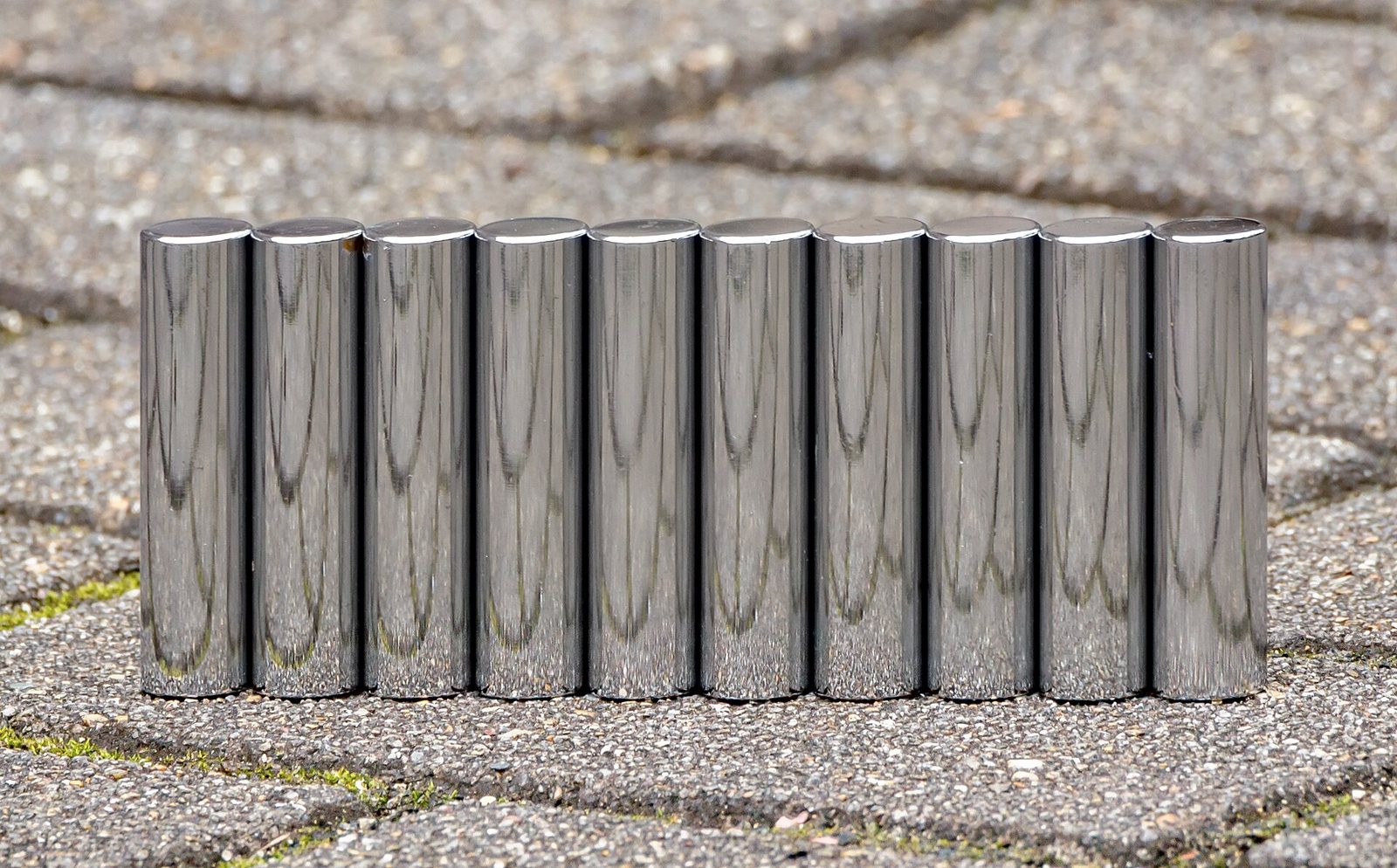
Metal poles (surface is chromium-plated) - HDR · Laitche · CC BY-SA 4.0 · Wikimedia Commons

Che cos'è?

The element that makes stainless steel stainless — at about eleven percent chromium, steel grows an invisible film that stops rust.

Perché è importante?

There is no substitute for chromium in stainless steel, and supply is unusually concentrated in southern Africa.

Where it is in the Earth

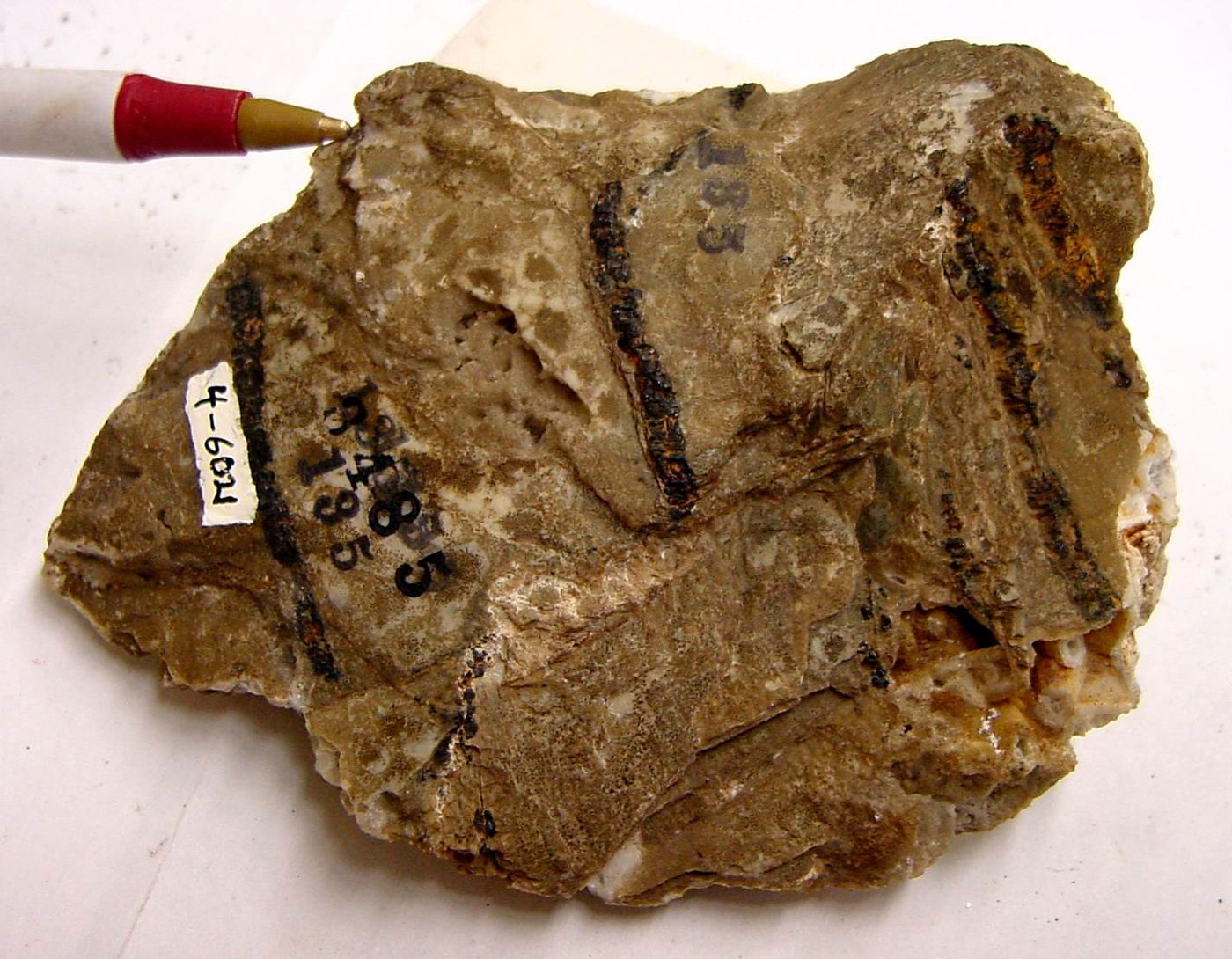
Chromium reaches mineable concentrations almost exclusively through one geological process: the crystallisation of magma derived from the Earth's mantle. When ultramafic magma — rock-forming liquid unusually rich in magnesium and iron and poor in silica — cools slowly deep in the crust, the mineral chromite (iron chromium oxide, with the formula FeCr2O4) is among the first solid phases to appear. Being denser than the surrounding melt, chromite crystals sink and accumulate in layers, a process called magmatic segregation. The resulting rock bodies are called layered igneous intrusions, and the chromite-rich bands within them are called seams or reefs. The Bushveld Igneous Complex in South Africa is the largest and most chromite-rich structure of this kind known, and it accounts for the dominant share of both current production and global reserves shown in the tables above.

A second geological setting produces podiform deposits: chromite concentrated in lenses within ophiolites, which are fragments of ancient ocean floor that have been thrust onto continental margins. These bodies are smaller and less regular than layered intrusion reefs, but they can be high in grade and are the source of much of Turkey's production. The Kempirsai massif in Kazakhstan represents a very large podiform system, giving that country the second-largest reserve base after South Africa. The geographical concentration of reserves that the tables show is therefore not an accident of exploration history but a reflection of where the right geology exists: southern Africa and central Asia sit atop the largest surviving layered and podiform chromite systems on the planet.

Because chromite forms in the mantle-derived part of the geological cycle, it is rarely found in the sedimentary or granitic rocks that make up most of the continental crust. There are no chromium-bearing brines, no evaporite deposits, no hydrothermal vein systems worth mining. The ore mineral is chromite, and only chromite. This geological narrowness has direct consequences for the supply chain: new deposits can only be found in the specific rock types and tectonic settings described above, and those settings are unevenly distributed across the globe.

Getting it out

Most large chromite deposits are mined by open-pit methods, at least in their early stages, because the reef geometry and the relatively shallow depth of many economically attractive seams make surface excavation the lowest-cost option. In open-pit mining, the overlying rock — called overburden or waste — is stripped away to expose the ore beneath. The ratio of waste moved to ore recovered, called the strip ratio, matters greatly to the economics of a mine: a high strip ratio means more diesel, more trucks and more time per tonne of chromite delivered to the processing plant. As a pit deepens, strip ratios rise and at some point underground methods become more attractive. The Bushveld mines in South Africa include both large open pits and underground bord-and-pillar or room-and-pillar operations, where horizontal chambers are cut and columns of rock left standing to support the roof.

The grade of chromite ore — typically expressed as the percentage of Cr2O3 (chromium sesquioxide) in the rock — determines how much raw material must be dug, crushed and transported to yield a given amount of usable chromium. Higher-grade ores reduce the cost of every subsequent step in the chain. Another number that matters in the chromite trade is the chromium-to-iron ratio, or Cr:Fe ratio, because different end uses — metallurgical, chemical, refractory — require different ratios. A metallurgical-grade ore destined for ferrochrome smelting has different specification requirements than a chemical-grade ore destined for chromium chemicals production. These distinctions explain why ore from different deposits commands different prices even at the same Cr2O3 content.

The United States produces no chromite ore from domestic mines — the USGS reports this figure as withheld, reflecting the absence of active primary production rather than suppressed data — which is why the U.S. import reliance figure in the statistics table is as high as it is. Domestic resources exist, as the reserves table shows, but they are not currently being worked at commercial scale. Turkey's production comes largely from smaller podiform deposits, which are typically mined by smaller operations with shorter mine lives than the large South African reef mines. This variety of deposit type and mine scale across producer countries means the global supply picture is not monolithic: a disruption in one country does not automatically mean another can fill the gap quickly.

What pulls on it

The dominant use of chromium is in stainless steel, and the relationship is chemically non-negotiable: below roughly eleven percent chromium by weight, the protective passive oxide film that gives stainless steel its corrosion resistance does not reliably form. This threshold effect means that chromium cannot simply be used sparingly or diluted away when its price rises; a stainless steel grade either meets its chromium specification or it is not stainless steel. Beyond stainless, chromium is alloyed into a wide range of engineering steels — high-speed tool steels, bearing steels, chromium-molybdenum pressure-vessel steels — and into the nickel-based superalloys used in jet engines and gas turbines, where it contributes to oxidation resistance at high temperatures.

Demand for stainless steel tracks industrial activity broadly, and particularly the growth of construction, consumer goods, food processing and chemical plant in industrialising economies. The expansion of stainless steel production in China over the past two decades was the single largest change in the global chromium demand picture of that period, and China's trajectory continues to shape the market. A meaningful share of demand also comes from the chemical industry — chromium compounds in leather tanning and surface treatment — though regulatory pressure on hexavalent chromium in many jurisdictions has pushed some of this demand toward alternative finishing processes, causing a gradual erosion in those specific applications. Nuclear power, listed in the end-markets section, represents a relatively specialised but stable demand for chromium-containing reactor steels, where the corrosion resistance requirements are particularly stringent.

A sharp change in chromium demand would most plausibly follow from a large-scale shift in stainless steel consumption — either a sustained contraction in the construction and industrial sectors that drive stainless demand, or an unlikely but theoretically possible displacement of stainless by another corrosion-resistant material. Neither appears imminent based on the structural drivers of industrial development, though the efficiency of chromium use in steel — how many tonnes of chromite ore are required per tonne of stainless produced — is a variable that improves incrementally as steelmakers reduce process losses and recycle scrap more effectively.

Turning ore into product Livello 3

Run-of-mine chromite ore — the material as it comes from the pit or underground workings — goes first through comminution: crushing and then grinding to break the rock down until chromite grains are liberated from the surrounding silicate minerals. Because chromite is significantly denser than most gangue (the unwanted host rock), concentration is achieved mainly by gravity separation, using spirals, shaking tables or dense-media vessels. Magnetic and flotation circuits may supplement gravity steps depending on the ore character. The product of this beneficiation stage is a chromite concentrate, reporting a higher Cr2O3 grade than the run-of-mine feed. Fine-grained ores, particularly those from some South African deposits, can be difficult to concentrate efficiently and may require sintering or pelletising before they can be fed to a furnace.

For metallurgical use, chromite concentrate is smelted with coke and a flux (typically quartz) in a submerged arc furnace — a large electric furnace in which the electrodes are buried in the charge. The product is ferrochrome, an alloy of chromium and iron. Charge chrome, the dominant traded form, typically contains roughly half chromium and the remainder iron and carbon; high-carbon ferrochrome and refined low-carbon grades also exist for specific applications. The electricity consumption of submerged arc smelting is substantial, which is why ferrochrome production has historically clustered where electricity is cheap — South Africa and Kazakhstan — or where integrated operations reduce logistics costs. South Africa has progressively moved more smelting capacity in-country rather than exporting raw ore, capturing more of the value chain domestically. The price tables show ferrochrome and chromite ore quoted separately, reflecting the real commercial distinction between selling ore and selling the smelted intermediate.

Chromium metal, as distinct from ferrochrome, is produced by aluminothermic reduction — reacting chromium oxide with aluminium powder — or by electrolytic refining. The metal commands a substantially higher price per pound than ferrochrome, as the price series in the tables illustrate, because the additional processing steps add cost and the market is smaller. Chemical uses of chromium — leather tanning, surface finishing, pigments — require yet another processing route: ore is roasted with sodium carbonate to produce sodium chromate, from which a range of hexavalent chromium (Cr6+) compounds are derived. Hexavalent chromium is toxic, and the handling and disposal requirements this creates add cost and regulatory complexity to chemical-grade processing.

Substitution and recycling Livello 3

In stainless steel, there is no substitute for chromium. The passive film that resists corrosion is a chromium oxide layer; no other alloying element replicates it at comparable cost and in comparable steel compositions. Nickel and molybdenum are added to stainless grades to enhance specific properties, but they complement rather than replace chromium. Where customers have moved away from stainless steel — toward coated carbon steel, aluminium, polymers or composites — they have accepted trade-offs in temperature resistance, mechanical properties, longevity or recyclability. In many corrosive environments, those trade-offs are unacceptable, which constrains substitution in practice far more than price alone would suggest.

In superalloys and high-temperature coatings, aluminium and silicon can provide some oxidation resistance, and coating technologies have advanced considerably. However, these alternatives perform differently across different temperature ranges and corrosive environments, and superalloy designers generally treat chromium as one component of a complex balance rather than a variable they wish to eliminate. In surface finishing, trivalent chromium (Cr3+) processes have partially displaced traditional hexavalent chromium electroplating in response to environmental regulation, representing a genuine substitution within the chromium system rather than away from it — the metal is still used, just in a different oxidation state and process chemistry.

Recycling is a significant secondary source of chromium, though it moves through the steel scrap stream rather than as recovered chromium metal. Stainless steel scrap is highly sought after precisely because of its chromium content, and steelmakers actively seek it for its alloy value. The recycling rate for chromium embedded in stainless steel at end of life is relatively high compared to many other technology metals, because the scrap has clear economic value and the collection infrastructure for steel is well established. What limits the recycled fraction is dilution: stainless scrap mixed with carbon steel scrap loses its chromium value, and separation at the point of collection or sorting is imperfect. The availability of high-quality stainless scrap also depends on the age profile of installed stainless steel stock — material put into service during periods of rapid growth only becomes available for recycling decades later.

Where the chain is fragile Livello 4

The concentration of both production and reserves in a small number of countries is the most straightforward feature of the chromium supply risk picture, and the tables make it plain. South Africa alone accounts for 45 percent of world production and holds the largest reserve base. Kazakhstan holds the second-largest reserve position. Zimbabwe's reserves are substantial relative to its current production, suggesting latent capacity, but realising it depends on infrastructure, capital and regulatory conditions that are not guaranteed. The figures for reserves in the tables carry their own uncertainty: reserve estimates are sensitive to the chromium price assumed, the Cr2O3 cut-off grade applied, and whether the compiling agency uses national government data, company disclosures or independent estimates. The USGS notes that its figures are drawn from varied national sources and that reporting conventions differ across countries, which means the apparent precision of the reserve numbers should not be mistaken for precision in the underlying knowledge.

A further structural feature is the two-stage geography of the supply chain. Mining is concentrated in southern Africa, but a meaningful share of smelting capacity — converting chromite ore to ferrochrome — also sits in South Africa and Kazakhstan. Countries that import chromite for domestic smelting, such as China and some European producers, are exposed both to ore supply and to the logistical and political conditions affecting export from producer countries. South Africa in particular has experienced periods of electricity supply constraint that affected ferrochrome smelting output, illustrating the dependency of this energy-intensive process on stable power infrastructure. The price data show considerable year-to-year movement in ferrochrome values, which reflects both demand cycles and these supply-side irregularities.

The United States' position — no domestic mine production and a net import reliance of 79 percent as reported by USGS — places it among the more exposed consuming nations. Domestic reserves exist, but the gap between a resource in the ground and a producing mine involves permitting timelines, infrastructure development and sustained economic justification that typically spans many years. The lead time from discovery or project initiation to first production for a new hard-rock mine is rarely less than a decade. This lag means that a policy decision to develop domestic chromite capacity cannot quickly translate into supply security, which is why chromium appears on critical mineral lists in multiple jurisdictions. The secondary supply — chromium recycled through stainless scrap — provides some buffer, but the quantity available at any given time is determined by the vintage of installed stainless stock and scrap collection efficiency, neither of which responds quickly to a supply shock in primary ore.

Leggere correttamente i numeri. USGS reports chromite ore gross weight, not contained chromium. Chromite ore, then ferrochrome, then stainless steel; chromium metal for superalloys.

Da dove proviene nella roccia

Tutti i minerali mena →

Questi sono i minerali che contengono effettivamente chromium. Un giacimento è un corpo minerario solo se uno di essi è sufficientemente concentrato da giustificare il costo dell'estrazione.
Mine production

Mine productionthousand metric tons 2025 (stimato) Totale mondiale 51,000 thousand metric tons

USGS Mineral Commodity Summaries 2026 · USGS reports chromite ore gross weight, not contained chromium. · fonte ↗

Scorrere la tabella lateralmente per visualizzare le colonne rimanenti.

PaeseProduzione Quota mondiale
South Africa 23,000 45.1%
Turkey 9,000 17.6%
Kazakhstan 7,000 13.7%
Other countries 3,000 5.9%
India 3,000 5.9%
Zimbabwe 2,000 3.9%
Brazil 2,000 3.9%
Finland 1,900 3.7%
United States Zero
Totale mondiale 51,000100%

«Withheld» significa che l'USGS ha soppresso il dato per evitare di divulgare informazioni relative a una singola azienda — non equivale a zero. I valori per paese non sempre sommano al totale mondiale perché la fonte arrotonda ciascun dato in modo indipendente e non sempre disaggrega la voce «altri paesi».

Chi detiene le riserve

«Riserve» è un termine preciso. Indica la parte di un giacimento noto che potrebbe essere estratta economicamente oggi, con i prezzi attuali e le tecnologie attuali — non tutto ciò che esiste nel sottosuolo. Le riserve crescono quando i prezzi salgono o viene inventato un nuovo processo, e diminuiscono quando scendono.

Reserves: Cr2O3 content

Reserves: Cr2O3 contentthousand metric tons 2025

USGS Mineral Commodity Summaries 2026 · fonte ↗

PaeseRiserveQuota mondiale
South Africa 110,000 20.4%
Kazakhstan 100,000 18.5%
Zimbabwe 78,000 14.4%
India 27,000 5.0%
Finland 16,000 3.0%
Turkey 5,700 1.1%
Brazil 1,000 0.2%
United States 630.0 0.1%
Other countries Not applicable
Totale mondiale >540,000100%

La fonte pubblica questo totale mondiale come valore limite anziché come valore puntuale; le quote nell'ultima colonna sono pertanto esse stesse valori limite.

Reserves: Ore

Reserves: Orethousand metric tons 2024

USGS Mineral Commodity Summaries 2026 · fonte ↗

PaeseRiserveQuota mondiale
South Africa 350,000 29.2%
Kazakhstan 230,000 19.2%
Zimbabwe 140,000 11.7%
India 79,000 6.6%
Finland 63,000 5.2%
Turkey 27,000 2.2%
United States 8,500 0.7%
Brazil 3,900 0.3%
Other countries Not applicable
Totale mondiale >1,200,000100%

La fonte pubblica questo totale mondiale come valore limite anziché come valore puntuale; le quote nell'ultima colonna sono pertanto esse stesse valori limite.

Prezzo

Price: Chromium metal (gross weight), dollars per pound

Media annualedollars per pound

2021 · 4.23 alto 7.20 dollars per pound 2025 · 5.90

Base: Price: Chromium metal (gross weight), dollars per pound. Medie annuali pubblicate in USGS Mineral Commodity Summaries 2026 · fonte ↗. Queste sono medie annuali di riferimento, non quotazioni di mercato in tempo reale.

Price: Chromite ore (gross weight), dollars per metric ton

Media annualedollars per metric ton

2021 · 199.0 alto 331.0 dollars per metric ton 2025 · 290.0

Base: Price: Chromite ore (gross weight), dollars per metric ton. Medie annuali pubblicate in USGS Mineral Commodity Summaries 2026 · fonte ↗. Queste sono medie annuali di riferimento, non quotazioni di mercato in tempo reale.

Price: Ferrochromium (chromium content), dollars per pound

Media annualedollars per pound

2021 · 1.50 alto 3.19 dollars per pound 2025 · 1.60

Base: Price: Ferrochromium (chromium content), dollars per pound. Medie annuali pubblicate in USGS Mineral Commodity Summaries 2026 · fonte ↗. Queste sono medie annuali di riferimento, non quotazioni di mercato in tempo reale.

Mercato finaleCosa fa lìImportanza
Nuclear Power Corrosion resistance in reactor steels Importante

Seguilo attraverso i confini

Tutti i percorsi →

Dove va effettivamente un lotto di questo materiale — ogni paese, ogni custode e cosa rimane indietro a ogni tappa.

New Caledonian laterite to stainless steel An island that smelts its own ore, and pays for it with the most expensive electricity in the industry. da New Caledonia · Saprolite laterite ore, roughly 2% nickel, low cobalt

Materiali

Tutti i materiali Minerali critici Terre rare Materiali per batterie Minerali mena Tavola periodica Screener

Il sottosuolo

Miniere e giacimenti Lavorazione e raffinazione Paesi Mappe

L'economia

Percorsi di custodia Filiere produttive Mercati finali Tecnologie Aziende Calcolatore di materiali

Approfondisci

ApprofondisciGlossario Interroga i datiAgenti AI Ricerca e datiAPI aperta Notizie★ Salvato

Chi siamo

Chi siamoContatti MetodologiaFonti dei dati Politica editoriale Informativa sulla privacyCondizioni d'uso Avvertenza