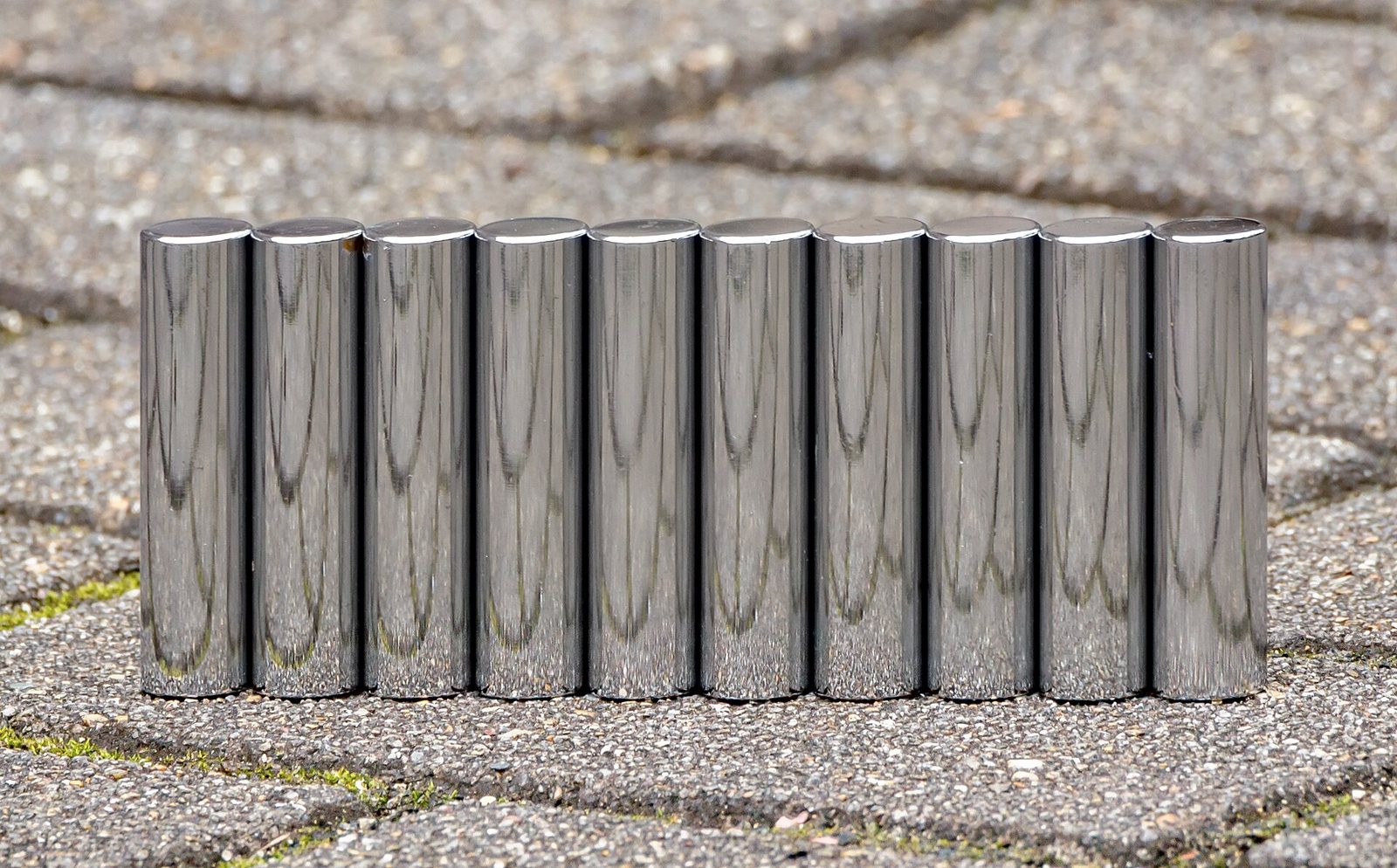
이것은 무엇인가?
The element that makes stainless steel stainless — at about eleven percent chromium, steel grows an invisible film that stops rust.
왜 중요한가?
There is no substitute for chromium in stainless steel, and supply is unusually concentrated in southern Africa.
Where it is in the Earth
Chromium reaches mineable concentrations almost exclusively through one geological process: the crystallisation of magma derived from the Earth's mantle. When ultramafic magma — rock-forming liquid unusually rich in magnesium and iron and poor in silica — cools slowly deep in the crust, the mineral chromite (iron chromium oxide, with the formula FeCr2O4) is among the first solid phases to appear. Being denser than the surrounding melt, chromite crystals sink and accumulate in layers, a process called magmatic segregation. The resulting rock bodies are called layered igneous intrusions, and the chromite-rich bands within them are called seams or reefs. The Bushveld Igneous Complex in South Africa is the largest and most chromite-rich structure of this kind known, and it accounts for the dominant share of both current production and global reserves shown in the tables above.
A second geological setting produces podiform deposits: chromite concentrated in lenses within ophiolites, which are fragments of ancient ocean floor that have been thrust onto continental margins. These bodies are smaller and less regular than layered intrusion reefs, but they can be high in grade and are the source of much of Turkey's production. The Kempirsai massif in Kazakhstan represents a very large podiform system, giving that country the second-largest reserve base after South Africa. The geographical concentration of reserves that the tables show is therefore not an accident of exploration history but a reflection of where the right geology exists: southern Africa and central Asia sit atop the largest surviving layered and podiform chromite systems on the planet.
Because chromite forms in the mantle-derived part of the geological cycle, it is rarely found in the sedimentary or granitic rocks that make up most of the continental crust. There are no chromium-bearing brines, no evaporite deposits, no hydrothermal vein systems worth mining. The ore mineral is chromite, and only chromite. This geological narrowness has direct consequences for the supply chain: new deposits can only be found in the specific rock types and tectonic settings described above, and those settings are unevenly distributed across the globe.
Getting it out
Most large chromite deposits are mined by open-pit methods, at least in their early stages, because the reef geometry and the relatively shallow depth of many economically attractive seams make surface excavation the lowest-cost option. In open-pit mining, the overlying rock — called overburden or waste — is stripped away to expose the ore beneath. The ratio of waste moved to ore recovered, called the strip ratio, matters greatly to the economics of a mine: a high strip ratio means more diesel, more trucks and more time per tonne of chromite delivered to the processing plant. As a pit deepens, strip ratios rise and at some point underground methods become more attractive. The Bushveld mines in South Africa include both large open pits and underground bord-and-pillar or room-and-pillar operations, where horizontal chambers are cut and columns of rock left standing to support the roof.
The grade of chromite ore — typically expressed as the percentage of Cr2O3 (chromium sesquioxide) in the rock — determines how much raw material must be dug, crushed and transported to yield a given amount of usable chromium. Higher-grade ores reduce the cost of every subsequent step in the chain. Another number that matters in the chromite trade is the chromium-to-iron ratio, or Cr:Fe ratio, because different end uses — metallurgical, chemical, refractory — require different ratios. A metallurgical-grade ore destined for ferrochrome smelting has different specification requirements than a chemical-grade ore destined for chromium chemicals production. These distinctions explain why ore from different deposits commands different prices even at the same Cr2O3 content.
The United States produces no chromite ore from domestic mines — the USGS reports this figure as withheld, reflecting the absence of active primary production rather than suppressed data — which is why the U.S. import reliance figure in the statistics table is as high as it is. Domestic resources exist, as the reserves table shows, but they are not currently being worked at commercial scale. Turkey's production comes largely from smaller podiform deposits, which are typically mined by smaller operations with shorter mine lives than the large South African reef mines. This variety of deposit type and mine scale across producer countries means the global supply picture is not monolithic: a disruption in one country does not automatically mean another can fill the gap quickly.
What pulls on it
The dominant use of chromium is in stainless steel, and the relationship is chemically non-negotiable: below roughly eleven percent chromium by weight, the protective passive oxide film that gives stainless steel its corrosion resistance does not reliably form. This threshold effect means that chromium cannot simply be used sparingly or diluted away when its price rises; a stainless steel grade either meets its chromium specification or it is not stainless steel. Beyond stainless, chromium is alloyed into a wide range of engineering steels — high-speed tool steels, bearing steels, chromium-molybdenum pressure-vessel steels — and into the nickel-based superalloys used in jet engines and gas turbines, where it contributes to oxidation resistance at high temperatures.
Demand for stainless steel tracks industrial activity broadly, and particularly the growth of construction, consumer goods, food processing and chemical plant in industrialising economies. The expansion of stainless steel production in China over the past two decades was the single largest change in the global chromium demand picture of that period, and China's trajectory continues to shape the market. A meaningful share of demand also comes from the chemical industry — chromium compounds in leather tanning and surface treatment — though regulatory pressure on hexavalent chromium in many jurisdictions has pushed some of this demand toward alternative finishing processes, causing a gradual erosion in those specific applications. Nuclear power, listed in the end-markets section, represents a relatively specialised but stable demand for chromium-containing reactor steels, where the corrosion resistance requirements are particularly stringent.
A sharp change in chromium demand would most plausibly follow from a large-scale shift in stainless steel consumption — either a sustained contraction in the construction and industrial sectors that drive stainless demand, or an unlikely but theoretically possible displacement of stainless by another corrosion-resistant material. Neither appears imminent based on the structural drivers of industrial development, though the efficiency of chromium use in steel — how many tonnes of chromite ore are required per tonne of stainless produced — is a variable that improves incrementally as steelmakers reduce process losses and recycle scrap more effectively.
Turning ore into product 수준 3
Run-of-mine chromite ore — the material as it comes from the pit or underground workings — goes first through comminution: crushing and then grinding to break the rock down until chromite grains are liberated from the surrounding silicate minerals. Because chromite is significantly denser than most gangue (the unwanted host rock), concentration is achieved mainly by gravity separation, using spirals, shaking tables or dense-media vessels. Magnetic and flotation circuits may supplement gravity steps depending on the ore character. The product of this beneficiation stage is a chromite concentrate, reporting a higher Cr2O3 grade than the run-of-mine feed. Fine-grained ores, particularly those from some South African deposits, can be difficult to concentrate efficiently and may require sintering or pelletising before they can be fed to a furnace.
For metallurgical use, chromite concentrate is smelted with coke and a flux (typically quartz) in a submerged arc furnace — a large electric furnace in which the electrodes are buried in the charge. The product is ferrochrome, an alloy of chromium and iron. Charge chrome, the dominant traded form, typically contains roughly half chromium and the remainder iron and carbon; high-carbon ferrochrome and refined low-carbon grades also exist for specific applications. The electricity consumption of submerged arc smelting is substantial, which is why ferrochrome production has historically clustered where electricity is cheap — South Africa and Kazakhstan — or where integrated operations reduce logistics costs. South Africa has progressively moved more smelting capacity in-country rather than exporting raw ore, capturing more of the value chain domestically. The price tables show ferrochrome and chromite ore quoted separately, reflecting the real commercial distinction between selling ore and selling the smelted intermediate.
Chromium metal, as distinct from ferrochrome, is produced by aluminothermic reduction — reacting chromium oxide with aluminium powder — or by electrolytic refining. The metal commands a substantially higher price per pound than ferrochrome, as the price series in the tables illustrate, because the additional processing steps add cost and the market is smaller. Chemical uses of chromium — leather tanning, surface finishing, pigments — require yet another processing route: ore is roasted with sodium carbonate to produce sodium chromate, from which a range of hexavalent chromium (Cr6+) compounds are derived. Hexavalent chromium is toxic, and the handling and disposal requirements this creates add cost and regulatory complexity to chemical-grade processing.
Substitution and recycling 수준 3
In stainless steel, there is no substitute for chromium. The passive film that resists corrosion is a chromium oxide layer; no other alloying element replicates it at comparable cost and in comparable steel compositions. Nickel and molybdenum are added to stainless grades to enhance specific properties, but they complement rather than replace chromium. Where customers have moved away from stainless steel — toward coated carbon steel, aluminium, polymers or composites — they have accepted trade-offs in temperature resistance, mechanical properties, longevity or recyclability. In many corrosive environments, those trade-offs are unacceptable, which constrains substitution in practice far more than price alone would suggest.
In superalloys and high-temperature coatings, aluminium and silicon can provide some oxidation resistance, and coating technologies have advanced considerably. However, these alternatives perform differently across different temperature ranges and corrosive environments, and superalloy designers generally treat chromium as one component of a complex balance rather than a variable they wish to eliminate. In surface finishing, trivalent chromium (Cr3+) processes have partially displaced traditional hexavalent chromium electroplating in response to environmental regulation, representing a genuine substitution within the chromium system rather than away from it — the metal is still used, just in a different oxidation state and process chemistry.
Recycling is a significant secondary source of chromium, though it moves through the steel scrap stream rather than as recovered chromium metal. Stainless steel scrap is highly sought after precisely because of its chromium content, and steelmakers actively seek it for its alloy value. The recycling rate for chromium embedded in stainless steel at end of life is relatively high compared to many other technology metals, because the scrap has clear economic value and the collection infrastructure for steel is well established. What limits the recycled fraction is dilution: stainless scrap mixed with carbon steel scrap loses its chromium value, and separation at the point of collection or sorting is imperfect. The availability of high-quality stainless scrap also depends on the age profile of installed stainless steel stock — material put into service during periods of rapid growth only becomes available for recycling decades later.
암석 내 산출 위치
전체 광석 광물 →실제로 이를 함유하는 광물은 다음과 같다: chromium. 광체(orebody)란 채굴 비용을 충당할 만큼 특정 광물이 충분히 농집된 광상을 말한다.
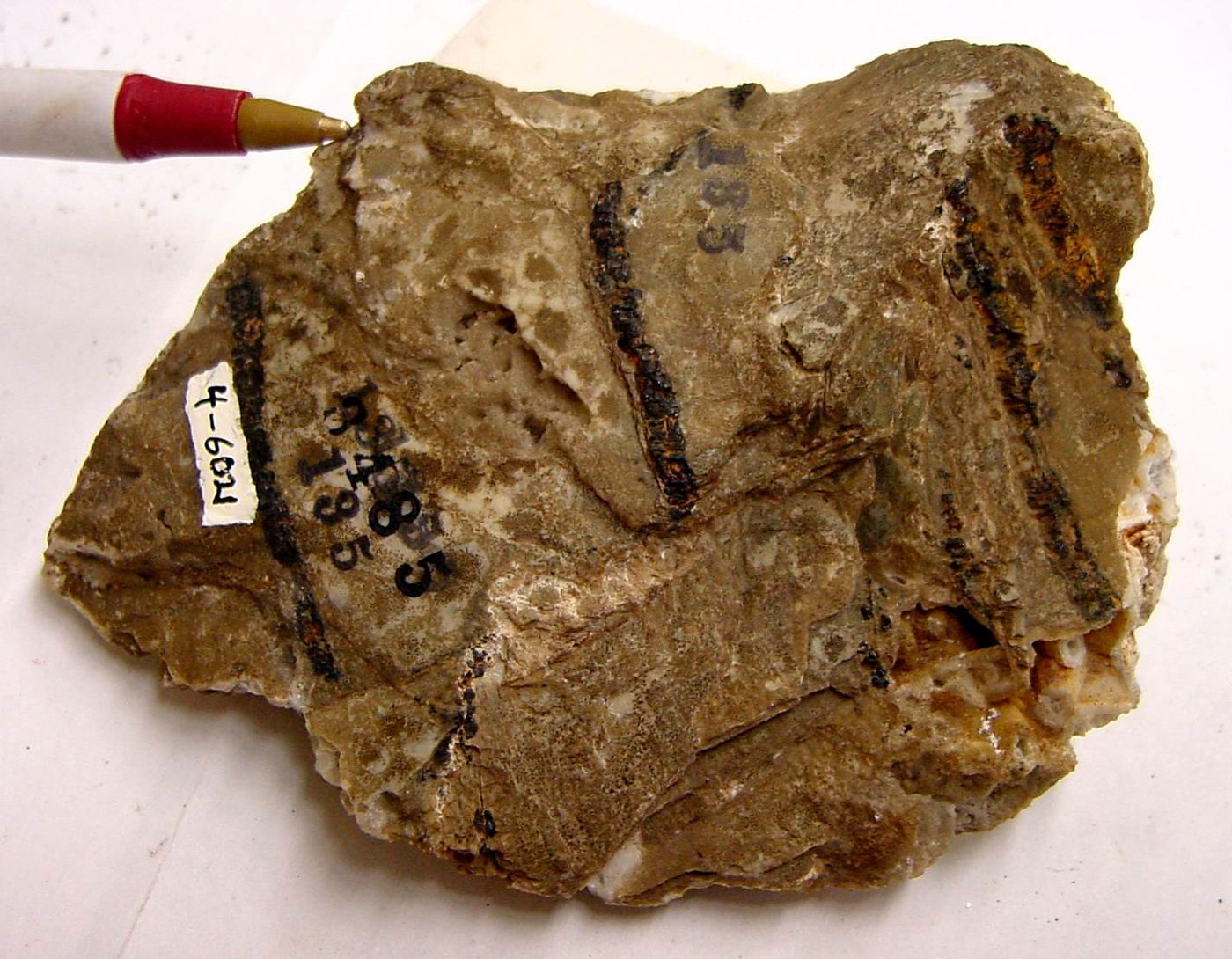
Chromite
The only ore of chromium, formed in layered mafic intrusions where it settles out in bands.
생산 주체
지도에서 보기 →Mine production
Mine productionthousand metric tons 2025 (추정치) 세계 합계 51,000 thousand metric tons
USGS Mineral Commodity Summaries 2026 · USGS reports chromite ore gross weight, not contained chromium. · 출처 ↗
나머지 열을 보려면 표를 옆으로 스크롤하십시오.
| 국가 | 생산 | 세계 비중 |
|---|---|---|
| South Africa | 23,000 | 45.1% |
| Turkey | 9,000 | 17.6% |
| Kazakhstan | 7,000 | 13.7% |
| Other countries | 3,000 | 5.9% |
| India | 3,000 | 5.9% |
| Zimbabwe | 2,000 | 3.9% |
| Brazil | 2,000 | 3.9% |
| Finland | 1,900 | 3.7% |
| United States | Zero | — |
| 세계 합계 | 51,000 | 100% |
'비공개'는 USGS가 개별 기업의 데이터 노출을 막기 위해 수치를 억제한 것으로, 0을 의미하지 않습니다. 출처가 각 수치를 독립적으로 반올림하고 '기타 국가' 항목을 항상 별도로 구분하지는 않기 때문에, 국가별 합계가 세계 합계와 일치하지 않을 수 있습니다.
매장량 보유 주체
Reserves: Cr2O3 content
Reserves: Cr2O3 contentthousand metric tons 2025
USGS Mineral Commodity Summaries 2026 · 출처 ↗
| 국가 | 매장량 | 세계 비중 |
|---|---|---|
| South Africa | 110,000 | 20.4% |
| Kazakhstan | 100,000 | 18.5% |
| Zimbabwe | 78,000 | 14.4% |
| India | 27,000 | 5.0% |
| Finland | 16,000 | 3.0% |
| Turkey | 5,700 | 1.1% |
| Brazil | 1,000 | 0.2% |
| United States | 630.0 | 0.1% |
| Other countries | Not applicable | — |
| 세계 합계 | >540,000 | 100% |
출처에서 이 세계 합계를 정확한 수치가 아닌 범위로 공표하므로, 마지막 열의 점유율도 범위값이다.
Reserves: Ore
Reserves: Orethousand metric tons 2024
USGS Mineral Commodity Summaries 2026 · 출처 ↗
| 국가 | 매장량 | 세계 비중 |
|---|---|---|
| South Africa | 350,000 | 29.2% |
| Kazakhstan | 230,000 | 19.2% |
| Zimbabwe | 140,000 | 11.7% |
| India | 79,000 | 6.6% |
| Finland | 63,000 | 5.2% |
| Turkey | 27,000 | 2.2% |
| United States | 8,500 | 0.7% |
| Brazil | 3,900 | 0.3% |
| Other countries | Not applicable | — |
| 세계 합계 | >1,200,000 | 100% |
출처에서 이 세계 합계를 정확한 수치가 아닌 범위로 공표하므로, 마지막 열의 점유율도 범위값이다.
가격
Price: Chromium metal (gross weight), dollars per pound
연간 평균dollars per pound
기준: Price: Chromium metal (gross weight), dollars per pound. 다음 자료에 게재된 연간 평균 USGS Mineral Commodity Summaries 2026 · 출처 ↗. 이 수치는 기준 연간 평균값이며, 실시간 시장 가격이 아니다.
Price: Chromite ore (gross weight), dollars per metric ton
연간 평균dollars per metric ton
기준: Price: Chromite ore (gross weight), dollars per metric ton. 다음 자료에 게재된 연간 평균 USGS Mineral Commodity Summaries 2026 · 출처 ↗. 이 수치는 기준 연간 평균값이며, 실시간 시장 가격이 아니다.
Price: Ferrochromium (chromium content), dollars per pound
연간 평균dollars per pound
기준: Price: Ferrochromium (chromium content), dollars per pound. 다음 자료에 게재된 연간 평균 USGS Mineral Commodity Summaries 2026 · 출처 ↗. 이 수치는 기준 연간 평균값이며, 실시간 시장 가격이 아니다.
용도
전체 최종 시장 →| 최종 시장 | 거기에서의 기능 | 중요도 |
|---|---|---|
| Nuclear Power | Corrosion resistance in reactor steels | 중요 |
국경을 따라 추적하기
모든 여정 →이 소재의 화물이 실제로 가는 곳 — 모든 나라, 모든 보관자, 그리고 각 단계에서 남는 것.
New Caledonian laterite to stainless steel An island that smelts its own ore, and pays for it with the most expensive electricity in the industry.