Che cos'è?
Six metals — platinum, palladium, rhodium, iridium, ruthenium and osmium — that occur together and are separated from each other only with difficulty.
Perché è importante?
They are separated as a family, so the price of any one of them is partly set by demand for the other five.
Where it is in the Earth
The platinum-group metals — platinum, palladium, rhodium, iridium, ruthenium and osmium — are among the rarest elements in the Earth's crust, yet they occur in mineable concentrations in a small number of places because of a specific geological accident. When very large volumes of magma (molten rock) rise from the mantle and begin to cool slowly inside the crust, the heavier metals settle out in sequence, a process called magmatic segregation. Sulfur dissolved in the melt plays a key role: it combines with iron and nickel to form sulfide minerals, and the platinum-group metals partition strongly into those sulfide droplets, concentrating there as the magma crystallises. The result is a layered igneous rock body — called a layered intrusion — in which thin, remarkably consistent sheets of sulfide-rich rock carry almost the entire metal endowment.
The Bushveld Igneous Complex in South Africa is by far the most significant example. It formed roughly two billion years ago and has been exposed by long erosion to depths that are economically accessible. The reserve figures in the table make this clear: South Africa holds 63,000,000 kilograms of platinum-group metals in reserve, against Russia's 11,000,000 kilograms, Zimbabwe's 1,300,000 kilograms, the United States' 590,000 kilograms and Canada's 310,000 kilograms. The world total exceeds 76,000,000 kilograms; the South African share alone accounts for the great majority of that figure. A second geological setting also matters: in Russia, the platinum-group metals occur in the Norilsk–Talnakh sulfide deposits in Siberia, where they are recovered as by-products of nickel and copper mining rather than as the primary target. Canada's Sudbury Basin, formed by a meteorite impact that remobilised the country's ancient shield rocks, follows a similar pattern. These two geological routes — primary layered intrusions and nickel–copper sulfide deposits — together account for almost all the world's supply.
Zimbabwe's Great Dyke is geologically related to the Bushveld, being another ancient layered intrusion, though narrower and less studied. The United States has small layered-intrusion resources in Montana. What these deposits share is age and scale: the geological events that created them were enormous, slow and unrepeatable on a human timescale, which is why the metals are described as finite strategic resources rather than commodities that new discoveries can readily replace.
Getting it out
The method of extraction depends almost entirely on the geometry of the ore body. In the Bushveld Complex, the platinum-bearing layers — known as reefs — are thin, sometimes only a metre or two thick, but they extend laterally for enormous distances and dip at a moderate angle into the ground. Because the valuable rock is sandwiched between large volumes of barren rock above and below, open-pit mining (removing ore from a large surface excavation) works only near the surface, where the reef has not yet descended too deep. As the reef dips away, underground mining takes over. Miners follow the reef down and along its strike, cutting tunnels called stopes that track the thin ore horizon. This means the surrounding rock — called country rock or waste — must be blasted and moved, but only the reef itself is sent to the processing plant.
The grade of the ore — the concentration of metal in the rock — is extremely low by the standards of most metals. The platinum-group metals are measured in grams per tonne of ore, meaning that many tonnes of rock must be mined and processed to recover a single kilogram of metal. This is what makes mining economics so sensitive to the cost of labour, electricity and consumables: the ratio of waste handled to product recovered is very high. In the Norilsk model, where platinum-group metals are a by-product of nickel and copper, the economics are different — the capital and operating cost of mining is spread across several metals, which changes the threshold at which the operation is viable.
In South Africa, underground mining at depth is the norm, and the shafts can reach several kilometres below surface. Heat, ventilation and logistics at that depth make it among the more demanding mining environments anywhere in the world. Zimbabwe's Great Dyke operations are shallower in places, but the same thin-reef underground method applies. In Montana, a small amount of platinum-group metals is recovered from a palladium-rich reef by open-pit methods, reflecting the particular geometry of that deposit.
What pulls on it
The platinum-group metals are bought for two broad reasons: their chemical activity and their resistance to heat and corrosion. In practice, the dominant use for platinum and palladium is in catalytic converters fitted to petrol and diesel vehicles. A catalytic converter contains a ceramic or metallic substrate coated with a thin wash of platinum-group metals; as exhaust gases pass over this surface, the metals catalyse reactions that convert harmful pollutants into less harmful ones. Because the metals are not consumed in this reaction — they are catalysts, meaning they facilitate chemical change without being used up themselves — they remain in the converter for the life of the vehicle. Platinum has historically dominated in diesel converters; palladium in petrol ones. Rhodium is used in both because it is particularly effective at converting nitrogen oxides.
Beyond vehicles, platinum-group metals appear in industrial catalysts for producing chemicals including nitric acid and certain plastics, in fuel cells (where platinum catalyses the electrochemical reaction between hydrogen and oxygen), in glass-making equipment that must withstand very high temperatures, in hard-disk drive coatings, in medical devices, and in jewellery — particularly platinum jewellery, which has a long tradition in East Asian markets. Each of these uses draws on a different combination of the six metals, which is part of why the family is traded and analysed as a group even though the individual metals can have quite different price trajectories.
The direction of demand is genuinely uncertain in the medium term. Stricter vehicle-emission standards in most large economies have historically increased the loading of platinum-group metals per vehicle even as engineers work to reduce it. Battery-electric vehicles, which have no exhaust and therefore no catalytic converter, displace demand if they replace internal-combustion vehicles at scale. Hydrogen fuel cells, on the other hand, require platinum, and if hydrogen vehicles grow as a transport mode the demand picture shifts in a different direction. These two trends pull against each other, and their relative magnitude will depend on policy choices, infrastructure investment and technology cost reductions that are not yet determined.
Da dove proviene nella roccia
Tutti i minerali mena →Questi sono i minerali che contengono effettivamente platinum-group metals. Un giacimento è un corpo minerario solo se uno di essi è sufficientemente concentrato da giustificare il costo dell'estrazione.
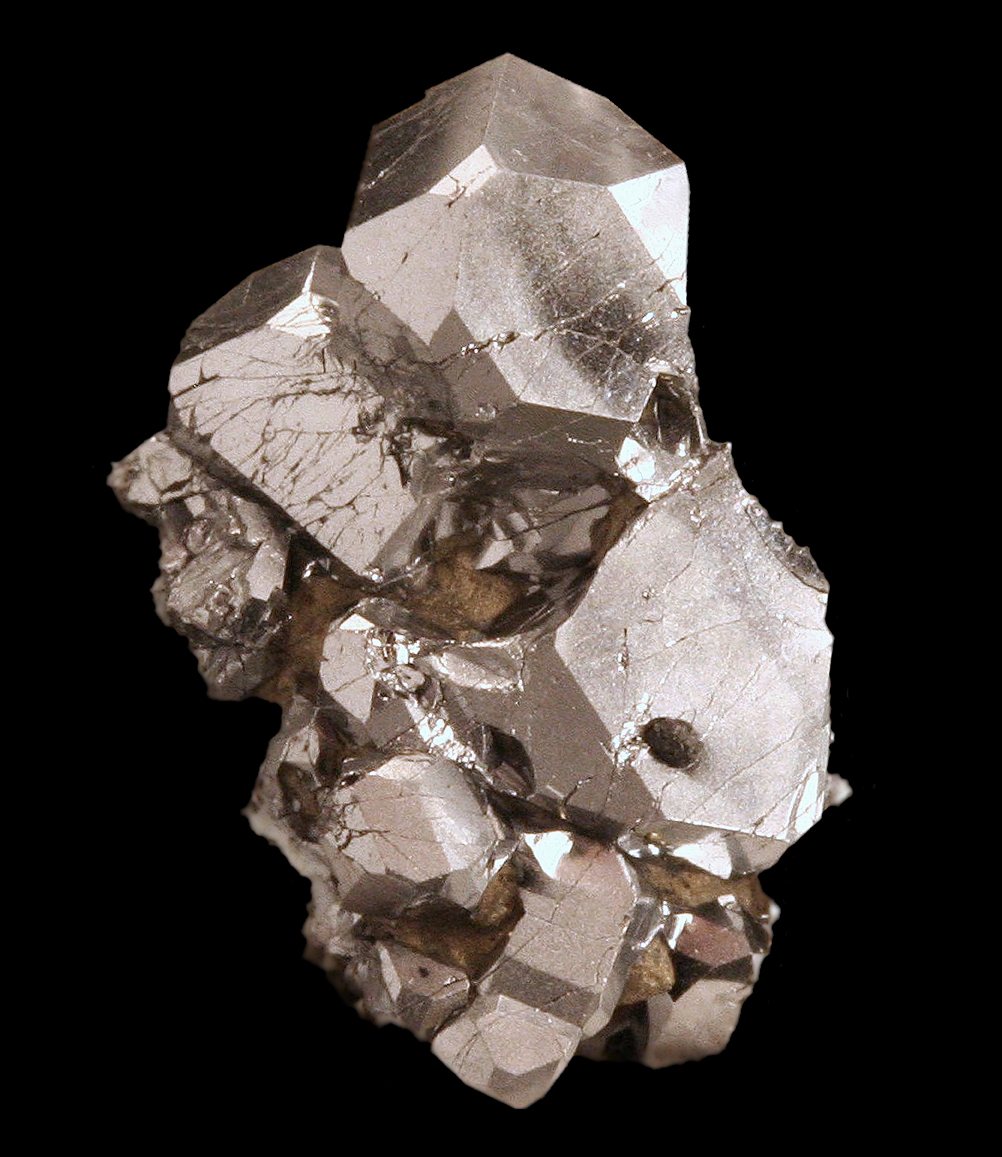
Sperrylite
The most common platinum mineral, a hard arsenide found in nickel-copper sulfide ores.
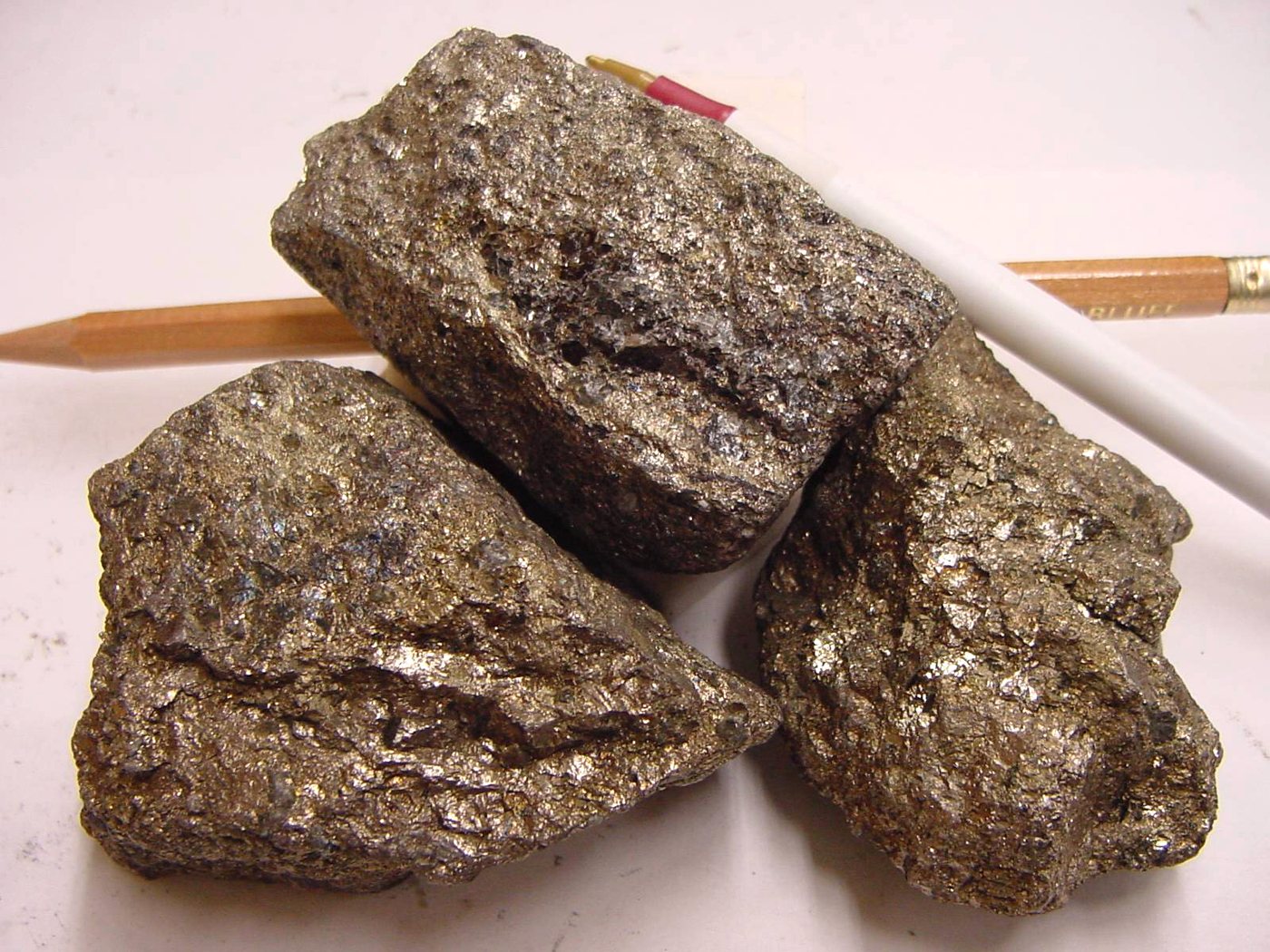
Pentlandite
The main nickel sulfide ore mineral, and the host that also carries most by-product platinum-group metals.
Chi detiene le riserve
PGM reserves
PGM reserveskilograms 2025
USGS Mineral Commodity Summaries 2026 · fonte ↗
| Paese | Riserve | Quota mondiale |
|---|---|---|
| South Africa | 63,000,000 | 82.9% |
| Russia | 11,000,000 | 14.5% |
| Zimbabwe | 1,300,000 | 1.7% |
| United States | 590,000 | 0.8% |
| Canada | 310,000 | 0.4% |
| Other countries | Not applicable | — |
| Totale mondiale | >76,000,000 | 100% |
La fonte pubblica questo totale mondiale come valore limite anziché come valore puntuale; le quote nell'ultima colonna sono pertanto esse stesse valori limite.