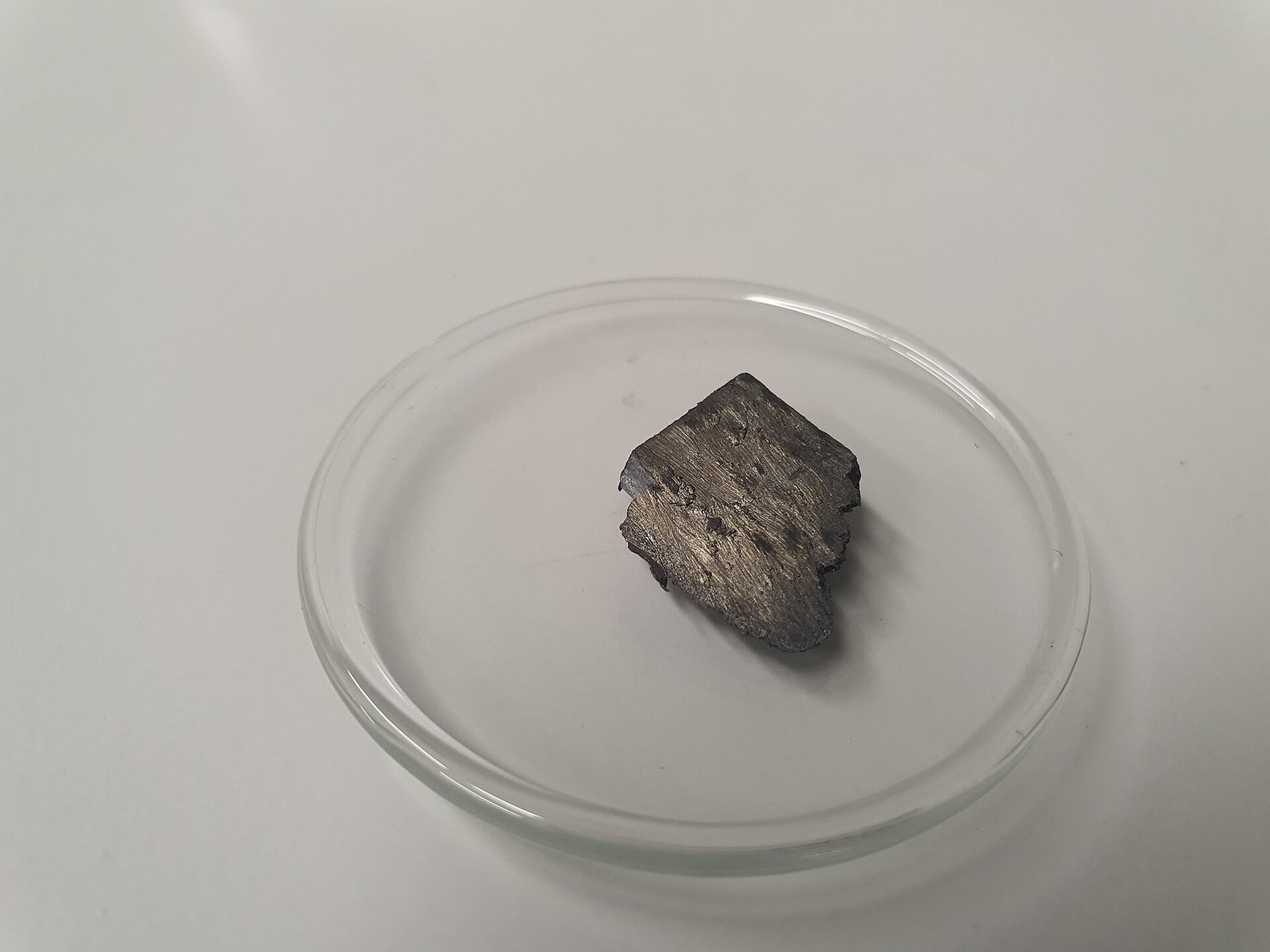
Đây là gì?
The scarcest of the four magnet rare earths, used in tiny quantities to make a magnet survive high temperature.
Tại sao điều này quan trọng?
Terbium is the tightest single link in the magnet chain: very little is produced, almost all of it from one region, and there is no substitute for the hottest applications.
Where it is in the Earth
Terbium belongs to the heavy rare earth elements, a group that sits toward the right-hand end of the lanthanide series on the periodic table. That distinction matters because the light and heavy rare earths tend to concentrate in different types of rock and in different minerals, which is why they do not always appear together in useful proportions. Terbium is scarcer in the crust than its lighter cousins such as lanthanum or cerium, and that inherent scarcity is compounded by the fact that it does not form its own minerals in any commercially significant way. Instead, it substitutes into the crystal structures of other minerals, riding along as a minor constituent.
The two ore minerals listed for terbium — xenotime and ion-adsorption clays — represent quite different geological stories. Xenotime is a yttrium phosphate mineral that forms in granites and in the heavy-mineral sands that erode from them. Because xenotime preferentially incorporates heavy rare earths, including terbium, it can carry relatively enriched concentrations compared with the more abundant light-rare-earth mineral bastnäsite. Ion-adsorption clays are a different matter entirely. They form when granitic rock weathers slowly under warm, humid conditions over millions of years. As the feldspar and mica in the granite break down, the rare earth ions released from the rock are not washed away entirely; instead they adsorb — that is, they loosely attach to the surface of clay minerals, chiefly kaolinite. This process selectively retains the heavy rare earths, including terbium, dysprosium and yttrium, in proportions that are far more useful industrially than most hard-rock deposits. Southern China's deeply weathered granites, sitting in a humid subtropical climate, produced exactly these conditions over geological time, which is why the region dominates heavy rare earth supply.
The consequence of this geology is that terbium is not found in large, discrete orebodies in the way that copper or iron ore is. It is disseminated at very low concentrations across wide areas of clay-covered granite terrain, or as a minor fraction in hard-rock phosphate ores. Neither setting is naturally amenable to the straightforward bulk mining that underpins most of the metals industry.
Getting it out
Because terbium does not concentrate into thick, high-grade veins, the methods used to recover it are shaped by the nature of the host material rather than by any choice of convenience. In ion-adsorption clay deposits, the ore is not a hard rock at all — it is a soft, weathered material sitting close to or at the surface. The rare earth ions are not locked into a mineral grain but are loosely held on clay surfaces, which means the chemistry of extraction is relatively simple even if the logistics of working across large, low-lying terrain are not. The dominant technique is in-situ leaching, in which a solution — historically ammonium sulfate, more recently other reagents following environmental restrictions — is injected into the ground through drilled holes. The solution displaces the adsorbed rare earth ions from the clay surfaces and carries them downslope or to collection points, where they are precipitated out as a crude mixed rare earth compound. No blasting, no large-scale earth movement of the conventional sort, and no mill are required in the traditional sense, which keeps some costs down while creating a different set of land-disturbance and groundwater-management challenges.
The grade of an ion-adsorption deposit — meaning the concentration of rare earth oxides in the ore — is very low. This is not a setting where the ore stands visually apart from the surrounding rock, and the terbium content is only a fraction of the total rare earth content. What this means in practice is that very large areas of land must be worked, and that the mass of solution pumped through the ground per unit of recovered oxide is large. The ratio of effort to product is high. In xenotime-bearing hard-rock or heavy-mineral sand operations, the mining may be conventional open-pit or dredging, but terbium there is a by-product of yttrium or zircon recovery, so the mining decisions are made on the basis of the primary product, not terbium.
What pulls on it
Terbium's primary use in modern industry is as an additive to NdFeB permanent magnets intended for high-temperature service. NdFeB magnets are the strongest class of permanent magnet available, and they underpin the motors and generators in electric vehicles, wind turbines and a wide range of industrial equipment. The difficulty is that without modification, these magnets lose their magnetic strength — technically, their coercivity drops — as temperature rises. Terbium, added in small quantities to the grain boundaries of a sintered magnet, raises the maximum operating temperature substantially. The intensity of use is low, as the data show: the addition ranges from nothing to around 0.02 kilograms per kilogram of finished magnet, and only the grades intended for the hottest operating environments require it at all. But because the magnet market itself is large, even this small intensity translates into meaningful aggregate demand for an element produced in very small absolute quantities.
Wind turbines that use direct-drive permanent magnet generators, which avoid gearboxes by running the generator at the slow rotational speed of the rotor, tend to require the higher-performance magnet grades and therefore the terbium addition. Electric vehicle traction motors, depending on design and operating temperature targets, may or may not use terbium-containing grades. The other historical use — green phosphors in fluorescent lamps and display screens — has declined substantially as LED lighting displaced fluorescent technology, because LEDs do not use rare earth phosphors in the same way. This shift has changed the shape of terbium demand, making the magnet chain more dominant than it once was. If the penetration of direct-drive wind turbines and thermally demanding motor designs continues to grow, demand for terbium would be expected to grow with it, though the relationship depends on engineering choices that vary by manufacturer and application.
What would cause demand to change sharply is either a broad shift in magnet design — for instance, a widespread move toward motor topologies that run cooler and therefore need less or no terbium — or a breakthrough in substitution chemistry. Neither can be ruled out, but neither has displaced terbium in the highest-performance applications to date. The defence and advanced electronics uses listed in the U.S. statistics are real but represent a smaller fraction of aggregate demand than the magnet chain.
Nguồn gốc của nó trong đá
Tất cả khoáng vật quặng →Đây là các khoáng sản thực sự mang lại terbium. Một mỏ khoáng chỉ là thân quặng khi một trong số chúng có hàm lượng đủ cao để bù đắp chi phí khai thác.
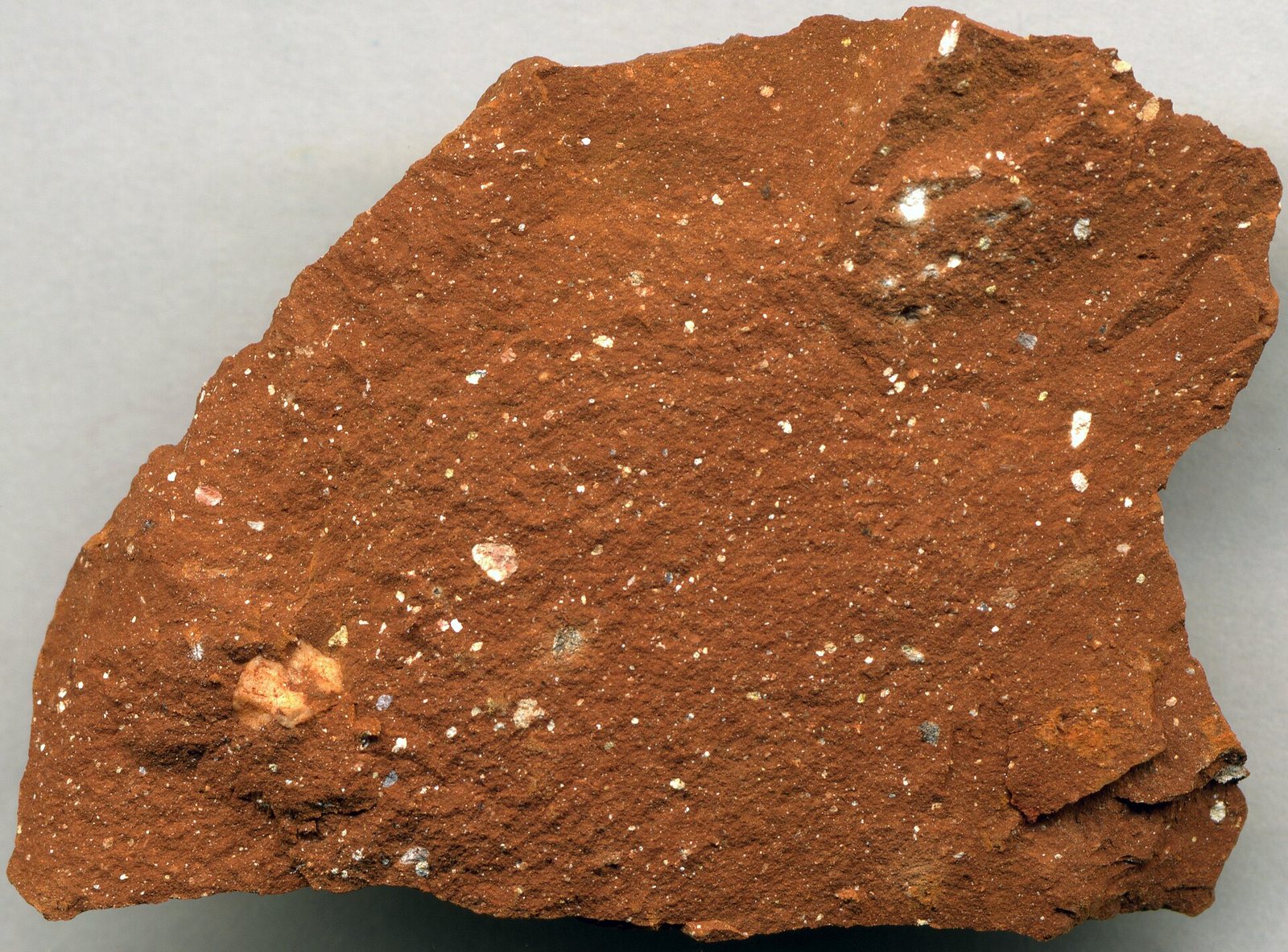
Ion-Adsorption Clay
Weathered granite where rare-earth ions cling loosely to clay surfaces. Grades are very low but the metal washes out…
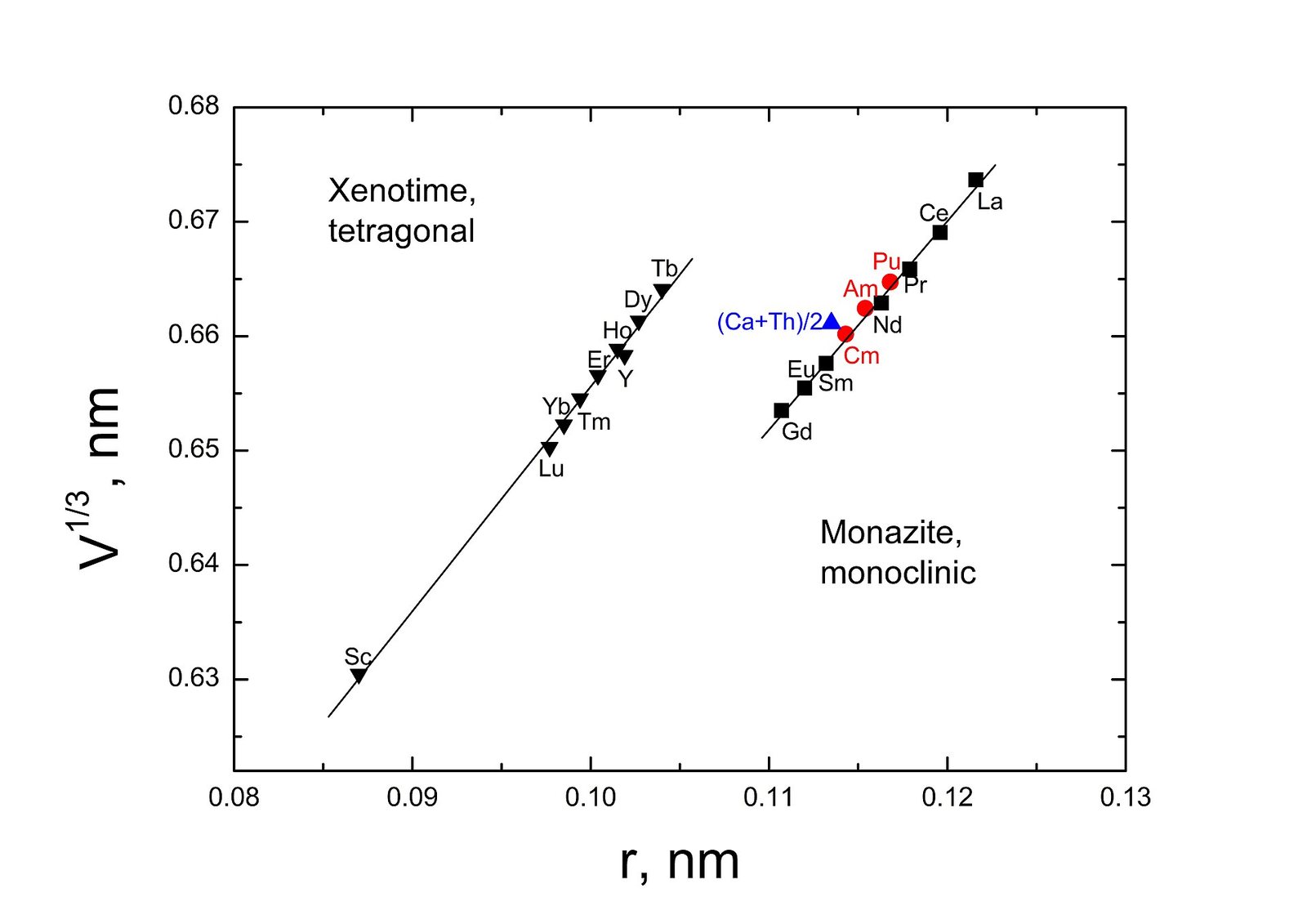
Xenotime
A yttrium phosphate that also carries the heavy rare earths — dysprosium, terbium, erbium — that magnets need.
Giá
average, dollars per kilogram: Terbium oxide, 99.99% minimum
Trung bình nămdollars per kilogram
Cơ sở: average, dollars per kilogram: Terbium oxide, 99.99% minimum. Trung bình năm theo công bố trong USGS Mineral Commodity Summaries 2026 · nguồn ↗. Đây là mức trung bình hàng năm tham khảo, không phải báo giá thị trường trực tiếp.
Các mỏ sản xuất khoáng sản này
Tất cả mỏ →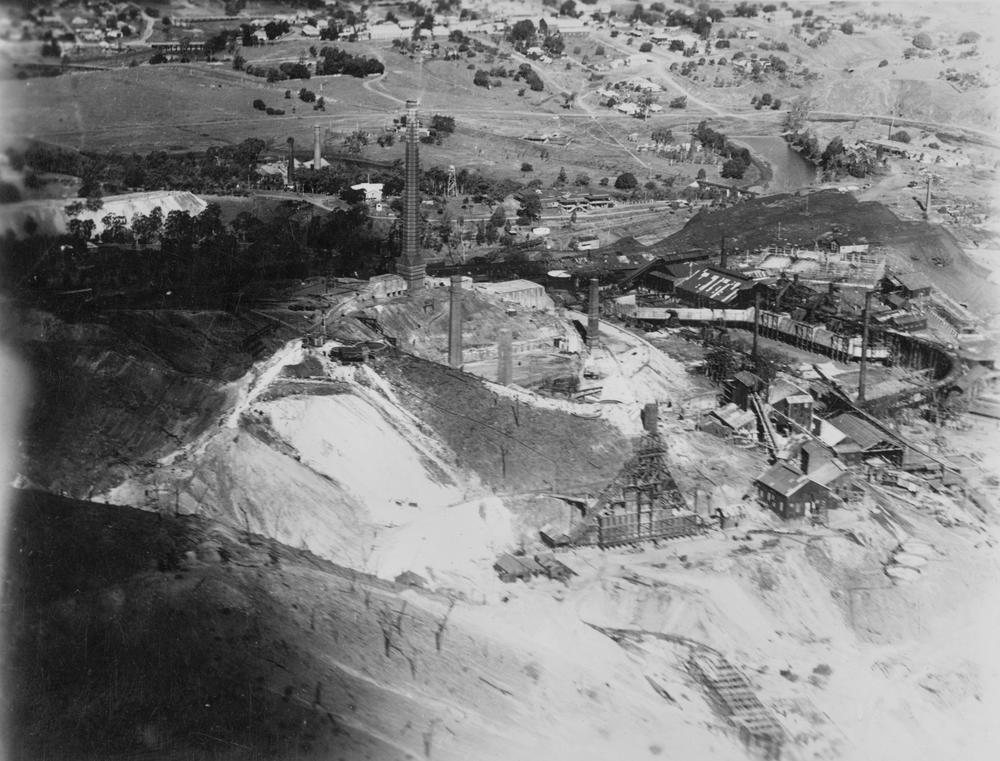
Southern China Ion-Adsorption Clays →
Nơi nó được chế biến và tinh luyện
| Nhà máy | Loại | Giai đoạn | Quốc gia | Vai trò |
|---|---|---|---|---|
| Chinese NdFeB Magnet Cluster | Nhà máy nam châm | Thành phần | China | Đầu vào |
| Ganzhou Rare Earth Cluster | Nhà máy tách chiết | Tinh luyện | China | Sản lượng đầu ra |
Công dụng của nó
Tất cả thị trường đầu ra →| Thị trường đầu ra | Chức năng của nó ở đó | Tầm quan trọng |
|---|---|---|
| Wind Power | Heat resistance in the hottest designs | Quan trọng |
Một công nghệ cần bao nhiêu
| Công nghệ | Đại lượng | Báo giá | Cơ sở |
|---|---|---|---|
| NdFeB Permanent Magnet | —–0.02 kg | per kg of finished magnet | Added for the hottest grades |
Indicative range compiled from published technology studies and chemistry; verify against a manufacturer specification before use. Chạy các con số này ở bất kỳ quy mô nào trong máy tính vật liệu →