Commercial
Wind Power
What it is
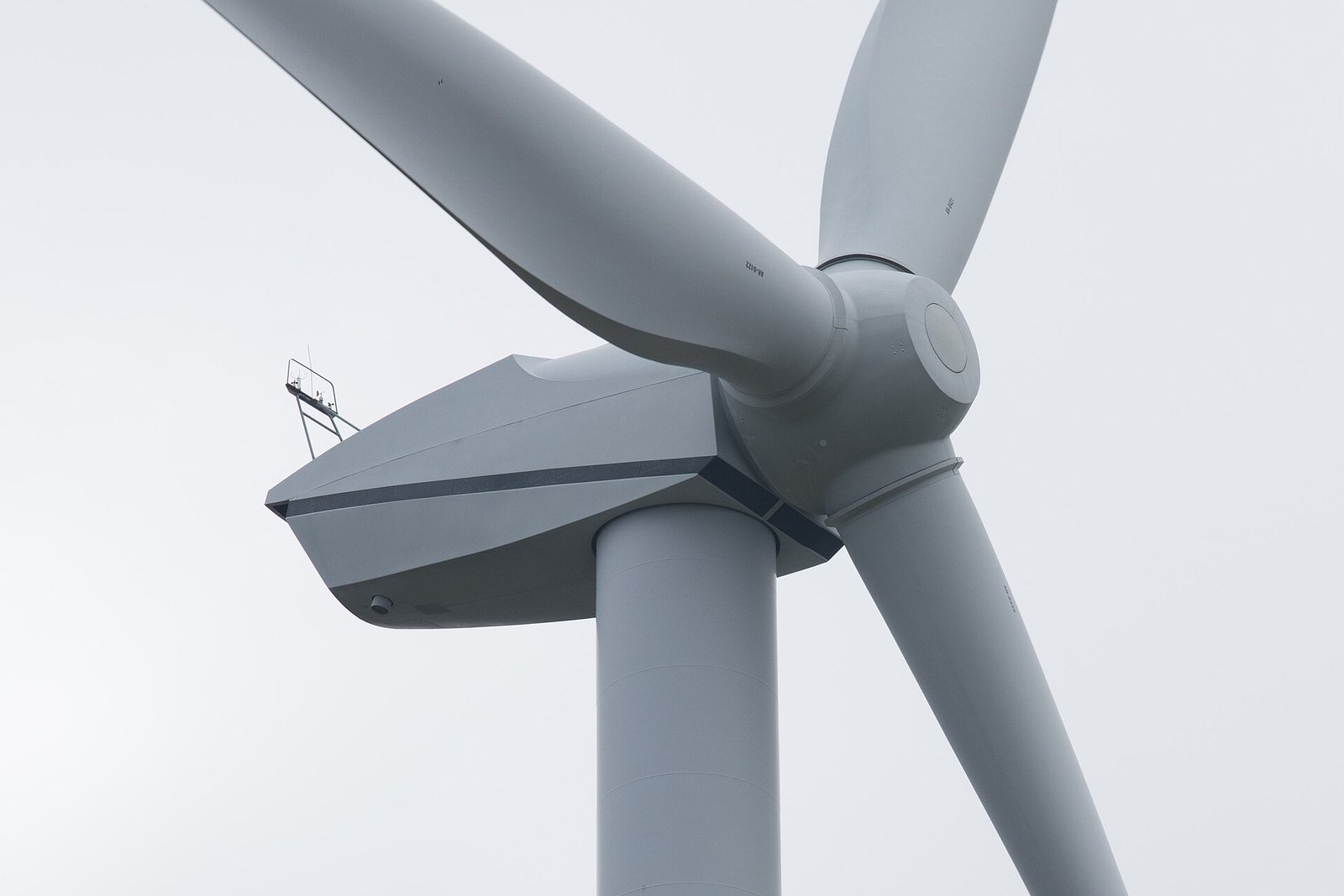
Removing the gearbox removes the component that fails most often offshore. The price is several hundred kilograms of rare-earth magnet per megawatt.
The material bill
Scale it up →Quantities are per MW of capacityindicative range
Read these as “about this much, give or take”. Every manufacturer’s design differs, and the numbers fall over time as engineers learn to use less of the expensive things.
| Material | Low | High | Unit | Basis |
|---|---|---|---|---|
| Iron & Steel Dominates the mass by far. | 100,000 | 180,000 | kg | Tower, nacelle and foundation |
| Copper critical Offshore is far higher than onshore. | 3,000 | 8,000 | kg | Generator, nacelle and array cabling |
| Neodymium critical Direct-drive designs only. | 100.0 | 200.0 | kg | Contained in generator magnets |
| Dysprosium critical | 5.00 | 20.00 | kg | Heat and demagnetisation resistance |
| Boron critical | 4.00 | 8.00 | kg | Magnet alloy |
Indicative range compiled from published technology studies and chemistry; verify against a manufacturer specification before use. Rows marked “trace” contain the material in quantities too small to state usefully as a mass — the constraint there is purity or supplier count, not tonnage.
The alternatives
Substitution is the most underrated force in materials. When a metal gets expensive or politically difficult, engineers design around it — and demand for a whole mine can evaporate.