O que é?
An element that makes glass resist thermal shock, fibreglass strong, and — with iron and neodymium — the strongest magnets known.
Por que razão é importante?
Borosilicate glass, glass fibre for wind blades, agricultural micronutrients and NdFeB magnets all start here, from very few deposits.
Where it is in the Earth
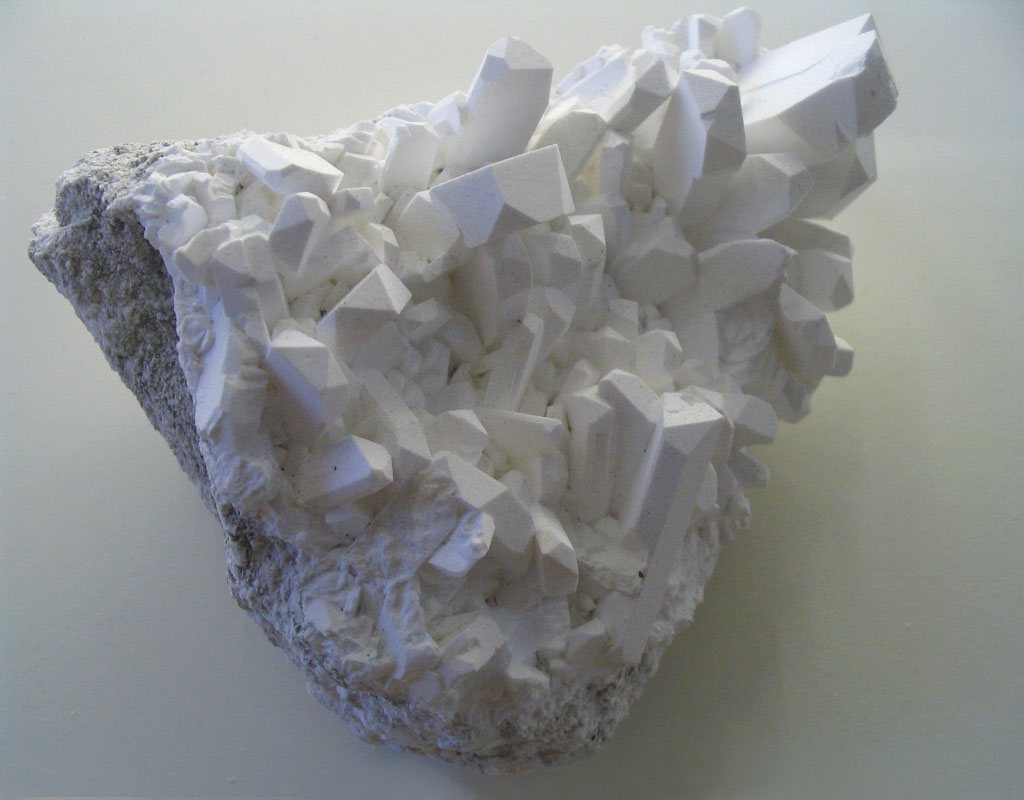
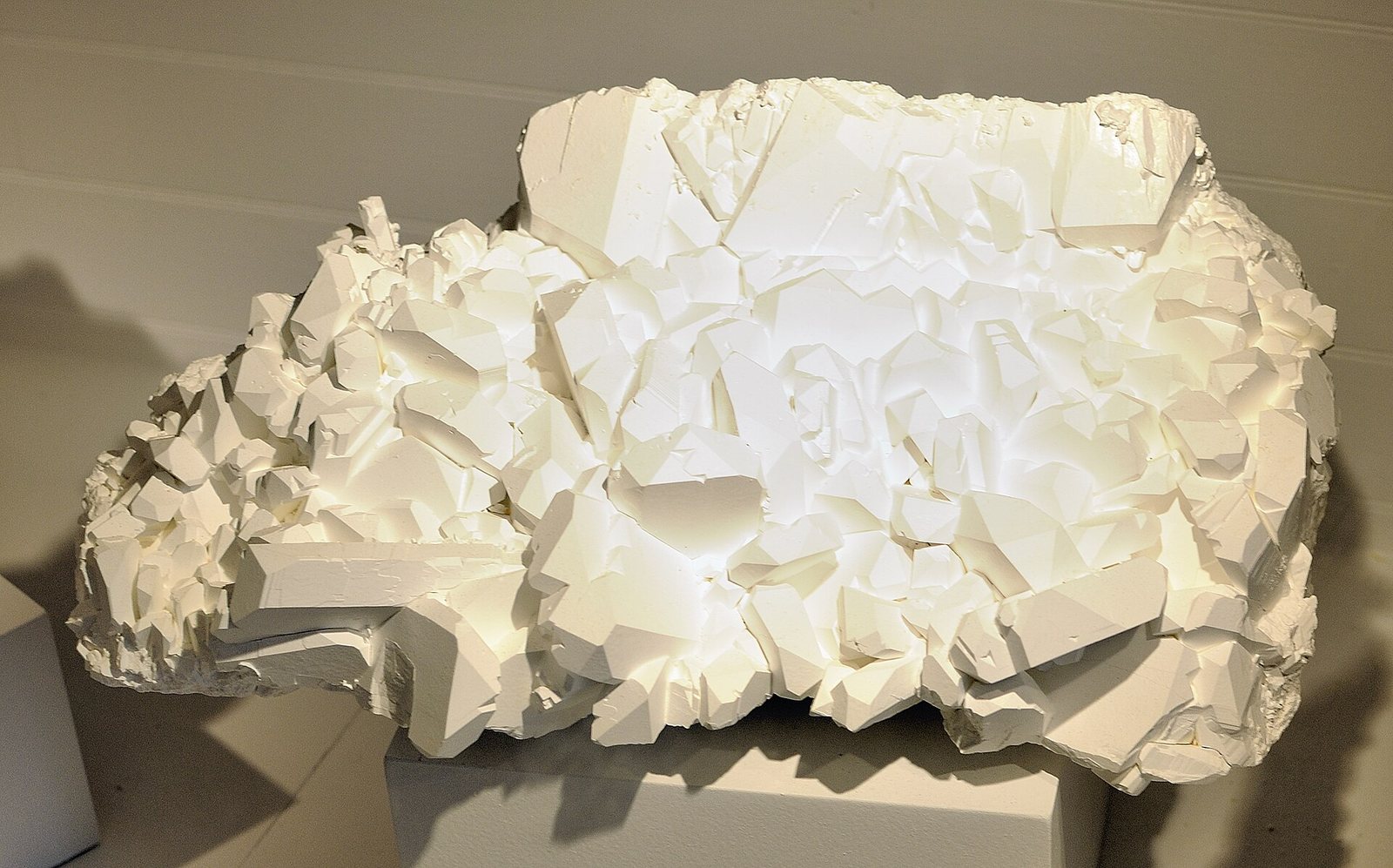
Boron does not form metal deposits in the way that copper or iron do. Instead, it concentrates through evaporation. The process begins when boron-rich hydrothermal fluids — hot water carrying dissolved minerals up through volcanic rock — discharge into enclosed, arid basins. As the water evaporates under a dry climate, the dissolved material crystallises out in layers on the basin floor, building up sequences of borate minerals over geological time. The most important of these minerals is borax, a hydrated sodium borate, though dozens of other borate species can occur depending on the chemistry of the brines and the temperature at which they crystallise. The resulting deposits are called evaporites, because evaporation is the engine that made them.
This process explains why the world's major boron deposits cluster in specific geological settings: the volcanic arcs and high-altitude closed basins of the Andes in South America, the great endorheic basins of Central Asia and the Tibetan plateau, and — most importantly — the Neogene sedimentary basins of western Turkey. Turkey's deposits, particularly those in the Kütahya-Eskişehir region, formed in lake basins associated with Miocene-age volcanism and rifting, and they accumulated to exceptional thickness and purity. The reserve figures in the table above make this concentration stark: Turkey holds reserves vastly larger than any other country, which is unusual even by the standards of mineral commodities, where production is often geographically concentrated but reserves are more widely spread.
The Atacama and other South American salars represent a related but distinct setting. Here the boron occurs dissolved in brines beneath the surface of salt flats at high altitude, rather than as solid mineral layers. The brine has accumulated over millions of years in structurally closed basins — basins with no outlet to the sea — where inflow from volcanic springs exceeds evaporation loss of water, but the salts themselves build up steadily. Whether the deposit takes the form of a solid evaporite bed or a subsurface brine depends largely on how far evaporation has proceeded since the brine formed, and on the age and thermal history of the basin.
Getting it out
Because boron deposits are mostly soft sedimentary evaporites, the dominant extraction method is open-pit mining. The ore — typically borax or a related borate mineral — sits in horizontal or gently dipping beds that are accessible from surface with standard earth-moving equipment. The overburden, meaning the rock and soil above the ore that must be removed first, is stripped away to expose the ore body. The ratio of waste moved to ore recovered varies with the geometry of the deposit and the thickness of the borate layers, but borate ore bodies tend to be thick and relatively close to surface, which generally makes them more economical to mine by open pit than many metal ores.
Grade, in this context, refers to the concentration of boron oxide (B₂O₃) in the ore expressed as a percentage by weight. This matters because a higher-grade ore requires less energy and fewer processing steps to produce a tonne of sellable product. Borate deposits can be quite high grade relative to many industrial minerals, which is part of what makes large-scale open-pit extraction economic at the prices the market has historically supported. That said, within any deposit there will be zones of varying grade, and miners selectively work higher-grade material when conditions allow.
The South American salar operations, such as those at the Salar de Atacama in Chile, use a fundamentally different method: brine pumping and solar evaporation. The boron-bearing brine is pumped from wells into a series of large, shallow ponds. The sun does most of the concentration work, evaporating water and progressively enriching the remaining liquid in dissolved salts. The boron is eventually recovered from the concentrated brine through further processing. This approach uses far less mechanical energy than conventional mining but depends on the right climate — abundant sunshine and very low rainfall — and takes considerably more surface area than an equivalent solid-ore operation.
What pulls on it
Boron reaches most of its markets in the form of borosilicate glass, glass fibre, or agricultural micronutrients, rather than as a metal or pure element. Borosilicate glass — the kind used in laboratory equipment, cookware, and pharmaceutical packaging — contains boron oxide as a network modifier that lowers the thermal expansion coefficient, meaning the glass expands and contracts far less when heated or cooled than ordinary soda-lime glass does. This property is what allows a borosilicate dish to go from a cold refrigerator to a hot oven without cracking. Glass fibre, produced by drawing molten glass into very fine filaments, uses boron to control the viscosity and crystallisation behaviour of the melt, and the resulting fibres are the reinforcement in fibreglass composites used in wind turbine blades, printed circuit boards, and construction panels.
Agriculture consumes a meaningful share of boron supply as a micronutrient. Plants require boron in small amounts for cell wall formation and reproductive development, and soils in many parts of the world are deficient in it. Boron-deficient crops show characteristic symptoms — hollow stems in brassicas, corky patches in apples — and yield losses can be substantial. The correction is applied either through foliar sprays or soil amendments using borax or boric acid. Demand from agriculture tracks closely with arable land use and crop intensification, and it tends to be fairly stable year to year.
The end markets table on this page lists nuclear power and wind power as distinct demand segments. In nuclear pressurised-water reactors, boron is dissolved in the coolant water and incorporated into control rods because boron-10, one of its naturally occurring isotopes, is exceptionally good at absorbing neutrons — the particles that sustain the fission chain reaction. In wind power, the connection is more indirect: boron is one of the three elements in neodymium-iron-boron (NdFeB) permanent magnets, which are the magnet type used in the direct-drive generators of many offshore turbines. The material-intensity figures in the table show how much boron is embedded per unit of each application. For demand to shift sharply downward in glass fibre, an alternative reinforcing material would need to achieve equivalent stiffness and fatigue resistance at comparable cost — carbon fibre can do this technically but is substantially more expensive. For the magnet application, alternative magnet types exist but none currently match NdFeB in energy density at room temperature.
Turning ore into product Nível 3
The flowsheet from mined borate ore to a marketable product depends on which mineral has been extracted and what form the customer needs. For solid borax ore, the first step is comminution — crushing and grinding the ore to liberate the borate minerals from any gangue, meaning the waste rock intergrown with the ore. Because borax is relatively soft and soluble, crushing is straightforward, but care must be taken not to generate excessive fines that complicate subsequent handling. The crushed ore is then dissolved in hot water, a step called leaching, which selectively extracts the soluble borate while leaving insoluble silicates and clays behind. This pregnant solution — the dissolved borate in water — is clarified by settling and filtration to remove suspended solids.
From the clarified solution, the principal products are crystallised out. Borax decahydrate and borax pentahydrate are produced by controlled cooling or evaporation of the solution, causing the sodium borate to crystallise in the desired hydration state. Boric acid is produced by reacting the borate solution with sulfuric acid, which converts the sodium borate to boric acid (H₃BO₃), and then crystallising the acid product. These two traded forms — borax and boric acid — account for the large majority of commercial boron supply. Further downstream, boric acid can be dehydrated to boron trioxide (B₂O₃), or reduced to produce elemental boron or boron carbide, each step adding processing complexity and energy cost. Boron carbide, used in armour and neutron-absorbing applications, requires very high-temperature reduction, making it a significantly more expensive product than the basic borates. Losses of boron occur at each stage — in filtration residues, in mother liquors returned to the process circuit, and in fine crystalline material that does not meet specification — so overall recovery from ore to final product is an important driver of unit costs and is closely managed by producers.
For salar-derived boron, the evaporation ponds deliver a concentrated brine rather than a solid mineral feed, and the downstream chemistry follows a similar dissolution-and-crystallisation logic but without the initial comminution stage. One complexity of salar operations is that lithium, potassium, and boron often coexist in the same brine, and the processing circuit must be designed to separate them efficiently, with the relative prices of each product influencing which is prioritised at any given time. This by-product interdependence means that decisions made for lithium recovery — driven by battery demand — can affect the economics and throughput of boron recovery from the same brine, and vice versa.
Substitution and recycling Nível 3
In glass and glass fibre, partial substitution of boron oxide is technically possible in some formulations, but removing it entirely tends to compromise the properties that manufacturers and end users depend on. In borosilicate glass, no common oxide replicates boron's effect on thermal expansion as efficiently; switching to a boron-free composition typically requires either accepting inferior thermal performance or reformulating around more expensive alternatives. In glass fibre for composites, some E-glass formulations have been reformulated to reduce or eliminate boron, driven more by emissions regulations at the melting stage than by raw material cost — boron volatilises from the melt as boric acid vapour, which is regulated as an air pollutant in some jurisdictions. These low-boron or boron-free fibre glasses are now commercially established for certain applications, so substitution pressure from environmental regulation has already had some effect on demand growth, though it has not collapsed it.
In NdFeB magnets, boron is present at a low weight fraction — around 1 percent by weight according to the intensity data — but it plays a specific crystallographic role in stabilising the tetragonal Nd₂Fe₁₄B phase that gives the magnet its exceptional coercivity. Removing or substantially reducing it changes the phase entirely. Ferrite magnets (iron oxide based) and samarium-cobalt magnets can serve some of the same applications, but ferrite magnets are considerably weaker per unit volume, and samarium-cobalt is expensive and relies on cobalt, itself a supply-concentrated material. Neither is a straightforward drop-in replacement for NdFeB in high-performance applications.
Recycling of boron is minimal in practice. Boron that goes into glass and fertiliser is dispersed in ways that make recovery uneconomic: glass cullet is recycled as a material (the glass itself is remelted) but the boron content is simply carried along with the glass rather than recovered as boron oxide and re-refined. Agricultural boron is taken up by crops, passes through the food chain, and ends up in wastewater or dispersed in soil. In NdFeB magnets, end-of-life magnet recycling schemes are developing in response to neodymium supply concerns, and if such schemes become widespread, some boron would re-enter the supply chain embedded in recovered alloy, but boron is not the driver of magnet recycling economics and would be a minor co-recovered material rather than the target.
De onde vem na rocha
Todos os minerais de minério →Estes são os minerais que efetivamente transportam boron. Um depósito só é um corpo de minério se um deles estiver concentrado o suficiente para justificar o custo de sua extração.
Quem o produz
Ver no mapa →Production—All forms
Production—All formsthousand metric tons 2025 (estimado)
USGS Mineral Commodity Summaries 2026 · Production is often withheld; USGS marks several figures as proprietary. · fonte ↗
Deslize a tabela lateralmente para ver as colunas restantes.
| País | Produção | Partilha do mundo |
|---|---|---|
| United States | Withheld | — |
| Total mundial | Not available | 100% |
Production—boric oxide equivalent
Production—boric oxide equivalentthousand metric tons 2025 (estimado)
USGS Mineral Commodity Summaries 2026 · Production is often withheld; USGS marks several figures as proprietary. · fonte ↗
Deslize a tabela lateralmente para ver as colunas restantes.
| País | Produção | Partilha do mundo |
|---|---|---|
| China | 230.0 | — |
Production—compounds
Production—compoundsthousand metric tons 2025 (estimado)
USGS Mineral Commodity Summaries 2026 · Production is often withheld; USGS marks several figures as proprietary. · fonte ↗
Deslize a tabela lateralmente para ver as colunas restantes.
| País | Produção | Partilha do mundo |
|---|---|---|
| Germany | 40.00 | — |
Production—crude borates
Production—crude boratesthousand metric tons 2025 (estimado)
USGS Mineral Commodity Summaries 2026 · Production is often withheld; USGS marks several figures as proprietary. · fonte ↗
Deslize a tabela lateralmente para ver as colunas restantes.
| País | Produção | Partilha do mundo |
|---|---|---|
| Peru | 220.0 | — |
Production—crude ore
Production—crude orethousand metric tons 2025 (estimado)
USGS Mineral Commodity Summaries 2026 · Production is often withheld; USGS marks several figures as proprietary. · fonte ↗
Deslize a tabela lateralmente para ver as colunas restantes.
| País | Produção | Partilha do mundo |
|---|---|---|
| Argentina | 170.0 | — |
Production—datolite ore
Production—datolite orethousand metric tons 2025 (estimado)
USGS Mineral Commodity Summaries 2026 · Production is often withheld; USGS marks several figures as proprietary. · fonte ↗
Deslize a tabela lateralmente para ver as colunas restantes.
| País | Produção | Partilha do mundo |
|---|---|---|
| Russia | 80.00 | — |
Production—refined borates
Production—refined boratesthousand metric tons 2025 (estimado)
USGS Mineral Commodity Summaries 2026 · Production is often withheld; USGS marks several figures as proprietary. · fonte ↗
Deslize a tabela lateralmente para ver as colunas restantes.
| País | Produção | Partilha do mundo |
|---|---|---|
| Turkey | 1,500 | — |
Production—ulexite
Production—ulexitethousand metric tons 2025 (estimado)
USGS Mineral Commodity Summaries 2026 · Production is often withheld; USGS marks several figures as proprietary. · fonte ↗
Deslize a tabela lateralmente para ver as colunas restantes.
"Withheld" significa que o USGS suprimiu o valor para evitar divulgar dados de uma empresa individual — não significa zero. Os valores por país nem sempre somam o total mundial porque a fonte arredonda cada valor de forma independente e nem sempre discrimina uma linha de "outros países".
Quem detém as reservas
Reserves
Reservesthousand metric tons 2025
USGS Mineral Commodity Summaries 2026 · fonte ↗
| País | Reservas | Partilha do mundo |
|---|---|---|
| United States | 48,000 | — |
| Total mundial | Not available | 100% |
Reserves—boric oxide equivalent
Reserves—boric oxide equivalentthousand metric tons 2025
USGS Mineral Commodity Summaries 2026 · fonte ↗
| País | Reservas | Partilha do mundo |
|---|---|---|
| China | 9,100 | — |
Reserves—compounds
Reserves—compoundsthousand metric tons 2025
USGS Mineral Commodity Summaries 2026 · fonte ↗
| País | Reservas | Partilha do mundo |
|---|---|---|
| Germany | Not applicable | — |
Reserves—crude borates
Reserves—crude boratesthousand metric tons 2025
USGS Mineral Commodity Summaries 2026 · fonte ↗
| País | Reservas | Partilha do mundo |
|---|---|---|
| Peru | 4,000 | — |
Reserves—crude ore
Reserves—crude orethousand metric tons 2025
USGS Mineral Commodity Summaries 2026 · fonte ↗
| País | Reservas | Partilha do mundo |
|---|---|---|
| Argentina | Not applicable | — |
Reserves—datolite ore
Reserves—datolite orethousand metric tons 2025
USGS Mineral Commodity Summaries 2026 · fonte ↗
| País | Reservas | Partilha do mundo |
|---|---|---|
| Russia | 40,000 | — |
Reserves—refined borates
Reserves—refined boratesthousand metric tons 2025
USGS Mineral Commodity Summaries 2026 · fonte ↗
| País | Reservas | Partilha do mundo |
|---|---|---|
| Turkey | 950,000 | — |
Reserves—ulexite
Reserves—ulexitethousand metric tons 2025
USGS Mineral Commodity Summaries 2026 · fonte ↗
Preço
average unit value of combined imports, cost, insurance, and freight, dollars per metric ton
Média anualdollars per metric ton
Base: average unit value of combined imports, cost, insurance, and freight, dollars per metric ton. Médias anuais conforme publicadas em USGS Mineral Commodity Summaries 2026 · fonte ↗. Estas são médias anuais de referência, não uma cotação de mercado em tempo real.
Minas que o produzem
Todas as minas →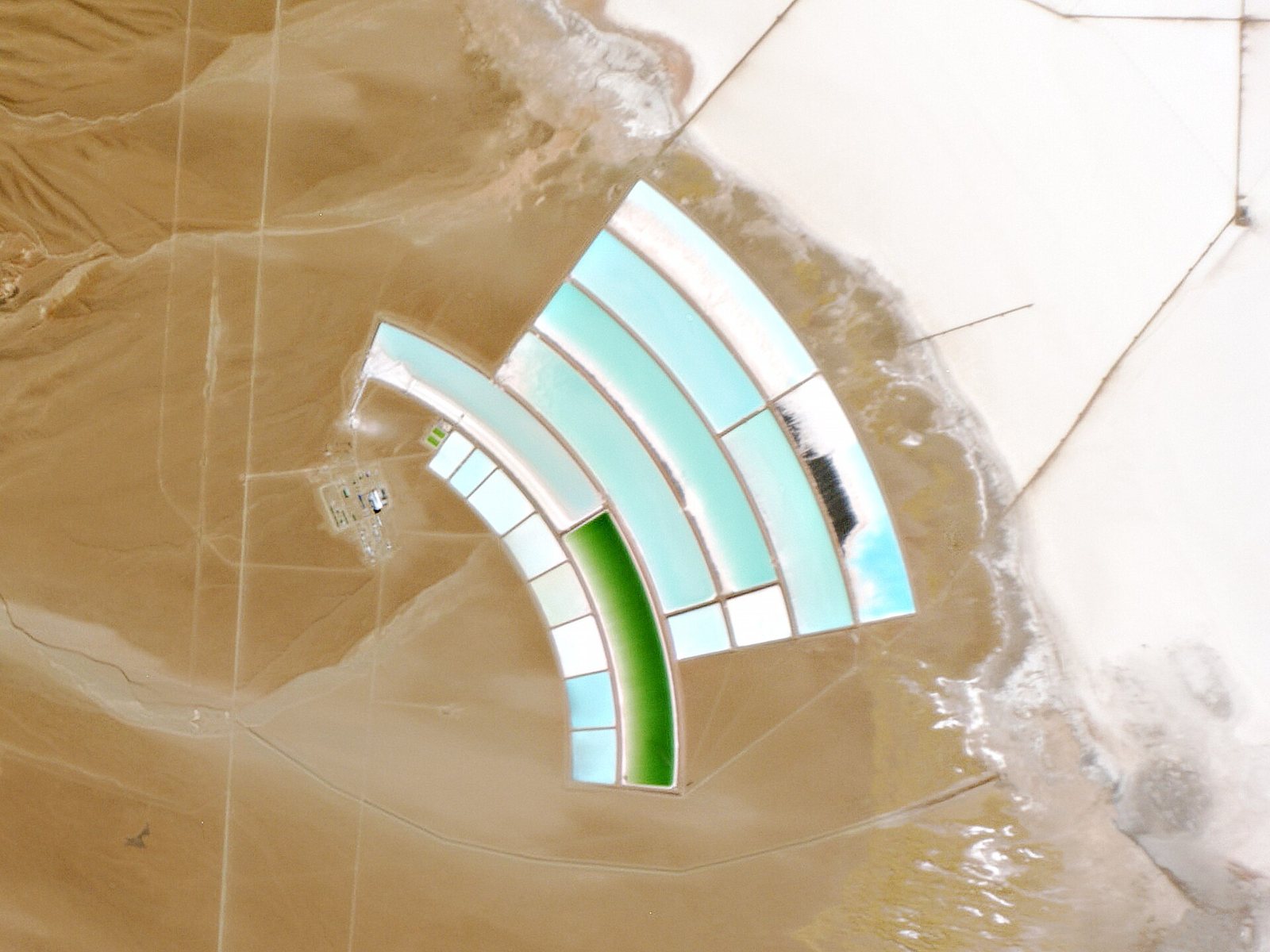
Onde é processado e refinado
| Planta | Tipo | Etapa | País | Função |
|---|---|---|---|---|
| Chinese NdFeB Magnet Cluster | Fábrica de ímanes | Componente | China | Entrada |
| Wind Turbine Nacelle & Blade Plants, Jutland | Fábrica de transformação | Produto | Denmark | Entrada |
Para que é utilizado
Todos os mercados finais →| Mercado final | O que faz ali | Importância |
|---|---|---|
| Nuclear Power | Neutron absorber in control and coolant chemistry | Definição de |
| Wind Power | The B in NdFeB magnet alloy | Importante |
| Agriculture & Food | Crop micronutrient | Importante |
Quanto uma tecnologia necessita
| Tecnologia | Quantidade | Cotado | Base |
|---|---|---|---|
| Direct-Drive Offshore Wind Turbine | 4.00–8.00 kg | per MW of capacity | Magnet alloy |
| NdFeB Permanent Magnet | 0.008–0.012 kg | per kg of finished magnet | About 1% by weight |
| Pressurised Water Reactor | 5.00–20.00 t | per GW of capacity | Control rods and coolant chemistry |
Indicative range compiled from published technology studies and chemistry; verify against a manufacturer specification before use. Execute estes números em qualquer escala na calculadora de materiais →