De la roche au produit, tracé
The Materials Atlas
Matériaux Mines et gisements Traitement et affinage Parcours de garde à vue Chaînes d'approvisionnement Entreprises Pays Actualités
Matériaux par rayon Matériaux de batteries Éléments de terres rares Cuivre et électricité Matériaux pour semiconducteurs Matières nucléaires Aérospatiale & Défense Métaux précieux Acier et métaux d'alliage Minéraux industriels Minéraux agricoles Matières premières énergétiques Minéraux menants Tableau périodique
Demande Marchés finaux Technologies Calculateur de matériaux Cartes Filtre de sélection
Apprendre & outils ApprendreGlossaire Interroger les donnéesAgents IA Recherche et donnéesAPI ★ Enregistré
À propos À notre sujetMéthodologie Sources des donnéesContact Avertissement
Options de lecture
🧭 Vue guidée Nouveau dans ce domaine — teneurs en minerai, concentré, affinage, sous-produits ? Nous expliquons chaque terme au fil de votre navigation, en langage clair. Les mêmes données, avec l'aide intégrée.
⚡ Vue expert Vous connaissez déjà le secteur. Uniquement les données — claires, rapides et compactes, sans explications supplémentaires. Il s'agit de l'affichage par défaut.
Thème
Langue de l'interface
Profondeur Les pages matériaux sont rédigées à quatre niveaux. Choisissez-en un sur n'importe quelle page matériau et il est mémorisé.
★ Enregistré Recherche et données
Boron

Minéraux industriels

Boron B · 5

An element that makes glass resist thermal shock, fibreglass strong, and — with iron and neodymium — the strongest magnets known.

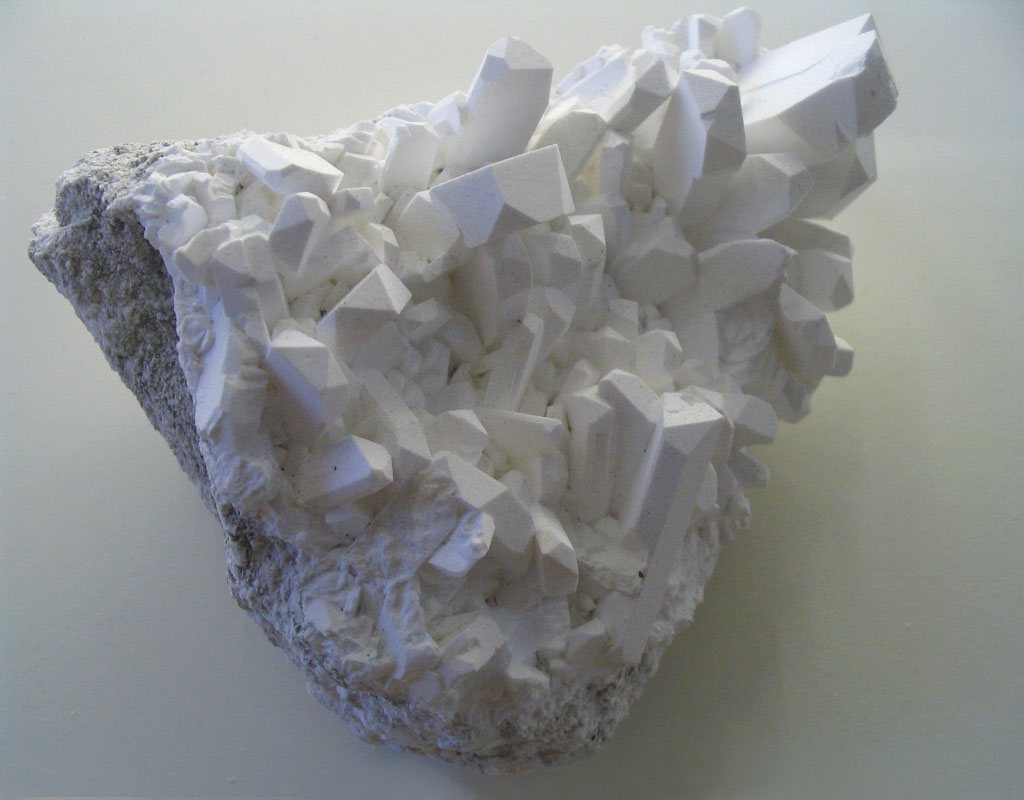
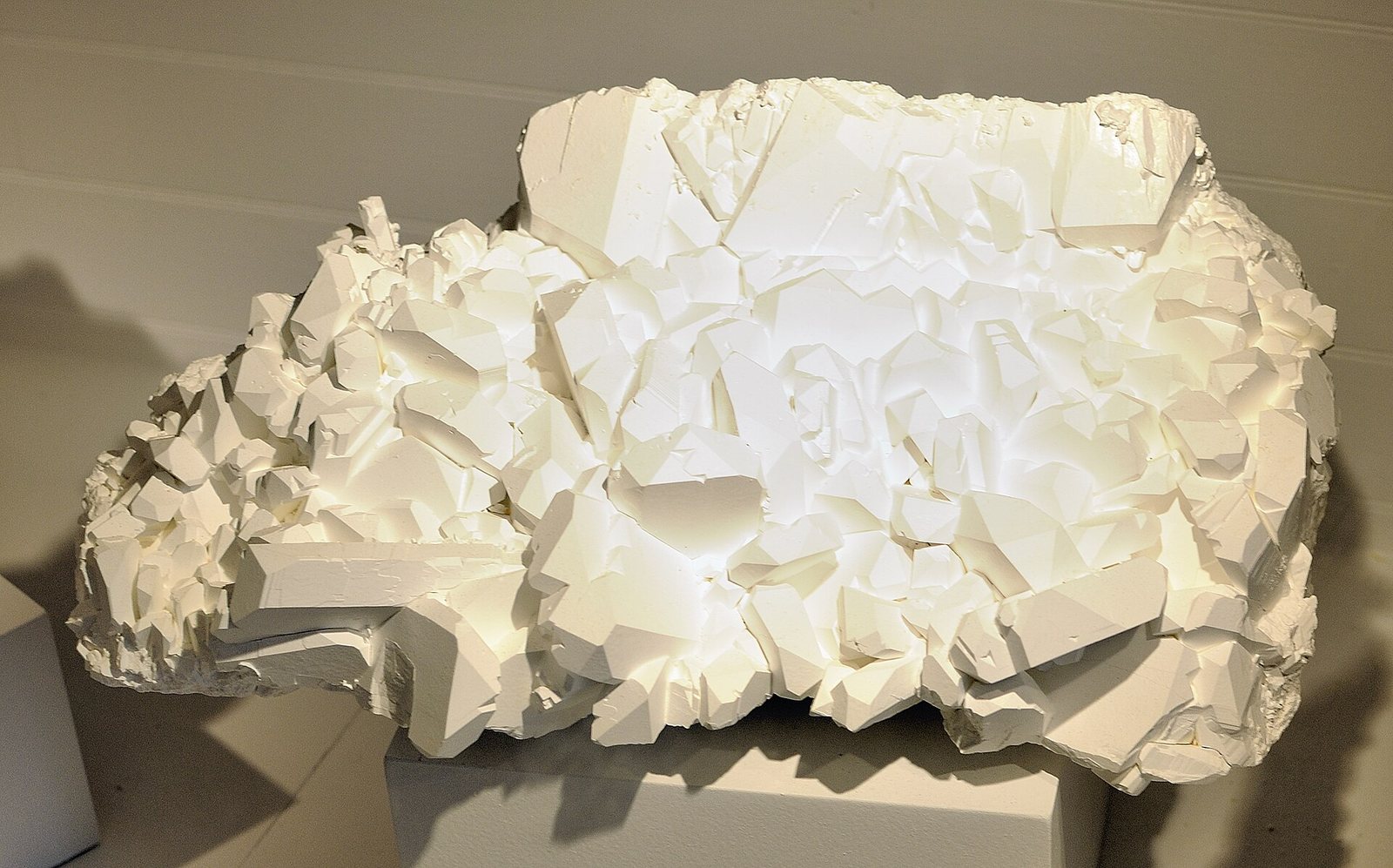
Borax crystals · Aram Dulyan ( User:Aramgutang ) · Public domain · Wikimedia Commons

Qu'est-ce que c'est ?

An element that makes glass resist thermal shock, fibreglass strong, and — with iron and neodymium — the strongest magnets known.

Pourquoi est-ce important ?

Borosilicate glass, glass fibre for wind blades, agricultural micronutrients and NdFeB magnets all start here, from very few deposits.

Where it is in the Earth

Boron does not form metal deposits in the way that copper or iron do. Instead, it concentrates through evaporation. The process begins when boron-rich hydrothermal fluids — hot water carrying dissolved minerals up through volcanic rock — discharge into enclosed, arid basins. As the water evaporates under a dry climate, the dissolved material crystallises out in layers on the basin floor, building up sequences of borate minerals over geological time. The most important of these minerals is borax, a hydrated sodium borate, though dozens of other borate species can occur depending on the chemistry of the brines and the temperature at which they crystallise. The resulting deposits are called evaporites, because evaporation is the engine that made them.

This process explains why the world's major boron deposits cluster in specific geological settings: the volcanic arcs and high-altitude closed basins of the Andes in South America, the great endorheic basins of Central Asia and the Tibetan plateau, and — most importantly — the Neogene sedimentary basins of western Turkey. Turkey's deposits, particularly those in the Kütahya-Eskişehir region, formed in lake basins associated with Miocene-age volcanism and rifting, and they accumulated to exceptional thickness and purity. The reserve figures in the table above make this concentration stark: Turkey holds reserves vastly larger than any other country, which is unusual even by the standards of mineral commodities, where production is often geographically concentrated but reserves are more widely spread.

The Atacama and other South American salars represent a related but distinct setting. Here the boron occurs dissolved in brines beneath the surface of salt flats at high altitude, rather than as solid mineral layers. The brine has accumulated over millions of years in structurally closed basins — basins with no outlet to the sea — where inflow from volcanic springs exceeds evaporation loss of water, but the salts themselves build up steadily. Whether the deposit takes the form of a solid evaporite bed or a subsurface brine depends largely on how far evaporation has proceeded since the brine formed, and on the age and thermal history of the basin.

Getting it out

Because boron deposits are mostly soft sedimentary evaporites, the dominant extraction method is open-pit mining. The ore — typically borax or a related borate mineral — sits in horizontal or gently dipping beds that are accessible from surface with standard earth-moving equipment. The overburden, meaning the rock and soil above the ore that must be removed first, is stripped away to expose the ore body. The ratio of waste moved to ore recovered varies with the geometry of the deposit and the thickness of the borate layers, but borate ore bodies tend to be thick and relatively close to surface, which generally makes them more economical to mine by open pit than many metal ores.

Grade, in this context, refers to the concentration of boron oxide (B₂O₃) in the ore expressed as a percentage by weight. This matters because a higher-grade ore requires less energy and fewer processing steps to produce a tonne of sellable product. Borate deposits can be quite high grade relative to many industrial minerals, which is part of what makes large-scale open-pit extraction economic at the prices the market has historically supported. That said, within any deposit there will be zones of varying grade, and miners selectively work higher-grade material when conditions allow.

The South American salar operations, such as those at the Salar de Atacama in Chile, use a fundamentally different method: brine pumping and solar evaporation. The boron-bearing brine is pumped from wells into a series of large, shallow ponds. The sun does most of the concentration work, evaporating water and progressively enriching the remaining liquid in dissolved salts. The boron is eventually recovered from the concentrated brine through further processing. This approach uses far less mechanical energy than conventional mining but depends on the right climate — abundant sunshine and very low rainfall — and takes considerably more surface area than an equivalent solid-ore operation.

What pulls on it

Boron reaches most of its markets in the form of borosilicate glass, glass fibre, or agricultural micronutrients, rather than as a metal or pure element. Borosilicate glass — the kind used in laboratory equipment, cookware, and pharmaceutical packaging — contains boron oxide as a network modifier that lowers the thermal expansion coefficient, meaning the glass expands and contracts far less when heated or cooled than ordinary soda-lime glass does. This property is what allows a borosilicate dish to go from a cold refrigerator to a hot oven without cracking. Glass fibre, produced by drawing molten glass into very fine filaments, uses boron to control the viscosity and crystallisation behaviour of the melt, and the resulting fibres are the reinforcement in fibreglass composites used in wind turbine blades, printed circuit boards, and construction panels.

Agriculture consumes a meaningful share of boron supply as a micronutrient. Plants require boron in small amounts for cell wall formation and reproductive development, and soils in many parts of the world are deficient in it. Boron-deficient crops show characteristic symptoms — hollow stems in brassicas, corky patches in apples — and yield losses can be substantial. The correction is applied either through foliar sprays or soil amendments using borax or boric acid. Demand from agriculture tracks closely with arable land use and crop intensification, and it tends to be fairly stable year to year.

The end markets table on this page lists nuclear power and wind power as distinct demand segments. In nuclear pressurised-water reactors, boron is dissolved in the coolant water and incorporated into control rods because boron-10, one of its naturally occurring isotopes, is exceptionally good at absorbing neutrons — the particles that sustain the fission chain reaction. In wind power, the connection is more indirect: boron is one of the three elements in neodymium-iron-boron (NdFeB) permanent magnets, which are the magnet type used in the direct-drive generators of many offshore turbines. The material-intensity figures in the table show how much boron is embedded per unit of each application. For demand to shift sharply downward in glass fibre, an alternative reinforcing material would need to achieve equivalent stiffness and fatigue resistance at comparable cost — carbon fibre can do this technically but is substantially more expensive. For the magnet application, alternative magnet types exist but none currently match NdFeB in energy density at room temperature.

Lire correctement les chiffres. Production is often withheld; USGS marks several figures as proprietary. Borax, boric acid, and boron carbide for armour.
A lithium brine salar
volcanic highlands feed the basin evaporation ponds salt crust upper sediments, fresher water lithium-bearing brine in the pore space impermeable basement production well
Rain falling on volcanic highlands leaches lithium and carries it into a basin with no outlet. Evaporation removes the water and leaves the salts. The ore is not rock at all — it is water in the pore space beneath the salt crust. Schematic. Production wells typically draw from 30–200 m below the crust. Original diagram, The Materials Atlas.

D'où cela vient dans la roche

Tous les minéraux de minerai →

Ce sont les minéraux qui portent réellement boron. Un gisement n'est un corps minéralisé que si l'un d'eux est suffisamment concentré pour rentabiliser son extraction.
Qui le produit

Voir sur une carte →
Plusieurs séries sont publiées pour cette matière. L'USGS publie ces données séparément car elles mesurent des choses différentes — la production minière et la production d'affinerie, ou des bases chimiques différentes. Elles sont présentées sous forme de tableaux distincts et ne doivent jamais être additionnées.

Production—All forms

Production—All formsthousand metric tons 2025 (estimé)

USGS Mineral Commodity Summaries 2026 · Production is often withheld; USGS marks several figures as proprietary. · source ↗

Faire défiler le tableau latéralement pour afficher les colonnes restantes.

PaysProduction Part mondiale
United States Withheld
Total mondial Not available100%

Production—boric oxide equivalent

Production—boric oxide equivalentthousand metric tons 2025 (estimé)

USGS Mineral Commodity Summaries 2026 · Production is often withheld; USGS marks several figures as proprietary. · source ↗

Faire défiler le tableau latéralement pour afficher les colonnes restantes.

PaysProduction Part mondiale
China 230.0

Production—compounds

Production—compoundsthousand metric tons 2025 (estimé)

USGS Mineral Commodity Summaries 2026 · Production is often withheld; USGS marks several figures as proprietary. · source ↗

Faire défiler le tableau latéralement pour afficher les colonnes restantes.

PaysProduction Part mondiale
Germany 40.00

Production—crude borates

Production—crude boratesthousand metric tons 2025 (estimé)

USGS Mineral Commodity Summaries 2026 · Production is often withheld; USGS marks several figures as proprietary. · source ↗

Faire défiler le tableau latéralement pour afficher les colonnes restantes.

PaysProduction Part mondiale
Peru 220.0

Production—crude ore

Production—crude orethousand metric tons 2025 (estimé)

USGS Mineral Commodity Summaries 2026 · Production is often withheld; USGS marks several figures as proprietary. · source ↗

Faire défiler le tableau latéralement pour afficher les colonnes restantes.

PaysProduction Part mondiale
Argentina 170.0

Production—datolite ore

Production—datolite orethousand metric tons 2025 (estimé)

USGS Mineral Commodity Summaries 2026 · Production is often withheld; USGS marks several figures as proprietary. · source ↗

Faire défiler le tableau latéralement pour afficher les colonnes restantes.

PaysProduction Part mondiale
Russia 80.00

Production—refined borates

Production—refined boratesthousand metric tons 2025 (estimé)

USGS Mineral Commodity Summaries 2026 · Production is often withheld; USGS marks several figures as proprietary. · source ↗

Faire défiler le tableau latéralement pour afficher les colonnes restantes.

PaysProduction Part mondiale
Turkey 1,500

Production—ulexite

Production—ulexitethousand metric tons 2025 (estimé)

USGS Mineral Commodity Summaries 2026 · Production is often withheld; USGS marks several figures as proprietary. · source ↗

Faire défiler le tableau latéralement pour afficher les colonnes restantes.

PaysProduction Part mondiale
Bolivia 380.0
Chile 300.0

« Withheld » signifie que l'USGS a supprimé le chiffre afin de ne pas divulguer les données d'une entreprise individuelle — cela ne signifie pas zéro. La somme des lignes par pays ne correspond pas toujours au total mondial, car la source arrondit chaque chiffre de manière indépendante et ne détaille pas toujours une ligne « autres pays ».

Qui détient les réserves

« Réserves » est un terme précis. Il désigne la part d'un gisement connu qui pourrait être extraite de manière économiquement rentable dans les conditions actuelles, aux prix et avec les technologies d'aujourd'hui — et non l'ensemble de ce qui existe dans le sous-sol. Les réserves augmentent lorsque les prix montent ou qu'un nouveau procédé est mis au point, et diminuent lorsqu'ils baissent.

Reserves

Reservesthousand metric tons 2025

USGS Mineral Commodity Summaries 2026 · source ↗

PaysRéservesPart mondiale
United States 48,000
Total mondial Not available100%

Reserves—boric oxide equivalent

Reserves—boric oxide equivalentthousand metric tons 2025

USGS Mineral Commodity Summaries 2026 · source ↗

PaysRéservesPart mondiale
China 9,100

Reserves—compounds

Reserves—compoundsthousand metric tons 2025

USGS Mineral Commodity Summaries 2026 · source ↗

PaysRéservesPart mondiale
Germany Not applicable

Reserves—crude borates

Reserves—crude boratesthousand metric tons 2025

USGS Mineral Commodity Summaries 2026 · source ↗

PaysRéservesPart mondiale
Peru 4,000

Reserves—crude ore

Reserves—crude orethousand metric tons 2025

USGS Mineral Commodity Summaries 2026 · source ↗

PaysRéservesPart mondiale
Argentina Not applicable

Reserves—datolite ore

Reserves—datolite orethousand metric tons 2025

USGS Mineral Commodity Summaries 2026 · source ↗

PaysRéservesPart mondiale
Russia 40,000

Reserves—refined borates

Reserves—refined boratesthousand metric tons 2025

USGS Mineral Commodity Summaries 2026 · source ↗

PaysRéservesPart mondiale
Turkey 950,000

Reserves—ulexite

Reserves—ulexitethousand metric tons 2025

USGS Mineral Commodity Summaries 2026 · source ↗

PaysRéservesPart mondiale
Chile 35,000
Bolivia Not applicable

Prix

average unit value of combined imports, cost, insurance, and freight, dollars per metric ton

Moyenne annuelledollars per metric ton

2021 · 394.0 élevé 606.0 dollars per metric ton 2025 · 540.0

Base: average unit value of combined imports, cost, insurance, and freight, dollars per metric ton. Moyennes annuelles telles que publiées dans USGS Mineral Commodity Summaries 2026 · source ↗. Il s'agit de moyennes annuelles de référence, et non de cotations de marché en temps réel.

Mines qui le produisent

Toutes les mines →
Salar de Atacama
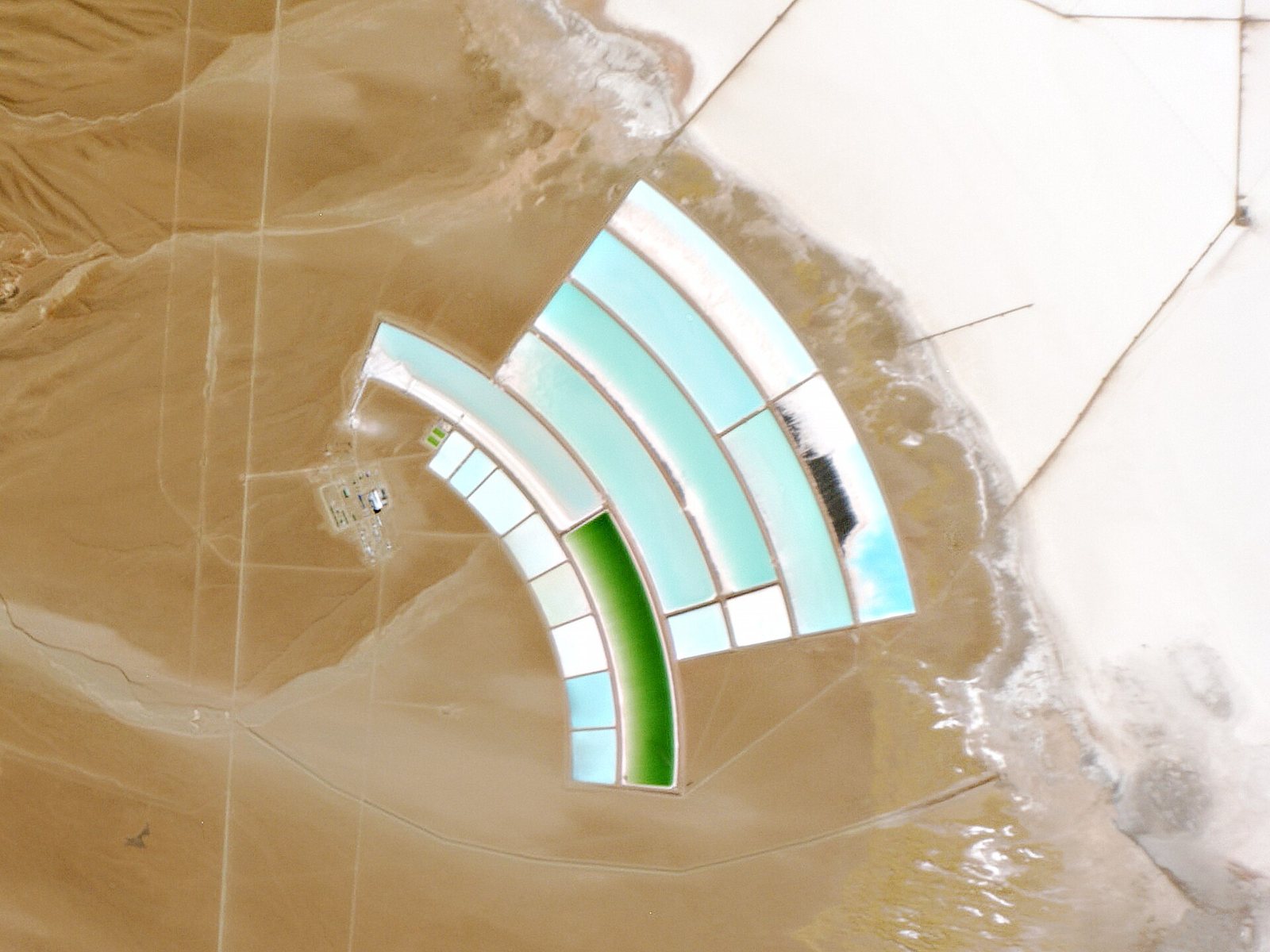
Salar de Atacama, Chile — The highest-grade and most productive lithium brine operation in the world. Salar de Olaroz Lithium Mine, Argentina by Pl…, CC BY-SA 4.0 via Wikimedia Commons

Salar de Atacama →

Où c'est traité et raffiné

UsineType ÉtapePaysRôle
Chinese NdFeB Magnet Cluster Usine d'aimantsComposant ChinaIntrant
Wind Turbine Nacelle & Blade Plants, Jutland Usine de fabricationProduit DenmarkIntrant
Marché finalCe qu'il fait là-basImportance
Nuclear Power Neutron absorber in control and coolant chemistry Définition de
Wind Power The B in NdFeB magnet alloy Important
Agriculture & Food Crop micronutrient Important

Quelle quantité en nécessite une technologie

« Intensité » désigne simplement la quantité de matière que contient une unité d'un produit donné. Les plages indiquées sont indicatives — les conceptions réelles varient selon le fabricant et l'année de modèle, et toutes sont en baisse à mesure que les ingénieurs apprennent à réduire les quantités utilisées.
TechnologieQuantité CotéBase
Direct-Drive Offshore Wind Turbine 4.00–8.00 kg per MW of capacityMagnet alloy
NdFeB Permanent Magnet 0.008–0.012 kg per kg of finished magnetAbout 1% by weight
Pressurised Water Reactor 5.00–20.00 t per GW of capacityControl rods and coolant chemistry

Indicative range compiled from published technology studies and chemistry; verify against a manufacturer specification before use. Appliquer ces chiffres à n'importe quelle échelle dans le calculateur de matériaux →

Matériaux

Tous les matériaux Minéraux critiques Terres rares Matériaux de batteries Minéraux menants Tableau périodique Filtre de sélection

Le sous-sol

Mines et gisements Traitement et affinage Pays Cartes

L'économie

Parcours de garde à vue Chaînes d'approvisionnement Marchés finaux Technologies Entreprises Calculateur de matériaux

Apprendre

ApprendreGlossaire Interroger les donnéesAgents IA Recherche et donnéesAPI ouverte Actualités★ Enregistré

À notre sujet

À notre sujetContact MéthodologieSources des données Politique éditoriale Politique de confidentialitéConditions d'utilisation Avertissement