¿Qué es?
A brittle grey metal that steel cannot be made without, and that is now being used to stretch scarce nickel and cobalt further in batteries.
¿Por qué importa?
Around 90% of manganese goes into steel — it removes sulfur and oxygen and adds toughness. There is no substitute in steelmaking at any price.
Where it is in the Earth
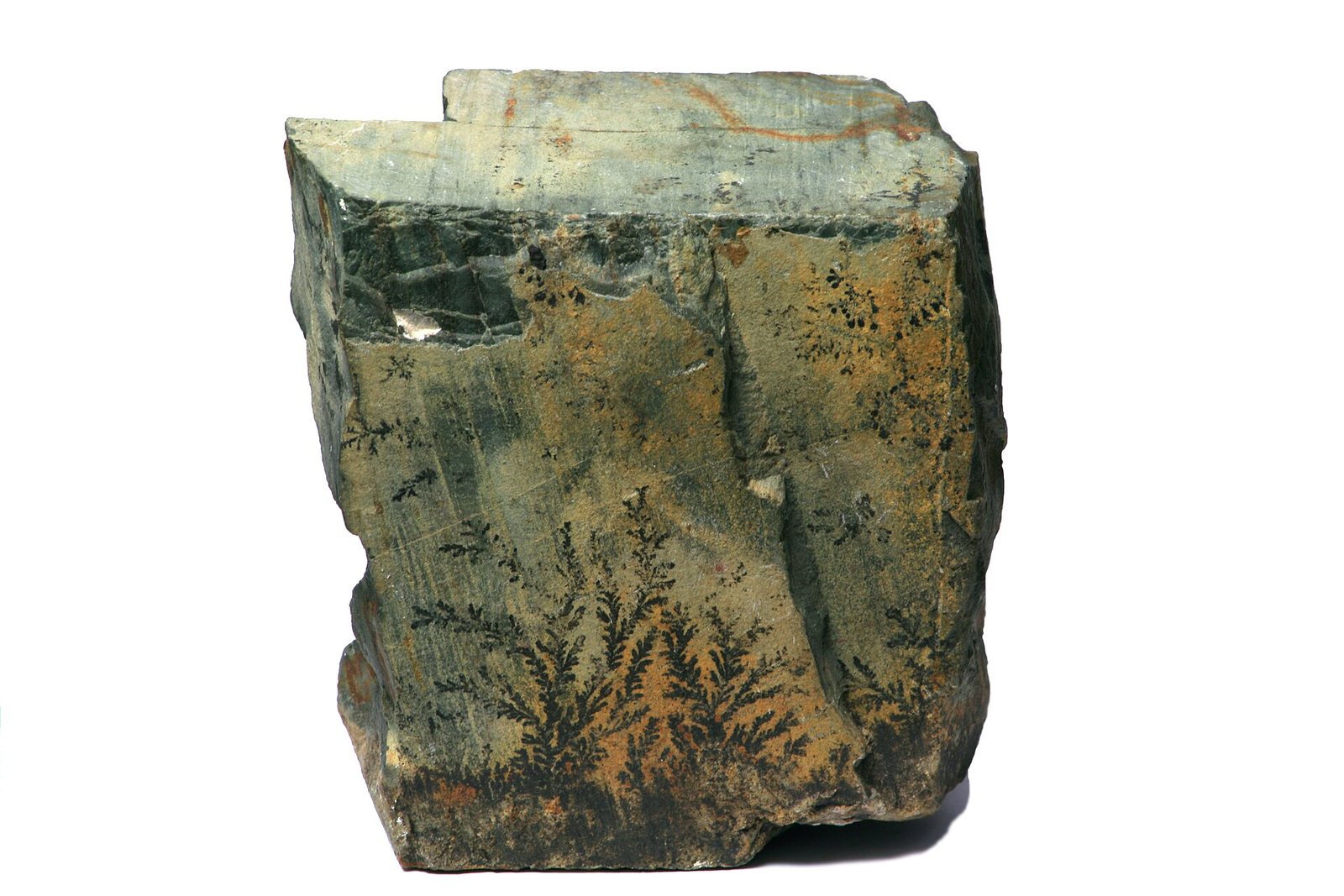
Manganese is the twelfth most abundant element in the Earth's crust, but that abundance is deceptive: the metal is spread so thinly through common rocks that only a handful of geological processes have ever concentrated it enough to be worth mining. The most economically important deposits are sedimentary manganese deposits, formed in ancient shallow seas where dissolved manganese, carried by river water or hydrothermal vents, precipitated out of the water column as oxygen levels changed. Over millions of years these chemical sediments built up into layered beds interbedded with other seafloor material. The great deposits of South Africa's Kalahari basin, Gabon's Moanda plateau, and Australia's Groote Eylandt island all belong to this family, and they account for the overwhelming share of what the world mines today.
A second important geological setting is the banded iron formation, a very ancient rock type in which iron and silica-rich layers alternate in fine bands. In some banded iron formations, later weathering and groundwater movement have leached away much of the iron and silica while leaving manganese behind in enriched concentrations near the surface. The Carajás district of Brazil, operated by Vale, is the most prominent example. A third, much smaller source is deep-sea manganese nodules — potato-sized concretions that grow extremely slowly on the ocean floor, incorporating manganese, nickel, copper and cobalt from seawater. No commercial deep-sea mining operation exists yet, so these remain a geological curiosity with uncertain future relevance.
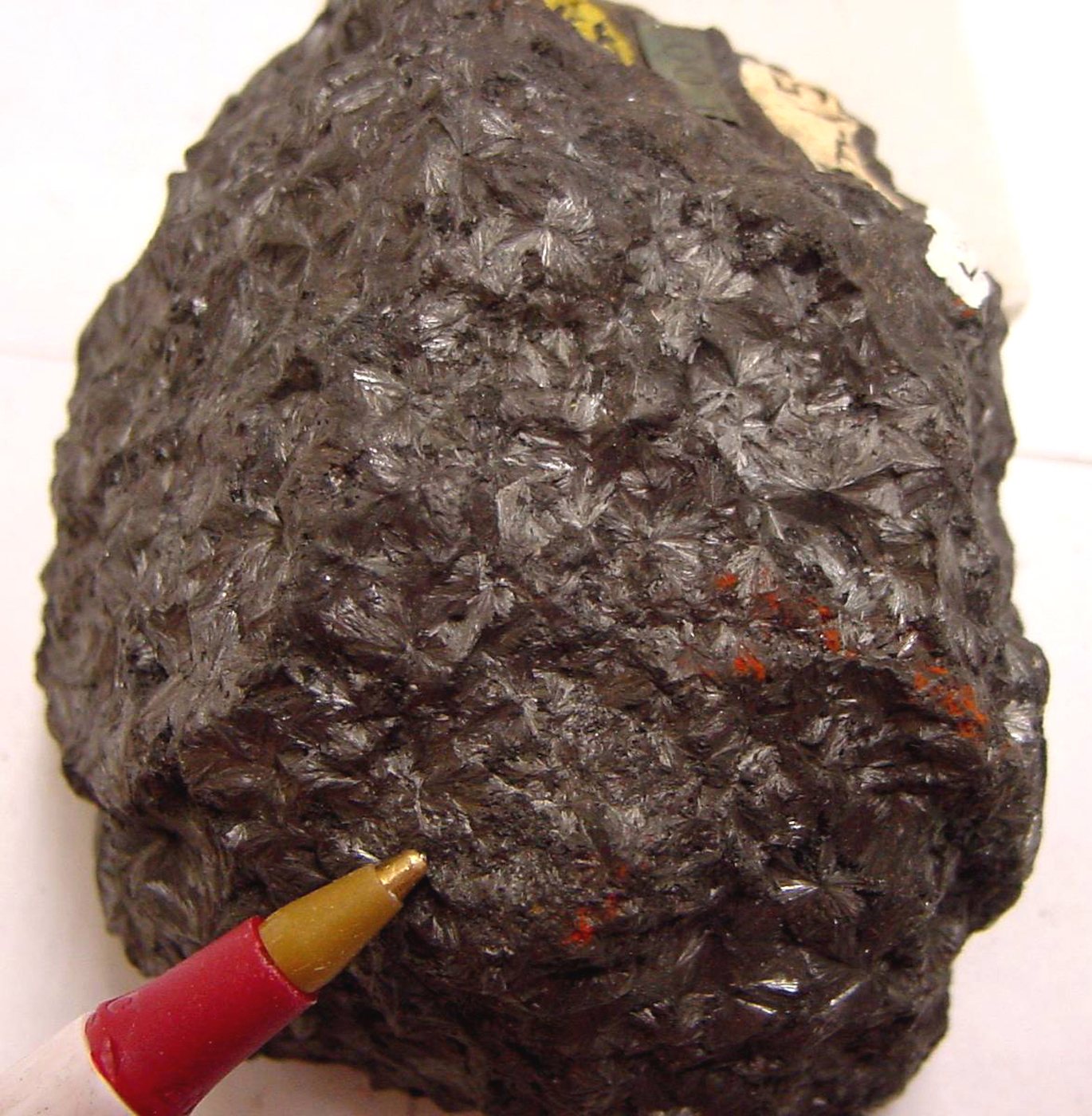
The dominant ore mineral is pyrolusite, a manganese dioxide (MnO₂) mineral with a distinctive black to steel-grey colour. Other oxide minerals — romanèchite, manganite, hausmannite — appear in the same deposits, often alongside one another. Because the best sedimentary deposits formed under specific ocean-chemistry conditions that existed during a relatively narrow window of geological time, the world's high-grade reserves are concentrated in a small number of countries, a pattern that has direct consequences for how the supply chain works.
Getting it out
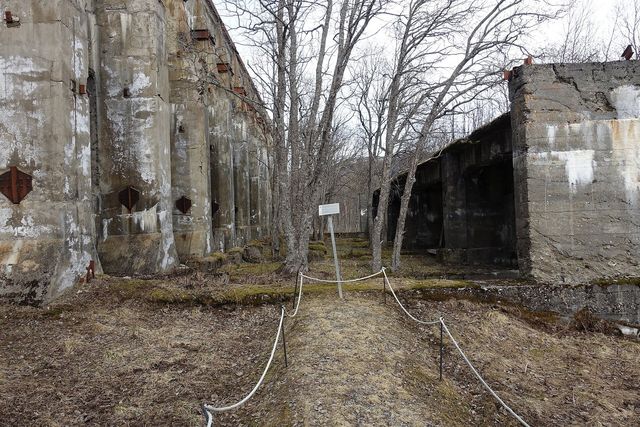
Almost all primary manganese is extracted by open-pit mining, a method in which overlying rock and soil — called overburden — is stripped away in benches to expose the ore beneath. The geometry suits manganese geology well: sedimentary manganese deposits tend to be broad, relatively flat-lying bodies close to the surface, meaning the ratio of overburden to ore is manageable and the ore can be reached with large excavators and haul trucks rather than the more expensive infrastructure of an underground mine. Groote Eylandt and Moanda are both classic open-pit operations of this kind. The Carajás deposit in Brazil, formed by weathering of banded iron formation, is likewise mined as a large open pit.
The ore grade — the concentration of manganese in the rock being dug — matters enormously to the economics. Grade is typically expressed as a percentage of manganese content by weight. A higher grade means less rock must be moved and processed to produce a given amount of saleable manganese, so it directly affects the cost of every tonne shipped. The USGS, the United States Geological Survey, reports world production figures on a manganese-content basis rather than on a gross ore basis, which is worth remembering when comparing figures across sources, since a low-grade operation produces far more gross ore tonnes for the same content figure. The practical consequence is that mines with naturally higher grades, like those in Gabon and South Africa's Kalahari, can compete on cost even when located far from their customers.
Because the deposits are sedimentary and broadly distributed, the mines are large in areal extent but relatively shallow. This means the volume of waste rock moved is lower than in many hard-rock metal mines, though the softer, sometimes clay-rich overburden at places like Groote Eylandt creates its own handling challenges, particularly in wet seasons. There is no significant manganese production from brine or in-situ leaching methods, which dissolve metals underground before pumping the resulting solution to surface — the chemistry of manganese mineralisation does not lend itself to those approaches.
What pulls on it
Steel is where manganese demand begins and ends for most of the metal that is mined. Roughly 90 percent of manganese consumption goes into steel in one form or another, added as ferromanganese or silicomanganese alloys during steelmaking. The function is partly chemical and partly metallurgical: manganese combines with sulfur in the molten steel, preventing the formation of iron sulfide, which would make the steel brittle along its grain boundaries. It also scavenges dissolved oxygen. Beyond those cleaning functions, manganese adds hardness and toughness to the finished steel, and high-manganese steels are used in applications that face severe abrasion, such as rail crossings, rock-crushing equipment and ground-engaging tools for mining and construction. Because every tonne of steel contains some manganese, demand broadly tracks global steel production, which in turn tracks construction activity and industrial output, particularly in the economies that build the most infrastructure.
The second and faster-growing stream of demand is in batteries. Manganese appears in the cathodes of NMC batteries (lithium nickel manganese cobalt oxide), which are widely used in electric vehicles, and its role is partly to dilute the more expensive and less abundant nickel and cobalt while maintaining acceptable energy density and cycle life. A 75 kWh NMC battery pack contains between 5.0 and 9.0 kg of manganese, according to the data available. More recently, LMFP cathodes (lithium manganese iron phosphate) have attracted attention as a way to use considerably more manganese and less of the metals with more constrained supply. Sodium-ion batteries, which use a layered-oxide cathode that can contain substantial manganese, are estimated to require between 10.0 and 30.0 kg per 75 kWh-equivalent depending on the specific chemistry — a meaningfully higher intensity than current lithium-ion designs. If sodium-ion technology scales significantly, manganese demand from batteries could grow faster than most current expectations assume.
For demand to shift sharply downward from its steel anchor, either global steel production would need to fall or a substitute for manganese in steelmaking would need to emerge. Neither is imminent: steel output has grown steadily with urbanisation and industrialisation across the developing world, and the chemistry of steel desulfurisation and deoxidation genuinely has no cost-competitive alternative. The battery sector, by contrast, is still settling on its preferred chemistries, and a shift toward higher-manganese or manganese-dominant cathodes would represent a meaningful upward demand signal, while a shift toward lithium iron phosphate without manganese would leave battery demand relatively flat.
Turning ore into product Nivel 3
Run-of-mine manganese ore goes through a sequence of size-reduction and sorting steps before it is useful to a steelmaker or battery manufacturer. The first stage is comminution — crushing and screening to break the ore into the size fractions that downstream processes require. Much of the ore sold for steelmaking moves as lump or fines directly after beneficiation, a term covering relatively simple steps such as washing, scrubbing and dense-medium separation, which exploit the density difference between manganese minerals and the lighter gangue (waste) minerals to raise the grade of the shipped product. These physical steps are comparatively low-cost and generate a tailings stream — the waste slurry of rejected material — that must be managed at the mine site.
For steelmaking, the ore is not used as pure manganese metal. It is smelted in electric arc or submerged-arc furnaces with iron-bearing materials and coke to produce ferromanganese or silicomanganese, alloys in which manganese is combined with iron and sometimes silicon. This smelting step is energy-intensive, and a significant share of global ferroalloy smelting has migrated to countries with lower electricity costs, including Malaysia and parts of Africa, rather than sitting at the mine or at the point of steel consumption. Energy cost is therefore one of the key variables in the economics of the processed product, separate from the cost of the ore itself.
Battery applications require an entirely different, much higher-purity product. The key intermediate is manganese sulfate monohydrate (MSM or MSPM), a white crystalline salt typically produced by leaching manganese ore or intermediate products in sulfuric acid, purifying the resulting solution through a series of precipitation and solvent extraction steps to remove iron, heavy metals and other impurities, then crystallising the final product. The purity specifications for battery-grade MSM are demanding — trace contaminants at the parts-per-million level can degrade cell performance — and the purification steps are where most of the processing complexity and cost sit. Losses occur throughout: each chemical purification step rejects some manganese along with the impurities, and the overall recovery from ore to finished battery-grade product is lower than the recovery in the ferroalloy route, which tolerates a far wider range of input chemistry.
Substitution and recycling Nivel 3
In steelmaking, manganese has no practical substitute. The USGS notes this explicitly: there is no material that performs the combined sulfur-removal and toughening role at any commercially viable price. Historically, chromium and vanadium can contribute to some of the hardness functions in specialty steels, but they do not replicate the desulfurisation chemistry that makes manganese indispensable in the basic steelmaking furnace. This absence of substitutability is what makes manganese a designated critical mineral even though it is not particularly scarce in the geological sense.
In battery cathodes the picture is more fluid. Manganese competes within a portfolio of cathode chemistries — NMC, NCA (nickel cobalt aluminium), LFP (lithium iron phosphate), LMFP and sodium-ion variants — and battery manufacturers make substitution decisions continuously as they balance cost, performance and supply security. LFP, which contains no manganese, no cobalt and no nickel, has captured a large share of the stationary storage and lower-range vehicle market partly because its constituent materials are less supply-constrained. A further shift to LFP would suppress manganese demand from batteries. Conversely, concerns about the cost and supply concentration of nickel and cobalt have pushed some cathode development toward higher-manganese formulations, and LMFP and high-manganese NMC variants are in commercial production. The substitution dynamic in batteries therefore cuts both ways and depends heavily on how nickel and cobalt supply develops.
Recycling of manganese from end-of-life steel is structurally limited: when steel scrap is re-melted, the manganese it contains is largely oxidised and lost to the slag, since the same chemistry that makes manganese useful in primary steelmaking — its affinity for oxygen and sulfur — causes it to be consumed during remelting. Recovering manganese from steel slag is technically possible but not widely practised at commercial scale. Battery recycling routes can recover manganese alongside nickel, cobalt and lithium, but the economics of manganese recovery from batteries are weaker than for the more valuable metals in the same cell, so recyclers prioritise those other materials and manganese recovery rates in end-of-life battery streams remain low. This means the manganese supply chain remains predominantly dependent on primary mining rather than on secondary production.
Where the chain is fragile Nivel 4
The single most visible concentration risk in manganese supply is geographic. South Africa alone accounts for 37 percent of world production, according to USGS estimates, and a small number of countries — South Africa, Gabon, Australia — hold the overwhelming share of known high-grade reserves. The United States has essentially no domestic primary production and reports 100 percent net import reliance on foreign manganese, drawing primarily from Gabon, South Africa, Malaysia and Australia in recent years. This means any disruption to southern African or Gabonese supply — whether from labour action, infrastructure failure, export policy change, or political instability — propagates directly and quickly into the global market, with no large domestic buffer in the principal consuming economies to absorb the shock.
A secondary concentration risk sits in processing rather than mining. The conversion of manganese ore to battery-grade manganese sulfate monohydrate is currently dominated by a small number of facilities, with processing capacity heavily concentrated in China. The ore may come from Africa or Australia, but the chemical upgrading step that makes it usable in batteries passes through a narrow geographic and corporate bottleneck. Building alternative processing capacity outside China requires capital, time and access to the acidic leach chemistry and purification technology involved; permitting and construction lead times for hydrometallurgical plants typically run to several years even in favourable jurisdictions. The asymmetry between the ease of mining and the difficulty of building qualified processing capacity means that ore supply and refined product supply can diverge, as they did in other battery material chains before manganese attracted similar attention.
A further difficulty in assessing supply risk is the uncertainty in published reserve and production figures. The USGS reports manganese figures on a contained-metal basis rather than gross ore, which is analytically cleaner but means figures are not directly comparable with sources that report gross tonnes. Reserve estimates depend on cut-off grades that are themselves functions of assumed future prices and processing costs; as battery demand has grown, deposits that were once considered too low-grade or too mineralogically complex to be economic have been reclassified. This means the reserve base is not fixed, but it also means that some reported reserves carry more economic conditionality than the raw numbers suggest. The gap between geological resources — material known to exist in the ground — and economically recoverable reserves is not trivial for manganese, particularly for deposits intended to supply the higher-purity battery market rather than the more tolerant ferroalloy market.
De dónde proviene en la roca
Todos los minerales de mena →Estos son los minerales que realmente contienen manganese. Un yacimiento solo es un cuerpo mineral si uno de ellos está suficientemente concentrado para costear su extracción.
Quién lo produce
Verlo en un mapa →Mine production
Mine productionthousand metric tons 2025 (estimado) Total mundial 20,000 thousand metric tons
USGS Mineral Commodity Summaries 2026 · USGS world figures are manganese CONTENT of ore, not gross ore tonnes. · fuente ↗
Desplace la tabla lateralmente para ver las columnas restantes.
| País | Producción | Cuota mundial |
|---|---|---|
| South Africa | 7,600 | 38.0% |
| Gabon | 5,000 | 25.0% |
| Ghana | 2,000 | 10.0% |
| Australia | 1,600 | 8.0% |
| Other countries | 1,300 | 6.5% |
| Brazil | 800.0 | 4.0% |
| India | 790.0 | 4.0% |
| China | 700.0 | 3.5% |
| Côte d’Ivoire | 350.0 | 1.8% |
| United States | Zero | — |
| Total mundial | 20,000 | 100% |
«Withheld» significa que el USGS suprimió el dato para evitar revelar información de una empresa concreta — no equivale a cero. Las filas por país no siempre suman el total mundial porque la fuente redondea cada cifra de forma independiente y no siempre desglosa una línea de «otros países».
Quién posee las reservas
Reserves
Reservesthousand metric tons 2025
USGS Mineral Commodity Summaries 2026 · fuente ↗
| País | Reservas | Cuota mundial |
|---|---|---|
| Australia | 580,000 | 34.1% |
| South Africa | 550,000 | 32.4% |
| Brazil | 300,000 | 17.6% |
| China | 260,000 | 15.3% |
| Gabon | 61,000 | 3.6% |
| India | 34,000 | 2.0% |
| Ghana | 13,000 | 0.8% |
| United States | Zero | — |
| Côte d’Ivoire | Not applicable | — |
| Other countries | Small | — |
| Total mundial | 1,700,000 | 100% |
Precio
average, manganese content, cost, insurance, and freight, China, dollars per metric ton unit
Promedio anualdollars per metric ton
Base: average, manganese content, cost, insurance, and freight, China, dollars per metric ton unit. Promedios anuales publicados en USGS Mineral Commodity Summaries 2026 · fuente ↗. Estos son promedios anuales de referencia, no una cotización de mercado en tiempo real.
Minas que lo producen
Todas las minas →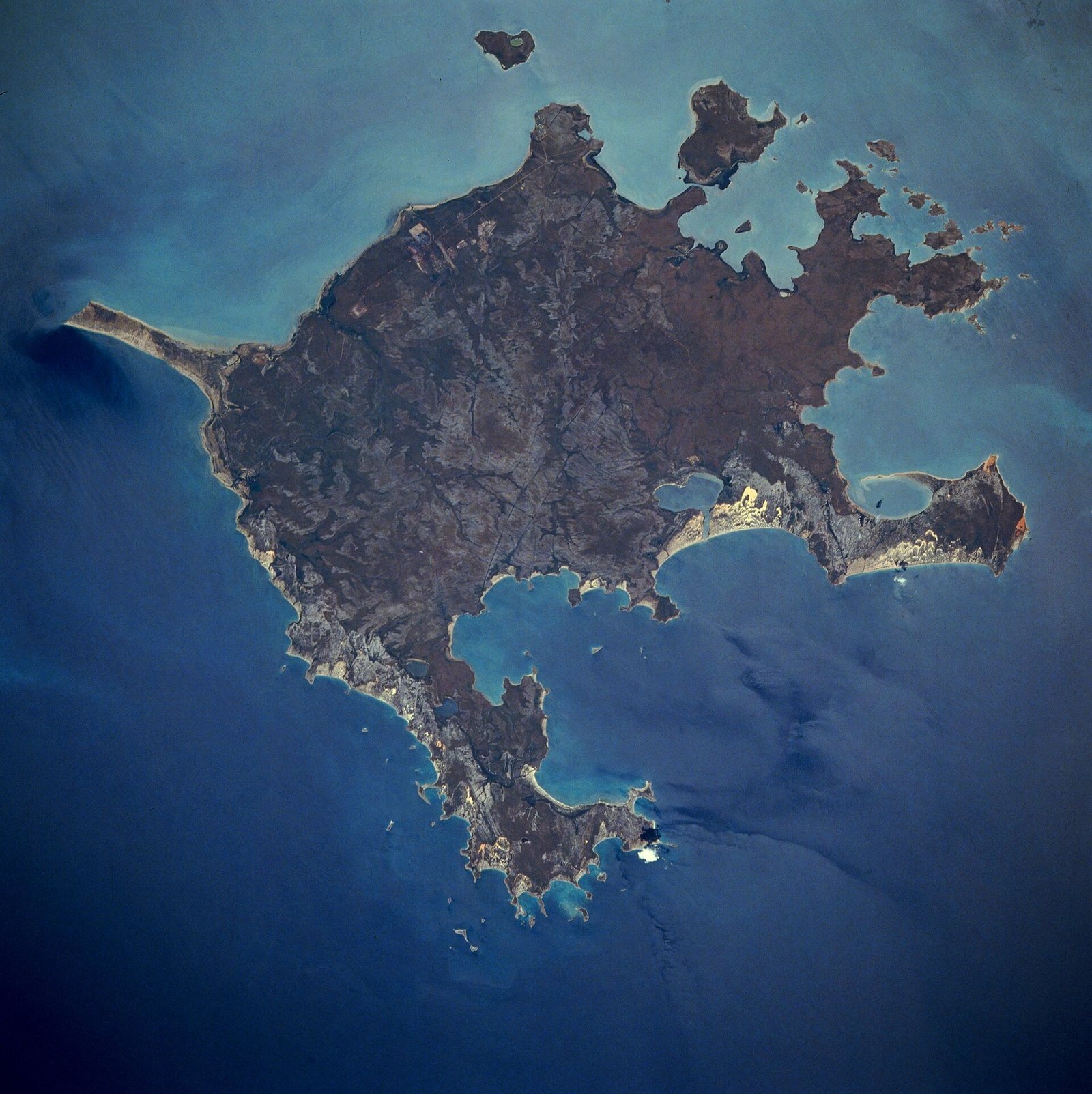
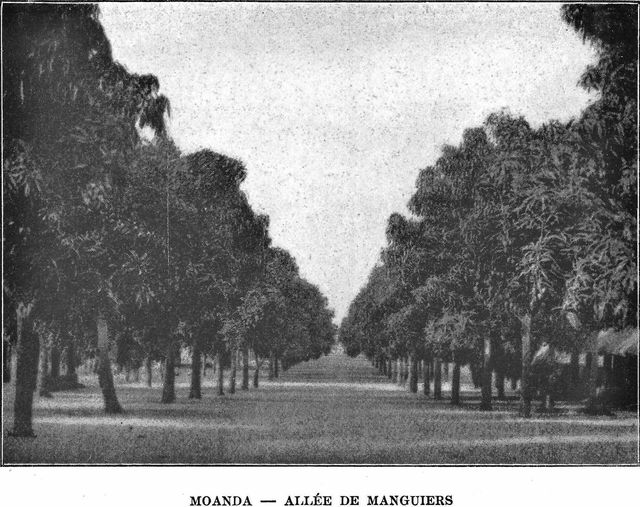
Moanda
One of the world's largest manganese deposits.
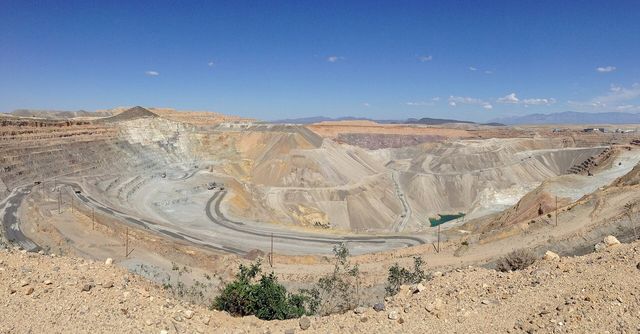
Carajás
The highest-grade large iron-ore operation in the world.
Para qué se usa
Todos los mercados finales →| Mercado final | Lo que hace allí | Importancia |
|---|---|---|
| Construction & Steel | In every tonne of steel | Definición de |
| Electric Vehicles | Cathode component in NMC and LMFP | Importante |
| Grid Storage | Manganese-based cathodes | Importante |
Cuánto necesita una tecnología
| Tecnología | Cantidad | Citado | Base |
|---|---|---|---|
| NMC Lithium-Ion Battery | 5.00–9.00 kg | per 75 kWh pack | Contained manganese |
| Sodium-Ion Battery | 10.00–30.00 kg | per 75 kWh equivalent | Layered-oxide cathode variants |
Indicative range compiled from published technology studies and chemistry; verify against a manufacturer specification before use. Ejecute estas cifras a cualquier escala en la calculadora de materiales →
Controles de exportación
| País | Control | Se aplica a |
|---|---|---|
| Namibia | Export ban | Ores and concentrates of cobalt, graphite, lithium, manganese, and rare earths (2023). ↗ |
| Vietnam | Export ban | Raw materials of iron, lead-zinc, chromite, manganese, apatite, and rare earths and deeply processed titanium (2012). ↗ |
USGS Mineral Commodity Summaries 2026, table 4 — controls in effect as of January 2026, excluding controls since lifted.
Síguelo a través de las fronteras
Todos los recorridos →Adónde va realmente una partida de este material: cada país, cada custodio y qué queda atrás en cada paso.
Pilbara iron ore to Chinese steel The largest material flow on Earth: dig it, crush it, screen it, and put it on a boat.