从矿石到产品,全程溯源
The Materials Atlas
材料 矿山与矿床 加工与精炼 溯源记录 供应链 企业 国家/地区 资讯
按货架浏览材料 电池材料 稀土元素 铜与电气 半导体材料 核材料 航空航天与国防 贵金属 钢铁与合金金属 工业矿物 农业矿物 能源原材料 矿石矿物 元素周期表
需求 终端市场 技术 材料计算器 地图 筛选器
学习与工具 了解术语表 数据问答AI智能体 研究与数据API ★ 已保存
关于 关于我们方法论 数据来源联系我们 免责声明
阅读选项
🧭 引导视图 初次接触矿石品位、精矿、精炼、副产品等概念?我们在您浏览时对每个术语进行解释,语言浅显易懂,数据相同,帮助内置其中。
⚡ 专家视角 您已熟悉这一行业,直接看数据即可——简洁、快速、紧凑,无附加说明。此为默认视图。
主题
界面语言
深度 材料页面分四个级别撰写。在任意材料页面选择后,系统将记住您的选择。
★ 已保存 研究与数据
Manganese

电池材料

Manganese Mn · 25

A brittle grey metal that steel cannot be made without, and that is now being used to stretch scarce nickel and cobalt further in batteries.

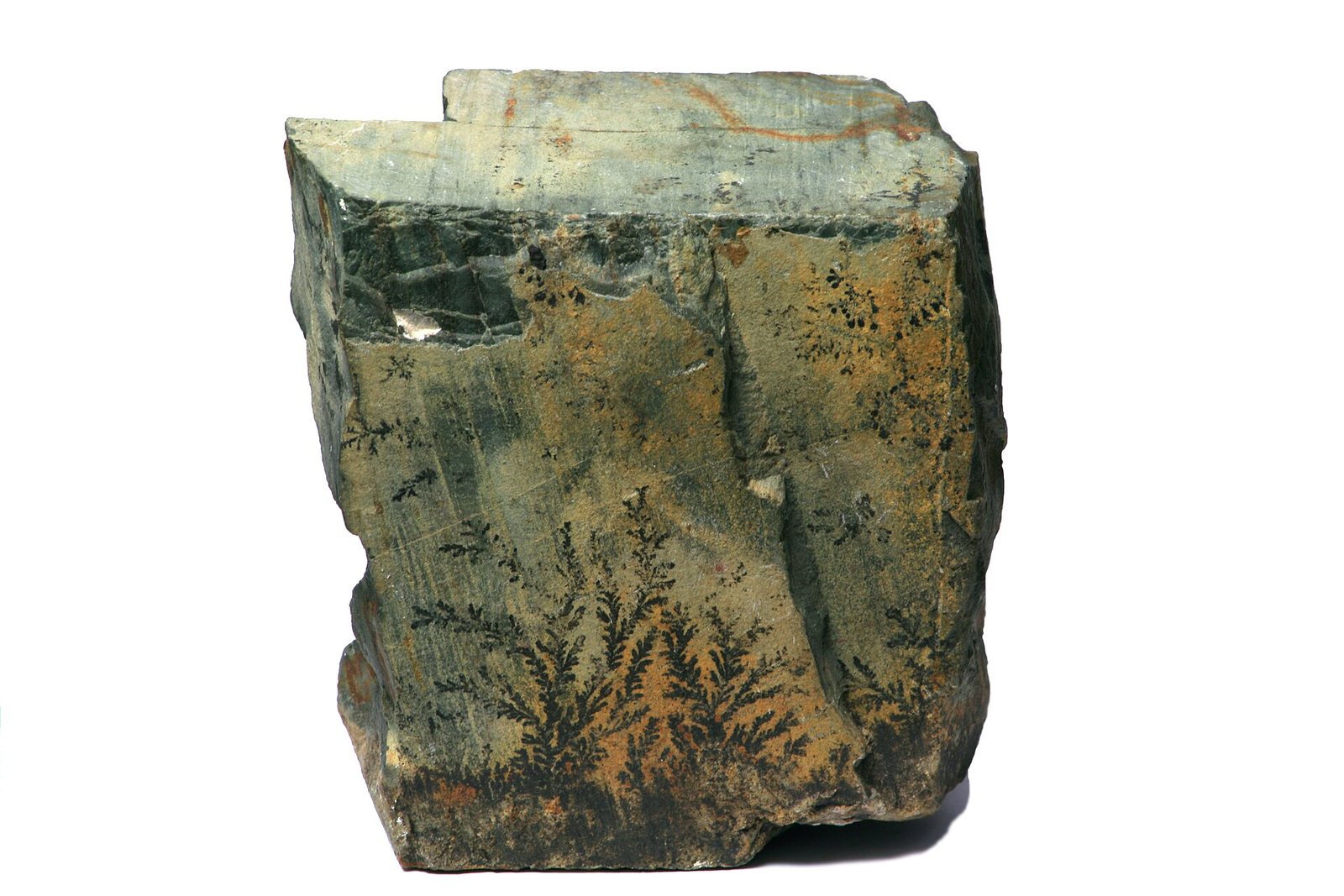
Pyrolusite Mineral with Dendrite Macro Digon3 · “Jonathan Zander ( Digon3 )" · CC BY-SA 3.0 · Wikimedia Commons

这是什么?

A brittle grey metal that steel cannot be made without, and that is now being used to stretch scarce nickel and cobalt further in batteries.

为何重要?

Around 90% of manganese goes into steel — it removes sulfur and oxygen and adds toughness. There is no substitute in steelmaking at any price.

Where it is in the Earth

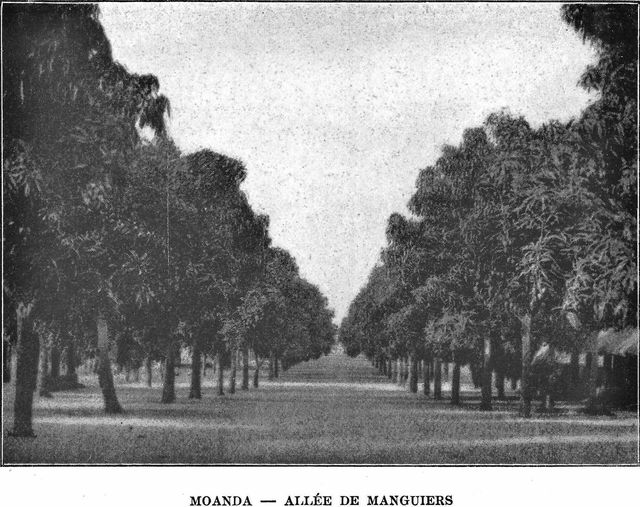
Manganese is the twelfth most abundant element in the Earth's crust, but that abundance is deceptive: the metal is spread so thinly through common rocks that only a handful of geological processes have ever concentrated it enough to be worth mining. The most economically important deposits are sedimentary manganese deposits, formed in ancient shallow seas where dissolved manganese, carried by river water or hydrothermal vents, precipitated out of the water column as oxygen levels changed. Over millions of years these chemical sediments built up into layered beds interbedded with other seafloor material. The great deposits of South Africa's Kalahari basin, Gabon's Moanda plateau, and Australia's Groote Eylandt island all belong to this family, and they account for the overwhelming share of what the world mines today.

A second important geological setting is the banded iron formation, a very ancient rock type in which iron and silica-rich layers alternate in fine bands. In some banded iron formations, later weathering and groundwater movement have leached away much of the iron and silica while leaving manganese behind in enriched concentrations near the surface. The Carajás district of Brazil, operated by Vale, is the most prominent example. A third, much smaller source is deep-sea manganese nodules — potato-sized concretions that grow extremely slowly on the ocean floor, incorporating manganese, nickel, copper and cobalt from seawater. No commercial deep-sea mining operation exists yet, so these remain a geological curiosity with uncertain future relevance.

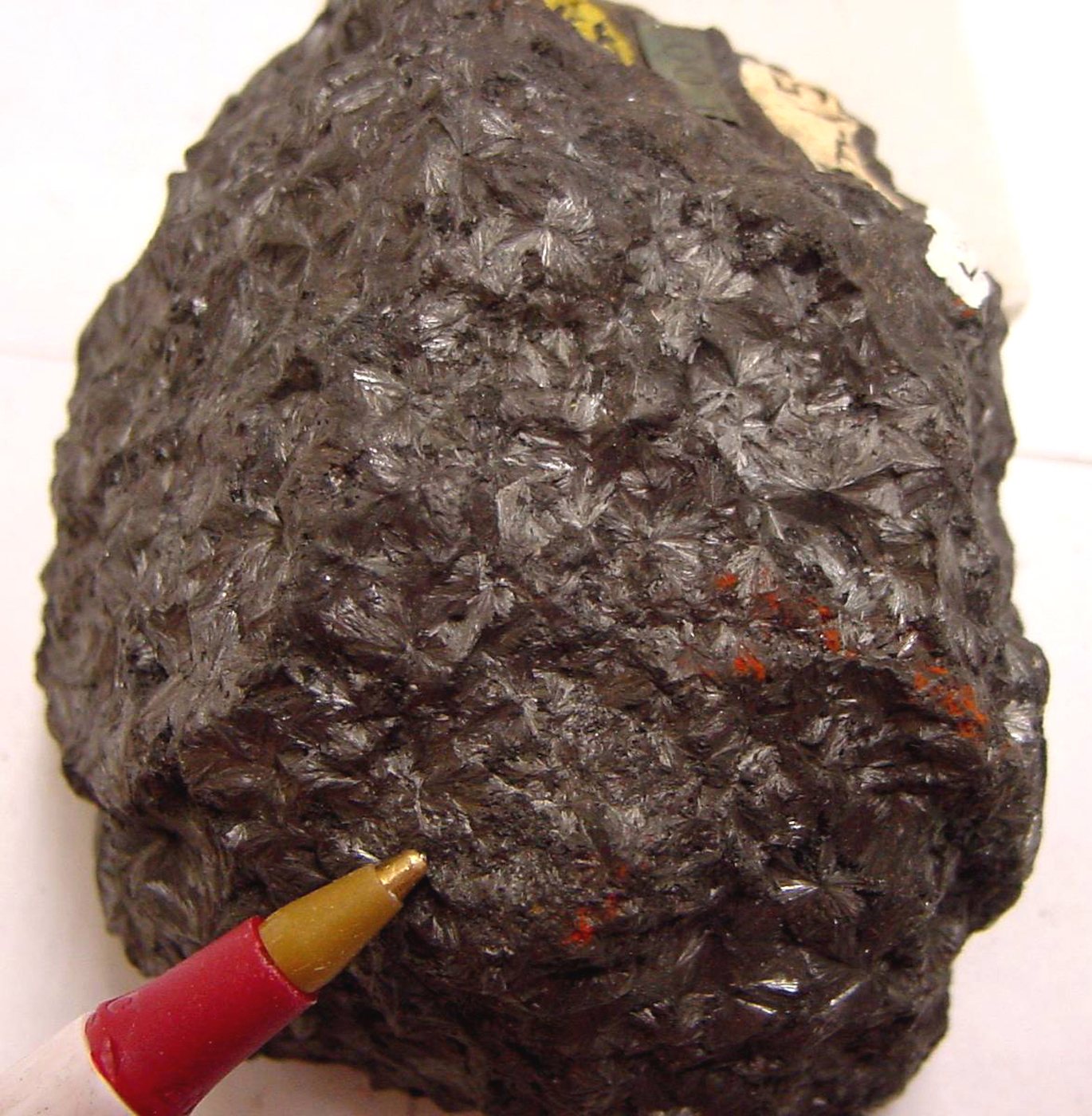
The dominant ore mineral is pyrolusite, a manganese dioxide (MnO₂) mineral with a distinctive black to steel-grey colour. Other oxide minerals — romanèchite, manganite, hausmannite — appear in the same deposits, often alongside one another. Because the best sedimentary deposits formed under specific ocean-chemistry conditions that existed during a relatively narrow window of geological time, the world's high-grade reserves are concentrated in a small number of countries, a pattern that has direct consequences for how the supply chain works.

Getting it out

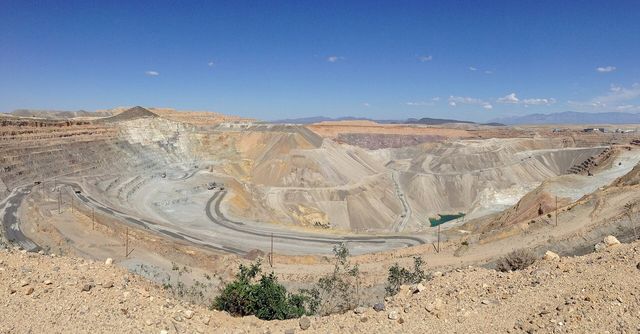
Almost all primary manganese is extracted by open-pit mining, a method in which overlying rock and soil — called overburden — is stripped away in benches to expose the ore beneath. The geometry suits manganese geology well: sedimentary manganese deposits tend to be broad, relatively flat-lying bodies close to the surface, meaning the ratio of overburden to ore is manageable and the ore can be reached with large excavators and haul trucks rather than the more expensive infrastructure of an underground mine. Groote Eylandt and Moanda are both classic open-pit operations of this kind. The Carajás deposit in Brazil, formed by weathering of banded iron formation, is likewise mined as a large open pit.

The ore grade — the concentration of manganese in the rock being dug — matters enormously to the economics. Grade is typically expressed as a percentage of manganese content by weight. A higher grade means less rock must be moved and processed to produce a given amount of saleable manganese, so it directly affects the cost of every tonne shipped. The USGS, the United States Geological Survey, reports world production figures on a manganese-content basis rather than on a gross ore basis, which is worth remembering when comparing figures across sources, since a low-grade operation produces far more gross ore tonnes for the same content figure. The practical consequence is that mines with naturally higher grades, like those in Gabon and South Africa's Kalahari, can compete on cost even when located far from their customers.

Because the deposits are sedimentary and broadly distributed, the mines are large in areal extent but relatively shallow. This means the volume of waste rock moved is lower than in many hard-rock metal mines, though the softer, sometimes clay-rich overburden at places like Groote Eylandt creates its own handling challenges, particularly in wet seasons. There is no significant manganese production from brine or in-situ leaching methods, which dissolve metals underground before pumping the resulting solution to surface — the chemistry of manganese mineralisation does not lend itself to those approaches.

What pulls on it

Steel is where manganese demand begins and ends for most of the metal that is mined. Roughly 90 percent of manganese consumption goes into steel in one form or another, added as ferromanganese or silicomanganese alloys during steelmaking. The function is partly chemical and partly metallurgical: manganese combines with sulfur in the molten steel, preventing the formation of iron sulfide, which would make the steel brittle along its grain boundaries. It also scavenges dissolved oxygen. Beyond those cleaning functions, manganese adds hardness and toughness to the finished steel, and high-manganese steels are used in applications that face severe abrasion, such as rail crossings, rock-crushing equipment and ground-engaging tools for mining and construction. Because every tonne of steel contains some manganese, demand broadly tracks global steel production, which in turn tracks construction activity and industrial output, particularly in the economies that build the most infrastructure.

The second and faster-growing stream of demand is in batteries. Manganese appears in the cathodes of NMC batteries (lithium nickel manganese cobalt oxide), which are widely used in electric vehicles, and its role is partly to dilute the more expensive and less abundant nickel and cobalt while maintaining acceptable energy density and cycle life. A 75 kWh NMC battery pack contains between 5.0 and 9.0 kg of manganese, according to the data available. More recently, LMFP cathodes (lithium manganese iron phosphate) have attracted attention as a way to use considerably more manganese and less of the metals with more constrained supply. Sodium-ion batteries, which use a layered-oxide cathode that can contain substantial manganese, are estimated to require between 10.0 and 30.0 kg per 75 kWh-equivalent depending on the specific chemistry — a meaningfully higher intensity than current lithium-ion designs. If sodium-ion technology scales significantly, manganese demand from batteries could grow faster than most current expectations assume.

For demand to shift sharply downward from its steel anchor, either global steel production would need to fall or a substitute for manganese in steelmaking would need to emerge. Neither is imminent: steel output has grown steadily with urbanisation and industrialisation across the developing world, and the chemistry of steel desulfurisation and deoxidation genuinely has no cost-competitive alternative. The battery sector, by contrast, is still settling on its preferred chemistries, and a shift toward higher-manganese or manganese-dominant cathodes would represent a meaningful upward demand signal, while a shift toward lithium iron phosphate without manganese would leave battery demand relatively flat.

正确读取数据。 USGS world figures are manganese CONTENT of ore, not gross ore tonnes. Ore, then ferromanganese and silicomanganese alloys for steel; high-purity manganese sulfate monohydrate for batteries.
A banded iron formation
enriched hematite ore unenriched banded iron formation: iron oxide alternating with chert weathering leaches the silica out surface
Over two billion years ago, oxygen produced by early life met iron dissolved in the oceans and precipitated it. The result is millimetre-scale bands of iron oxide and chert laid down over hundreds of millions of years. Later weathering leached the silica out of parts of it, leaving almost pure iron ore. Schematic. Enriched zones can be tens of metres thick and hundreds of metres long. Original diagram, The Materials Atlas.

其在岩石中的来源

所有含矿矿物 →

实际承载以下内容的矿物: manganese. 只有其中某种物质的富集程度足以覆盖开采成本,矿床才能成为矿体。
Mine production

Mine productionthousand metric tons 2025 (估计值) 全球合计 20,000 thousand metric tons

USGS Mineral Commodity Summaries 2026 · USGS world figures are manganese CONTENT of ore, not gross ore tonnes. · 来源 ↗

横向滚动表格以查看其余列。

国家/地区产量 占全球份额
South Africa 7,600 38.0%
Gabon 5,000 25.0%
Ghana 2,000 10.0%
Australia 1,600 8.0%
Other countries 1,300 6.5%
Brazil 800.0 4.0%
India 790.0 4.0%
China 700.0 3.5%
Côte d’Ivoire 350.0 1.8%
United States Zero
全球合计 20,000100%

"未披露"表示美国地质调查局(USGS)为避免泄露单个企业数据而对该数字进行了保密处理——并不意味着数值为零。各国行数之和不一定等于世界合计,原因在于来源对每个数字单独进行四舍五入处理,且并不总是单独列出"其他国家/地区"一行。

储量持有方

"储量"是一个严格的术语。它是指已知矿床中,按当前价格和当前技术,在经济上可行的可采部分——而非地下所有存量。当价格上涨或新工艺出现时,储量增加;当价格下跌时,储量减少。

Reserves

Reservesthousand metric tons 2025

USGS Mineral Commodity Summaries 2026 · 来源 ↗

国家/地区储量占全球份额
Australia 580,000 34.1%
South Africa 550,000 32.4%
Brazil 300,000 17.6%
China 260,000 15.3%
Gabon 61,000 3.6%
India 34,000 2.0%
Ghana 13,000 0.8%
United States Zero
Côte d’Ivoire Not applicable
Other countries Small
全球合计 1,700,000100%

价格

average, manganese content, cost, insurance, and freight, China, dollars per metric ton unit

年度平均值dollars per metric ton

2021 · 5.27 高 5.97 dollars per metric ton 2025 · 4.50

基准: average, manganese content, cost, insurance, and freight, China, dollars per metric ton unit. 年度平均值,来源: USGS Mineral Commodity Summaries 2026 · 来源 ↗. 以下为参考年度均价,非实时市场报价。

产出该材料的矿山

所有矿山 →
Groote Eylandt (GEMCO)
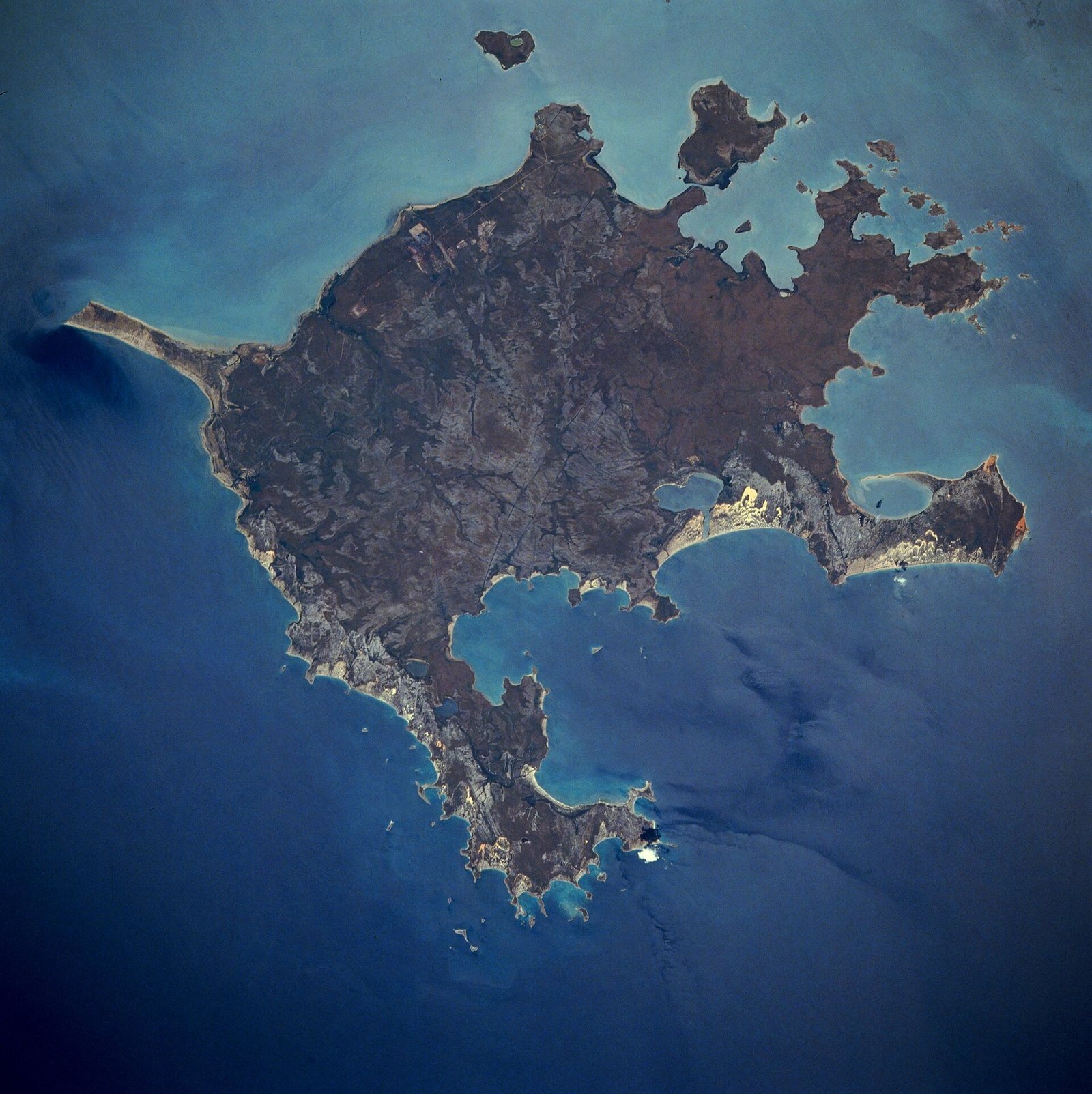
Groote Eylandt (GEMCO), Australia — One of the largest and highest-grade manganese operations in the world. Groote eylandt, Public domain via Wikimedia Commons

Groote Eylandt (GEMCO) →

终端市场其在彼处的用途重要性
Construction & Steel In every tonne of steel 定义
Electric Vehicles Cathode component in NMC and LMFP 重要
Grid Storage Manganese-based cathodes 重要

某项技术的需求用量

"强度"是指单位产品所含某种材料的用量。此处为参考区间——实际用量因制造商和年型而异,且随着工程师不断探索减量化设计,所有数值均呈下降趋势。
技术数量 报价基准
NMC Lithium-Ion Battery 5.00–9.00 kg per 75 kWh packContained manganese
Sodium-Ion Battery 10.00–30.00 kg per 75 kWh equivalentLayered-oxide cathode variants

Indicative range compiled from published technology studies and chemistry; verify against a manufacturer specification before use. 在物料计算器中按任意规模运行这些数据 →

出口管制

国家/地区管控适用于
NamibiaExport ban Ores and concentrates of cobalt, graphite, lithium, manganese, and rare earths (2023).
VietnamExport ban Raw materials of iron, lead-zinc, chromite, manganese, apatite, and rare earths and deeply processed titanium (2012).

USGS Mineral Commodity Summaries 2026, table 4 — controls in effect as of January 2026, excluding controls since lifted.

跟踪其跨境全程

全部溯源记录 →

这批材料实际经过的路线——每个国家、每位托管方,以及每个环节留下的内容。

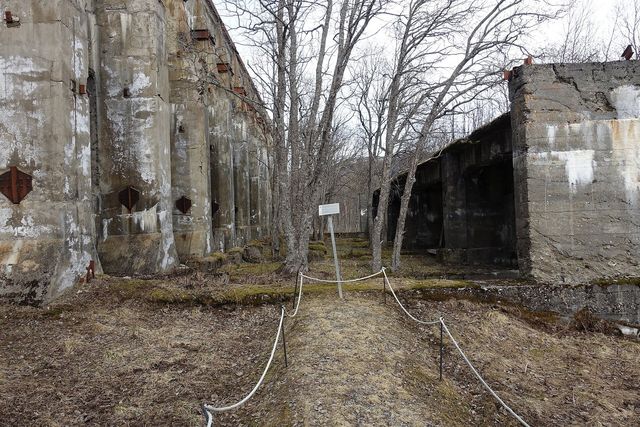
Pilbara iron ore to Chinese steel The largest material flow on Earth: dig it, crush it, screen it, and put it on a boat. 来自 Australia · Direct-shipping hematite fines, around 62% iron
已追溯的供应链

新闻动态

更多 →

US Forest Service signs off on South32 Hermosa’s mine plan in Arizona

MINING.COM02 Sep 2026

材料

所有材料 关键矿产 稀土 电池材料 矿石矿物 元素周期表 筛选器

地层

矿山与矿床 加工与精炼 国家/地区 地图

经济体

溯源记录 供应链 终端市场 技术 企业 材料计算器

了解

了解术语表 数据问答AI智能体 研究与数据开放 API 资讯★ 已保存

关于我们

关于我们联系我们 方法论数据来源 编辑方针 隐私政策使用条款 免责声明