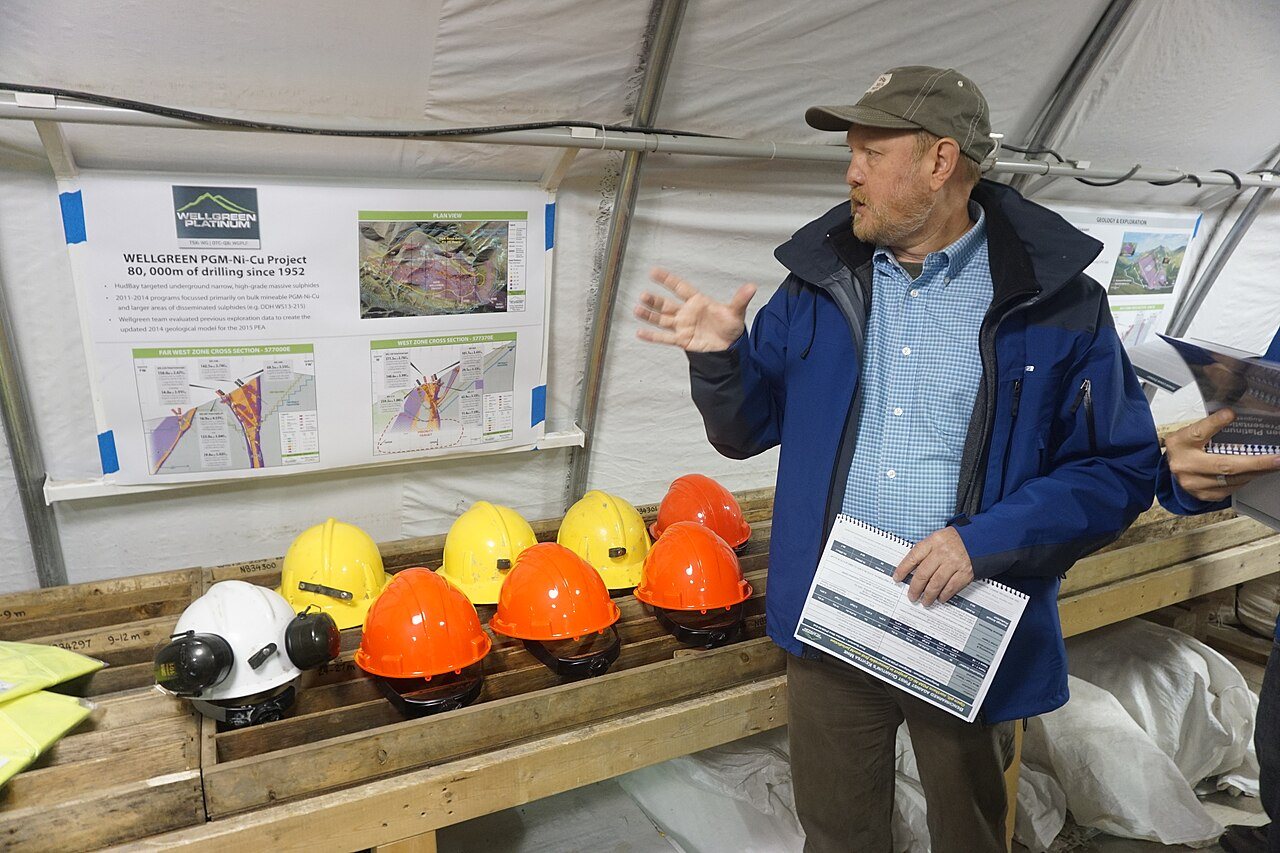
这是什么?
A dense, unreactive metal that speeds up chemical reactions without being consumed by them.
为何重要?
Platinum cleans diesel exhaust, and it is the catalyst on both sides of a hydrogen fuel cell and most electrolysers.
Where it is in the Earth
Platinum belongs to a group of six chemically similar elements — the platinum-group metals, or PGMs — that share an unusual tendency to remain inert under conditions that would corrode or dissolve almost anything else. In the Earth's crust they are extraordinarily rare, and that rarity is not accidental. When the planet was still largely molten, dense metallic elements sank toward the core, carrying most of the world's platinum with them. What remains in the accessible crust is there because of specific geological accidents that concentrated it to workable grades.
The most important of those accidents is the solidification of large bodies of magma — molten rock — inside the Earth. As a magma body cools slowly over millions of years, different minerals crystallise out in sequence. In certain magmas derived from the mantle (the layer beneath the crust), a process called magmatic differentiation allows iron- and nickel-rich sulfide liquids to separate and sink, scavenging platinum and its sister metals as they go. Where those sulfide-rich layers were preserved, the result is a layered mafic intrusion — mafic meaning a rock rich in magnesium and iron. The Bushveld Complex in South Africa is the largest such structure known, and it hosts the Merensky Reef and the UG2 chromite layer, which together account for the majority of the world's known platinum endowment. Zimbabwe's Great Dyke is a narrower but structurally similar feature.
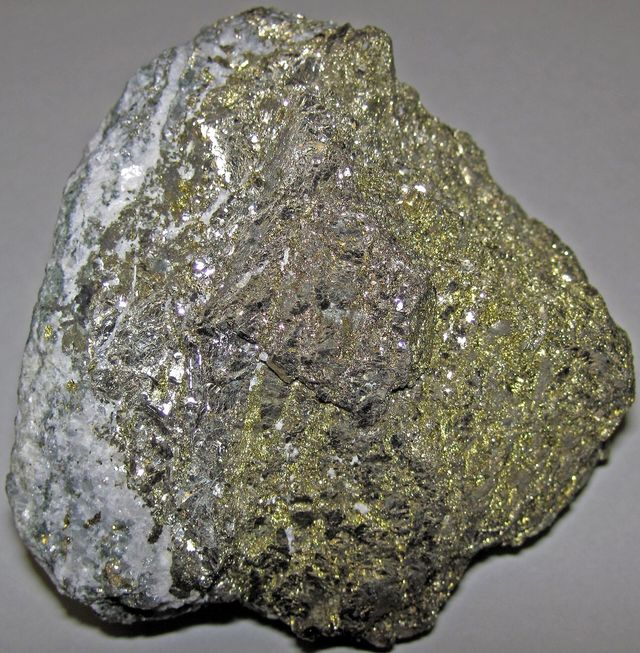
A separate style of deposit forms where magma carrying sulfide droplets cools more rapidly, often near the surface or in conduit-like feeder channels. The Norilsk-Talnakh system in Russia and the Sudbury Basin in Canada represent this type, though Sudbury has the additional distinction of having been reshaped by a large meteorite impact, which redistributed and concentrated the sulfide ore. In all these settings, platinum occurs partly within sulfide minerals such as pentlandite and partly as its own discrete mineral, sperrylite, a platinum arsenide. The grade of these ores is low by the standards of most metals — the metal content is measured in grams per tonne rather than percent — which means that the geological process of concentration, though remarkable, still leaves most of the rock as waste.
Getting it out
Because platinum occurs at such low concentrations, mining it is fundamentally an exercise in moving enormous quantities of rock to recover a small quantity of metal. The method used depends on how the orebody sits in the ground. In the Bushveld Complex, the platinum-bearing reefs are relatively thin, near-horizontal layers that can extend for many kilometres laterally but are only a metre or two thick. Accessing them requires underground mining — sinking shafts and driving tunnels along the reef — because the overburden (the rock above the ore) is too thick for surface excavation to be economical over most of the deposit. The work is labour-intensive and technically demanding, carried out at considerable depth.
Where a reef outcrops at or near the surface, or where a thick, lower-grade zone exists close to the surface as on the Platreef at Mogalakwena, open-pit mining becomes viable. An open pit strips away the overlying rock in benches, exposing the ore below. The ratio of waste rock removed to ore extracted — called the strip ratio — can be high, but the method allows for larger equipment and higher throughput than underground operations. At Mogalakwena this approach makes a lower-grade, thicker body of ore economically workable in a way that conventional narrow-reef underground methods would not.
In Russia, the platinum at Norilsk-Talnakh is recovered underground alongside nickel and copper, which are the primary products of those mines. This means platinum there is inseparable from the economics of nickel and copper production. A mine operator whose revenue depends mostly on nickel will continue operating even when platinum prices fall, and conversely will not expand specifically to produce more platinum. This by-product relationship shapes supply in ways that are quite different from a mine where platinum is the principal product. Wherever platinum is mined, the grade of the ore — that is, the number of grams of platinum contained in each tonne of rock — determines how much material must be dug, crushed, and processed for every kilogram of metal recovered.
What pulls on it
Platinum's dominant use for several decades has been in catalytic converters, devices fitted to vehicle exhaust systems that convert harmful gases — carbon monoxide, unburned hydrocarbons, and nitrogen oxides — into less harmful ones. Platinum is particularly effective in diesel catalytic converters, where operating temperatures and exhaust chemistry differ from petrol engines. As long as large numbers of diesel vehicles remain in service, this demand continues. The concern for producers is that new diesel vehicle sales have been declining in major markets, and the share of battery electric vehicles, which require no exhaust catalyst at all, is growing. Whether this shrinks platinum demand in autocatalysts depends on the pace of fleet turnover, which is slow: vehicles already in service continue to require their catalysts, and the global vehicle fleet is large.
Alongside the established catalyst market, platinum has a structural role in hydrogen technologies. In a proton exchange membrane, or PEM, fuel cell — a device that combines hydrogen and oxygen to generate electricity — platinum is used as a catalyst on both electrodes. In a PEM electrolyser, which splits water into hydrogen and oxygen using electricity, platinum is used on the cathode side. The intensity figures for these applications show a meaningful quantity of platinum per unit of capacity. If hydrogen production and fuel-cell power generation scale substantially, the demand from these uses could become significant relative to current supply. That said, reducing the amount of platinum required per unit of capacity has been an active research direction for years, and actual deployment volumes depend on factors outside the platinum market itself.
Chemical refining and petroleum processing use platinum-containing catalysts to facilitate reactions such as reforming, where lower-value hydrocarbons are converted into higher-value ones. These are continuous industrial processes with long catalyst lifetimes, so demand from this sector is relatively stable and tied to the overall scale of refinery operation. Medical applications, including chemotherapy agents that contain platinum, represent a smaller but consistent slice of demand. A sharp change in overall platinum demand would most plausibly come either from a rapid collapse of the internal combustion engine fleet — faster than historical fleet replacement has occurred — or from a large-scale build-out of PEM electrolysis capacity, both of which would play out over years rather than months.
Turning ore into product 级别 3
The sequence of steps between a platinum-bearing ore and a refined metal ready for industrial use is long, energy-intensive, and concentrated in relatively few facilities. The first stage, comminution, reduces the mined rock to a fine powder by crushing and grinding. This liberates the platinum-bearing sulfide minerals from the surrounding waste rock, making physical separation possible. The ground material is then processed by froth flotation — a technique in which air bubbles are passed through a water-mineral slurry; hydrophobic sulfide particles attach to the bubbles and float to the surface, producing a concentrate. The concentrate contains most of the platinum alongside nickel, copper, cobalt, and other PGMs, while the gangue (waste minerals) is rejected as tailings. Recovery in flotation is never complete; a portion of platinum is lost to tailings at every operation, and the proportion lost depends on how finely the ore was ground and how well the platinum is associated with the sulfide phases versus locked in silicate minerals.
The concentrate is then smelted at very high temperatures to produce a sulfide matte — a material richer in metal content than the original concentrate. The matte undergoes a converting step, analogous in principle to steelmaking, in which oxygen is blown through the molten material to oxidise sulfur and iron, leaving a high-grade sulfide product. This material is then treated by a slow cooling or by hydrometallurgical leaching — dissolving metals selectively using acid or other reagents — to separate the base metals (nickel, copper) from the PGM-rich fraction. The base metals are refined and sold separately; this by-product revenue is economically significant and affects the overall cost structure of the operation. The PGM-rich residue proceeds to a precious metals refinery, where individual elements are isolated by a series of chemical precipitation and solvent extraction steps. The entire sequence from mine to refined sponge or ingot can take several months, which means that changes in mine output do not reach the refined metal market quickly.
The processing infrastructure is geographically concentrated. South Africa hosts major refining capacity, notably at Rustenburg, which treats material from a large portion of the Bushveld operations. Russia refines its PGM production domestically at facilities such as the Nadezhda plant at Norilsk. Chinese capacity, including the Jinchuan complex, handles material from multiple sources. The consequence is that even if ore could be produced elsewhere, the ability to refine it to a specification acceptable to catalyst manufacturers or fuel-cell producers depends on a small number of plant operators in a small number of countries. Losses accumulate at each processing stage — flotation, smelting, base-metal refining, and precious-metal refining — and the aggregate recovery from ore to refined metal, while it varies by operation and ore type, is never 100 percent. Operators are not generally required to disclose stage-by-stage recoveries, so published figures describe contained metal in ore rather than the losses incurred converting it.
Substitution and recycling 级别 3
In automotive catalysis, palladium — another PGM — has largely displaced platinum in petrol (gasoline) engine catalytic converters over recent decades, because palladium performs better under the higher-temperature, more oxidising conditions of petrol exhaust. The reverse substitution, moving palladium back to platinum in petrol converters, has been explored when palladium prices rose sharply relative to platinum, but reformulating a catalyst system requires engineering validation work and regulatory approval, so substitution does not happen quickly even when the economics favour it. For diesel applications, platinum retains a role that palladium cannot easily replicate. In fuel-cell and electrolyser applications, platinum's performance as a catalyst is difficult to match with non-PGM materials at comparable loadings; iridium is used on the anode side of PEM electrolysers, not platinum, so the two applications draw on different metals even within the same technology family.
Recycling is a substantial source of platinum supply. The largest stream comes from end-of-life catalytic converters, which are collected, shredded, and processed to recover the PGMs they contain. The recovery rate from this stream is reasonably high in markets where collection infrastructure exists, because the economic value of the metal makes collection worthwhile. Industrial catalysts from chemical and petroleum refining are also returned to refiners, often under toll-refining arrangements where the operator retains ownership of the platinum through the recycling cycle. The principal constraint on secondary supply is not the technology of recovery but the lag between when platinum is put into service and when it returns: a vehicle catalytic converter may be in use for a decade or more before the car is scrapped, so today's secondary supply reflects sales of vehicles and catalysts from years past. Medical and electronic applications return very little platinum because the quantities in individual items are small, the items are widely dispersed, and collection systems for those streams are limited.
其在岩石中的来源
所有含矿矿物 →实际承载以下内容的矿物: platinum. 只有其中某种物质的富集程度足以覆盖开采成本,矿床才能成为矿体。
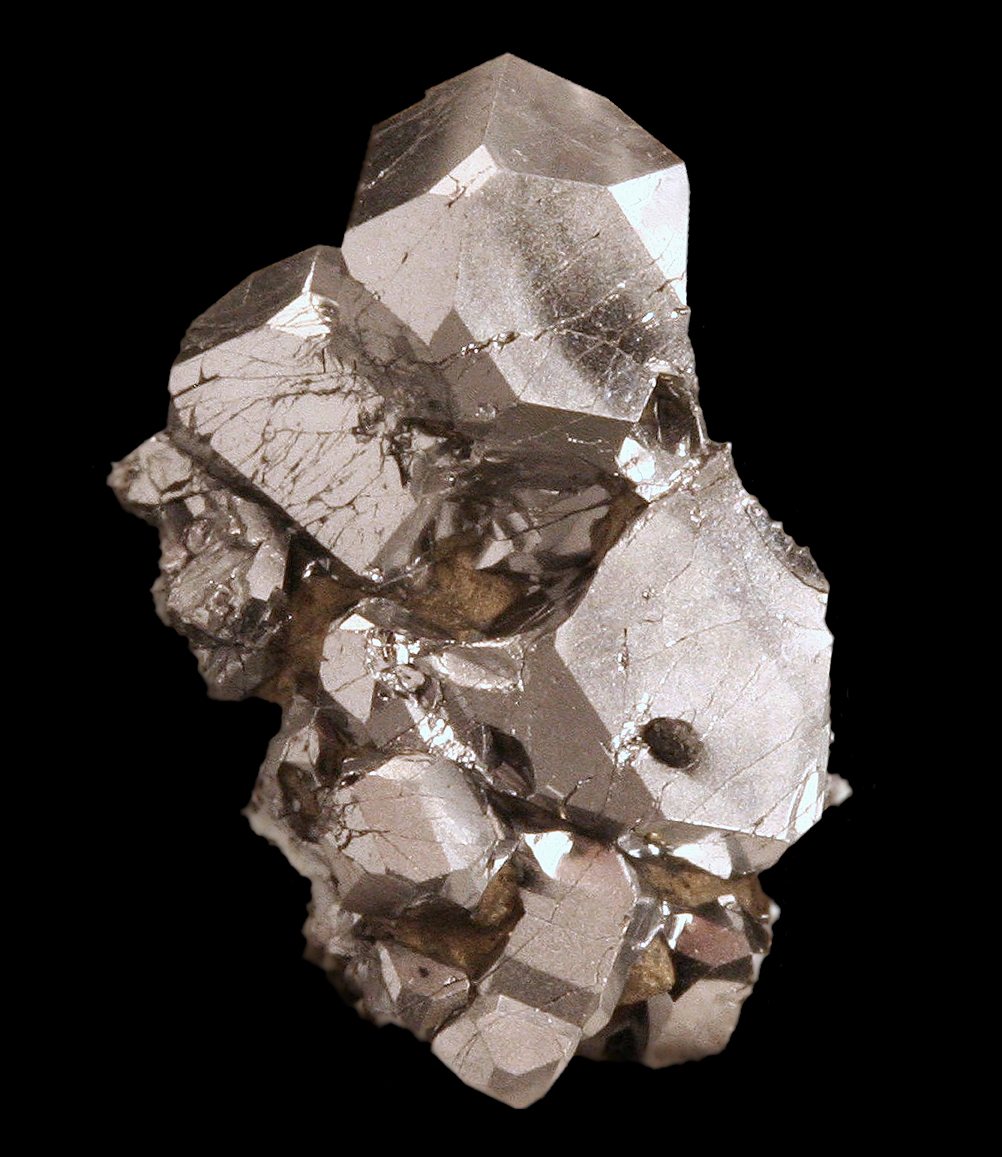
Sperrylite
The most common platinum mineral, a hard arsenide found in nickel-copper sulfide ores.
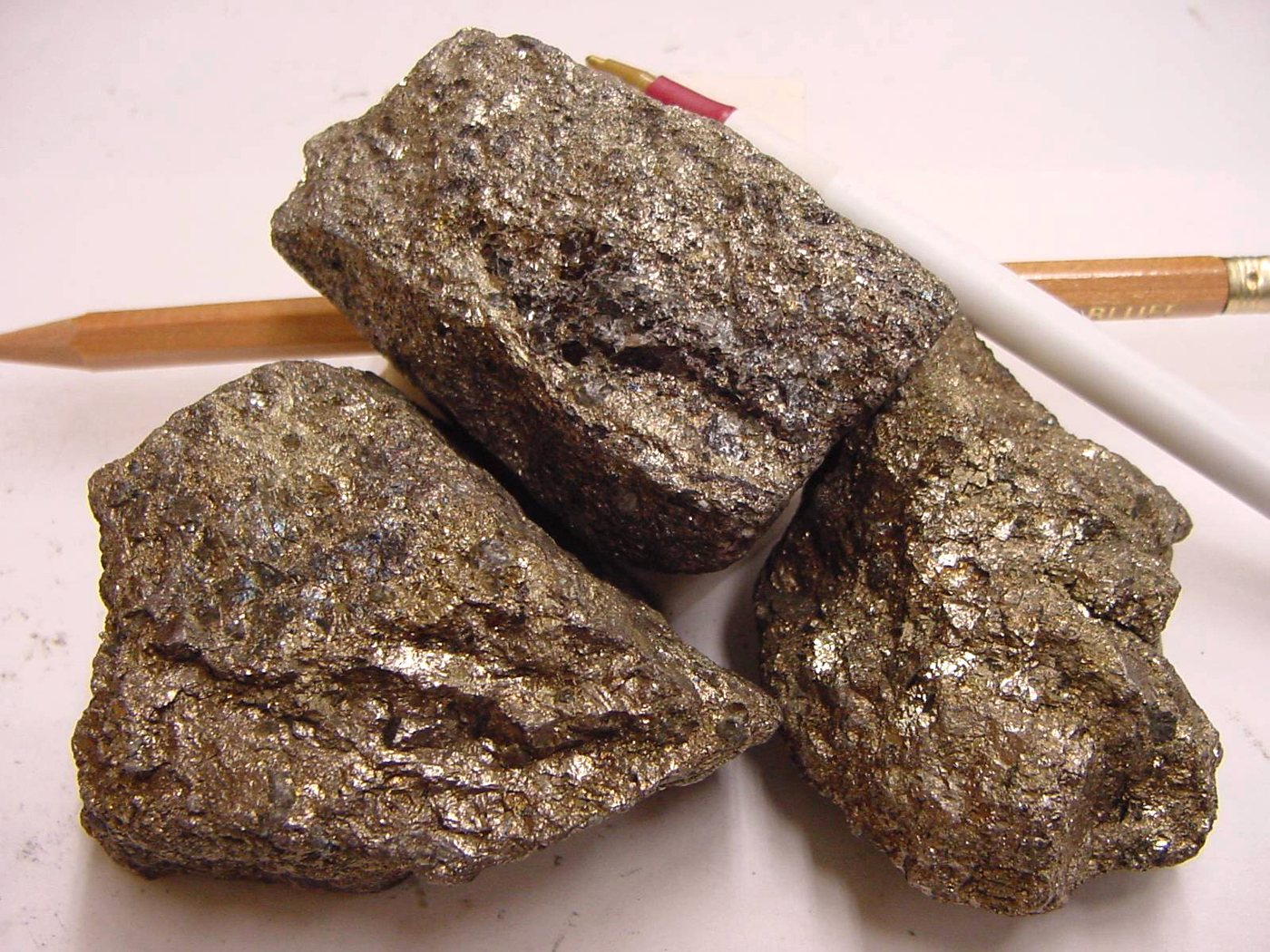
Pentlandite
The main nickel sulfide ore mineral, and the host that also carries most by-product platinum-group metals.
生产主体
在地图上查看 →Mine production: Platinum
Mine production: Platinumkilograms 2025 (估计值)
USGS Mineral Commodity Summaries 2026 · Reported in kilograms of contained platinum; supply is dominated by a small number of orebodies. · 来源 ↗
横向滚动表格以查看其余列。
| 国家/地区 | 产量 | 占全球份额 |
|---|---|---|
| South Africa | 120,000 | — |
| Russia | 20,000 | — |
| Zimbabwe | 18,000 | — |
| Canada | 5,000 | — |
| Other countries | 3,900 | — |
| United States | 1,800 | — |
Mine production: Platinum, rounded
Mine production: Platinum, roundedkilograms 2025 (估计值) 全球合计 170,000 kilograms
USGS Mineral Commodity Summaries 2026 · Reported in kilograms of contained platinum; supply is dominated by a small number of orebodies. · 来源 ↗
横向滚动表格以查看其余列。
| 国家/地区 | 产量 | 占全球份额 |
|---|---|---|
| 全球合计 | 170,000 | 100% |
"未披露"表示美国地质调查局(USGS)为避免泄露单个企业数据而对该数字进行了保密处理——并不意味着数值为零。各国行数之和不一定等于世界合计,原因在于来源对每个数字单独进行四舍五入处理,且并不总是单独列出"其他国家/地区"一行。
价格
dollars per troy ounce: Platinum
年度平均值dollars per troy ounce
基准: dollars per troy ounce: Platinum. 年度平均值,来源: USGS Mineral Commodity Summaries 2026 · 来源 ↗. 以下为参考年度均价,非实时市场报价。
产出该材料的矿山
所有矿山 →
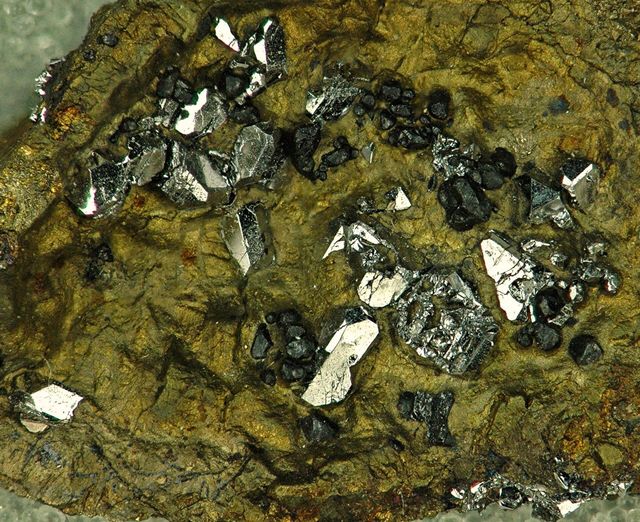
Norilsk-Talnakh
The largest palladium source in the world and a major nickel producer.
Sudbury Basin
One of the longest-producing nickel districts on Earth.
其加工与精炼地点
| 工厂 | 类型 | 阶段 | 国家/地区 | 角色 |
|---|---|---|---|---|
| Nadezhda Metallurgical Plant | 冶炼厂 | 加工 | Russia | 产出 |
| Jinchuan Group Smelter-Refinery | 精炼厂 | 精炼 | China | 产出 |
| Rustenburg Base & Precious Metals Refineries | 精炼厂 | 精炼 | South Africa | 产出 |
其用途
所有终端市场 →| 终端市场 | 其在彼处的用途 | 重要性 |
|---|---|---|
| Hydrogen & Electrolysis | PEM cathode catalyst and fuel cells | 定义 |
| Medicine & Health | Chemotherapy drugs and electrodes | 重要 |
某项技术的需求用量
| 技术 | 数量 | 报价 | 基准 |
|---|---|---|---|
| PEM Electrolyser | 0.1–0.3 kg | per MW of capacity | Cathode catalyst |
| Three-Way Catalytic Converter | 0.002–0.008 kg | per vehicle | Coating, mostly diesel |
Indicative range compiled from published technology studies and chemistry; verify against a manufacturer specification before use. 在物料计算器中按任意规模运行这些数据 →