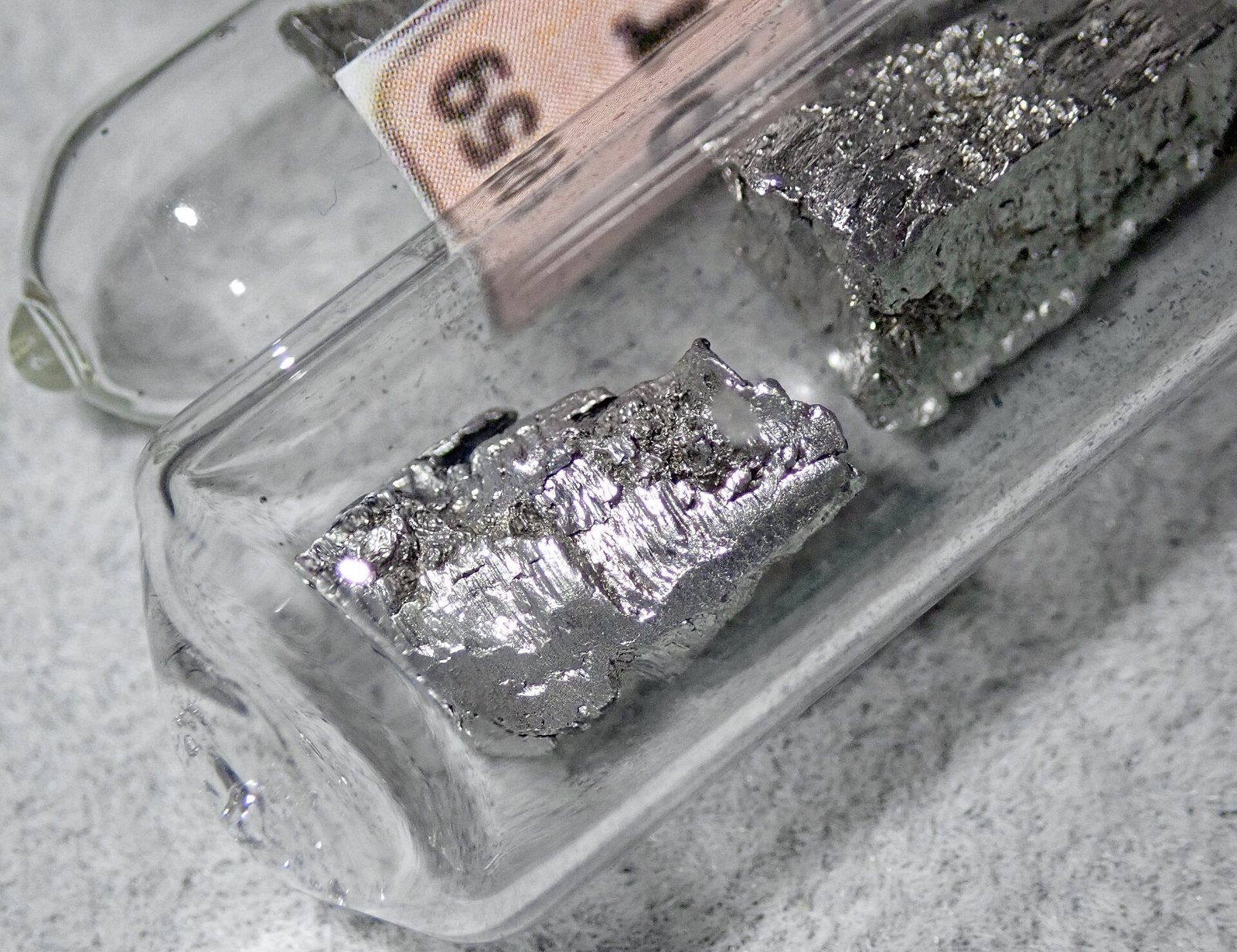
Wat is het?
Neodymium's near-twin, so alike that magnet makers usually do not bother separating the two and sell them together as didymium.
Waarom is het van belang?
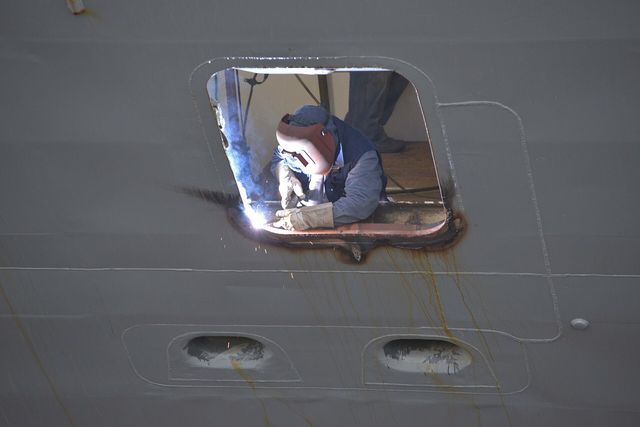
Pr substitutes directly for Nd in magnet alloy, which effectively enlarges the magnet-metal pool. It also colours welding goggles and glass yellow-green.
Where it is in the Earth
Praseodymium belongs to the rare earth elements, a group of metals that, despite their name, are not especially scarce in the Earth's crust. The difficulty lies in concentration: most of the crust contains trace amounts of rare earths spread too thinly to mine economically. Praseodymium reaches workable concentrations only where unusual geological processes have gathered and re-gathered it over millions of years. The most important of those processes involves carbonatites — igneous rocks formed from magma unusually rich in carbonate minerals rather than the silicates that make up ordinary rock. As carbonatite magma cools and evolves, it preferentially scavenges rare earth elements from the surrounding mantle and lower crust, concentrating them into minerals such as bastnäsite and monazite. These rocks are geologically rare, which is why the world's significant praseodymium deposits cluster around a small number of carbonatite bodies.
The three mines shown in the table — Mountain Pass in California, Mount Weld in Western Australia, and Bayan Obo in Inner Mongolia — all owe their deposits to carbonatite geology, though each expresses it differently. Bayan Obo is exceptional in scale and complexity: the carbonatite body there is intimately mixed with iron ore and niobium mineralisation, making it simultaneously a major iron mine and the world's largest single source of rare earths by output. Mount Weld sits above an ancient carbonatite that has been deeply weathered over geological time; that weathering has dissolved away much of the surrounding rock while leaving the rare earth minerals concentrated in a residual blanket near the surface. Mountain Pass is a fresh, unweathered carbonatite plug. The precise distribution of praseodymium within any given deposit mirrors the broader rare earth pattern: it is present alongside cerium, lanthanum, neodymium, and other lanthanides in proportions fixed by the original geology, not by what the market happens to want.
Monazite, the phosphate mineral listed in the ore table, matters as a second route to praseodymium. Monazite accumulates in placer deposits — sedimentary concentrations formed when rivers or waves sort heavy minerals from lighter sand grains. Beaches and ancient river beds in Australia, India, Brazil, and parts of Africa carry monazite as a heavy mineral in sand, usually recovered as a by-product of mining for titanium or zirconium minerals. Monazite also contains thorium, a mildly radioactive element, which complicates its processing and has caused some operators to avoid it despite its rare earth content.
Getting it out
All three major praseodymium-bearing operations listed in the table use open-pit mining, which reflects the geometry of carbonatite deposits. Carbonatites tend to be roughly cylindrical or lens-shaped bodies that reach from the surface downward, and at the grades found in economic deposits the rock above the ore — called overburden or waste rock — can be removed profitably enough to expose the ore from above rather than tunnelling to it. Open-pit mining proceeds by drilling and blasting the rock into fragments, loading those fragments into large trucks, and hauling them either to a processing plant or to a waste dump. For every tonne of ore that reaches the plant, several tonnes of waste rock may need to move first; the precise ratio depends on the geometry of each deposit and how deeply mining has progressed.
Grade is the concentration of the target material in the ore, usually expressed for rare earths as a percentage of total rare earth oxides by weight (TREO). A higher grade means less rock needs to be mined and processed to produce a given amount of product, which generally lowers cost per tonne of output. Mount Weld is widely described as one of the highest-grade rare earth deposits in the world, though the data provided here does not include the specific figures. Bayan Obo operates at a lower rare earth grade but compensates through enormous scale and because the rare earths are effectively a by-product alongside iron ore, spreading costs across multiple revenue streams. Mountain Pass sits between these extremes and processes ore on site before shipping a concentrate overseas for separation.
Praseodymium is never mined selectively. A miner cannot choose to extract more praseodymium and less cerium; the ratio is fixed by the ore body's mineralogy. This means supply of praseodymium moves in lockstep with total rare earth production, driven primarily by demand for whichever element in the mix has the strongest market at a given time. The market for praseodymium and neodymium together is currently the dominant commercial driver, but cerium and lanthanum are produced in the same operation whether or not buyers want them.
What pulls on it
The dominant use of praseodymium is in NdFeB permanent magnets — the strongest type of permanent magnet known, made from an alloy of neodymium, iron, and boron. Praseodymium substitutes directly for neodymium in this alloy without requiring significant changes to the manufacturing process or noticeably degrading magnet performance. Because of this interchangeability, the magnet industry does not usually insist on separating the two; buying NdPr as a mixed product is cheaper than paying for pure neodymium and wastes none of the praseodymium that inevitably comes with it. The practical effect is that praseodymium enlarges the supply of magnet metal: every tonne of praseodymium used in place of neodymium frees up a tonne of neodymium that does not need to be mined.
Wind turbines with permanent-magnet generators and electric vehicles with permanent-magnet traction motors are the end markets the data identifies as the growth drivers. Both applications use NdFeB magnets in large quantities, and demand for both is expanding as grids add more wind capacity and vehicle fleets electrify. The intensity figure in the table — between 0.04 and 0.08 kg of NdPr per kilogram of finished magnet — shows that even a modest-sized magnet contains a meaningful quantity of the material, and that industrial-scale magnet production aggregates into substantial demand on the rare earth supply chain. Other uses, such as colouring welding glass yellow-green and contributing to aerospace alloys and ceramics, consume praseodymium in smaller but not negligible quantities.
A sharp change in demand would most plausibly come from one of two directions. On the upside, faster-than-expected adoption of electric vehicles or offshore wind would pull on NdPr supply more quickly than the mining and processing chain can expand. On the downside, a technical shift away from rare-earth permanent magnets — toward induction motors or alternative magnet chemistries — would reduce demand, though no such shift has yet occurred at scale in the highest-performance applications. The fixed ratio of praseodymium to other rare earths in any ore body means that demand for praseodymium alone cannot easily be satisfied by adjusting mine output; the whole rare earth basket moves together.
Turning ore into product Niveau 3
Getting from mined ore to a form praseodymium users can work with requires several distinct stages, each with its own losses and costs. The first is comminution — crushing and grinding the ore to liberate the rare earth mineral grains from the surrounding waste rock. The ground material then passes through froth flotation or gravity concentration, physical processes that separate the denser or more surface-active rare earth minerals from gangue. At Mountain Pass, flotation is the primary concentration method for bastnäsite. The product of this stage is a concentrate: a mixture still containing multiple rare earth minerals but at far higher grades than the original ore. This concentrate is what Mountain Pass ships, and what the Lynas Advanced Materials Plant in Kuantan receives from Mount Weld.
Separating individual rare earth elements from one another is chemically demanding because the lanthanides are almost identical in their chemistry — praseodymium and neodymium being particularly close, which is why the data notes they are usually sold together as NdPr. Industrial separation uses solvent extraction, sometimes called liquid-liquid extraction or SX: the concentrate is dissolved in acid and the resulting solution is contacted repeatedly with an organic solvent that preferentially picks up different elements at different acidities. Hundreds of extraction stages may be required to achieve high purity. This is the operation conducted at separation plants such as those at Kuantan and Mountain Pass. The separated oxide is then reduced to metal — typically by electrolysis or metallothermic reduction — to produce the NdPr metal alloy that magnet makers actually purchase. Each conversion step introduces yield losses, and the solvent extraction circuits require careful management of reagent consumption and aqueous waste streams, particularly given the thorium and uranium that accompany monazite-sourced material.
The unit basis reported in the data — praseodymium oxide expressed as Pr₆O₁₁ — reflects an industry convention rather than the physical form in which praseodymium is traded. Pr₆O₁₁ is the stable oxide that forms when praseodymium is exposed to air, and quoting on this basis allows comparison across different physical forms (carbonate, chloride, oxide, metal) by converting everything to a common oxygen-bearing reference. The traded product, NdPr oxide or NdPr metal, contains both elements in the proportions the ore delivers, and its pricing therefore blends the market values of both.
Substitution and recycling Niveau 3
Within the magnet alloy itself, praseodymium and neodymium are already mutually substitutable to a degree unusual in materials supply chains, which is why the industry treats them as a combined product. Beyond that internal flexibility, there is no other element that replicates the magnetic performance of NdFeB alloy at comparable cost. Samarium-cobalt magnets offer superior high-temperature performance but depend on cobalt, which carries its own supply concerns, and they are considerably more expensive per unit of magnetic output. Ferrite magnets — made from iron oxide compounds — are abundant and cheap but substantially weaker, meaning a motor designed around ferrite would need to be physically larger or accept lower performance to deliver the same output as one using NdFeB. In applications where size and weight are constrained, such as electric vehicle traction motors, that trade-off is often unacceptable.
Recycling of praseodymium from end-of-life products is technically possible but occurs at a small fraction of the scale that primary mining supplies. The main obstacle is collection and sorting: NdFeB magnets are embedded in assemblies — motors, generators, speakers, hard drives — and recovering them requires disassembly steps that are rarely automated and often uneconomic when labour costs are high. Once magnets are recovered, hydrometallurgical routes can dissolve and re-separate the rare earth content, but the infrastructure to do this at industrial scale exists in very few places. A secondary obstacle is that the alloy composition of recovered magnets varies, and blending incompatible scrap can degrade properties. Some research focuses on direct reuse of magnet alloy without full chemical separation, which would reduce processing cost, but the proportion of demand met by recycled material remains small. Growth in recycling is constrained less by technology than by the economics of collection and by the relatively long service lives of the products — a wind turbine or a vehicle may remain in service for many years before its magnets become available for recovery.
Where the chain is fragile Niveau 4
The most significant structural feature of praseodymium supply is its concentration within a single country's processing industry. While ore is mined in the United States, Australia, and China, the separation and refining steps that produce market-ready NdPr oxide or metal are overwhelmingly concentrated in China. The Lynas plant in Malaysia is the most significant non-Chinese separation facility, and Mountain Pass conducts separation on site, but the Chinese NdFeB magnet cluster dominates the conversion of separated material into finished magnet components. This means a disruption anywhere along the Chinese processing chain — whether from export policy, environmental enforcement, energy constraints, or other regulatory action — propagates rapidly to markets outside China with few short-term alternatives. Lead times for building new separation capacity are measured in years, not months, because the solvent extraction circuits require specialised engineering, environmental permitting, and time to develop operational chemistry under varying ore compositions.
A second structural issue is by-product dependence. Praseodymium is not mined to order; it arrives at the separation plant in proportions fixed by the ore. At Bayan Obo, rare earth production is intertwined with iron ore extraction, meaning output decisions are made by a steelmaker with iron ore economics as the primary consideration. If iron ore demand falters, rare earth output from Bayan Obo may contract regardless of rare earth market conditions, and vice versa. This decoupling of supply from rare-earth-specific demand creates price volatility that does not respond to normal market signals in the short term.
Reporting uncertainty compounds analytical difficulty. The data provided here shows no figures for world production or reserves by country, and published estimates from different agencies diverge because China does not publish detailed mine-by-mine production data and because individual rare earth elements are often reported only as fractions of total rare earth oxide output using assumed or averaged distribution factors. The monazite route introduces additional uncertainty: thorium content means some national stockpiles are classified under nuclear materials regulations rather than mining statistics, and reported availability may not reflect actual accessible supply. Any model of praseodymium supply that does not account for these classification and reporting asymmetries will appear more precise than the underlying data warrants.
Waar het in het gesteente vandaan komt
Alle ertsmineralen →Dit zijn de mineralen die daadwerkelijk praseodymium. Een afzetting is alleen een ertslichaam als een van beide voldoende geconcentreerd is om de winning ervan te bekostigen.
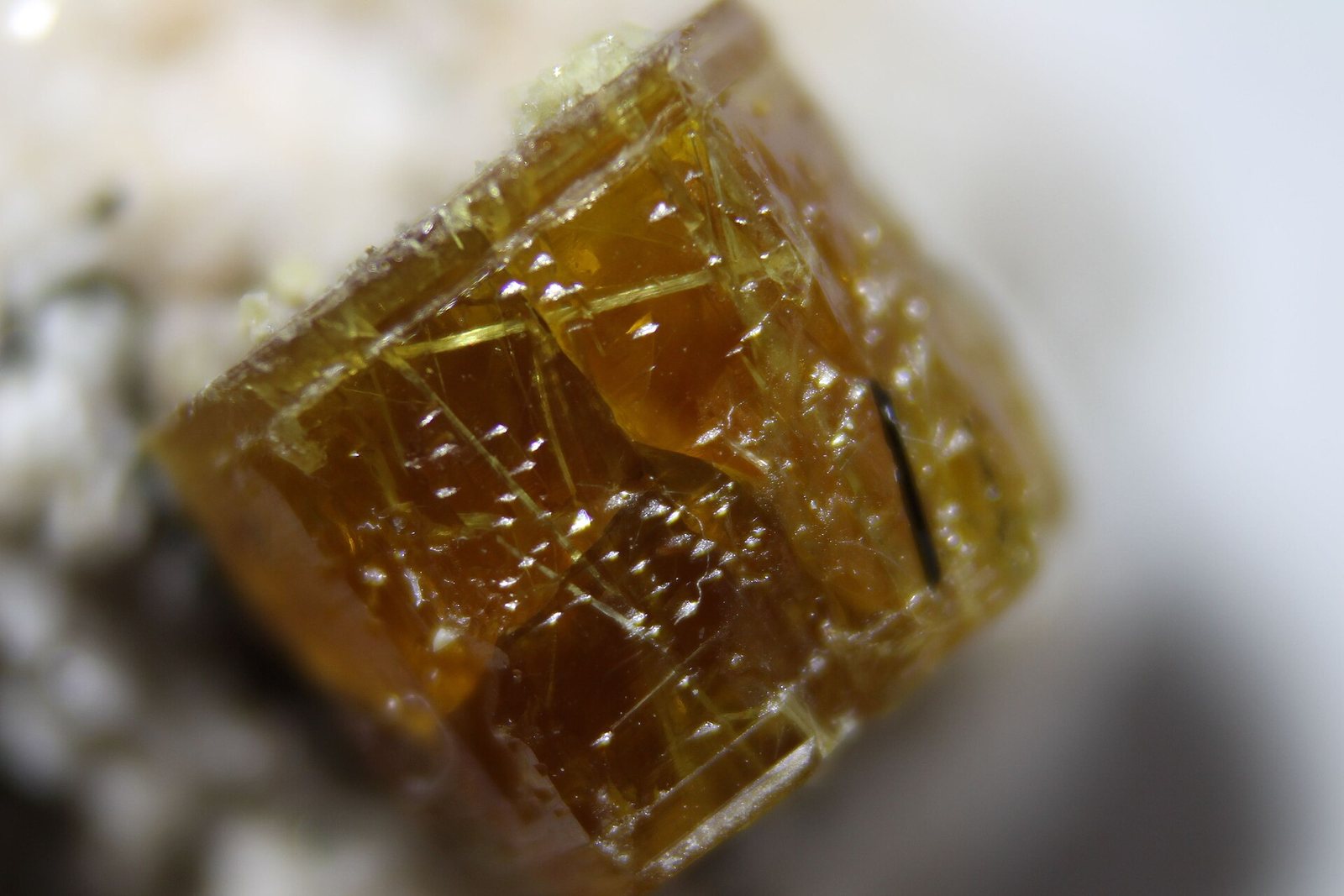
Bastnäsite
The world's principal light rare-earth mineral, mined from carbonatites. Low in thorium, which makes it easier to…
Monazite
A rare-earth phosphate found in heavy mineral sands. Carries thorium, so it is radioactive enough to be regulated.
Prijs
average, dollars per kilogram: Praseodymium oxide, 99.99% minimum
Jaargemiddeldedollars per kilogram
Grondslag: average, dollars per kilogram: Praseodymium oxide, 99.99% minimum. Jaargemiddelden zoals gepubliceerd in USGS Mineral Commodity Summaries 2026 · bron ↗. Dit zijn referentiejaargemiddelden, geen live marktkoers.
Mijnen die het produceren
Alle mijnen →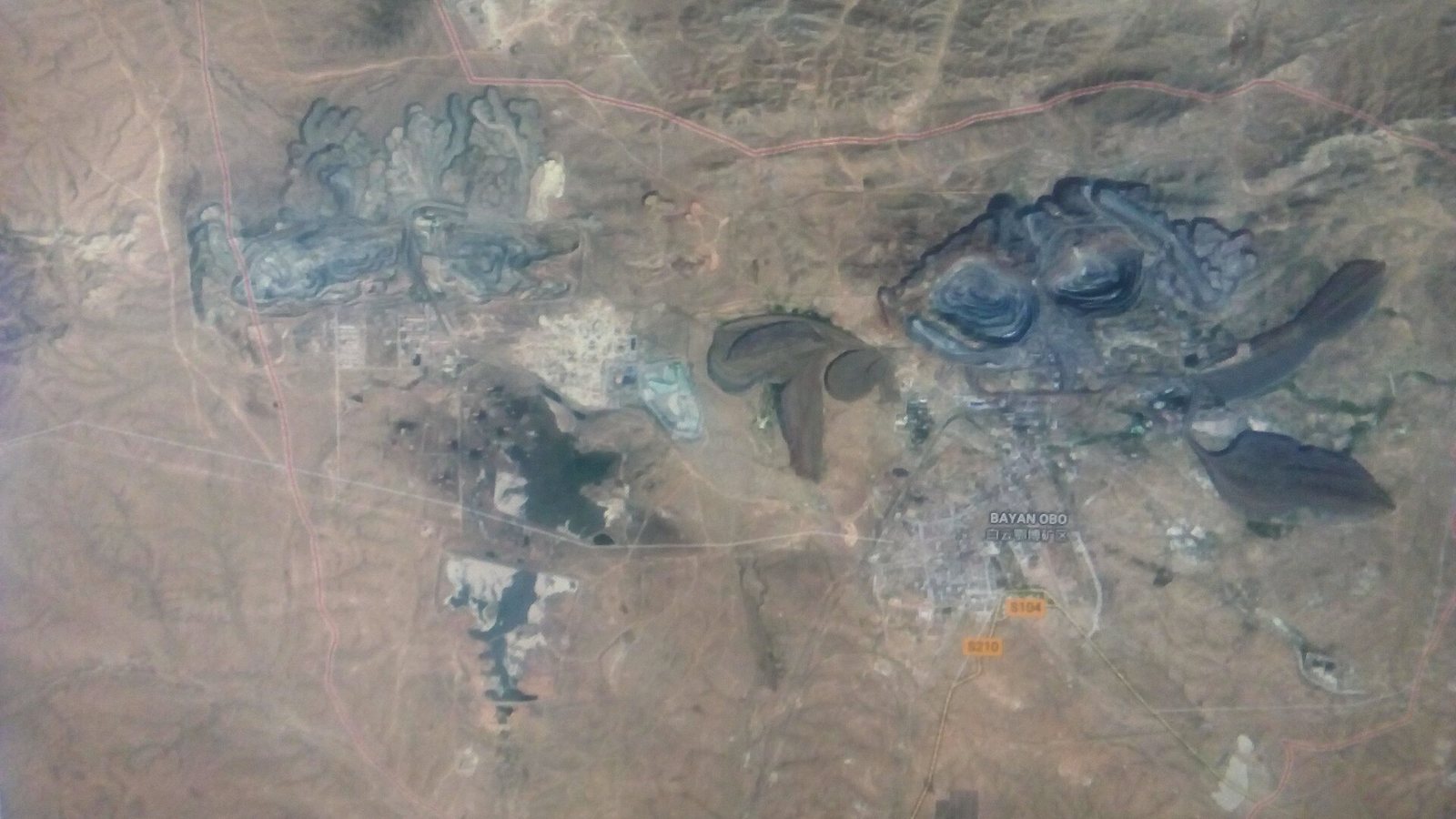
Mount Weld
The mine behind the largest rare-earth separation capacity outside China.
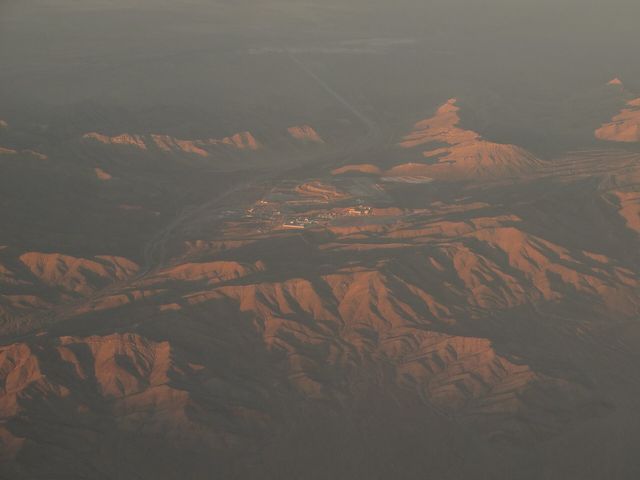
Mountain Pass
The only operating rare-earth mine in the United States.
Waar het wordt verwerkt en geraffineerd
| Installatie | Soort | Fase | Land | Rol |
|---|---|---|---|---|
| Chinese NdFeB Magnet Cluster | Magneetfabriek | Component | China | Invoer |
| Lynas Advanced Materials Plant, Kuantan | Scheidingsinstallatie | Raffinage | Malaysia | Output |
| Mountain Pass Separation & Metal Plant | Scheidingsinstallatie | Raffinage | United States | Output |
Waarvoor het wordt gebruikt
Alle eindmarkten →| Eindmarkt | Wat het daar doet | Belang |
|---|---|---|
| Electric Vehicles | Substitutes for neodymium in magnet alloy | Belangrijk |
| Wind Power | Magnet alloy | Belangrijk |
Hoeveel een technologie ervan nodig heeft
| Technologie | Hoeveelheid | Genoteerd | Grondslag |
|---|---|---|---|
| NdFeB Permanent Magnet | 0.04–0.08 kg | per kg of finished magnet | Part of the NdPr fraction |
Indicative range compiled from published technology studies and chemistry; verify against a manufacturer specification before use. Voer deze getallen op elke schaal uit in de materiaalcalculator →