从矿石到产品,全程溯源
The Materials Atlas
材料 矿山与矿床 加工与精炼 溯源记录 供应链 企业 国家/地区 资讯
按货架浏览材料 电池材料 稀土元素 铜与电气 半导体材料 核材料 航空航天与国防 贵金属 钢铁与合金金属 工业矿物 农业矿物 能源原材料 矿石矿物 元素周期表
需求 终端市场 技术 材料计算器 地图 筛选器
学习与工具 了解术语表 数据问答AI智能体 研究与数据API ★ 已保存
关于 关于我们方法论 数据来源联系我们 免责声明
阅读选项
🧭 引导视图 初次接触矿石品位、精矿、精炼、副产品等概念?我们在您浏览时对每个术语进行解释,语言浅显易懂,数据相同,帮助内置其中。
⚡ 专家视角 您已熟悉这一行业,直接看数据即可——简洁、快速、紧凑,无附加说明。此为默认视图。
主题
界面语言
深度 材料页面分四个级别撰写。在任意材料页面选择后,系统将记住您的选择。
★ 已保存 研究与数据
Tungsten

航空航天与国防材料

Tungsten W · 74

The metal with the highest melting point of them all — you can heat it to 3,400 C before it turns liquid.

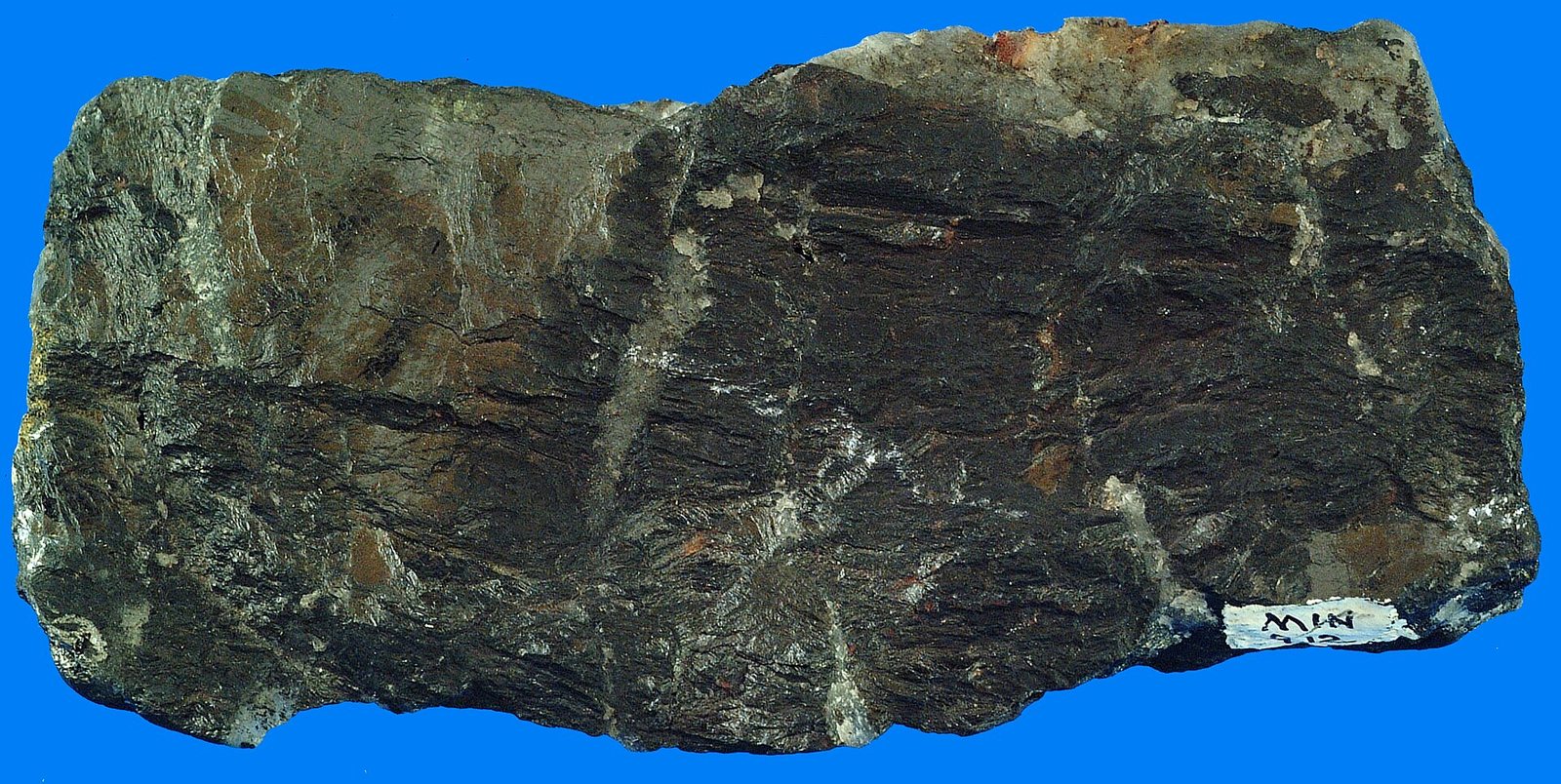
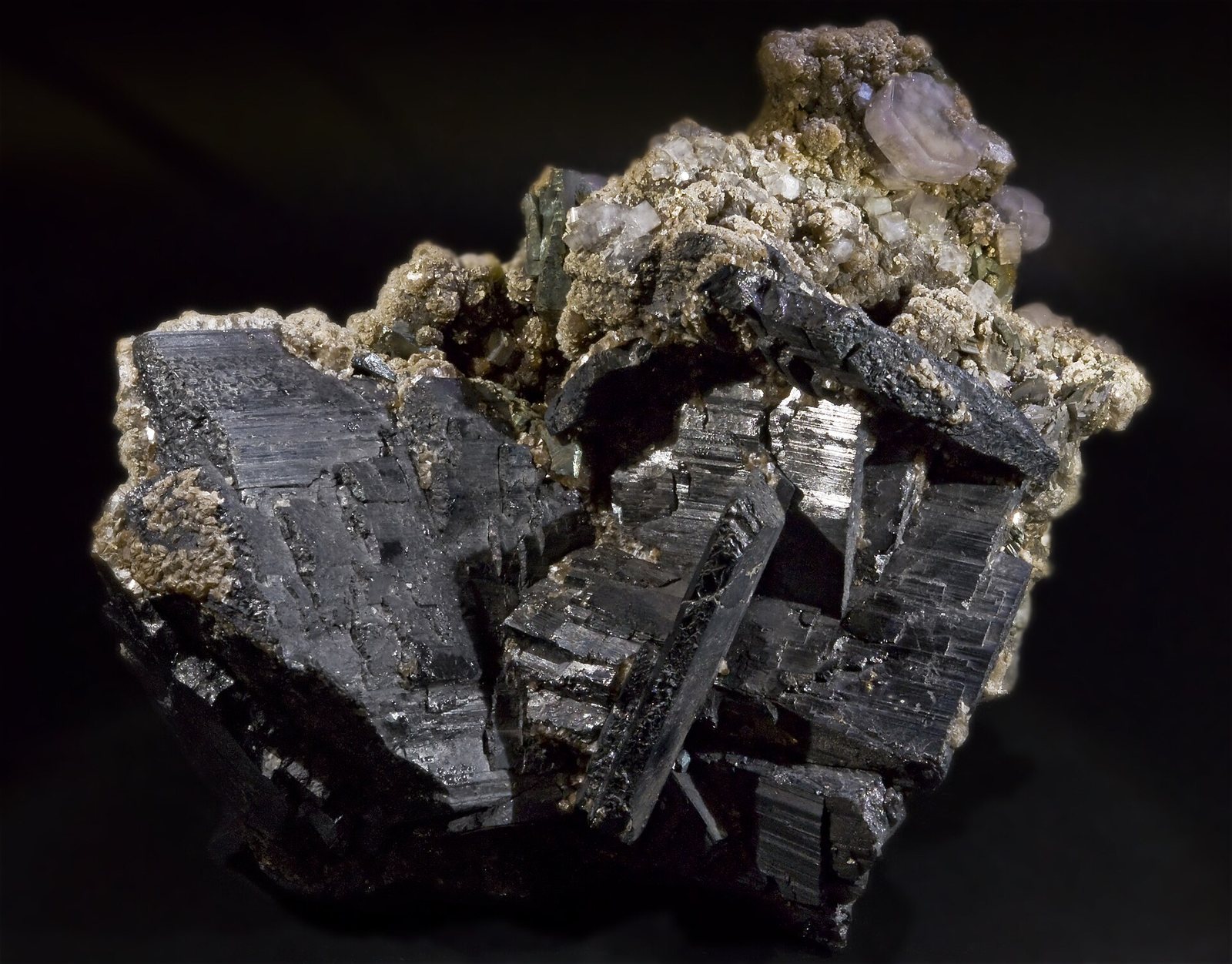
Wolframiteportugal2 · Didier Descouens · CC BY-SA 3.0 · Wikimedia Commons

这是什么?

The metal with the highest melting point of them all — you can heat it to 3,400 C before it turns liquid.

为何重要?

Tungsten carbide is what cuts, drills and mills every other metal. Industrial capacity depends on it in a way that is easy to overlook.

Where it is in the Earth

Tungsten does not spread itself evenly through the crust. It concentrates into economic deposits through a specific set of geological circumstances, most of which involve heat and chemistry working together over long timescales. The most important setting is the contact zone between a cooling granite intrusion and the surrounding limestone or carbonate rock. As the intrusion cools, hot fluids carrying dissolved tungsten, calcium and other elements migrate outward and react with the carbonate. The result is a skarn — a zone of chemically altered rock — in which the mineral scheelite (calcium tungstate) crystallises in quantities large enough to mine. Skarns account for much of the world's tungsten output.

The other principal deposit type forms when tungsten-bearing hydrothermal fluids — essentially hot, mineralised water circulating through fractures in the rock — cool and deposit the mineral wolframite along veins. Wolframite is an iron-manganese tungstate and tends to form in and around granite bodies, often alongside tin, molybdenum and bismuth. These vein deposits can be narrow but rich, and they are the classic form of tungsten mineralisation associated with the granites of southern China, the Iberian Peninsula and parts of Southeast Asia. The geographical pattern of tungsten deposits around the world therefore follows the distribution of old granitic terranes and the limestone sequences that surround them, which is why China, with its enormous extent of such geology, holds reserves far larger than any other country.

A useful distinction to carry through the rest of this page: scheelite tends to show up in skarns associated with calc-silicate metamorphic belts, while wolframite is more typical of high-temperature hydrothermal veins. Both are tungstates — salts of tungstic acid — but they respond differently to processing, which matters when the ore leaves the mine.

Getting it out

Because tungsten ore bodies are often steep, irregular and relatively small in lateral extent, underground mining is the dominant extraction method. Miners follow the vein or skarn body downward, using methods such as stoping — excavating the ore in a controlled sequence of rooms or slices — while leaving enough intact rock to support the surrounding ground. The ore itself makes up only a small fraction of the total rock that must be handled; the rest, called waste or gangue, is moved and stored. This ratio of waste to ore, called the strip ratio in open-pit operations or expressed as dilution underground, is a central economic variable at any tungsten mine.

Ore grade matters enormously because tungsten concentrations are reported in units of WO₃ — tungsten trioxide equivalent by weight — per tonne of rock. Economic grades are typically low by the standards of base metals; the ore contains a small proportion of tungsten mineral surrounded by a large volume of unremarkable rock. Moving and processing that surrounding rock has a cost, and when ore grades fall below a threshold that varies with the price of tungsten concentrate, mines close. This sensitivity explains why capacity outside China has been prone to care-and-maintenance closures during periods of low prices. Some scheelite is also recovered as a by-product of mining for other metals, particularly tin and copper, which changes the economics considerably: the tungsten recovery cost is shared with the primary product.

Open-pit mining does occur where ore bodies are wide enough and shallow enough to make it practical, though this is less common than in commodities such as iron ore or copper. In either configuration, the extracted ore must be crushed and processed promptly, since there is no value in stockpiling low-grade rock indefinitely. The mining method is therefore chosen primarily by the geometry and depth of the deposit, and only secondarily by other considerations.

What pulls on it

The single largest use of tungsten worldwide is in cutting and wear-resistant tooling, where it appears as tungsten carbide — a compound of tungsten and carbon that is extraordinarily hard. Cemented carbide, sometimes called hardmetal, binds tungsten carbide grains together with a metal binder, usually cobalt, to produce inserts, drills, end mills and other cutting tools used to machine steel, aluminium and other materials. Without these tools, manufacturing as it is currently practised would not function. Almost every metal component that requires a precise shape passes through a cutting tool at some stage, and tungsten carbide is the material those tools are most commonly made from.

Beyond cutting tools, tungsten appears in a range of demanding applications where its extreme density or melting point is specifically required. In defence, its density makes it suitable for kinetic energy penetrators — projectiles that rely on mass rather than explosive force. In aerospace and other precision applications, small tungsten alloy components serve as counterweights and vibration dampers. The semiconductor industry uses tungsten in contacts and vias — the tiny conducting pathways that connect layers within a microchip — because tungsten can be deposited uniformly into very small features and withstands the high temperatures of chip fabrication.

Demand would shift materially only if the nature of manufacturing changed substantially. A broad move away from metal cutting — through additive manufacturing at sufficient scale and precision, for instance — could reduce tool consumption, but this transition has been gradual and incomplete. Growth in semiconductor content per device, combined with continuing demand from defence procurement, provides a counterweight to any softening in conventional machining. Neither the composition of end-use demand nor the rate of its growth is something the tables alone convey; what matters is that the uses are structurally embedded in industrial processes that do not change quickly.

正确读取数据。 Mine production of contained tungsten, from wolframite and scheelite ore. Concentrate, then ammonium paratungstate (APT), then carbide powder or metal.

其在岩石中的来源

所有含矿矿物 →

实际承载以下内容的矿物: tungsten. 只有其中某种物质的富集程度足以覆盖开采成本,矿床才能成为矿体。
Mine production

Mine productionmetric tons 2025 (估计值) 全球合计 85,000 metric tons

USGS Mineral Commodity Summaries 2026 · Mine production of contained tungsten, from wolframite and scheelite ore. · 来源 ↗

横向滚动表格以查看其余列。

国家/地区产量 占全球份额
China 67,000 78.8%
Vietnam 3,000 3.5%
Other countries 2,400 2.8%
Kazakhstan 2,400 2.8%
Russia 2,000 2.4%
Korea, North 2,000 2.4%
Bolivia 1,700 2.0%
Rwanda 1,300 1.5%
Australia 1,000 1.2%
Austria 840.0 1.0%
Spain 800.0 0.9%
Portugal 700.0 0.8%
United States Zero
全球合计 85,000100%

"未披露"表示美国地质调查局(USGS)为避免泄露单个企业数据而对该数字进行了保密处理——并不意味着数值为零。各国行数之和不一定等于世界合计,原因在于来源对每个数字单独进行四舍五入处理,且并不总是单独列出"其他国家/地区"一行。

储量持有方

"储量"是一个严格的术语。它是指已知矿床中,按当前价格和当前技术,在经济上可行的可采部分——而非地下所有存量。当价格上涨或新工艺出现时,储量增加;当价格下跌时,储量减少。

Reserves

Reservesmetric tons 2025

USGS Mineral Commodity Summaries 2026 · 来源 ↗

国家/地区储量占全球份额
China 2,500,000 53.2%
Other countries 950,000 20.2%
Australia 570,000 12.1%
Russia 400,000 8.5%
Vietnam 170,000 3.6%
Spain 66,000 1.4%
Korea, North 29,000 0.6%
Austria 10,000 0.2%
Portugal 3,400 0.1%
United States Not applicable
Bolivia Not applicable
Kazakhstan Not applicable
Rwanda Not applicable
全球合计 >4,700,000100%

来源将此世界总量作为区间值而非精确数值发布,因此末列的份额本身亦为区间值。

价格

concentrate, average in-warehouse Rotterdam, dollars per dry metric ton unit of tungsten trioxide

年度平均值dollars per dry metric ton unit

2021 · 225.0 高 380.0 dollars per dry metric ton unit 2025 · 380.0

基准: concentrate, average in-warehouse Rotterdam, dollars per dry metric ton unit of tungsten trioxide. 年度平均值,来源: USGS Mineral Commodity Summaries 2026 · 来源 ↗. 以下为参考年度均价,非实时市场报价。

其加工与精炼地点

工厂类型 阶段国家/地区角色
Samsung Pyeongtaek Campus 半导体晶圆厂组件 South Korea输入
TSMC Fab 18, Tainan 半导体晶圆厂组件 Taiwan输入
终端市场其在彼处的用途重要性
Semiconductors Contacts and vias 定义
Aerospace & Defence Penetrators and counterweights 重要

某项技术的需求用量

"强度"是指单位产品所含某种材料的用量。此处为参考区间——实际用量因制造商和年型而异,且随着工程师不断探索减量化设计,所有数值均呈下降趋势。
技术数量 报价基准
Leading-Edge Logic Chip Grams per wafer. 痕量 per 300 mm waferContacts and vias

Indicative range compiled from published technology studies and chemistry; verify against a manufacturer specification before use. 在物料计算器中按任意规模运行这些数据 →

出口管制

国家/地区管控适用于
ChinaExport licensing requirement for materials and technologies Antimony (2024), bismuth (2025), synthesized diamond (2025), gallium (2023), germanium (2023), graphite (2023), indium (2025), magnesium materials (2024), molybdenum (2025), rare earths (2025), silver (2026), tellurium (2025), tungsten (2025), and items related to lithium batteries and artificial graphite anode materials (2025).
RussiaExport ban Steel waste and scrap, tungsten scrap, and enriched uranium (2022).

USGS Mineral Commodity Summaries 2026, table 4 — controls in effect as of January 2026, excluding controls since lifted.

新闻动态

更多 →

Tungsten surge transforms Northcliff’s Sisson economics

MINING.COM02 Sep 2026

Tungsten surge transforms Northcliff’s Sisson economics

The Northern Miner02 Sep 2026

材料

所有材料 关键矿产 稀土 电池材料 矿石矿物 元素周期表 筛选器

地层

矿山与矿床 加工与精炼 国家/地区 地图

经济体

溯源记录 供应链 终端市场 技术 企业 材料计算器

了解

了解术语表 数据问答AI智能体 研究与数据开放 API 资讯★ 已保存

关于我们

关于我们联系我们 方法论数据来源 编辑方针 隐私政策使用条款 免责声明