What is it?
A metal that barely absorbs neutrons, which is why nuclear fuel rods are wrapped in it, and whose sand form is a foundry and ceramics staple.
Why does it matter?
Zircaloy cladding is a nuclear reactor's first containment barrier. Making it requires separating zirconium from chemically near-identical hafnium.
Where it is in the Earth
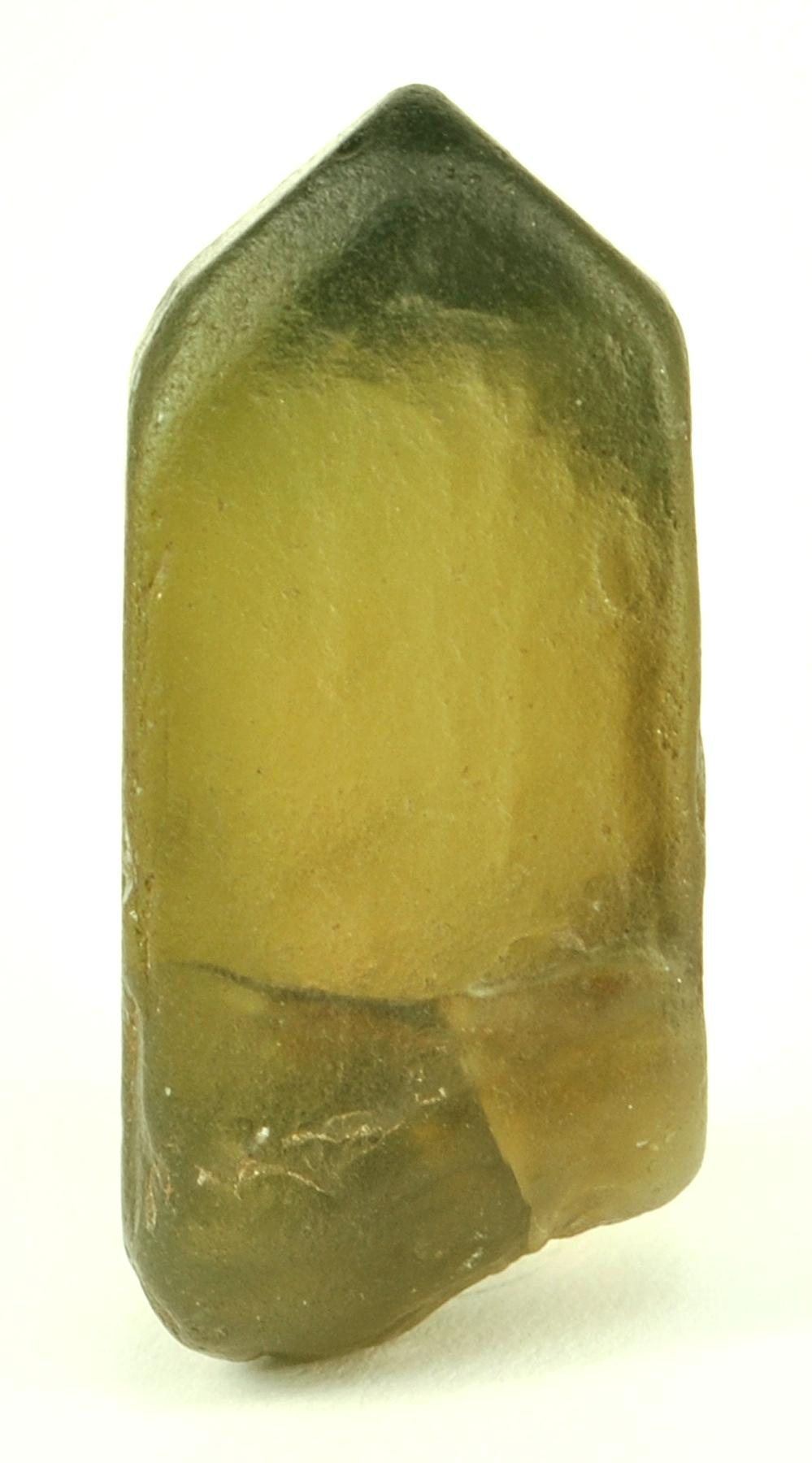
Zircon — the mineral zirconium silicate (ZrSiO4) — forms in igneous rocks, particularly granites and syenites, where zirconium concentrates in the melt as other minerals crystallise around it. Because zircon is chemically inert and physically hard, it survives the long journey from its parent rock into river systems and eventually to coastlines. Wave and wind action do the separating work: minerals are sorted by density, and zircon, being noticeably denser than common quartz and feldspar, settles out in the same beaches and dune systems that accumulate other heavy minerals such as ilmenite and rutile. These accumulations are called heavy-mineral sand deposits, or simply mineral sands.
The deposits that dominate the production tables today — in Australia, South Africa, Mozambique, and along the West African coast — are relict shorelines, meaning ancient coastlines that have since been buried or lifted above sea level by geological movement. Australia's vast reserves reflect the fact that the continent's old, stable geology has produced granitic source rocks over enormous areas, and that ancient drainage systems funnelled the eroded material into long-lived coastal environments where sorting could proceed over geological time. The concentration of zircon in these deposits is usually modest in percentage terms but recoverable because the sand is loose and near-surface, requiring no blasting or underground work.
Zircon is the sole commercial source of zirconium. There is no significant hard-rock mining of zirconium-bearing ore, and no brine or sedimentary source contributes meaningfully to supply. This means the entire zirconium supply chain depends on the health of the mineral sands industry, which itself produces zircon alongside titanium minerals — a relationship that shapes the economics of both commodities.
Getting it out
Because mineral sand deposits are unconsolidated — essentially beach sand — the mining method is almost always a form of open-cut operation, either dry mining with scrapers and bulldozers or, more commonly at large operations, wet mining using a floating dredge. A dredge sits in a pond of its own making: it excavates the sand ahead, processes it aboard the vessel, and stacks the coarse waste material behind, so the pond migrates slowly across the orebody. This approach works well where the water table is shallow and the ground flat, which describes most coastal mineral sand terrains.
The product leaving the mine is called heavy-mineral concentrate, or HMC. It contains zircon alongside ilmenite, rutile, leucoxene, and smaller quantities of monazite. The zircon content of the raw sand is typically a fraction of what ends up in the HMC, because the concentration step on the dredge or in a dry-mining plant uses gravity, magnetic, and electrostatic separation to discard the abundant low-density quartz and feldspar before any of the valuable minerals are separated from each other. What counts as an economic grade of zircon in the raw sand is not a fixed number; it depends on the total heavy-mineral content, the mix of valuable minerals in that HMC, the depth and thickness of the ore body, and the cost of moving sand. Because mining is effectively moving large volumes of loose material, the ratio of waste sand to product is high, though the waste is generally benign — returned sand, not chemically toxic tailings in the conventional sense.
A complication specific to mineral sands is the presence of monazite, a phosphate mineral that carries thorium and uranium. Because of their radioactivity, monazite-bearing streams must be managed carefully, and in some jurisdictions regulations constrain how much can be stockpiled or sold, which affects the economics of the entire operation even though monazite is a relatively minor component of the HMC.
What pulls on it
Zircon sand consumed in ceramics — principally as an opacifier in tiles and sanitaryware, and as a refractory in foundry casting — accounts for by far the largest share of demand. Zircon makes tiles white and opaque, and it stabilises the moulds into which molten metal is poured because it tolerates rapid temperature change without cracking. This means that construction activity and automotive and aerospace casting volumes are the primary drivers of the zircon market, and those are cyclical. When housing construction slows or car production falls, zircon demand softens, as the price series illustrates: the peak around 2022 reflects a recovery in construction and manufacturing activity, and the subsequent easing tracks cooling demand from those sectors.
The nuclear application is a much smaller share of total zirconium demand by volume, but it is qualitatively different from the ceramics market because it requires the highly processed, hafnium-depleted metal rather than the sand. Demand for Zircaloy tubing is governed by reactor construction and refuelling schedules, not construction booms. A pressurised-water reactor requires between 20 and 40 tonnes of zirconium per gigawatt of capacity in cladding tubes and structural grids, and fuel assemblies are replaced on cycles of one to two years, so operating reactors generate a steady ongoing call on the metal. A global expansion in nuclear generating capacity — whether for decarbonisation reasons or energy-security reasons — would increase demand for nuclear-grade zirconium, but this effect unfolds over the decade-scale lead times of reactor construction, not quickly.
For demand to change sharply in either direction, something structural would need to shift. A sustained collapse in ceramics construction output globally, or the widespread adoption of a different opacifier that matches zircon's optical and chemical properties at lower cost, would remove the largest pillar of demand. Conversely, a rapid build-out of new reactor fleets would increase demand for nuclear-grade metal specifically, though the sand market would see only a modest indirect effect given the scale difference between the two end uses.
Turning ore into product Level 3
Processing happens in two broadly separate stages: mineral separation to isolate zircon from the other heavy minerals, and downstream chemical processing to convert zircon into zirconia, zirconium chemicals, or zirconium metal. The mineral separation plant uses a sequence of gravity tables, magnetic drums, and high-tension electrostatic rolls. Zircon is weakly magnetic relative to ilmenite and non-conducting relative to rutile, so the sequence progressively removes each mineral in turn until a zircon product meeting chemical and sizing specifications is packaged for sale. Losses occur at each step, and fine-grained or altered zircon — called metamict zircon, in which the crystal structure has been damaged by internal radiation from trace uranium and thorium — responds poorly to electrostatic separation and tends to be lost to tailings.
For the nuclear fuel industry, the journey continues well beyond a zircon sand. Zircon must first be fused or chlorinated to break the chemically stable silicate bond. Chlorination at high temperature produces zirconium tetrachloride, which is then reduced — typically with magnesium, in a process analogous to titanium sponge production — to yield zirconium sponge. This is where the critical separation from hafnium takes place. Hafnium is chemically nearly identical to zirconium and invariably accompanies it through every step of processing. In ceramics or foundry applications the hafnium content is irrelevant, but in a nuclear reactor hafnium absorbs neutrons far more readily than zirconium, and its presence degrades cladding performance. Reactor-grade zirconium must therefore be purified to very low hafnium content through solvent extraction or fractional distillation of the tetrachloride, a step that adds considerable cost and requires specialised plant. The separated hafnium is itself a marketable product, used in control rods and high-temperature superalloys, which provides some by-product credit to the economics of nuclear-grade zirconium production.
Once hafnium-free zirconium sponge is consolidated, it is alloyed — small additions of tin, iron, chromium, and nickel in varying recipes create the family of alloys known collectively as Zircaloy — and then extruded or pilgered into seamless tubing with extremely tight dimensional tolerances. The tube must contain the fuel pellets for years in a high-radiation, high-temperature, high-pressure aqueous environment without meaningful corrosion or deformation. This means the processing chain for reactor-grade material involves far more quality-assurance steps than a ceramics or foundry supply chain does, and the plants capable of producing it are few and geographically concentrated. A reported price for zirconium sponge, as shown in the price history, reflects ex-works Chinese material, and buyers should be aware that reactor-grade sponge from qualified Western producers trades on terms that are not publicly reported in the same way.
Substitution and recycling Level 3
In the ceramics and opacifier market, zircon faces partial competition from calcined alumina and from synthetic zirconia produced by fusing zircon to remove silica, but neither replicates the combination of refractive index, chemical stability, and cost that makes natural zircon sand attractive to tile manufacturers. Some reformulation is technically possible, particularly where zircon loadings are high, but it typically involves compromises in whiteness or firing behaviour, and the economic incentive to switch diminishes when zircon prices fall back toward historical norms, as they appear to have done by 2025. In refractory and foundry applications, aluminium silicates and chromite sands serve overlapping functions, but zircon's thermal properties and its very low thermal expansion give it advantages in demanding casting applications that are difficult to match cheaply.
In the nuclear application, there is no commercially deployed substitute for Zircaloy cladding in light-water reactors. Advanced cladding concepts — sometimes grouped under the term accident-tolerant fuel cladding — explore chromium coatings on Zircaloy or alternative alloy systems based on silicon carbide or ferritic steels, but these remain in varying stages of qualification testing rather than widespread deployment. Replacing Zircaloy in existing and near-term reactors is not a near-term prospect; the qualification process for a change to fuel-rod materials is extensive and slow.
Recycling of zirconium metal from spent nuclear fuel assemblies does occur within the fuel cycle, but the volumes are constrained by the same factors that constrain all spent-fuel processing — regulatory complexity, the presence of highly radioactive material, and the small number of facilities worldwide capable of handling it. Zircon from ceramics waste is not recovered in any meaningful quantity. The result is that primary mine supply dominates, and the recycling contribution to total supply is small enough that the USGS reporting convention focuses entirely on mined zircon concentrate.
Where the chain is fragile Level 4
The most significant structural feature of zirconium supply is the extreme concentration of reserves. Australia holds reserves that dwarf every other country combined — the published figure exceeds 55,000 thousand metric tonnes against a world total reported as greater than 70,000 thousand metric tonnes — and it is also the single largest producing country, contributing around 400 thousand metric tonnes of a world total of 1,200 thousand metric tonnes. South Africa is the second producer and second reserve holder by a considerable margin. This geographic concentration is not in itself unusual for a heavy-mineral sand commodity, but it means that regulatory or operational disruption in Australia or South Africa would have immediate market consequences. The African producing countries — Mozambique, Senegal, Madagascar, Sierra Leone — collectively represent a meaningful and growing share of production but their infrastructure and permitting environments introduce a different category of operational risk.
A less visible but arguably more consequential fragility lies in the processing chain for nuclear-grade metal. The conversion of zircon sand to hafnium-depleted sponge and then to Zircaloy tube requires a small number of specialised facilities. The capability to perform the hafnium separation and to manufacture reactor-qualified tubing is concentrated in a handful of countries, and the qualification requirements mean that a new entrant cannot simply commission a plant and begin selling product into the nuclear market — qualification against reactor operator specifications takes years and requires a sustained operational track record. This creates a processing bottleneck that is largely invisible when looking only at mine production figures.
A further complication in reading the supply picture is the unit-basis issue noted by USGS: published production and trade figures are reported in zircon concentrate gross weight, not in contained zirconium metal. This makes direct comparison between the sand market and the metal market awkward, and figures cited in different sources may be on incompatible bases. The disconnect between zircon sand pricing and zirconium sponge pricing — two series shown in the price history on very different per-unit scales — reflects both this unit difference and the substantial value added by chemical processing and hafnium separation. Researchers constructing supply-demand balances for the nuclear market must therefore reconcile data from the mineral sands industry with data from the nuclear fuel fabrication industry, which report through entirely separate channels and use different conventions. Where figures appear to disagree, the most common source of discrepancy is this unit-basis mismatch rather than a genuine data error.
Where it comes from in the rock
All ore minerals →These are the minerals that actually carry zirconium. A deposit is only an orebody if one of them is concentrated enough to pay for digging it up.
Who produces it
See it on a map →Zirconium mineral concentrates, mine production (thousand metric tons, gross weight)
Zirconium mineral concentrates, mine production (thousand metric tons, gross weight)thousand metric tons 2025 (estimated) World total 1,200 thousand metric tons
USGS Mineral Commodity Summaries 2026 · USGS reports zircon (ZrSiO4) concentrate gross weight, not zirconium metal. · source ↗
Scroll the table sideways for the remaining columns.
| Country | Production | Share of world |
|---|---|---|
| Australia | 400.0 | 33.3% |
| South Africa | 270.0 | 22.5% |
| Mozambique | 160.0 | 13.3% |
| China | 100.0 | 8.3% |
| United States | 100.0 | 8.3% |
| Senegal | 70.00 | 5.8% |
| Indonesia | 52.00 | 4.3% |
| Other countries | 40.00 | 3.3% |
| Madagascar | 26.00 | 2.2% |
| Sierra Leone | 25.00 | 2.1% |
| World total | 1,200 | 100% |
“Withheld” means the USGS suppressed the figure to avoid disclosing an individual company's data — it does not mean zero. Country rows do not always sum to the world total because the source rounds each figure independently and does not always break out an “other countries” line.
Who holds the reserves
Zirconium reserves(thousand metric tons, ZrO2 content)
Zirconium reserves(thousand metric tons, ZrO2 content)thousand metric tons 2025
USGS Mineral Commodity Summaries 2026 · source ↗
| Country | Reserves | Share of world |
|---|---|---|
| Australia | 55,000 | 78.6% |
| South Africa | 5,900 | 8.4% |
| Other countries | 5,700 | 8.1% |
| Indonesia | 3,400 | 4.9% |
| Senegal | 2,600 | 3.7% |
| Madagascar | 2,100 | 3.0% |
| Mozambique | 1,500 | 2.1% |
| United States | 500.0 | 0.7% |
| China | 500.0 | 0.7% |
| Sierra Leone | 290.0 | 0.4% |
| World total | >70,000 | 100% |
The source publishes this world total as a bound rather than a point figure, so the shares in the last column are themselves bounds.
Price
Price: Zircon, dollars per metric ton (gross weight): Premium grade, cost, insurance, and freight, China
Annual averagedollars per metric ton
Basis: Price: Zircon, dollars per metric ton (gross weight): Premium grade, cost, insurance, and freight, China. Annual averages as published in USGS Mineral Commodity Summaries 2026 · source ↗. These are reference annual averages, not a live market quote.
Price: Zircon, dollars per metric ton (gross weight): Imported
Annual averagedollars per metric ton
Basis: Price: Zircon, dollars per metric ton (gross weight): Imported. Annual averages as published in USGS Mineral Commodity Summaries 2026 · source ↗. These are reference annual averages, not a live market quote.
Price: Zirconium, sponge, ex-works China, dollars per kilogram
Annual averagedollars per kilogram
Basis: Price: Zirconium, sponge, ex-works China, dollars per kilogram. Annual averages as published in USGS Mineral Commodity Summaries 2026 · source ↗. These are reference annual averages, not a live market quote.
What it is used for
All end markets →| End market | What it does there | Importance |
|---|---|---|
| Nuclear Power | Fuel-rod cladding | Defining |
How much of it a technology needs
| Technology | Quantity | Quoted | Basis |
|---|---|---|---|
| Pressurised Water Reactor | 20.00–40.00 t | per GW of capacity | Cladding tubes and structural grids |
Indicative range compiled from published technology studies and chemistry; verify against a manufacturer specification before use. Run these numbers at any scale in the material calculator →
Follow it across the borders
All journeys →Where a consignment of this material actually goes — every country, every custodian, and what is left behind at each step.
Kazakh uranium to a fuel assembly in a reactor The most tightly watched journey covered here: every kilogram is accounted for, at every border.