这是什么?
A metal that barely absorbs neutrons, which is why nuclear fuel rods are wrapped in it, and whose sand form is a foundry and ceramics staple.
为何重要?
Zircaloy cladding is a nuclear reactor's first containment barrier. Making it requires separating zirconium from chemically near-identical hafnium.
Where it is in the Earth
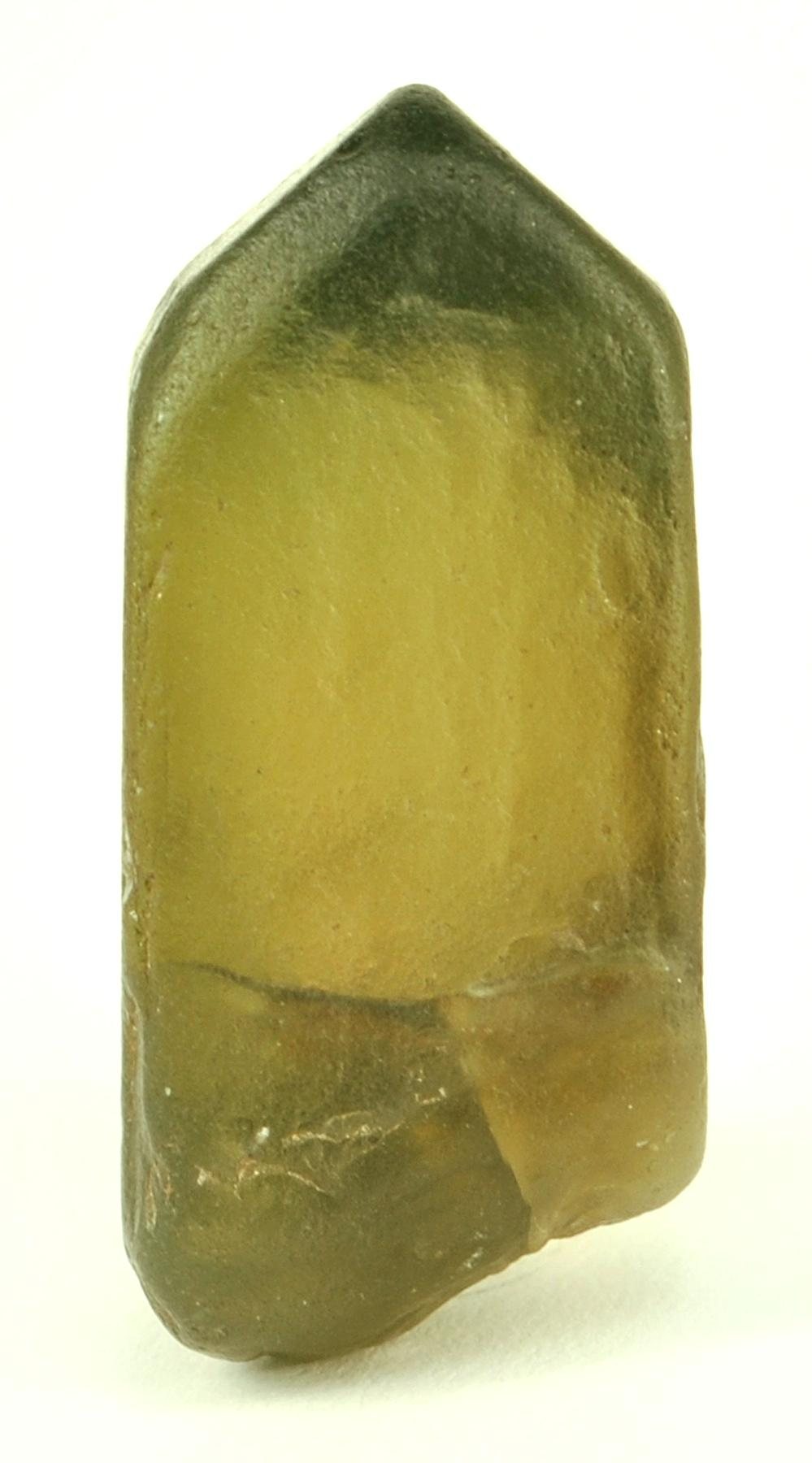
Zircon — the mineral zirconium silicate (ZrSiO4) — forms in igneous rocks, particularly granites and syenites, where zirconium concentrates in the melt as other minerals crystallise around it. Because zircon is chemically inert and physically hard, it survives the long journey from its parent rock into river systems and eventually to coastlines. Wave and wind action do the separating work: minerals are sorted by density, and zircon, being noticeably denser than common quartz and feldspar, settles out in the same beaches and dune systems that accumulate other heavy minerals such as ilmenite and rutile. These accumulations are called heavy-mineral sand deposits, or simply mineral sands.
The deposits that dominate the production tables today — in Australia, South Africa, Mozambique, and along the West African coast — are relict shorelines, meaning ancient coastlines that have since been buried or lifted above sea level by geological movement. Australia's vast reserves reflect the fact that the continent's old, stable geology has produced granitic source rocks over enormous areas, and that ancient drainage systems funnelled the eroded material into long-lived coastal environments where sorting could proceed over geological time. The concentration of zircon in these deposits is usually modest in percentage terms but recoverable because the sand is loose and near-surface, requiring no blasting or underground work.
Zircon is the sole commercial source of zirconium. There is no significant hard-rock mining of zirconium-bearing ore, and no brine or sedimentary source contributes meaningfully to supply. This means the entire zirconium supply chain depends on the health of the mineral sands industry, which itself produces zircon alongside titanium minerals — a relationship that shapes the economics of both commodities.
Getting it out
Because mineral sand deposits are unconsolidated — essentially beach sand — the mining method is almost always a form of open-cut operation, either dry mining with scrapers and bulldozers or, more commonly at large operations, wet mining using a floating dredge. A dredge sits in a pond of its own making: it excavates the sand ahead, processes it aboard the vessel, and stacks the coarse waste material behind, so the pond migrates slowly across the orebody. This approach works well where the water table is shallow and the ground flat, which describes most coastal mineral sand terrains.
The product leaving the mine is called heavy-mineral concentrate, or HMC. It contains zircon alongside ilmenite, rutile, leucoxene, and smaller quantities of monazite. The zircon content of the raw sand is typically a fraction of what ends up in the HMC, because the concentration step on the dredge or in a dry-mining plant uses gravity, magnetic, and electrostatic separation to discard the abundant low-density quartz and feldspar before any of the valuable minerals are separated from each other. What counts as an economic grade of zircon in the raw sand is not a fixed number; it depends on the total heavy-mineral content, the mix of valuable minerals in that HMC, the depth and thickness of the ore body, and the cost of moving sand. Because mining is effectively moving large volumes of loose material, the ratio of waste sand to product is high, though the waste is generally benign — returned sand, not chemically toxic tailings in the conventional sense.
A complication specific to mineral sands is the presence of monazite, a phosphate mineral that carries thorium and uranium. Because of their radioactivity, monazite-bearing streams must be managed carefully, and in some jurisdictions regulations constrain how much can be stockpiled or sold, which affects the economics of the entire operation even though monazite is a relatively minor component of the HMC.
What pulls on it
Zircon sand consumed in ceramics — principally as an opacifier in tiles and sanitaryware, and as a refractory in foundry casting — accounts for by far the largest share of demand. Zircon makes tiles white and opaque, and it stabilises the moulds into which molten metal is poured because it tolerates rapid temperature change without cracking. This means that construction activity and automotive and aerospace casting volumes are the primary drivers of the zircon market, and those are cyclical. When housing construction slows or car production falls, zircon demand softens, as the price series illustrates: the peak around 2022 reflects a recovery in construction and manufacturing activity, and the subsequent easing tracks cooling demand from those sectors.
The nuclear application is a much smaller share of total zirconium demand by volume, but it is qualitatively different from the ceramics market because it requires the highly processed, hafnium-depleted metal rather than the sand. Demand for Zircaloy tubing is governed by reactor construction and refuelling schedules, not construction booms. A pressurised-water reactor requires between 20 and 40 tonnes of zirconium per gigawatt of capacity in cladding tubes and structural grids, and fuel assemblies are replaced on cycles of one to two years, so operating reactors generate a steady ongoing call on the metal. A global expansion in nuclear generating capacity — whether for decarbonisation reasons or energy-security reasons — would increase demand for nuclear-grade zirconium, but this effect unfolds over the decade-scale lead times of reactor construction, not quickly.
For demand to change sharply in either direction, something structural would need to shift. A sustained collapse in ceramics construction output globally, or the widespread adoption of a different opacifier that matches zircon's optical and chemical properties at lower cost, would remove the largest pillar of demand. Conversely, a rapid build-out of new reactor fleets would increase demand for nuclear-grade metal specifically, though the sand market would see only a modest indirect effect given the scale difference between the two end uses.
其在岩石中的来源
所有含矿矿物 →实际承载以下内容的矿物: zirconium. 只有其中某种物质的富集程度足以覆盖开采成本,矿床才能成为矿体。
生产主体
在地图上查看 →Zirconium mineral concentrates, mine production (thousand metric tons, gross weight)
Zirconium mineral concentrates, mine production (thousand metric tons, gross weight)thousand metric tons 2025 (估计值) 全球合计 1,200 thousand metric tons
USGS Mineral Commodity Summaries 2026 · USGS reports zircon (ZrSiO4) concentrate gross weight, not zirconium metal. · 来源 ↗
横向滚动表格以查看其余列。
| 国家/地区 | 产量 | 占全球份额 |
|---|---|---|
| Australia | 400.0 | 33.3% |
| South Africa | 270.0 | 22.5% |
| Mozambique | 160.0 | 13.3% |
| China | 100.0 | 8.3% |
| United States | 100.0 | 8.3% |
| Senegal | 70.00 | 5.8% |
| Indonesia | 52.00 | 4.3% |
| Other countries | 40.00 | 3.3% |
| Madagascar | 26.00 | 2.2% |
| Sierra Leone | 25.00 | 2.1% |
| 全球合计 | 1,200 | 100% |
"未披露"表示美国地质调查局(USGS)为避免泄露单个企业数据而对该数字进行了保密处理——并不意味着数值为零。各国行数之和不一定等于世界合计,原因在于来源对每个数字单独进行四舍五入处理,且并不总是单独列出"其他国家/地区"一行。
储量持有方
Zirconium reserves(thousand metric tons, ZrO2 content)
Zirconium reserves(thousand metric tons, ZrO2 content)thousand metric tons 2025
USGS Mineral Commodity Summaries 2026 · 来源 ↗
| 国家/地区 | 储量 | 占全球份额 |
|---|---|---|
| Australia | 55,000 | 78.6% |
| South Africa | 5,900 | 8.4% |
| Other countries | 5,700 | 8.1% |
| Indonesia | 3,400 | 4.9% |
| Senegal | 2,600 | 3.7% |
| Madagascar | 2,100 | 3.0% |
| Mozambique | 1,500 | 2.1% |
| United States | 500.0 | 0.7% |
| China | 500.0 | 0.7% |
| Sierra Leone | 290.0 | 0.4% |
| 全球合计 | >70,000 | 100% |
来源将此世界总量作为区间值而非精确数值发布,因此末列的份额本身亦为区间值。
价格
Price: Zircon, dollars per metric ton (gross weight): Premium grade, cost, insurance, and freight, China
年度平均值dollars per metric ton
基准: Price: Zircon, dollars per metric ton (gross weight): Premium grade, cost, insurance, and freight, China. 年度平均值,来源: USGS Mineral Commodity Summaries 2026 · 来源 ↗. 以下为参考年度均价,非实时市场报价。
Price: Zircon, dollars per metric ton (gross weight): Imported
年度平均值dollars per metric ton
基准: Price: Zircon, dollars per metric ton (gross weight): Imported. 年度平均值,来源: USGS Mineral Commodity Summaries 2026 · 来源 ↗. 以下为参考年度均价,非实时市场报价。
Price: Zirconium, sponge, ex-works China, dollars per kilogram
年度平均值dollars per kilogram
基准: Price: Zirconium, sponge, ex-works China, dollars per kilogram. 年度平均值,来源: USGS Mineral Commodity Summaries 2026 · 来源 ↗. 以下为参考年度均价,非实时市场报价。
其用途
所有终端市场 →| 终端市场 | 其在彼处的用途 | 重要性 |
|---|---|---|
| Nuclear Power | Fuel-rod cladding | 定义 |
某项技术的需求用量
| 技术 | 数量 | 报价 | 基准 |
|---|---|---|---|
| Pressurised Water Reactor | 20.00–40.00 t | per GW of capacity | Cladding tubes and structural grids |
Indicative range compiled from published technology studies and chemistry; verify against a manufacturer specification before use. 在物料计算器中按任意规模运行这些数据 →
跟踪其跨境全程
全部溯源记录 →这批材料实际经过的路线——每个国家、每位托管方,以及每个环节留下的内容。
Kazakh uranium to a fuel assembly in a reactor The most tightly watched journey covered here: every kilogram is accounted for, at every border.