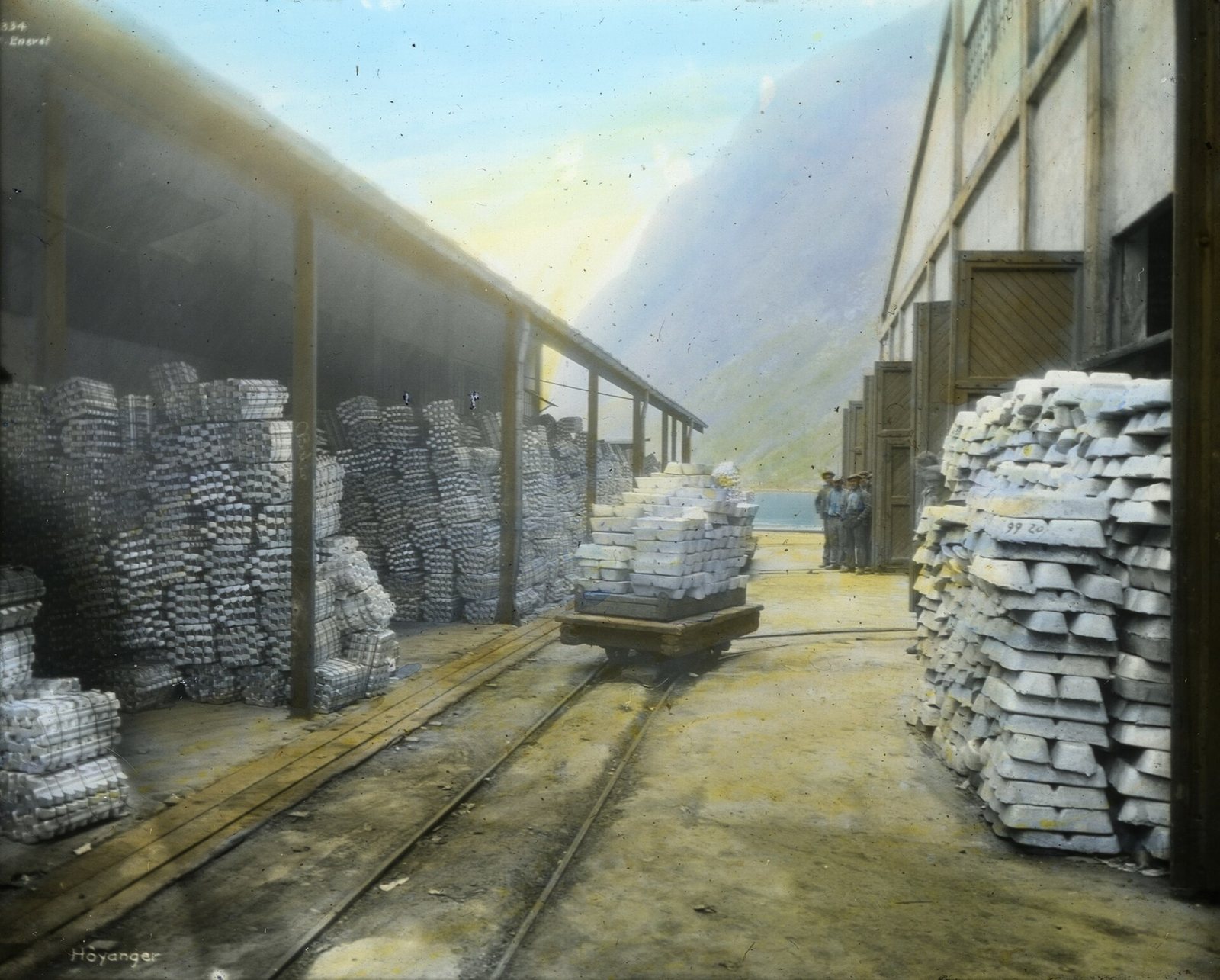
ما هو؟
A light silvery metal made by passing an enormous electric current through dissolved bauxite — which is why people call it solid electricity.
لماذا يهم هذا؟
It is the second-most-used metal after steel, the metal of overhead power lines and drink cans, and one of the largest single industrial consumers of electricity on Earth.
Where it is in the Earth
Aluminium is the most abundant metal in the Earth's crust, yet it almost never occurs in a form that can be mined economically. The reason is chemical: aluminium bonds readily with silicon, oxygen and other elements to form stable minerals such as feldspar and mica, which are found everywhere but yield no practical metal without prohibitive effort. The only ore that works at industrial scale is bauxite, a soft, earthy rock composed mainly of the aluminium hydroxide minerals gibbsite and boehmite. Gibbsite has the formula Al(OH)₃ and boehmite AlO(OH); both are essentially aluminium that has combined with water over geological time. A third mineral, diaspore, occurs in some deposits but is less common in the large commercial bodies.
Bauxite forms through a process called laterisation, which is intense chemical weathering of aluminium-bearing rocks under warm, wet, tropical or subtropical conditions over millions of years. Rain percolating through rock dissolves and carries away silica and other soluble constituents, leaving behind the less-soluble aluminium hydroxides to accumulate near the surface. The result is a blanket or cap of bauxite sitting on top of the original parent rock, typically limestone or granite. Because the process depends on sustained rainfall and warm temperatures, the world's largest bauxite deposits are concentrated in a band across West Africa, the Caribbean, South America and Australia — regions that were in tropical climates for long periods of geological time. Guinea holds a large share of known bauxite reserves; Australia has historically been the largest producer of the ore itself.
The depth of a bauxite layer is generally modest — deposits typically lie at or very close to the surface, which is why mining them is straightforward in physical terms. Grade is expressed as the aluminium oxide (Al₂O₃) content of the ore, and the reactive silica content matters equally because silica consumes caustic soda during processing and raises costs. Understanding the geology is therefore not just about finding aluminium; it is about finding aluminium in a chemical context that makes processing economical.
Getting it out
Because bauxite deposits sit close to the surface, almost all bauxite is mined by open-pit methods — sometimes called open-cast or strip mining. Vegetation and topsoil are removed, the bauxite layer is broken with excavators or light blasting, and the ore is loaded onto trucks or conveyor systems. The shallow, flat-lying nature of most deposits means that very little waste rock, called overburden, has to be moved relative to the ore recovered. This distinguishes bauxite mining from many other metal mines where many tonnes of barren rock must be displaced for every tonne of ore extracted. The low strip ratio (the ratio of waste to ore) is one reason bauxite can be mined profitably even at relatively low prices for the finished metal.
Once removed, bauxite requires little processing at the mine itself. It is crushed, sometimes washed to remove fine clay, and then either shipped directly to an alumina refinery or dried if it is to travel long distances by sea. The aluminium content of the ore is expressed as the percentage of Al₂O₃ it contains, and commercially viable deposits typically carry a grade that makes it worth shipping large volumes around the world. The reactive silica fraction — silica that reacts chemically rather than simply sitting inert — is watched carefully because it determines how much caustic soda the refinery will need. A tonne of reactive silica in the feed causes a disproportionate increase in operating cost downstream, so ore quality is assessed on both the aluminium content and the silica penalty simultaneously.
There is no brine extraction, no underground mining of significance and no meaningful by-product recovery at the bauxite stage. The mine's environmental footprint is primarily about land disturbance: large areas of surface are stripped, and responsible operations rehabilitate the land progressively as mining advances. The red mud — a caustic residue — is produced not at the mine but at the refinery, and it represents one of the industry's more difficult waste-management questions.
What pulls on it
Aluminium's appeal to almost every manufacturing sector rests on a combination of properties that no single alternative metal reproduces: a density of 2.7 g/cm³ (roughly a third that of steel), adequate strength in alloyed form, good electrical conductivity, corrosion resistance from its naturally forming oxide layer, and the ability to be cast, rolled, extruded or drawn into almost any shape. These properties do not serve one market; they serve dozens simultaneously, which is why aluminium is the second-most-used metal after steel and why demand tracks broad industrial and construction activity rather than any single sector.
The end-use picture shown in the tables spans construction, packaging, transport, power infrastructure and the newer energy-transition industries. In construction, aluminium appears in window frames, facades and structural components — its corrosion resistance reduces maintenance costs over a building's life. In transport, particularly in passenger vehicles and aircraft, reducing weight directly translates to lower fuel consumption, and that relationship has driven a long substitution of aluminium for steel in structural applications. Overhead power lines use aluminium rather than copper in most modern installations because aluminium is lighter and cheaper per unit of electrical conductance, even though copper conducts better by volume. The energy-transition uses that appear in the tables — solar panel frames, electric-vehicle body panels and battery pack casings, grid-scale battery enclosures, wind turbine components — are each individually modest, but taken together they represent a growing and durable new source of demand that did not exist at scale a generation ago.
What would cause demand to change sharply? A sustained shift away from single-use packaging would reduce one segment. A structural slowdown in construction in China, which accounts for a very large share of global consumption, would have an outsized effect because the production figures show China producing by far the largest share of world output and consuming a correspondingly large proportion of it domestically. Conversely, a faster-than-expected build-out of solar generation, grid transmission and electric vehicles would add demand in segments where the metal's use per unit of capacity is measurable and documented in the intensity table.
من أين يأتي في الصخر
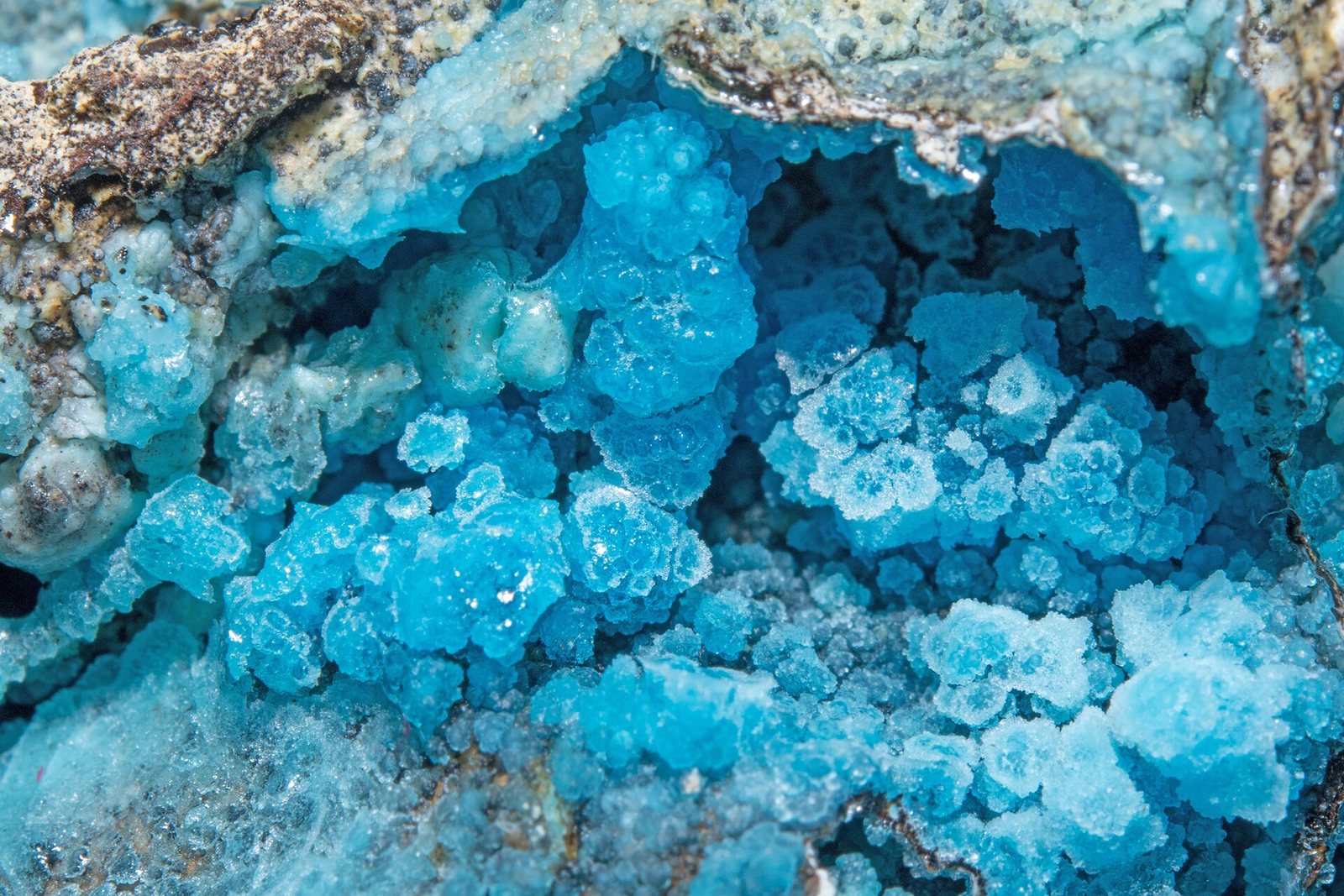
جميع المعادن الخامة →هذه هي المعادن التي تحمل فعلياً aluminium. لا يُعدّ الرسوب خاماً إلا إذا كان تركيز أحد معادنه كافياً لتغطية تكاليف استخراجه.
من ينتجه
اعرضه على خريطة →Smelter production
Smelter productionthousand metric tons 2025 (مُقدَّر) المجموع العالمي 74,000 thousand metric tons
USGS Mineral Commodity Summaries 2026 · Primary smelter production only; recycled (secondary) metal is counted separately and is a large share of supply. · المصدر ↗
مرِّر الجدول أفقياً لعرض الأعمدة المتبقية.
| الدولة | الإنتاج | حصة من العالم |
|---|---|---|
| China | 45,000 | 60.8% |
| Other countries | 7,000 | 9.5% |
| India | 4,200 | 5.7% |
| Russia | 3,900 | 5.3% |
| Canada | 3,300 | 4.5% |
| United Arab Emirates | 2,700 | 3.6% |
| Bahrain | 1,600 | 2.2% |
| Australia | 1,500 | 2.0% |
| Norway | 1,300 | 1.8% |
| Brazil | 1,200 | 1.6% |
| Malaysia | 1,100 | 1.5% |
| Iceland | 750.0 | 1.0% |
| United States | 660.0 | 0.9% |
| المجموع العالمي | 74,000 | 100% |
«محجوب» يعني أن USGS أخفى الرقم تفاديًا للإفصاح عن بيانات شركة بعينها — وهو لا يعني صفرًا. لا يُساوي مجموع صفوف الدول دائمًا المجموع العالمي لأن المصدر يُقرِّب كل رقم باستقلالية ولا يُفصِّل دائمًا خانة «دول أخرى».
السعر
Aluminium, global price
المتوسط السنويUS$ per tonne
الأساس: IMF global price of aluminium — 99.5% minimum purity, LME spot. متوسطات سنوية كما نُشرت في FRED (IMF primary commodity prices) · المصدر ↗. هذه متوسطات سنوية مرجعية، وليست أسعار سوق آنية.
ingot, average U.S. market (spot), cents per pound
المتوسط السنويcents per pound
الأساس: ingot, average U.S. market (spot), cents per pound. متوسطات سنوية كما نُشرت في USGS Mineral Commodity Summaries 2026 · المصدر ↗. هذه متوسطات سنوية مرجعية، وليست أسعار سوق آنية.
أين تتم معالجته وتكريره
| المنشأة | النوع | المرحلة | الدولة | الدور |
|---|---|---|---|---|
| Gigafactory Nevada | المصنع العملاق (غيغافاكتوري) | مكوّن | United States | المدخل |
ما الذي يُستخدم فيه
جميع الأسواق النهائية →| السوق النهائية | ما الذي يؤديه هناك | الأهمية |
|---|---|---|
| Power Grids | Overhead lines and some cable cores | تعريف |
| Solar Power | Frames and mounting | تعريف |
| Aerospace & Defence | Airframe skin and structure | تعريف |
| Electric Vehicles | Body, cathode foil and pack casing | مهم |
| Data Centres & AI | Racks, heat sinks and structure | مهم |
| Construction & Steel | Facades, windows and structure | مهم |
| Robotics & Automation | Structure and housings | مهم |
| Grid Storage | Enclosures and collectors | مهم |
| Wind Power | Nacelle components and cabling | الحاضر |
ما تحتاجه التقنية منه
| التقنية | الكمية | مُدرج | الأساس |
|---|---|---|---|
| Cadmium Telluride Thin-Film Module | 3,000–7,000 kg | per MW of capacity | Mounting |
| Crystalline Silicon Solar Module | 5,000–9,000 kg | per MW of capacity | Frames and mounting |
| HVDC Transmission Cable | 15.00–60.00 t | per km of circuit | Conductor in overhead and some cable designs |
| NMC Lithium-Ion Battery | 20.00–35.00 kg | per 75 kWh pack | Cathode foil, cell cans and pack casing |
| Sodium-Ion Battery Removes the copper foil entirely. | 25.00–45.00 kg | per 75 kWh equivalent | Both current collectors can be aluminium |
Indicative range compiled from published technology studies and chemistry; verify against a manufacturer specification before use. شغّل هذه الأرقام على أي نطاق في حاسبة المواد →
تتبّعها عبر الحدود
جميع المسارات →أين تذهب شحنة من هذه المادة فعلاً — كل دولة، وكل حارس، وما الذي يتبقّى في كل خطوة.
Venezuelan extra-heavy crude to diesel, asphalt and aluminium anodes Oil so thick it will not flow down a pipe, and cannot be refined by most refineries on Earth.