鉱石から製品まで、経路を追跡
The Materials Atlas
素材 鉱山・鉱床 処理・精製 管理移転経路 サプライチェーン 企業 ニュース
棚別素材 バッテリー材料 希土類元素 銅・電気 半導体材料 核物質 航空宇宙・防衛 貴金属 鉄鋼・合金金属 工業用鉱物 農業用鉱物 エネルギー原材料 鉱石鉱物 周期表
需要 最終市場 技術 素材計算機 地図 スクリーナー
学習・ツール 学ぶ用語集 データに質問するAIエージェント 調査・データAPI ★ 保存済み
概要 運営について方法論 データソースお問い合わせ 免責事項
表示オプション
🧭 ガイドビュー 鉱石品位、精鉱、精錬、副産物といった用語が初めての方へ。閲覧しながらすべての用語をわかりやすく解説します。同じデータを、解説付きでご覧いただけます。
⚡ 専門家向け解説 業界の知識はお持ちのはず。データのみを——簡潔、迅速、コンパクトに、余分な説明なしで。これがデフォルト表示です。
テーマ
インターフェース言語
深度 素材ページは4段階のレベルで構成されている。任意の素材ページでレベルを選択すると、その設定が記憶される。
★ 保存済み 調査・データ
Aluminium

銅・電気材料

Aluminium Al · 13

A light silvery metal made by passing an enormous electric current through dissolved bauxite — which is why people call it solid electricity.

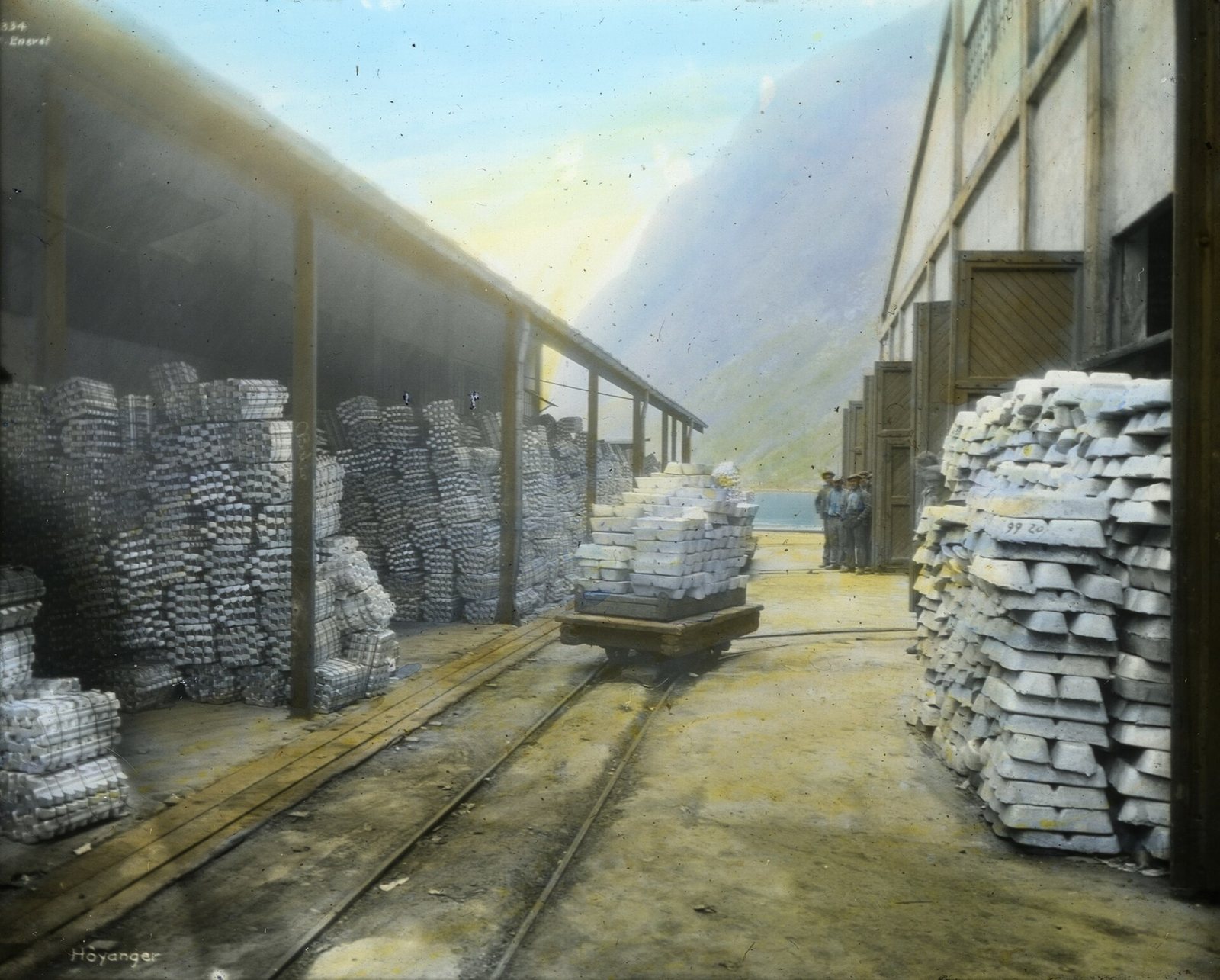
Aluminum ingots at Norwegian Aluminium Company · Anders Beer Wilse · CC BY 4.0 · Wikimedia Commons

これは何か

A light silvery metal made by passing an enormous electric current through dissolved bauxite — which is why people call it solid electricity.

なぜ重要なのか

It is the second-most-used metal after steel, the metal of overhead power lines and drink cans, and one of the largest single industrial consumers of electricity on Earth.

Where it is in the Earth

Aluminium is the most abundant metal in the Earth's crust, yet it almost never occurs in a form that can be mined economically. The reason is chemical: aluminium bonds readily with silicon, oxygen and other elements to form stable minerals such as feldspar and mica, which are found everywhere but yield no practical metal without prohibitive effort. The only ore that works at industrial scale is bauxite, a soft, earthy rock composed mainly of the aluminium hydroxide minerals gibbsite and boehmite. Gibbsite has the formula Al(OH)₃ and boehmite AlO(OH); both are essentially aluminium that has combined with water over geological time. A third mineral, diaspore, occurs in some deposits but is less common in the large commercial bodies.

Bauxite forms through a process called laterisation, which is intense chemical weathering of aluminium-bearing rocks under warm, wet, tropical or subtropical conditions over millions of years. Rain percolating through rock dissolves and carries away silica and other soluble constituents, leaving behind the less-soluble aluminium hydroxides to accumulate near the surface. The result is a blanket or cap of bauxite sitting on top of the original parent rock, typically limestone or granite. Because the process depends on sustained rainfall and warm temperatures, the world's largest bauxite deposits are concentrated in a band across West Africa, the Caribbean, South America and Australia — regions that were in tropical climates for long periods of geological time. Guinea holds a large share of known bauxite reserves; Australia has historically been the largest producer of the ore itself.

The depth of a bauxite layer is generally modest — deposits typically lie at or very close to the surface, which is why mining them is straightforward in physical terms. Grade is expressed as the aluminium oxide (Al₂O₃) content of the ore, and the reactive silica content matters equally because silica consumes caustic soda during processing and raises costs. Understanding the geology is therefore not just about finding aluminium; it is about finding aluminium in a chemical context that makes processing economical.

Getting it out

Because bauxite deposits sit close to the surface, almost all bauxite is mined by open-pit methods — sometimes called open-cast or strip mining. Vegetation and topsoil are removed, the bauxite layer is broken with excavators or light blasting, and the ore is loaded onto trucks or conveyor systems. The shallow, flat-lying nature of most deposits means that very little waste rock, called overburden, has to be moved relative to the ore recovered. This distinguishes bauxite mining from many other metal mines where many tonnes of barren rock must be displaced for every tonne of ore extracted. The low strip ratio (the ratio of waste to ore) is one reason bauxite can be mined profitably even at relatively low prices for the finished metal.

Once removed, bauxite requires little processing at the mine itself. It is crushed, sometimes washed to remove fine clay, and then either shipped directly to an alumina refinery or dried if it is to travel long distances by sea. The aluminium content of the ore is expressed as the percentage of Al₂O₃ it contains, and commercially viable deposits typically carry a grade that makes it worth shipping large volumes around the world. The reactive silica fraction — silica that reacts chemically rather than simply sitting inert — is watched carefully because it determines how much caustic soda the refinery will need. A tonne of reactive silica in the feed causes a disproportionate increase in operating cost downstream, so ore quality is assessed on both the aluminium content and the silica penalty simultaneously.

There is no brine extraction, no underground mining of significance and no meaningful by-product recovery at the bauxite stage. The mine's environmental footprint is primarily about land disturbance: large areas of surface are stripped, and responsible operations rehabilitate the land progressively as mining advances. The red mud — a caustic residue — is produced not at the mine but at the refinery, and it represents one of the industry's more difficult waste-management questions.

What pulls on it

Aluminium's appeal to almost every manufacturing sector rests on a combination of properties that no single alternative metal reproduces: a density of 2.7 g/cm³ (roughly a third that of steel), adequate strength in alloyed form, good electrical conductivity, corrosion resistance from its naturally forming oxide layer, and the ability to be cast, rolled, extruded or drawn into almost any shape. These properties do not serve one market; they serve dozens simultaneously, which is why aluminium is the second-most-used metal after steel and why demand tracks broad industrial and construction activity rather than any single sector.

The end-use picture shown in the tables spans construction, packaging, transport, power infrastructure and the newer energy-transition industries. In construction, aluminium appears in window frames, facades and structural components — its corrosion resistance reduces maintenance costs over a building's life. In transport, particularly in passenger vehicles and aircraft, reducing weight directly translates to lower fuel consumption, and that relationship has driven a long substitution of aluminium for steel in structural applications. Overhead power lines use aluminium rather than copper in most modern installations because aluminium is lighter and cheaper per unit of electrical conductance, even though copper conducts better by volume. The energy-transition uses that appear in the tables — solar panel frames, electric-vehicle body panels and battery pack casings, grid-scale battery enclosures, wind turbine components — are each individually modest, but taken together they represent a growing and durable new source of demand that did not exist at scale a generation ago.

What would cause demand to change sharply? A sustained shift away from single-use packaging would reduce one segment. A structural slowdown in construction in China, which accounts for a very large share of global consumption, would have an outsized effect because the production figures show China producing by far the largest share of world output and consuming a correspondingly large proportion of it domestically. Conversely, a faster-than-expected build-out of solar generation, grid transmission and electric vehicles would add demand in segments where the metal's use per unit of capacity is measurable and documented in the intensity table.

数値の読み方に注意してください。 Primary smelter production only; recycled (secondary) metal is counted separately and is a large share of supply. Ingot, billet, slab and rolling blooms; alloy series (1xxx-7xxx) determine the use.

岩石中の産出箇所

全鉱石鉱物 →

実際に以下を担う鉱物 aluminium. 鉱床が鉱体となるのは、採掘コストを回収できるほど十分な濃度で鉱石が濃集している場合に限られる。
Smelter production

Smelter productionthousand metric tons 2025 (推定値) 世界合計 74,000 thousand metric tons

USGS Mineral Commodity Summaries 2026 · Primary smelter production only; recycled (secondary) metal is counted separately and is a large share of supply. · 出典 ↗

テーブルを横にスクロールすると残りの列が表示されます。

生産 世界に占める割合
China 45,000 60.8%
Other countries 7,000 9.5%
India 4,200 5.7%
Russia 3,900 5.3%
Canada 3,300 4.5%
United Arab Emirates 2,700 3.6%
Bahrain 1,600 2.2%
Australia 1,500 2.0%
Norway 1,300 1.8%
Brazil 1,200 1.6%
Malaysia 1,100 1.5%
Iceland 750.0 1.0%
United States 660.0 0.9%
世界合計 74,000100%

「非開示」とは、個別企業のデータが特定されないようUSGSが数値を公表しなかったことを意味し、ゼロを意味するものではありません。出典が各数値を独立して丸め処理しており、「その他の国」の内訳を常に示しているわけではないため、各国の数値の合計が世界合計と一致しないことがあります。

価格

Aluminium, global price

年間平均US$ per tonne

1995 · 2,059 高 3,658 US$ per tonne 2026 · 3,158

基準: IMF global price of aluminium — 99.5% minimum purity, LME spot. 以下に公表された年間平均値: FRED (IMF primary commodity prices) · 出典 ↗. これらは参照用の年間平均値であり、リアルタイムの市況相場ではない。

ingot, average U.S. market (spot), cents per pound

年間平均cents per pound

2021 · 138.5 高 180.0 cents per pound 2025 · 180.0

基準: ingot, average U.S. market (spot), cents per pound. 以下に公表された年間平均値: USGS Mineral Commodity Summaries 2026 · 出典 ↗. これらは参照用の年間平均値であり、リアルタイムの市況相場ではない。

処理・精製が行われる場所

プラント種別 ステージ役割
Gigafactory Nevada ギガファクトリーコンポーネント United States投入
最終市場そこでの機能重要度
Power Grids Overhead lines and some cable cores 定義
Solar Power Frames and mounting 定義
Aerospace & Defence Airframe skin and structure 定義
Electric Vehicles Body, cathode foil and pack casing 重要
Data Centres & AI Racks, heat sinks and structure 重要
Construction & Steel Facades, windows and structure 重要
Robotics & Automation Structure and housings 重要
Grid Storage Enclosures and collectors 重要
Wind Power Nacelle components and cabling 現在

技術が必要とする量

「インテンシティ」とは、ある製品1単位に含まれる素材の量を指します。ここに示す値は参考レンジであり、実際の設計はメーカーやモデル年によって異なります。また、エンジニアが使用量を削減する技術を習得するにつれ、いずれの値も低下し続けています。
技術数量 建値基準
Cadmium Telluride Thin-Film Module 3,000–7,000 kg per MW of capacityMounting
Crystalline Silicon Solar Module 5,000–9,000 kg per MW of capacityFrames and mounting
HVDC Transmission Cable 15.00–60.00 t per km of circuitConductor in overhead and some cable designs
NMC Lithium-Ion Battery 20.00–35.00 kg per 75 kWh packCathode foil, cell cans and pack casing
Sodium-Ion Battery Removes the copper foil entirely. 25.00–45.00 kg per 75 kWh equivalentBoth current collectors can be aluminium

Indicative range compiled from published technology studies and chemistry; verify against a manufacturer specification before use. 素材計算機で任意の規模に換算して実行 →

越境地点をたどる

すべての輸送経路 →

この素材の特定の貨物が実際にたどる経路——すべての国、すべての管理者、各工程で残されるもの。

Venezuelan extra-heavy crude to diesel, asphalt and aluminium anodes Oil so thick it will not flow down a pipe, and cannot be refined by most refineries on Earth. 出所 Venezuela · Extra-heavy crude, roughly 8–10° API, high sulfur, high…

素材

全素材 重要鉱物 レアアース バッテリー材料 鉱石鉱物 周期表 スクリーナー

地下

鉱山・鉱床 処理・精製 地図

経済

管理移転経路 サプライチェーン 最終市場 技術 企業 素材計算機

学ぶ

学ぶ用語集 データに質問するAIエージェント 調査・データオープンAPI ニュース★ 保存済み

運営について

運営についてお問い合わせ 方法論データソース 編集方針 プライバシーポリシー利用規約 免責事項