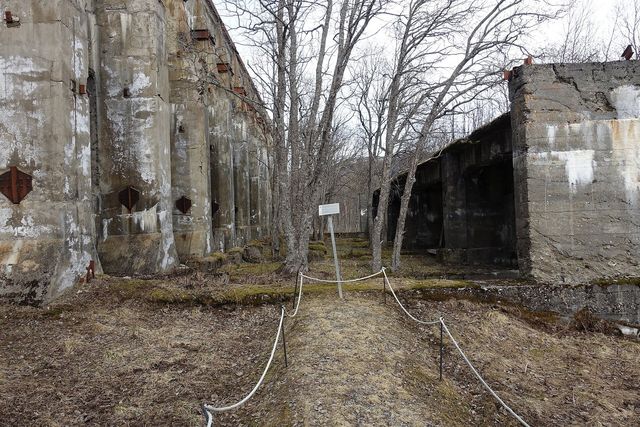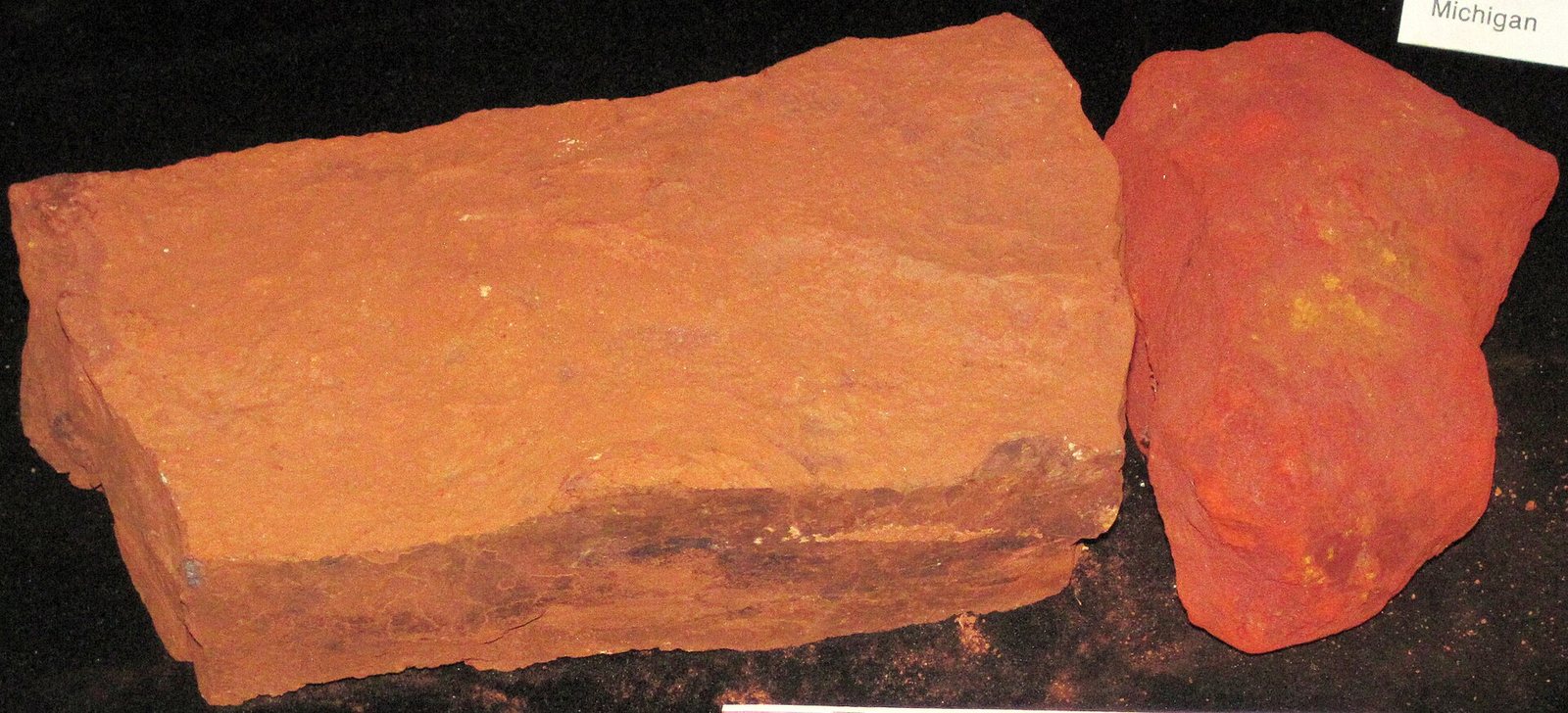
Đây là gì?
Rust-coloured rock that is roughly one-third to two-thirds iron, and the single largest tonnage the mining industry moves.
Tại sao điều này quan trọng?
Steel is about ninety-five percent of all metal used by weight. Everything else on this site is, by tonnage, a rounding error next to iron.
Where it is in the Earth
Where it is in the Earth
Almost all of the iron ore mined today came into existence during a narrow window of geological time, roughly two to two and a half billion years ago, when Earth's oceans were still largely free of dissolved oxygen. Iron-bearing fluids, released by submarine volcanic activity, reacted with oxygen produced by early photosynthetic organisms. The iron oxidised and settled to the seafloor in thin, alternating layers of iron-rich minerals and chert — a fine-grained silica rock. Over geological time these sediments were buried, compacted and sometimes heated, producing the characteristic banded appearance that gives the rock its name: banded iron formation, or BIF. This rock type is the source of the overwhelming majority of the world's iron ore reserves and virtually all of the large-scale mining operations the tables on this page describe.
BIF on its own is not always economic to mine directly, because its iron content can be too dilute. What makes a deposit mineable is secondary enrichment — a later process in which groundwater, over tens of millions of years, dissolves away the silica and concentrates the iron minerals into a softer, higher-grade mass. The two minerals that result from this are hematite, an oxide with the formula Fe₂O₃, and magnetite, an oxide with the formula Fe₃O₄. Hematite-enriched BIF, where the iron content has risen to the point at which the ore can be loaded onto a ship without further treatment, is called direct-shipping ore. Australia's Pilbara region and Brazil's Carajás district are the world's pre-eminent examples of this type. Magnetite deposits, found across much of China and parts of Russia and other countries, tend to be lower in iron content as mined and require concentration at the mine site before they can be used.
The geography of reserves follows directly from the distribution of ancient BIF sequences. Australia holds the largest reported reserves in the tables, with Brazil and Russia close behind. These numbers reflect both the original extent of ancient seafloor sediments and the degree to which later enrichment has raised grades to economic levels. China appears in both the production and reserve tables, but its domestic ore tends to be lower-grade magnetite rather than the high-grade hematite that trades internationally, which is why China remains a very large importer despite substantial domestic output.
Getting it out
Getting it out
Iron ore is almost universally mined in open pits — large, stepped excavations that remove rock from the surface downward. The reason is straightforward: BIF-hosted deposits are often very large in areal extent but relatively shallow, making open-pit mining far cheaper than sinking shafts and developing underground workings. The ore is drilled, blasted, loaded into large trucks and driven to a crusher or, in the case of direct-shipping ore, to a screening and loading facility. The mines listed in the tables — the Pilbara district, Carajás, and Bayan Obo — are all open-pit operations, and they are among the largest volume-moving industrial operations on Earth.
Grade is the central economic fact of any ore deposit. In iron ore, grade is expressed as a percentage of iron by weight, written as Fe%. The benchmark that the traded market uses is 62% Fe — meaning 62 parts of iron in every 100 parts of ore. Direct-shipping hematite ore from the Pilbara and Carajás typically falls within or close to that range as it leaves the ground, which is why it can be shipped and sold with minimal processing. Magnetite ore, by contrast, is commonly mined at grades well below the traded benchmark. The gap between the mined grade and the saleable grade has to be closed by processing, which costs money and energy. The amount of material that must be moved to obtain a tonne of saleable product — including waste rock that contains no ore at all — varies enormously between deposits and is a primary driver of operating cost.
One exception to the open-pit pattern is Bayan Obo in Inner Mongolia, which is geologically unusual: it is hosted in a carbonatite, a rare igneous rock type, and carries iron alongside rare-earth elements and niobium. That makes it a polymetallic deposit where the economics of each commodity affect the others, and where the mining method and the processing flowsheet are more complicated than at a straightforward BIF hematite operation.
What pulls on it
What pulls on it
Iron ore is almost entirely a steel-making raw material. Steel production is the end market listed in the tables, and the connection is direct: iron ore is charged into a blast furnace with coke and limestone, the iron is reduced out of the oxide, and the resulting pig iron is refined into steel. There is no meaningful substitute for iron ore in this process, and steel is so deeply embedded in construction, transport, machinery and energy infrastructure that demand for iron ore broadly tracks global construction and manufacturing activity. When large economies are building rapidly — roads, bridges, buildings, railways — iron ore demand rises. When construction slows, it falls.
China is the central fact of the modern iron ore market. It accounts for roughly half of global steel production by most external estimates, and its reliance on seaborne iron ore from Australia and Brazil is the reason those two countries dominate the production tables. The concentration of demand in a single country means that changes in Chinese construction policy, property sector health or steelmaking technology choices move the global market in ways that no other country's demand can match. The price series in the tables reflects this: the reference price is specifically the China import price for 62% Fe fines, CFR Tianjin.
A smaller but growing demand source appears in the end-markets table under grid storage. Iron-based battery chemistries, including iron-air batteries and lithium iron phosphate cells, use iron compounds in ways that are structurally different from steelmaking. The intensity figures in the table — iron in the cathode of an LFP battery pack, and iron as the balance of an NdFeB permanent magnet alloy — represent this second demand stream. For LFP batteries in particular, the iron used is a chemical-grade material rather than ore, so it passes through a different supply chain. At present this represents a small fraction of total iron ore consumption, but the direction of change is toward greater use as stationary energy storage expands.
Nguồn gốc của nó trong đá
Tất cả khoáng vật quặng →Đây là các khoáng sản thực sự mang lại iron ore. Một mỏ khoáng chỉ là thân quặng khi một trong số chúng có hàm lượng đủ cao để bù đắp chi phí khai thác.
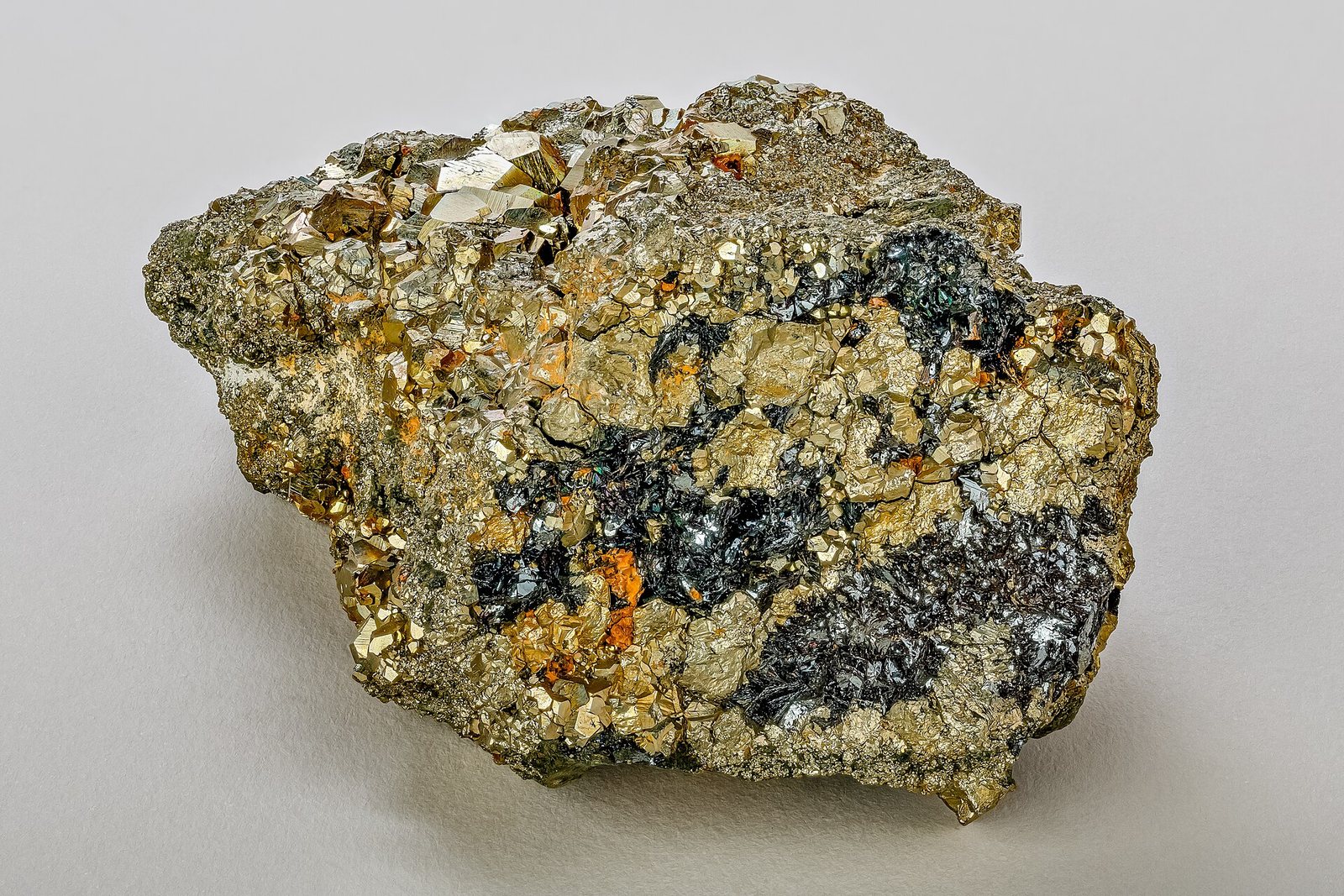
Hematite
70% iron when pure. Direct-shipping hematite ore needs little processing, which is why it built the Pilbara and Carajás.
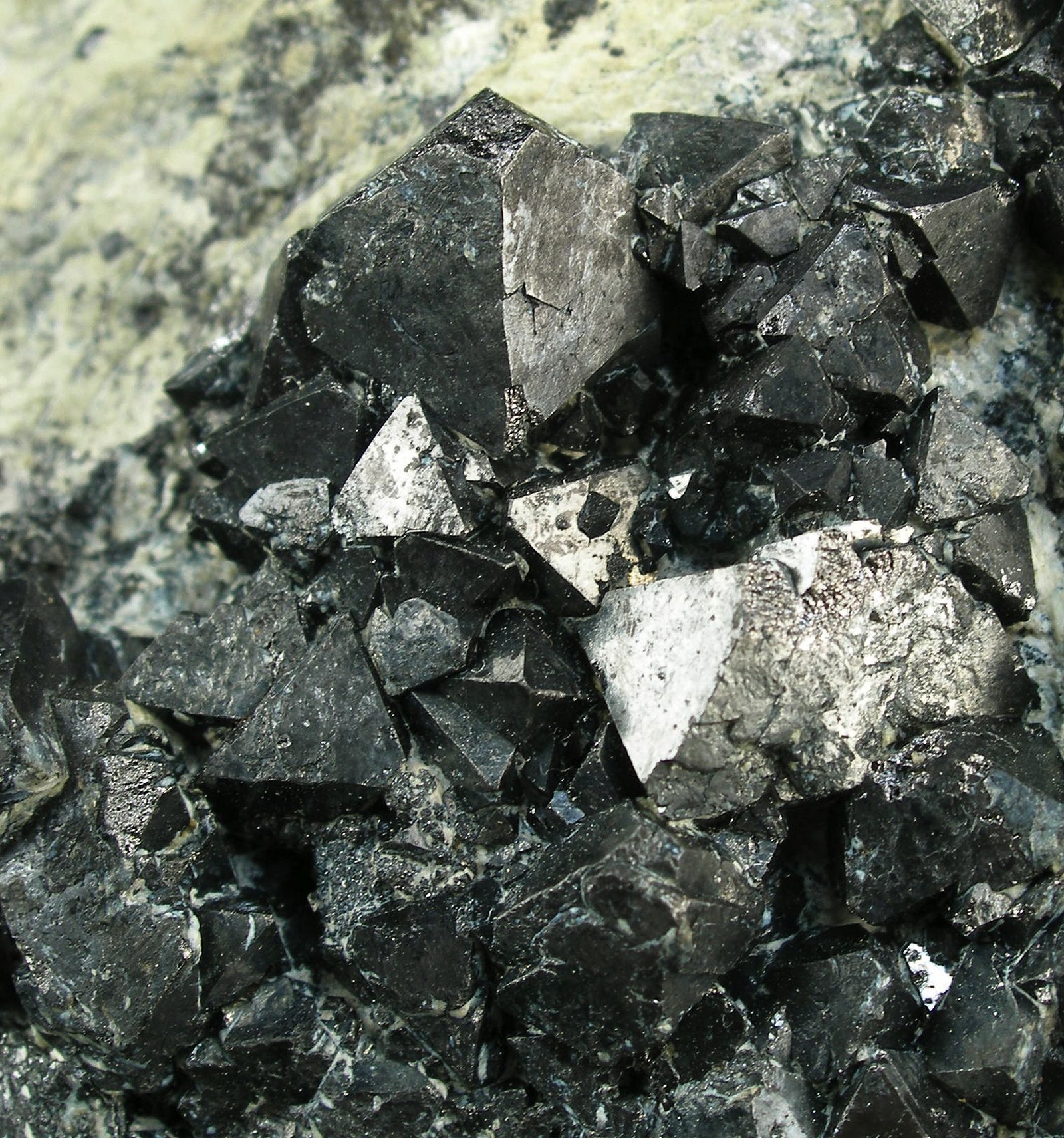
Magnetite
72% iron when pure but usually low grade in the ground; it is upgraded by magnetic separation into high-purity pellet…
Ai sản xuất nó
Xem trên bản đồ →Mine production: Iron content
Mine production: Iron contentthousand metric tons 2025 (ước tính)
USGS Mineral Commodity Summaries 2026 · USGS iron-ore figures are usable ore (gross weight); a separate line gives iron content. Do not compare the two. · nguồn ↗
Cuộn bảng sang ngang để xem các cột còn lại.
| Quốc gia | Sản lượng | Tỷ phần thế giới |
|---|---|---|
| Australia | 600,000 | — |
| Brazil | 260,000 | — |
| India | 190,000 | — |
| China | 180,000 | — |
| Iran | 61,000 | — |
| Russia | 50,000 | — |
| South Africa | 42,000 | — |
| Canada | 41,000 | — |
| Other countries | 36,000 | — |
| Ukraine | 32,000 | — |
| United States | 24,000 | — |
| Sweden | 18,000 | — |
| Peru | 14,000 | — |
| Chile | 12,000 | — |
| Kazakhstan | 11,000 | — |
| Turkey | 11,000 | — |
| Mauritania | 9,300 | — |
| Mexico | 4,800 | — |
Mine production: Iron content, rounded
Mine production: Iron content, roundedthousand metric tons 2025 (ước tính) Tổng toàn cầu 1,600,000 thousand metric tons
USGS Mineral Commodity Summaries 2026 · USGS iron-ore figures are usable ore (gross weight); a separate line gives iron content. Do not compare the two. · nguồn ↗
Cuộn bảng sang ngang để xem các cột còn lại.
| Quốc gia | Sản lượng | Tỷ phần thế giới |
|---|---|---|
| Tổng toàn cầu | 1,600,000 | 100% |
Mine production: Usable ore
Mine production: Usable orethousand metric tons 2025 (ước tính)
USGS Mineral Commodity Summaries 2026 · USGS iron-ore figures are usable ore (gross weight); a separate line gives iron content. Do not compare the two. · nguồn ↗
Cuộn bảng sang ngang để xem các cột còn lại.
| Quốc gia | Sản lượng | Tỷ phần thế giới |
|---|---|---|
| Australia | 980,000 | — |
| Brazil | 420,000 | — |
| India | 310,000 | — |
| China | 290,000 | — |
| Iran | 93,000 | — |
| Russia | 86,000 | — |
| Canada | 69,000 | — |
| South Africa | 66,000 | — |
| Other countries | 64,000 | — |
| Ukraine | 52,000 | — |
| United States | 38,000 | — |
| Kazakhstan | 35,000 | — |
| Sweden | 26,000 | — |
| Peru | 21,000 | — |
| Chile | 19,000 | — |
| Turkey | 18,000 | — |
| Mauritania | 15,000 | — |
| Mexico | 7,700 | — |
Mine production: Usable ore, rounded
Mine production: Usable ore, roundedthousand metric tons 2025 (ước tính) Tổng toàn cầu 2,600,000 thousand metric tons
USGS Mineral Commodity Summaries 2026 · USGS iron-ore figures are usable ore (gross weight); a separate line gives iron content. Do not compare the two. · nguồn ↗
Cuộn bảng sang ngang để xem các cột còn lại.
| Quốc gia | Sản lượng | Tỷ phần thế giới |
|---|---|---|
| Tổng toàn cầu | 2,600,000 | 100% |
"Withheld" có nghĩa là USGS đã ẩn số liệu để tránh tiết lộ dữ liệu của một công ty riêng lẻ — không có nghĩa là bằng không. Tổng các hàng theo quốc gia không phải lúc nào cũng bằng tổng toàn cầu vì nguồn làm tròn từng số liệu một cách độc lập và không phải lúc nào cũng tách riêng dòng "các quốc gia khác".
Ai nắm giữ trữ lượng
Reserves (million metric tons): Crude ore
Reserves (million metric tons): Crude oremillion metric tons 2025
USGS Mineral Commodity Summaries 2026 · nguồn ↗
| Quốc gia | Trữ lượng | Tỷ phần thế giới |
|---|---|---|
| Australia | 59,000 | — |
| Russia | 35,000 | — |
| Brazil | 34,000 | — |
| China | 17,000 | — |
| Other countries | 11,000 | — |
| Mauritania | 10,000 | — |
| Ukraine | 6,500 | — |
| Canada | 6,000 | — |
| India | 5,500 | — |
| Iran | 4,200 | — |
| Kazakhstan | 3,800 | — |
| United States | 3,600 | — |
| Chile | 3,000 | — |
| Peru | 1,800 | — |
| Sweden | 1,300 | — |
| South Africa | 1,200 | — |
| Mexico | 940.0 | — |
| Turkey | 150.0 | — |
Reserves (million metric tons): Crude ore, rounded
Reserves (million metric tons): Crude ore, roundedmillion metric tons 2025
USGS Mineral Commodity Summaries 2026 · nguồn ↗
| Quốc gia | Trữ lượng | Tỷ phần thế giới |
|---|---|---|
| Tổng toàn cầu | 200,000 | 100% |
Reserves (million metric tons): Iron content
Reserves (million metric tons): Iron contentmillion metric tons 2025
USGS Mineral Commodity Summaries 2026 · nguồn ↗
| Quốc gia | Trữ lượng | Tỷ phần thế giới |
|---|---|---|
| Australia | 27,000 | — |
| Brazil | 15,000 | — |
| Russia | 14,000 | — |
| Other countries | 6,000 | — |
| Mauritania | 4,400 | — |
| India | 3,400 | — |
| China | 3,000 | — |
| United States | 2,700 | — |
| Ukraine | 2,300 | — |
| Canada | 2,300 | — |
| Iran | 1,500 | — |
| Kazakhstan | 1,500 | — |
| Peru | 1,000 | — |
| Chile | 740.0 | — |
| South Africa | 680.0 | — |
| Sweden | 600.0 | — |
| Mexico | 520.0 | — |
| Turkey | 99.00 | — |
Reserves (million metric tons): Iron content, rounded
Reserves (million metric tons): Iron content, roundedmillion metric tons 2025
USGS Mineral Commodity Summaries 2026 · nguồn ↗
| Quốc gia | Trữ lượng | Tỷ phần thế giới |
|---|---|---|
| Tổng toàn cầu | 87,000 | 100% |
Giá
Iron ore, global price
Trung bình nămUS$ per tonne
Cơ sở: IMF global price of iron ore — China import, 62% Fe fines, CFR Tianjin. Trung bình năm theo công bố trong FRED (IMF primary commodity prices) · nguồn ↗. Đây là mức trung bình hàng năm tham khảo, không phải báo giá thị trường trực tiếp.
average unit value reported by mines, dollars per metric ton
Trung bình nămdollars per metric ton
Cơ sở: average unit value reported by mines, dollars per metric ton. Trung bình năm theo công bố trong USGS Mineral Commodity Summaries 2026 · nguồn ↗. Đây là mức trung bình hàng năm tham khảo, không phải báo giá thị trường trực tiếp.
Các mỏ sản xuất khoáng sản này
Tất cả mỏ →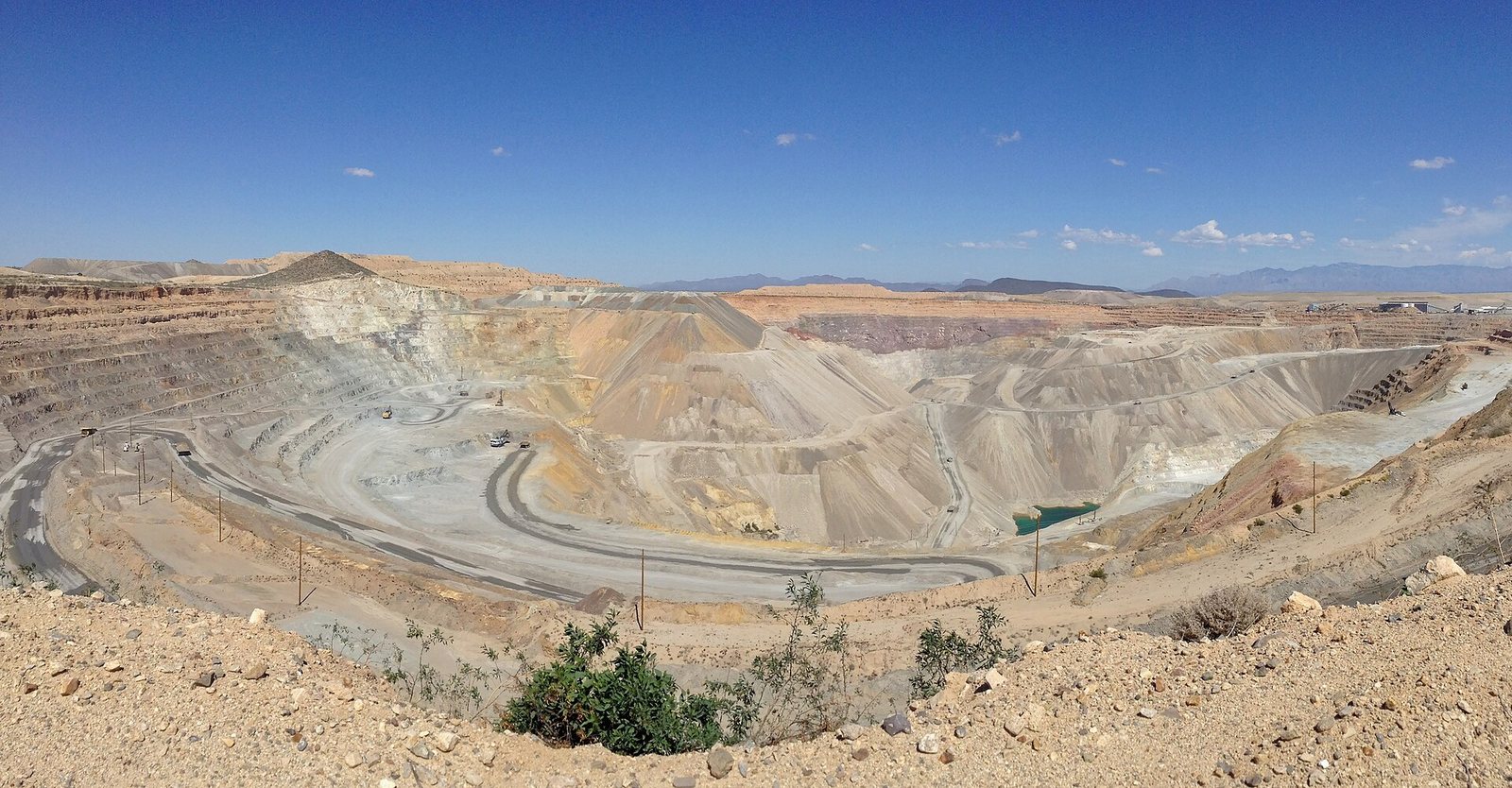
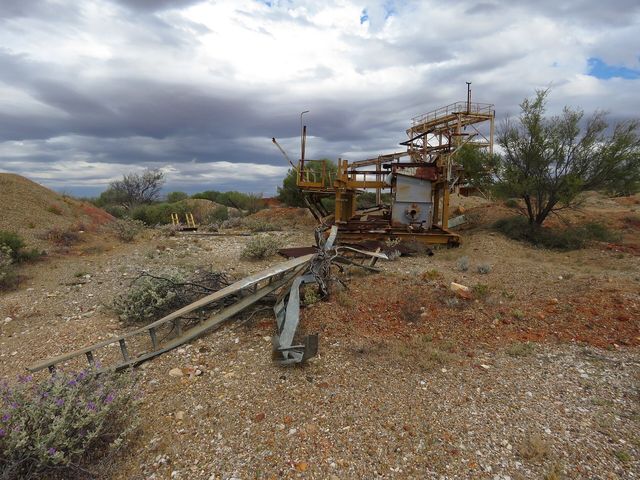
Pilbara Iron Ore District
The largest iron-ore export region in the world.
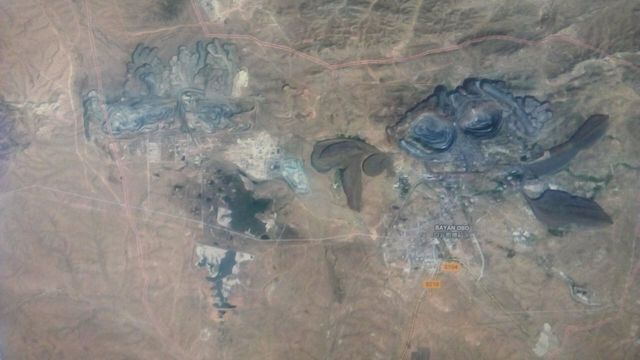
Bayan Obo
The largest rare-earth deposit in the world.
Nơi nó được chế biến và tinh luyện
| Nhà máy | Loại | Giai đoạn | Quốc gia | Vai trò |
|---|---|---|---|---|
| Chinese NdFeB Magnet Cluster | Nhà máy nam châm | Thành phần | China | Đầu vào |
| Port Hedland | Cảng | Chế biến | Australia | Đầu vào |
| Port of Rotterdam Bulk Terminals | Cảng | Chế biến | Netherlands | Đầu vào |
Công dụng của nó
Tất cả thị trường đầu ra →| Thị trường đầu ra | Chức năng của nó ở đó | Tầm quan trọng |
|---|---|---|
| Construction & Steel | Steel | Định nghĩa |
| Grid Storage | Iron-air and iron-based chemistries | Quan trọng |
Một công nghệ cần bao nhiêu
| Công nghệ | Đại lượng | Báo giá | Cơ sở |
|---|---|---|---|
| LFP Lithium-Ion Battery | 25.00–45.00 kg | per 75 kWh pack | Iron in the cathode |
| NdFeB Permanent Magnet | 0.6–0.7 kg | per kg of finished magnet | Iron balance of the alloy |
Indicative range compiled from published technology studies and chemistry; verify against a manufacturer specification before use. Chạy các con số này ở bất kỳ quy mô nào trong máy tính vật liệu →
Kiểm soát xuất khẩu
| Quốc gia | Kiểm soát | Áp dụng cho |
|---|---|---|
| Laos | Export ban | Raw minerals, including copper, gold, iron, nickel, potassium, silver, and zinc (2024). ↗ |
| Vietnam | Export ban | Raw materials of iron, lead-zinc, chromite, manganese, apatite, and rare earths and deeply processed titanium (2012). ↗ |
USGS Mineral Commodity Summaries 2026, table 4 — controls in effect as of January 2026, excluding controls since lifted.
Theo dõi nó qua các biên giới
Tất cả hành trình →Một lô hàng của vật liệu này thực sự đi đâu — mỗi quốc gia, mỗi người giám hộ, và những gì còn lại sau mỗi bước.
Pilbara iron ore to Chinese steel The largest material flow on Earth: dig it, crush it, screen it, and put it on a boat.