Apa ini?
A silvery metal that resists rust, which is why it goes into stainless steel — and, more recently, into the cathodes that give an EV its range.
Mengapa ini penting?
Two-thirds of nickel still goes into stainless steel, but the battery share is what moved the market: raising nickel in a cathode raises the energy the cell can hold.
Where it is in the Earth
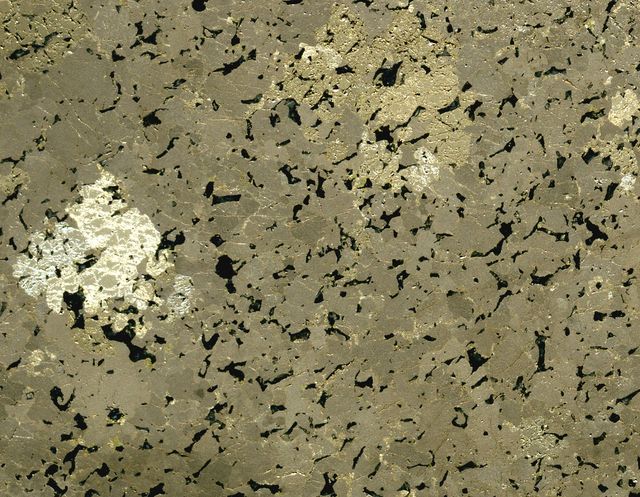
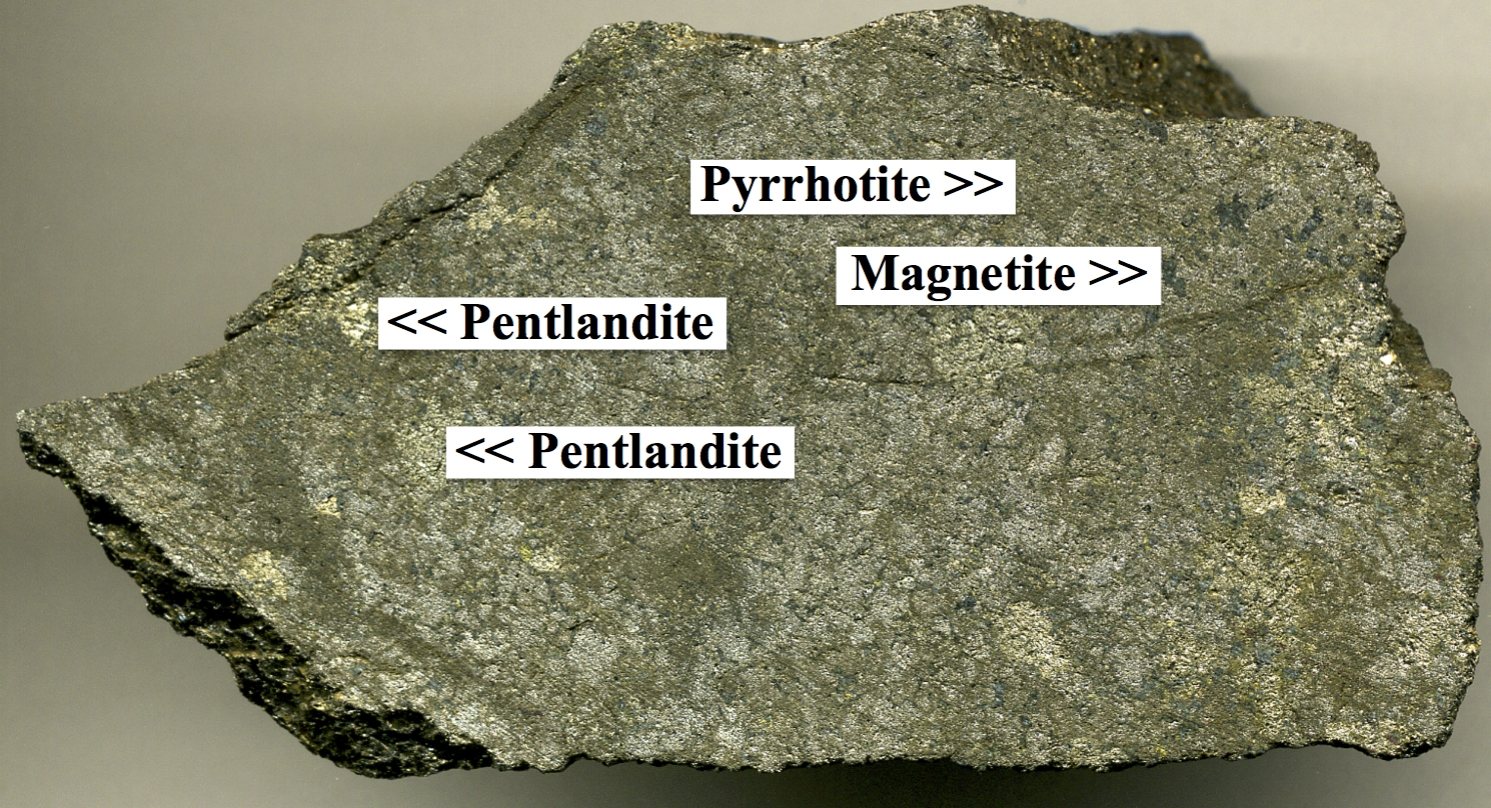
Nickel reaches minable concentrations through two quite different geological processes, which is why the deposits look nothing like each other and require very different methods to extract. The first process is magmatic: when molten rock rich in iron, magnesium and sulfur cools slowly deep in the crust, nickel tends to follow sulfur and iron into droplets of liquid sulfide that sink through the magma and pool at the base of the intrusion. When that melt eventually solidifies, the result is a sulfide ore body — rock threaded with the mineral pentlandite — carrying nickel grades that the data here put at roughly one to three percent by weight. The great sulfide camps of Sudbury in Canada and Norilsk-Talnakh in Russia formed this way, though Sudbury has the additional distinction of having been shaped or at least reprocessed by a meteorite impact, which concentrated the sulfides further.
The second process is entirely at the surface. When ancient ultramafic rocks — the same iron- and magnesium-rich rock types that host sulfide deposits — are exposed to prolonged tropical weathering over millions of years, water slowly dissolves and carries away much of the magnesium and silica. Nickel, being less mobile, is left behind and gradually enriches in the remaining clay and oxide minerals near the surface. The result is a laterite deposit: a broad, shallow blanket of reddish or greenish saprolite and limonite that can extend over a large area but carries nickel in a fundamentally different mineralogical form, mainly in the silicate garnierite or locked into iron oxide minerals. Indonesia sits on one of the world's largest accumulations of these laterised ultramafic rocks, which is why it now accounts for so large a share of world output.
The distinction between sulfide and laterite is not merely geological curiosity. Sulfide ores tend to occur at depth and in discrete bodies, making them amenable to selective underground mining and relatively straightforward concentration by flotation. Laterite ores are widespread, near-surface and fine-grained, which makes them harder to concentrate by physical means and generally requires either smelting or hydrometallurgical leaching — processes that consume considerably more energy per tonne of nickel produced. Where a deposit sits on the geological spectrum between these two end-members shapes almost every subsequent decision in the supply chain.
Getting it out
Sulfide nickel deposits are typically mined underground, because the ore bodies are narrow, steeply dipping and located at considerable depth. Miners drive tunnels to reach the ore zone and use methods such as cut-and-fill or blasthole stoping — essentially carving out large underground chambers — to extract the rock. The ore grades associated with sulfide deposits, running around one to two percent nickel, sound low, but because so much of the unwanted rock (called gangue) can be left underground or managed as tailings after milling, the economics can work well. The Norilsk-Talnakh complex in Russia and the Sudbury Basin in Canada are the canonical examples of this type.
Laterite deposits are a different matter. Because the enriched material forms a near-surface blanket, it is usually stripped by open-pit methods: overburden is removed, and the ore is excavated in horizontal benches. The Sorowako operation in Indonesia follows this pattern. The trade-off is that laterite ore is bulky and low-grade relative to the energy needed to process it, so very large volumes of material move through the system for each tonne of nickel recovered. There is no clean separation step equivalent to flotation: the nickel is dispersed through the clay and oxide minerals in a way that only heat or acid can release.
Grade matters in practice because it determines the ratio of waste to product at every stage. A mine processing ore at one percent nickel must handle a hundred tonnes of rock to obtain one tonne of contained metal, and most of those hundred tonnes must be moved, crushed, processed and disposed of. For laterite operations, the processing waste — whether slag from a smelter or tailings from a pressure-acid-leach plant — is substantial in volume and must be managed carefully to prevent environmental contamination, particularly because laterite processing often involves strong acids or high-pressure steam.
What pulls on it
Nickel's demand story has two quite separate chapters that are sometimes conflated. The older and larger chapter is stainless steel. Stainless steel is an alloy of iron, chromium and nickel in which the nickel stabilises a particular crystalline structure (the austenite phase) that gives the steel its combination of formability and corrosion resistance. Around two-thirds of all nickel consumed goes into this application, and that fraction has remained broadly stable for decades. Stainless steel production tends to follow construction activity, industrial output and consumer goods manufacturing, so nickel demand from this sector tracks general economic conditions rather than any specific technology transition.
The newer chapter is batteries. Nickel-manganese-cobalt (NMC) cathode chemistries, which dominate much of the electric vehicle market, use nickel as the primary active material. Raising the nickel share of the cathode increases the energy density — the amount of electricity the cell can store per kilogram — which in turn extends the range a vehicle can travel on a single charge. This is why battery manufacturers have progressively moved towards higher-nickel formulations. The intensity figures in the table on this page quantify what that means in practice: an NMC pack of the size typical for a mid-range electric vehicle contains between 40 and 60 kilograms of contained nickel. Multiply that by the number of vehicles being produced and the arithmetic makes clear why battery demand has become the part of the nickel market that attracts the most attention.
Beyond steel and batteries, nickel appears in superalloys used in the hot sections of aircraft engines, in alloys for nuclear steam generators, and in the electrodes of alkaline electrolysers used to produce hydrogen. These are smaller in volume than stainless steel but often require high-purity material and are less price-sensitive, so they carry disproportionate weight in discussions of supply adequacy. What would have to change for demand to shift sharply? On the battery side, a sustained move toward lithium iron phosphate (LFP) cathode chemistry — which contains no nickel at all — would reduce growth in battery demand. On the stainless side, a prolonged slowdown in global industrial output would reduce the base load. Neither of these is a certainty; they are simply the main variables that would alter the trajectory.
Dari mana asalnya di dalam batuan
Semua mineral bijih →Inilah mineral yang sesungguhnya menjadi pembawa nickel. Suatu endapan hanya menjadi badan bijih jika salah satunya cukup terkonsentrasi untuk menutup biaya penambangannya.
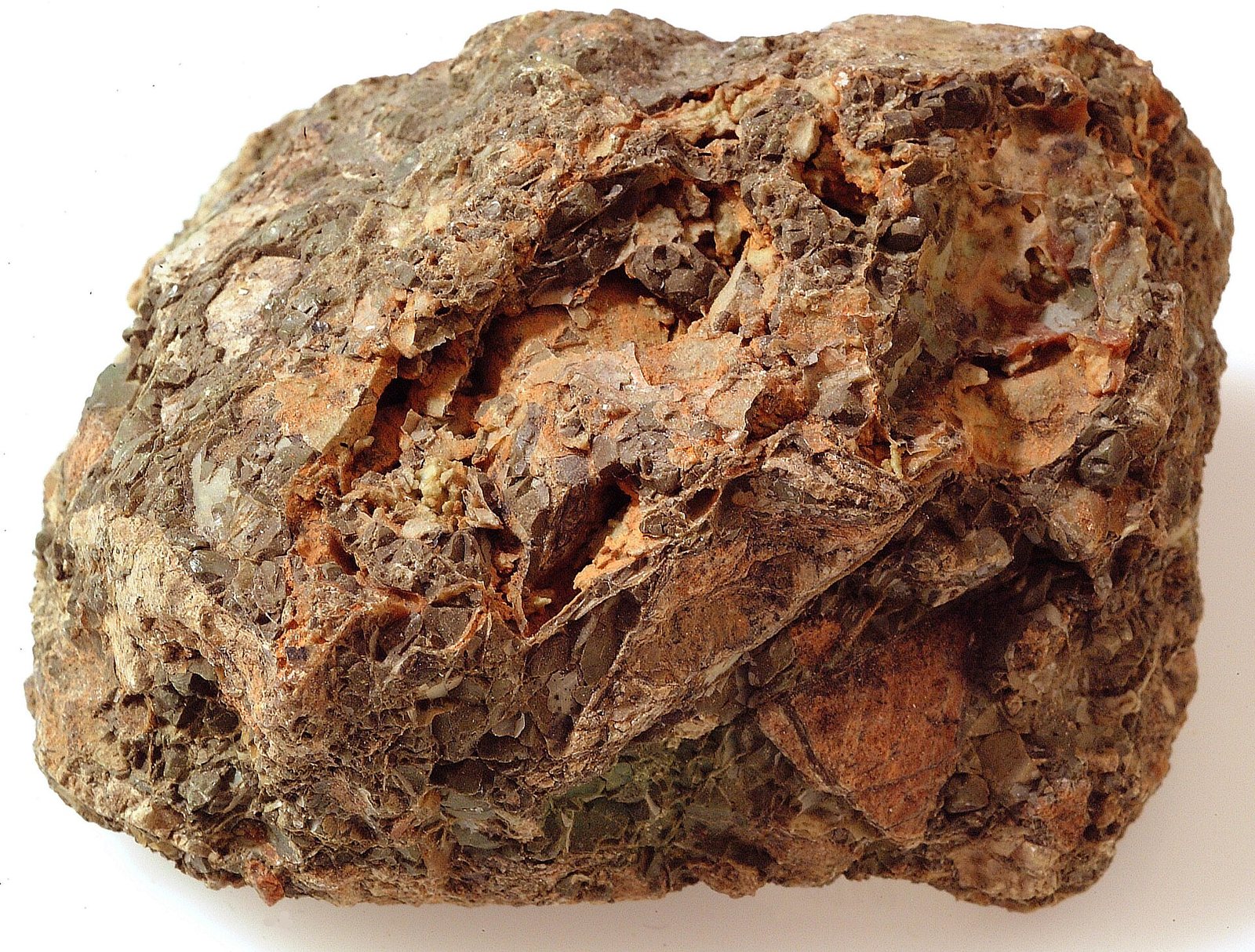
Garnierite (nickel laterite)
A green nickel silicate from tropically weathered rock. Laterite ore is soft and shallow but needs high-pressure acid…
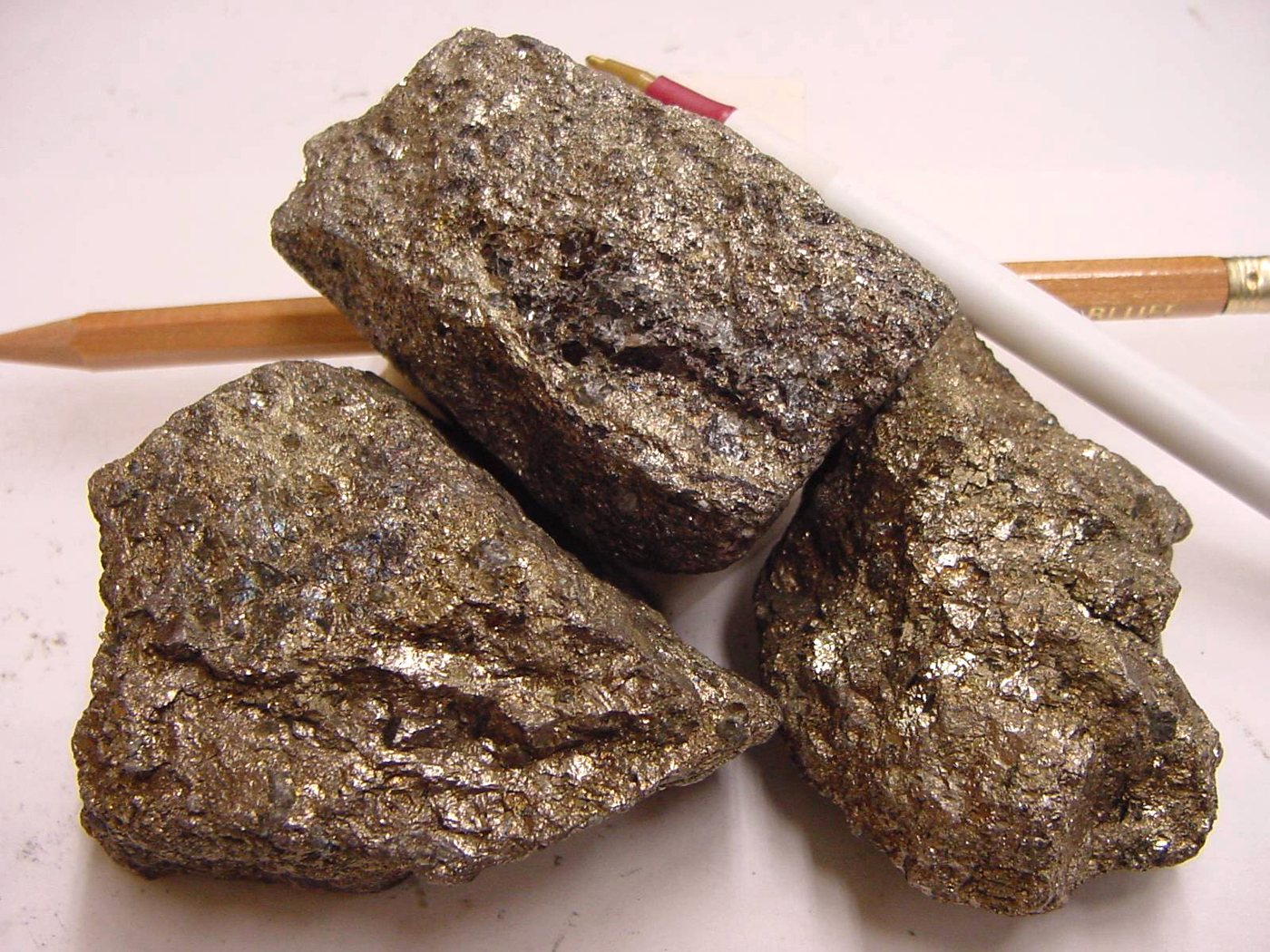
Pentlandite
The main nickel sulfide ore mineral, and the host that also carries most by-product platinum-group metals.
Siapa yang memproduksinya
Lihat di peta →Mine production
Mine productionmetric tons 2025 (estimasi) Total dunia 3,900,000 metric tons
USGS Mineral Commodity Summaries 2026 · Tonnages are contained nickel. Grades differ enormously: sulfide ore may run 1-2% Ni, laterite ore under 1.5%. · sumber ↗
Gulir tabel ke samping untuk melihat kolom-kolom yang tersisa.
| Negara | Produksi | Pangsa dunia |
|---|---|---|
| Indonesia | 2,600,000 | 66.7% |
| Other countries | 290,000 | 7.4% |
| Philippines | 270,000 | 6.9% |
| Russia | 200,000 | 5.1% |
| Canada | 140,000 | 3.6% |
| New Caledonia | 140,000 | 3.6% |
| China | 120,000 | 3.1% |
| Brazil | 70,000 | 1.8% |
| Australia | 45,000 | 1.2% |
| United States | 10,000 | 0.3% |
| Total dunia | 3,900,000 | 100% |
"Ditahan" berarti USGS menyembunyikan angka tersebut untuk menghindari pengungkapan data perusahaan tertentu — bukan berarti nol. Baris per negara tidak selalu berjumlah sama dengan total dunia karena sumber membulatkan setiap angka secara independen dan tidak selalu merinci baris "negara lain".
Siapa yang memegang cadangan
Reserves
Reservesmetric tons 2025
USGS Mineral Commodity Summaries 2026 · sumber ↗
| Negara | Cadangan | Pangsa dunia |
|---|---|---|
| Indonesia | 62,000,000 | 44.3% |
| Australia | 25,000,000 | 17.9% |
| Brazil | 16,000,000 | 11.4% |
| Other countries | >9,100,000 | 6.5% |
| Russia | 8,300,000 | 5.9% |
| New Caledonia | 7,100,000 | 5.1% |
| Philippines | 4,800,000 | 3.4% |
| China | 4,400,000 | 3.1% |
| Canada | 2,200,000 | 1.6% |
| United States | 340,000 | 0.2% |
| Total dunia | >140,000,000 | 100% |
Sumber menerbitkan total dunia ini sebagai batas, bukan angka titik, sehingga pangsa pada kolom terakhir juga merupakan batas.
Harga
Nickel, global price
Rata-rata tahunanUS$ per tonne
Dasar: IMF global price of nickel — melting grade, LME spot. Rata-rata tahunan sebagaimana diterbitkan dalam FRED (IMF primary commodity prices) · sumber ↗. Ini adalah rata-rata tahunan referensi, bukan kuotasi pasar secara langsung.
average annual, London Metal Exchange (LME), cash: Dollars per metric ton
Rata-rata tahunandollars per metric ton
Dasar: average annual, London Metal Exchange (LME), cash: Dollars per metric ton. Rata-rata tahunan sebagaimana diterbitkan dalam USGS Mineral Commodity Summaries 2026 · sumber ↗. Ini adalah rata-rata tahunan referensi, bukan kuotasi pasar secara langsung.
average annual, London Metal Exchange (LME), cash: Dollars per pound
Rata-rata tahunandollars per pound
Dasar: average annual, London Metal Exchange (LME), cash: Dollars per pound. Rata-rata tahunan sebagaimana diterbitkan dalam USGS Mineral Commodity Summaries 2026 · sumber ↗. Ini adalah rata-rata tahunan referensi, bukan kuotasi pasar secara langsung.
Tambang yang memproduksinya
Semua tambang →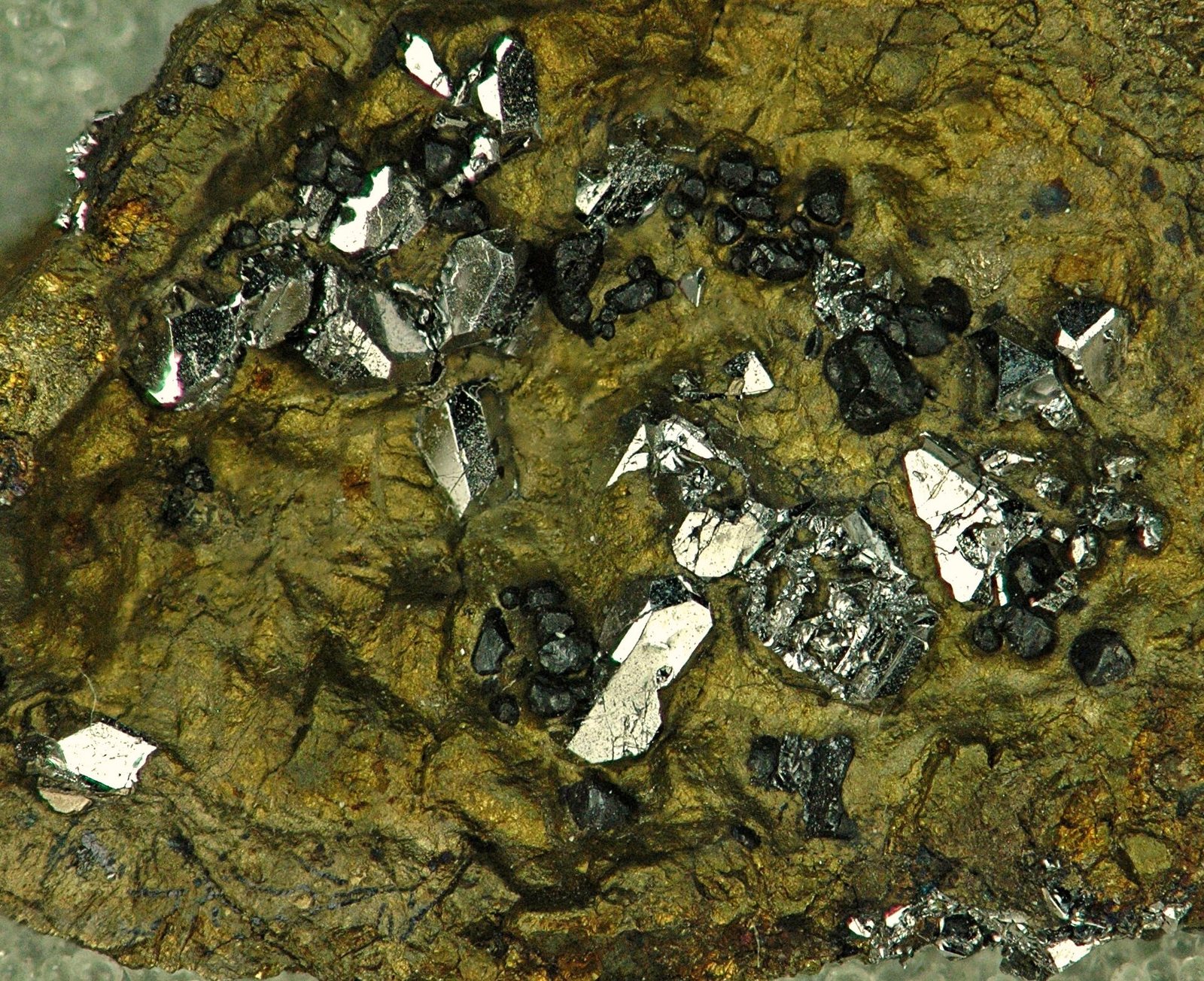
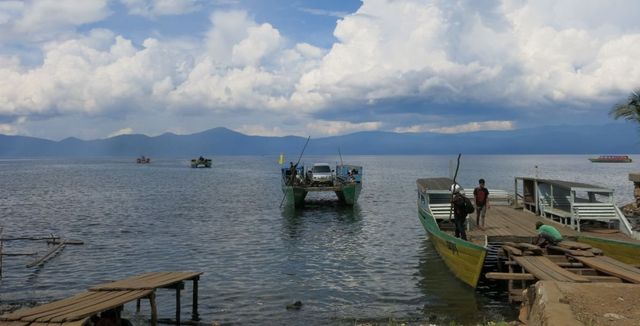
Sorowako
One of Indonesia's long-established integrated nickel operations.
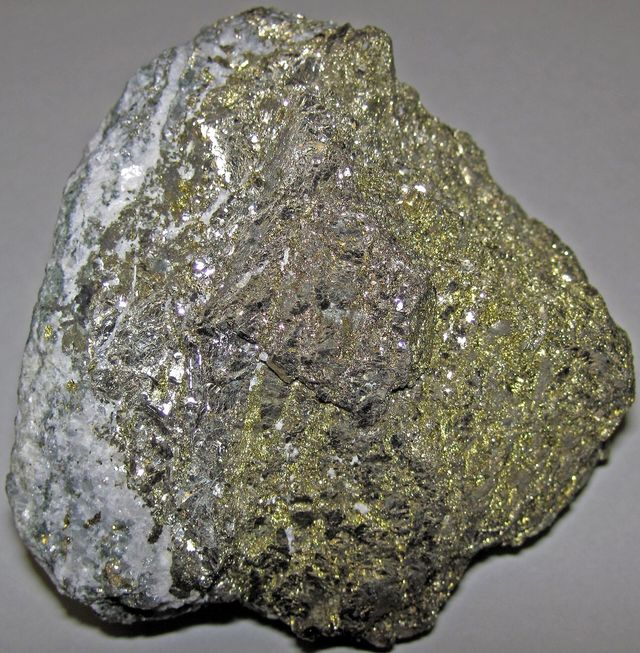
Sudbury Basin
One of the longest-producing nickel districts on Earth.
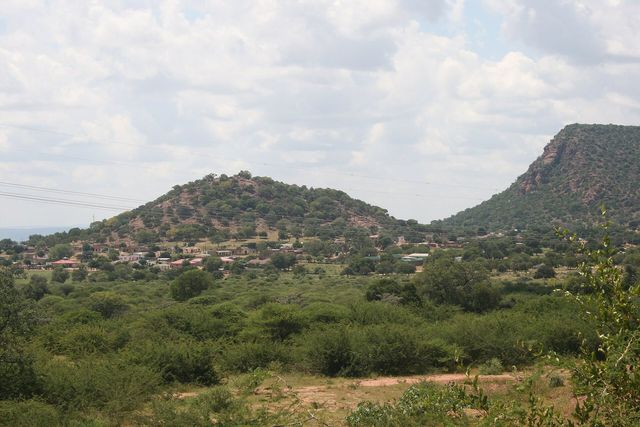
Mogalakwena
The largest open-pit platinum-group metals mine in the world.
Di mana material diproses dan dimurnikan
| Fasilitas | Jenis | Tahap | Negara | Peran |
|---|---|---|---|---|
| Gigafactory Nevada | Gigafabrik | Komponen | United States | Masukan |
| Indonesia Morowali Industrial Park | Smelter | Pemrosesan | Indonesia | Keluaran |
| Nadezhda Metallurgical Plant | Smelter | Pemrosesan | Russia | Keluaran |
| Aero-Engine Turbine Plant, Derby | Pabrik manufaktur | Produk | United Kingdom | Masukan |
| Huayou Cobalt Refineries | Pabrik kimia | Pemurnian | China | Masukan |
| Jinchuan Group Smelter-Refinery | Kilang | Pemurnian | China | Keluaran |
| Rustenburg Base & Precious Metals Refineries | Kilang | Pemurnian | South Africa | Masukan |
Untuk apa digunakan
Semua pasar akhir →| Pasar akhir | Apa yang dilakukannya di sana | Kepentingan |
|---|---|---|
| Electric Vehicles | Raises the energy the cathode can hold | Mendefinisikan |
| Aerospace & Defence | Superalloy for hot sections | Mendefinisikan |
| Hydrogen & Electrolysis | Alkaline electrolyser electrodes | Mendefinisikan |
| Nuclear Power | Alloys for steam generators | Penting |
Seberapa banyak yang dibutuhkan suatu teknologi
| Teknologi | Kuantitas | Dikutip | Dasar |
|---|---|---|---|
| Alkaline Electrolyser | 300.0–800.0 kg | per MW of capacity | Electrodes and catalyst coatings |
| NMC Lithium-Ion Battery NMC811 cathode is roughly 0.7 kg Ni per kWh. | 40.00–60.00 kg | per 75 kWh pack | Contained nickel |
| Pressurised Water Reactor | 500.0–1,500 t | per GW of capacity | Steam generators and alloy components |
| Single-Crystal Turbine Blade Typically 60% or more of the alloy. | jejak | per blade set | Superalloy base |
Indicative range compiled from published technology studies and chemistry; verify against a manufacturer specification before use. Jalankan angka-angka ini pada skala berapa pun dalam kalkulator material →
Kontrol ekspor
| Negara | Kontrol | Berlaku untuk |
|---|---|---|
| Indonesia | Export ban | Bauxite (2023), copper concentrates (2023), and nickel ore (2020). ↗ |
| Laos | Export ban | Raw minerals, including copper, gold, iron, nickel, potassium, silver, and zinc (2024). ↗ |
| Tanzania | Export ban | Ore concentrates of copper, gold, nickel, and silver (2017). ↗ |
USGS Mineral Commodity Summaries 2026, table 4 — controls in effect as of January 2026, excluding controls since lifted.
Ikuti melintasi perbatasan
Semua perjalanan →Ke mana kiriman material ini sebenarnya pergi — setiap negara, setiap pengelola, dan apa yang tersisa di setiap langkah.
Indonesian laterite to a battery cathode A country that banned raw ore exports and built the processing industry instead. New Caledonian laterite to stainless steel An island that smelts its own ore, and pays for it with the most expensive electricity in the industry.