Apa ini?
A yellow element stripped out of oil and gas to stop it polluting, then turned into sulfuric acid — the most-produced chemical in the world.
Mengapa ini penting?
Sulfuric acid leaches copper, nickel and rare earths and makes phosphate fertiliser. Almost all of it comes from fossil-fuel processing, so decarbonisation shrinks its supply.
Where it is in the Earth
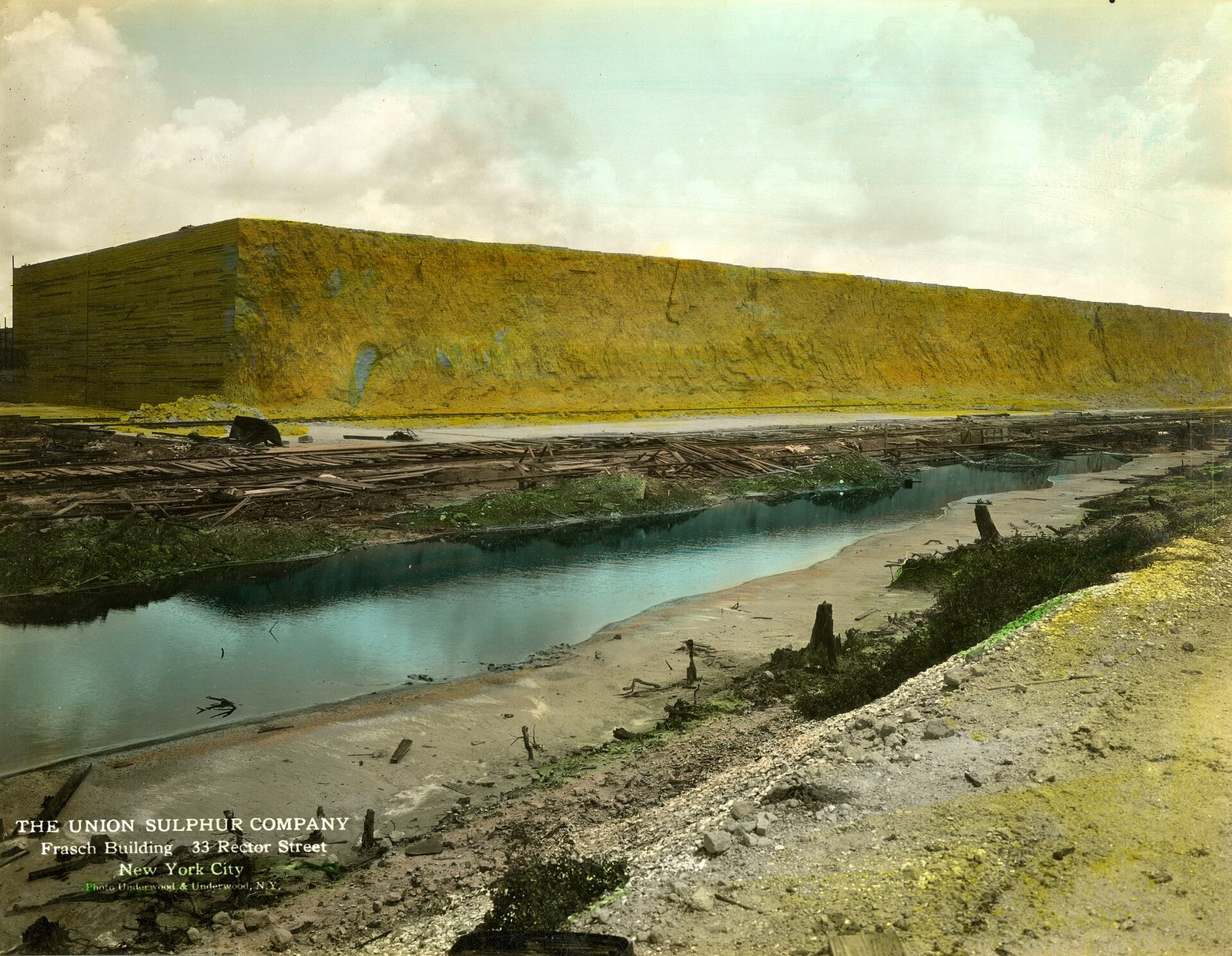
Sulfur is one of the more abundant elements in the Earth's crust and mantle, but the concentrations that matter commercially are almost always the product of specific geological processes rather than simple crustal abundance. The oldest and most familiar source is the native sulfur — meaning pure, elemental sulfur — that accumulates around volcanic vents and in the cap rock above salt domes. Salt domes form when thick beds of ancient evaporite salt, buried under younger sediments, become buoyant and push upward in great columns. As they rise they carry sulfate minerals, principally anhydrite (calcium sulfate), into contact with anaerobic bacteria and with hydrocarbons migrating up from depth. Those bacteria reduce the sulfate, stripping oxygen from it and leaving elemental sulfur behind in porous limestone that sits atop the dome. This is the classical Frasch deposit, named after the extraction method it made famous, and it underlies the Gulf Coast geology that once made the United States the world's leading sulfur producer.
Volcanic environments produce a different style of deposit. Where magma rich in sulfur dioxide vents at or near the surface — around fumaroles and crater lakes — sulfur dioxide reacts with hydrogen sulfide to precipitate native sulfur directly. These deposits can be visually dramatic but are rarely large by industrial standards. A more consequential geological association is with metal sulfide ore bodies: the ores of copper, zinc, lead, nickel and molybdenum are sulfide minerals (chalcopyrite, sphalerite, galena, pentlandite and molybdenite respectively), meaning sulfur is chemically bound to the metal throughout. When those ores are smelted, the sulfur is driven off as sulfur dioxide gas and must be captured. This capture, rather than any mining of sulfur itself, is now how most of the world's smelter-derived sulfuric acid is made.
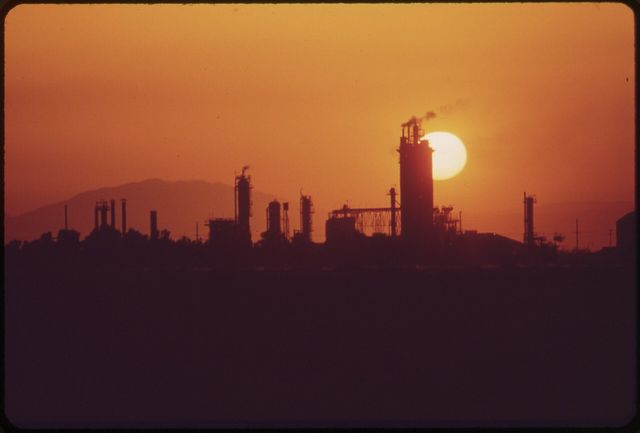
By far the largest modern source, however, is neither volcanic nor sedimentary in the traditional sense. Crude oil and natural gas contain sulfur compounds — mercaptans, hydrogen sulfide, organic sulfides — in concentrations that vary enormously by field. Sour crude and sour gas, the industry terms for high-sulfur feedstocks, must be sweetened before refining or transmission because sulfur compounds corrode pipelines and equipment and produce sulfur dioxide when burned. The hydrogen sulfide separated out in this sweetening process is converted to elemental sulfur by the Claus process, a catalytic sequence that has become the dominant sulfur-producing technology worldwide. The geography of sulfur supply therefore maps almost exactly onto the geography of fossil-fuel processing: the large producers listed in the production table — China, the United States, Russia, Saudi Arabia, the UAE, Canada, Kazakhstan — are large precisely because they process large volumes of oil and gas, not because their territory happens to be geologically sulfur-rich in any traditional sense.
Getting it out
For most of the twentieth century, the word 'sulfur mining' would have called to mind the Frasch process: superheated water pumped underground to melt native sulfur out of salt-dome cap rock, with the liquid sulfur then forced to the surface by compressed air. The method was elegant for its time and required no crushing or flotation, since the product arrived at surface already molten. Frasch operations were common along the Gulf Coast of the United States and in Poland. Those deposits are now largely exhausted or uneconomic, and Frasch production is no longer significant at the global scale. What replaced it was not a new mining method but a change in the nature of the resource itself.
Today, the great majority of sulfur does not come from a mine at all. It is recovered as an unavoidable by-product of oil refining and natural gas processing. At a refinery or gas-processing plant, hydrogen sulfide is separated from the hydrocarbon stream, fed into a Claus unit, and converted to liquid sulfur at roughly 130–150 °C — just above sulfur's melting point of 115.2 °C. The liquid is either stored in heated tanks and shipped molten, or allowed to solidify into formed product (pastilles, granules or large blocks) for easier handling. There is no ore grade in the conventional sense, no overburden to move, and no mill to run. The 'mine' is the refinery or gas plant, and the output of sulfur is determined by how much sour feedstock is processed and how stringent the environmental regulations on sulfur emissions are, not by any decision to produce sulfur per se.
The Athabasca oil sands in Canada illustrate the scale this can reach. Bitumen-saturated sand is excavated by truck-and-shovel in large open pits, upgraded into synthetic crude, and in that process sulfur is separated and stockpiled. Because the sulfur is a by-product of a process driven by energy demand, the producer has limited ability to adjust sulfur output in response to sulfur prices. A small fraction of global supply still comes from mining native sulfur deposits by conventional open-pit methods in countries such as Poland and parts of the Middle East, and from sulfur recovered at metal smelters as a by-product of roasting sulfide concentrates. The practical implication is that most of the world's sulfur supply is, in a meaningful sense, captive: it is produced whether the market wants it or not, because the alternative is to emit sulfur dioxide, which regulations prohibit.
What pulls on it
The single largest use of sulfur, by a considerable margin, is the manufacture of phosphate fertilisers. Phosphate rock — mined primarily in Morocco, China and a handful of other countries — does not dissolve readily in water and cannot be absorbed by plant roots in its raw form. To make it useful, it must be reacted with sulfuric acid to produce superphosphate or phosphoric acid, which are the actual fertiliser ingredients. Because global food production depends on phosphate fertilisers, and because phosphate processing requires sulfuric acid in large quantities, sulfur is indirectly a foundational input to the food supply. The connection is not abstract: a shortage or sharp price spike in sulfur feeds through into fertiliser costs within months.
Beyond agriculture, sulfuric acid is the workhorse leaching agent in hydrometallurgy — the extraction of metals from ores using liquid chemistry rather than heat. Copper in particular is increasingly recovered from low-grade oxide ores by heap leaching with sulfuric acid, a process in which crushed ore is stacked on lined pads and acid is dripped through to dissolve copper, which is then recovered by electrowinning. Nickel and cobalt laterites, rare earth ores and uranium ores are also processed with sulfuric acid. As demand for battery metals grows, so does demand for acid and therefore for sulfur. The intensity figures in the table illustrate this at the system level: vanadium redox flow batteries use between 3.0 and 8.0 tonnes of sulfuric acid per megawatt-hour of storage capacity, because sulfuric acid is the electrolyte in which the vanadium chemistry takes place.
Demand could change sharply in two quite different directions. On the upside, any large expansion of copper, nickel or lithium processing — driven by electrification — increases acid demand. On the downside, a faster-than-expected contraction of oil and gas processing would reduce supply before demand has fallen proportionally, temporarily tightening the market; but a very deep, sustained decarbonisation would eventually reduce the fossil-fuel processing base that generates most of the world's sulfur, potentially creating a structural deficit that no easy substitute can fill. Sulfur is also used in smaller but non-trivial quantities in rubber vulcanisation (the chemical process that gives rubber its elasticity and durability), in pharmaceuticals, in fungicides and in pulp and paper, but these sectors are secondary in scale to fertilisers and hydrometallurgy.
Turning ore into product Tingkat 3
Because sulfur arrives at the point of use already elementally pure — the Claus process typically yields product of very high purity — there is almost no beneficiation (upgrading of the material by removing impurities) required before it can be used. The processing chain is instead one of physical handling and chemical conversion. Molten sulfur at roughly 130–150 °C is transported in heated rail cars or ships and kept liquid throughout, since solidification in a pipe or tank creates serious operational problems. Where solid product is preferred, prilling towers or pastillation drums drop the liquid into controlled shapes that are easier to convey, store and load without generating fine dust. Sulfur dust is explosive within a certain concentration range and must be managed accordingly in any solid-handling facility.
The more important transformation is conversion to sulfuric acid, which is the form in which most sulfur actually reaches its end uses. The contact process burns elemental sulfur to sulfur dioxide, passes it over a vanadium pentoxide catalyst to oxidise it to sulfur trioxide, and then absorbs the trioxide in water to yield sulfuric acid. Acid plants are also built directly at copper and zinc smelters, where the sulfur dioxide in off-gas provides the feedstock instead of elemental sulfur. The acid plant at the Atlantic Copper smelter in Huelva, Spain, is one example of this integrated arrangement, capturing sulfur dioxide that would otherwise require costly scrubbing. The distinction matters economically: when a smelter produces acid from its off-gas, the acid revenue offsets smelting costs, but the smelter's primary driver remains metal output. The acid is therefore produced at a cost structure quite different from a standalone acid plant burning purchased sulfur, and in a market downturn both types of producer respond differently.
Losses in the processing chain are relatively small compared with many minerals, because the chemical steps are well understood and the product is a gas or liquid rather than a solid requiring mechanical separation. The main points of loss or value destruction are logistics — solidified sulfur that absorbs moisture, or acid spills in transit — and the small but real energy cost of maintaining liquid sulfur at temperature over long supply chains. In periods when sulfur prices are low (as low as 46.42 dollars per metric ton in 2024) the cost of heated transport can approach or exceed the value of the cargo, which shapes the geography of who trades with whom.
Substitution and recycling Tingkat 3
For the dominant use — making sulfuric acid to acidulate phosphate rock — there is no practical substitute that operates at comparable scale and cost. Hydrochloric acid and nitric acid can in principle dissolve phosphate minerals, but the economics are unfavourable and the resulting fertiliser products require additional processing steps. The agronomic function that sulfuric acid performs is not optional: without an acidulation step, phosphate rock cannot be converted efficiently into plant-available forms. This means that demand for sulfur in agriculture is tied to the global appetite for phosphate fertiliser in a way that is very difficult to route around.
In hydrometallurgical leaching, the picture is somewhat more flexible but not dramatically so. Hydrochloric acid leach circuits exist and are used for certain laterite nickel projects; ammonia-based leaching is used for some oxide copper ores. These alternatives work in specific geological and process contexts but each involves different capital requirements, different reagent supply chains and different environmental footprints. For heap leaching of copper oxide ores — which is a mature, low-cost technology deployed across much of Chile, Peru and the American Southwest — switching away from sulfuric acid is not a realistic near-term option.
Recycling of sulfur, in the conventional sense of collecting a used material and reprocessing it, is essentially not practised. Sulfuric acid used in fertiliser production is incorporated into the product and dispersed to agricultural land; it cannot be recovered. Acid used in hydrometallurgy is partially recirculated within the plant but is consumed in neutralisation reactions and eventually leaves the circuit. The reason more is not recovered is simply that the chemistry of the end uses destroys or disperses the sulfur irreversibly. This makes sulfur unusual among industrial materials: supply depends almost entirely on new production, and new production depends almost entirely on the rate at which fossil fuels are processed and metal sulfide ores are smelted.
Where the chain is fragile Tingkat 4
The most structurally unusual feature of the sulfur supply chain is that supply is almost entirely determined by decisions made in other industries. Refiners and gas processors produce sulfur because environmental regulations require them to remove it from their products; they do not increase or reduce sulfur output in response to sulfur market signals. This creates a supply that is, in the short run, nearly price-inelastic — meaning it does not respond to price changes — while demand can shift more quickly. The price history visible in the table illustrates the resulting volatility: the average unit value moved from 90.4 dollars per metric ton in 2021 to 177.8 in 2022, collapsed to 58.9 in 2023, fell further to 46.42 in 2024, and recovered to 180.0 in 2025. These swings reflect demand-side events (fertiliser buying cycles, Chinese policy, shipping disruptions) against a supply that cannot adjust. The figures are reported on an all-forms, gross-weight basis as recovered sulfur, and this unit basis is important for comparison: some published series exclude certain forms or report on a contained-sulfur basis, which produces different totals.
Geographic concentration is real but is often misread. The production table shows China, the United States, Russia, Saudi Arabia and the UAE among the top producers, but none of these are 'sulfur exporters' in a simple sense — they are large fossil-fuel processors. The countries that are net exporters of elemental sulfur are mostly Middle Eastern and Central Asian gas producers whose domestic acid consumption is smaller than their output: Saudi Arabia, UAE, Qatar and Kazakhstan figure prominently here. Canada, particularly through oil sands upgrading, is a major exporter. Disruptions to these export flows — through sanctions, logistics constraints, or production curtailments at gas plants — have historically been the proximate cause of the largest price spikes. The fact that world reserves are not separately published in the data reflects the nature of the resource: because sulfur is a by-product, 'reserves' are not a meaningful category in the way they are for a conventionally mined mineral. The relevant question is not how much sulfur remains in the ground but how long fossil-fuel processing will continue at its current scale.
The deepest structural uncertainty is the interaction between decarbonisation and sulfur supply. If oil and gas processing declines significantly over coming decades, the flow of by-product sulfur will decline with it. Whether demand for sulfuric acid — driven by fertilisers and battery-metal hydrometallurgy — will decline at the same pace, faster or slower is genuinely uncertain and is not resolvable with currently available data. If demand contracts more slowly than supply, the world would need to develop alternative sulfur sources — native sulfur deposits, or sulfide ore roasting — at a scale and speed that would require substantial lead times and capital. Published analyses disagree on the timeline and magnitude of this risk, partly because reporting conventions for by-product supply are not standardised across national statistical agencies, and partly because the pace of energy transition itself remains uncertain.
Siapa yang memproduksinya
Lihat di peta →Production, all forms
Production, all formsthousand metric tons 2025 (estimasi) Total dunia 84,000 thousand metric tons
USGS Mineral Commodity Summaries 2026 · All forms, gross weight; recovered (by-product) sulfur dominates. · sumber ↗
Gulir tabel ke samping untuk melihat kolom-kolom yang tersisa.
| Negara | Produksi | Pangsa dunia |
|---|---|---|
| China | 19,000 | 22.6% |
| United States | 8,100 | 9.6% |
| Russia | 7,500 | 8.9% |
| Saudi Arabia | 7,200 | 8.6% |
| United Arab Emirates | 6,300 | 7.5% |
| Other countries | 5,700 | 6.8% |
| Canada | 5,000 | 6.0% |
| Kazakhstan | 4,800 | 5.7% |
| India | 3,700 | 4.4% |
| Qatar | 3,100 | 3.7% |
| Korea, Republic of | 3,100 | 3.7% |
| Japan | 2,700 | 3.2% |
| Iran | 2,100 | 2.5% |
| Chile | 1,400 | 1.7% |
| Kuwait | 1,300 | 1.5% |
| Poland | 1,100 | 1.3% |
| Australia | 900.0 | 1.1% |
| Turkmenistan | 870.0 | 1.0% |
| Total dunia | 84,000 | 100% |
"Ditahan" berarti USGS menyembunyikan angka tersebut untuk menghindari pengungkapan data perusahaan tertentu — bukan berarti nol. Baris per negara tidak selalu berjumlah sama dengan total dunia karena sumber membulatkan setiap angka secara independen dan tidak selalu merinci baris "negara lain".
Harga
average unit value, free on board, mine and (or) plant, dollars per metric ton of elemental sulfur
Rata-rata tahunandollars per metric ton
Dasar: average unit value, free on board, mine and (or) plant, dollars per metric ton of elemental sulfur. Rata-rata tahunan sebagaimana diterbitkan dalam USGS Mineral Commodity Summaries 2026 · sumber ↗. Ini adalah rata-rata tahunan referensi, bukan kuotasi pasar secara langsung.
Tambang yang memproduksinya
Semua tambang →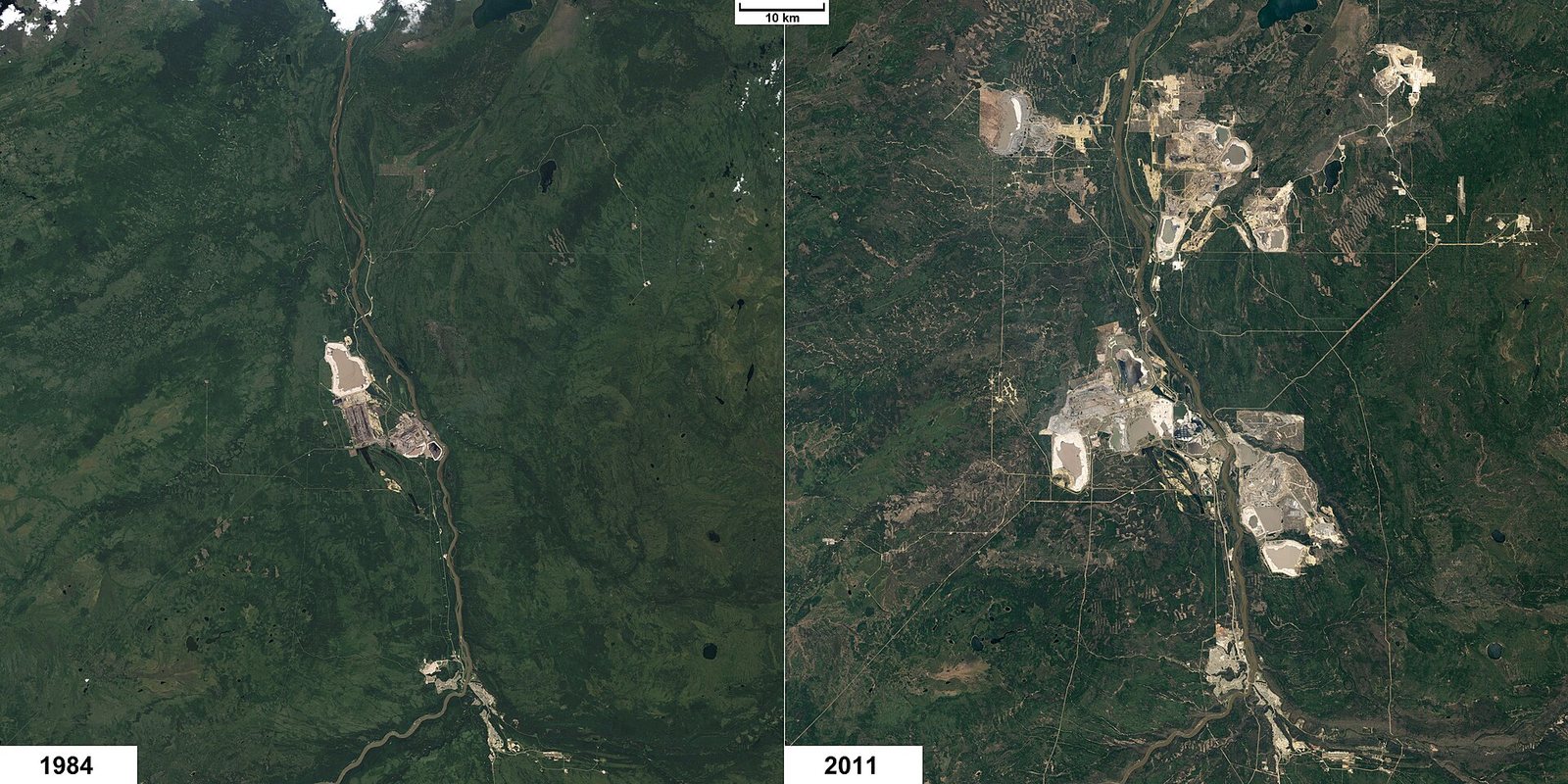
Athabasca Oil Sands (Mildred Lake / Aurora) →
Di mana material diproses dan dimurnikan
| Fasilitas | Jenis | Tahap | Negara | Peran |
|---|---|---|---|---|
| Atlantic Copper Smelter, Huelva | Smelter | Pemrosesan | Spain | Keluaran |
Untuk apa digunakan
Semua pasar akhir →| Pasar akhir | Apa yang dilakukannya di sana | Kepentingan |
|---|---|---|
| Agriculture & Food | Sulfuric acid to make phosphate fertiliser | Mendefinisikan |
Seberapa banyak yang dibutuhkan suatu teknologi
| Teknologi | Kuantitas | Dikutip | Dasar |
|---|---|---|---|
| Vanadium Redox Flow Battery | 3.00–8.00 t | per MWh of storage | Sulfuric acid electrolyte |
Indicative range compiled from published technology studies and chemistry; verify against a manufacturer specification before use. Jalankan angka-angka ini pada skala berapa pun dalam kalkulator material →
Ikuti melintasi perbatasan
Semua perjalanan →Ke mana kiriman material ini sebenarnya pergi — setiap negara, setiap pengelola, dan apa yang tersisa di setiap langkah.
Australian spodumene to a battery, the fast way Eight weeks instead of eighteen months, at the cost of a great deal more energy. Chilean sulfide concentrate to Chinese cathode to a wire Chile mines the most copper in the world. China refines the most. Those are not the same sentence. Venezuelan extra-heavy crude to diesel, asphalt and aluminium anodes Oil so thick it will not flow down a pipe, and cannot be refined by most refineries on Earth.