Dari batuan ke produk, ditelusuri
Commodity Education
★
Commodity Education
Material Tambang & deposit Pemrosesan & pemurnian Perjalanan-perjalanan kustodi Rantai-rantai pasokan Perusahaan Negara Berita
Material berdasarkan rak Bahan Baku Baterai Unsur Tanah Jarang Tembaga & Kelistrikan Material Semikonduktor Material Nuklir Dirgantara & Pertahanan Logam Mulia Baja & Logam Paduan Mineral Industri Mineral Pertanian Bahan Baku Energi Mineral-mineral bijih Tabel periodik
Permintaan Pasar akhir Teknologi Kalkulator material Peta Penyaring
Pelajari & alat PelajariGlosarium Courses Identify the Commodity Tanya DataAgen AI Riset & dataAPI ★ Tersimpan
Tentang Tentang kamiMetodologi Sumber dataKontak Penafian
Opsi pembacaan
Tampilan Terpandu Belum familiar dengan kadar bijih, konsentrat, pemurnian, dan produk sampingan? Kami menjelaskan setiap istilah saat Anda menjelajah, dalam bahasa yang lugas. Data yang sama, dilengkapi panduan bawaan.
Tampilan Ahli Anda sudah memahami industri ini. Cukup datanya: ringkas, cepat, dan padat, tanpa penjelasan tambahan. Ini adalah tampilan default.
Tema
Bahasa antarmuka
Kedalaman Halaman material ditulis dalam empat tingkat. Pilih salah satu di halaman material mana pun dan pilihan tersebut akan diingat.
★ Tersimpan Riset & data
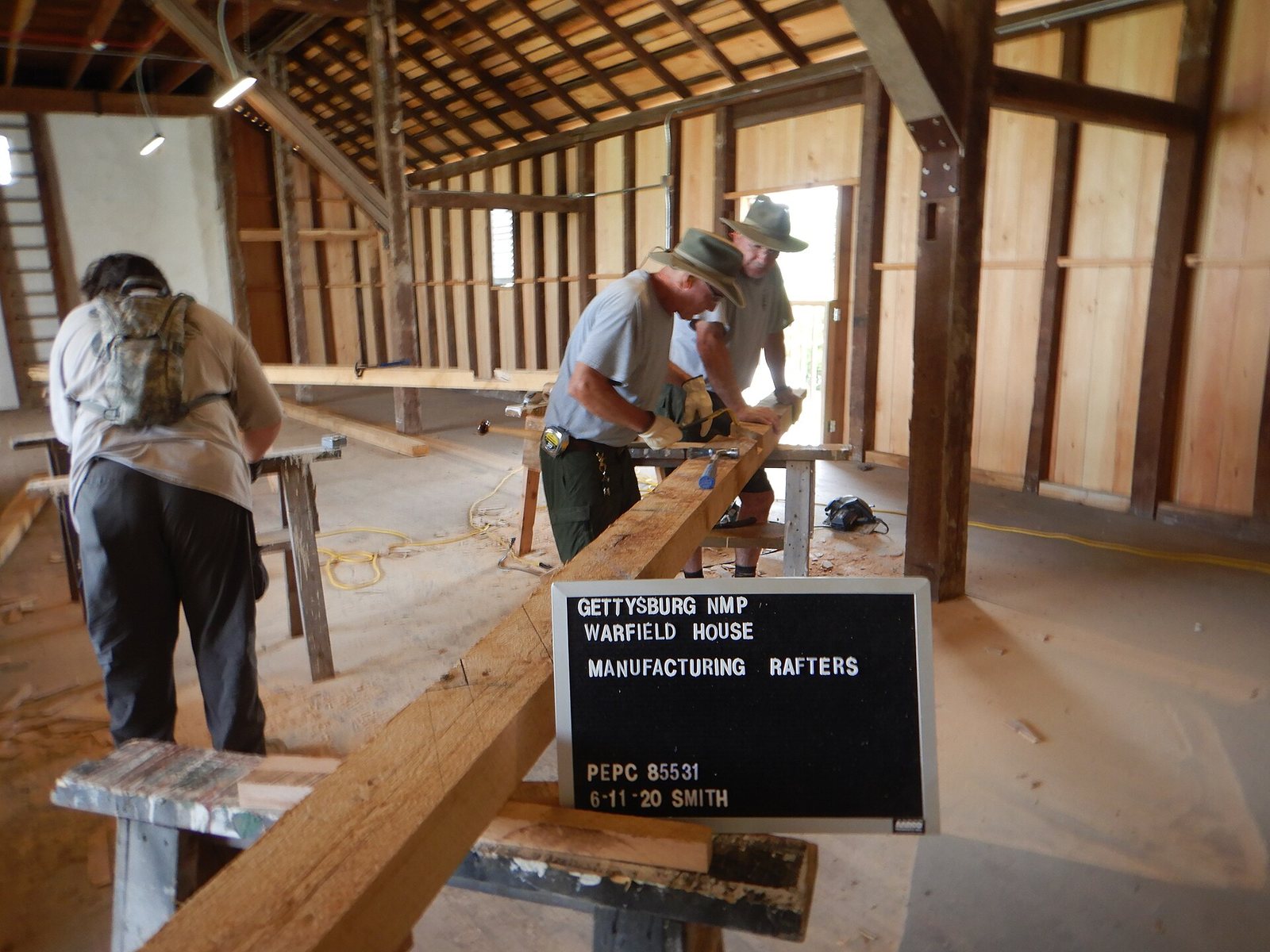
Standing tree to house frame

Rantai pasokan

Standing tree to house frame

The stump-to-stud route that most of the world's homes are built through, and where the value is actually added.

NPS Preservationists are at work laying out the timber fram… · NPS Photo · Public domain · Wikimedia Commons

Versi singkat

A softwood log is worth a few tens of dollars standing and a few hundred as graded, dried, stamped lumber. Almost all of that difference is created in two places - the saw line, which decides how much of the log becomes board, and the kiln and grader, which decide what the board may be sold as.

Rantai yang paling sempit. The constraint is sawmill and kiln capacity, not trees. A mill takes two to three years and a large capital commitment to build, so when housebuilding demand jumps the price rises instead of the volume. That is the mechanism behind every lumber price spike.

Tahap demi tahap

01Raw material

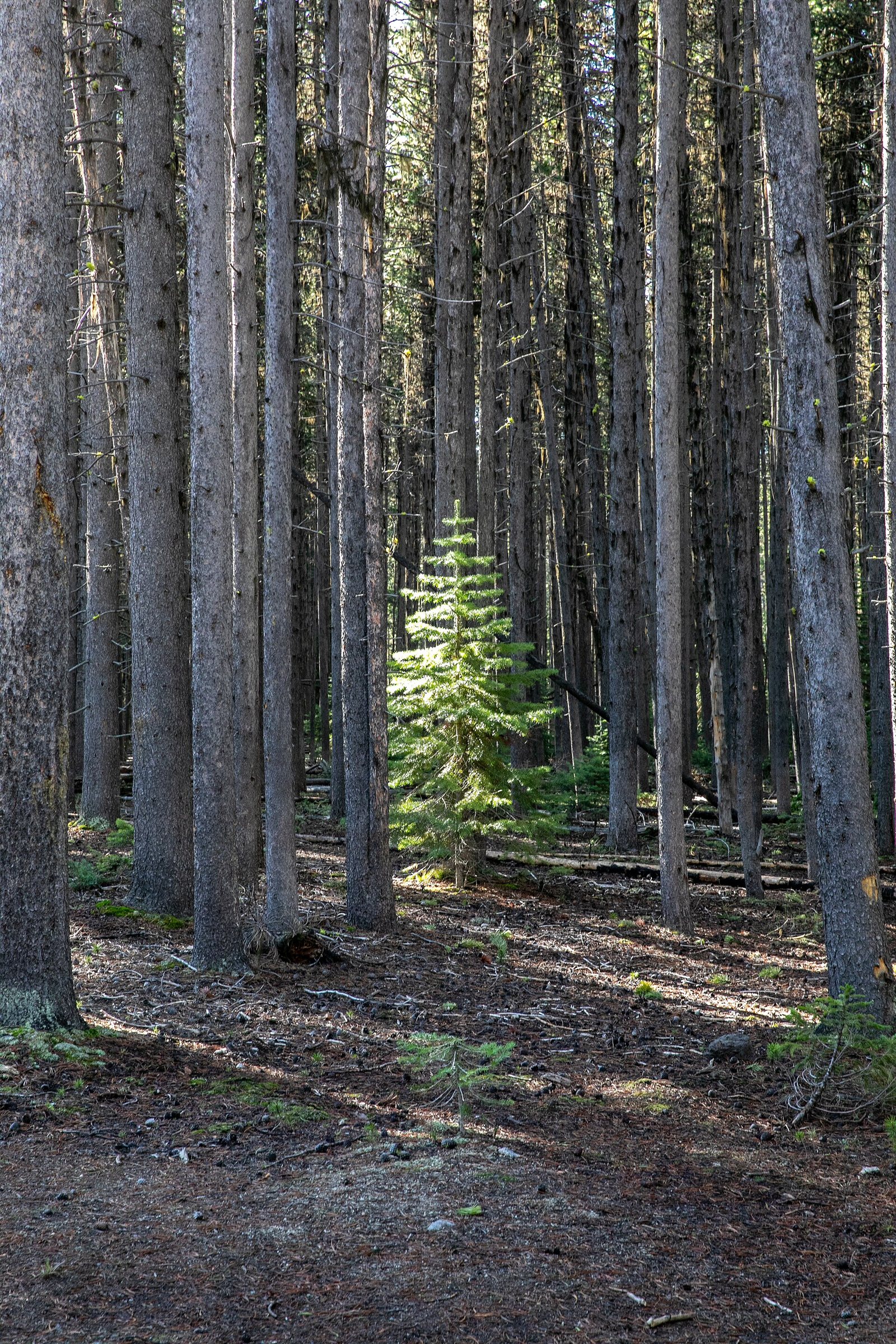
Standing timber

The tree is bought as stumpage - the right to cut - priced per thousand board feet at the stump, with the buyer paying to fell and haul. Volume is estimated by a log rule, and different rules give different answers for the same tree.
Standing Timber →

Standing Timber
Stand re-initiation of shade-tolerant spruce … · Public domain via Wikimedia Commons
02Raw material

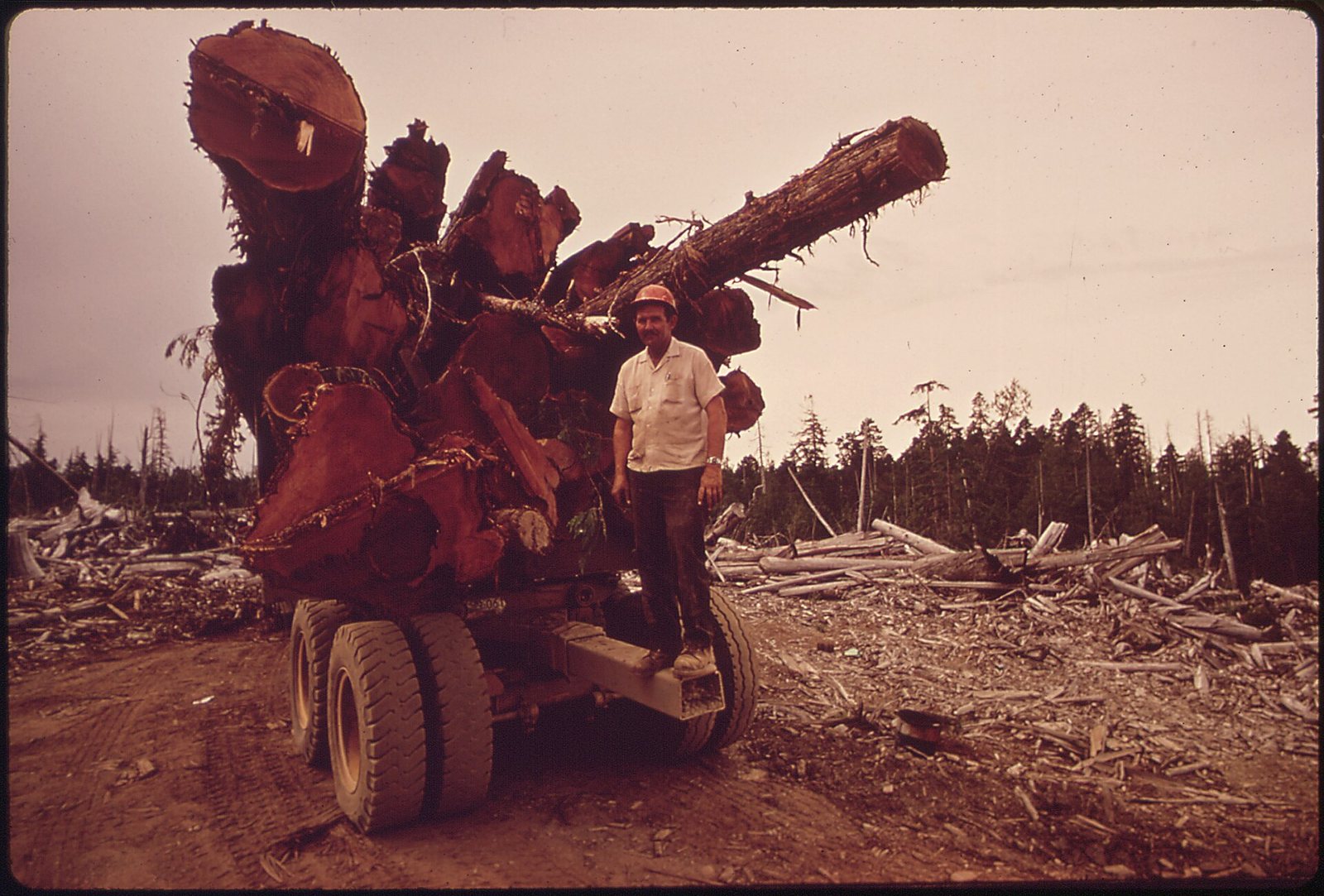
Logs at the mill gate

Felled, limbed and cut to length, then sorted by diameter and quality. Sawlogs go to the sawmill; anything too small or crooked is pulpwood and is worth roughly a third as much.

Catatan: Branches, tops and stumps are left in the forest.
Industrial Roundwood →

Industrial Roundwood
LOGGING TRUCK LOADED WITH CEDAR IN A CLEARCUT… · Public domain via Wikimedia Commons
03Processing

The saw line

The log is squared and broken down into boards on a pattern chosen to maximise value, not volume. Roughly half the solid wood in the log leaves as sawn lumber; the rest becomes chips, sawdust and bark, all of which are sold.

Catatan: About half the log volume leaves as residue rather than board.
Wood Pulp →

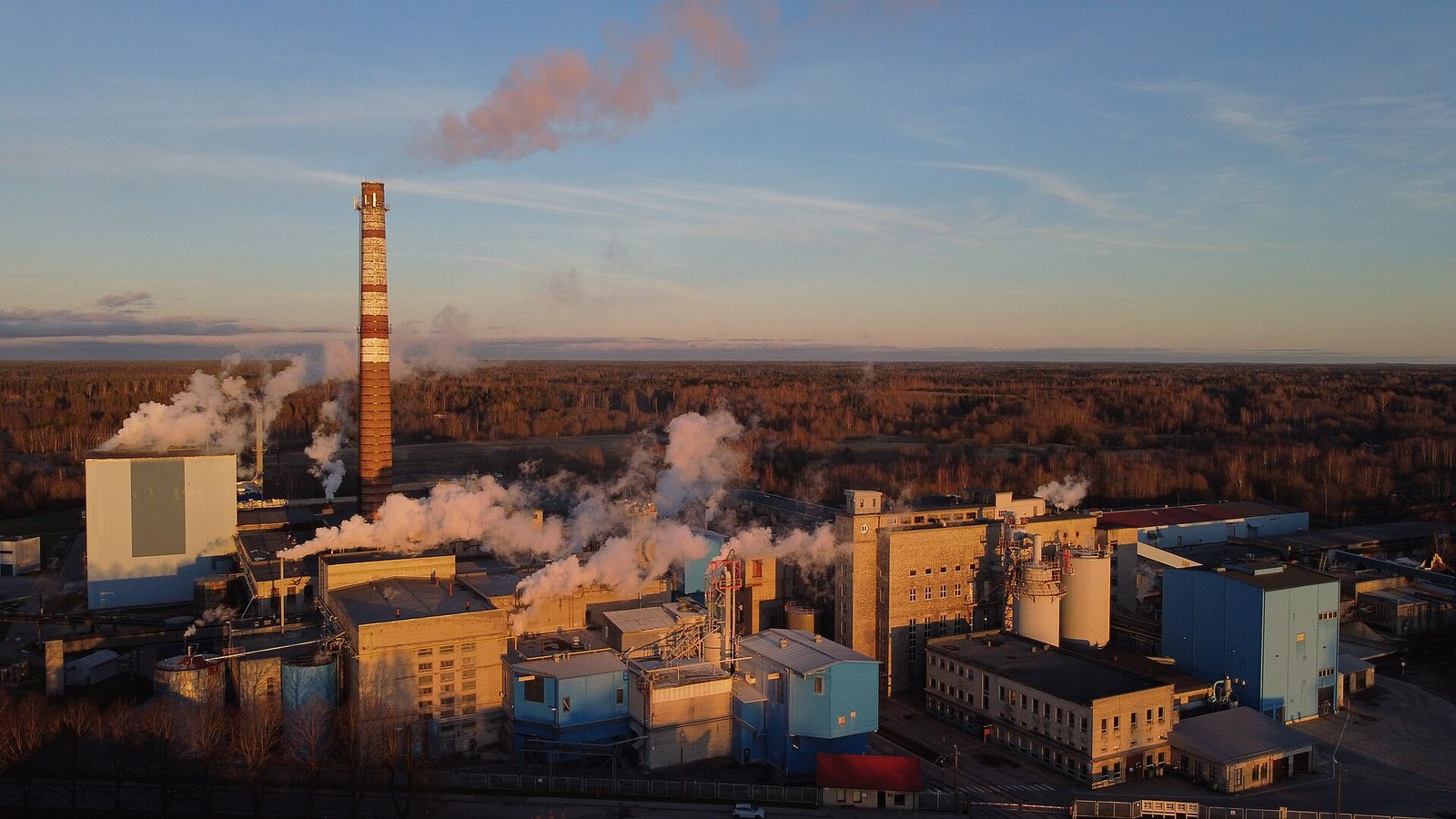
A pulp and paper mill at dusk, with steam rising from the plant
Kehra pulp and paper mill in Estonia (Novembe… · CC BY-SA 4.0 via Wikimedia Commons
04Refining

Kiln and grader

Drying to a specified moisture content stops the board moving and is what allows a standard size to mean anything. Then a grader assigns the stamp that sets the design values an engineer may assume - and therefore the price.
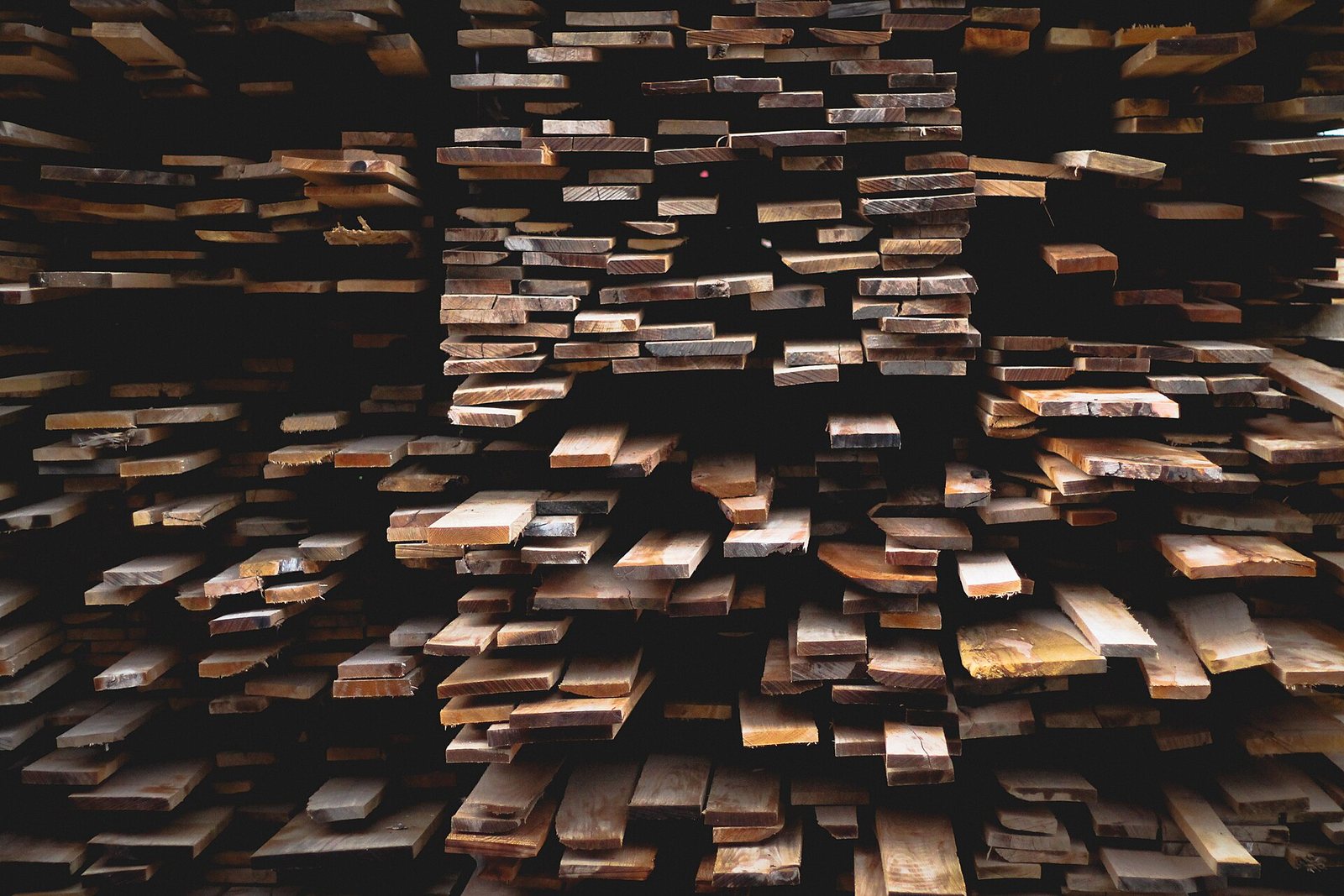
Softwood Lumber →

Sawn softwood planks stacked in a timber yard
Stacked wood planks (Unsplash) · CC0 via Wikimedia Commons
05Product

Framing lumber and panels

Sold as dimension lumber by species group and grade, alongside the sheathing panels made from the smaller trees and the residues of this same process.
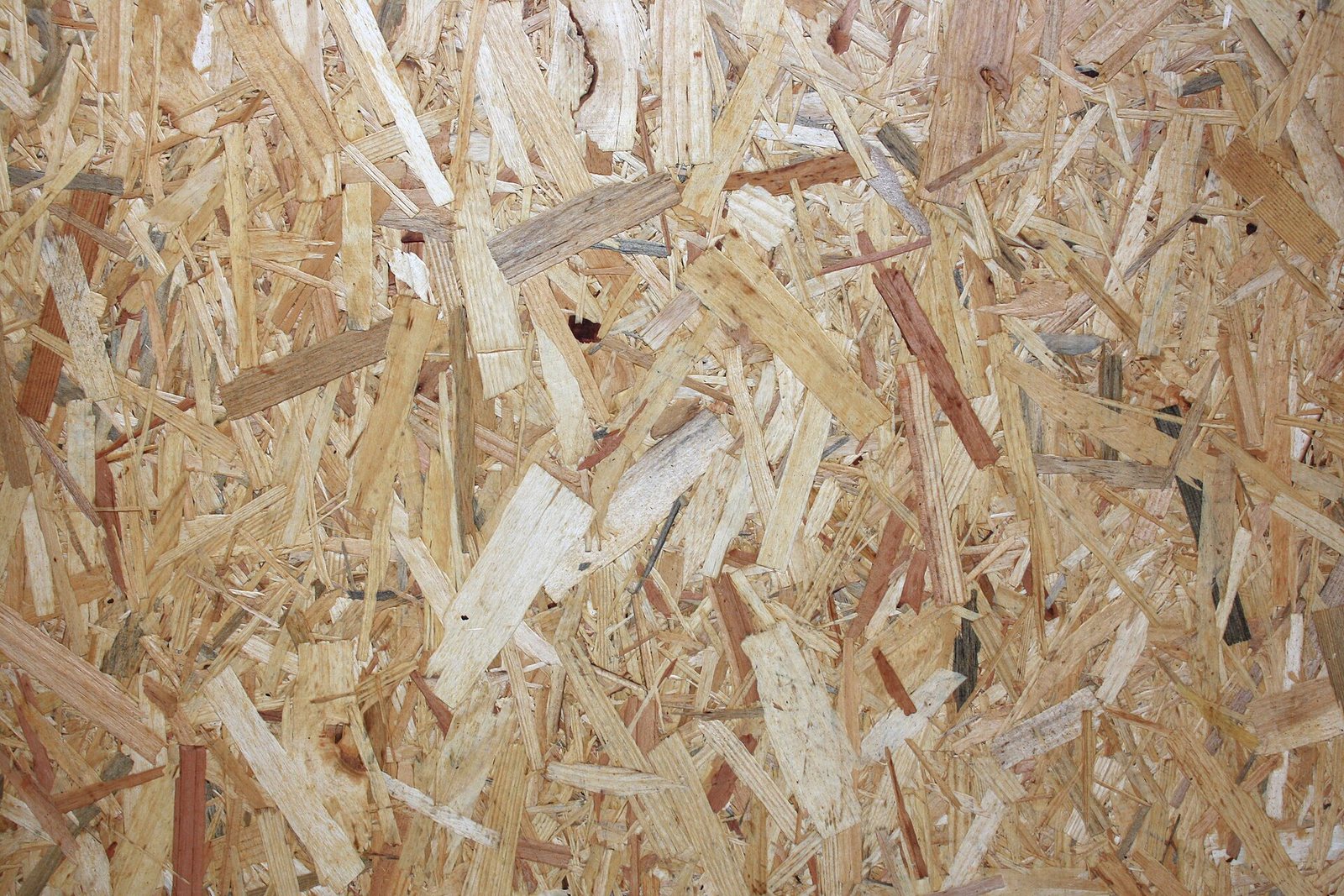
Oriented Strand Board →

Oriented Strand Board
Oriented strand board at Courtabœuf 2011 · CC BY-SA 3.0 via Wikimedia Commons
06End market

Housebuilding

Bought by builders and merchants against housing starts. Demand is cyclical and rate-sensitive, supply is fixed in the short run, and the price absorbs the difference.
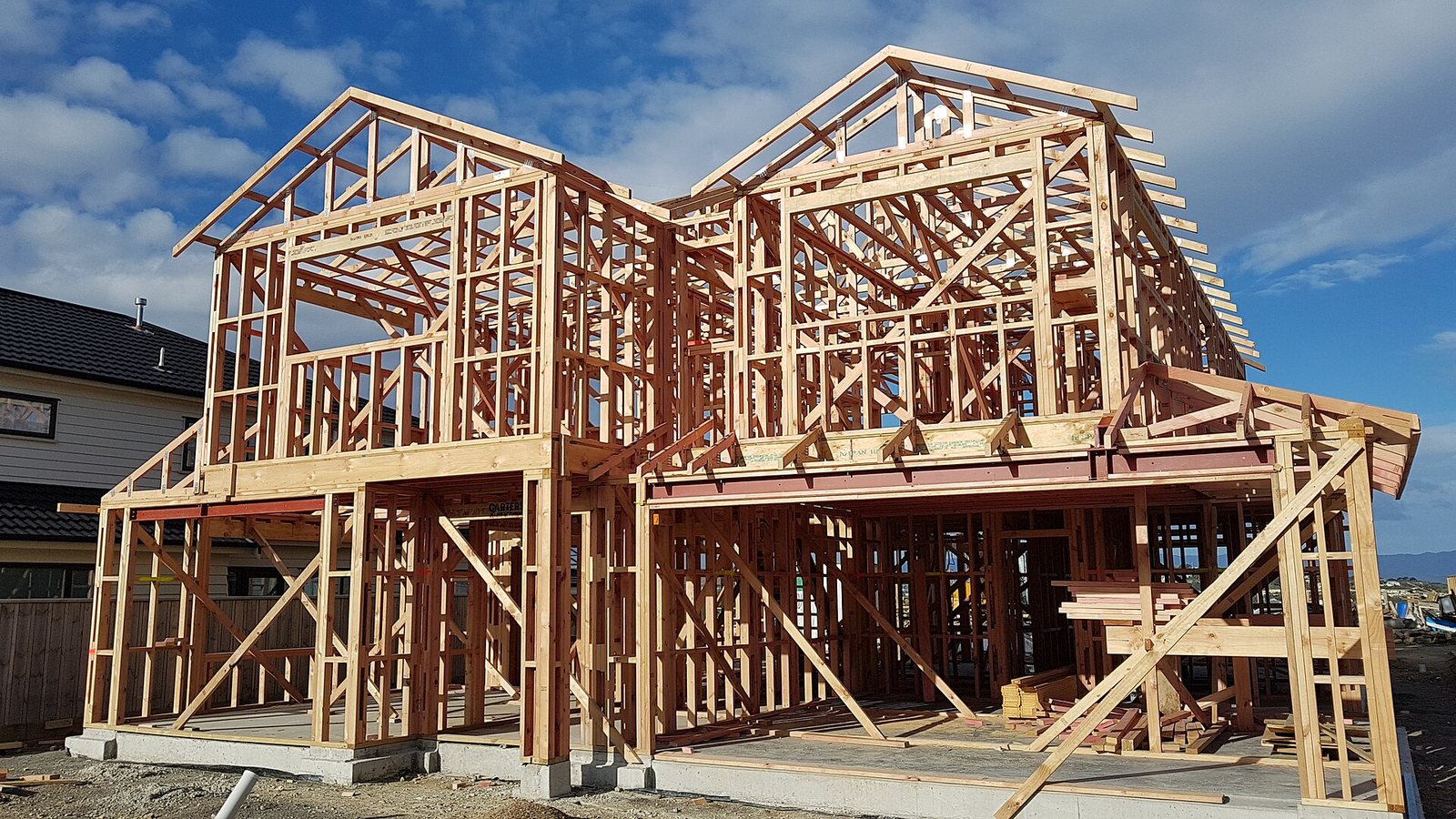
Housebuilding →

Housebuilding
Timber frame house under construction, New Zealand · CC BY-SA 4.0 via Wikimedia Commons

Material

Semua material Mineral kritis Tanah jarang Bahan baku baterai Mineral-mineral bijih Tabel periodik Penyaring

Permukaan tanah

Tambang & deposit Pemrosesan & pemurnian Negara Peta

Perekonomian

Perjalanan-perjalanan kustodi Rantai-rantai pasokan Pasar akhir Teknologi Perusahaan Kalkulator material

Pelajari

PelajariGlosarium Tanya DataAgen AI Riset & dataAPI Terbuka Berita★ Tersimpan

Tentang kami

Tentang kamiKontak MetodologiSumber data Kebijakan editorial Kebijakan privasiKetentuan penggunaan Penafian