鉱石から製品まで、経路を追跡
The Materials Atlas
素材 鉱山・鉱床 処理・精製 管理移転経路 サプライチェーン 企業 ニュース
棚別素材 バッテリー材料 希土類元素 銅・電気 半導体材料 核物質 航空宇宙・防衛 貴金属 鉄鋼・合金金属 工業用鉱物 農業用鉱物 エネルギー原材料 鉱石鉱物 周期表
需要 最終市場 技術 素材計算機 地図 スクリーナー
学習・ツール 学ぶ用語集 データに質問するAIエージェント 調査・データAPI ★ 保存済み
概要 運営について方法論 データソースお問い合わせ 免責事項
表示オプション
🧭 ガイドビュー 鉱石品位、精鉱、精錬、副産物といった用語が初めての方へ。閲覧しながらすべての用語をわかりやすく解説します。同じデータを、解説付きでご覧いただけます。
⚡ 専門家向け解説 業界の知識はお持ちのはず。データのみを——簡潔、迅速、コンパクトに、余分な説明なしで。これがデフォルト表示です。
テーマ
インターフェース言語
深度 素材ページは4段階のレベルで構成されている。任意の素材ページでレベルを選択すると、その設定が記憶される。
★ 保存済み 調査・データ
Crude Oil

エネルギー原材料

Crude Oil

Ancient marine plankton, cooked underground for millions of years into a liquid that carries more energy per litre than almost anything else portable.

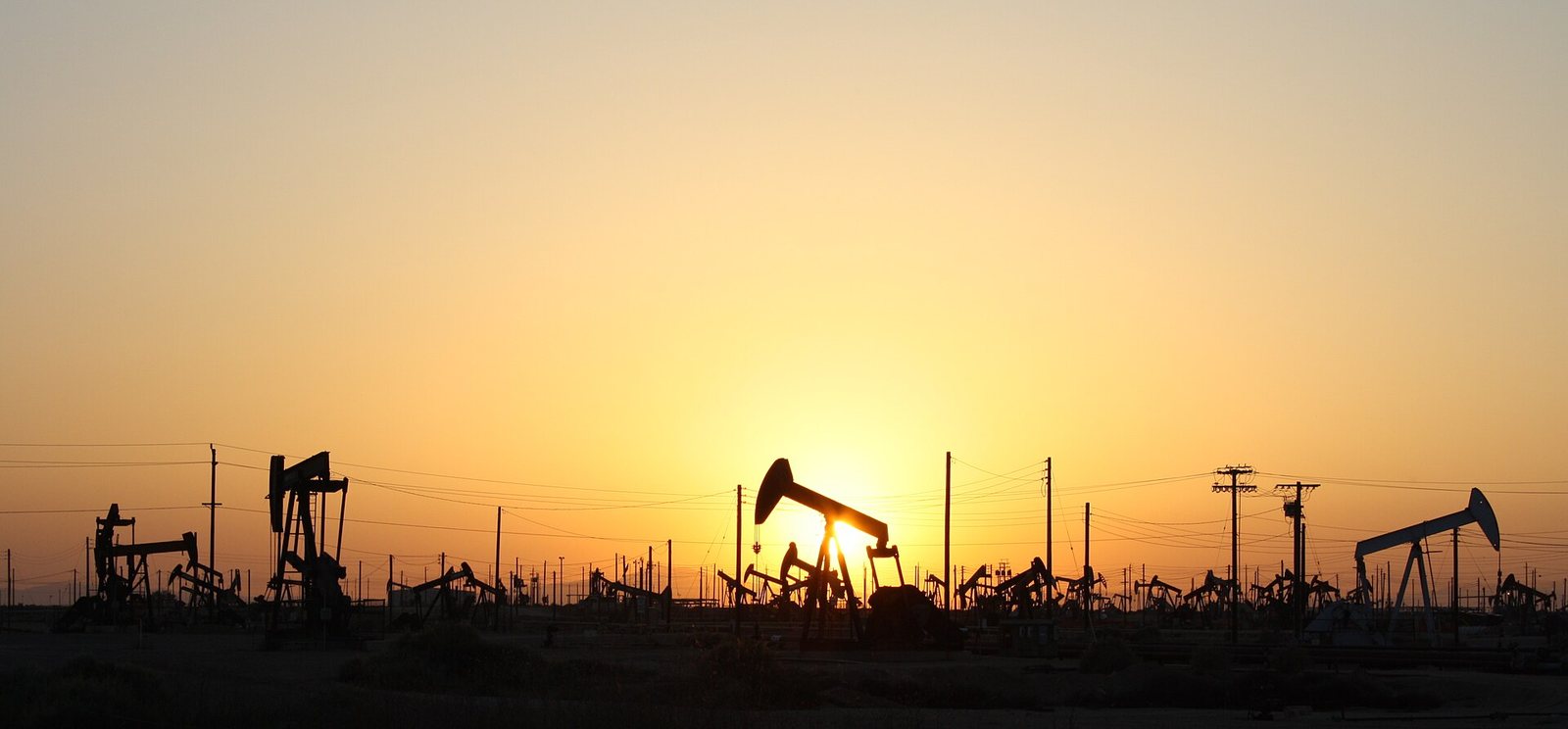
Pumpjacks · Arne Hückelheim · CC BY-SA 3.0 · Wikimedia Commons

これは何か

Ancient marine plankton, cooked underground for millions of years into a liquid that carries more energy per litre than almost anything else portable.

なぜ重要なのか

Oil is still the largest single energy source on Earth, and it is also the feedstock for plastics, lubricants, asphalt and petroleum coke — which is what synthetic graphite is baked from.

Where it is in the Earth

Crude oil begins with the death of microscopic marine organisms — mostly single-celled algae and bacteria — that settled onto the floors of ancient seas and shallow basins over hundreds of millions of years. Buried under accumulating sediment, this organic material was gradually cooked by the heat of the Earth at depths where temperatures are elevated but not so extreme as to destroy the carbon compounds. This transformation, which geologists call catagenesis, converts the original biological matter into the mixture of liquid hydrocarbons we call crude oil. The process takes place within a layer of fine-grained rock, typically shale or mudstone, known as the source rock. Kerogen — the solid, waxy precursor to oil — is the intermediate stage before enough heat has been applied to produce a fluid.

Oil does not, however, stay where it forms. Because it is less dense than the surrounding water-saturated rock, it migrates upward through permeable layers until it either reaches the surface and disperses, or is stopped by an impermeable barrier. A trap is any geological structure that prevents further migration: an anticlinal fold (an arch-shaped bend in rock layers), a fault that places impermeable rock against permeable rock, or a stratigraphic pinch-out where a porous layer simply thins and disappears. Below the trap lies the reservoir rock — most commonly sandstone or fractured limestone — whose connected pore spaces hold the oil. The impermeable cap rock above it seals everything in place. This three-part combination of source, reservoir and trap, arranged in the right sequence and timing, is what makes a commercial oil deposit possible and explains why large accumulations are geographically clustered rather than evenly spread across the globe.

The Middle East sits atop enormous reserves because its ancient Tethys Sea produced prodigious quantities of marine organic material, and the regional geology subsequently provided thick carbonate reservoir rocks and effective structural traps. The sedimentary basins of Siberia, the Gulf of Mexico, the North Sea and the Niger Delta each tell similar stories of the right combination of source richness, burial depth, migration pathway and trapping geometry arriving together. Where conventional traps are absent, oil can still be present but locked within the source rock itself — what is called tight oil or shale oil — or mixed into sand at the surface as bitumen-saturated oil sands, as in the Athabasca region of Canada. These unconventional accumulations require different extraction methods precisely because the rock has not allowed natural migration to concentrate the resource into a discrete reservoir.

Getting it out

The way oil is extracted depends almost entirely on where it sits and in what physical state. Conventional crude oil occupies the pore spaces of a permeable reservoir rock under pressure, so the primary extraction method is simply drilling a well and allowing that pressure to drive oil to the surface. Early in a field's life this happens naturally; as pressure drops, operators inject water or gas into the reservoir to maintain it, a practice called secondary recovery. At a certain point, more elaborate chemical or thermal methods — tertiary or enhanced recovery — can coax additional oil from the rock, though at greater cost. The concept of a grade, so central to hard-rock mining, applies here differently: what matters is the density and sulfur content of the oil itself, expressed as API gravity (a scale on which lighter oil has a higher number) and sulfur percentage, since these determine what refinery configurations can handle the crude and what refined products can be made from it.

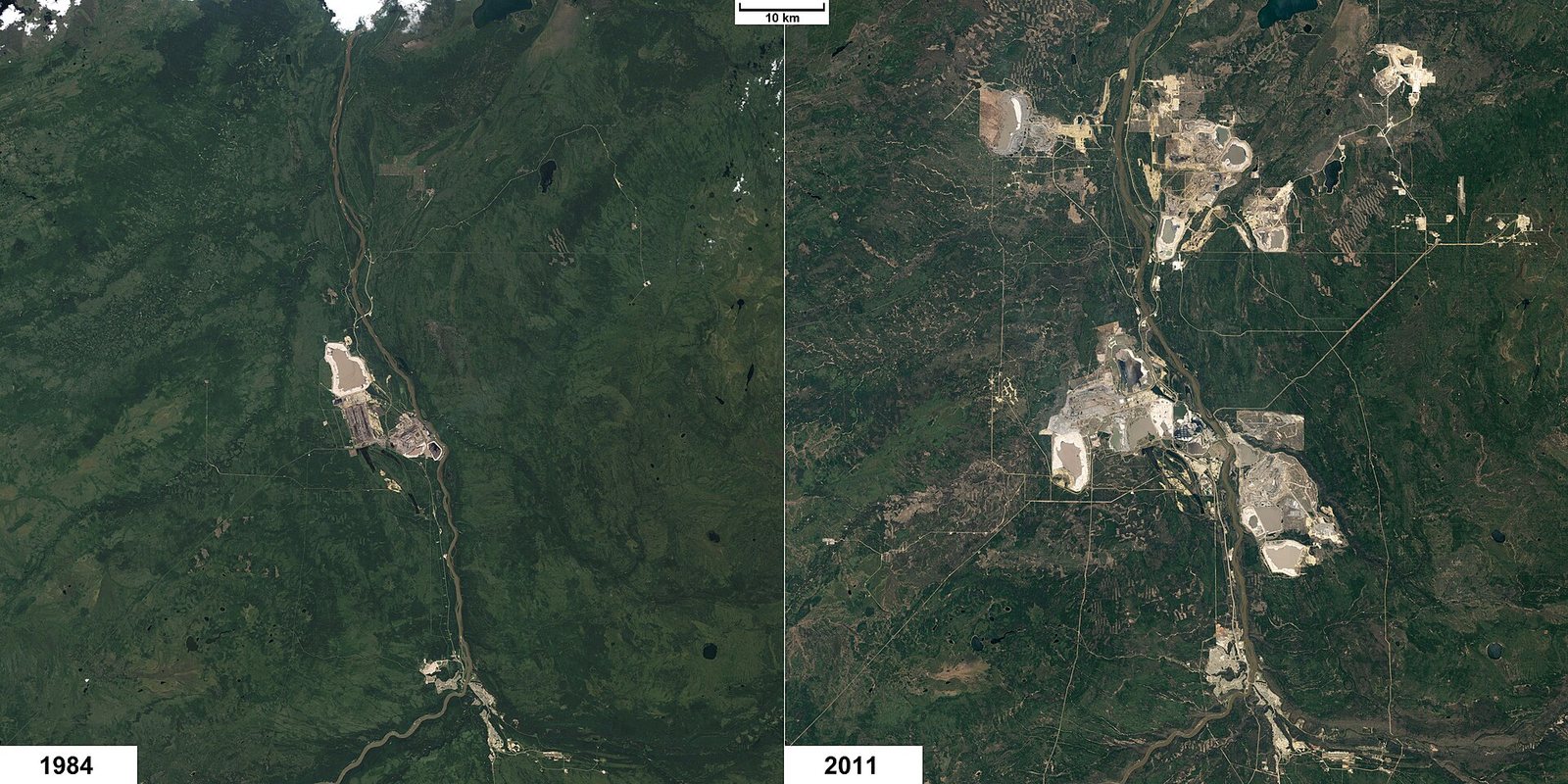
Oil sands are a fundamentally different proposition. In the Athabasca deposit in Canada, bitumen — a very heavy, viscous form of petroleum — is so thoroughly mixed with sand that it cannot flow at all at surface temperatures. Where the deposit lies close enough to the surface, it is mined using large trucks and shovels in open-pit operations, as at the Mildred Lake and Aurora mines operated by Syncrude and Suncor. Vast quantities of oil-saturated sand are excavated, moved and processed. The ratio of material moved to product recovered is substantially higher than in a conventional oil field, and the land disturbance is correspondingly large. Where the bitumen lies too deep for surface mining, steam is injected underground to heat and thin it enough to pump to the surface, in a method called steam-assisted gravity drainage, or SAGD. Neither approach produces anything a conventional refinery can directly handle without first upgrading the bitumen into a synthetic crude oil.

In conventional fields, there is no waste rock in the mining sense — what comes out of the well is the product, along with associated water and gas that are separated at surface. The meaningful efficiency measure is the recovery factor: the fraction of the oil originally in the reservoir that can actually be produced over the life of the field. That fraction varies widely with reservoir type, fluid properties and the recovery methods applied, and a great deal of reservoir engineering is devoted to improving it. For oil sands mined at surface, the analogous concern is bitumen extraction efficiency from the mined sand, and the management of the large volumes of fine-grained tailings — a slurry of water, sand and residual hydrocarbons — that the process generates.

What pulls on it

The largest single use of crude oil is as a transport fuel. Refinery output goes predominantly into petrol (gasoline), diesel and jet fuel, which power road vehicles, aircraft and shipping. This dependence on oil for mobility has been so deeply built into infrastructure, vehicle fleets and settlement patterns over the past century that it changes only slowly even when alternatives exist. Heating oil and bunker fuel for ships add further demand from the energy side. Taken together, the combustion uses of oil account for the overwhelming majority of barrels consumed each day, and it is this portion of demand that is most exposed to long-run change as electrification of transport proceeds.

The non-combustion uses of oil are smaller in aggregate but structurally different in character. Crude oil is the primary feedstock for petrochemicals — the chemical building blocks from which plastics, synthetic fibres, rubber, detergents, fertilisers, solvents and pharmaceuticals are made. These applications do not burn the oil; they embed its carbon in physical products. Lubricants, waxes and asphalt for road construction are further non-energy uses. Petroleum coke, a solid residue of refining, is the feedstock from which the calcined carbon used in aluminium smelting anodes and synthetic graphite electrodes is produced. This petrochemical and materials side of oil demand is less sensitive to competition from renewable energy than the fuel side, and has been growing as a share of total consumption, particularly as rising incomes in Asia increase the demand for plastics and chemicals.

For demand to shift sharply downward, several things would need to happen simultaneously: electric vehicles would need to penetrate the global fleet rapidly and in markets beyond early-adopting countries; aviation and shipping would need scalable low-carbon fuel alternatives; and the petrochemical industry would need either dramatically higher recycling rates for plastics or bio-based alternatives at comparable cost and scale. For demand to shift sharply upward from current levels, the most likely driver would be accelerated economic development in regions where per-capita consumption of both fuels and petrochemical products remains far below levels seen in industrialised economies. Neither shift is simple or fast, given the scale of existing infrastructure on both the supply and demand sides.

数値の読み方に注意してください。 Priced and traded in barrels (159 litres); grades differ by density (API gravity) and sulfur content. Light sweet, medium sour, heavy sour crudes; then refined products.

価格

Crude oil, Brent price

年間平均US$ per barrel

1995 · 16.65 高 133.6 US$ per barrel 2026 · 83.73

基準: IMF global price of Brent crude. 以下に公表された年間平均値: FRED (IMF primary commodity prices) · 出典 ↗. これらは参照用の年間平均値であり、リアルタイムの市況相場ではない。

産出鉱山

全鉱山 →
Athabasca Oil Sands (Mildred Lake / Aurora)
Athabasca Oil Sands (Mildred Lake / Aurora), Canada — Among the largest surface mining operations in the world by material moved. NASA EO Athabasca tar sands environmental imp…, Public domain via Wikimedia Commons

Athabasca Oil Sands (Mildred Lake / Aurora) →

最終市場そこでの機能重要度
Construction & Steel Asphalt and plastics 重要

越境地点をたどる

すべての輸送経路 →

この素材の特定の貨物が実際にたどる経路——すべての国、すべての管理者、各工程で残されるもの。

Alberta oil sands: mined like ore, refined like oil The only oil in the world that is dug up with a shovel and graded like an orebody. 出所 Canada · Bitumen in sand, roughly 8° API, 10–12% bitumen by… Saudi Arab Light to petrol, almost anywhere The same commodity, a fraction of the effort — because of what the molecule is. 出所 Saudi Arabia · Light sour crude, roughly 33° API, moderate sulfur Venezuelan extra-heavy crude to diesel, asphalt and aluminium anodes Oil so thick it will not flow down a pipe, and cannot be refined by most refineries on Earth. 出所 Venezuela · Extra-heavy crude, roughly 8–10° API, high sulfur, high…

U.S. SPR Depletion Threatens Further Oil Price Volatility

OilPrice.com02 Sep 2026

U.S. Oil Stocks Drop as Fuel Demand Weakens

OilPrice.com02 Sep 2026

India Boosts Far East Russian Oil Imports as War Upends Trade Routes

OilPrice.com02 Sep 2026

Kazakhstan to Double Oil Refining Capacity by 2040

OilPrice.com02 Sep 2026

U.S. Energy Secretary Says Venezuela Could More Than Double Oil Production

OilPrice.com02 Sep 2026

U.S. Crude Inventories Drop amid Continued SPR Draws

OilPrice.com01 Sep 2026

素材

全素材 重要鉱物 レアアース バッテリー材料 鉱石鉱物 周期表 スクリーナー

地下

鉱山・鉱床 処理・精製 地図

経済

管理移転経路 サプライチェーン 最終市場 技術 企業 素材計算機

学ぶ

学ぶ用語集 データに質問するAIエージェント 調査・データオープンAPI ニュース★ 保存済み

運営について

運営についてお問い合わせ 方法論データソース 編集方針 プライバシーポリシー利用規約 免責事項