鉱石から製品まで、経路を追跡
The Materials Atlas
素材 鉱山・鉱床 処理・精製 管理移転経路 サプライチェーン 企業 ニュース
棚別素材 バッテリー材料 希土類元素 銅・電気 半導体材料 核物質 航空宇宙・防衛 貴金属 鉄鋼・合金金属 工業用鉱物 農業用鉱物 エネルギー原材料 鉱石鉱物 周期表
需要 最終市場 技術 素材計算機 地図 スクリーナー
学習・ツール 学ぶ用語集 データに質問するAIエージェント 調査・データAPI ★ 保存済み
概要 運営について方法論 データソースお問い合わせ 免責事項
表示オプション
🧭 ガイドビュー 鉱石品位、精鉱、精錬、副産物といった用語が初めての方へ。閲覧しながらすべての用語をわかりやすく解説します。同じデータを、解説付きでご覧いただけます。
⚡ 専門家向け解説 業界の知識はお持ちのはず。データのみを——簡潔、迅速、コンパクトに、余分な説明なしで。これがデフォルト表示です。
テーマ
インターフェース言語
深度 素材ページは4段階のレベルで構成されている。任意の素材ページでレベルを選択すると、その設定が記憶される。
★ 保存済み 調査・データ
Lithium

バッテリー材料

Lithium Li · 3

A soft, silvery metal so light it floats on water, and the element that lets a rechargeable battery store a lot of energy for very little weight.

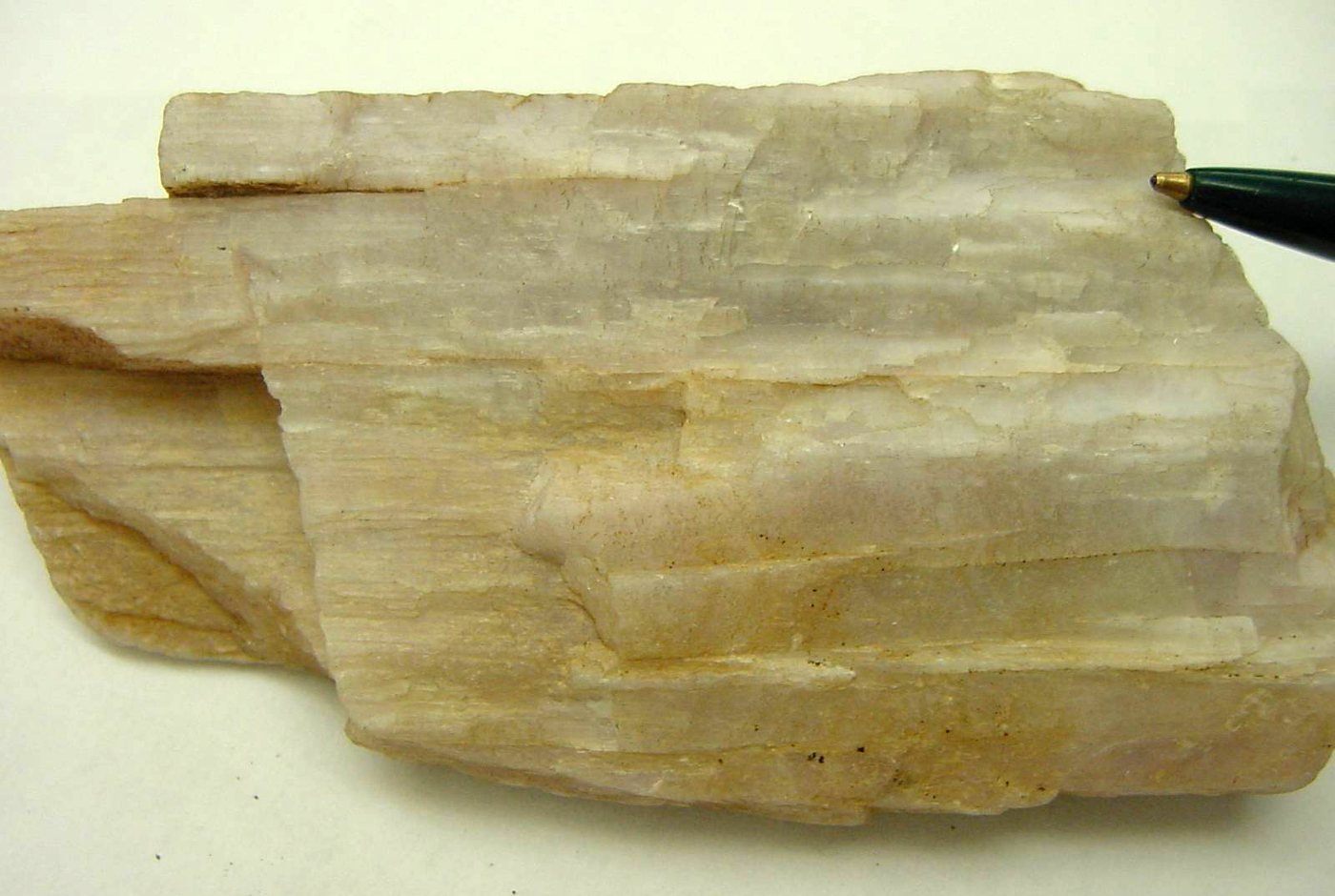
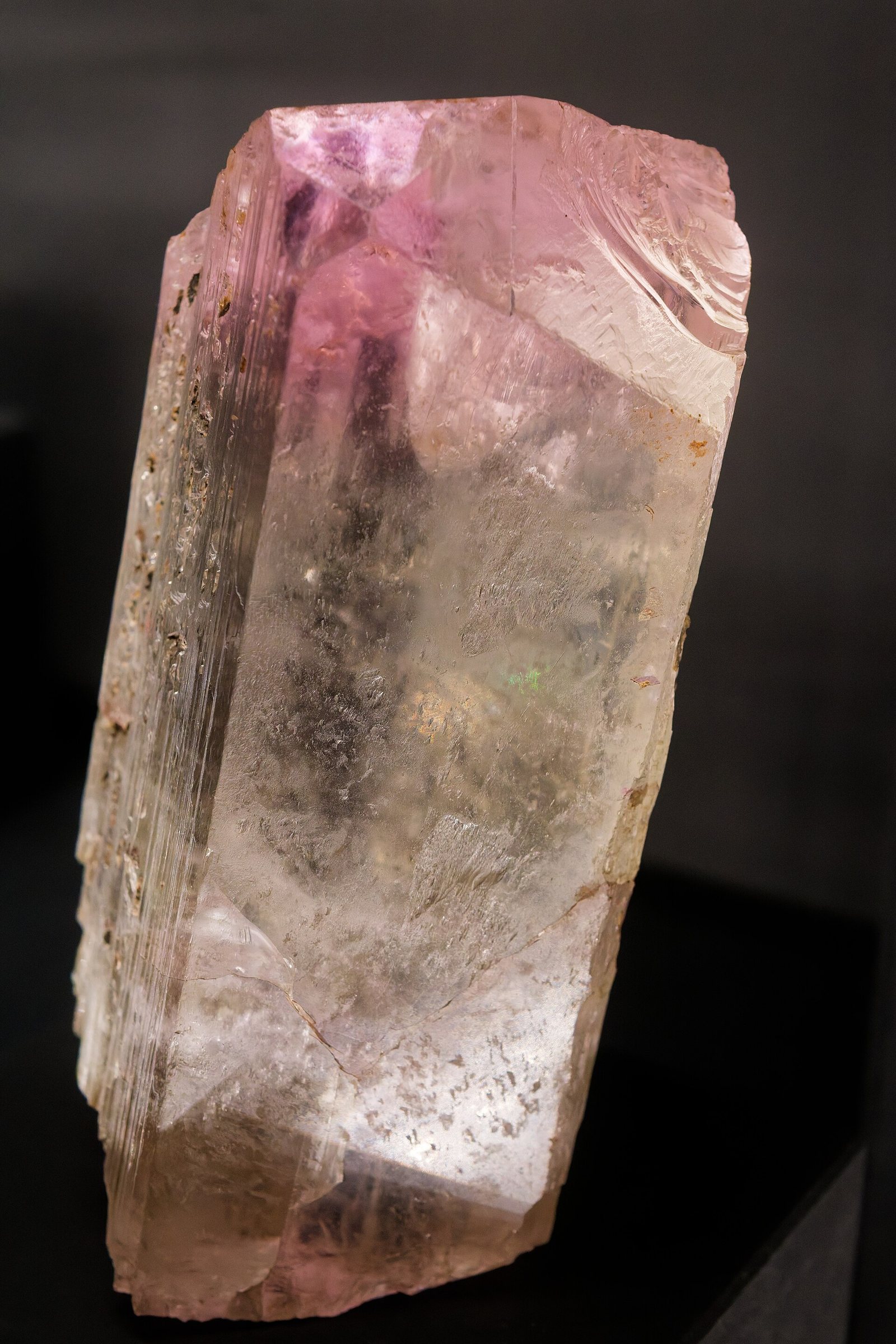
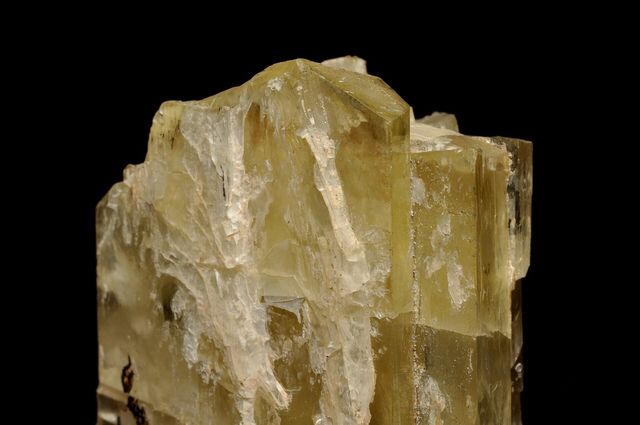
Spodumene Nuristan Créer le cristal · Marie-Lan Taÿ Pamart · CC BY 4.0 · Wikimedia Commons

これは何か

A soft, silvery metal so light it floats on water, and the element that lets a rechargeable battery store a lot of energy for very little weight.

なぜ重要なのか

Almost every phone, laptop and electric car on Earth runs on a lithium-ion battery. There is no drop-in replacement that matches it on energy per kilogram today.

Getting it out

Hard-rock lithium deposits, principally the spodumene pegmatites of Australia and southern Africa, are mined by open-pit methods. Miners remove the overlying rock — called overburden — expose the orebody, and extract it in benches cut down through the deposit. The proportion of waste rock moved for every tonne of ore recovered varies with the geometry of the deposit and how deeply it runs, but in any open-pit operation this stripping ratio is a significant part of the cost. The ore is then crushed and processed on site to produce a spodumene concentrate, a product containing around 6 percent lithium oxide (Li₂O) by weight. This concentrate is the form in which most Australian lithium leaves the country, travelling to chemical plants — predominantly in China — for further conversion.

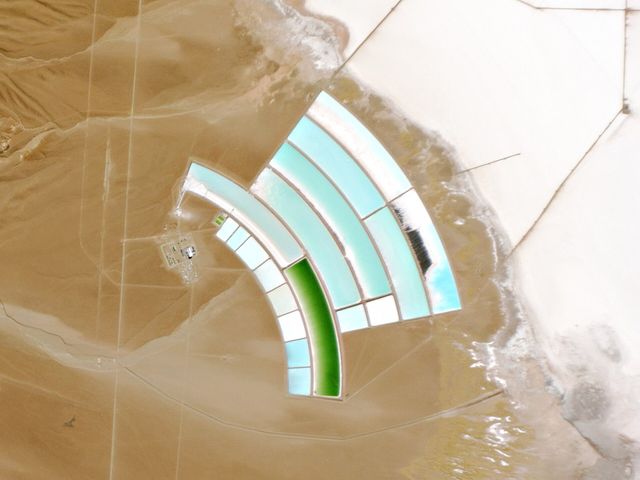
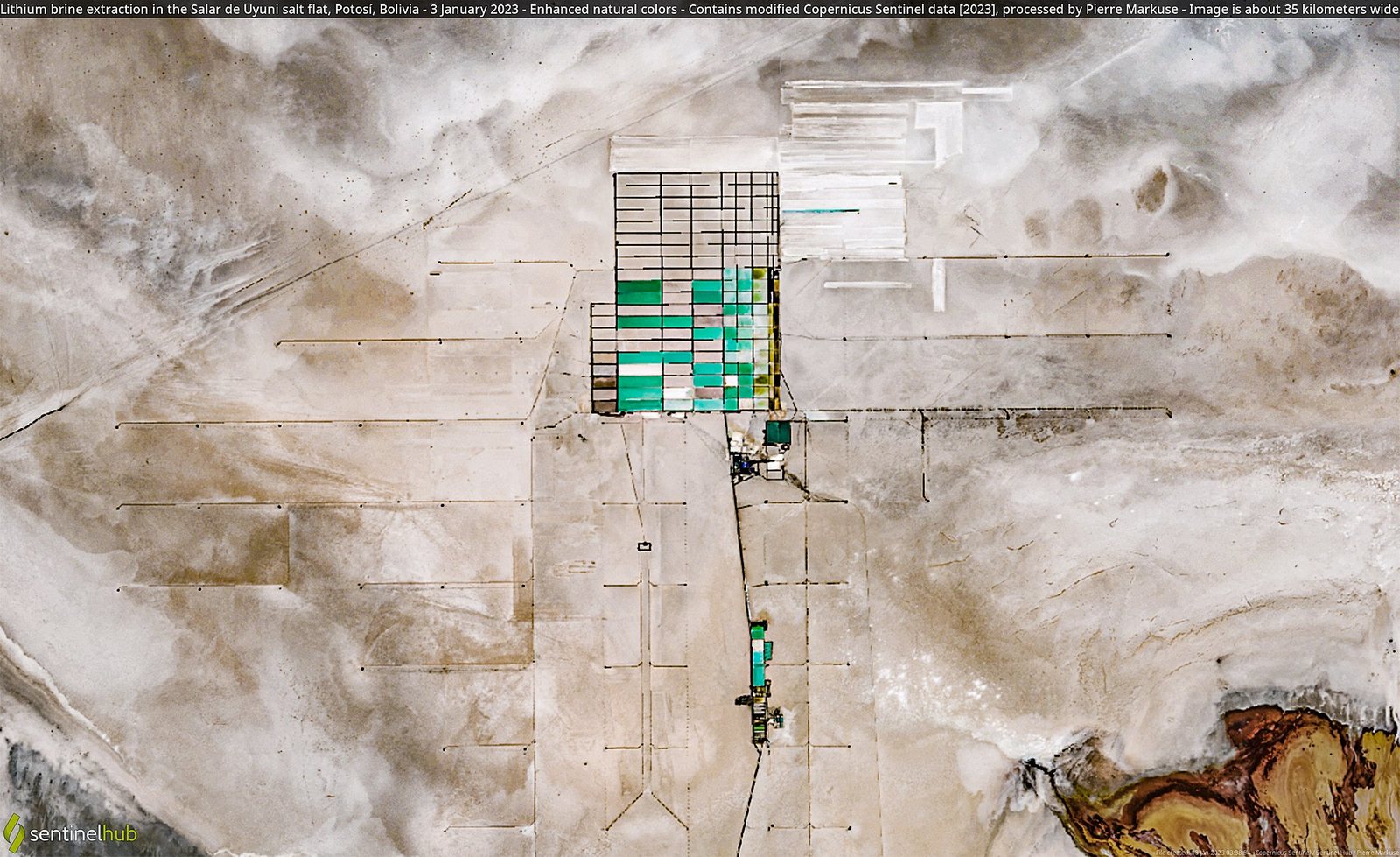
Brine deposits work entirely differently. Operators drill wells into the salt flat and pump the lithium-bearing brine to the surface, where it is directed into a sequence of large, shallow evaporation ponds. Solar energy does most of the work: over many months, water evaporates and unwanted salts crystallise out, progressively concentrating the lithium. When the brine has been sufficiently enriched, it moves to a chemical plant for further purification and conversion into lithium carbonate or lithium hydroxide. The process is slow — a full evaporation cycle can take well over a year — and the large pond footprint means it uses considerable land area in ecosystems that are ecologically and hydrologically sensitive. More recently, direct lithium extraction (DLE) technologies, which use selective adsorbent or membrane materials to pull lithium from brine without lengthy evaporation, are being piloted at several sites, including at Salar del Hombre Muerto in Argentina. DLE promises faster processing and a smaller footprint, but most projects using it are not yet operating at full commercial scale.

The clay-hosted deposit at Thacker Pass in the United States involves open-pit mining followed by acid leaching of the crushed claystone — a process closer to hydrometallurgy than to conventional mineral processing. Because this deposit type is still at an early stage of commercial development, the practical performance of the full process at scale remains to be demonstrated under operating conditions.

What pulls on it

The dominant use of lithium today is in rechargeable batteries, and within that category the largest single application is the electric vehicle. Both of the main cathode chemistries in wide use — lithium iron phosphate (LFP) and nickel manganese cobalt oxide (NMC) — incorporate lithium as a functional element that shuttles between electrodes during each charge and discharge cycle. The material-intensity data on this page shows that a single 75 kWh battery pack requires several kilograms of contained lithium, meaning that each vehicle placed on the road represents a discrete, sizeable demand event. Consumer electronics — phones, laptops, tablets — also rely on lithium-ion cells, and grid-scale battery storage for electricity networks is a growing application as more intermittent renewable generation is added to grids.

Before the battery era, lithium's main markets were quite different: glass and ceramics (where it improves thermal properties), lubricating greases, air treatment, and pharmaceutical compounds. Those uses have not disappeared, but they have shrunk as a share of total demand as battery growth has outrun everything else. The practical consequence is that the lithium market's fortunes are now tightly coupled to the rate at which battery-powered vehicles and storage systems are adopted. If that adoption accelerated, demand would rise accordingly; if policy support for electric vehicles were withdrawn in major markets, or if a competing battery chemistry emerged that did not require lithium, the demand picture would change substantially. Neither the pace of adoption nor the development of alternative chemistries is fixed, which is what makes demand forecasting in this market genuinely uncertain.

It is worth noting that demand does not translate directly into lithium consumption without accounting for the efficiency of the manufacturing chain. Cathode production involves its own yield losses, and scrap generated within battery factories does not all return to the supply chain cleanly. The intensity figures are for finished packs, and the quantity of lithium that must actually be mined to deliver one finished pack is somewhat higher than those figures alone suggest.

Where it is in the Earth

Lithium is one of the lightest elements, and its very lightness is part of why it does not appear in concentrated form everywhere: it does not fit comfortably into the crystal structures of most common rock-forming minerals, so it tends to be left behind as magmas cool and solidify. Over geological time, that rejection causes it to accumulate in the last fractions of a cooling granite body, where water-rich fluids carry it into cracks and cavities. The resulting rock type is called a pegmatite — a coarse-grained igneous rock whose outsized crystals reflect the slow, fluid-assisted growth conditions. When the right combination of lithium, aluminium, and silicon is present, the mineral spodumene crystallises, and a mineable deposit can form. Geologists label the most lithium-rich class of these bodies LCT pegmatites, shorthand for the lithium, caesium, and tantalum that tend to travel together through these late-stage fluids. The Greenbushes and Pilgangoora deposits in Western Australia are among the best-known examples.

The other principal source is entirely different in character. In high, arid plateaux — most famously the Andean altiplano spanning Chile, Argentina, and Bolivia — ancient lake basins have been concentrated by millions of years of evaporation into vast salt flats called salares. Rainwater that falls on the surrounding volcanic highlands dissolves lithium from the rocks and carries it into these closed basins, from which there is no outlet to the sea. Evaporation removes the water but leaves the dissolved salts behind, including lithium at concentrations that can reach into the thousands of milligrams per litre in the subsurface brines beneath the salt crust. This is not ore in the conventional sense — it is a mineral-rich solution sitting in the pores of sediments below ground. The concentration of lithium in that brine, measured in milligrams per litre, is the brine-deposit equivalent of ore grade.

A third deposit type is drawing attention as exploration expands: lithium-bearing claystones formed from the alteration of volcanic ash in ancient lake beds. The Thacker Pass deposit in the United States belongs to this category. Clay-hosted lithium presents different metallurgical challenges from either pegmatite or brine, and the technology to process it at scale is still being proved commercially. Each deposit type therefore represents not just a different geological setting but a different set of engineering and environmental problems to solve.

数値の読み方に注意してください。 USGS tonnages count CONTAINED LITHIUM METAL, not lithium carbonate. One tonne of lithium metal is about 5.32 tonnes of lithium carbonate (Li2CO3). Nobody ships lithium metal. The traded products are lithium carbonate and lithium hydroxide, plus spodumene concentrate at about 6% Li2O.
An LCT pegmatite
spodumene-bearing zone wall zone: quartz, feldspar, mica granite host rock surface
The last few percent of a cooling granite carries whatever would not fit into the ordinary minerals — lithium, caesium, tantalum. Water-rich fluid injects it into cracks, where it grows outsized crystals in distinct zones. Schematic. Dykes range from under a metre to tens of metres thick. Original diagram, The Materials Atlas.

岩石中の産出箇所

全鉱石鉱物 →

実際に以下を担う鉱物 lithium. 鉱床が鉱体となるのは、採掘コストを回収できるほど十分な濃度で鉱石が濃集している場合に限られる。
Mine production

Mine productionmetric tons 2025 (推定値) 世界合計 290,000 metric tons

USGS Mineral Commodity Summaries 2026 · USGS tonnages count CONTAINED LITHIUM METAL, not lithium carbonate. One tonne of lithium metal is about 5.32 tonnes of lithium carbonate (Li2CO3). · 出典 ↗

テーブルを横にスクロールすると残りの列が表示されます。

生産 世界に占める割合
Australia 92,000 31.7%
China 62,000 21.4%
Chile 56,000 19.3%
Zimbabwe 28,000 9.7%
Argentina 23,000 7.9%
Brazil 12,000 4.1%
Mali 9,400 3.2%
Canada 5,600 1.9%
Portugal 380.0 0.1%
Other countries Zero
United States Withheld
世界合計 290,000100%

「非開示」とは、個別企業のデータが特定されないようUSGSが数値を公表しなかったことを意味し、ゼロを意味するものではありません。出典が各数値を独立して丸め処理しており、「その他の国」の内訳を常に示しているわけではないため、各国の数値の合計が世界合計と一致しないことがあります。

埋蔵量の保有者

「埋蔵量」は厳密な用語です。既知の鉱床のうち、現在の価格と現在の技術で経済的に採掘できる部分を指し、地中に存在するすべてのものを意味するわけではありません。埋蔵量は、価格が上昇するか新たなプロセスが開発されると増加し、逆の場合は減少します。

Reserves

Reservesmetric tons 2025

USGS Mineral Commodity Summaries 2026 · 出典 ↗

埋蔵量世界に占める割合
Chile 9,200,000 24.9%
Australia 8,400,000 22.7%
China 4,600,000 12.4%
United States 4,400,000 11.9%
Argentina 4,400,000 11.9%
Other countries 2,400,000 6.5%
Canada 1,600,000 4.3%
Brazil 540,000 1.5%
Zimbabwe 500,000 1.4%
Mali 370,000 1.0%
Portugal 60,000 0.2%
世界合計 37,000,000100%

価格

annual average-real, battery-grade lithium carbonate, dollars per metric ton

年間平均dollars per metric ton

2021 · 11,700 高 63,700 dollars per metric ton 2025 · 9,000

基準: annual average-real, battery-grade lithium carbonate, dollars per metric ton. 以下に公表された年間平均値: USGS Mineral Commodity Summaries 2026 · 出典 ↗. これらは参照用の年間平均値であり、リアルタイムの市況相場ではない。

産出鉱山

全鉱山 →
Goulamina
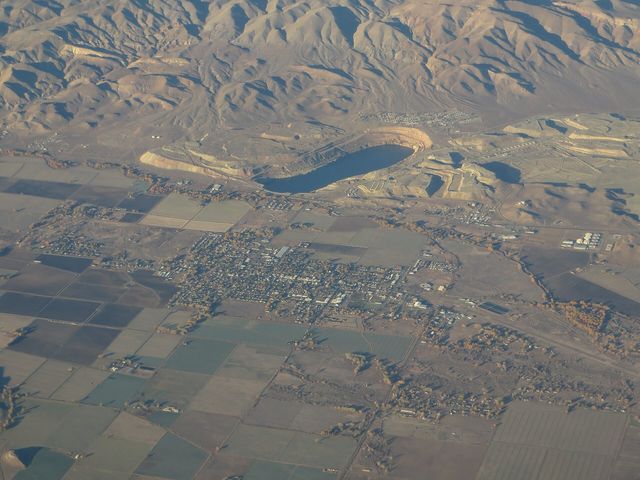
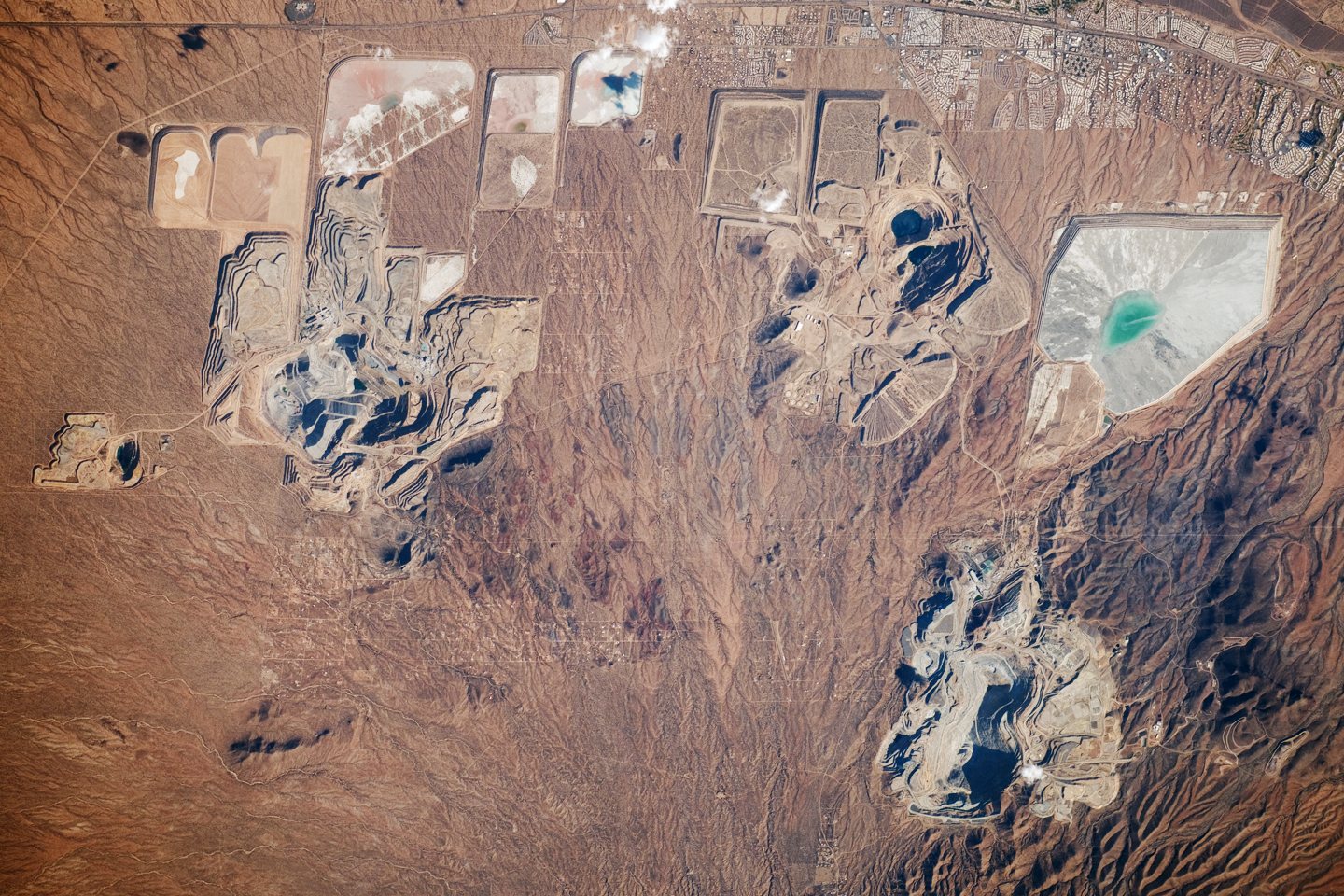
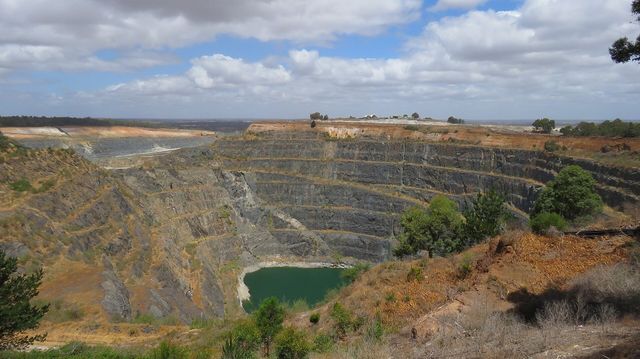
Goulamina, Mali — One of the mines behind Mali's sudden appearance in world lithium statistics. Open Pit Mines, Southern Arizona 2010-01-14 I…, Public domain via Wikimedia Commons

Goulamina →

処理・精製が行われる場所

プラント種別 ステージ役割
CATL Ningde Plants ギガファクトリーコンポーネント China投入
Gigafactory Nevada ギガファクトリーコンポーネント United States投入
Kwinana Lithium Hydroxide Plant 化学プラント精製 Australia投入
Qinghai & Sichuan Lithium Chemical Cluster 化学プラント精製 China投入
最終市場そこでの機能重要度
Electric Vehicles The cathode and electrolyte salt 定義
Consumer Electronics Battery 定義
Grid Storage Lithium-ion systems 定義
Power Grids Battery storage on the network 重要
Robotics & Automation On-board battery 重要

技術が必要とする量

「インテンシティ」とは、ある製品1単位に含まれる素材の量を指します。ここに示す値は参考レンジであり、実際の設計はメーカーやモデル年によって異なります。また、エンジニアが使用量を削減する技術を習得するにつれ、いずれの値も低下し続けています。
技術数量 建値基準
LFP Lithium-Ion Battery About 0.09 kg Li per kWh. 5.50–8.00 kg contained lithium per 75 kWh packContained metal
NMC Lithium-Ion Battery About 0.10 kg Li per kWh of cell capacity. 6.00–9.00 kg contained lithium per 75 kWh packContained metal, not carbonate

Indicative range compiled from published technology studies and chemistry; verify against a manufacturer specification before use. 素材計算機で任意の規模に換算して実行 →

輸出規制

支配適用対象
ChinaExport licensing requirement for materials and technologies Antimony (2024), bismuth (2025), synthesized diamond (2025), gallium (2023), germanium (2023), graphite (2023), indium (2025), magnesium materials (2024), molybdenum (2025), rare earths (2025), silver (2026), tellurium (2025), tungsten (2025), and items related to lithium batteries and artificial graphite anode materials (2025).
NamibiaExport ban Ores and concentrates of cobalt, graphite, lithium, manganese, and rare earths (2023).
ZimbabweExport ban Lithium ore (2022).

USGS Mineral Commodity Summaries 2026, table 4 — controls in effect as of January 2026, excluding controls since lifted.

越境地点をたどる

すべての輸送経路 →

この素材の特定の貨物が実際にたどる経路——すべての国、すべての管理者、各工程で残されるもの。

Australian spodumene to a battery, the fast way Eight weeks instead of eighteen months, at the cost of a great deal more energy. 出所 Australia · Spodumene concentrate, 6% Li2O, from an LCT pegmatite Chilean brine to a battery in a car The ore is water. The first year and a half of processing is done by the sun, for free. 出所 Chile · Salar brine, roughly 1,500–2,000 mg of lithium per litre
トレース済みサプライチェーン

SW US mine rush collides with water limits

The Northern Miner02 Sep 2026

Liontown to earn up to 100% interest in Centenario lithium project

MINING.COM02 Sep 2026

China’s biggest lithium mine loses licence

The Northern Miner02 Sep 2026

China’s biggest lithium mine loses licence

MINING.COM02 Sep 2026

Axiant hits ASX after Core Lithium completes spinout

MINING.COM02 Sep 2026

Liontown to acquire up to 100% of Centenario lithium project

Mining Technology02 Sep 2026

素材

全素材 重要鉱物 レアアース バッテリー材料 鉱石鉱物 周期表 スクリーナー

地下

鉱山・鉱床 処理・精製 地図

経済

管理移転経路 サプライチェーン 最終市場 技術 企業 素材計算機

学ぶ

学ぶ用語集 データに質問するAIエージェント 調査・データオープンAPI ニュース★ 保存済み

運営について

運営についてお問い合わせ 方法論データソース 編集方針 プライバシーポリシー利用規約 免責事項