Rock to product, traced
The Materials Atlas
Materials Mines & deposits Processing & refining Custody journeys Supply chains Companies Countries News
Materials by shelf Battery Materials Rare Earth Elements Copper & Electrical Semiconductor Materials Nuclear Materials Aerospace & Defence Precious Metals Steel & Alloy Metals Industrial Minerals Agricultural Minerals Energy Raw Materials Ore minerals Periodic table
Demand End markets Technologies Material calculator Maps Screener
Learn & tools LearnGlossary Ask the DataAI agents Research & dataAPI ★ Saved
About About usMethodology Data sourcesContact Disclaimer
Reading options
🧭 Guided View New to this — ore grades, concentrate, refining, by-products? We explain every term as you browse, in plain English. Same data, with the help built in.
⚡ Expert View You already know the industry. Just the data — clean, fast and compact, with no extra explanations. This is the default view.
Theme
Interface language
Depth Material pages are written at four levels. Pick one on any material page and it is remembered.
★ Saved Research & data
Chilean brine to a battery in a car

Custody journey · starts in Chile

Chilean brine to a battery in a car

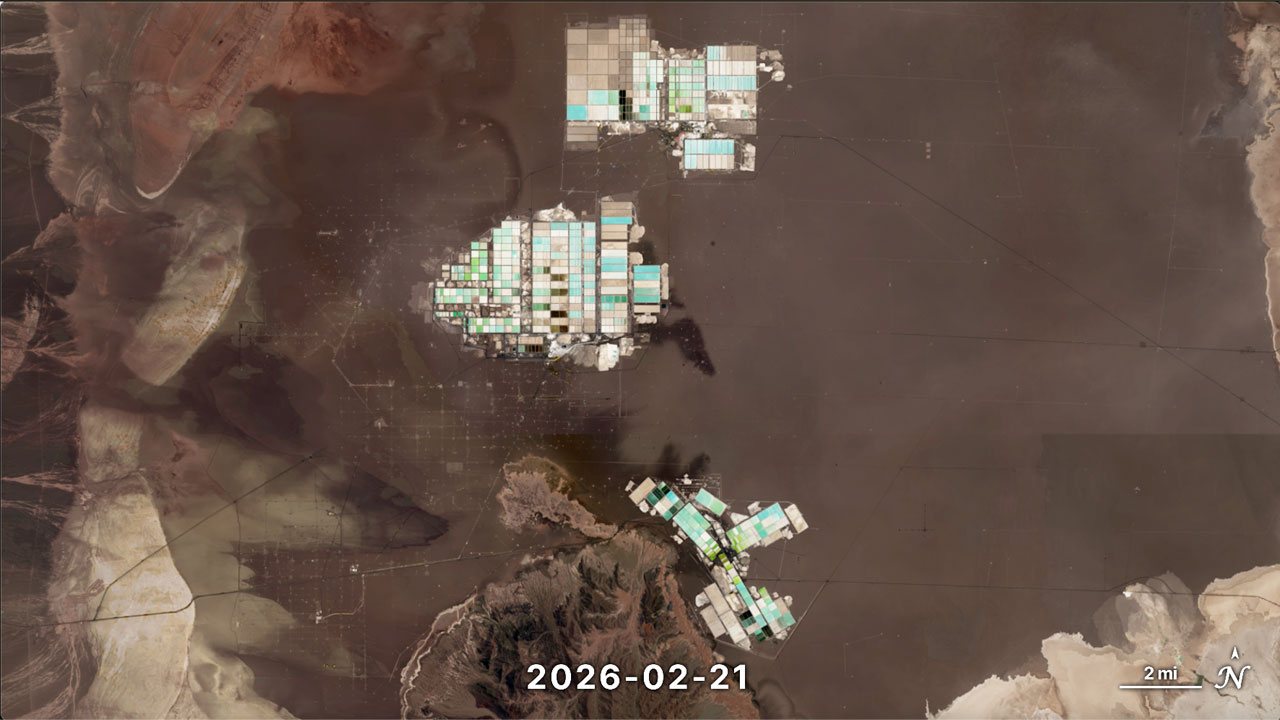
The ore is water. The first year and a half of processing is done by the sun, for free.

Lithium Ponds of Chile's Salar de Atacama (SVS15006) · NASA's Scientific Visualization Studio - SSAI… · Public domain · Wikimedia Commons
1,000,000 litres of raw brine pumped from beneath the salt crust
8 kg of contained lithium — roughly one electric car's worth
Chile → China · Container ship China → Germany Chile — Pumping the ore to the surface 1 Chile China — Across the Pacific in a container 2 China Germany — A car, for maybe fifteen years 3 Germany
Numbered in the order the material travels. Click a country to open its page. Equirectangular projection drawn from country centroids — the arcs show which borders are crossed, not the actual sailing route.

What is actually moving

Lithium in a salar is dissolved in brine under the salt crust. It is pumped into ponds and left to evaporate for twelve to twenty-four months until it is concentrated enough to be worth processing. Almost none of the value is added in Chile; the concentrate leaves as a chemical and comes back, eventually, as a car.

The material
Lithium
The variety
Salar brine, roughly 1,500–2,000 mg of lithium per litre
Where it starts
Chile — Salar de Atacama, 2,300 m up in the driest desert on Earth
Why this route and not another. Atacama brine has an unusually favourable ratio of magnesium to lithium, which is what makes solar evaporation work here and not in most other salars. The alternative — extracting the lithium directly with an adsorbent — is faster and uses far less water, but has a much shorter commercial track record.
The narrowest link. Not the brine. Cathode manufacture, which is overwhelmingly concentrated in one region, and which is where the lithium finally acquires most of its value.
Read the two numbers on each step: what went in, and what came out. Watching them shrink is the point. By the end you will have followed a thousand tonnes of rock down to a few kilograms of the thing that actually does the work.

Step by step, and border by border

01 Extraction 1,000,000litres

Chile · Salar de Atacama held by SQM and Albemarle, under CORFO concessions (Miner)

Pumping the ore to the surface

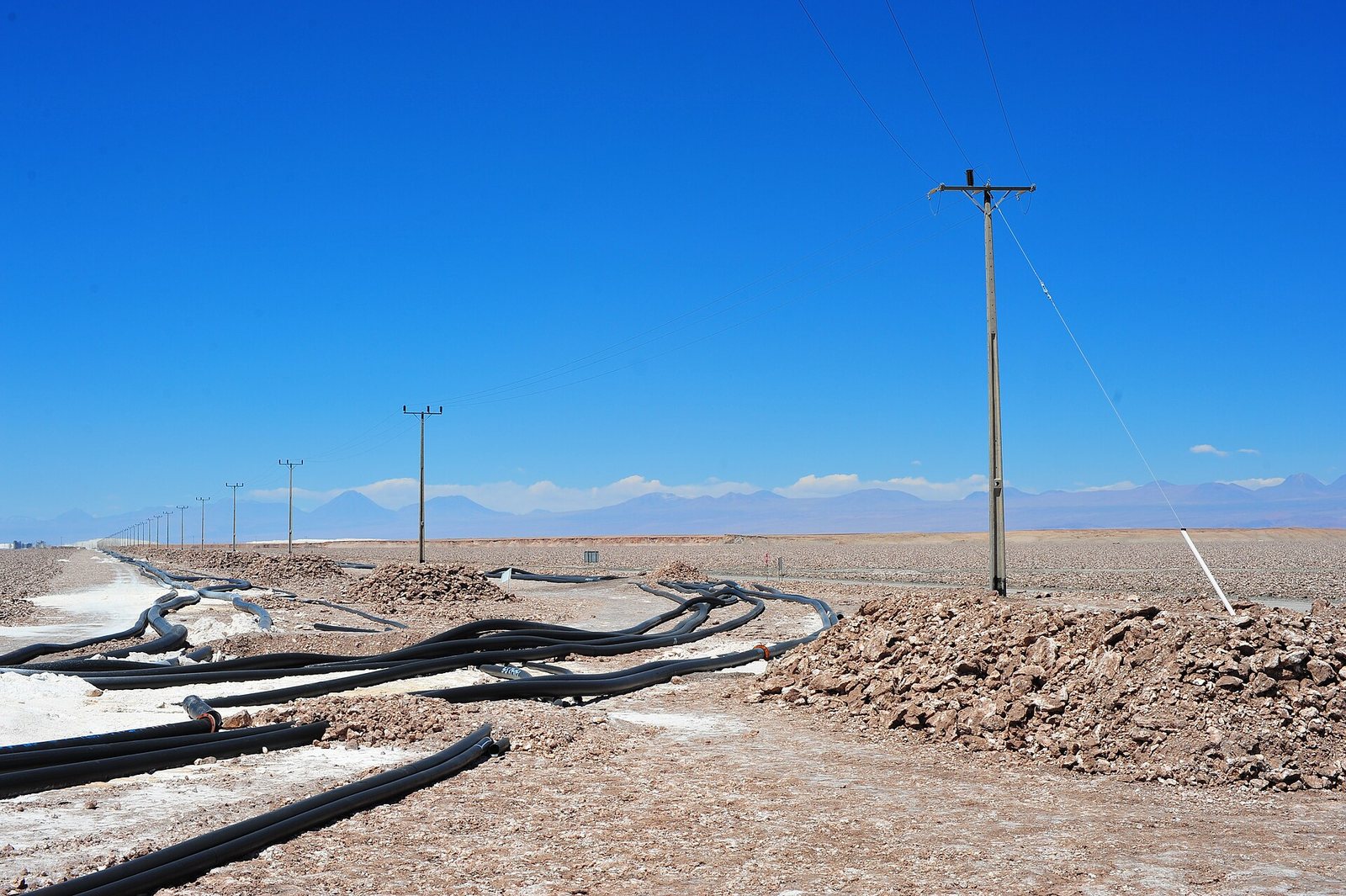
Brine is pumped from wells 30–200 m below the salt crust. No blasting, no haul trucks, no waste rock — the ore arrives as a liquid.

1,000,000 litresbrine in the aquifer 1,000,000 litresraw brine at the ponds

Why here: Closed basin, high altitude, volcanic highlands feeding it, and almost no rainfall. Very few places on Earth combine all four.
Pumping the ore to the surface
SQM Brine pipelines, Salar de Atacama · CC BY-SA 2.0 via Wikimedia Commons
02 Preparation 25,000litres

Chile · Evaporation ponds held by SQM and Albemarle (Miner)

Eighteen months of sunshine

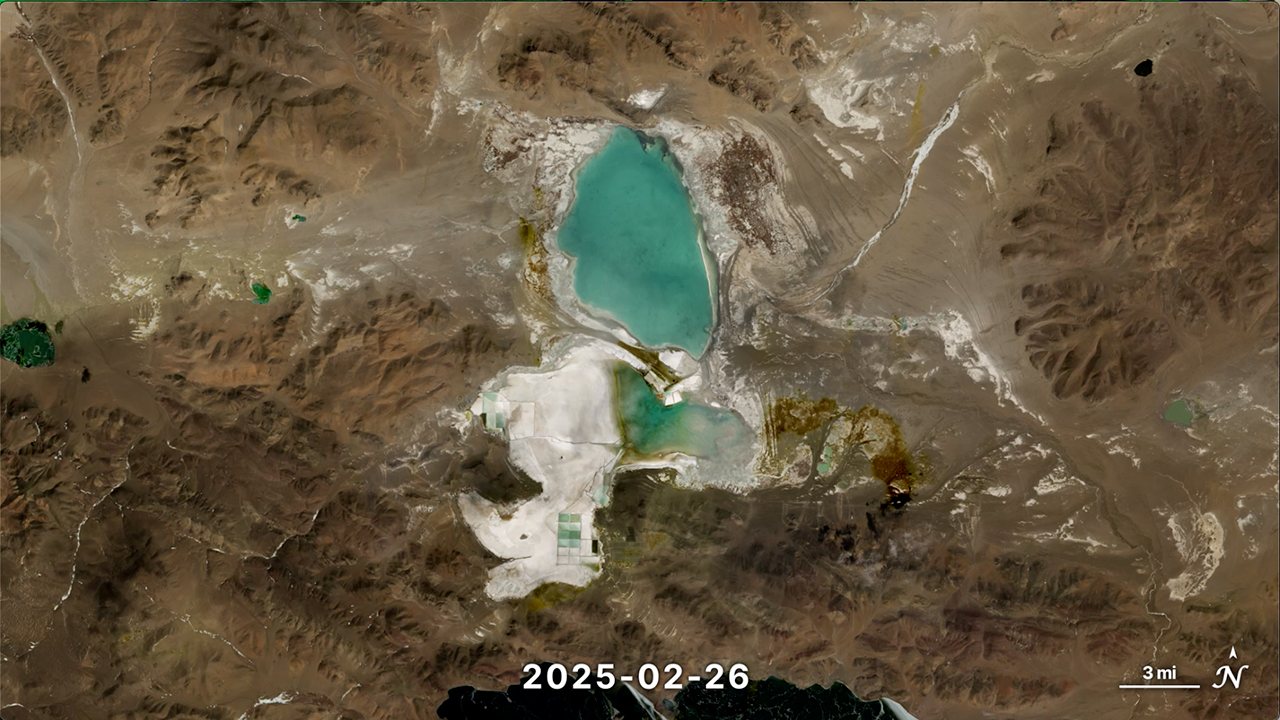
The brine moves through a cascade of ponds. Sodium, potassium and magnesium salts crystallise out in sequence and are harvested; the lithium stays in solution and concentrates.

1,000,000 litresraw brine at ~1,800 mg/L lithium 25,000 litresconcentrated brine at ~6% lithium

What happened to the rest: Around 95% of the water evaporates into the desert air. Potash is harvested as a genuine co-product, not a waste.

Why here: This step is free solar energy and eighteen months of patience. It cannot be moved somewhere with less sun and it cannot be hurried.
12–24 months Potash →
The road not taken The same element out of hard rock instead Eighteen months of evaporation, or eight weeks of crushing and roasting. Compare them.
Eighteen months of sunshine
Lithium Ponds of Tibet’s Lake Zabuye (S… · Public domain via Wikimedia Commons
03 Processing 43kg

Chile · Salar del Carmen, near Antofagasta held by SQM / Albemarle (Chemical)

Into a chemical

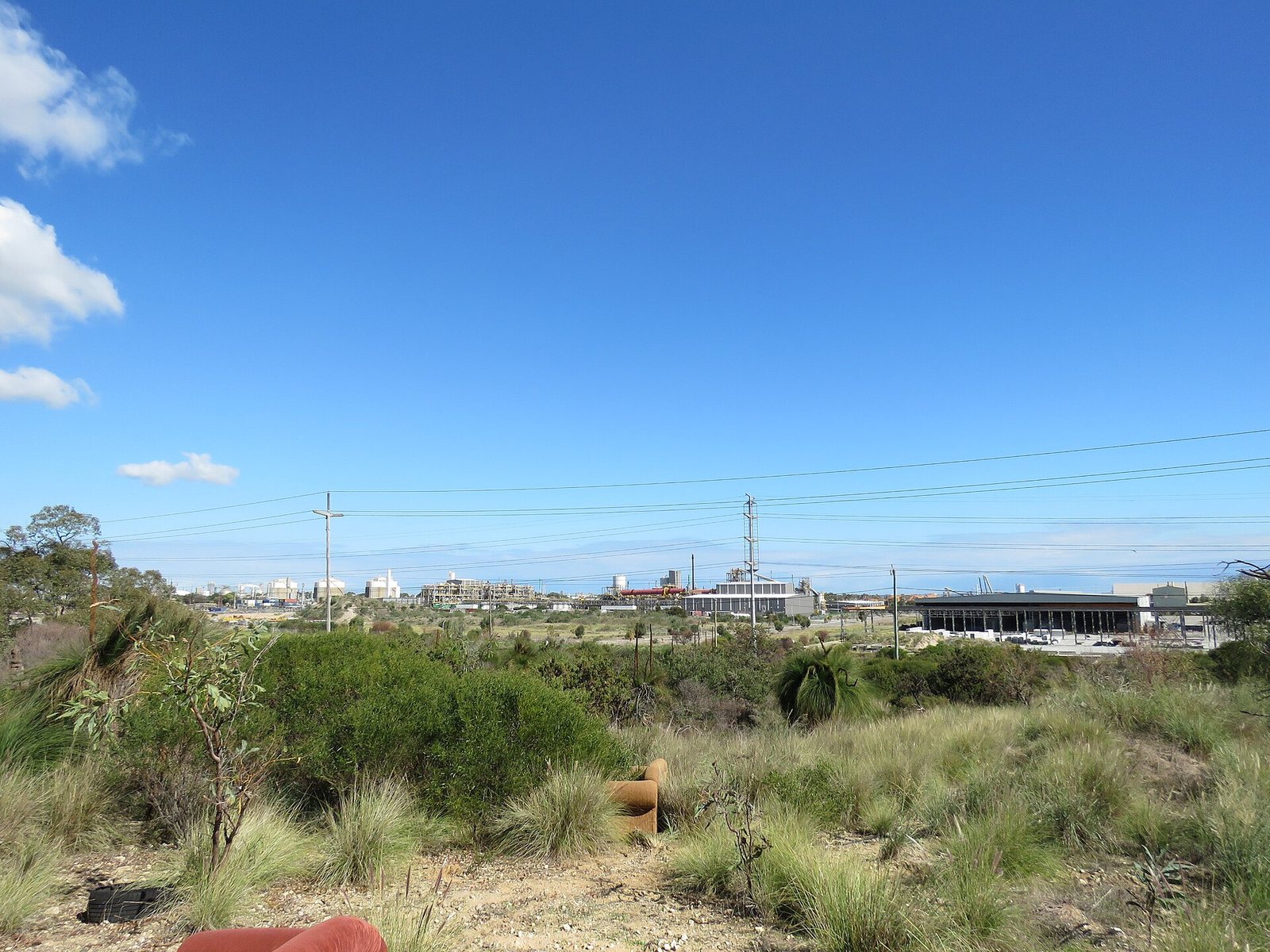
The concentrate is trucked to the coast, purified of boron and magnesium, and reacted with soda ash to precipitate lithium carbonate.

25,000 litresconcentrated brine 43 kgbattery-grade lithium carbonate

What happened to the rest: This is the last step performed in Chile. Everything downstream — and most of the value — happens elsewhere.

Why here: Near the port and the power, and required by the concession terms.
Truck · ~250 km down from the salar to the coast days Lithium →
Into a chemical
Kwinana Lithium Plant, May 2021 01 · CC BY-SA 4.0 via Wikimedia Commons
04 Transport 43kg

China · To Chinese and Korean cathode plants held by Traders and cathode makers (Trader)

Across the Pacific in a container

Lithium carbonate ships as an ordinary bagged chemical in a standard container. At this point custody leaves the mining industry entirely.

43 kglithium carbonate 43 kgdelivered chemical

Why here: Cathode manufacture is where the buyers are. The chemical goes to the factory; the factory does not come to the salar.
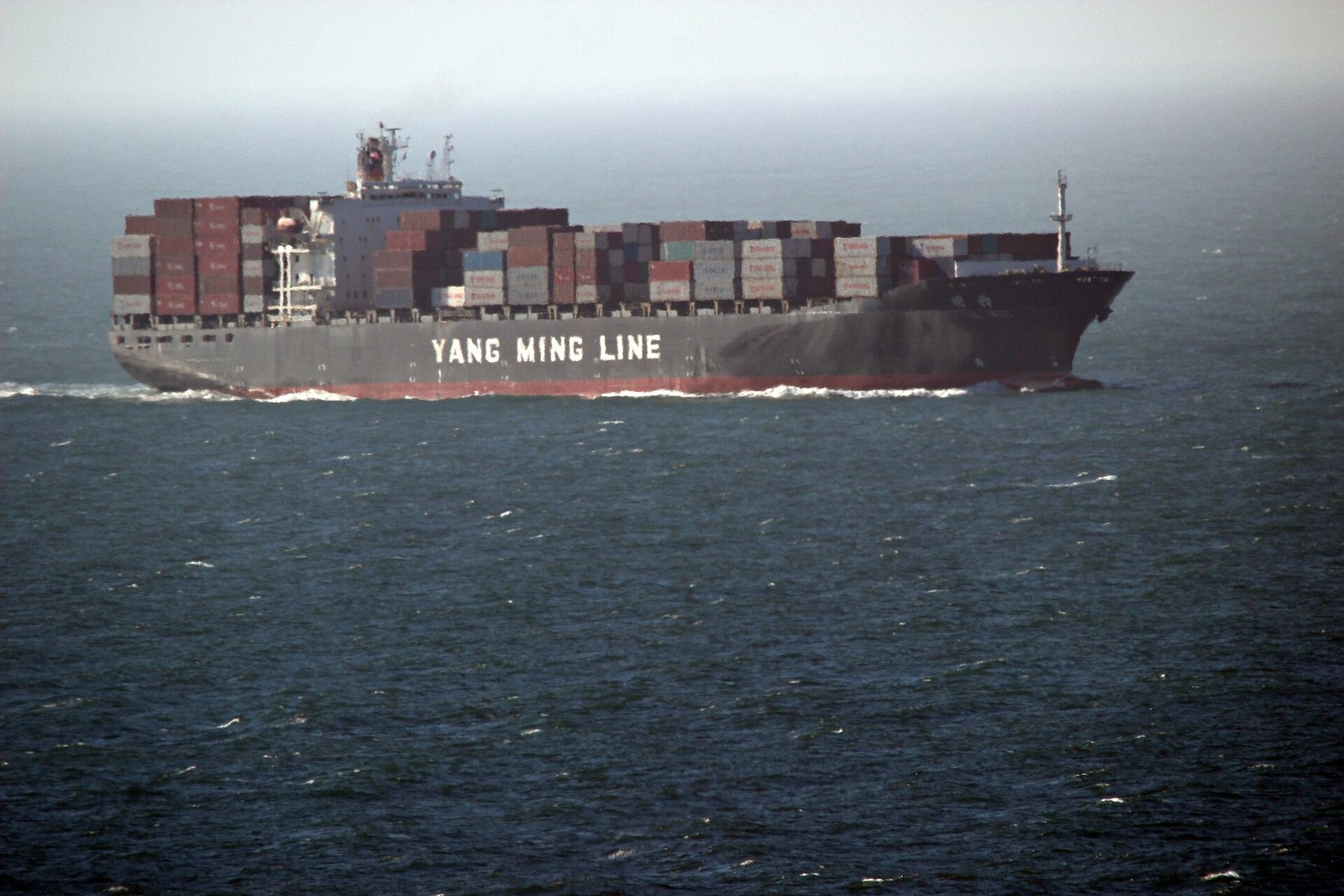
Container ship · Antofagasta to Shanghai, about 30 days ~30 days Qinghai & Sichuan Lithium Chemical Cluster →
Across the Pacific in a container
Container ship in Pacific Ocean off the… · CC BY-SA 4.0 via Wikimedia Commons
05 Component 8kg

China · Cathode plant held by Cathode manufacturer (Manufacturer)

Becoming a cathode

The carbonate is combined with an iron-phosphate or nickel-manganese-cobalt precursor and calcined into cathode active material — a black powder.

43 kglithium carbonate 8 kgcontained lithium in cathode powder

What happened to the rest: Carbonate is only about 19% lithium by weight. The rest of the mass was always carbon and oxygen.

Why here: Calcination to a tight particle-size specification is the hardest step to qualify, and the qualified plants are concentrated in a few places.
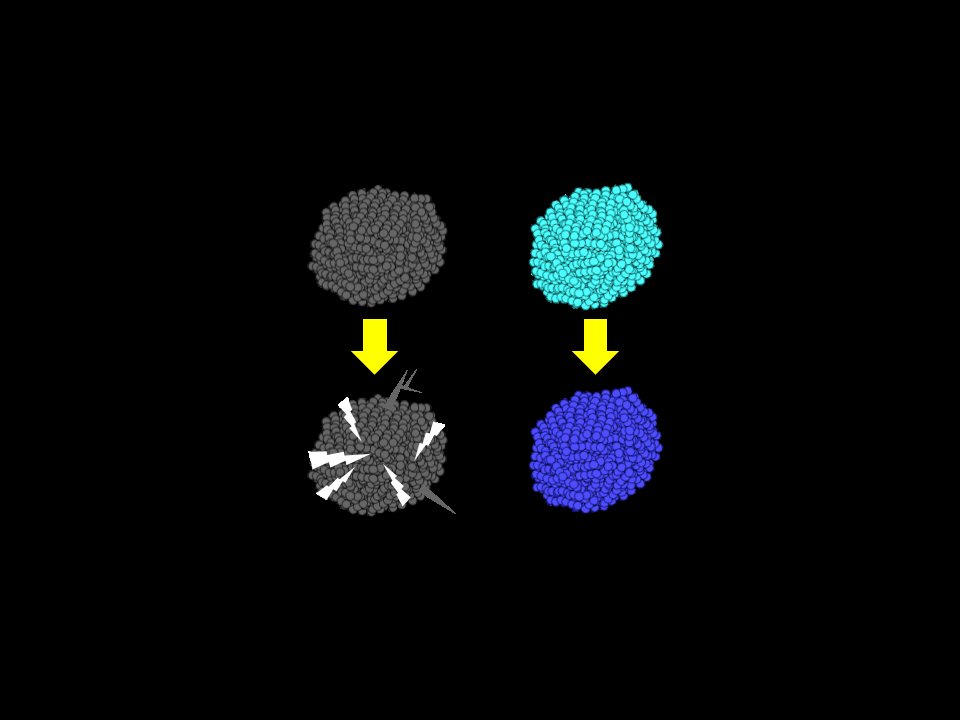
Becoming a cathode
Cathode Coating Materials.png · CC0 via Wikimedia Commons
06 Product 8kg

China · Cell plant and vehicle assembly held by Battery and vehicle manufacturers (Manufacturer)

Into a cell, then a pack, then a car

Cathode powder is coated onto aluminium foil, paired with a graphite anode on copper foil, wound or stacked, filled with electrolyte and sealed. The cells become modules, the modules become a pack.

8 kgcontained lithium 8 kgcontained lithium in a finished pack

Why here: Cells are heavy and awkward to ship, so cell plants cluster near vehicle assembly.
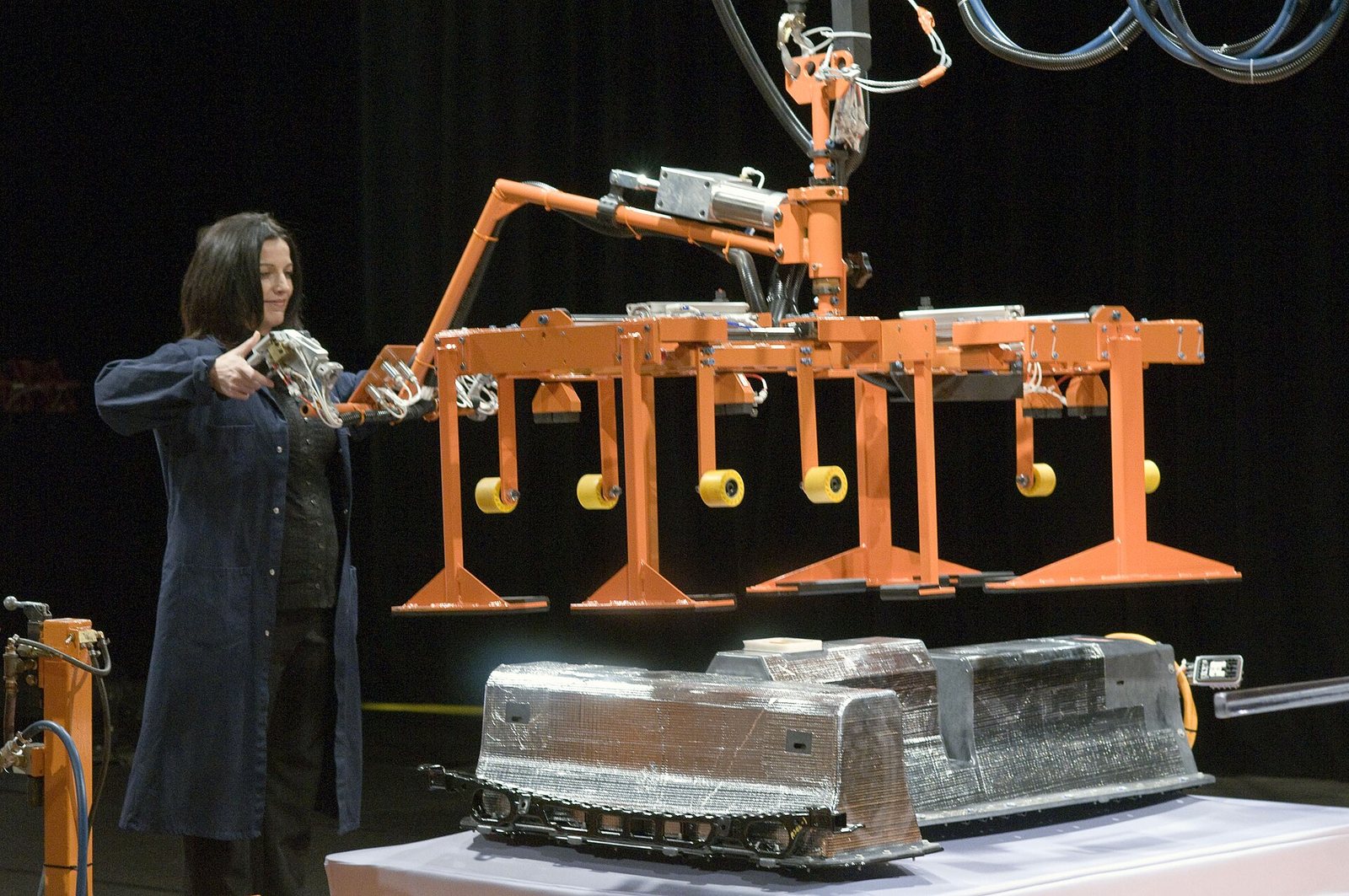
Into a cell, then a pack, then a car
ChevyVoltFirstBattery06 (4267062397) · Public domain via Wikimedia Commons
07 End market 8kg

Germany · Wherever it is sold held by The driver (End user)

A car, for maybe fifteen years

Roughly 8 kg of contained lithium, from a million litres of desert brine, now sits under a car floor. At end of life it can be recovered — recycling returns lithium at high rates once the collection system exists.

8 kgcontained lithium 8 kgrecoverable at end of life

Why here: The car is sold where the demand is. The lithium has now crossed three continents.
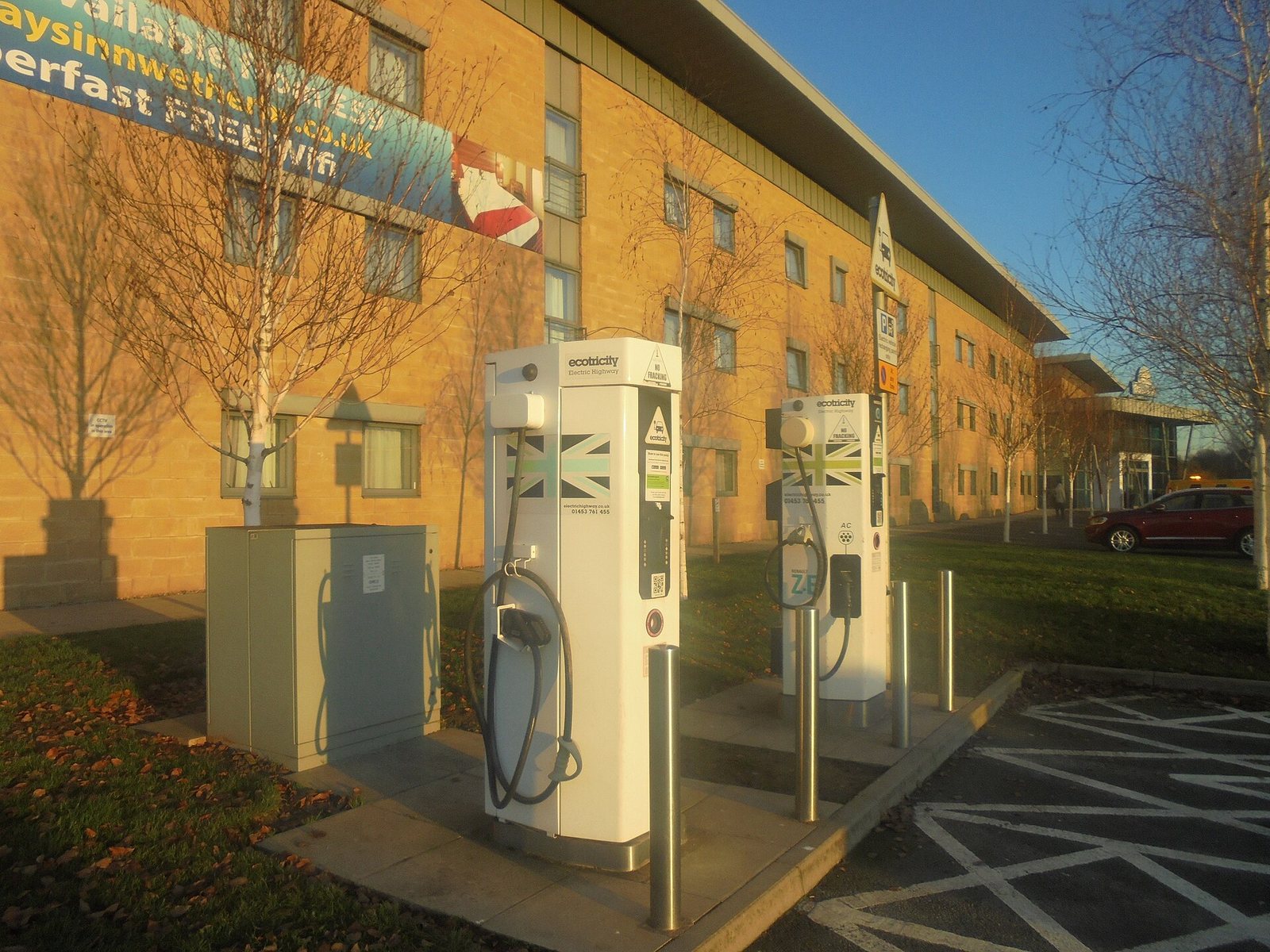
A car, for maybe fifteen years
Electric car charging point, Wetherby s… · CC BY-SA 4.0 via Wikimedia Commons

This is a worked example. It follows a stated starting quantity through published typical yields and recoveries, so the proportions are checkable; it is not a record of a specific shipment. Route facts — which countries, which processes, and why the material cannot simply be handled somewhere else — are compiled from public reporting.

Materials

All materials Critical minerals Rare earths Battery materials Ore minerals Periodic table Screener

The ground

Mines & deposits Processing & refining Countries Maps

The economy

Custody journeys Supply chains End markets Technologies Companies Material calculator

Learn

LearnGlossary Ask the DataAI agents Research & dataOpen API News★ Saved

About us

About usContact MethodologyData sources Editorial policy Privacy policyTerms of use Disclaimer