Vom Gestein zum Produkt, nachverfolgt
The Materials Atlas
Materialien Bergwerke & Lagerstätten Aufbereitung & Raffination Verbleibsrouten Lieferketten Unternehmen Länder Nachrichten
Materialien nach Regal Batteriematerialien Seltene-Erden-Elemente Kupfer & Elektro Halbleitermaterialien Nuklearmaterialien Luft- und Raumfahrt & Verteidigung Edelmetalle Stahl & Legierungsmetalle Industrieminerale Agrarmineralien Energierohstoffe Erzminerale Periodensystem
Nachfrage Endmärkte Technologien Materialrechner Karten Screener
Lernen & Werkzeuge LernenGlossar Die Daten befragenKI-Agenten Forschung & DatenAPI ★ Gespeichert
Über Über unsMethodik DatenquellenKontakt Haftungsausschluss
Leseoptionen
🧭 Geführte Ansicht Neu dabei – Erzgehalte, Konzentrat, Raffination, Nebenprodukte? Wir erläutern jeden Begriff beim Stöbern, in verständlicher Sprache. Dieselben Daten, mit integrierter Hilfe.
⚡ Expertenansicht Sie kennen die Branche. Nur die Daten – bereinigt, schnell und kompakt, ohne zusätzliche Erläuterungen. Dies ist die Standardansicht.
Thema
Oberflächensprache
Tiefe Materialseiten sind auf vier Ebenen verfasst. Wählen Sie eine auf einer beliebigen Materialseite aus — sie wird gespeichert.
★ Gespeichert Forschung & Daten

Verbleibsroute · beginnt in Canada

Alberta oil sands: mined like ore, refined like oil

The only oil in the world that is dug up with a shovel and graded like an orebody.

1,000 tonnes of oil sand as mined
700 barrels of synthetic crude, roughly
Canada → United States · Pipeline Canada — A mine, in every sense 1 Canada United States — 1,500 km of pipeline 2 United States
In der Reihenfolge nummeriert, in der das Material transportiert wird. Ein Land anklicken, um dessen Seite zu öffnen. Äquidistante Zylinderprojektion auf Basis von Länderschwerpunkten — die Bögen zeigen, welche Grenzen überschritten werden, nicht den tatsächlichen Seeweg.

Was tatsächlich transportiert wird

Athabasca bitumen sits in sand near the surface. It is strip-mined, washed out with hot water, and then either upgraded on site into a synthetic crude or thinned with condensate and pipelined south. It is the clearest place where the mining industry and the oil industry are the same industry.

Das Material
Oil Sands & Bitumen
Die Varietät
Bitumen in sand, roughly 8° API, 10–12% bitumen by weight
Wo es beginnt
Canada — The Athabasca deposit, northern Alberta
Warum diese Route und keine andere. Bitumen will not flow at any temperature a pipeline can hold. It must either be chemically upgraded into a lighter synthetic crude, or physically diluted with condensate — and the condensate then has to be shipped all the way back north, which is a permanent cost on every barrel.
Das engste Glied. Pipeline capacity out of a landlocked province. The barrel is not short of buyers; it is short of ways to reach them.
Die zwei Zahlen an jedem Schritt zeigen: was hineinging und was herauskam. Ihrem Schrumpfen zuzusehen ist der Kern der Sache. Am Ende hat man tausend Tonnen Gestein bis auf wenige Kilogramm des eigentlich wirksamen Stoffs verfolgt.

Schritt für Schritt und Grenze für Grenze

01 Gewinnung 1,000tonnes

Canada · Athabasca, Alberta gehalten von Oil sands operators (Bergmann)

A mine, in every sense

Overburden is stripped and the oil sand is loaded by electric shovel into 400-tonne haul trucks. The ore grade is quoted in percent bitumen exactly as a copper mine quotes percent copper.

1,000 tonnesoil sand in the ground 1,000 tonnesoil sand at the crusher

Warum hier: Shallow deposits only. Where the bitumen is too deep to mine, steam is injected instead and it is produced through wells.
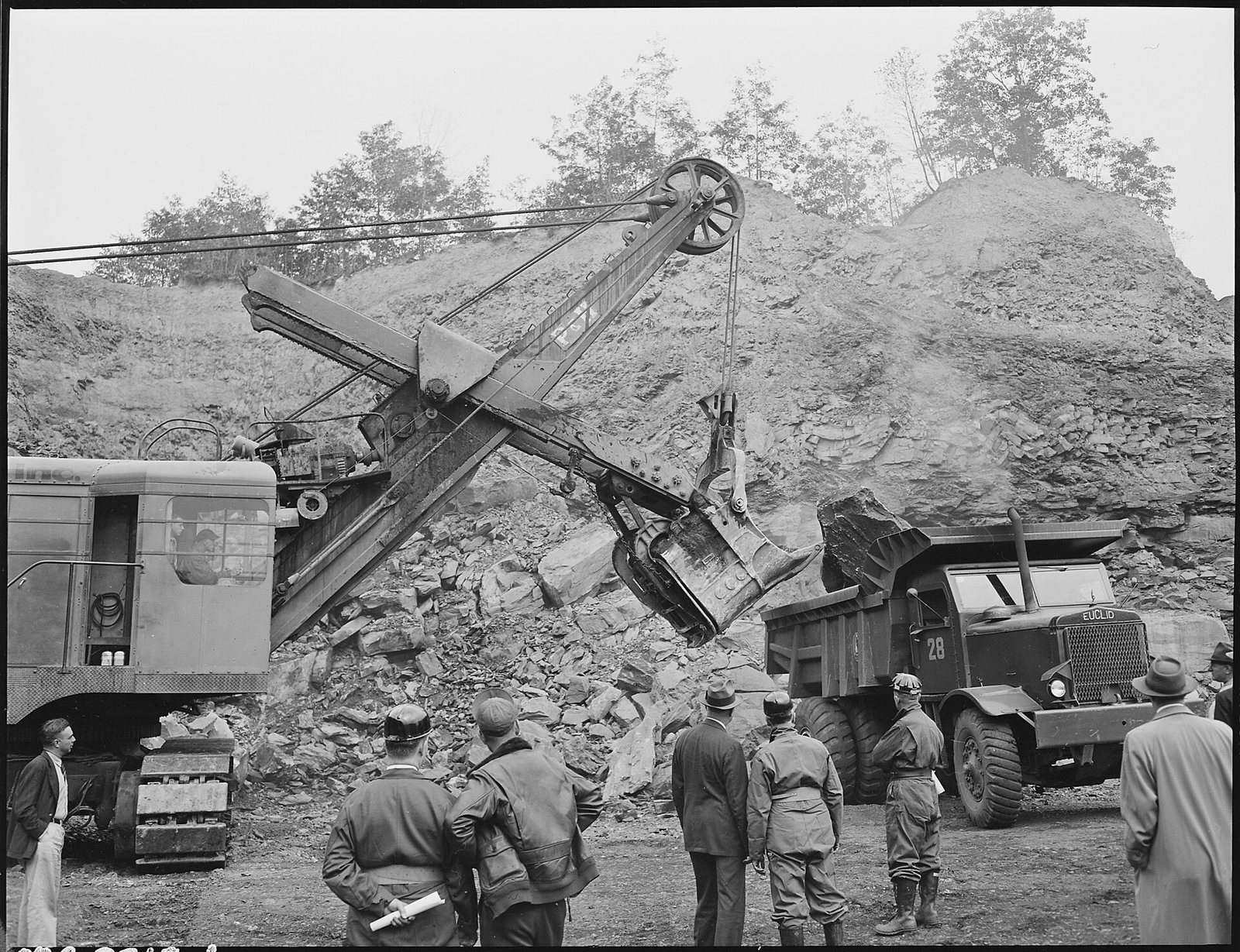
A mine, in every sense
Members of Medical Survey Gorup watch s… · Public domain via Wikimedia Commons
02 Aufbereitung 110tonnes

Canada · Extraction plant gehalten von Oil sands operators (Bergmann)

Washing the oil off the sand

The sand is slurried in hot water and agitated. Bitumen floats to the top as a froth; sand and clay sink and go to the tailings pond.

1,000 tonnesoil sand at about 11% bitumen 110 tonnesbitumen froth

Was mit dem Rest geschah: About 890 tonnes of sand, clay and water per 1,000 tonnes mined goes to tailings. Managing that residue is the defining environmental question of the whole industry.

Warum hier: Hot-water separation only works on mined ore, and the ore is too heavy to ship anywhere. The plant is beside the mine because it has to be.
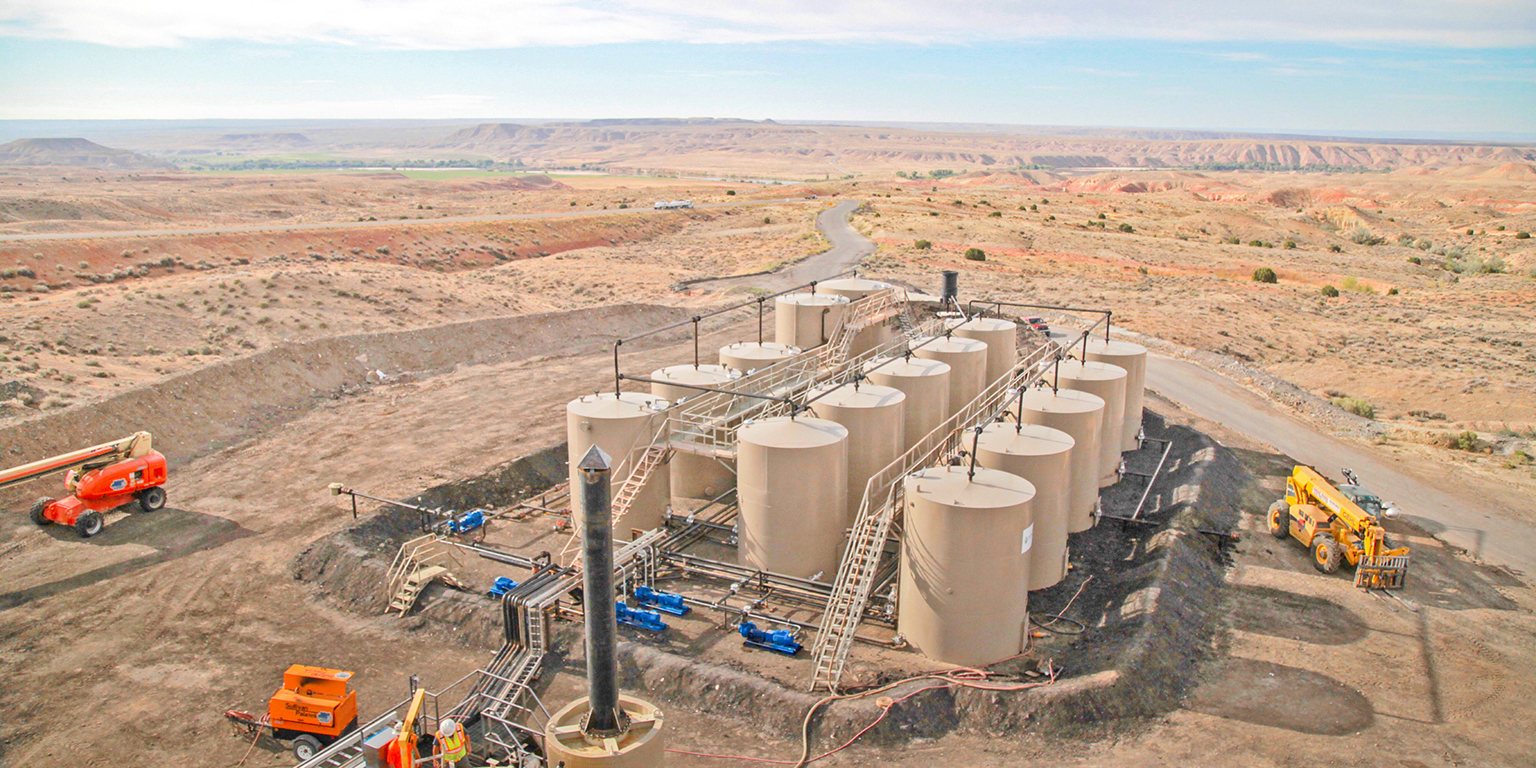
Washing the oil off the sand
Petroteq's Oil Sands Processing Plant a… · CC BY-SA 4.0 via Wikimedia Commons
03 Raffination 700barrels

Canada · Upgrader, or a diluent blending terminal gehalten von Operators and midstream companies (Raffineriebetreiber)

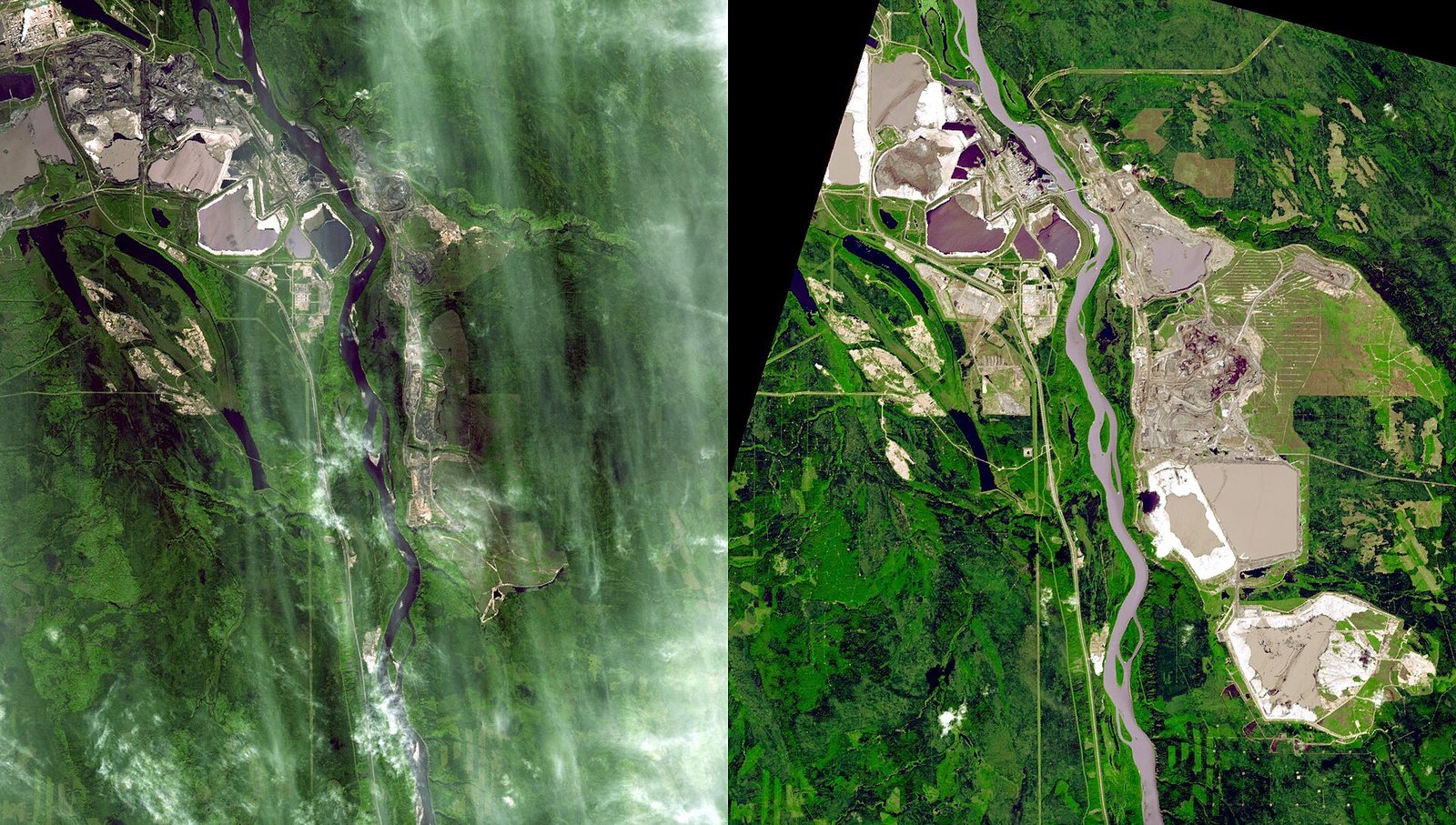
Upgrade here, or dilute and send it south

An upgrader cokes and hydrotreats the bitumen into synthetic crude oil of about 31° API. The alternative is to blend in roughly 30% condensate to make dilbit, which can be pipelined but arrives as somebody else's refining problem.

110 tonnesbitumen 700 barrelssynthetic crude, or dilbit

Was mit dem Rest geschah: Upgrading rejects carbon as petroleum coke — millions of tonnes of it are stockpiled in Alberta because there is no local market.

Warum hier: Upgrading in Alberta keeps the conversion value in Canada; diluting exports it. The same decision the Venezuelan route faces, with the same trade-off.
1–2 days Petroleum Coke →
Der nicht beschrittene Weg The same upgrade-or-export choice, in Venezuela Two heavy-oil provinces on different continents facing exactly the same decision.
Upgrade here, or dilute and send it south
Millennium Open Pit MIne, Alberta, Cana… · Public domain via Wikimedia Commons
04 Transport 700barrels

United States · To the US Midwest and Gulf Coast gehalten von Pipeline operators (Händler)

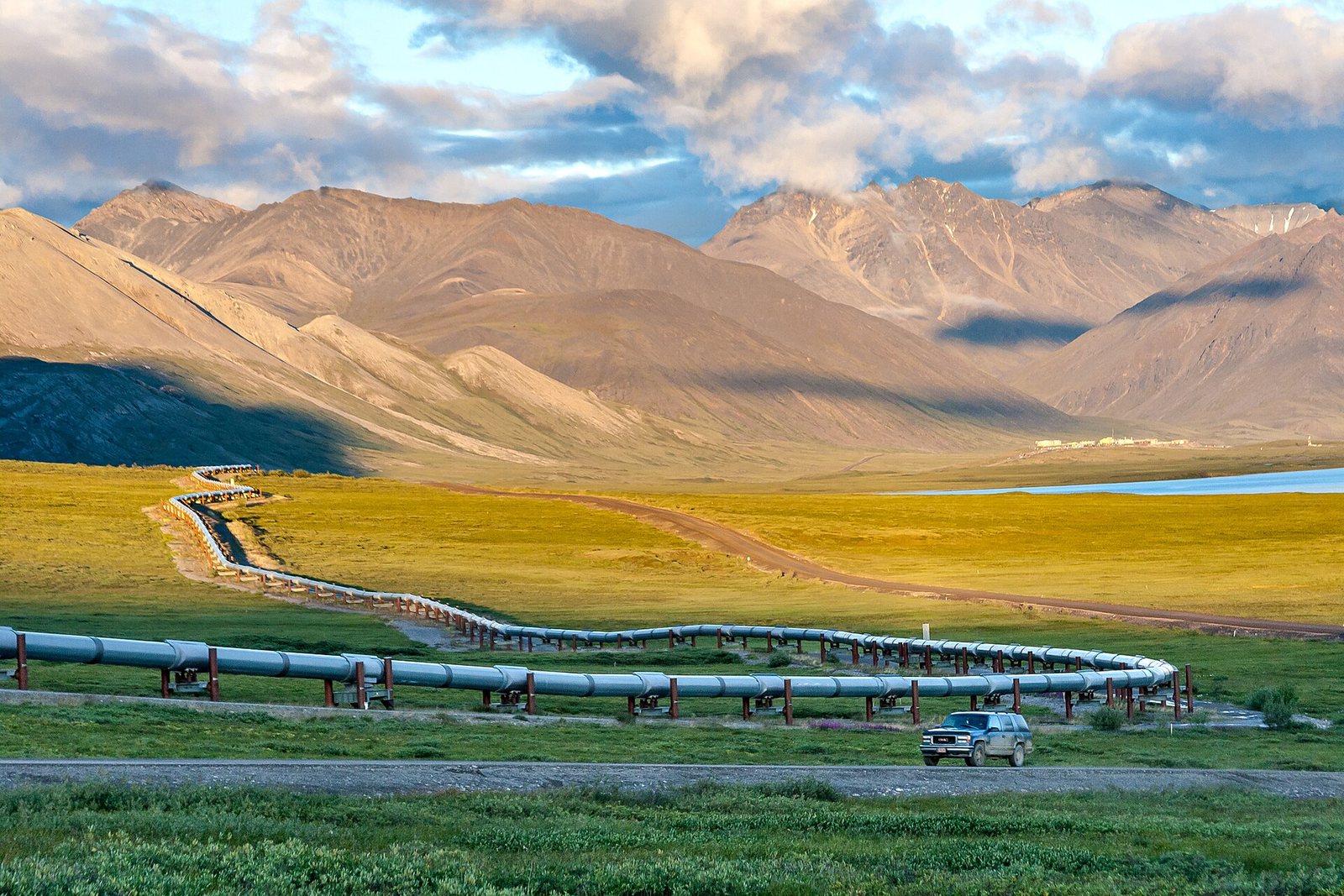
1,500 km of pipeline

Pumped south. The condensate in dilbit is separated at the refinery and railed or piped back north to be used again.

700 barrelssynthetic crude or dilbit 700 barrelsdelivered crude

Warum hier: Alberta is landlocked. Pipeline capacity, not geology, is what has capped this industry's growth for two decades.
Pipeline · With a return line for the diluent 2–3 weeks in transit Canada →
1,500 km of pipeline
Pipeline and Pump Station 4 (49681184616) · Public domain via Wikimedia Commons
05 Endmarkt 700barrels equivalent

United States · US Midwest refineries gehalten von Refiner (Raffineriebetreiber)

Refined into fuel

Midwest refineries were rebuilt specifically to run this heavy Canadian barrel, which is why it trades at a discount to lighter crude but has a dependable home.

700 barrelsdelivered crude 700 barrels equivalentfuels and asphalt

Warum hier: A refinery configured for heavy crude cannot easily switch to light, and vice versa. Refineries and crude grades marry each other for decades.
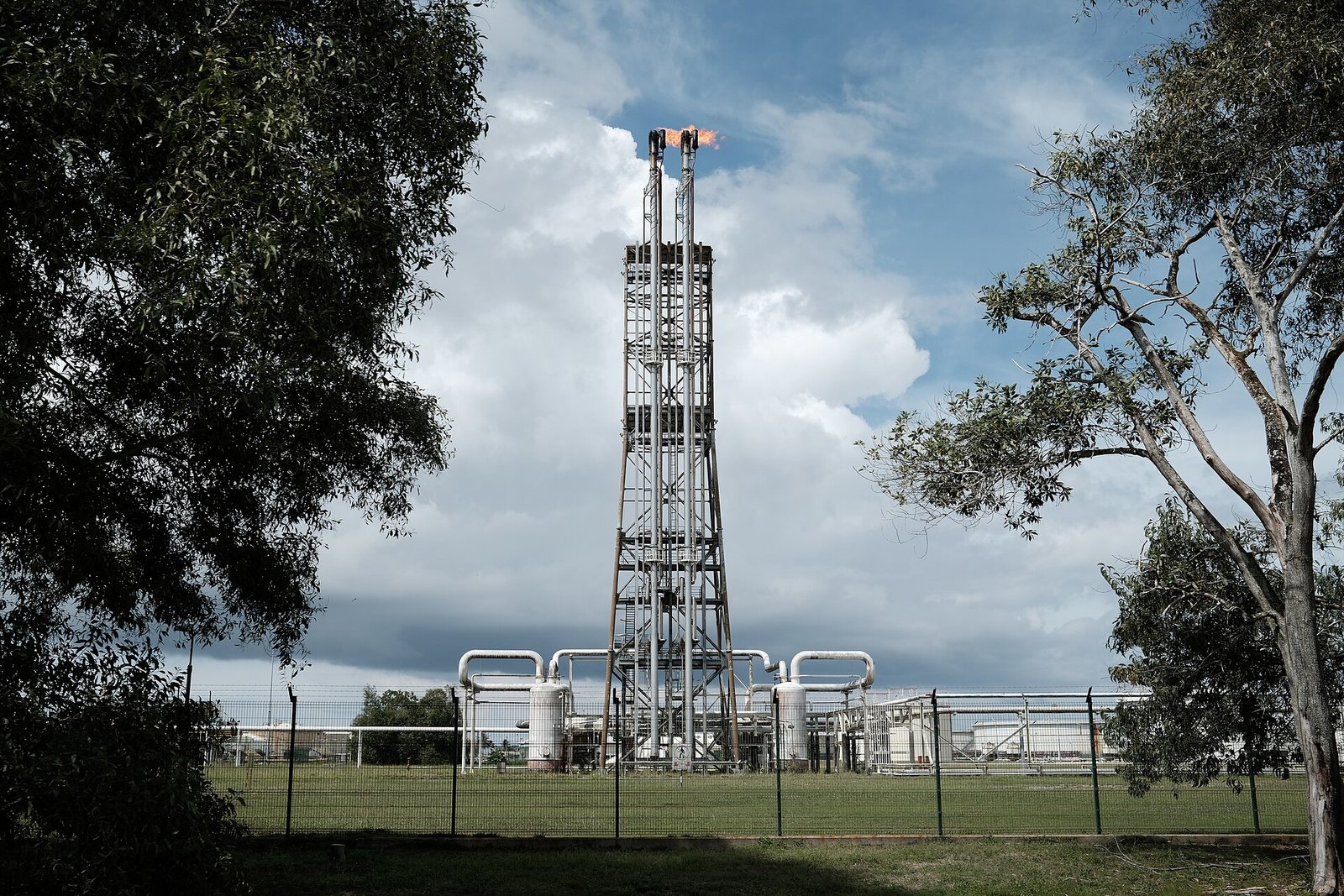
Refined into fuel
Seria Refinery flare stack in 2025 - 03 · CC BY-SA 4.0 via Wikimedia Commons

Dies ist ein ausgearbeitetes Beispiel. Es verfolgt eine angegebene Ausgangsmenge anhand veröffentlichter typischer Ausbeuten und Ausbringungsgrade, sodass die Verhältnisse nachprüfbar sind; es handelt sich nicht um den Nachweis einer bestimmten Lieferung. Routenfakten — welche Länder, welche Prozesse und warum das Material nicht einfach anderswo verarbeitet werden kann — sind aus öffentlichen Berichten zusammengestellt.

Materialien

Alle Materialien Kritische Mineralien Seltene Erden Batteriematerialien Erzminerale Periodensystem Screener

Das Gestein

Bergwerke & Lagerstätten Aufbereitung & Raffination Länder Karten

Die Wirtschaft

Verbleibsrouten Lieferketten Endmärkte Technologien Unternehmen Materialrechner

Lernen

LernenGlossar Die Daten befragenKI-Agenten Forschung & DatenOffene API Nachrichten★ Gespeichert

Über uns

Über unsKontakt MethodikDatenquellen Redaktionelle Leitlinien DatenschutzrichtlinieNutzungsbedingungen Haftungsausschluss