De la roca al producto, trazado
The Materials Atlas
Materiales Minas y yacimientos Procesamiento y refinación Recorridos de custodia Cadenas de suministro Empresas Países Noticias
Materiales por categoría Materiales para baterías Elementos de tierras raras Cobre y electricidad Materiales para semiconductores Materiales nucleares Aeroespacial y Defensa Metales preciosos Acero y metales de aleación Minerales industriales Minerales Agrícolas Materias primas energéticas Minerales mena Tabla periódica
Demanda Mercados finales Tecnologías Calculadora de materiales Mapas Clasificador
Aprender y herramientas AprenderGlosario Consultar los datosAgentes de IA Investigación y datosAPI ★ Guardado
Acerca de Quiénes somosMetodología Fuentes de datosContacto Aviso legal
Opciones de lectura
🧭 Vista guiada ¿Es nuevo en esto: leyes de mena, concentrado, refinación, subproductos? Explicamos cada término mientras navega, en lenguaje claro. Los mismos datos, con la ayuda integrada.
⚡ Vista de experto Usted ya conoce el sector. Solo los datos: limpios, rápidos y compactos, sin explicaciones adicionales. Esta es la vista predeterminada.
Tema
Idioma de la interfaz
Profundidad Las páginas de materiales están redactadas en cuatro niveles. Seleccione uno en cualquier página de material y se recordará.
★ Guardado Investigación y datos

Recorrido de custodia · comienza en Kazakhstan

Kazakh uranium to a fuel assembly in a reactor

The most tightly watched journey in this atlas: every kilogram is accounted for, at every border.

200 tonnes of natural uranium
25 tonnes of enriched fuel — about one year for a large reactor
Kazakhstan → Canada · Certified drums Canada → France · Certified cylinders Kazakhstan — Mining without a mine 1 Kazakhstan Canada — Conversion to a gas 2 Canada France — Enrichment 3 France
Numerados en el orden en que viaja el material. Haga clic en un país para abrir su página. Proyección equirrectangular trazada a partir de los centroides de cada país — los arcos indican qué fronteras se cruzan, no la ruta de navegación real.

Qué es lo que se mueve realmente

Kazakh uranium is dissolved underground and pumped up as a solution — nothing is blasted and no waste rock is moved. It then passes through conversion, enrichment and fuel fabrication, each of which exists in only a handful of countries and each of which is under international safeguards.

El material
Uranium
La variedad
Sandstone-hosted uranium recovered in situ, no rock moved at all
Dónde empieza
Kazakhstan — Wellfields on the Chu-Sarysu and Syrdarya basins
Por qué esta ruta y no otra. Natural uranium is only 0.7% fissile. Raising that to 3–5% requires centrifuge enrichment, which is dual-use technology and therefore among the most controlled industrial processes in the world. The route is short in tonnage and long in paperwork.
El eslabón más estrecho. Conversion and enrichment. Mining is spread across several countries; these two steps exist at a handful of sites and are the real dependency.
Lea los dos valores de cada paso: lo que entró y lo que salió. Observar cómo se reducen es el objeto del ejercicio. Al final habrá seguido mil toneladas de roca hasta llegar a unos pocos kilogramos de lo que realmente hace el trabajo.

Paso a paso, y frontera por frontera

01 Extracción 200tonnes

Kazakhstan · Southern Kazakhstan wellfields en poder de Kazatomprom and joint ventures (Productor estatal)

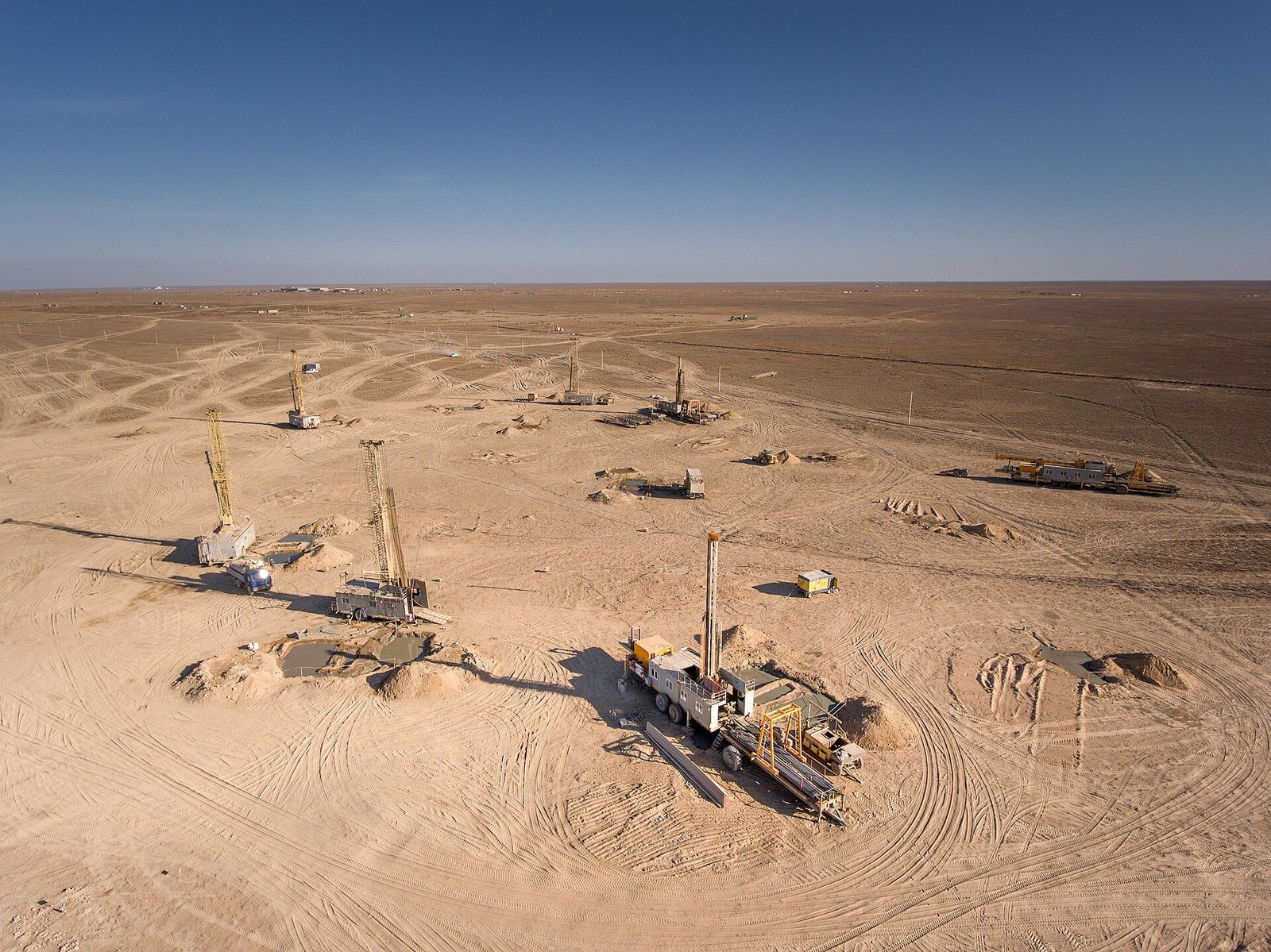
Mining without a mine

A mildly acidic solution is injected through wells into the ore-bearing sandstone, dissolves the uranium, and is pumped back to surface through recovery wells. There is no pit, no shaft and no tailings dam.

200 tonnesuranium in the sandstone 200 tonnesuranium in solution

Por qué aquí: In-situ recovery only works in permeable, water-saturated sandstone with the right chemistry. Kazakhstan has an unusual amount of it, which is why it became the largest producer.
continuous Carnotite →
Mining without a mine
Central Processing Plant at a uranium i… · Public domain via Wikimedia Commons
02 Procesamiento 236tonnes

Kazakhstan · Central processing plant en poder de Kazatomprom (Productor estatal)

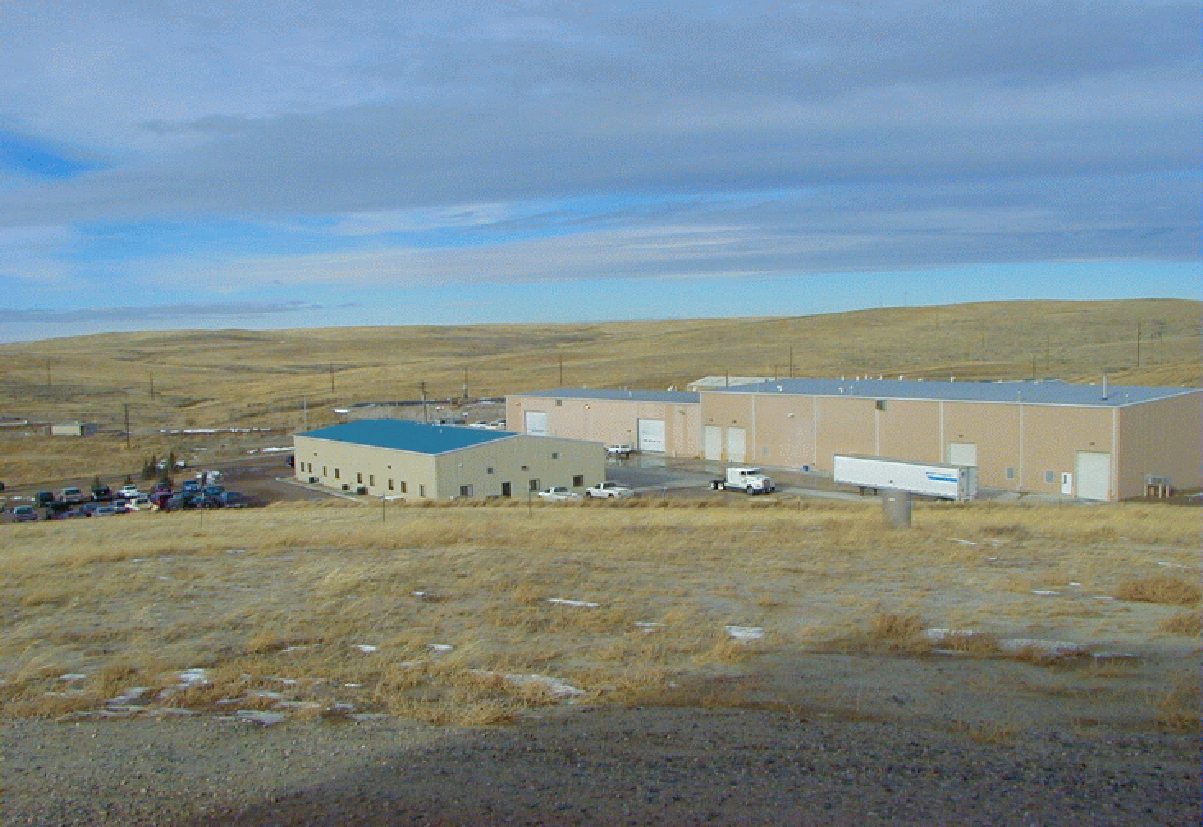
Yellowcake

The uranium is stripped from solution onto resin, eluted and precipitated as U3O8 — a yellow-brown powder — then dried and drummed.

200 tonnesuranium in solution 236 tonnesU3O8 (yellowcake)

Qué ocurrió con el resto: Note the units. 200 tU is 236 t U3O8 — mixing tonnes of uranium with tonnes of oxide is the classic error in this industry's reporting.

Por qué aquí: Concentrating before transport, and before the safeguards paperwork gets heavier.
El camino no tomado Another chain where the mine is not the problem Both routes are limited by a processing step that only a few countries operate.
Yellowcake
Sulfuric acid plant at the Kerr McGee U… · Public domain via Wikimedia Commons
03 Refinación 296tonnes

Canada · Conversion facility en poder de Converter (Refinador)

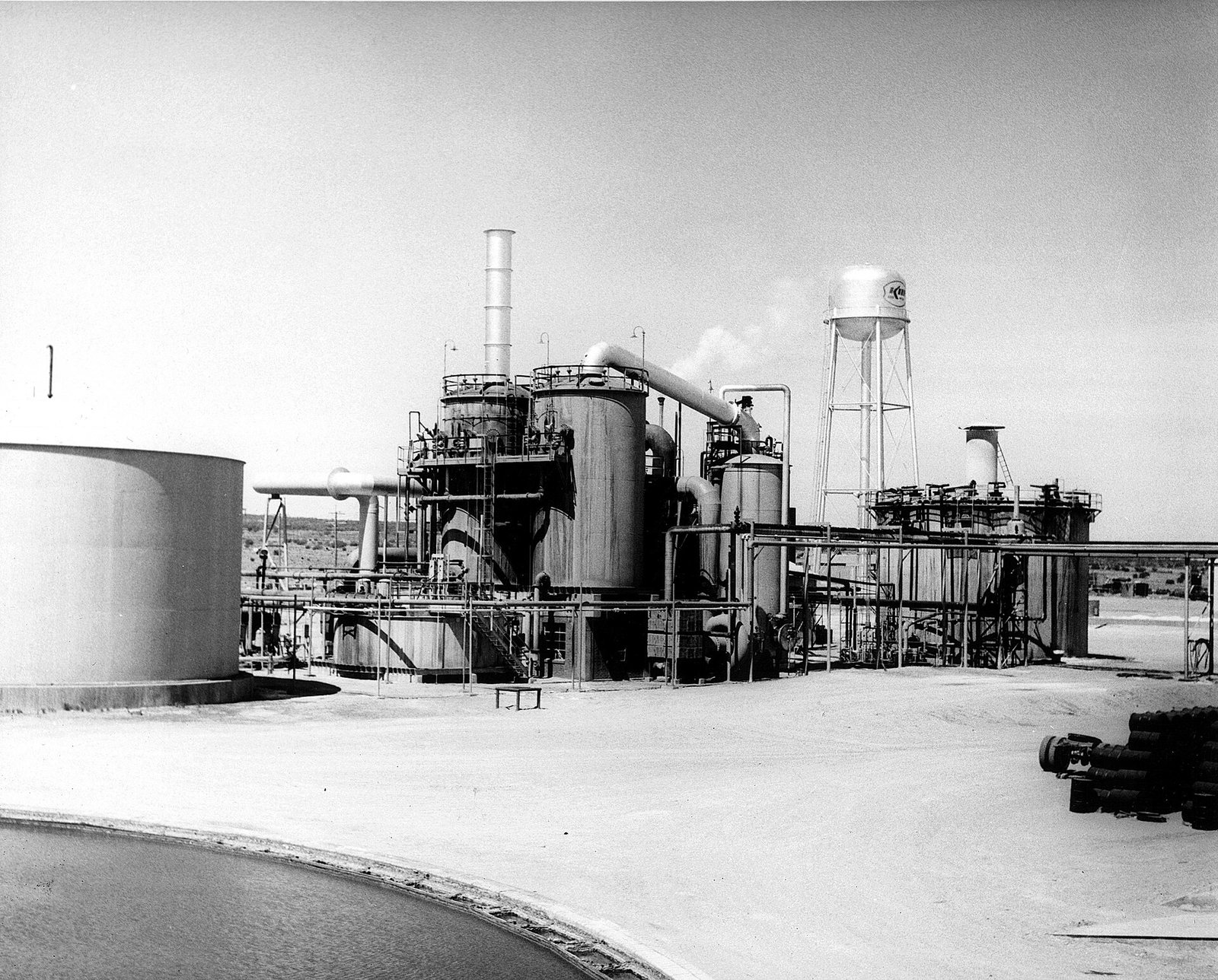
Conversion to a gas

Yellowcake is purified and converted to uranium hexafluoride, which becomes a gas just above room temperature — the only practical form for enrichment.

236 tonnesyellowcake 296 tonnesuranium hexafluoride

Qué ocurrió con el resto: The fluorine comes from fluorspar. A mineral most people have never heard of is a precondition for nuclear fuel.

Por qué aquí: Only a handful of commercial conversion plants exist worldwide. This is a genuine bottleneck.
Certified drums weeks Port Hope Conversion Facility →
Conversion to a gas
Deputy Secretary Poneman signs a cylind… · Public domain via Wikimedia Commons
04 Refinación 30tonnes

France · Centrifuge plant en poder de Enricher (Refinador)

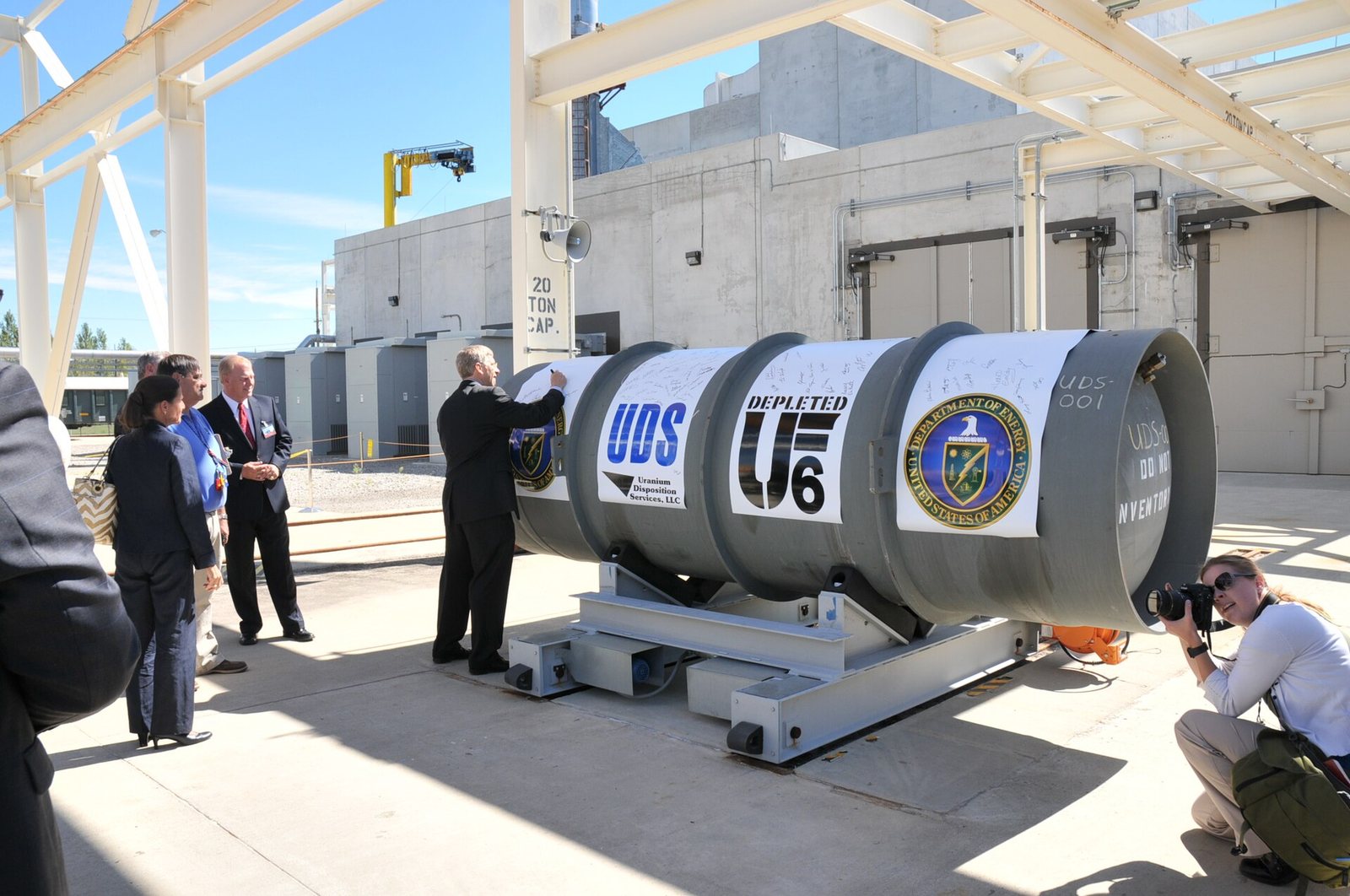
Enrichment

Thousands of centrifuges in cascade separate uranium-235 from uranium-238 by mass, raising the fissile fraction from 0.7% to 3–5%. Most of the feed leaves as depleted tails.

296 tonnesuranium hexafluoride 30 tonnesenriched UF6

Qué ocurrió con el resto: The great majority becomes depleted uranium — used for radiation shielding, ballast and armour, and otherwise stored.

Por qué aquí: Enrichment is dual-use. Where it exists is a matter of treaty and politics as much as engineering.
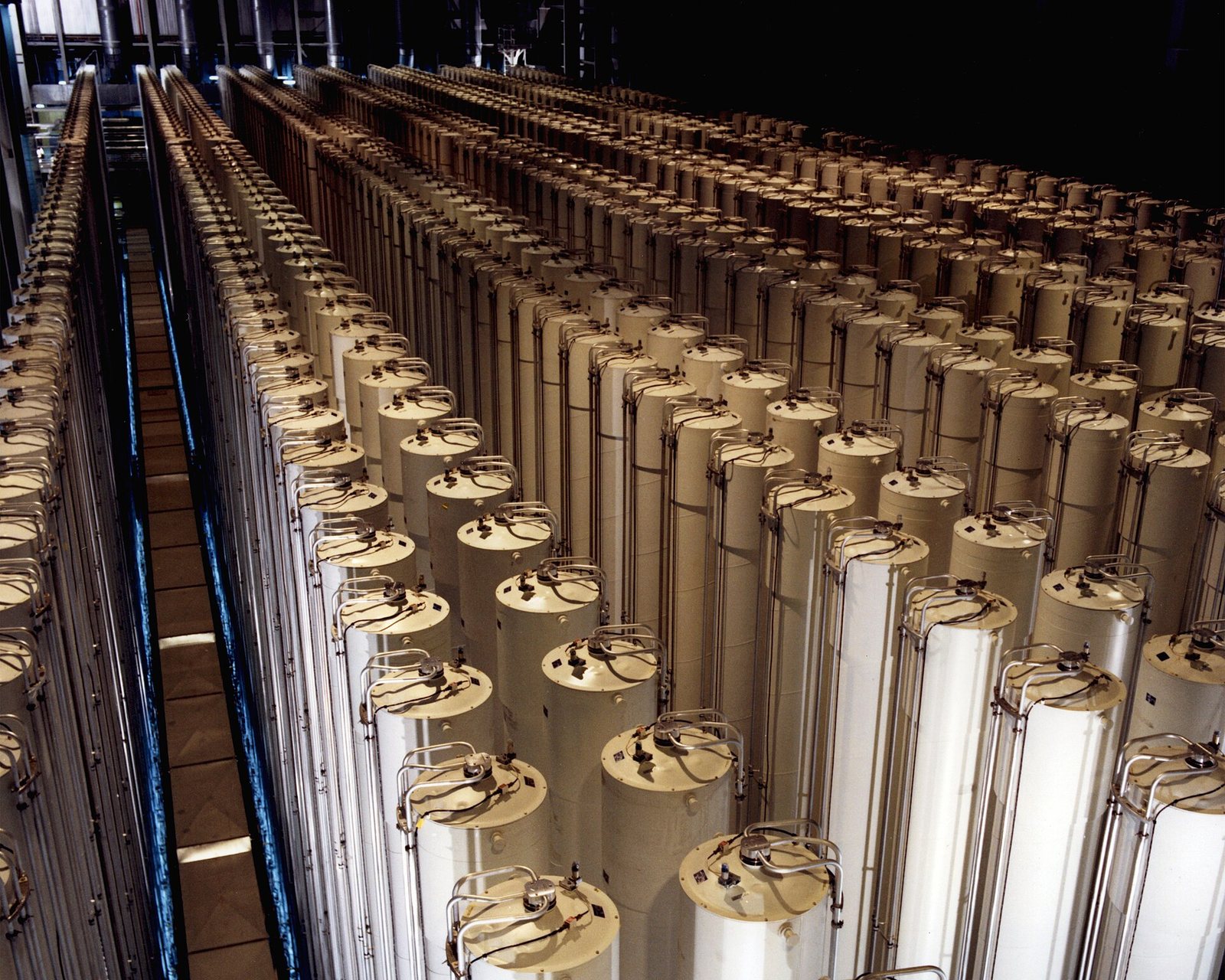
Certified cylinders weeks Georges Besse II Enrichment Plant →
Enrichment
Gas centrifuge cascade · Public domain via Wikimedia Commons
05 Componente 25tonnes

France · Fuel fabrication plant en poder de Fuel fabricator (Fabricante)

Pellets and rods

Converted to uranium dioxide powder, pressed into ceramic pellets the size of a fingertip, sintered, ground to tolerance and sealed into zirconium alloy tubes bundled into assemblies.

30 tonnesenriched uranium 25 tonnesfuel in assemblies

Por qué aquí: The cladding is zirconium with the hafnium removed — two chemically near-identical metals that had to be separated for this to work at all.
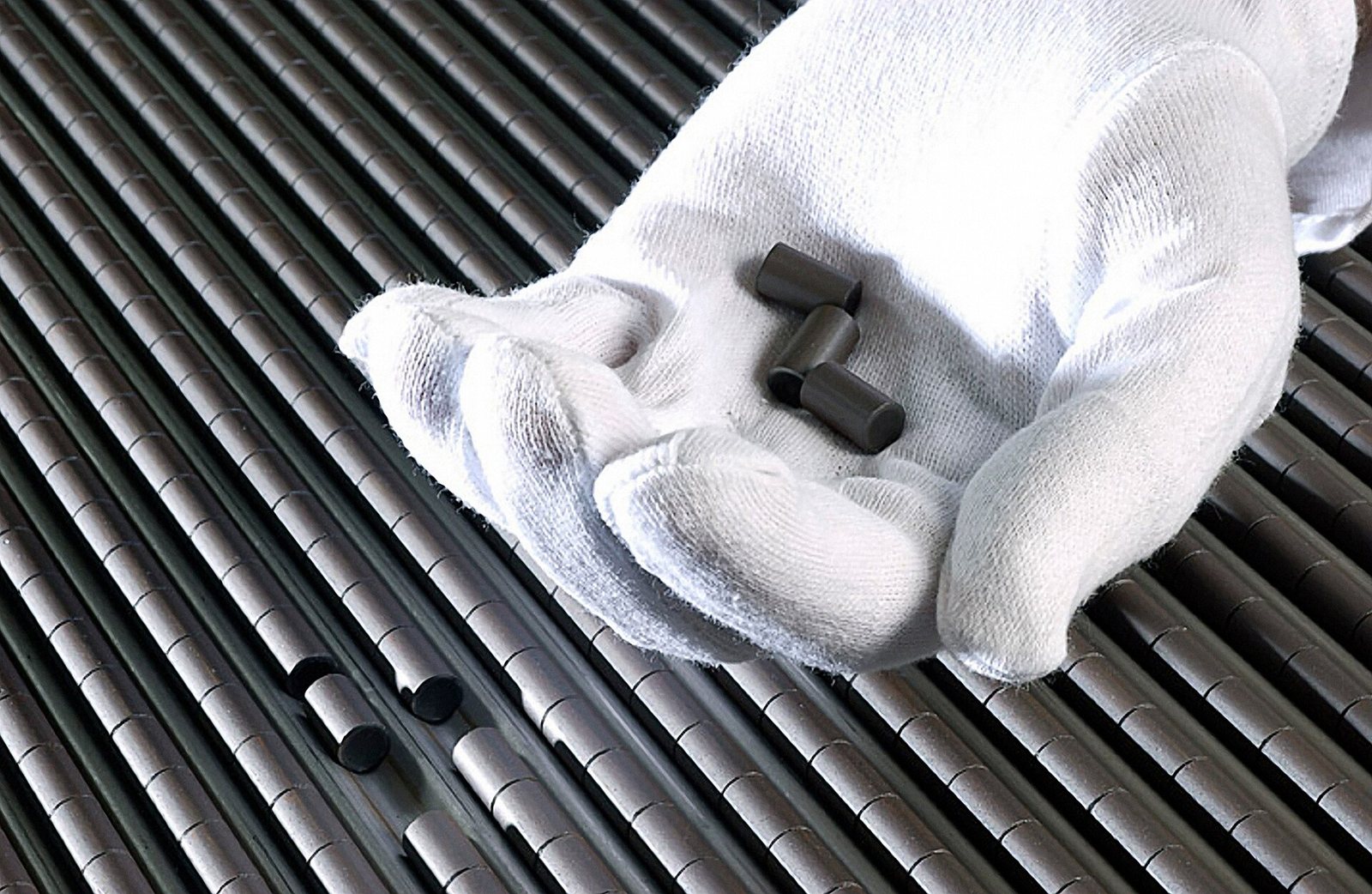
Pellets and rods
Nuclear Fuel Pellets (14492225000) · Public domain via Wikimedia Commons
06 Mercado final 25tonnes

France · Reactor en poder de Utility (Usuario final)

About a year of electricity

Loaded into the core. One pellet holds roughly the energy of a tonne of coal. A large reactor's annual load fits in a few shipping containers.

25 tonnesfuel 25 tonnesspent fuel, stored or reprocessed

Por qué aquí: Four countries, and every gram inventoried at every handover.
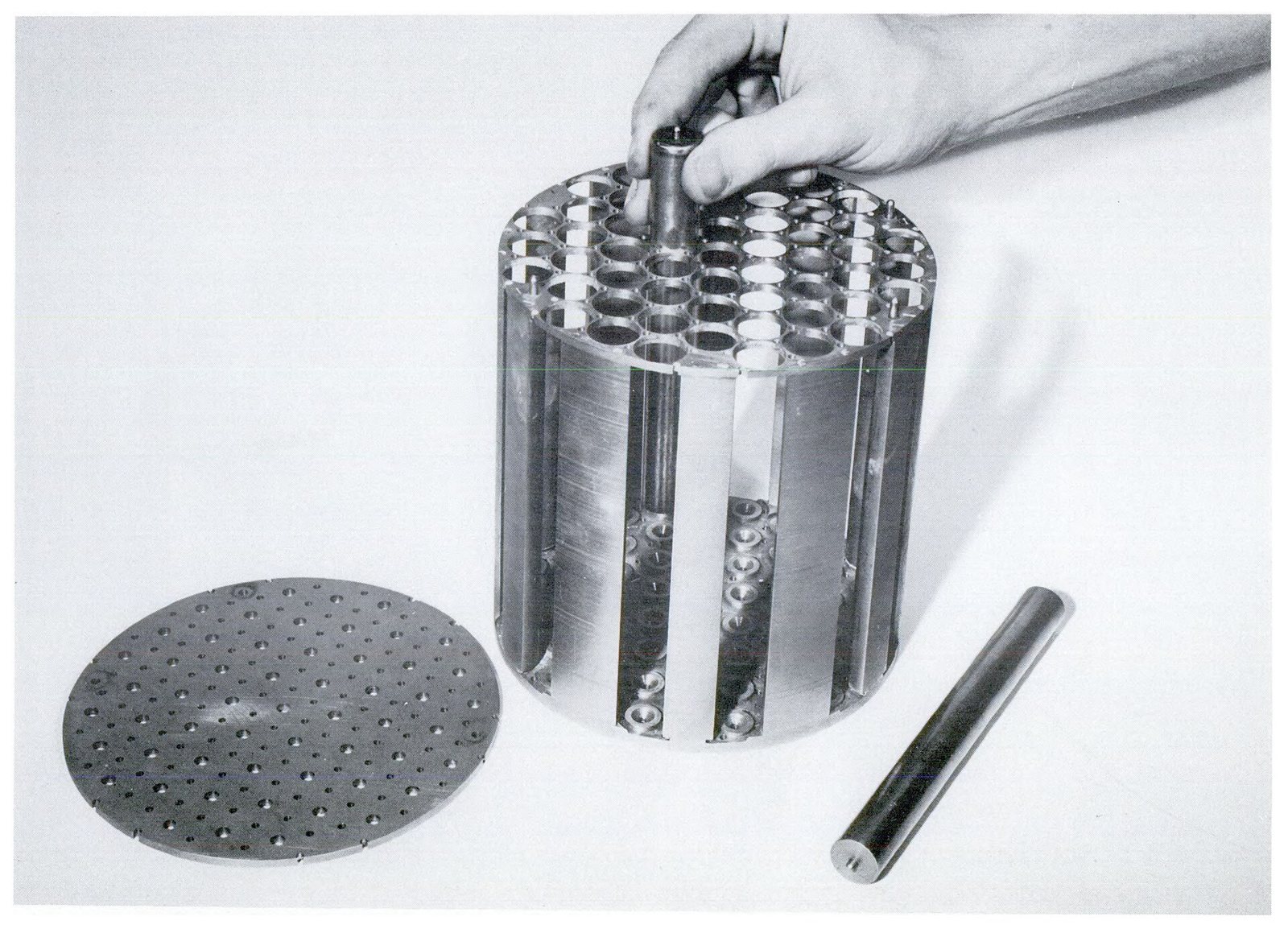
About a year of electricity
Clementine reactor core · Public domain via Wikimedia Commons

Este es un ejemplo resuelto. Sigue una cantidad de partida declarada a través de rendimientos y recuperaciones típicos publicados, por lo que las proporciones son verificables; no es el registro de un envío concreto. Los datos de la ruta — qué países, qué procesos y por qué el material no puede simplemente manipularse en otro lugar — se han compilado a partir de información pública.

Materiales

Todos los materiales Minerales críticos Tierras raras Materiales para baterías Minerales mena Tabla periódica Clasificador

El subsuelo

Minas y yacimientos Procesamiento y refinación Países Mapas

La economía

Recorridos de custodia Cadenas de suministro Mercados finales Tecnologías Empresas Calculadora de materiales

Aprender

AprenderGlosario Consultar los datosAgentes de IA Investigación y datosAPI abierta Noticias★ Guardado

Quiénes somos

Quiénes somosContacto MetodologíaFuentes de datos Política editorial Política de privacidadCondiciones de uso Aviso legal