Apa yang sebenarnya bergerak
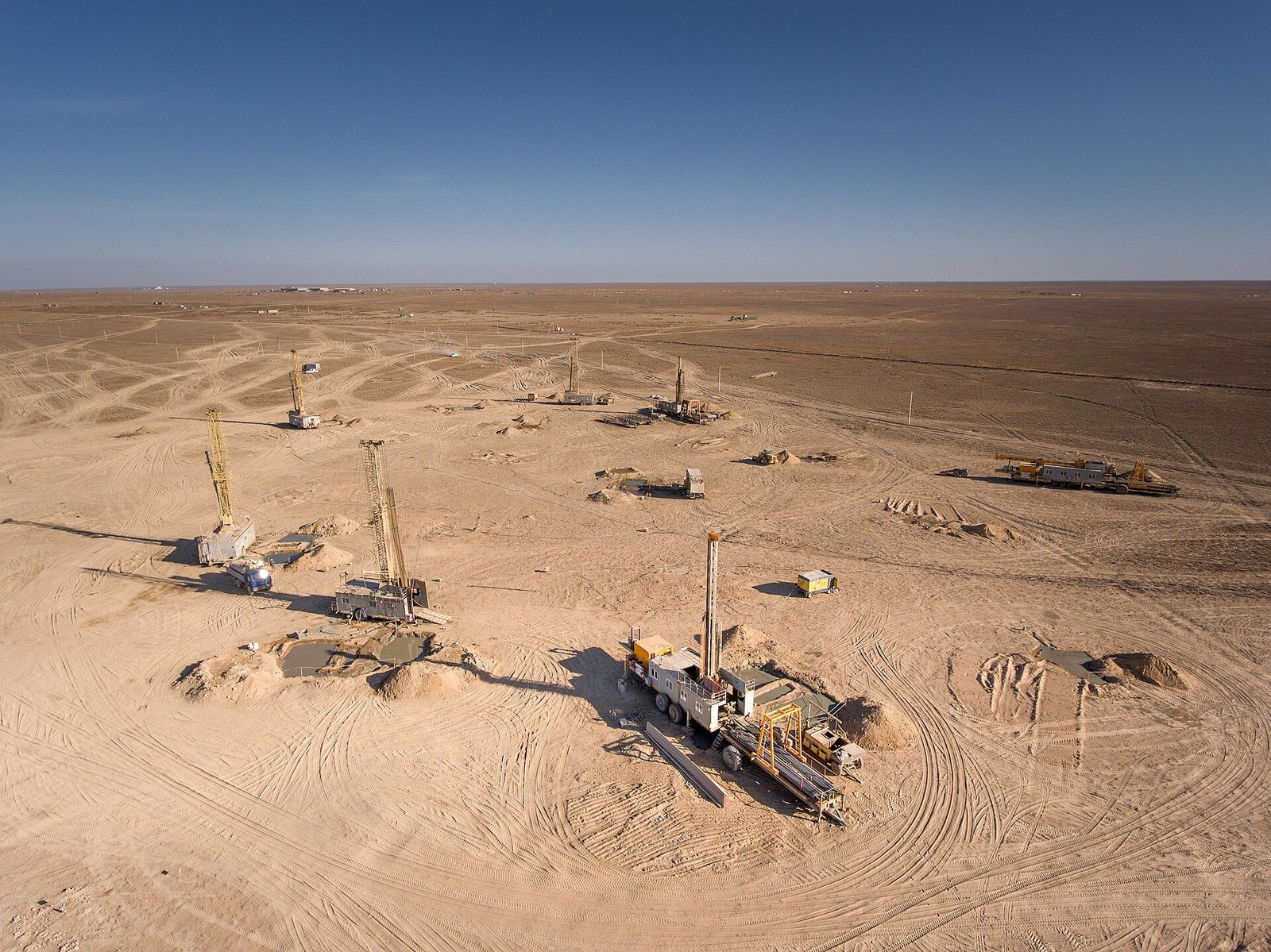
Kazakh uranium is dissolved underground and pumped up as a solution — nothing is blasted and no waste rock is moved. It then passes through conversion, enrichment and fuel fabrication, each of which exists in only a handful of countries and each of which is under international safeguards.
- Materialnya
- Uranium
- Varietasnya
- Sandstone-hosted uranium recovered in situ, no rock moved at all
- Titik awal
- Kazakhstan — Wellfields on the Chu-Sarysu and Syrdarya basins
Langkah demi langkah, perbatasan demi perbatasan
Kazakhstan · Southern Kazakhstan wellfields dipegang oleh Kazatomprom and joint ventures (Produsen negara)
Mining without a mine
A mildly acidic solution is injected through wells into the ore-bearing sandstone, dissolves the uranium, and is pumped back to surface through recovery wells. There is no pit, no shaft and no tailings dam.
Mengapa di sini: In-situ recovery only works in permeable, water-saturated sandstone with the right chemistry. Kazakhstan has an unusual amount of it, which is why it became the largest producer.
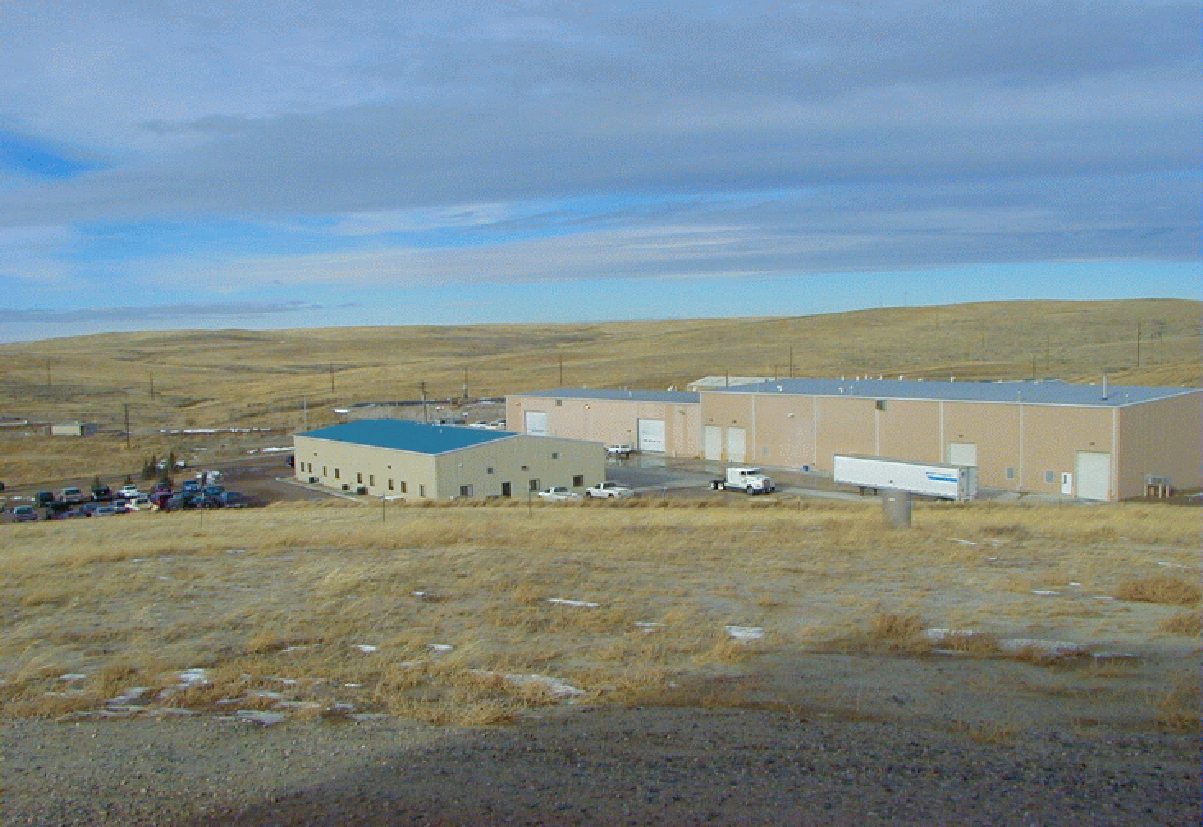
Kazakhstan · Central processing plant dipegang oleh Kazatomprom (Produsen negara)
Yellowcake
The uranium is stripped from solution onto resin, eluted and precipitated as U3O8 — a yellow-brown powder — then dried and drummed.
Apa yang terjadi pada sisanya: Note the units. 200 tU is 236 t U3O8 — mixing tonnes of uranium with tonnes of oxide is the classic error in this industry's reporting.
Mengapa di sini: Concentrating before transport, and before the safeguards paperwork gets heavier.
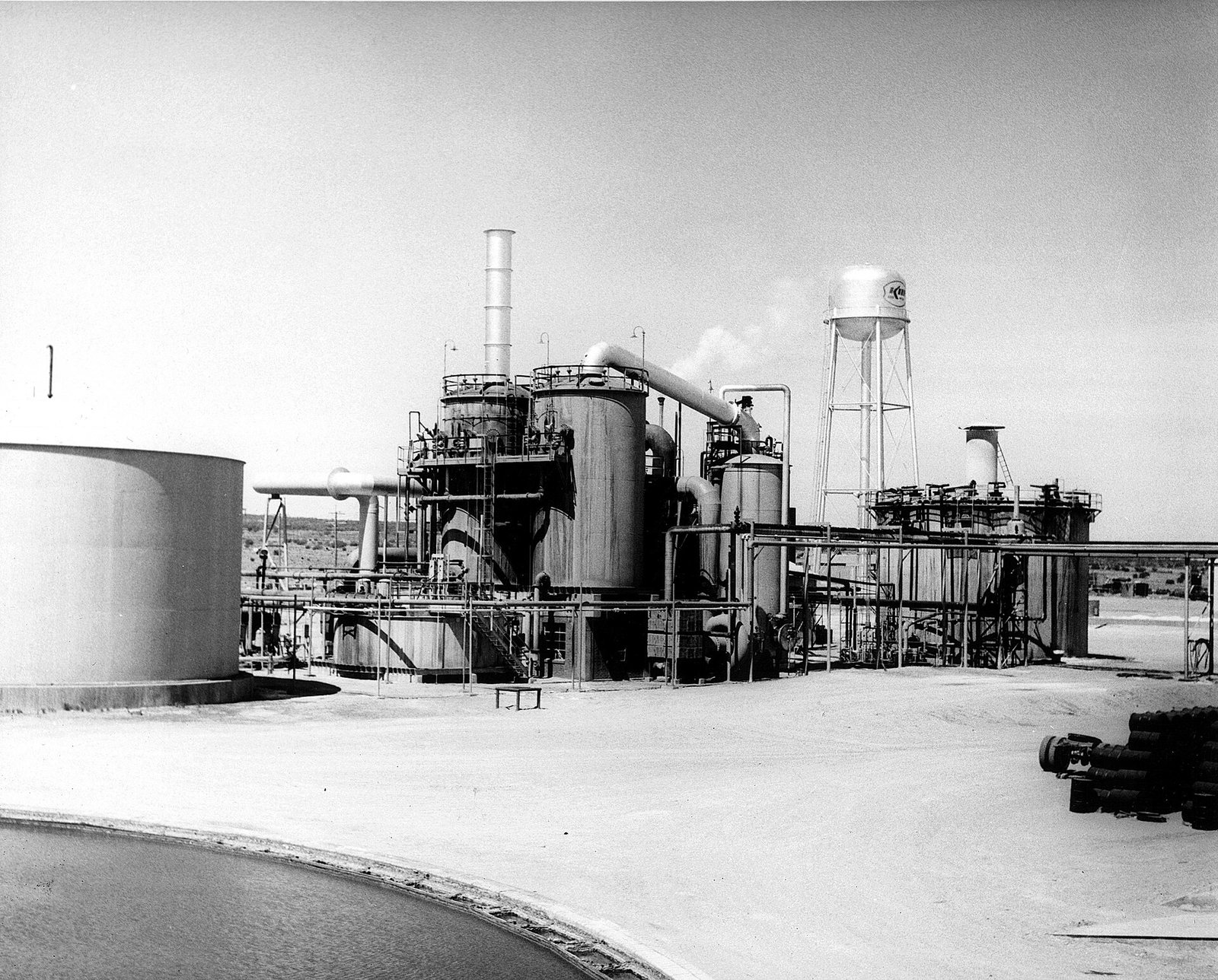
Canada · Conversion facility dipegang oleh Converter (Pemurni)
Conversion to a gas
Yellowcake is purified and converted to uranium hexafluoride, which becomes a gas just above room temperature — the only practical form for enrichment.
Apa yang terjadi pada sisanya: The fluorine comes from fluorspar. A mineral most people have never heard of is a precondition for nuclear fuel.
Mengapa di sini: Only a handful of commercial conversion plants exist worldwide. This is a genuine bottleneck.
France · Centrifuge plant dipegang oleh Enricher (Pemurni)
Enrichment
Thousands of centrifuges in cascade separate uranium-235 from uranium-238 by mass, raising the fissile fraction from 0.7% to 3–5%. Most of the feed leaves as depleted tails.
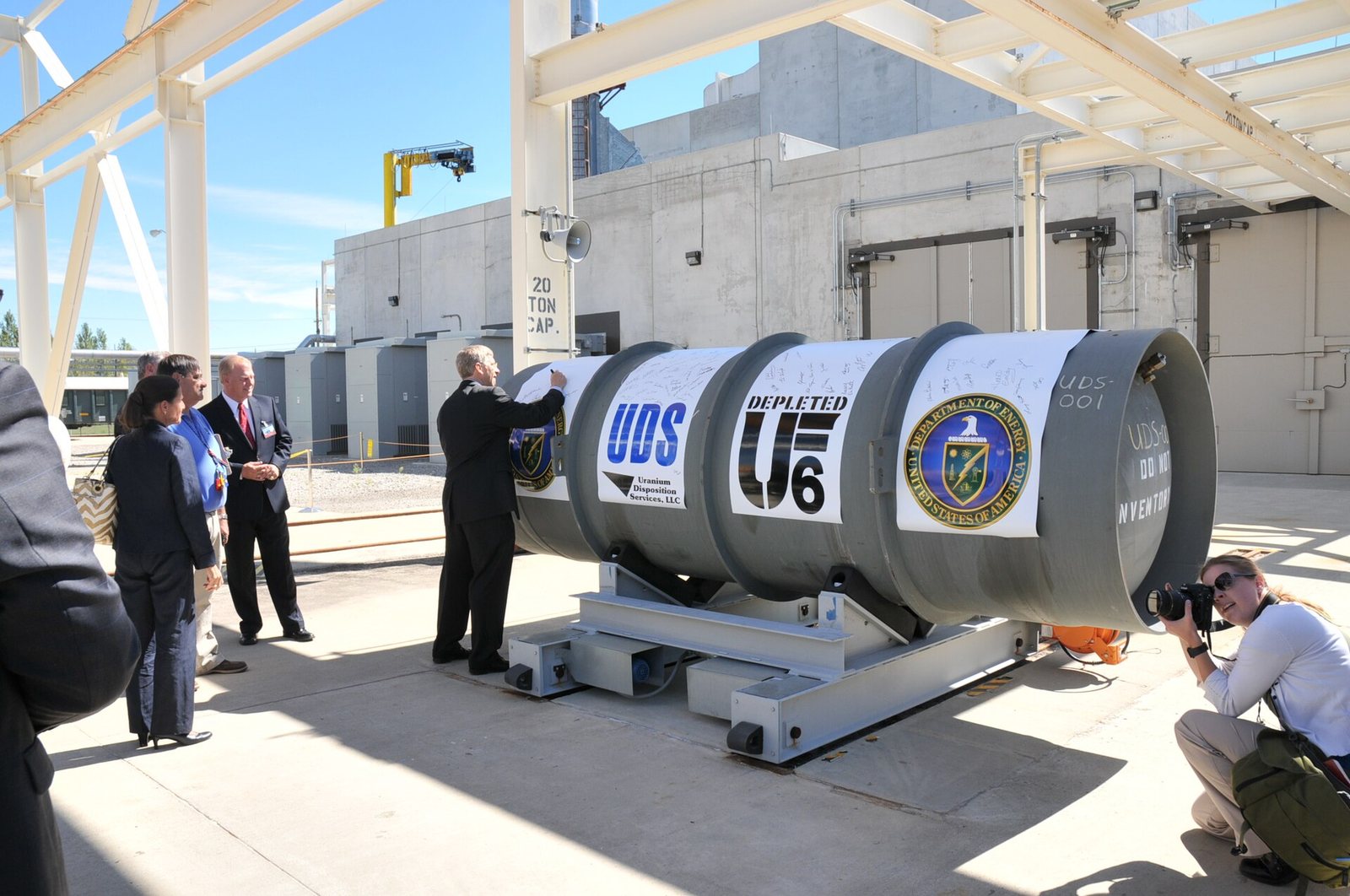
Apa yang terjadi pada sisanya: The great majority becomes depleted uranium — used for radiation shielding, ballast and armour, and otherwise stored.
Mengapa di sini: Enrichment is dual-use. Where it exists is a matter of treaty and politics as much as engineering.
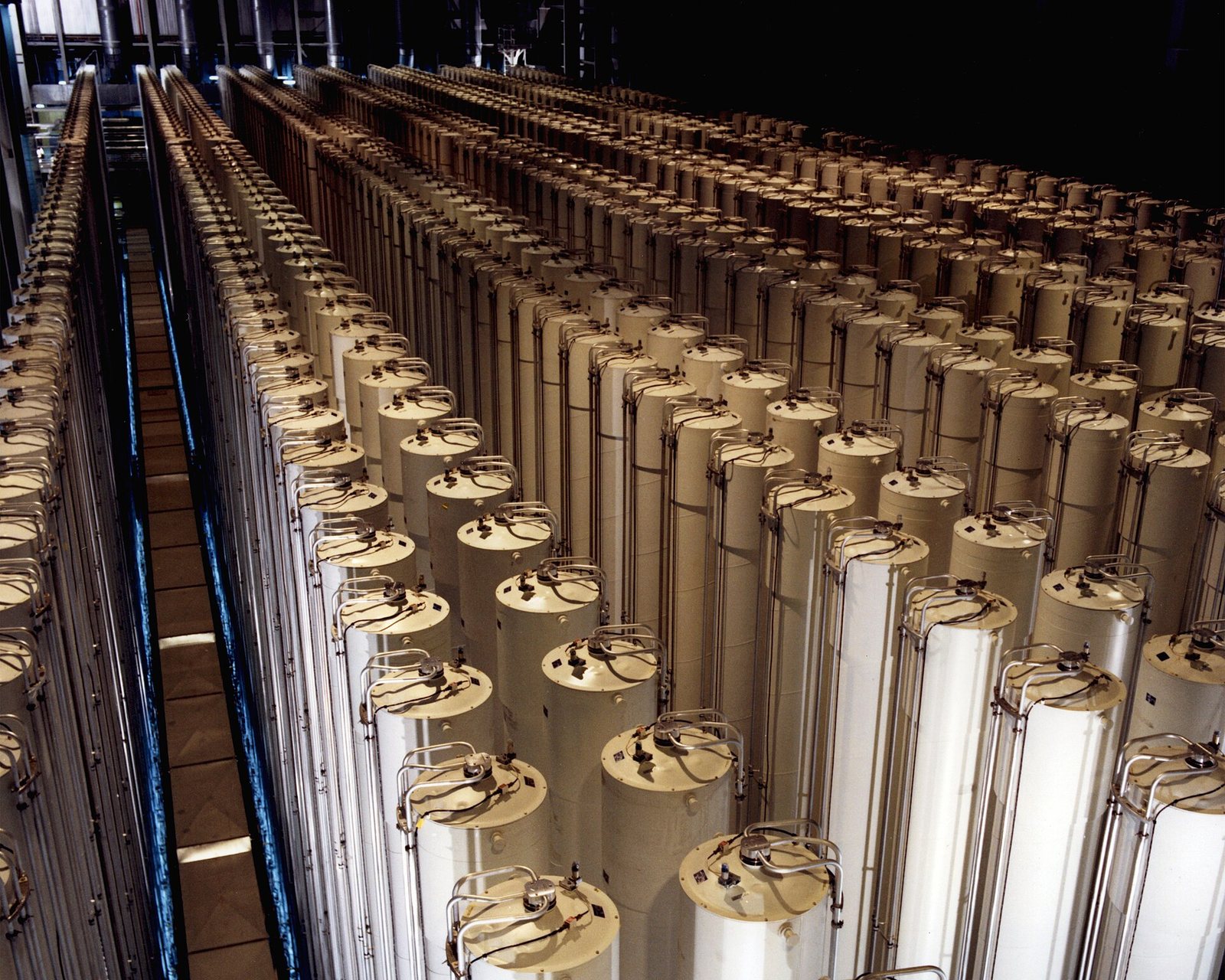
France · Fuel fabrication plant dipegang oleh Fuel fabricator (Produsen)
Pellets and rods
Converted to uranium dioxide powder, pressed into ceramic pellets the size of a fingertip, sintered, ground to tolerance and sealed into zirconium alloy tubes bundled into assemblies.
Mengapa di sini: The cladding is zirconium with the hafnium removed — two chemically near-identical metals that had to be separated for this to work at all.
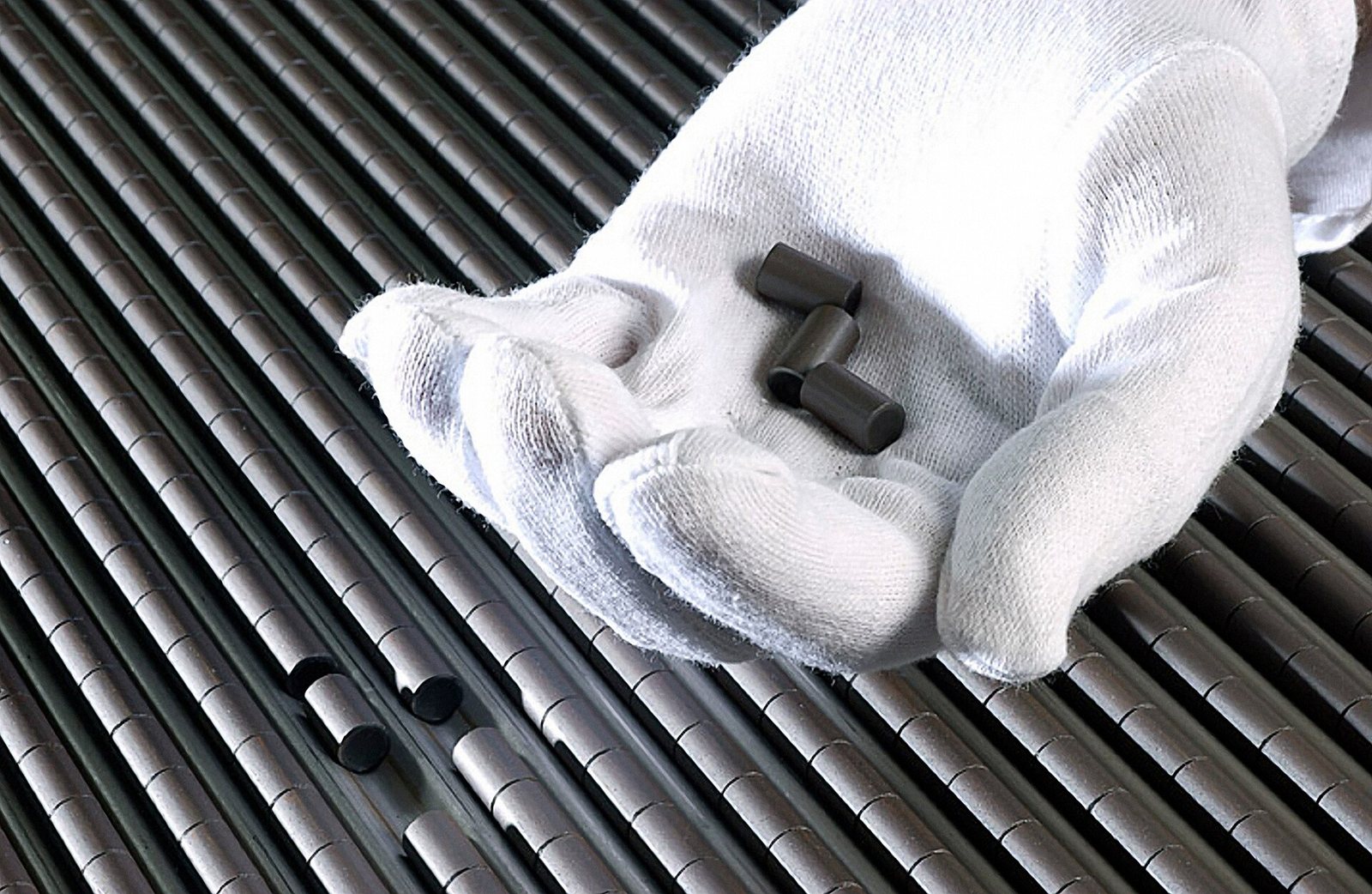
France · Reactor dipegang oleh Utility (Pengguna akhir)
About a year of electricity
Loaded into the core. One pellet holds roughly the energy of a tonne of coal. A large reactor's annual load fits in a few shipping containers.
Mengapa di sini: Four countries, and every gram inventoried at every handover.
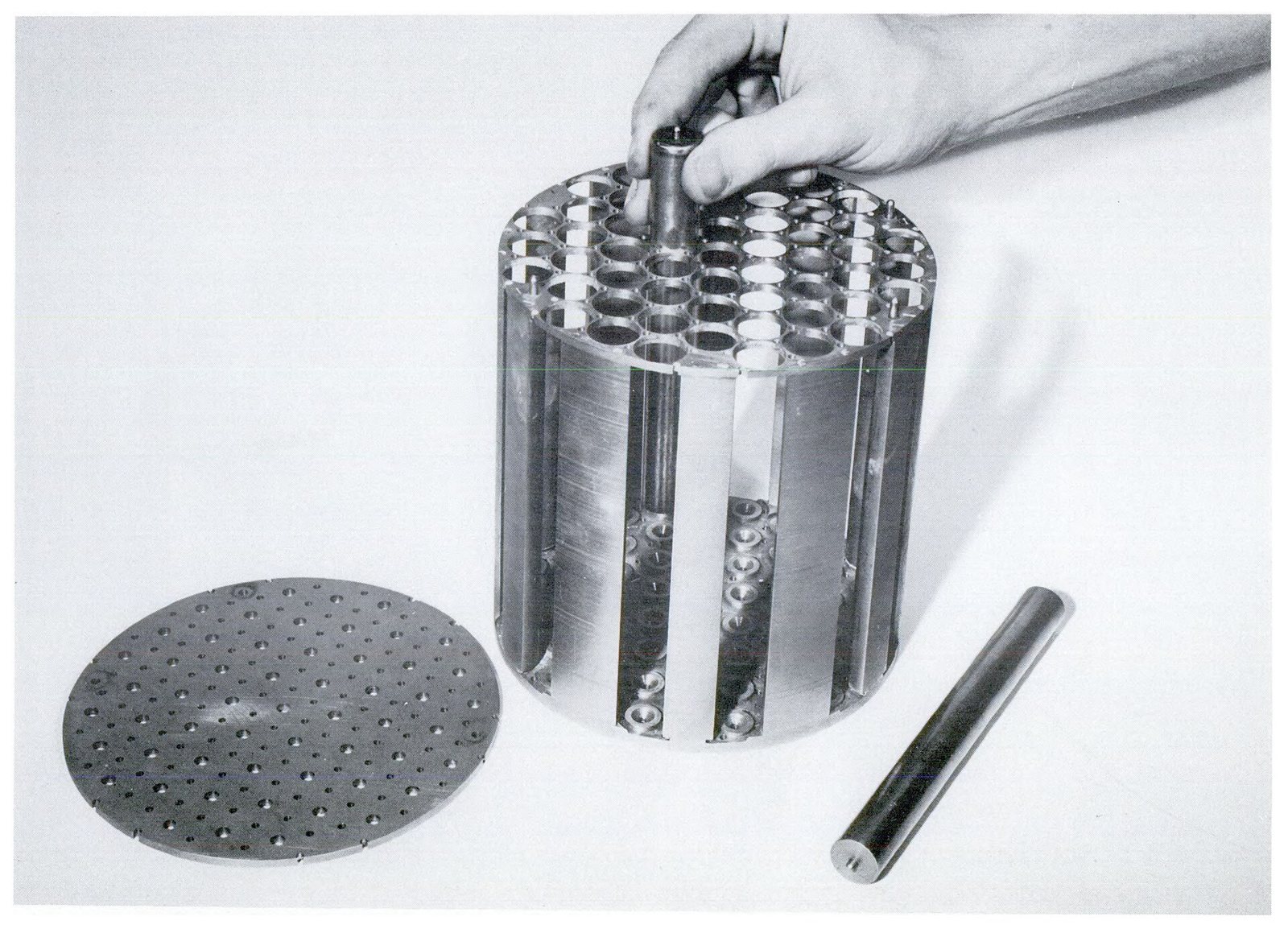
Ini adalah contoh terhitung. Contoh ini mengikuti kuantitas awal yang dinyatakan melalui hasil dan perolehan tipikal yang dipublikasikan, sehingga proporsinya dapat diperiksa; ini bukan catatan pengiriman tertentu. Fakta rute — negara mana saja, proses apa saja, dan mengapa material tersebut tidak dapat begitu saja ditangani di tempat lain — dikompilasi dari laporan publik.