Wat er werkelijk wordt vervoerd
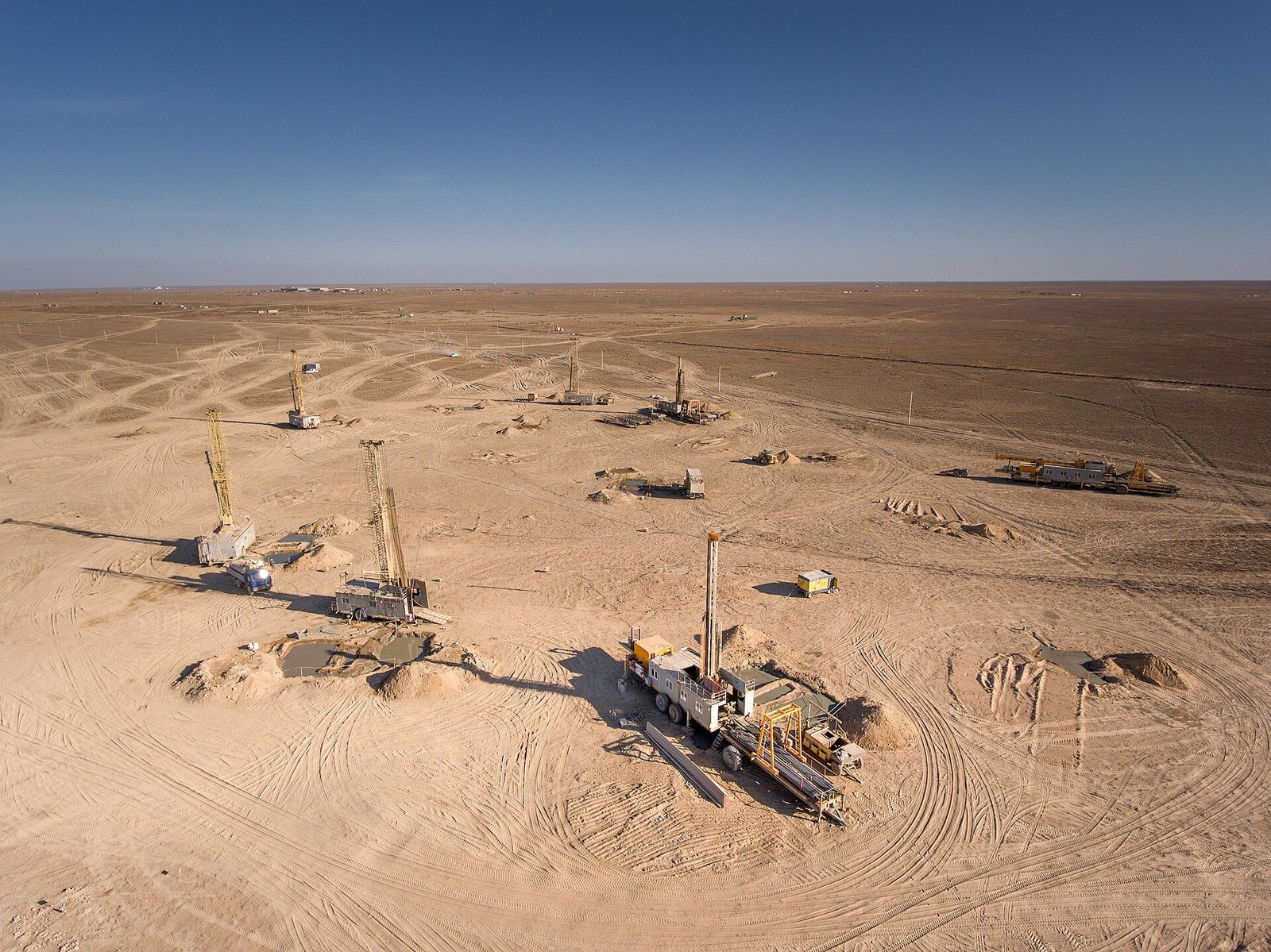
Kazakh uranium is dissolved underground and pumped up as a solution — nothing is blasted and no waste rock is moved. It then passes through conversion, enrichment and fuel fabrication, each of which exists in only a handful of countries and each of which is under international safeguards.
- Het materiaal
- Uranium
- De variëteit
- Sandstone-hosted uranium recovered in situ, no rock moved at all
- Waar het begint
- Kazakhstan — Wellfields on the Chu-Sarysu and Syrdarya basins
Stap voor stap, en grens voor grens
Kazakhstan · Southern Kazakhstan wellfields in beheer bij Kazatomprom and joint ventures (Staatsproducent)
Mining without a mine
A mildly acidic solution is injected through wells into the ore-bearing sandstone, dissolves the uranium, and is pumped back to surface through recovery wells. There is no pit, no shaft and no tailings dam.
Waarom hier: In-situ recovery only works in permeable, water-saturated sandstone with the right chemistry. Kazakhstan has an unusual amount of it, which is why it became the largest producer.
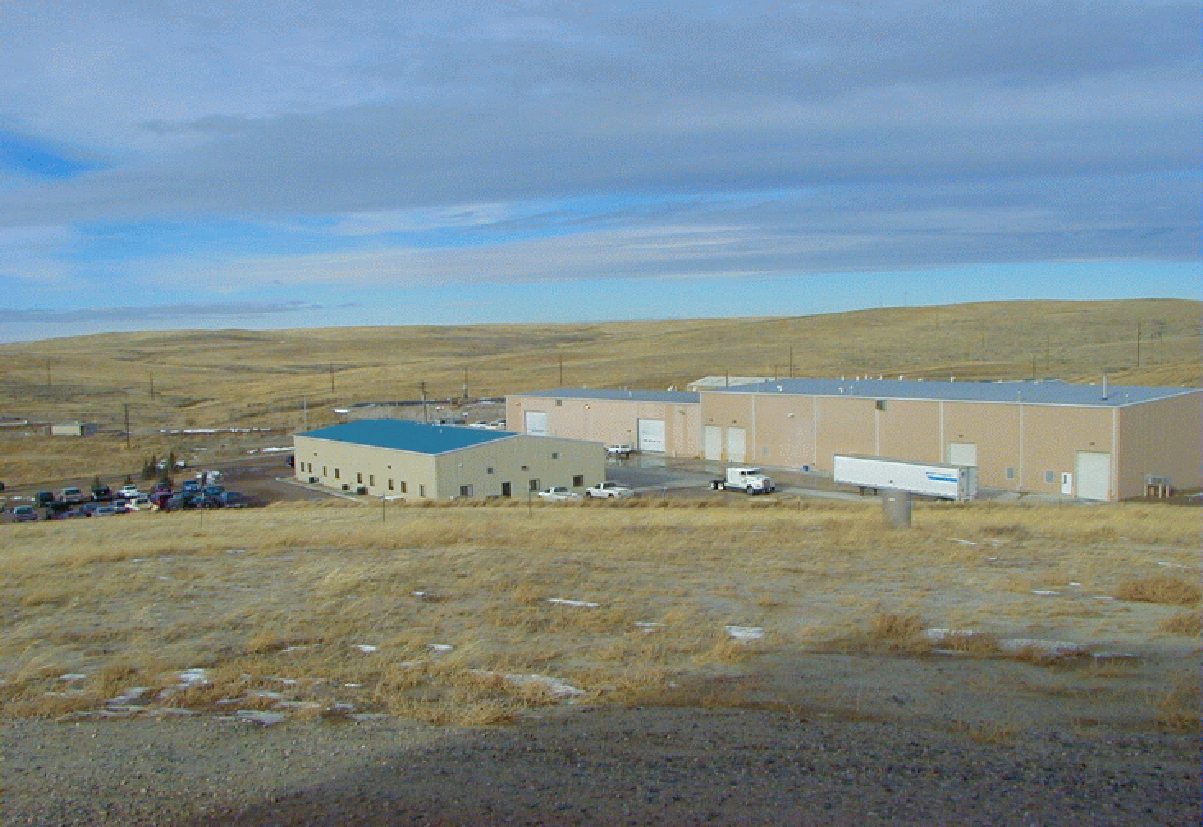
Kazakhstan · Central processing plant in beheer bij Kazatomprom (Staatsproducent)
Yellowcake
The uranium is stripped from solution onto resin, eluted and precipitated as U3O8 — a yellow-brown powder — then dried and drummed.
Wat er met de rest gebeurde: Note the units. 200 tU is 236 t U3O8 — mixing tonnes of uranium with tonnes of oxide is the classic error in this industry's reporting.
Waarom hier: Concentrating before transport, and before the safeguards paperwork gets heavier.
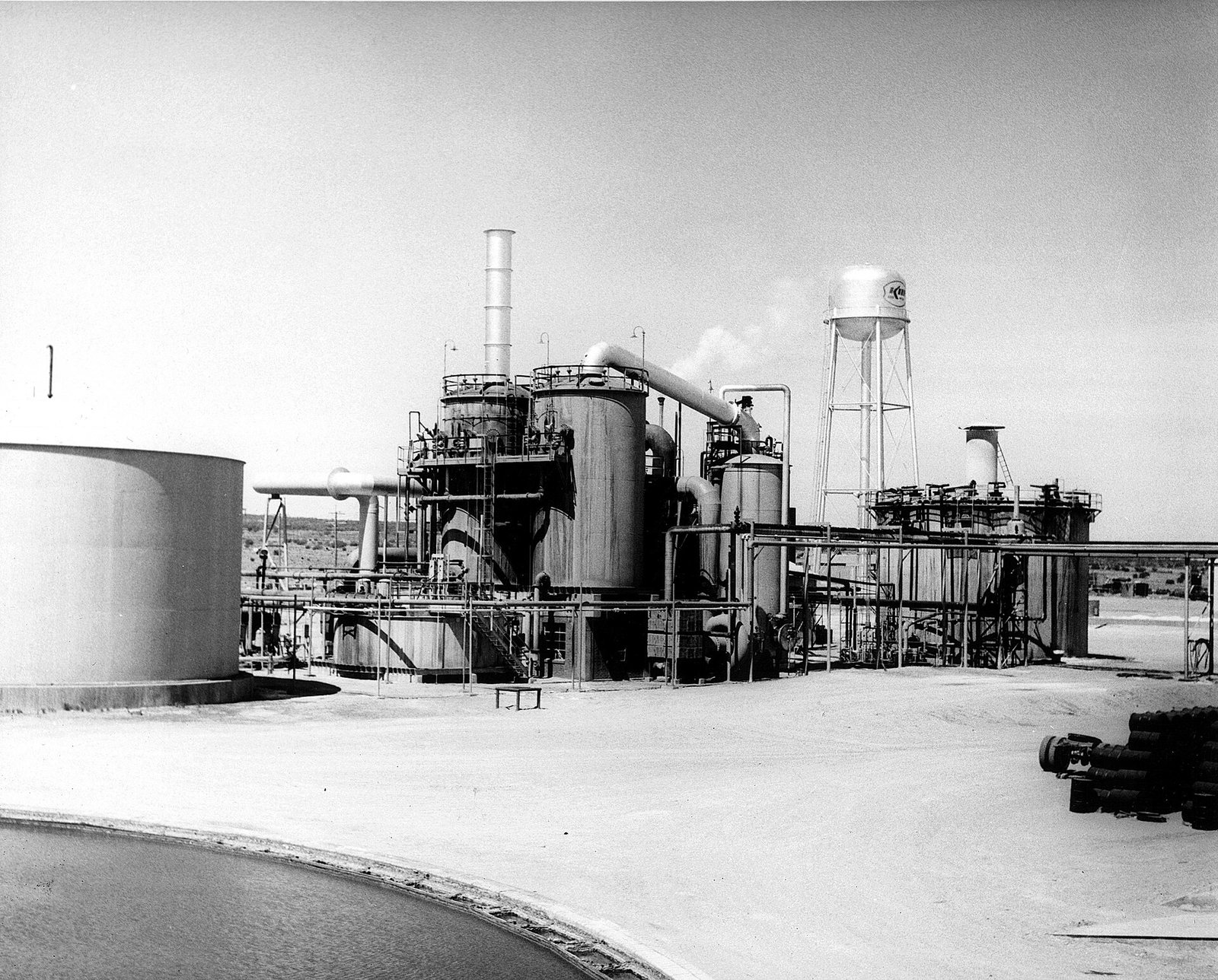
Canada · Conversion facility in beheer bij Converter (Raffinaderij)
Conversion to a gas
Yellowcake is purified and converted to uranium hexafluoride, which becomes a gas just above room temperature — the only practical form for enrichment.
Wat er met de rest gebeurde: The fluorine comes from fluorspar. A mineral most people have never heard of is a precondition for nuclear fuel.
Waarom hier: Only a handful of commercial conversion plants exist worldwide. This is a genuine bottleneck.
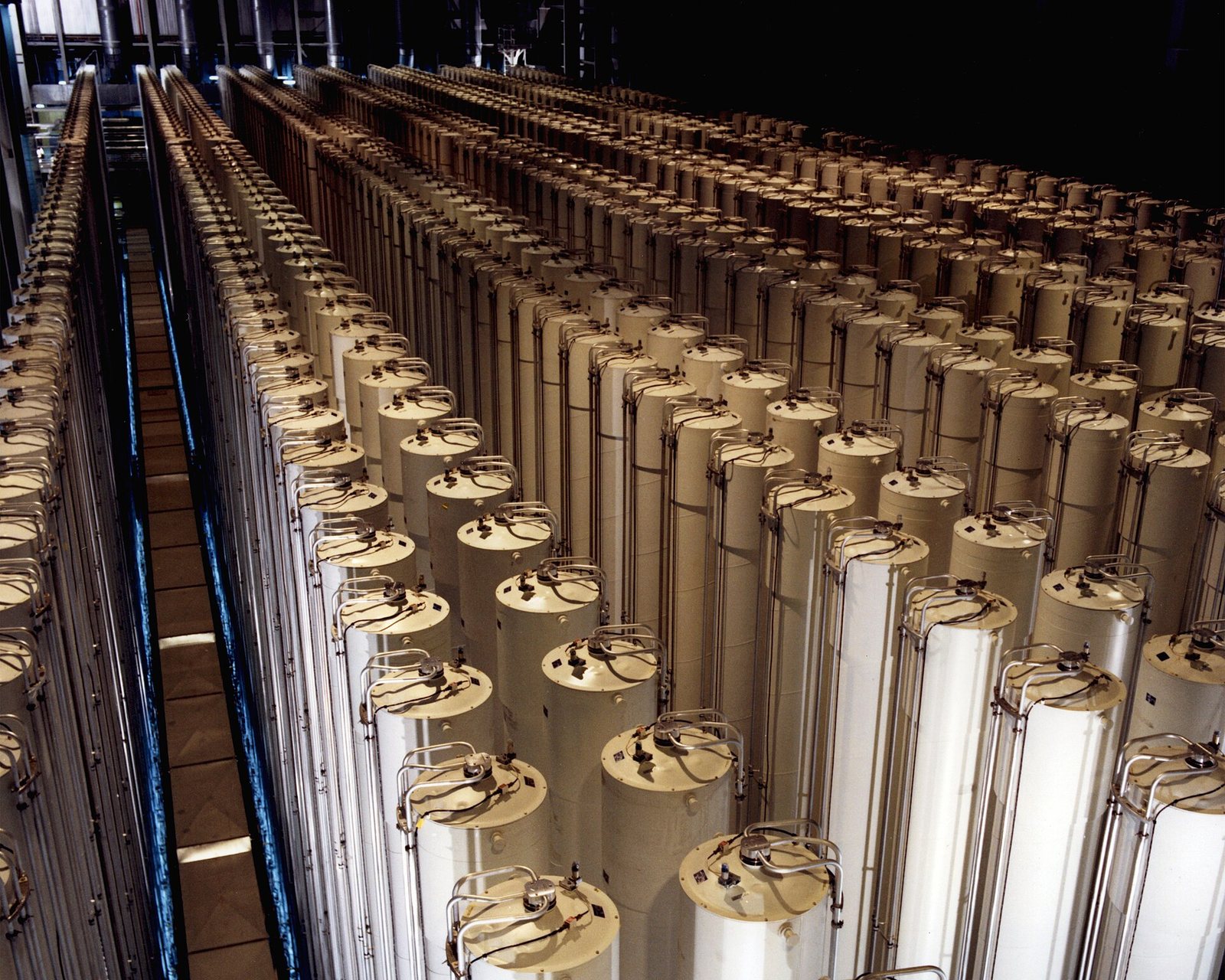
France · Centrifuge plant in beheer bij Enricher (Raffinaderij)
Enrichment
Thousands of centrifuges in cascade separate uranium-235 from uranium-238 by mass, raising the fissile fraction from 0.7% to 3–5%. Most of the feed leaves as depleted tails.
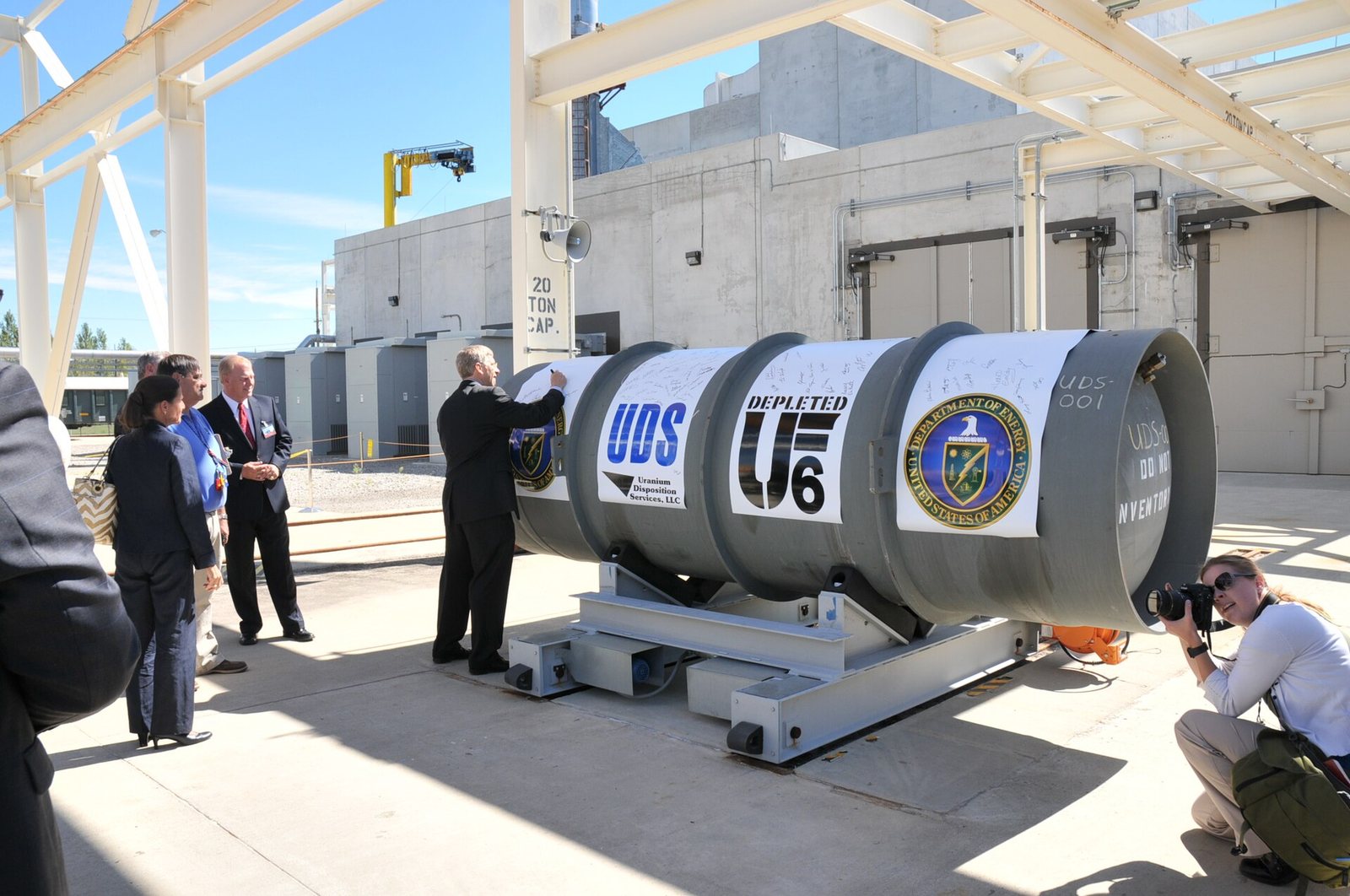
Wat er met de rest gebeurde: The great majority becomes depleted uranium — used for radiation shielding, ballast and armour, and otherwise stored.
Waarom hier: Enrichment is dual-use. Where it exists is a matter of treaty and politics as much as engineering.
France · Fuel fabrication plant in beheer bij Fuel fabricator (Fabrikant)
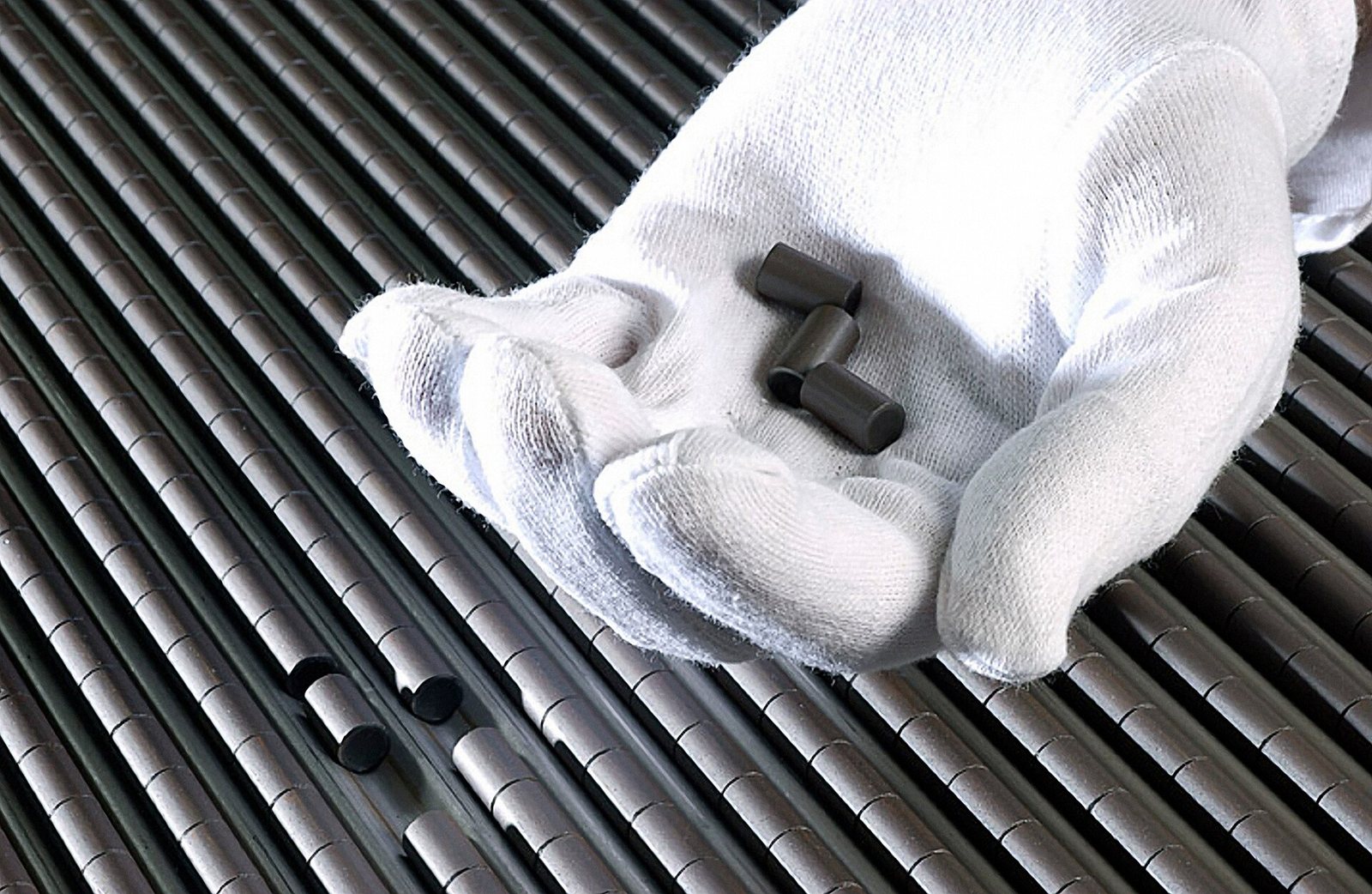
Pellets and rods
Converted to uranium dioxide powder, pressed into ceramic pellets the size of a fingertip, sintered, ground to tolerance and sealed into zirconium alloy tubes bundled into assemblies.
Waarom hier: The cladding is zirconium with the hafnium removed — two chemically near-identical metals that had to be separated for this to work at all.
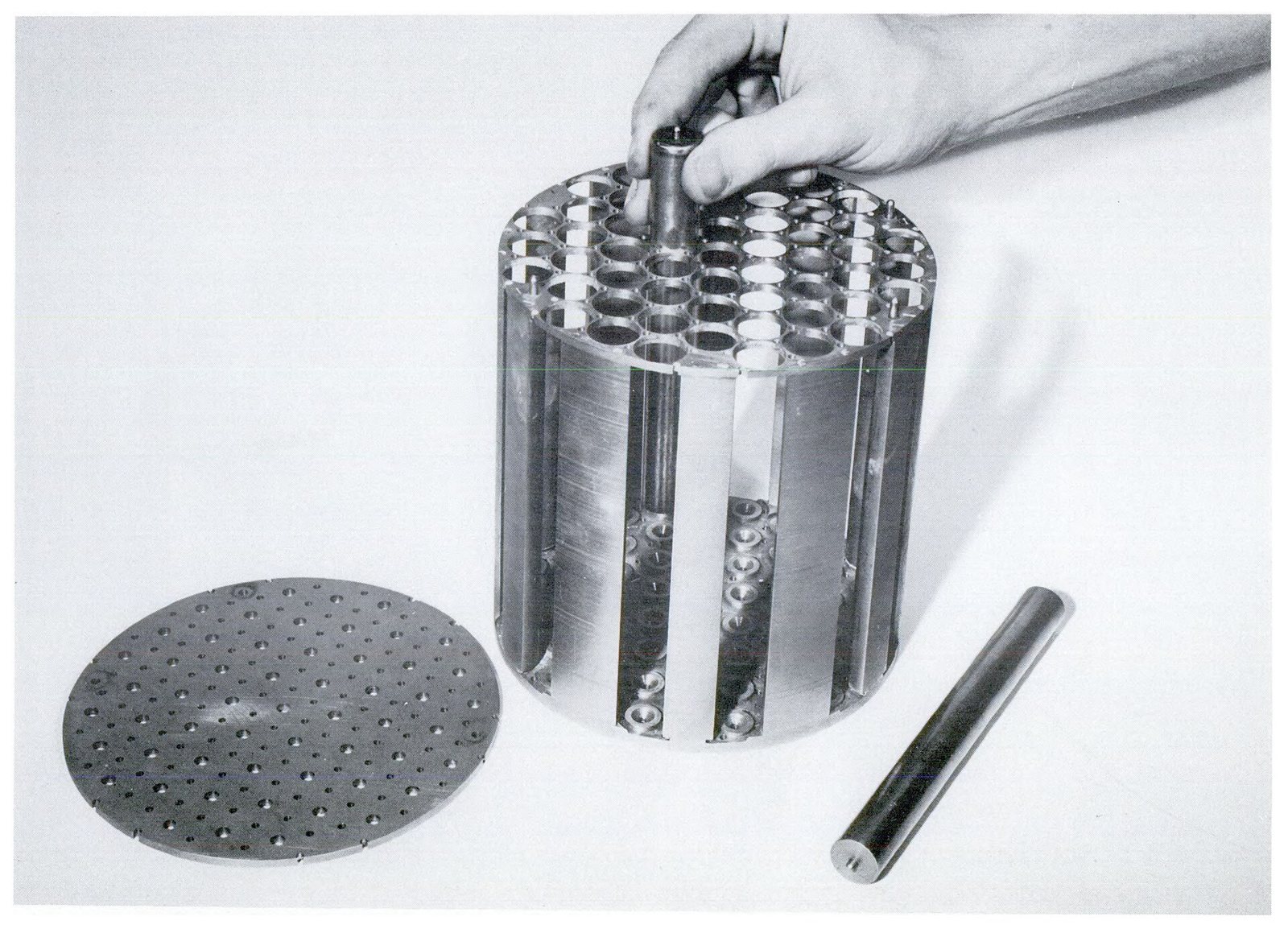
France · Reactor in beheer bij Utility (Eindgebruiker)
About a year of electricity
Loaded into the core. One pellet holds roughly the energy of a tonne of coal. A large reactor's annual load fits in a few shipping containers.
Waarom hier: Four countries, and every gram inventoried at every handover.
Dit is een uitgewerkt voorbeeld. Het volgt een opgegeven beginhoeveelheid door gepubliceerde typische opbrengsten en rendementen, zodat de verhoudingen controleerbaar zijn; het is geen verslag van een concrete zending. Routefeiten — welke landen, welke processen, en waarom het materiaal niet zomaar elders kan worden verwerkt — zijn samengesteld uit openbare bronnen.