Thực chất đang vận chuyển gì
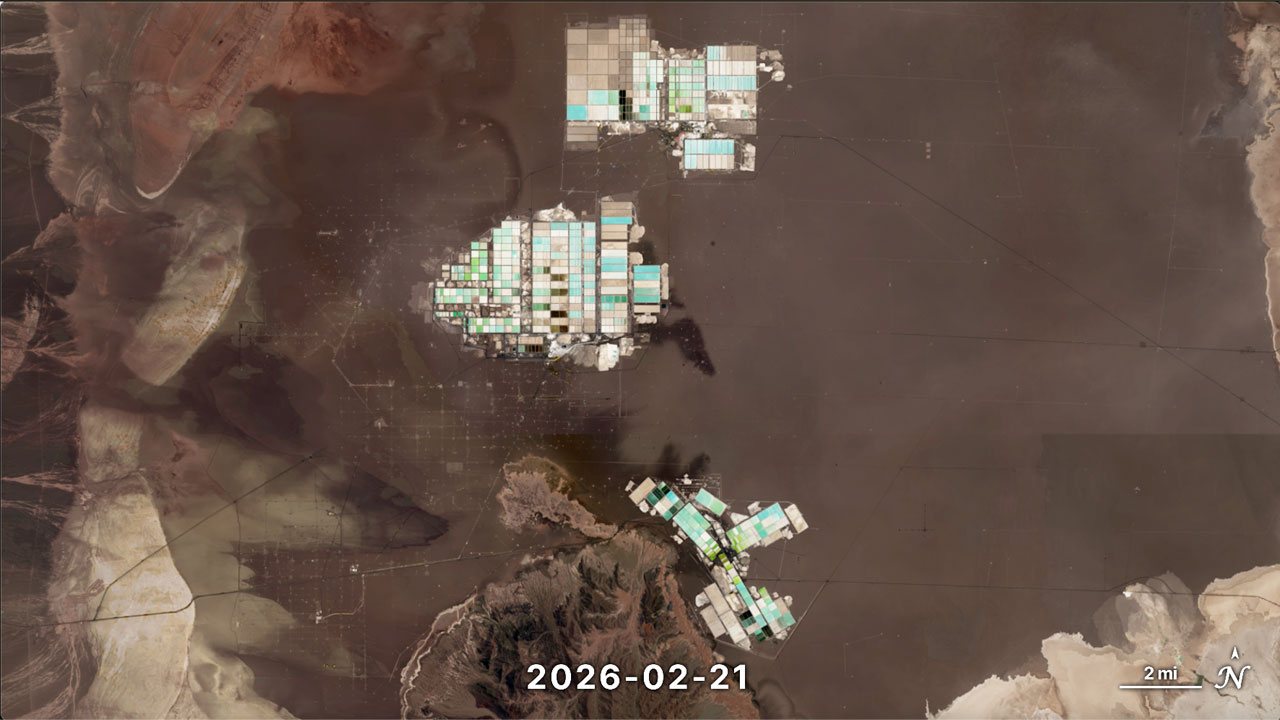
Lithium in a salar is dissolved in brine under the salt crust. It is pumped into ponds and left to evaporate for twelve to twenty-four months until it is concentrated enough to be worth processing. Almost none of the value is added in Chile; the concentrate leaves as a chemical and comes back, eventually, as a car.
- Vật liệu
- Lithium
- Loại
- Salar brine, roughly 1,500–2,000 mg of lithium per litre
- Nơi bắt đầu
- Chile — Salar de Atacama, 2,300 m up in the driest desert on Earth
Từng bước một, từng biên giới một
Chile · Salar de Atacama được nắm giữ bởi SQM and Albemarle, under CORFO concessions (Công ty khai thác)
Pumping the ore to the surface
Brine is pumped from wells 30–200 m below the salt crust. No blasting, no haul trucks, no waste rock — the ore arrives as a liquid.
Tại sao tại đây: Closed basin, high altitude, volcanic highlands feeding it, and almost no rainfall. Very few places on Earth combine all four.
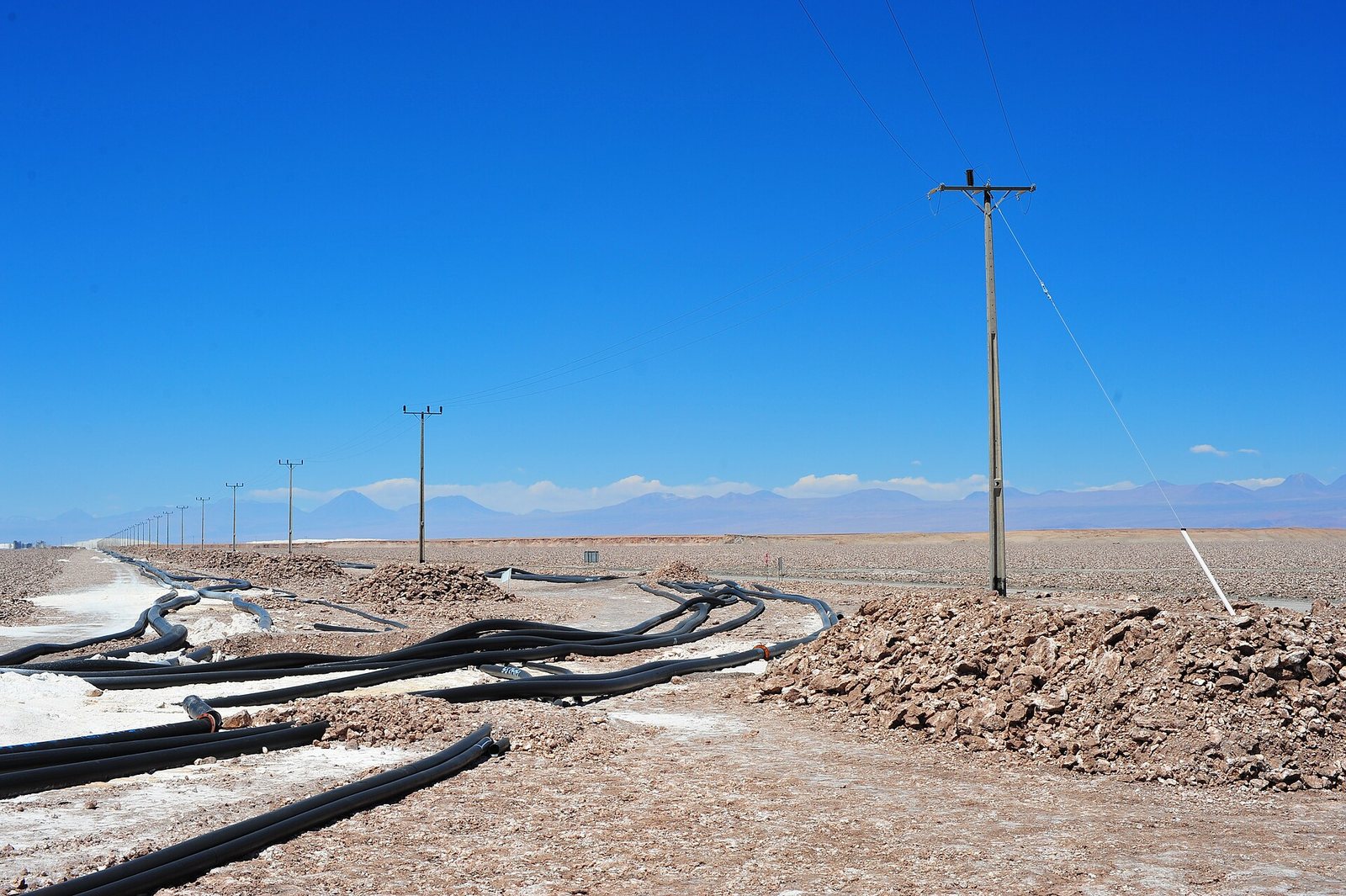
Chile · Evaporation ponds được nắm giữ bởi SQM and Albemarle (Công ty khai thác)
Eighteen months of sunshine
The brine moves through a cascade of ponds. Sodium, potassium and magnesium salts crystallise out in sequence and are harvested; the lithium stays in solution and concentrates.
Những gì xảy ra với phần còn lại: Around 95% of the water evaporates into the desert air. Potash is harvested as a genuine co-product, not a waste.
Tại sao tại đây: This step is free solar energy and eighteen months of patience. It cannot be moved somewhere with less sun and it cannot be hurried.
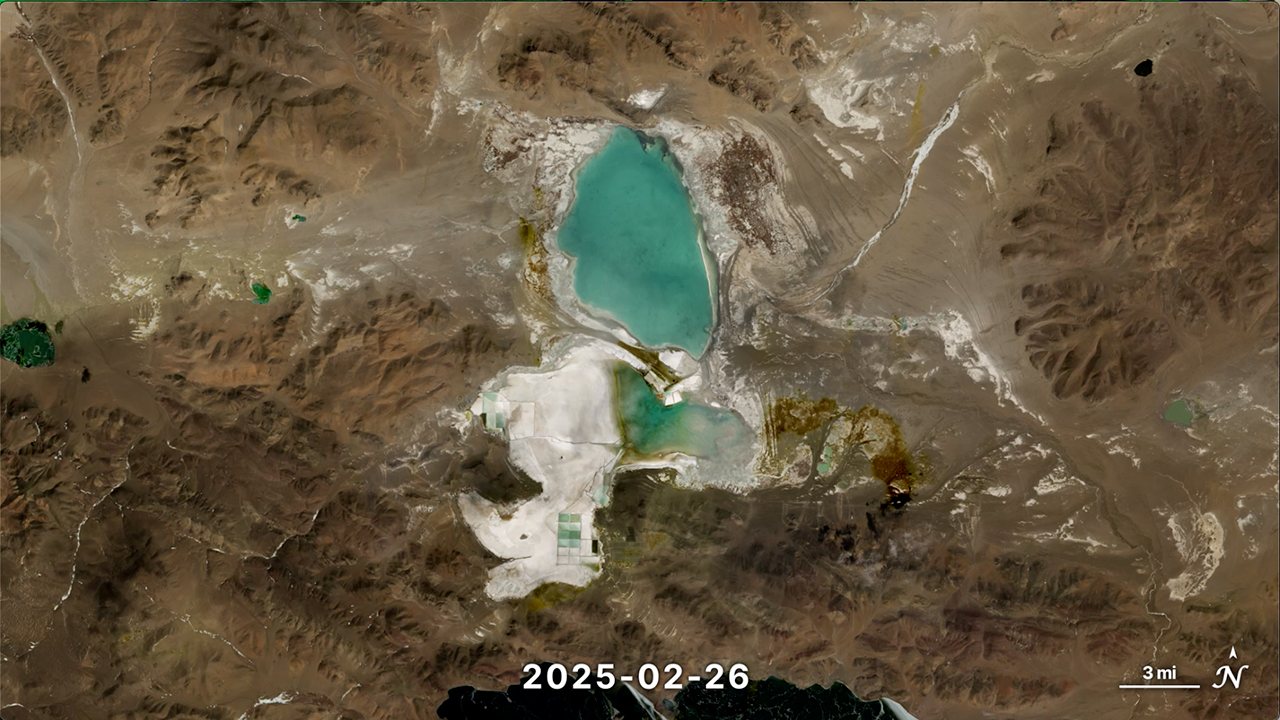
Chile · Salar del Carmen, near Antofagasta được nắm giữ bởi SQM / Albemarle (Hóa học)
Into a chemical
The concentrate is trucked to the coast, purified of boron and magnesium, and reacted with soda ash to precipitate lithium carbonate.
Những gì xảy ra với phần còn lại: This is the last step performed in Chile. Everything downstream — and most of the value — happens elsewhere.
Tại sao tại đây: Near the port and the power, and required by the concession terms.
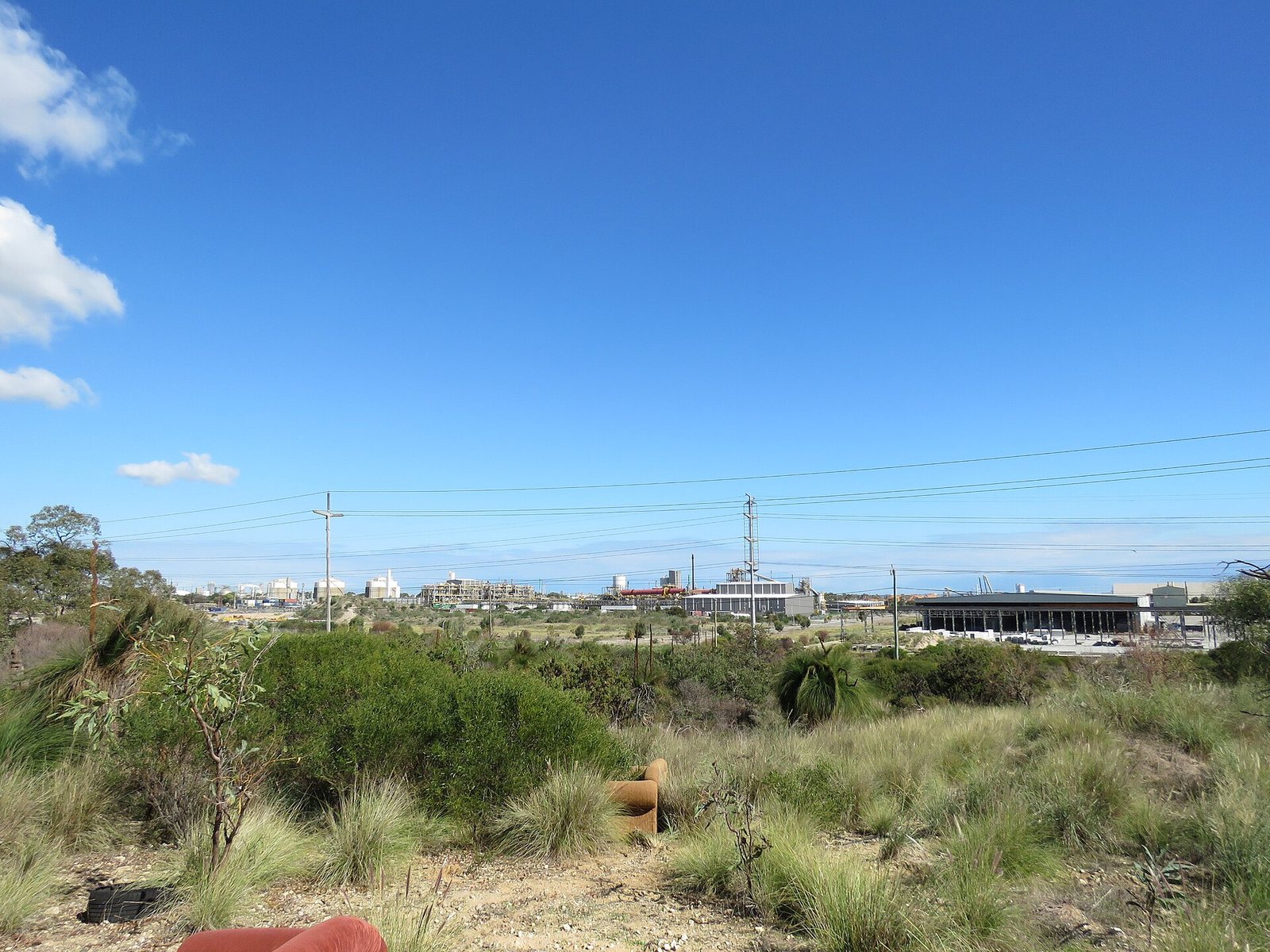
China · To Chinese and Korean cathode plants được nắm giữ bởi Traders and cathode makers (Nhà kinh doanh)
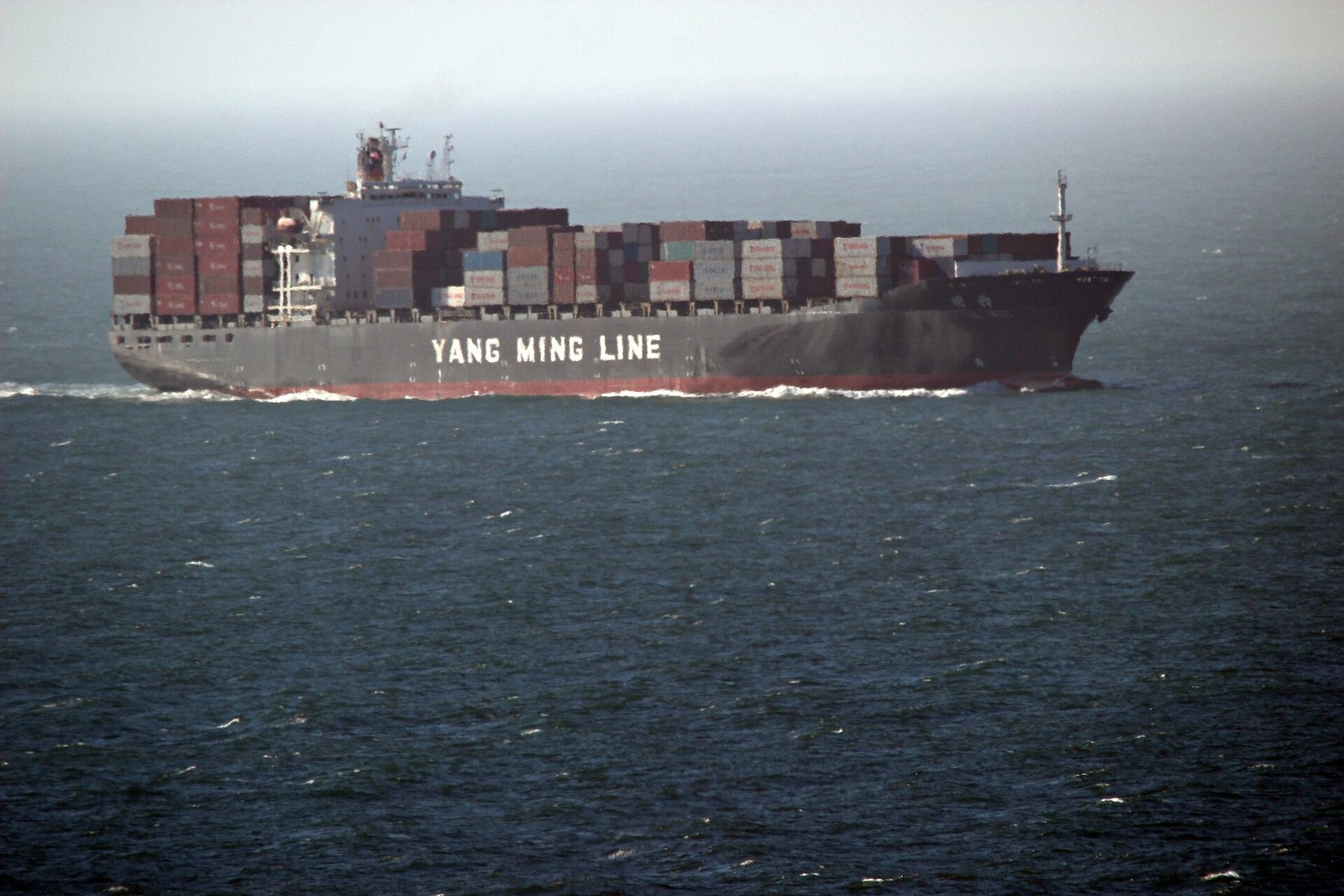
Across the Pacific in a container
Lithium carbonate ships as an ordinary bagged chemical in a standard container. At this point custody leaves the mining industry entirely.
Tại sao tại đây: Cathode manufacture is where the buyers are. The chemical goes to the factory; the factory does not come to the salar.
China · Cathode plant được nắm giữ bởi Cathode manufacturer (Nhà sản xuất)
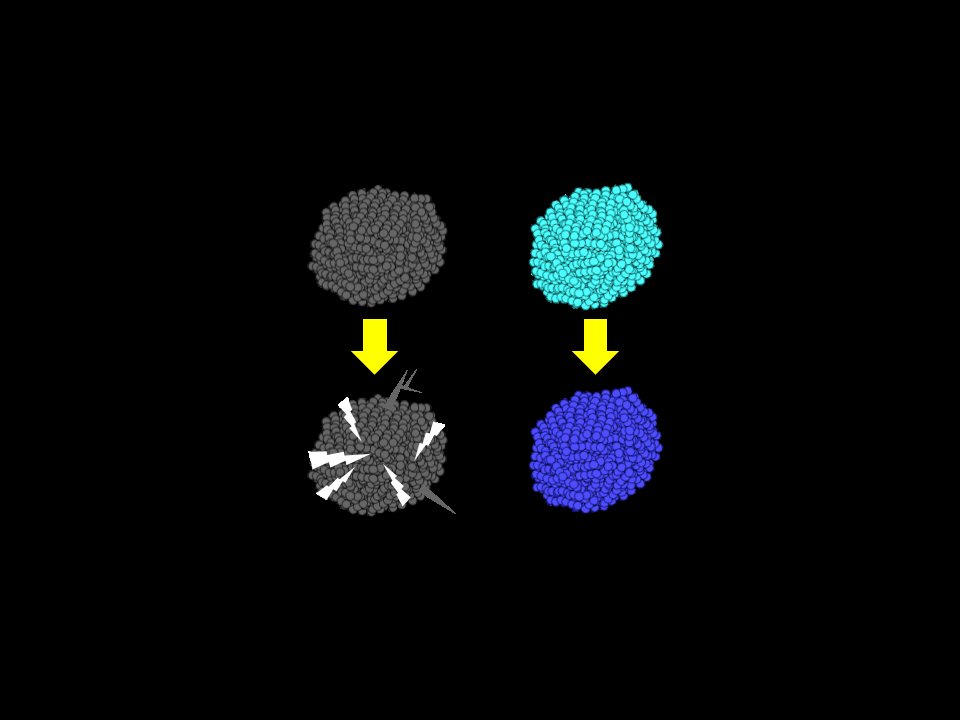
Becoming a cathode
The carbonate is combined with an iron-phosphate or nickel-manganese-cobalt precursor and calcined into cathode active material — a black powder.
Những gì xảy ra với phần còn lại: Carbonate is only about 19% lithium by weight. The rest of the mass was always carbon and oxygen.
Tại sao tại đây: Calcination to a tight particle-size specification is the hardest step to qualify, and the qualified plants are concentrated in a few places.
China · Cell plant and vehicle assembly được nắm giữ bởi Battery and vehicle manufacturers (Nhà sản xuất)
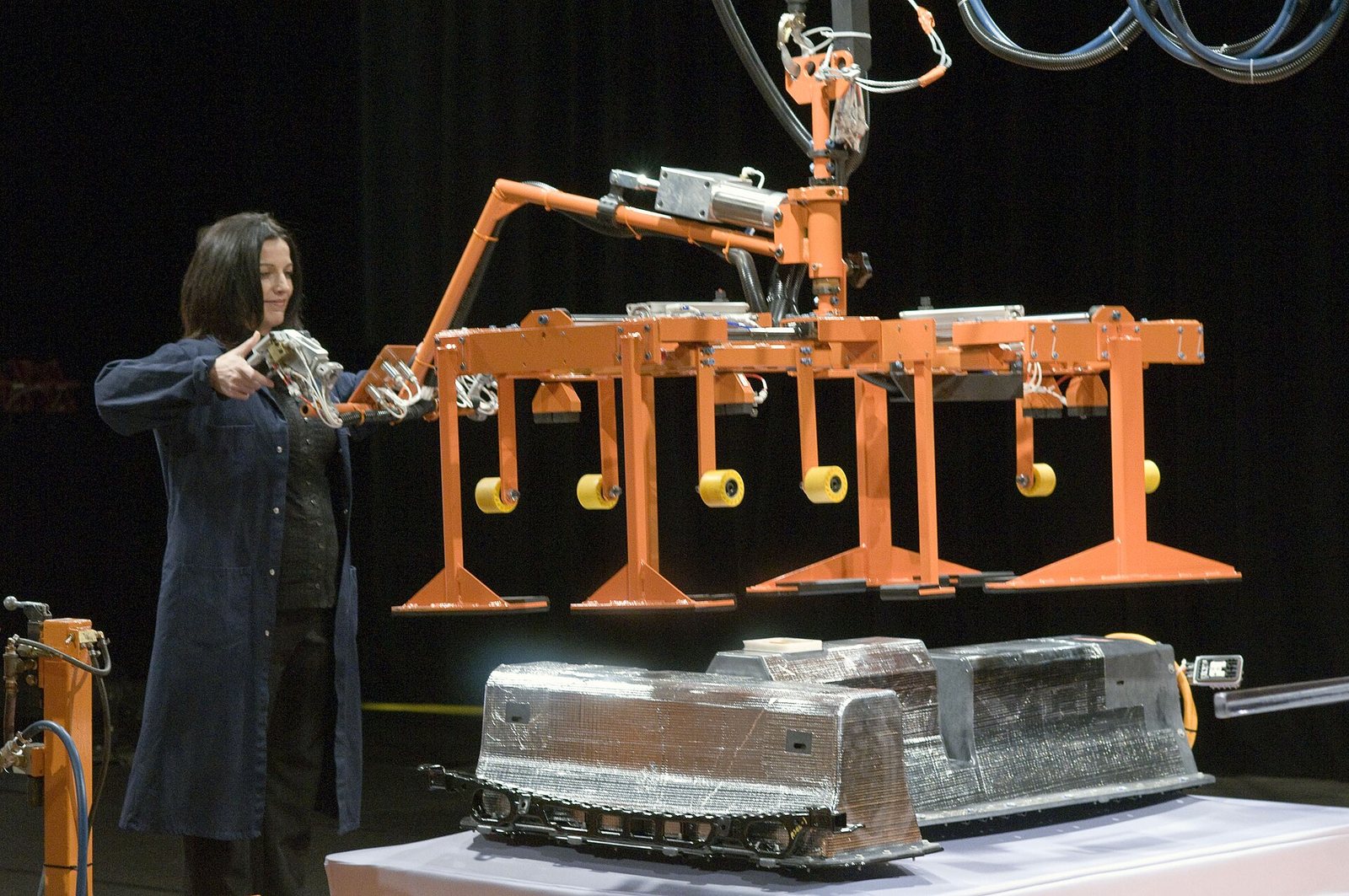
Into a cell, then a pack, then a car
Cathode powder is coated onto aluminium foil, paired with a graphite anode on copper foil, wound or stacked, filled with electrolyte and sealed. The cells become modules, the modules become a pack.
Tại sao tại đây: Cells are heavy and awkward to ship, so cell plants cluster near vehicle assembly.
Germany · Wherever it is sold được nắm giữ bởi The driver (Người dùng cuối)
A car, for maybe fifteen years
Roughly 8 kg of contained lithium, from a million litres of desert brine, now sits under a car floor. At end of life it can be recovered — recycling returns lithium at high rates once the collection system exists.
Tại sao tại đây: The car is sold where the demand is. The lithium has now crossed three continents.
Đây là một ví dụ minh họa có tính toán. Nó theo dõi một lượng khởi đầu được nêu rõ qua các năng suất và hiệu suất thu hồi điển hình đã công bố, do đó các tỷ lệ có thể kiểm chứng; đây không phải là hồ sơ của một lô hàng cụ thể. Các dữ kiện về tuyến đường — những quốc gia nào, những quy trình nào, và tại sao vật liệu không thể đơn giản được xử lý ở nơi khác — được tổng hợp từ các báo cáo công khai.