De la roca al producto, trazado
The Materials Atlas
Materiales Minas y yacimientos Procesamiento y refinación Recorridos de custodia Cadenas de suministro Empresas Países Noticias
Materiales por categoría Materiales para baterías Elementos de tierras raras Cobre y electricidad Materiales para semiconductores Materiales nucleares Aeroespacial y Defensa Metales preciosos Acero y metales de aleación Minerales industriales Minerales Agrícolas Materias primas energéticas Minerales mena Tabla periódica
Demanda Mercados finales Tecnologías Calculadora de materiales Mapas Clasificador
Aprender y herramientas AprenderGlosario Consultar los datosAgentes de IA Investigación y datosAPI ★ Guardado
Acerca de Quiénes somosMetodología Fuentes de datosContacto Aviso legal
Opciones de lectura
🧭 Vista guiada ¿Es nuevo en esto: leyes de mena, concentrado, refinación, subproductos? Explicamos cada término mientras navega, en lenguaje claro. Los mismos datos, con la ayuda integrada.
⚡ Vista de experto Usted ya conoce el sector. Solo los datos: limpios, rápidos y compactos, sin explicaciones adicionales. Esta es la vista predeterminada.
Tema
Idioma de la interfaz
Profundidad Las páginas de materiales están redactadas en cuatro niveles. Seleccione uno en cualquier página de material y se recordará.
★ Guardado Investigación y datos
Pilbara iron ore to Chinese steel

Recorrido de custodia · comienza en Australia

Pilbara iron ore to Chinese steel

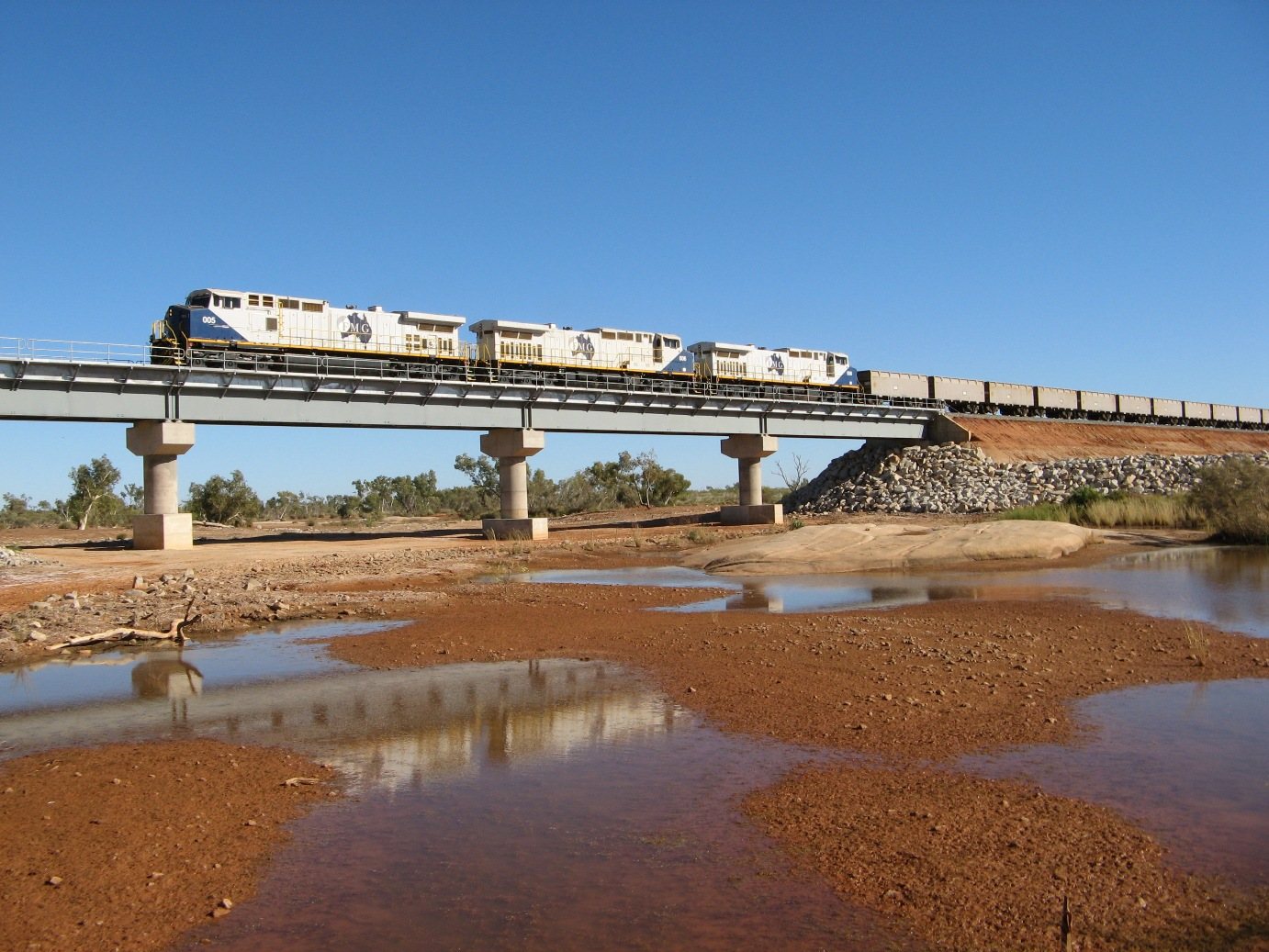
The largest material flow on Earth: dig it, crush it, screen it, and put it on a boat.

FMG Iron Ore Train -2008 · Geez-oz · CC BY-SA 3.0 · Wikimedia Commons
1,000 tonnes of iron ore as mined
620 tonnes of crude steel
Australia → China · Rail then Capesize Australia — Blast, load, haul 1 Australia China — Rail, port, Capesize 2 China
Numerados en el orden en que viaja el material. Haga clic en un país para abrir su página. Proyección equirrectangular trazada a partir de los centroides de cada país — los arcos indican qué fronteras se cruzan, no la ruta de navegación real.

Qué es lo que se mueve realmente

Pilbara hematite is rich enough to ship almost as it comes out of the ground. There is no flotation, no smelting, no chemistry at the mine — just crushing and screening, a private heavy-haul railway and a purpose-built port. All the transformation happens on another continent.

El material
Iron Ore
La variedad
Direct-shipping hematite fines, around 62% iron
Dónde empieza
Australia — The Pilbara, where banded iron formation was laid down over two billion years ago
Por qué esta ruta y no otra. Direct-shipping ore is the exception in mining: the rock is already good enough. That is why the Pilbara moves more tonnage than any other district and why the value added in Australia per tonne is so small.
El eslabón más estrecho. Coking coal, oddly enough. The blast furnace needs carbon as a chemical reductant, not just as fuel, and that is the hardest part of steel to replace.
Lea los dos valores de cada paso: lo que entró y lo que salió. Observar cómo se reducen es el objeto del ejercicio. Al final habrá seguido mil toneladas de roca hasta llegar a unos pocos kilogramos de lo que realmente hace el trabajo.

Paso a paso, y frontera por frontera

01 Extracción 1,000tonnes

Australia · Pilbara, Western Australia en poder de Rio Tinto, BHP, FMG and others (Minero)

Blast, load, haul

Enriched hematite is drilled, blasted and hauled — much of it by autonomous trucks and driverless trains.

1,000 tonnesore 1,000 tonnesore to the crusher

Por qué aquí: Weathering leached the silica out of ancient banded iron formation and left almost pure hematite behind.
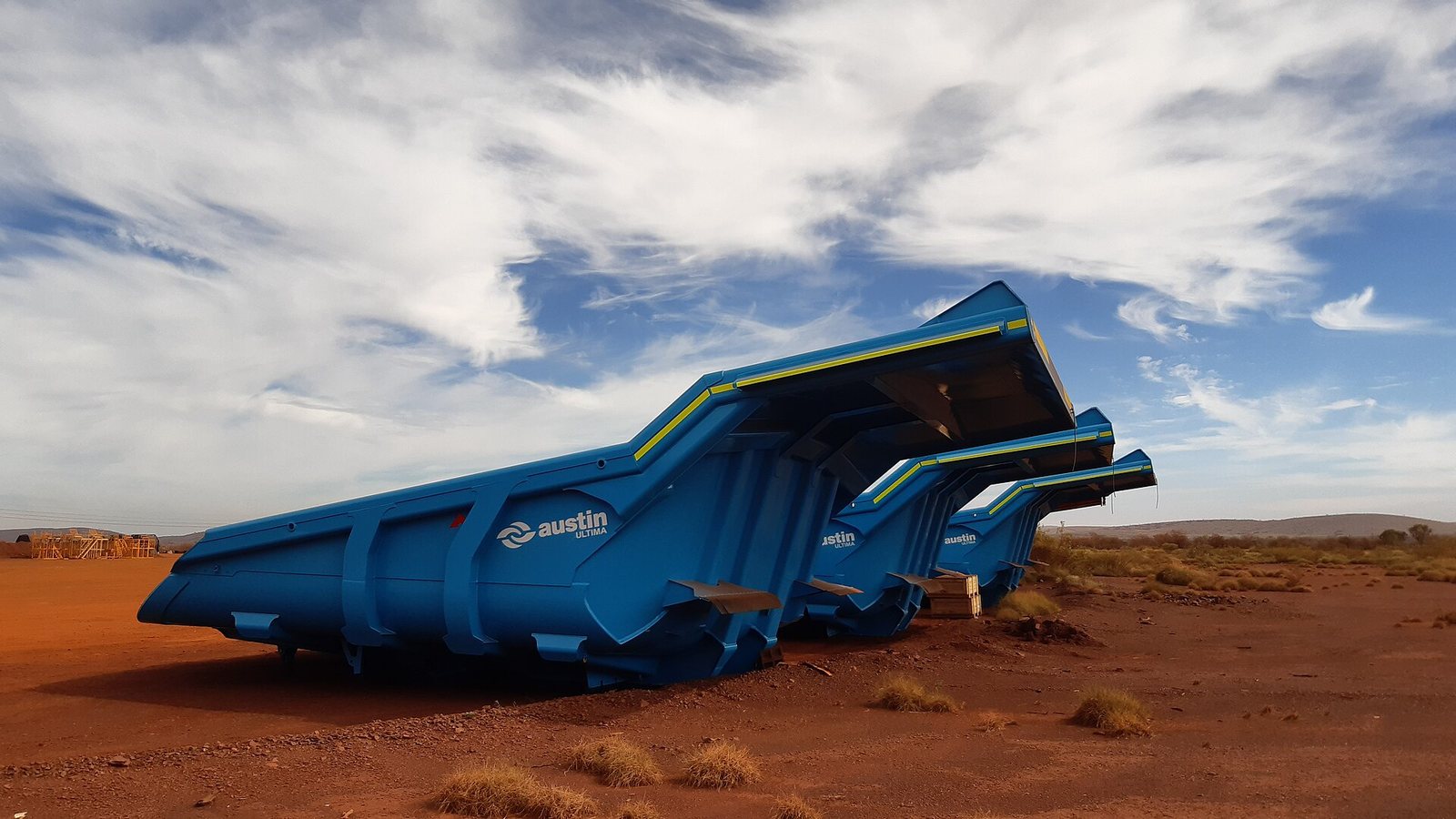
Blast, load, haul
Haul truck trays to be fitted at the Br… · CC BY-SA 4.0 via Wikimedia Commons
02 Preparación 990tonnes

Australia · Mine-site plant en poder de Miners (Minero)

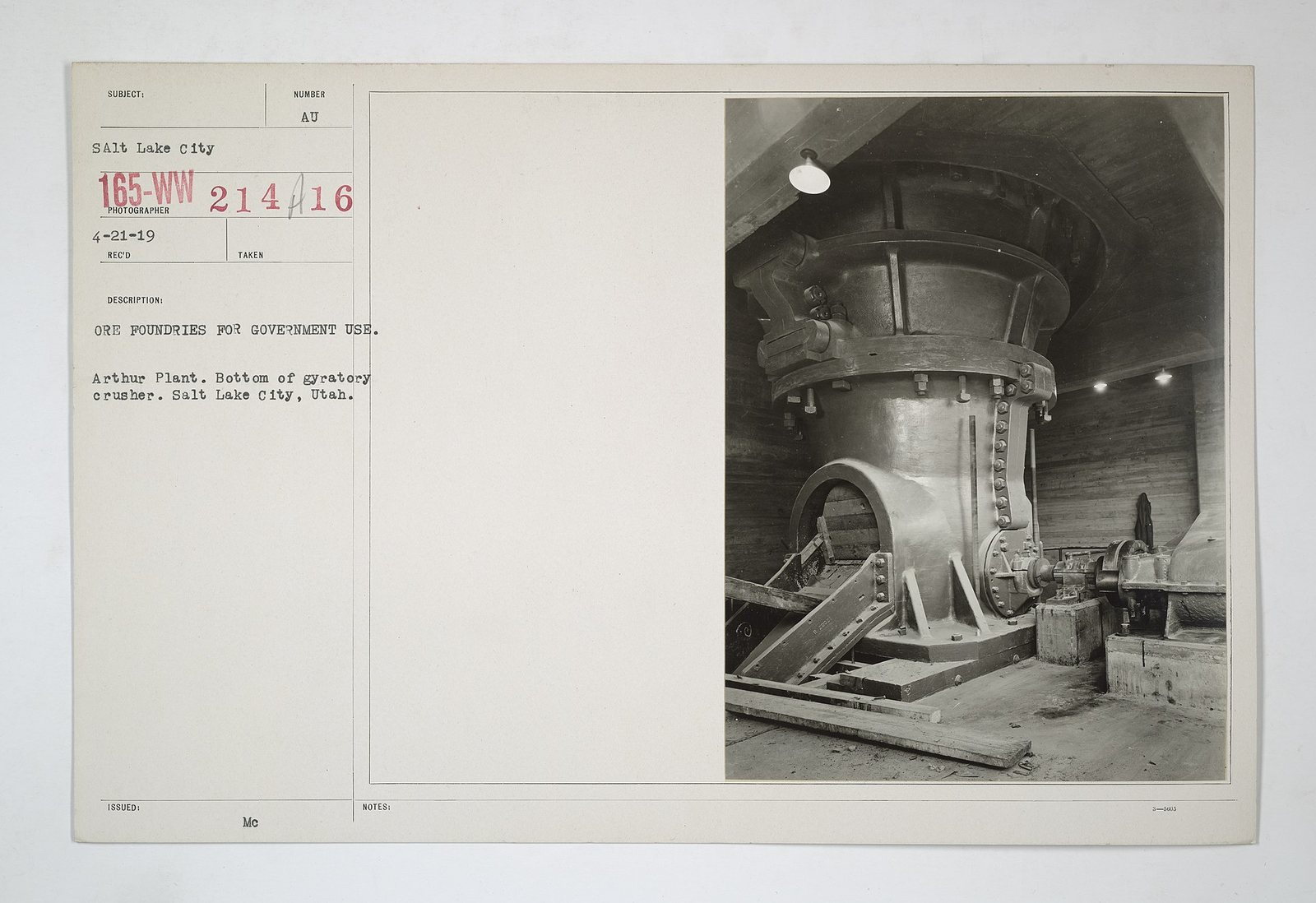
Crush and screen. That is all.

Crushed and screened into lump and fines. No concentration is needed — the ore is already close to a saleable grade.

1,000 tonnesore 990 tonneslump and fines

Qué ocurrió con el resto: Almost nothing is discarded. Compare that with copper, where 984 tonnes in 1,000 go to tailings.

Por qué aquí: Where the ore is good enough to ship, nobody builds a plant.
hours Hematite →
Crush and screen. That is all.
Industries of War - Metals - Iron - Ore… · Public domain via Wikimedia Commons
03 Transporte 990tonnes

China · Port Hedland to Chinese mills en poder de Miners and steelmakers (Comerciante)

Rail, port, Capesize

Trains up to 2.5 km long run to a private port, and Capesize bulkers sail to China. This is the highest-tonnage trade route on the planet.

990 tonnesore 990 tonnesdelivered

Por qué aquí: The steel mills are in Asia and the ore is in Australia. The whole business is logistics.
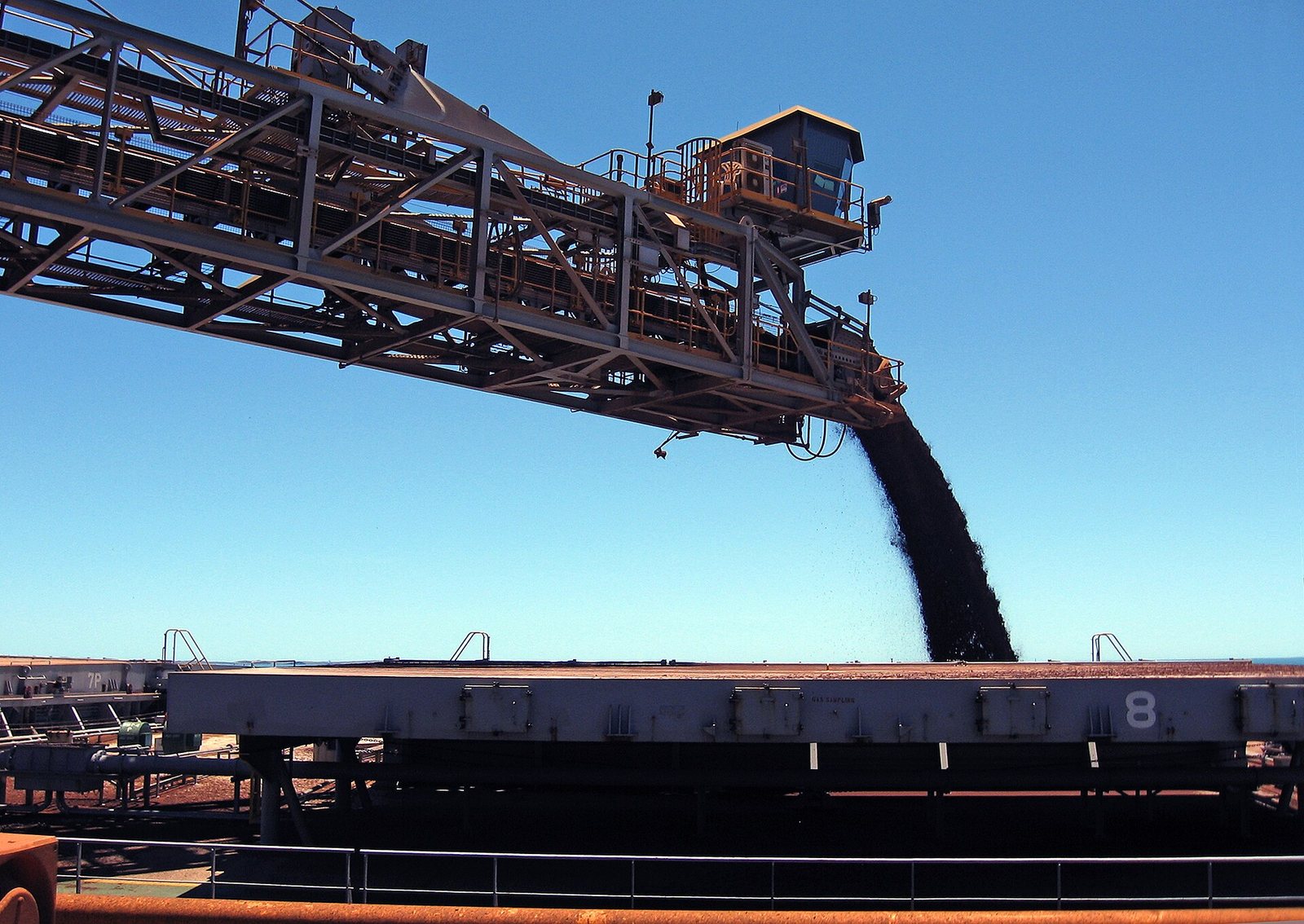
Rail then Capesize · ~2 weeks at sea ~2 weeks Port Hedland →
Rail, port, Capesize
CSIRO ScienceImage 11678 A Rio Tinto ir… · CC BY 3.0 via Wikimedia Commons
04 Procesamiento 640tonnes

China · Integrated steelworks en poder de Steelmaker (Fabricante)

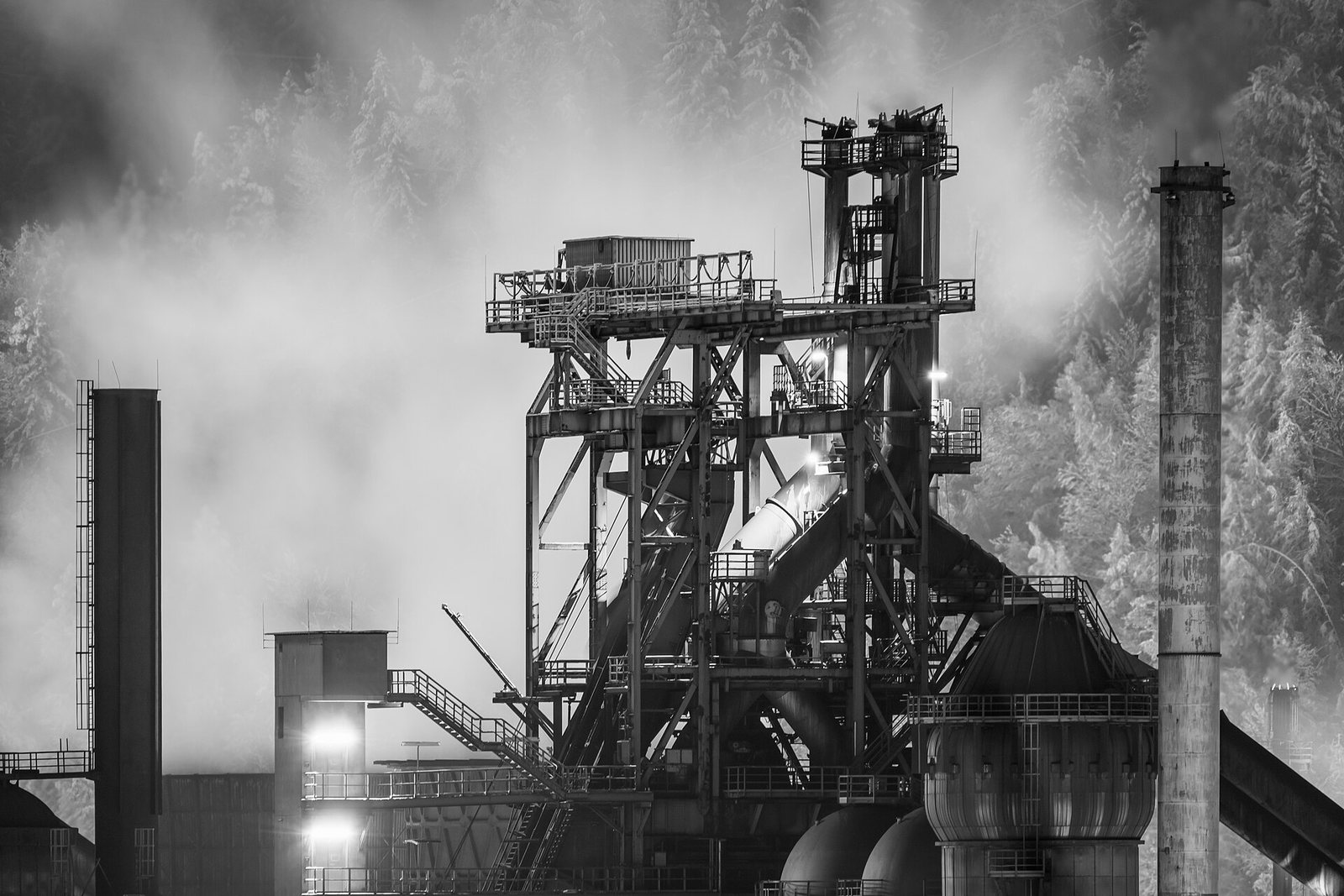
Sinter, coke, and a blast furnace

Fines are sintered into lumps; coking coal is baked into coke. In the furnace the carbon strips the oxygen off the iron oxide — a chemical reaction, not just heat.

990 tonnesiron ore 640 tonneshot metal

Qué ocurrió con el resto: Roughly 500 kg of coking coal per tonne of hot metal, and the CO2 that comes with it. This reaction is why steel is hard to decarbonise.

Por qué aquí: Integrated steelworks sit next to ports and next to demand.
El camino no tomado The other great bulk trade Same shape, different metal, and a different reason the value is added abroad.
Sinter, coke, and a blast furnace
DSC03739 Blast Furnace 1 at Night, voes… · CC BY 4.0 via Wikimedia Commons
05 Componente 620tonnes

China · Basic oxygen furnace en poder de Steelmaker (Fabricante)

Blowing the carbon back out

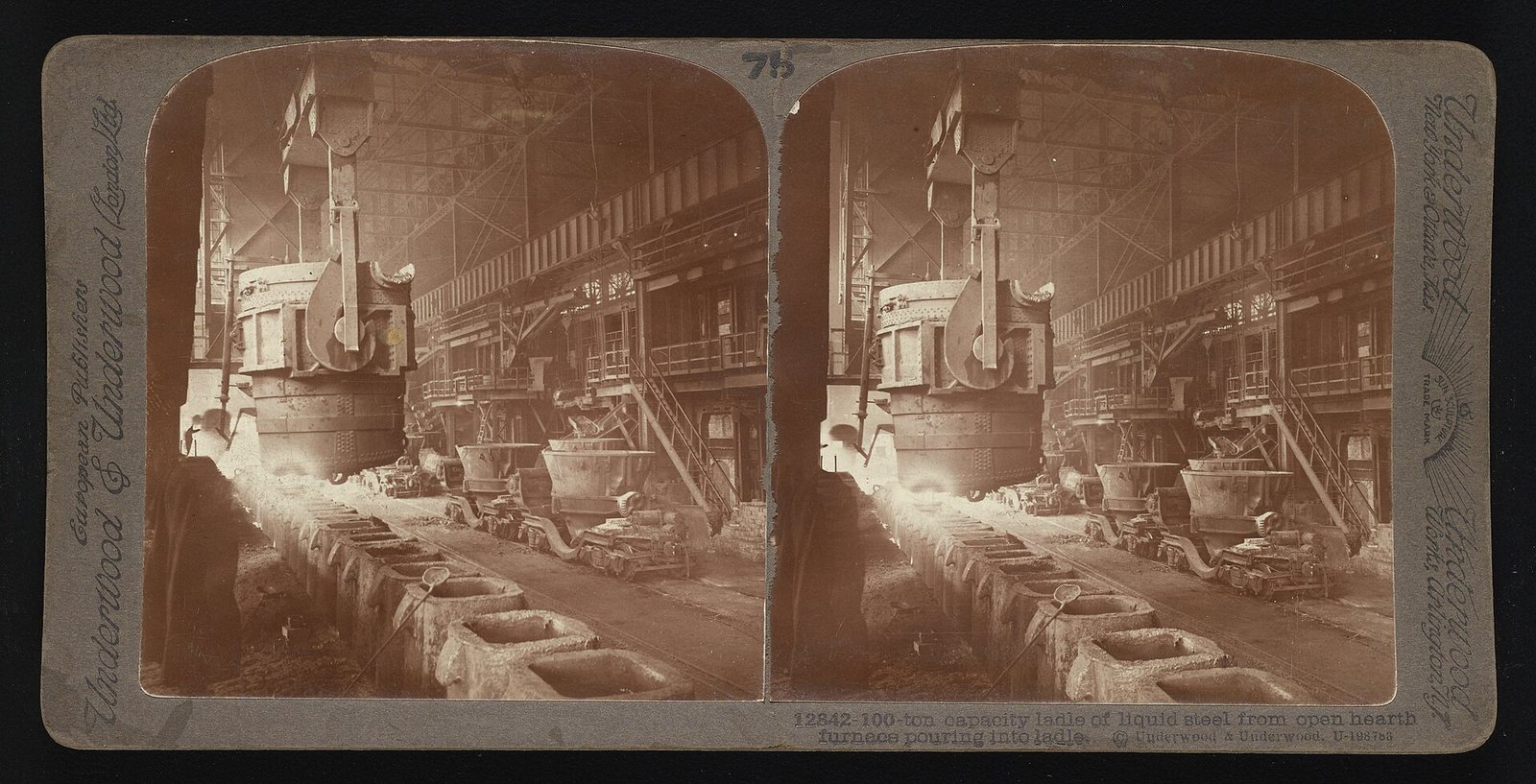
Oxygen is blown through the hot metal to burn the carbon down to a few tenths of a percent. Manganese goes in — every tonne of steel needs some — and then whatever else the grade calls for: chromium, nickel, niobium, vanadium.

640 tonneshot metal 620 tonnescrude steel

Por qué aquí: Steel is the alloy where a dozen other materials in this atlas quietly end up.

under an hour Manganese →
Blowing the carbon back out
100-ton capacity ladle of liquid steel … · Public domain via Wikimedia Commons
06 Mercado final 620tonnes

China · Rolling mills en poder de Fabricators (Fabricante)

Buildings, cars, rail, ships

Cast, rolled and cut. 620 tonnes of steel is roughly the frame of a mid-rise building, or five hundred cars.

620 tonnescrude steel 620 tonnesin service, and recyclable

Qué ocurrió con el resto: Steel made from scrap in an electric arc furnace emits a fraction of this route's carbon. How fast steel can decarbonise depends on how much scrap exists — and you cannot recycle steel that has not been built yet.

Por qué aquí: Two countries, one ocean, and by weight the largest thing humans move.
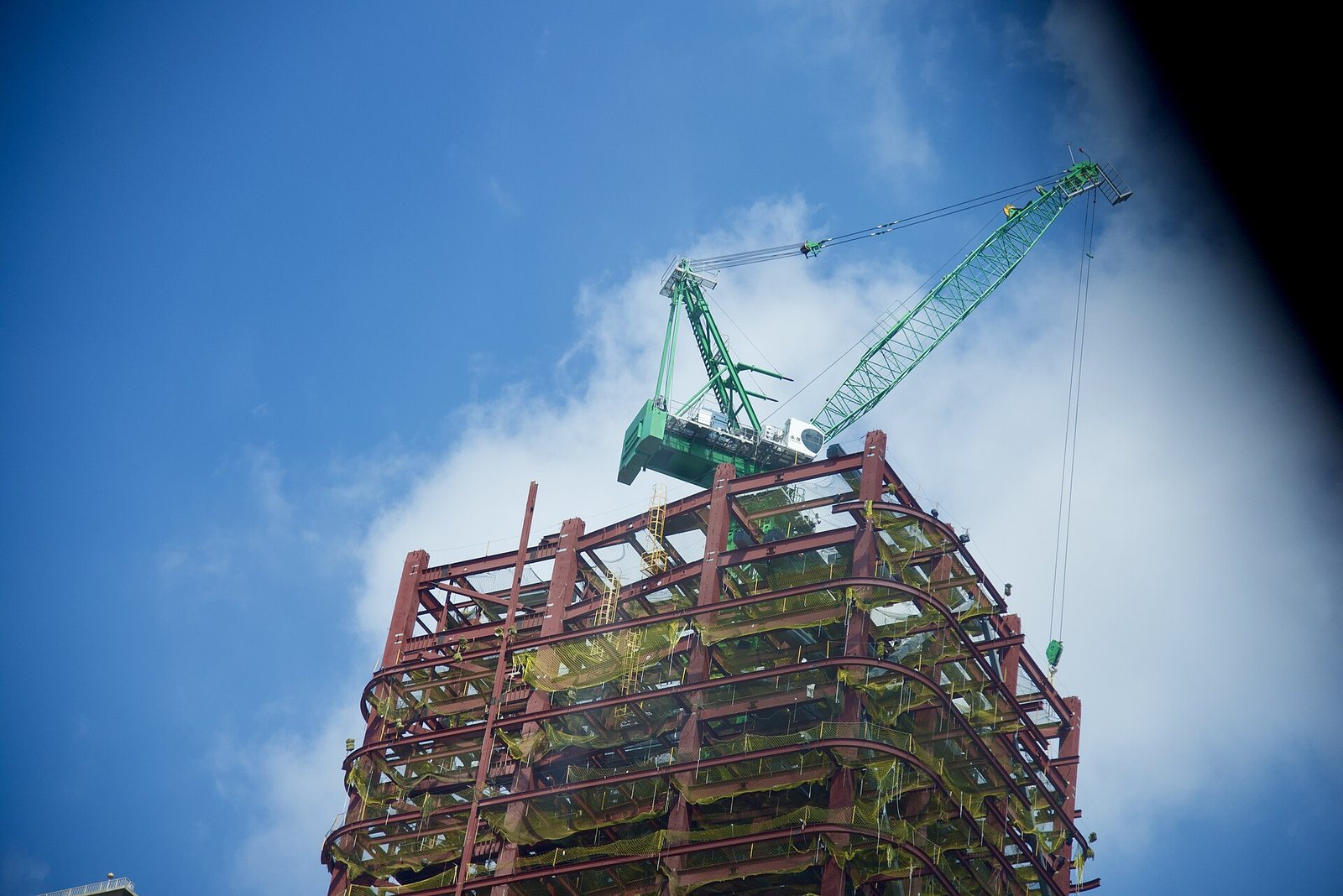
Buildings, cars, rail, ships
Steel frame building under construction… · CC0 via Wikimedia Commons

Este es un ejemplo resuelto. Sigue una cantidad de partida declarada a través de rendimientos y recuperaciones típicos publicados, por lo que las proporciones son verificables; no es el registro de un envío concreto. Los datos de la ruta — qué países, qué procesos y por qué el material no puede simplemente manipularse en otro lugar — se han compilado a partir de información pública.

Materiales

Todos los materiales Minerales críticos Tierras raras Materiales para baterías Minerales mena Tabla periódica Clasificador

El subsuelo

Minas y yacimientos Procesamiento y refinación Países Mapas

La economía

Recorridos de custodia Cadenas de suministro Mercados finales Tecnologías Empresas Calculadora de materiales

Aprender

AprenderGlosario Consultar los datosAgentes de IA Investigación y datosAPI abierta Noticias★ Guardado

Quiénes somos

Quiénes somosContacto MetodologíaFuentes de datos Política editorial Política de privacidadCondiciones de uso Aviso legal